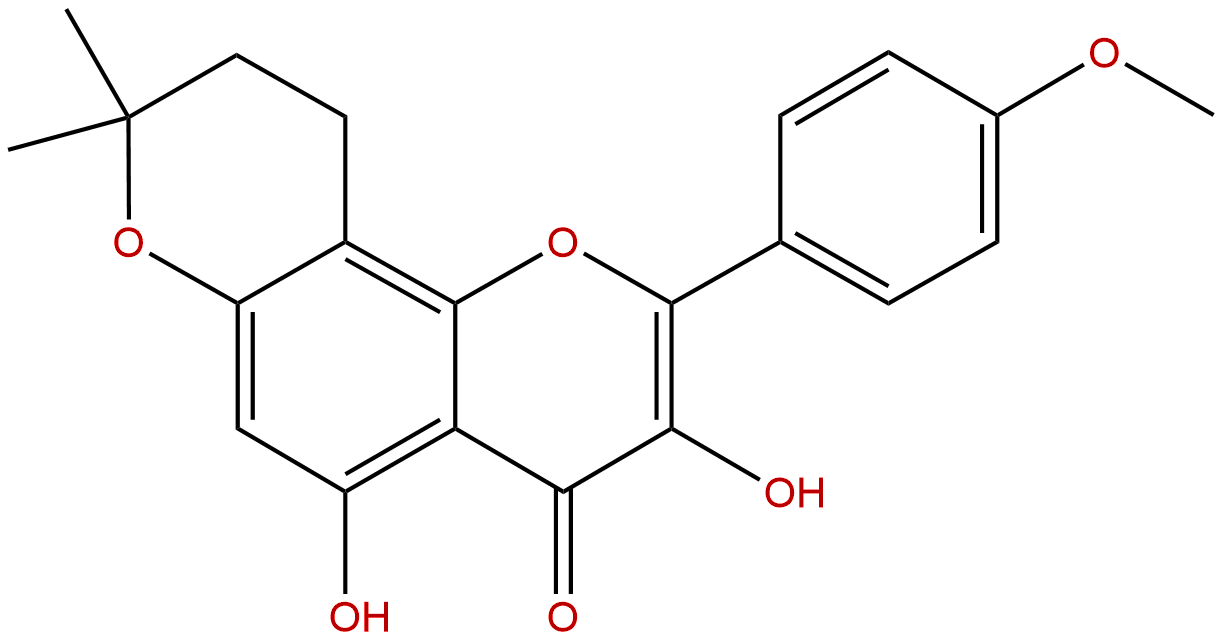


Product name: β-Anhydroicaritin
Synonym name:
Catalogue No.: BP3070
Cas No.: 38226-86-7
Formula: C21H20O6
Mol Weight: 368.385
Botanical Source:
Physical Description: Yellow powder
Type of Compound: Flavonoids
Purity: 95%~99%
Analysis Method: HPLC-DAD or/and HPLC-ELSD
Identification Method: Mass, NMR
Packing: Brown vial or HDPE plastic bottle
The product could be supplied from milligrams to grams. Inquire for bulk scale.
We provide solution to improve the water-solubility of compounds, thereby facilitating the variety of activity tests and clinic uses.
For Reference Standard and R&D, Not for Human Use Directly.
HPLC of Anhydroicaritin
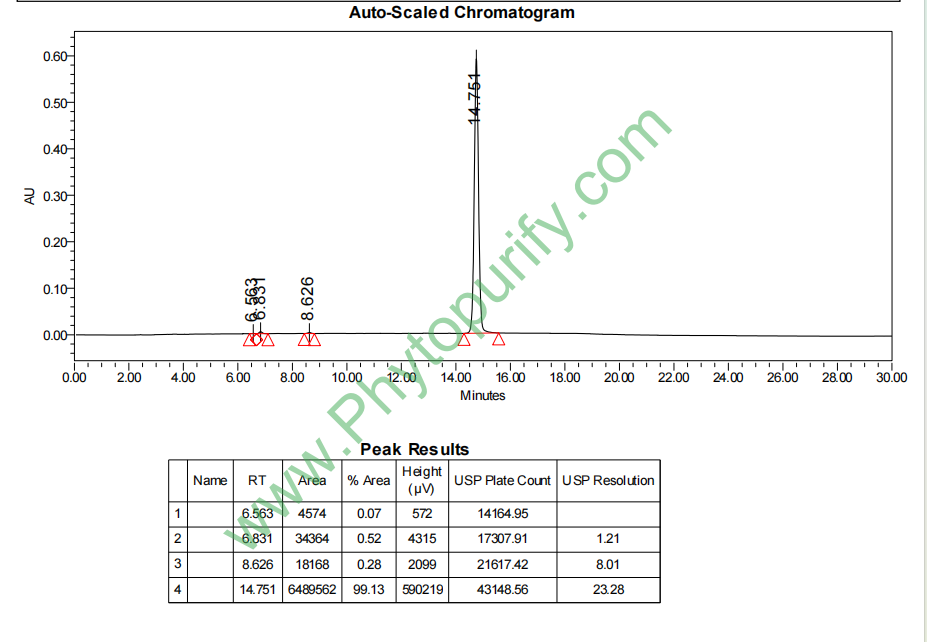
Storage conditions:Short-term storage at 2~8℃, long-term storage at -20 ~ -80℃
89.1300
3.8922
3.7844
.0125
4.0927
10.5326
Low
90.9711
2.6868
Yes
No
Yes
No
Yes
Yes
0.6
Yes
No
No
No
Osteoporosis is a systemic bone disease characterized by reduced bone mass, destruction of bone microstructure, and increased bone fragility, and has become a major global public health issue. At present, although first-line clinical drugs can effectively inhibit bone resorption or promote bone formation, long-term use often accompanies side effects such as mandibular necrosis, atypical fractures, and cardiovascular risks. Therefore, searching for highly effective and low toxicity new anti osteoporosis drugs from natural products has always been a hot research topic. Anhydroicaritin (ANI), CAS number 38226-86-7, is an important flavonoid compound in Epimedium plants and one of the main active metabolites of icariin and other components in the body. In recent years, a large number of studies have shown that dehydrated icariin exhibits significant multi-target and multi pathway regulatory effects in promoting osteogenesis and inhibiting osteoclastogenesis, and has good potential as a drug. It is expected to become a leading compound in the development of anti osteoporosis drugs. This article aims to systematically review the chemical structure, plant origin, pharmacological activity, molecular mechanism of action, pharmacological evaluation, and clinical application prospects of dehydrated icariin, in order to provide comprehensive scientific references for the in-depth research and development of this compound.
Dehydrated icariin is an isopentenyl flavonoid compound, with the chemical name 3,5,7-trihydroxy-2- (4-methoxyphenyl) -8- (3-methylbut-2-en-1-yl) -4H-phene-4-one. The molecular formula is C21H20O6 and the molecular weight is 368.3850. Its core structure is the flavonoid nucleus (2-phenylchromenone), which is connected to an isopentenyl group at the 8th position of the A ring and substituted with a methoxy group at the 4 'position of the B ring. This unique isopentenyl structure is considered one of the key pharmacophores that exert significant biological activity, enhancing its lipid solubility and ability to interact with target proteins.
From the analysis of physical and chemical properties, the calculated lipid water partition coefficient (LogP) is 3.8922, indicating that the compound has moderate lipophilic properties. The topological polar surface area (TPSA) is 89.1300 Å ², which is relatively low and favorable for its transmembrane absorption. The water solubility is poor, about 0.0125 mg/mL, which to some extent limits its bioavailability and is also a key issue that needs to be addressed in formulation development. Preliminary drug risk assessment shows that its blood-brain barrier permeability is low, indicating that its effects are mainly concentrated in the peripheral system; There is no significant inhibitory effect on hERG potassium channels, indicating a low risk of cardiac toxicity; The Ames test result is 0.6, indicating a low risk of mutagenicity and a good safety foundation.
Dehydrated icariin mainly comes from various plants in the Epimedium genus of the Berberidaceae family, such as Korean Epimedium, Soft haired Epimedium, Wushan Epimedium, etc. In these plants, it often exists in free form or as a aglycone of flavonoid glycosides such as icariin. Modern research has shown that after oral administration of icariin, it can be hydrolyzed and converted into dehydrated icariin under the action of gut microbiota and liver metabolic enzymes, which is considered a key direct active substance for exerting in vivo pharmacological effects.
The extraction and separation methods mainly follow the conventional process of natural product chemistry. Firstly, the dried Epimedium herb is crushed and subjected to heating reflux or ultrasound assisted extraction using organic solvents such as ethanol or methanol to obtain the crude extract of total flavonoids. Subsequently, preliminary enrichment and purification were carried out using macroporous adsorption resin and polyamide column chromatography. Finally, high-purity separation was performed using modern chromatographic techniques such as silica gel column chromatography and preparative high-performance liquid chromatography (HPLC). In addition, in order to meet the needs of in-depth research, chemical semi synthetic and total synthetic routes have also been reported. Usually, icariin or other flavonoids are used as starting materials and prepared through key steps such as dehydration, methylation, and isopentenylation. This provides a guarantee for obtaining sufficient samples for pharmacological and clinical research.
The pharmacological activity research of dehydrated icariin mainly focuses on the skeletal system, and its anti osteoporosis effect has been fully validated by in vitro and in vivo experiments.
1. Promote osteoblast differentiation and bone formation: At the cellular level, dehydrated icariin can significantly promote the proliferation, differentiation, and mineralization of pre osteoblast cell lines (such as MC3T3-E1, hFOB1.19) and bone marrow mesenchymal stem cells. It can upregulate alkaline phosphatase (ALP) activity and increase the formation of bone nodules. Long term oral administration of dehydrated icariin can effectively increase bone density (BMD), improve the microstructure of bone trabeculae (such as increasing the number and thickness of bone trabeculae and reducing separation), and enhance bone biomechanical properties (such as maximum load and elastic modulus) in ovariectomized (OVX) induced postmenopausal osteoporosis rat models and glucocorticoid induced osteoporosis mouse models.
2. Inhibit osteoclastogenesis and bone resorption: Equally important is its inhibitory effect on bone resorption. Dehydrated icariin can dose dependently inhibit the differentiation of osteoclasts (such as RAW264.7) induced by receptor activator of nuclear factor kappa B ligand (RANKL) into mature osteoclasts. It can reduce the number of tartrate resistant acid phosphatase (TRAP) positive multinucleated cells and inhibit the expression of osteoclast specific marker genes. In animal models, it can reduce the levels of serum bone resorption markers (such as CTX-I) and decrease the number of osteoclasts on the bone surface.
3. Other potential activities: In addition to its core anti osteoporosis effect, research also suggests that dehydrated icariin may have anti-inflammatory, anti-tumor, neuroprotective and other activities, which are related to its regulation of related signaling pathways, but further research is needed to clarify.
The mechanism of action of dehydrated icariin against osteoporosis is complex, involving multiple signaling pathways and molecular targets that regulate both osteogenesis and osteoclastogenesis, reflecting the characteristics of multi-target intervention.
The promotion mechanism of osteogenesis:
* Regulating classic signaling pathways: Activation of the Wnt/β - catenin pathway is one of the key mechanisms facilitated by it. Dehydrated icariin may promote β - catenin nuclear translocation and upregulate the expression of downstream osteogenic transcription factors RUNX2 and SP7 (Osterix) by inhibiting the expression of the negative regulator of bone formation, SOST (sclerosing protein), and releasing its inhibition on the Wnt pathway. RUNX2 and SP7 are the main controlling factors of osteogenic differentiation, which can further drive the expression of downstream osteogenic marker genes such as type I collagen alpha 1 chain (COL1A1) and osteocalcin (BGLAP), promoting bone matrix synthesis and mineralization.
* Acting on nuclear receptors: Research has shown that dehydrated icariin can interact with estrogen receptor alpha (ESR1) and vitamin D receptor (VDR). By partially simulating the estrogenic effect and activating ESR1 mediated signaling, it can help alleviate bone loss caused by postmenopausal estrogen deficiency. Meanwhile, the regulation of VDR may affect calcium and phosphorus metabolism as well as bone homeostasis.
* Affects MAPK and other pathways: It can also activate extracellular signal regulated kinase (ERK), p38 and other mitogen activated protein kinase (MAPK) pathways, which play important roles in responding to growth factors and stress, promoting cell proliferation and differentiation.
Inhibition mechanism of osteoclastogenesis:
* Interference with RANKL/RANK signal axis: The core pathways for osteoclast differentiation are the RANKL/RANK/NF - κ B and NFATc1 pathways. Dehydrated icariin can inhibit RANKL induced NF - κ B activation and downregulate the expression of key transcription factor NFATc1, thereby blocking gene programming for osteoclast differentiation.
* Inhibition of osteoclast specific enzymes and genes: It can significantly reduce the activity and expression of tissue protease K (CTSK), which is a key enzyme for osteoclasts to degrade bone organic matrix (mainly collagen). Its inhibition directly weakens bone resorption function. At the same time, it also downregulates the expression of osteoclast differentiation marker genes such as TRAP and c-Fos.
* Adjust OPG/RANKL balance: In the osteogenic osteoclast coupling, dehydrated icariin may promote the secretion of osteoprotegerin (OPG, encoded by the TNFRSF11B gene) by osteoblasts. OPG acts as a bait receptor for RANKL and competitively binds to RANKL, thereby inhibiting osteoclastogenesis.
In addition, studies have found that dehydrated icariin can inhibit the expression of matrix metalloproteinase-9 (MMP9), which is involved in osteoclast migration and bone matrix degradation. Its inhibition helps stabilize the bone microenvironment.
Although the pharmacological activity of dehydrated icariin is clear, its pharmacological properties still need to be comprehensively evaluated. As mentioned earlier, its low solubility and moderate permeability may limit its oral absorption, resulting in low absolute bioavailability. Pharmacokinetic studies (mainly conducted in rats) have shown that dehydrated icariin is absorbed slowly after oral administration, with a longer peak time (Tmax), higher plasma protein binding rate, and moderate distribution volume. It undergoes extensive phase I and phase II metabolism in the body, with the main metabolic pathways including hydroxylation, demethylation, glucuronidation, and sulfation, forming various metabolites. The prototype drug and its metabolites are mainly excreted through bile and urine.
To improve its bioavailability, researchers have tried various strategies.Pharmaceutical Strategy Including the preparation of phospholipid complexes, solid dispersions, nanocrystals, liposomes, or cyclodextrin inclusion complexes. For example, making it into phospholipid complexes or solid dispersions based on mesoporous silica can significantly improve its solubility and in vitro dissolution rate, thereby enhancing its oral bioavailability in rats.Structural modification It is another important direction to synthesize a series of derivatives by chemically modifying their phenolic hydroxyl groups, isopentenyl groups, etc., in order to improve water solubility and metabolic stability while maintaining activity. Some derivatives have shown in vitro activity and preliminary pharmacokinetic properties superior to the parent compound.
Dehydrated icariin, as a candidate drug for anti osteoporosis, has shown promising development prospects. Its multi-target mechanism of action may bring synergistic therapeutic effects and reduce the risk of side effects caused by excessive inhibition of a single target. At present, its related research has progressed from basic pharmacology to preclinical development.
The future research and development directions will mainly focus on the following aspects:
1. In depth mechanism exploration: By utilizing techniques such as proteomics and chemical proteomics, we can further accurately identify its direct target and create a more complete signal network diagram. Study its effects on bone immune microenvironment, bone angiogenesis and other bone homeostasis related processes.
2. Optimize drug properties: Continue to develop advanced delivery systems that are efficient, stable, and suitable for industrial production, such as oral nano formulations. Systematically conduct structure-activity relationship research, design and synthesize new derivatives with better physicochemical properties and pharmacological activity.
3. Pre clinical evaluation of the system: Complete standardized GLP toxicology studies to clarify the safety of long-term use. Validate efficacy in animal models that are closer to human diseases, such as age-related osteoporosis and male osteoporosis models.
4. Expanded indications: Based on its potential anti-inflammatory and immune regulating activities, explore its application value in other musculoskeletal diseases such as osteoarthritis, periodontitis, and delayed fracture healing.
5. Promote clinical translation: On the basis of completing sufficient preclinical research, actively prepare and conduct clinical trials to evaluate its safety, tolerability, and initial efficacy in humans, ultimately achieving a leap from natural products to innovative drugs.
In summary, dehydrated icariin, as an active flavonoid monomer derived from traditional Chinese medicine Epimedium, exhibits clear pharmacological effects and unique advantages in anti osteoporosis by synergistically regulating the dynamic balance of osteoblasts and osteoclasts through multiple targets and pathways. Despite facing challenges in terms of solubility and oral bioavailability, these bottlenecks are gradually being overcome through the intervention of modern pharmaceutical and medicinal chemistry methods. With the continuous deepening of understanding of its mechanism of action and the continuous development of pharmacological research, dehydrated icariin is expected to become a new, safe, and effective class of anti osteoporosis drugs, not only providing new treatment options for osteoporosis patients, but also providing successful examples for innovative drug development based on natural products. The research process fully reflects the translational medical value from traditional medical wisdom to modern scientific interpretation.
