


Synonym name:
Catalogue No.: BP0544
Cas No.: 110623-72-8
Formula: C39H50O20
Mol Weight: 838.809
Botanical Source: Epimedium koreanum
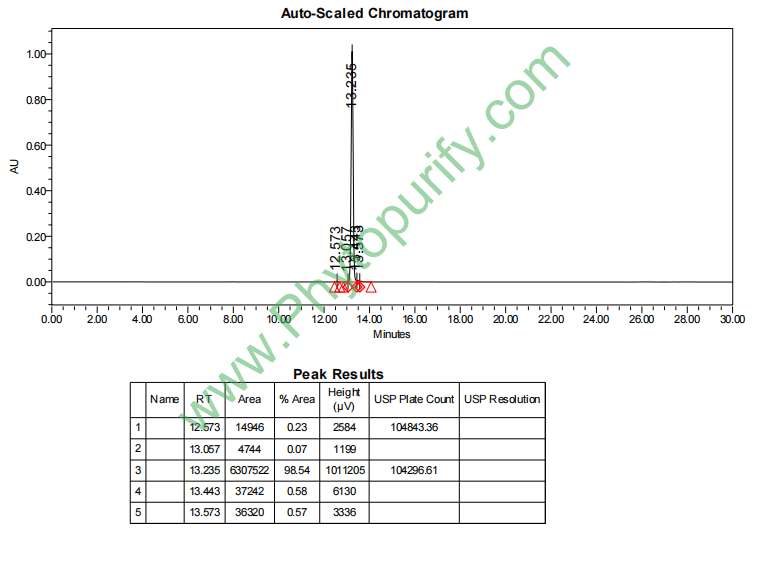
Purity: 95%~99%
Analysis Method: HPLC-DAD or/and HPLC-ELSD
Identification Method: Mass, NMR
Packing: Brown vial or HDPE plastic bottle
Can be supplied from milligrams to grams.
For Reference Standard and R&D, Not for Human Use Directly.
Inquire for bulk scale.
Description:
Epimedin A,epimendin B, epimendin C, icariin and baohuoside are flavonoids, main active ingredient in Epimedium, have clear anti-osteoporosis effect, the accumulation of epimedins A, B, C, and icariin in a traditional medicinal plant could be suppressed by light stress.
References:
Acta Physiol Plant, 2013, 35(11):3271-5.Light stress suppresses the accumulation of epimedins A, B, C, and icariin in Epimedium, a traditional medicinal plant.
Epimedium is well-known in China and East Asia due to high content of flavonoid derivatives, including icariin, Epimedin A, Epimedin B, and epimedin C, hereafter designated as bioactive components, which have been extensively utilized to cure many diseases. So far, the molecular mechanism of the bioactive components biosynthesis remains unclear.
METHODS AND RESULTS:
In the present study, the effect of light stress (24 h illumination) on the accumulation of bioactive components and the expression of flavonoid genes in Epimedium was investigated. Under light stress, the structural genes CHS1, CHI1, F3H, FLS, DFR1, DFR2, and ANS were remarkably up-regulated while CHS2 and F3′H were significantly down-regulated. For transcription factors, the expression of Epimedium MYB7 and TT8 were increased while Epimedium GL3, MYBF, and TTG1 expression were depressed. Additionally, the content of bioactive components was significantly decreased under light stress.
CONCLUSIONS:
Our results suggested that the decrease of bioactive compounds may be attributed to transcripts of late genes (DFRs and ANS) increased to a higher level than that of early genes (FLS and CHS1).
Yao Xue Xue Bao. 2014 Jun;49(6):932-7.
[Two-dimensional zebrafish model combined with hyphenated chromatographic techniques for evaluation anti-osteoporosis activity of epimendin A and its metabolite baohuoside I].
This article firstly established a new efficient method for screening anti-osteoporosis ingredients, which used two-dimensional zebrafish model combined with hyphenated chromatographic techniques to evaluate anti-osteoporosis activities of Epimedin A and its metabolite baohuoside I.
METHODS AND RESULTS:
Adult zebrafish was used for metabolism of Epimedin A in 0.5% DMSO, and LC-MS was used for analysis of the metabolite, which was captured by HPLC, and prednisolone-induced osteoporosis model of zebrafish was used to evaluate the anti-osteoporotic activities of trace amounts of Epimedin A and baohuoside I. The results indicated that Epimedin A and baohuoside I can prevent prednisolone-induced osteoporosis in zebrafish. The developed method in this paper enables the separation, enrichment and analysis of micro-amount metabolite of Epimedin A, and anti-osteoporosis activities in vivo of Epimedin A and baohuoside I was simple and efficient screening resorting to zebrafish osteoporosis mode.
CONCLUSIONS:
This paper would provide new ideas and methods for a rapid and early discovery of anti-osteoporosis activities of micro-ingredients and its metabolite of traditional Chinese medicine.
HPLC of Epimedin A
Storage conditions:Short-term storage at 2~8℃, long-term storage at -20 ~ -80℃
317.3500
.4693
.4650
3.3920
.3958
.3367
Low
79.0285
5.5535
Yes
No
Yes
No
No
No
0.0
Yes
Yes
Yes
Yes
Osteoporosis is a systemic bone disease characterized by reduced bone mass, destruction of bone microstructure, and increased bone fragility, and has become an increasingly serious public health problem worldwide. With the acceleration of the aging process of the population, its incidence rate continues to rise, bringing heavy economic and health burdens to society and individuals. At present, first-line clinical treatment drugs such as bisphosphonates, selective estrogen receptor modulators, RANKL inhibitors, etc. are effective, but long-term use often accompanies adverse reactions such as mandibular necrosis, atypical femoral fractures, and cardiovascular risks, limiting their widespread application. Therefore, excavating highly efficient and low toxicity new anti osteoporosis lead compounds from the treasure trove of traditional medicine has important scientific significance and clinical value.
Herba Epimedii, as a classic traditional Chinese medicine herb known for its ability to tonify the kidneys, strengthen yang, and strengthen muscles and bones, has a long history and proven efficacy in preventing and treating osteoporosis. Modern pharmacological research has confirmed that its anti osteoporosis activity is mainly attributed to the abundance of flavonoids, among which Epimidin A, as one of the most abundant and active characteristic components in Epimedium, is increasingly becoming a research focus. Chaohuoding A not only exhibits excellent dual regulatory effects of inhibiting osteoclast bone resorption and promoting osteoblast bone formation, but also has significant anti-inflammatory activity, providing new ideas for intervening in osteoporosis and related inflammatory bone diseases from the perspective of "bone immunology". This article aims to systematically review the chemical properties, plant sources, pharmacological activities, molecular mechanisms, medicinal properties, and clinical application prospects of Chaohuoding A, in order to provide comprehensive scientific references for the in-depth research and development of this natural product.
Epimidin A, also known as 8-isoprenyl kaempferol-3-O - [α - L-rhamnose (1 → 2)] - [α - L-rhamnose (1 → 4)] - β - D-glucoside, has a CAS number of 110623-72-8. From a chemical structure perspective, Chaohuoding A belongs to the class of isopentenyl flavonoid glycosides. Its parent nucleus is Kaempferol, which is connected to an isopentenyl group at position C-8. This is the key structural feature that distinguishes it from other flavonoid glycosides in Epimedium, such as Chaohuoding B, C, and Icariin. The introduction of the isopentenyl group significantly enhances its lipid solubility and ability to interact with biofilms, which may be closely related to its unique biological activity. Its glycosylation is composed of one molecule of β - D-glucose and two molecules of α - L-rhamnose, forming a triple sugar chain connected to the C-3 position of the kaempferol nucleus. This complex glycosylation structure has a decisive impact on its water solubility, stability, and metabolic processes in vivo.
According to the provided pharmacological parameters, the molecular weight of Chaohuoding A is 838.8090, which belongs to the category of high molecular weight flavonoid glycosides. The calculated lipid water partition coefficient (LogP) is 0.4693, indicating that the molecule has a certain degree of lipophilicity, but overall it still leans towards hydrophilicity. The topologically polar surface area (TPSA) is as high as 317.3500 Å ², which is mainly attributed to the multiple hydroxyl groups and oxygen atoms on the sugar ring in the molecule. High TPSA is the main factor limiting its passive transmembrane diffusion. Its water solubility value is 3.3920 (usually referring to LogS or similar indicators), indicating that it has a certain solubility in water, but not highly soluble. These physical and chemical properties collectively determine the absorption and distribution characteristics of Chaohuoding A in the body: after oral administration, it may be mainly absorbed through active intestinal transport or bypass pathways, and difficult to cross the blood-brain barrier (predicted to be low), which is consistent with its pharmacological characteristics of mainly acting on the peripheral skeletal system rather than the central nervous system. In addition, preliminary toxicity predictions showed no inhibition of hERG potassium channels (indicating low risk of cardiac toxicity), and the Ames test result was 0.0 (indicating no mutagenicity), providing preliminary favorable evidence for its safety.
Chaohuoding A mainly comes from various plants in the Epimedium L. genus of the Berberidaceae family, such as Epimedium koreanum Nakai, Epimedium sagittatum (Sieb. et Zucc.) Maxim., Epimedium pubescens Maxim., and Epimedium wushanense T.S. Ying. Its content varies significantly depending on the species, place of origin, harvest season, and medicinal parts (usually leaves), and is usually between 0.1% and 1.5% in dried medicinal materials. It is one of the main components of total flavonoids in Epimedium.
The efficient and high-purity extraction and separation of Chaohuoding A from Epimedium herb is the basis for its pharmacological research and product development. The commonly used extraction methods currently include:
1. Solvent extraction method The most classic method often uses different concentrations of ethanol (such as 50% -70%) or methanol for reflux extraction or ultrasound assisted extraction. This method is easy to operate, cost-effective, and suitable for preliminary enrichment of total flavonoids.
2. Modern separation and purification technology In order to obtain high-purity Chaohuoding A, the crude extract needs to undergo a series of refining steps. Large pore adsorption resins (such as AB-8 and D101) are often used for enrichment, and the difference in polarity and adsorption capacity between Chaohuoding A and impurities is used for preliminary separation. Subsequently, using preparative high-performance liquid chromatography (Prep HPLC) with acetonitrile water or methanol water as the mobile phase, the final separation was performed on a reverse phase C18 chromatographic column, resulting in a purity of over 98% for the monomer Chaohuoding A. In addition, high-speed countercurrent chromatography (HSCCC), as a solid-liquid distribution chromatography technique without solid carriers, has also been used for the separation of icariin flavonoids due to its high recovery rate and large preparation capacity.
3. quality control In the research of extraction technology and quality control of medicinal materials, high-performance liquid chromatography ultraviolet detection (HPLC-UV) or liquid chromatography-mass spectrometry (LC-MS) are often used for quantitative analysis of Chaohuoding A to ensure its stable and controllable content.
The pharmacological activity research of Chaohuoding A mainly focuses on the field of skeletal system and inflammation, exhibiting multi-target and multi pathway action characteristics.
1. Anti osteoporosis activity
This is the core pharmacological effect of Chaohuoding A. It has shown significant bone protective effects in various animal models of osteoporosis, such as ovariectomy induced postmenopausal osteoporosis model in rats, glucocorticoid induced osteoporosis model in rats, and senile osteoporosis model. Specifically, it manifests as increasing bone density (BMD), improving bone microstructure (increasing the number and thickness of bone trabeculae, reducing separation), and enhancing bone biomechanical performance (increasing maximum load, stiffness, etc.). Its mechanism of action has the characteristic of "bidirectional regulation":
* Inhibit bone resorption Chaohuoding A can effectively inhibit the generation, differentiation, and function of osteoclasts (OC). In vitro, it can inhibit the differentiation of osteoclast precursor cells into mature osteoclasts induced by macrophage colony-stimulating factor (M-CSF) and nuclear factor kappa B receptor activator ligand (RANKL), and suppress the ability of mature osteoclasts to form bone resorption cavities.
* Promote bone formation Chaohuoding A can stimulate the proliferation, differentiation, and mineralization functions of osteoblasts (OB). It can promote the differentiation of osteogenic precursor cells into mature osteoblasts, enhance alkaline phosphatase (ALP) activity, accelerate the synthesis of extracellular matrix (mainly type I collagen) and the formation of mineralized nodules.
2. Anti inflammatory activity
Chronic low-grade inflammation is an important driving factor for bone loss related to osteoporosis, especially age-related and inflammatory diseases such as rheumatoid arthritis. Chaohuoding A exhibits clear anti-inflammatory effects. In the macrophage (such as RAW264.7) model stimulated by lipopolysaccharide (LPS) or inflammatory factors (such as TNF - α, IL-1 β), Asahuoding A can dose dependently inhibit the production of nitric oxide (NO), prostaglandin E2 (PGE2), and pro-inflammatory cytokines (such as TNF - α, IL-6, IL-1 β). Its anti-inflammatory effect is closely related to the inhibition of classical inflammatory signaling pathways such as nuclear factor kappa B (NF - κ B) and mitogen activated protein kinase (MAPK) activation. This anti-inflammatory activity not only helps to directly alleviate the symptoms of inflammatory diseases, but also indirectly inhibits the excessive activation of osteoclasts driven by inflammation by regulating the "bone immune" microenvironment, thereby protecting the bones.
3. Other potential activities
Preliminary studies also suggest that Chaohuoding A may have potential activities such as antioxidant, anti-tumor (especially inhibitory effect on osteosarcoma cell proliferation), neuroprotective, etc., but these aspects still need further systematic research to confirm.
The anti osteoporosis and anti-inflammatory effects of Chaohuoding A involve a complex molecular network, with its targets and signaling pathways intertwined.
1. Core targets and pathways for regulating bone metabolism balance
* Regulating osteogenic differentiation and function:
* RUNX2 and SP7 (Osterix)RUNX2 is the main transcription factor controlling osteoblast differentiation, and SP7 is its downstream key factor. Chaohuoding A can significantly upregulate the expression of RUNX2 and SP7 in osteoblasts, thereby initiating the osteogenic differentiation program.
* Wnt/β - catenin pathway This pathway is a key positive regulatory pathway that promotes bone formation. Chaohuoding A may promote the expression of osteogenic related genes such as COL1A1 and BGLAP by inhibiting the expression of sclerosing protein (SOST), a Wnt pathway antagonist, to release its inhibition on the Wnt pathway, activate β - catenin signaling, and promote the expression of osteogenic related genes. The activation of vitamin D receptors (VDR) may also have a cross-talk with the Wnt pathway.
* Bone formation markers Chaohuoding A can directly promote the synthesis of type I collagen (COL1A1, the main component of bone matrix) and osteocalcin (BGLAP, a marker of late differentiation and mineralization of osteoblasts), which is a direct manifestation of its promotion of bone formation.
* Estrogen receptor alpha (ESR1)The phenolic hydroxyl group in the structure of Chaohuoding A endows it with weak estrogen like activity, which can mimic the partial bone protective effect of estrogen by binding to ESR1, especially in postmenopausal osteoporosis models.
2. Mechanisms related to anti-inflammatory effects
The anti-inflammatory effect of Chaohuoding A is mainly achieved by inhibiting the NF - κ B and MAPK inflammatory signaling pathways. It can prevent the degradation of I κ B α and p65 nuclear translocation (inhibit NF - κ B activation), while reducing the phosphorylation levels of p38, JNK, and ERK (inhibit MAPK activation), thereby reducing the expression of iNOS, COX-2, and various pro-inflammatory cytokines at the transcriptional level. In the context of bone immunology, this anti-inflammatory effect can effectively inhibit the abnormal activation of osteoclasts by cytokines such as TNF - α and IL-1 β in the inflammatory microenvironment, breaking the vicious cycle of "inflammation bone resorption".
Although Chaohuoding A has significant in vitro activity, its pharmacological properties, especially oral bioavailability, are the key bottleneck restricting its conversion into drugs.
1. Absorption, distribution, metabolism, and excretion (ADME)
* absorb Chaohuoding A has a high molecular weight and polarity (high TPSA), which leads to poor passive transmembrane absorption in the small intestine after oral administration. Research has shown that its absolute oral bioavailability in rats is relatively low (usually<5%). Its absorption may be partially dependent on transporters on intestinal epithelial cells (such as glucose transporters) or through hydrolysis by intestinal microbiota, first metabolized into glycosides (deglycosylation products) or secondary glycosides before being absorbed.
* distribution Chaohuoding A and its metabolites are widely distributed in the body, but difficult to penetrate the blood-brain barrier. Pharmacokinetic studies have shown that the distribution concentration and retention time of the drug in the main target tissue bone after administration are worth paying attention to, which may be the pharmacokinetic basis for its bone protective effect.
* Metabolism Chaohuoding A undergoes extensive metabolism in the body.Phase I metabolism Mainly including the redox reactions of liver cytochrome P450 enzyme system.Phase II metabolism It is its main elimination pathway, undergoing extensive glucuronidation and sulfation binding reactions in the liver and intestines, generating more polar metabolites that are excreted through bile and urine. In addition,Metabolism of gut microbiota Playing a crucial role. The β - glucosidase and rhamnosidase of intestinal bacteria can gradually hydrolyze the three sugar chains of Asahuoding A, generating secondary glycosides of Asahuoding A (such as losing some rhamnose) and its aglycone (kaempferol-8-isopentenyl). These metabolites have enhanced lipid solubility, are more easily absorbed, and some metabolites (such as aglycones) have even stronger biological activity than the prototype drug. Therefore, the pharmacological effect of Chaohuoding A is the result of the combined action of its prototype and multiple active metabolites.
* excretion Chaohuoding A and its metabolites are mainly excreted from the body through the kidneys in urine and through the liver in bile feces.
2. Formulation strategy and structural modification
To improve the bioavailability and efficacy of Chaohuoding A, researchers actively explore various strategies:
* New drug delivery system Including nanocrystals, liposomes, solid dispersions, self microemulsions, etc. These technologies can increase drug solubility, promote intestinal lymphatic absorption, delay metabolism, thereby significantly improving its oral bioavailability.
* Structural modification By chemically modifying the sugar or isopentenyl groups of Chaohuoding A, a series of derivatives were synthesized with the aim of optimizing its lipid water partition coefficient, improving membrane permeability and metabolic stability.
* Compatibility application According to traditional Chinese medicine theory, the combination of Epimedium (rich in Chaohuoding A) with other kidney tonifying herbs (such as bone broken tonics and Rehmannia glutinosa) may enhance overall efficacy and bioavailability through synergistic effects of multiple components and targets, as well as affecting each other's metabolic enzymes and transport proteins.
Chaohuoding A, as a highly promising natural candidate drug for anti osteoporosis, has broad clinical application prospects but also faces challenges.
1. Direct therapeutic application
* Prevention and treatment of osteoporosis The dual regulatory effect of Chaohuoding A, which promotes bone formation and inhibits bone resorption, makes it a promising new type of anti osteoporosis drug, especially suitable for postmenopausal osteoporosis, senile osteoporosis, and glucocorticoid induced osteoporosis. Combined use with existing drugs may result in synergistic effects, reducing the dosage and side effects of a single drug.
* Adjuvant treatment of inflammatory bone disease Localized or systemic bone destruction associated with diseases such as rheumatoid arthritis and periodontitis. The dual anti-inflammatory and anti bone resorption properties of Chaohuoding A make it an ideal candidate drug for treating such diseases.
* Fracture healing accelerator Its promotion of osteogenic differentiation and mineralization suggests its potential application in accelerating fracture healing and treating non union.
2. As a dietary supplement or functional food
Given the relatively safe history of long-term consumption of Epimedium, high-purity Asahuoding A or standardized Epimedium extract (with calibrated Asahuoding A content) can be developed as a dietary supplement for bone health and early prevention of osteoporosis in middle-aged and elderly populations.
3. Challenges and Future Research Directions
* Lack of systematic clinical research Currently, the vast majority of research is still in the preclinical stage (cell and animal experiments). It is urgent to design rigorous Phase I-III clinical trials to systematically evaluate the safety, efficacy, and optimal dosing regimen of Chaohuoding A in humans.
* The issue of bioavailability As mentioned earlier, low oral bioavailability is the core obstacle. Future research should focus on developing efficient, stable, and industrializable new drug delivery systems, or discovering derivatives with stronger activity and better pharmacokinetic properties.
* In depth mechanism exploration It is necessary to use omics technologies (proteomics, metabolomics), gene editing tools, etc. to more accurately elucidate its multi-target action network, especially its core node role in the "bone immune endocrine" cross network.
* Research on Compound Preparations In depth exploration of the role of Chaohuoding A in traditional Chinese medicine formulas, elucidating its interaction patterns with other components, and providing a basis for the development of modern traditional Chinese medicine compound drugs based on Chaohuoding A.
Chaohuoding A, as one of the soul active ingredients of traditional Chinese medicine Epimedium, is a brilliant pearl discovered by modern science from the natural treasure trove. It demonstrates outstanding potential in regulating bone metabolism balance and inhibiting inflammatory reactions through multi-target and multi pathway synergistic effects, providing new strategies and candidate molecules for the prevention and treatment of bone degenerative and inflammatory diseases such as osteoporosis. Despite facing challenges in drug formulation, especially in oral absorption, these bottlenecks are expected to be overcome with the continuous deepening of modern pharmacy, medicinal chemistry, and pharmacokinetic research, through innovative formulation technology and structural optimization. In the future, combined with strict clinical verification and in-depth mechanism research, Chaohoding A is very likely to move from laboratory to clinic, and develop into a modern bone health drug that originates from tradition and is superior to the standard, benefiting hundreds of millions of patients with bone diseases around the world, fully reflecting the eternal value of traditional Chinese medicine of "inheriting the essence, preserving integrity and innovation".
