


Product name: Baohuoside I
Synonym name: Icariside II
Catalogue No.: BP0236
Cas No.: 113558-15-9
Formula: C27H30O10
Mol Weight: 514.527
Botanical Source: Epimedii folium
Physical Description:
Type of Compound: Flavonoids
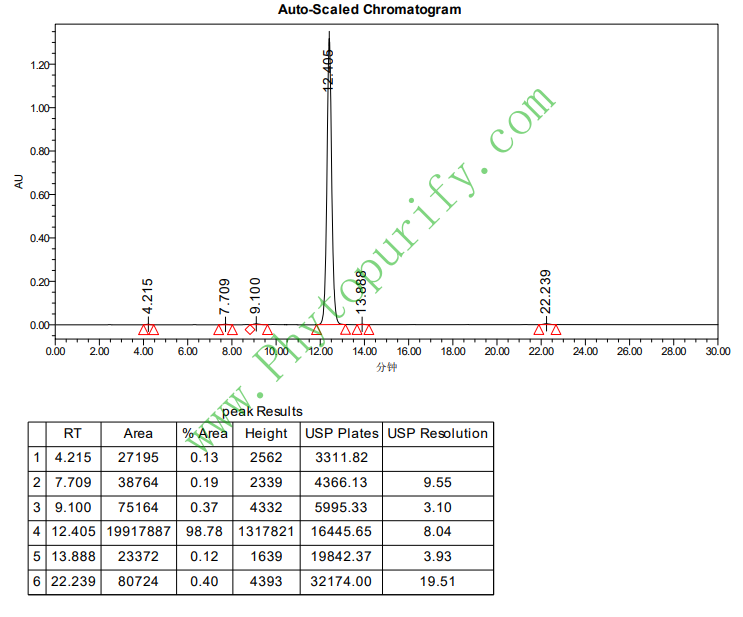
Purity: 95%~99%
Analysis Method: HPLC-DAD or/and HPLC-ELSD
Identification Method: Mass, NMR
Packing: Brown vial or HDPE plastic bottle
Storage: Store in a well closed container, protected from air and light. Put into refrigerate or freeze for long term storage.
Whenever possible, you should prepare and use solutions on the same day. However, if you need to make up stock solutions in advance, we recommend that you store the solution as aliquots in tightly sealed vials at -20℃. Generally, these will be useable for up to two weeks.
The product could be supplied from milligrams to grams
Inquire for bulk scale.
Description:
Baohuoside I is a novel immunosuppressive molecule, exhibits antimetastatic, anti-osteoporosis, anti-inflammatory and anti-cancer activities. Baohuoside I can inhibit the proliferation of Eca-109 cells, this effect associats with down-regulation expression of β-catenin,Cyclin D1,Survivin,and their proteins,which affects on the Wnt/β-catenin signaling pathway.
References:
Chinese Traditional & Herbal Drugs, 2011, 42(1):124-6.
Effect of baohuoside-I on Wnt/β-catenin signaling pathway of human esophageal carcinoma cell Eca-109.
To study the effect of baohuoside-I extracted from Periplocae Cortex on proliferation and Wnt/β-catenin signaling pathway of human esophageal carcinoma cell Eca-109.
METHODS AND RESULTS:
The expressions of β-catenin, Cyclin D1, and Survivin protein in Eca-109 cells were measured with flow cytometry (FCM). The expressions of β-catenin, Cyclin D1, and Survivin mRNA were detected by RT-PCR. After treatment with 25 and 50 μg/mL of Baohuoside I for 48 h, the expression levels of β-catenin, Cyclin D1, Survivin mRNA, and protein were decreased significantly (P<0.01), but with 12.5 μg/ML of Baohuoside I the expression level was not decreased significantly compared with the control group.
CONCLUSIONS:
: Baohuoside I from Periplocae Cortex could inhibit the proliferation of Eca-109 cells. This effect associais with down-regulation expression of β-catenin, Cyclin D1, Survivin, and their proteins, which affects on the Wnt/β-catenin signaling pathway.
Chem Biol Interact. 2012 Jul 30;199(1):9-17.
Reactive oxygen species-mediated mitochondrial pathway is involved in Baohuoside I-induced apoptosis in human non-small cell lung cancer.
Baohuoside I (also known as Icariside II) is a flavonoid isolated from Epimedium koreanum Nakai. Although Baohuoside I exhibits anti-inflammatory and anti-cancer activities, its molecular targets/pathways in human lung cancer cells are poorly understood. Therefore, in the present study, we investigated the usefulness of Baohuoside I as a potential apoptosis-inducing cytotoxic agent using human adenocarcinoma alveolar basal epithelial A549 cells as in vitro model.
METHODS AND RESULTS:
The apoptosis induced by Baohuoside I in A549 cells was confirmed by annexin V/propidium iodide double staining, cell cycle analysis and dUTP nick end labeling. Further research revealed that Baohuoside I accelerated apoptosis through the mitochondrial apoptotic pathway, involving the increment of BAX/Bcl-2 ratio, dissipation of mitochondrial membrane potential, transposition of cytochrome c, caspase 3 and caspase 9 activation, degradation of poly (ADP-ribose) polymerase and the over-production of reactive oxygen species (ROS). A pan-caspase inhibitor, Z-VAD-FMK, only partially prevented apoptosis induced by Baohuoside I, while NAC, a scavenger of ROS, diminished its effect more potently. In addition, the apoptotic effect of Baohuoside I was dependent on the activation of ROS downstream effectors, JNK and p38(MAPK), which could be almost abrogated by using inhibitors SB203580 (an inhibitor of p38(MAPK)) and SP600125 (an inhibitor of JNK).
CONCLUSIONS:
These findings suggested that Baohuoside I might exert its cytotoxic effect via the ROS/MAPK pathway.
Transplantation. 2004 Sep 27;78(6):831-8.
Baohuoside-1, a novel immunosuppressive molecule, inhibits lymphocyte activation in vitro and in vivo.
We evaluated the in vitro and in vivo immunosuppressive effects of Baohuoside I (B1), a novel flavonoid isolated from Epimedium davidii.
METHODS AND RESULTS:
Proliferation assay was used to determine the antiproliferative properties on T-cell and B-cell proliferation. Flow cytometry analysis was applied to detect changes of phenotypes on activated cells. B1 inhibits the lymphocyte proliferation activated by polyclonal mitogens and mixed lymphocyte reaction with a 50% inhibitory concentration of low micromolar concentration. Also, B1 suppressed T-cell activation in T cell receptor/CD3-mediated signaling pathways in a dose- and time-dependent manner. The suppression of B1 was not simply a result of a toxic effect and was recovered by withdrawing the drug. B1 down-regulated the expression of some phenotype molecules. In Ca(2+)-independent or -dependent antigen stimulation, although B1 had different inhibitive patterns on CD69 expression stimulated by phorbol 12-myristate 13-acetate (PMA) or Ca2+ ionophore, it inhibited T-cell proliferation induced by CD3/CD28 or PMA/ionomycin and partially blocked that induced by PMA/CD28. Interestingly, an additive inhibition between B1 and tacrolimus (FK506) was found in the CD69 expression stimulated by PMA/CD28 and PMA/ionomycin. Similarly, this immunosuppression by combination therapy was observed in a heart transplantation model in vivo and might act through an immunosuppressive mechanism different from FK506.
CONCLUSIONS:
B1, whose mechanism of action is not similar to that of FK506, has selectively immunosuppressive effects on T-cell and B-cell activation in vitro and effectively prevents rat heart allograft rejection in vivo.
HPLC of Baohuoside I
Storage conditions:Short-term storage at 2~8℃, long-term storage at -20 ~ -80℃
159.0500
2.3745
2.2809
.4158
.5583
.9014
Low
85.5730
4.1427
Yes
No
Yes
No
No
Yes
0.6
Yes
Yes
Yes
Yes
Natural products have always been an important source of innovative drug discovery, among which flavonoids have attracted much attention due to their broad biological activity and relatively low toxicity. Baohuoside I (CAS number: 113558-15-9), as an isoprenoid flavonoid glycoside isolated from traditional medicinal plants, has gradually become a hot topic in natural product pharmacology research in recent years due to its significant pharmacological activities in anti-tumor, anti-inflammatory, and cardiovascular protection. Its chemical structure is characterized by the presence of isoprene and rhamnose groups attached to the flavonoid core, which is considered a unique modification key to its biological activity. The initial research focused on its anti-tumor effects, especially as an effective inhibitor of C-X-C chemokine receptor type 4 (CXCR4), which can intervene in the migration, invasion, and survival of tumor cells. With the deepening of research, the potential of Baohuo glycoside I in the fields of heart failure, bone metabolism diseases, neurodegenerative diseases, etc. has gradually emerged, showing the characteristics of multi-target and multi pathway effects. This article aims to systematically review the chemical properties, plant sources, pharmacological activities, mechanisms of action, medicinal properties, and clinical application prospects of Baohuo glycoside I, in order to provide comprehensive scientific references for the in-depth research and development of this compound.
The chemical name of Baohuo glycoside I is 3,5,7-trihydroxy-4 '- methoxy-8-isoprenoidflavone-3-O - α - L-rhamnopyranoside, which is a glycosylated flavonoid. Its molecular formula is C ₂₇ H ∝₀ O ₁₀, and its molecular weight is 514.5270. Structurally, it is based on flavonoids as the basic skeleton, with the 8th position of the A ring replaced by an isoprene group, the 4th 'position of the B ring as a methoxy group, and the 3rd hydroxyl group of the C ring connected to α - L-pyranose rhamnose through glycosidic bonds. This isoprene and glycosylation modification is the key difference between it and ordinary flavonoids, significantly affecting its lipid solubility, biological activity, and interaction with target proteins.
From the analysis of physical and chemical properties, the lipid water partition coefficient (LogP) of Baohuo glycoside I is 2.3745, indicating that it has a certain degree of lipophilicity, but not highly hydrophobic. Its topological polar surface area (TPSA) is 159.0500 Å ², reflecting the strong polarity brought by multiple hydroxyl and sugar groups in the molecule. The water solubility value is 0.4158 mg/mL, which belongs to the category of slightly soluble to poorly soluble, posing a challenge for its formulation development. Preliminary evaluation of its pharmacological properties shows that its ability to cross the blood-brain barrier is relatively low, suggesting that its direct effect on central nervous system diseases may be limited, but it may also reduce the risk of central side effects. In terms of safety, existing data indicates that the risk of hERG channel inhibition is "no", and the preliminary Ames test result is 0.6 (usually considered to have a significant mutagenic risk only when the value is greater than 2), suggesting that its cardiac and genetic toxicity risks are low and it has the potential for further development.
Baohuo glycoside I mainly comes from traditional Chinese medicine plants of the Epimedium genus, among which Epimedium koreanum Nakai is the most abundant. Epimedium plants have a long history of medicinal use in China, South Korea, Japan, and other places, often used to treat conditions such as osteoporosis, rheumatism, and kidney yang deficiency. Baohuo glycoside I is one of the active components of various flavonoid glycosides in Epimedium, often coexisting with icariin (Icariside II is one of its glycoside forms) and other compounds.
Its extraction and separation usually use organic solvent extraction combined with modern chromatographic techniques. The conventional process is as follows: first, the dried whole herb of Epimedium is crushed, and then heated with ethanol or methanol for reflux or ultrasound assisted extraction. After concentration, the crude extract of total flavonoids is obtained. Subsequently, macroporous adsorption resins such as AB-8 and D101 were used for preliminary enrichment and purification, followed by gradient elution with water and different concentrations of ethanol to collect the flavonoid glycoside rich fraction. Further separation and purification often use silica gel column chromatography, polyamide column chromatography, as well as high-performance liquid chromatography (HPLC) or preparative HPLC. Structural identification was performed using techniques such as nuclear magnetic resonance (NMR) and mass spectrometry (MS). In recent years, green and efficient technologies such as supercritical fluid extraction and high-speed countercurrent chromatography have also been applied to the extraction and separation of patchouli glycoside I to improve yield and purity. It should be noted that the plant origin, harvesting season, and extraction process all affect the final content and yield of Baohuo glycoside I.
Baohuo glycoside I exhibits diverse and significant pharmacological activities, and its research has expanded from its initial anti-tumor effects to multiple disease fields.
1. Antitumor activity: This is the activity of Baohuo glycoside I that has received the most attention. Studies have shown that it inhibits proliferation and induces apoptosis in a variety of tumor cell lines, including prostate cancer, breast cancer, lung cancer, liver cancer, gastric cancer and leukemia cells. Its function is not limited to direct cytotoxic effects, but can also effectively inhibit the migration and invasion of tumor cells, which is closely related to its targeting of CXCR4. CXCR4 is a key chemokine receptor in the tumor microenvironment, involved in tumor metastasis and angiogenesis. Baohuo glycoside I exerts anti metastatic effects by downregulating CXCR4 expression and blocking its downstream signaling pathway.
2. Cardiovascular protective activity: Baohuo glycoside I has shown potential therapeutic value for cardiovascular diseases such as heart failure. Research suggests that it may improve myocardial cell energy metabolism, inhibit myocardial hypertrophy and fibrosis, and protect cardiac function by activating the adenosine monophosphate activated protein kinase (AMPK) signaling pathway. In addition, its anti-inflammatory and antioxidant properties also help to reduce myocardial ischemia-reperfusion injury and atherosclerosis process.
3. Anti inflammatory and immune regulatory activity: Baohuo glycoside I can inhibit the excessive production of inflammatory factors (such as TNF - α, IL-6, IL-1 β) in macrophages induced by lipopolysaccharides (LPS), and its mechanism involves inhibiting classic inflammatory signaling pathways such as NF - κ B. This anti-inflammatory effect is related to its potential regulation of related targets such as ALOX15 (lipoxygenase), providing a basis for its application in inflammatory diseases such as rheumatoid arthritis and asthma.
4. Bone metabolism regulation activity: Inheriting the traditional efficacy of Epimedium for "strengthening yang and kidney, strengthening tendons and bones", Baohuo glycoside I has been proven to promote osteoblast differentiation and mineralization, while inhibiting osteoclastogenesis, which has a positive significance in the prevention and treatment of osteoporosis.
5. Neuroprotective activity: Although the blood-brain barrier permeability is low, some studies have found that Baohuo glycoside I or its metabolites may have beneficial effects on neurodegenerative disease models such as Alzheimer's disease through peripheral anti-inflammatory, antioxidant, or indirect effects, possibly related to regulating targets such as APP (amyloid precursor protein) processing.
The pharmacological effects of Baohuo glycoside I depend on its interactions with multiple molecular targets, forming a multi-target regulatory network.
1. Core target: CXCR4
As a clear CXCR4 inhibitor, Baohuo glycoside I can directly or indirectly interfere with the binding of CXCR4 to its ligand SDF-1 α, inhibiting the membrane expression of CXCR4. This leads to the blockade of key survival, proliferation, and migration signaling pathways such as PI3K/Akt, MAPK/ERK, and JAK/STAT downstream, ultimately inducing tumor cell cycle arrest and apoptosis, and inhibiting epithelial mesenchymal transition (EMT).
2. Energy metabolism and stress response targets: AMPK (PRKAA1)
AMPK is a core sensor for cellular energy metabolism. Baohuo glycoside I can activate AMPK, which may be an important mechanism for its cardiovascular protection, improvement of insulin resistance, and inhibition of tumor growth. AMPK activation can promote fatty acid oxidation, glucose uptake, and inhibit the mTOR pathway, thereby regulating cell growth, autophagy, and metabolism.
3. Epigenetic regulatory target: EHMT2 (G9a)
Histone methyltransferase EHMT2 (G9a) catalyzes the dimethylation of histone H3 lysine 9 (H3K9me2), which is associated with gene transcription inhibition. Research has found that Baohuo glycoside I may inhibit EHMT2 activity, reverse the silencing of certain tumor suppressor genes, and thus exert anti-tumor effects.
4. Other related targets:
* Transporter protein: Baohuo glycoside I has been reported to be a substrate or regulator of efflux transporters ABCB1 (P-gp) and ABCG2 (BCRP), which may affect its pharmacokinetics and tumor multidrug resistance in combination with other drugs.
* Inflammatory and oxidative stress-related targets: Its potential effects on ALOX15 (involved in the synthesis of inflammatory mediator leukotrienes) and MAOA (monoamine oxidase A, related to neurotransmitter metabolism and oxidative stress) form part of the basis for its anti-inflammatory and neuroprotective effects.
* Hormones and signaling pathways: The interaction with estrogen receptor beta (ESR2) may mediate its bone protective effect; Inhibition of protein tyrosine phosphatase PTPN1 (PTP1B) may improve insulin sensitivity.
These targets do not exist in isolation, and Baohuo glycoside I intervenes in the disease process from multiple levels by synergistically acting on this network, reflecting the typical characteristics of multi-target action of natural products.
Although Baohuo glycoside I has significant pharmacological activity, its pharmacological properties still need to be comprehensively evaluated.
Pharmacodynamics: Existing pharmacokinetic studies (mainly based on animal experiments) have shown that the oral bioavailability of Baohuo glycoside I is generally low. This is mainly attributed to its large molecular weight, polar surface area, and as a substrate for efflux pumps such as P-gp, resulting in poor intestinal absorption. After entering the body, Baohuo glycoside I undergoes extensive first pass metabolism, and its main metabolic pathways include hydrolysis of glycosidic bonds (generating aglycones such as Icariside II), demethylation, hydroxylation, and glucuronidation. The activity of aglycones is often different from that of prototype glycosides, sometimes even stronger, which makes the substance basis of their pharmacological effects in vivo complex. Baohuo glycoside I and its metabolites are mainly excreted through bile and urine. More detailed data is needed on its plasma protein binding rate and tissue distribution characteristics.
Challenges and strategies for drug development:
1. Solubility and permeability: The moderate LogP value and low water solubility limit its dissolution and absorption. The use of preparation technologies such as nanocrystals, liposomes, cyclodextrin inclusion, and solid dispersions is an effective strategy to improve their solubility and oral bioavailability.
2. Metabolic stability: Glycoside bonds are easily hydrolyzed under the action of gut microbiota and enzymes in the body. Structural modifications (such as preparation of prodrugs, modification of sugar groups) or combination with β - glucosidase inhibitors may enhance their metabolic stability.
3. Targeted delivery: Developing a targeted drug delivery system based on nanotechnology for its main indications such as anti-tumor effects can increase drug accumulation at the tumor site, reduce systemic exposure and side effects.
4. Security: The preliminary hERG and Ames data are optimistic, but a systematic preclinical safety evaluation is still needed, including long-term toxicity, reproductive toxicity, etc.
The clinical application prospects of Baohuo glycoside I are broad, but the road ahead is long.
Potential application directions:
1. Antitumor adjuvant therapy: As a CXCR4 inhibitor, Baohuo glycoside I is most promising for development as an anti-tumor metastasis drug, or in combination with chemotherapy, radiotherapy, and immunotherapy to enhance efficacy and overcome drug resistance. Its potential inhibitory effect on bone metastasis is particularly noteworthy.
2. Cardiovascular disease: In the prevention and treatment of heart failure, myocardial hypertrophy, atherosclerosis and other diseases, it can be developed as an AMPK activator, or as a supplement to existing drugs.
3. Metabolic and inflammatory diseases: Based on its AMPK activation and anti-inflammatory properties, it has potential applications in type 2 diabetes, non-alcoholic fatty liver disease, arthritis, etc.
4. Osteoporosis: As one of the main active ingredients of Epimedium, the development of plant-based medicines or health products for the prevention and treatment of postmenopausal and elderly osteoporosis is a relatively direct transformation pathway.
Future research prospects:
1. In depth mechanism exploration: It is necessary to use chemical biology methods (such as chemical proteomics) to more accurately identify its direct targets and elucidate the hierarchical and causal relationships of its multi-target network.
2. Pharmacokinetic optimization: Strengthen the research on ADME (absorption, distribution, metabolism, excretion) in its body, and focus on improving its pharmacological properties through formulation and structural modification strategies.
3. Preclinical and clinical studies: Rigorous preclinical pharmacological studies and safety evaluations tailored to specific indications are required to provide solid data for clinical trial applications. Explore its potential as a drug combination sensitizer.
4. Quality control and standardization: Ensuring stable and controllable content and quality of Baohuo glycoside I from raw materials to finished products is the foundation for future product development.
Baohuo glycoside I, as an isoprenoid flavonoid glycoside derived from traditional Chinese medicine Epimedium, has shown great potential for development in various modern disease fields such as anti-tumor, cardiovascular protection, anti-inflammatory, and bone metabolism regulation due to its unique chemical structure and multi-target pharmacological mechanism. From inhibiting tumor metastasis as a CXCR4 inhibitor to regulating energy metabolism and inflammatory response through targets such as AMPK, its network of action is becoming increasingly clear. However, low bioavailability and complex in vivo metabolism are the main challenges facing its clinical translation. Future research should focus on using interdisciplinary approaches to deeply analyze its molecular mechanisms, and utilizing advanced drug delivery and structural optimization techniques to overcome its drug development bottlenecks. With the continuous deepening of research, Baohuo glycoside I is expected to gradually develop from an excellent pharmacological active molecule into an innovative drug or therapeutic adjuvant with clear clinical value, contributing the wisdom of natural products to human health.
