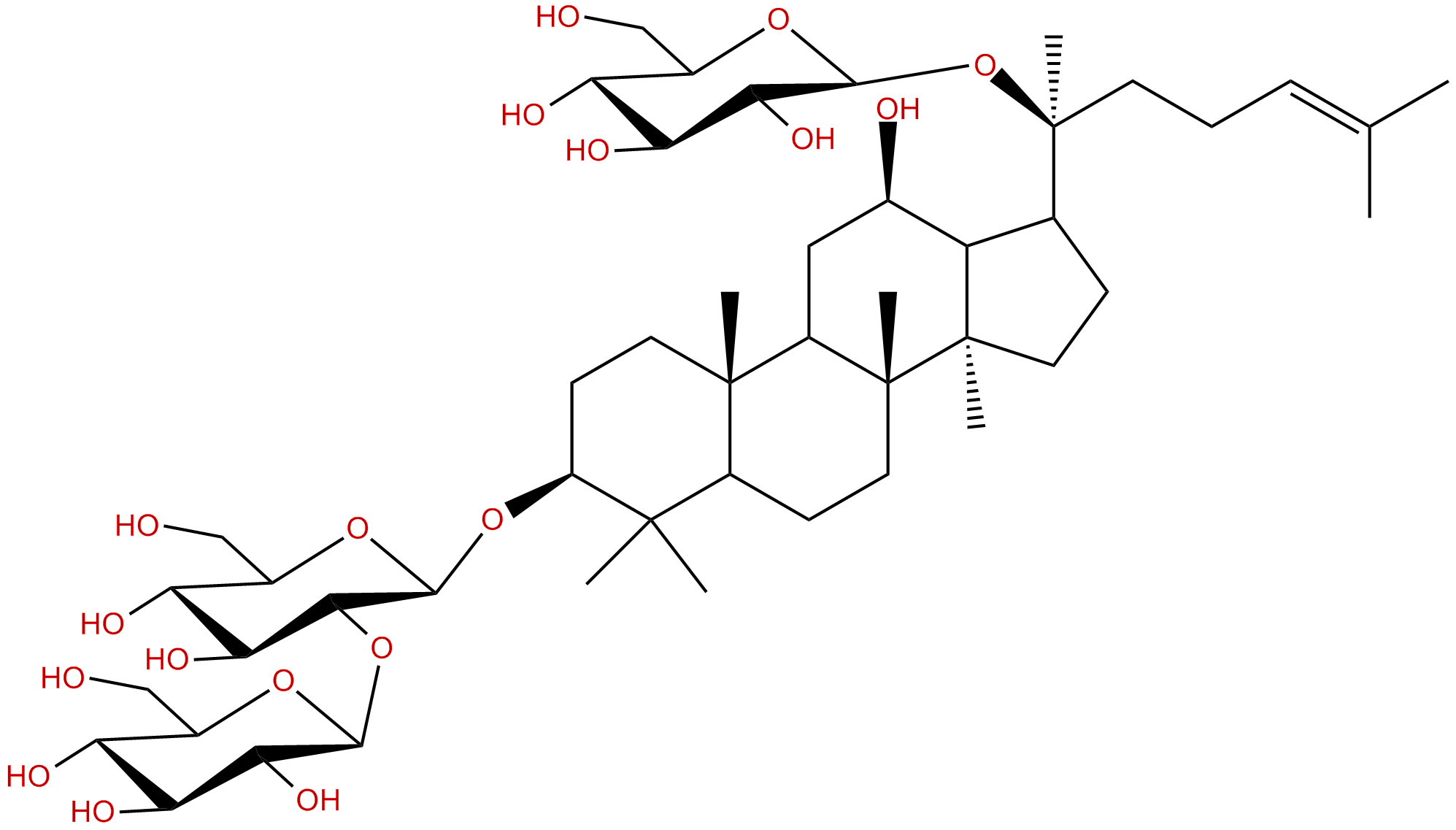


Product name: Ginsenoside Rd
Synonym name: Gypenoside VIII
Catalogue No.: BP0661
Cas No.: 52705-93-8
Formula: C48H82O18
Mol Weight: 947.166
Botanical Source: Panax ginseng (ginseng)
Physical Description: White powder
Type of Compound: Triterpenoids
Purity: 95%~99%
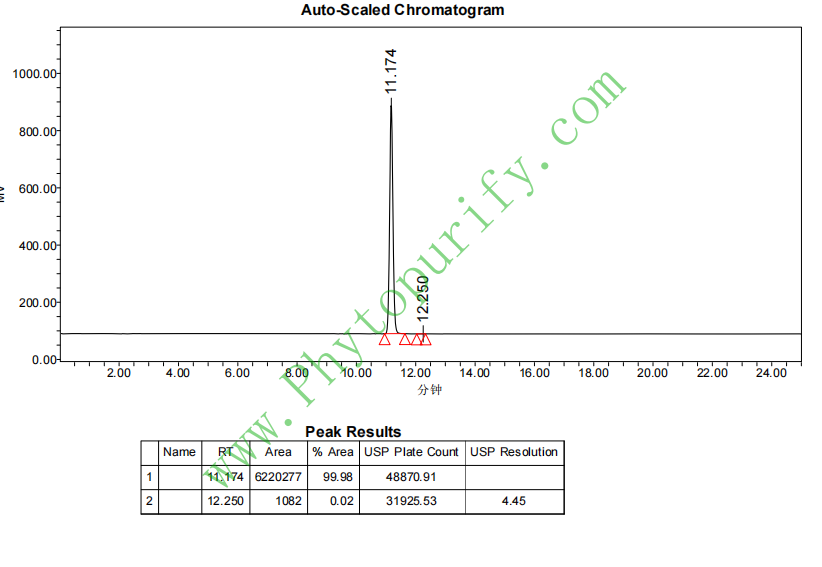
Analysis Method: HPLC-DAD or/and HPLC-ELSD
Identification Method: Mass, NMR
Packing: Brown vial or HDPE plastic bottle
Storage: Store in a well closed container, protected from air and light. Put into refrigerate or freeze for long term storage.
Whenever possible, you should prepare and use solutions on the same day. However, if you need to make up stock solutions in advance, we recommend that you store the solution as aliquots in tightly sealed vials at -20℃. Generally, these will be useable for up to two weeks.
The product could be supplied from milligrams to grams, up to kilograms
Inquire for bulk scale.
Descriptions:
Ginsenoside Rd (Rd), a saponin isolated from the roots of panax notoginseng, Rd has immunological adjuvant activity, and elicits a Th1 and Th2 immune response by regulating production and gene expression of Th1 cytokines and Th2 cytokines.[1]
Ginsenoside-Rd could play a crucial role in enhancing the defence system to counteract the aging process, through regulation of the GSH/GSSG redox status, decreasing in the superoxide dismutase (SOD) and catalase activity in old SAM.[2]
Ginsenoside-Rd treatment shows attenuation of hypertensive cerebrovascular remodeling, the underlying mechanism might be associated with inhibitory effects of ginsenoside-Rd on voltage-independent Ca 2+ entry and BAVSMC proliferation, but not with VDCC-mediated Ca 2+ entry.[3]
Ginsenoside Rd, a -type steroid extracted from , has exhibited an encouraging neuroprotective efficacy in both laboratory and clinical studies, could be as a neuroprotective agent for acute .[4]
Ginsenoside Rd can enhance the proliferation but not affect the differentiation of neural stem cells in vivo and in vitro.[5]
Ginsenoside Rd prevents glutamate-induced apoptosis in rat cortical neurons and may be the potential of voltage-independent Cachannel blockers as new neuroprotective drugs for the prevention of neuronal apoptosis and death induced by cerebral ischaemia.[6]
References:
[1] Yang Z, Chen A, Sun H, et al. Vaccine, 2007, 25(1):161-9.
[2] Takako Y, Akiko S, Ju C E. J Pharma Pharmacol, 2004, 56(1):107-13.
[3] Cai B X, Li X Y, Chen J H, et al. Eur J Pharmacol, 2009, 606(1–3):142-9.
[4] Ye R, Gang Z, Liu X. Expert Rev Neuroth, 2013, 13(6):603-13.
[5] Lin T, Liu Y, Shi M, et al. J Ethnopharmacol, 2012, 142(3):754–61.
[6] Li X Y, Liang J, Tang Y B, et al. Clin Exp Pharmacol P , 2010, 37(2):199–204.
[7] Qin H Y, Suo Z R, Wei Y Q. Journal of Southwest University of Science & Technology, 2013, 28(02):92-94.
HPLC of Ginsenoside Rd
Storage conditions:Short-term storage at 2~8℃, long-term storage at -20 ~ -80℃
298.1400
2.4782
2.4780
.1105
.4896
.1440
Low
71.4485
6.3768
No
No
No
No
No
No
0.0
Yes
No
No
No
Ginsenoside Rd is an important class of dammarane type tetracyclic triterpenoid saponins extracted from plants of the Panax genus in the Araliaceae family, such as ginseng, American ginseng, and Panax notoginseng. Its CAS number is 52705-93-8. As one of the key intermediate products of ginsenoside Rb1 metabolism in vivo, ginsenoside Rd has long been regarded as a minor saponin, and its biological activity research lags behind that of major components such as ginsenoside Rg1 and Rb1. However, with the deepening of modern pharmacological research, especially its unique role in neuroprotection, anti-inflammatory and metabolic regulation has gradually been revealed, ginsenoside Rd has changed from a "supporting role" to a highly concerned active natural product molecule.
Modern pharmacological studies have shown that ginsenoside Rd exhibits multi-target and multi pathway biological activity characteristics. It can significantly inhibit the transcription activity of nuclear factor kappa B (NF - κ B) induced by tumor necrosis factor alpha (TNF alpha), and downregulate the expression of key inflammatory mediators such as cyclooxygenase-2 (COX-2) and inducible nitric oxide synthase (iNOS), indicating its strong anti-inflammatory potential. What is particularly noteworthy is that it has shown clear neuroprotective effects in various neurological disease models such as Alzheimer's disease, Parkinson's disease, and cerebral ischemia, involving multiple aspects such as regulating apoptosis, autophagy, oxidative stress, and synaptic plasticity. In addition, its inhibitory effect on the cytochrome P450 (CYP) enzyme system also suggests its important research value in drug interactions and self metabolism. This article aims to systematically review the chemical characteristics, pharmacological activity, mechanism of action, and pharmacological properties of ginsenoside Rd, in order to provide comprehensive scientific references for the in-depth research and development of this compound.
Ginsenoside Rd belongs to the protopanaxadiol type saponin, with a molecular formula of C48H82O18 and a molecular weight of 947.1660. Its basic skeleton is a damaane type tetracyclic triterpene, with a sugar chain connected at positions C-3 and C-20. Specifically, its C-3 position is connected to a disaccharide chain composed of two molecules of glucose (Glc (β 1-2) Glc), while its C-20 position is connected to a disaccharide chain composed of one molecule of glucose and one molecule of xylose (Glc (β 1-6) Glc (β 1-20) Xyl). This specific glycosylation pattern is a key structural feature that distinguishes it from other ginsenosides such as Rb1 and Rc, and profoundly affects its physicochemical properties and biological activity.
From the analysis of parameters related to drug properties, the lipid water partition coefficient (LogP) of ginsenoside Rd is 2.4782, indicating that it has a certain degree of lipophilicity, but not high lipid solubility. Its topological polar surface area (TPSA) is as high as 298.1400 Å ², which is mainly attributed to the abundant hydroxyl and sugar structures in the molecule, leading to its strong ability to form intramolecular and intermolecular hydrogen bonds. This characteristic also directly affects its water solubility, with a calculated value of 0.1105 mg/mL, belonging to the category of slightly soluble to poorly soluble, which to some extent limits its bioavailability. In terms of absorption, distribution, metabolism, and excretion (ADME) prediction, its blood-brain barrier (BBB) permeability was evaluated as "low", which poses a challenge for its direct action as a central nervous system drug, but also suggests that its neuroprotective effect may be mediated through peripheral indirect mechanisms or metabolites. Preliminary safety predictions indicate that there is no risk of hERG potassium channel inhibition (low arrhythmogenic potential), and the Ames test predicts a negative result (no mutagenicity), providing preliminary positive signals for its safety.
Ginsenoside Rd mainly comes from various medicinal plants of the Panax genus in the Araliaceae family. In traditional precious medicinal herbs such as Panax ginseng C.A. Mey. and Panax quinquefolius L., the content of ginsenoside Rd is usually low and belongs to rare saponins. In Panax notoginseng (Burk. F. H. Chen), its content is relatively high and it is one of the characteristic saponin components of Panax notoginseng. In addition, this ingredient has also been detected in non-traditional medicinal parts such as stems, leaves, and flower buds of some ginseng plants.
Obtaining ginsenosides Rd from plant materials mainly relies on extraction, separation, and purification techniques. The conventional extraction methods include:
1. Solvent extraction method The most commonly used methods are hot reflux extraction or ultrasound assisted extraction using ethanol or methanol aqueous solutions of different concentrations. This method is efficient, but the extract components are complex.
2. Biotransformation method Given the limited content of ginsenoside Rd in plants, utilizing microorganisms or enzymes (such as β - glucosidase, cellulase) to selectively hydrolyze specific glycosides of precursor saponins such as ginsenoside Rb1, Rb2, Rc is an important biotechnological approach for efficient and specific preparation of ginsenoside Rd. For example, Rb1 can be converted to Rd using Aspergillus niger or specific enzyme preparations.
3. Modern Separation Technology After the crude extract is enriched with saponins using macroporous adsorption resins (such as D101, AB-8), it is further separated and purified using silica gel column chromatography, reverse phase silica gel column chromatography (such as ODS), high performance liquid chromatography (HPLC), and high-speed countercurrent chromatography (HSCCC) to obtain high-purity ginsenoside Rd monomer.
Numerous in vitro and in vivo studies have confirmed that ginsenoside Rd has a wide range of pharmacological activities, with neuroprotective and anti-inflammatory effects being the most prominent.
1. Neuroprotective effect
Ginsenoside Rd has shown clear protective effects in various neurological disease models. In Alzheimer's disease (AD) models, it can improve learning and memory impairment in A β 25-35 or APP/PS1 transgenic mice, reduce β - amyloid protein (A β) deposition, and inhibit β - secretase 1 (BACE1) activity. In Parkinson's disease (PD) models, it has a protective effect against MPTP or 6-OHDA induced dopaminergic neuron damage. In the model of cerebral ischemia/reperfusion injury, ginsenoside Rd can significantly reduce the volume of cerebral infarction and alleviate neurological deficits. Its mechanism is closely related to inhibiting cell apoptosis, reducing oxidative stress and inflammatory response. In addition, its protective effect has also been observed in models such as spinal cord injury and epilepsy.
2. Anti inflammatory and immune regulatory effects
The anti-inflammatory activity of ginsenoside Rd is one of its core pharmacological effects. It can effectively inhibit the overexpression of pro-inflammatory mediators such as COX-2, iNOS, TNF α, IL-1 β, IL-6 in inflammatory cells such as macrophages and microglia stimulated by lipopolysaccharide (LPS) or TNF α. Its key function is to inhibit the activation of the NF - κ B signaling pathway, thereby blocking the production of inflammatory factors at the transcriptional level. This anti-inflammatory effect is an important foundation for its neuroprotective and cardiovascular protective effects.
3. Effects on cytochrome P450 enzymes
Ginsenoside Rd has inhibitory effects on various human CYP enzymes, with IC50 values of CYP2D6 (58.0 ± 4.5 μ M), CYP1A2 (78.4 ± 5.3 μ M), CYP3A4 (81.7 ± 2.6 μ M), and CYP2C9 (85.1 ± 9.1 μ M), respectively. This indicates that when ginsenoside Rd reaches a certain blood drug concentration, it may interact with drugs metabolized by these CYP enzymes, affecting the efficacy of co administered drugs or increasing the risk of toxicity. Therefore, attention should be paid to clinical combination therapy. Meanwhile, this may also affect its own metabolic elimination.
4. Other activities
Research has also shown that ginsenoside Rd has potential activities such as inhibiting calcium influx, anti myocardial ischemia, anti fatigue, and anti-tumor effects (such as inhibiting liver cancer cell proliferation), but its research depth and breadth are not yet as extensive as neuroprotective and anti-inflammatory effects.
The neuroprotective and other pharmacological effects of ginsenoside Rd are not achieved through a single target, but through regulating a complex signaling network that acts on multiple key molecular targets.
1. Regulating cell apoptosis and survival pathways
* BCL2 family Ginsenoside Rd can upregulate the expression of anti apoptotic protein Bcl-2 and downregulate the expression of pro apoptotic protein Bax, thereby maintaining mitochondrial membrane stability, inhibiting cytochrome C release, and blocking the activation cascade of Caspase-9 (CASP9), ultimately inhibiting neuronal apoptosis.
* MAPK signaling pathway It can regulate the phosphorylation levels of members of the mitogen activated protein kinase (MAPK) family, such as extracellular signal regulated kinase (ERK/MAPK1). Usually, activating the ERK pathway helps promote cell survival and proliferation, which is one of the mechanisms of its neuroprotective effect.
* GSK3 β pathway Overactivation of glycogen synthase kinase-3 β (GSK3B) is associated with tau protein hyperphosphorylation and neuronal apoptosis in AD. Ginsenoside Rd can inhibit the activity of GSK3 β, thereby reducing tau protein phosphorylation and protecting neuronal function.
2. Inhibit inflammation and oxidative stress pathways
* NF - κ B pathway As mentioned earlier, inhibiting TNF α - induced NF - κ B activation is the core of its anti-inflammatory effect. It inhibits downstream inflammatory gene transcription by intervening in the activation of I κ B kinase (IKK) or the degradation of I κ B α, preventing nuclear translocation of NF - κ B p65 subunit.
* Nrf2/ARE pathway Nuclear factor E2 related factor 2 (NFE2L2/Nrf2) is a key transcription factor for cellular antioxidant stress. Ginsenoside Rd can activate Nrf2, promote its nuclear translocation, and upregulate the expression of phase II detoxifying enzymes and antioxidant proteins such as heme oxygenase-1 (HO-1) and quinone oxidoreductase 1 (NQO1), enhancing the antioxidant defense ability of cells.
3. Regulating autophagy and energy metabolism
* SIRT1 pathway Silent Information Regulatory Factor 1 (SIRT1) is an NAD+- dependent deacetylase involved in regulating energy metabolism, stress resistance, and autophagy. Ginsenoside Rd has been reported to activate SIRT1 and regulate its downstream targets (such as PGC-1 α, FOXO, etc.) through deacetylation, promoting mitochondrial biosynthesis, reducing oxidative damage, and possibly inducing protective autophagy to clear damaged proteins and organelles.
4. Specific targets for AD pathology
* APP Metabolism and BACE1 One of the key targets of its intervention in AD pathology is to reduce the production of A β by inhibiting the activity of β - site amyloid precursor protein lyase 1 (BACE1).
* MAPT (Tau protein)By inhibiting kinases such as GSK3 β, abnormal hyperphosphorylation of microtubule associated protein tau (MAPT) is reduced, thereby maintaining the stability of the neuronal cytoskeleton.
In summary, ginsenoside Rd acts on multiple targets such as BCL2, CASP9, MAPK1, GSK3B, NFE2L2, SIRT1, APP, BACE1, MAPT, etc., forming a synergistic network involving anti apoptosis, anti-inflammatory, antioxidant, and regulation of autophagy and metabolism, jointly exerting its biological effects such as neuroprotection.
Although the pharmacological activity of ginsenoside Rd is clear, its pharmacological development still faces some challenges, mainly due to its inherent physicochemical properties and complex in vivo processes.
1. Absorption and bioavailability
Ginsenoside Rd has a high molecular weight, high TPSA, and poor water solubility, which makes its oral absorption difficult and its bioavailability generally low. It may undergo partial hydrolysis or be metabolized by gut microbiota in the gastrointestinal tract, converting into deglycosylated secondary saponins (such as Compound K), which may be the true active form. Studying its precursor drugs or novel delivery systems (such as nanoparticles, liposomes, self microemulsions) is the main strategy to improve its oral bioavailability.
2. Distribution
It is predicted that its blood-brain barrier permeability is low, which is consistent with its high TPSA and molecular weight. However, in pathological conditions such as cerebral ischemia, the integrity of the blood-brain barrier is disrupted, which may facilitate its entry into brain tissue. In addition, its neuroprotective effect may also be partially achieved through indirect mechanisms such as peripheral anti-inflammatory and antioxidant effects. Further research is needed on its tissue distribution in the body.
3. Metabolism and excretion
Ginsenoside Rd itself is an inhibitor of CYP enzymes, and it is mainly metabolized by the liver. Its metabolic pathway mainly includes gradually removing sugar groups and generating metabolites such as F2 and Compound K. These metabolites may have different or even stronger activity than the prototype drug. Its prototype and metabolites are mainly excreted through bile and urine. Due to its inhibition of multiple CYP enzymes, potential pharmacokinetic interactions should be monitored when used in combination with other drugs.
4. Security
Existing predictions and some experimental studies indicate that ginsenoside Rd has low toxicity within the effective dose range. The absence of hERG inhibition and mutagenicity prediction are its safety advantages. However, the preclinical safety evaluation of systems such as long-term toxicity and reproductive toxicity still needs to be improved.
Ginsenoside Rd, as a natural active compound with multi-target effects, has shown broad application prospects in the prevention and treatment of various diseases, especially neurodegenerative diseases and inflammation related diseases.
1. Neurological disorders
* Alzheimer's disease and vascular dementia Its multiple mechanisms of action against A β production, tau protein phosphorylation, neuroinflammation, and oxidative stress make it a highly promising candidate drug or health ingredient for AD and vascular dementia. It can be developed as a single ingredient or combined with other neuroprotective agents to form a compound.
* stroke Its anti apoptotic, anti-inflammatory, and antioxidant effects are valuable for acute protection and later recovery of cerebral ischemia/reperfusion injury.
* Parkinson's disease The protective effect of dopaminergic neurons provides a basis for its application in PD.
2. Inflammatory diseases
Its strong NF - κ B inhibitory activity may make it suitable for adjuvant therapy of chronic inflammatory diseases such as rheumatoid arthritis, inflammatory bowel disease, and neuroinflammation.
3. Development Strategy and Challenges
* Structural modification By chemically modifying glycosides or glycosides, their water solubility, lipid solubility, and metabolic stability can be improved, enhancing their bioavailability and targeting.
* New drug delivery system Develop brain targeted nano drug delivery systems (such as nanoparticles modified with transferrin receptors or cell penetrating peptides) to overcome blood-brain barrier barriers and achieve precise delivery within the brain.
* Compound preparation When used in combination with traditional Chinese medicine or other active ingredients, it exerts a synergistic effect, reduces the dosage and potential side effects of each.
* In depth mechanism research Using omics technologies (proteomics, metabolomics) and gene editing techniques, further elucidate its systematic functional network and direct targets of action.
* clinical translation At present, most research on ginsenoside Rd is still in the preclinical stage. It is urgent to conduct standardized pharmacokinetic, safety, and efficacy clinical trials to promote their conversion into clinical drugs.
Ginsenoside Rd, as a characteristic active ingredient of Panax plants, has grown from an early minor saponin to a hot molecule in pharmacological research. Its outstanding performance in the field of neuroprotection is due to its precise regulation of multiple key signaling pathways such as apoptosis, inflammation, oxidative stress, and autophagy. Its targets include multiple key proteins such as BCL2, NF - κ B, Nrf2, SIRT1, GSK3 β, etc. Although it faces challenges such as low bioavailability and poor blood-brain barrier permeability in drug development, it is expected to overcome these bottlenecks through modern medicinal chemistry and pharmaceutical methods such as structural modification and novel drug delivery systems. In the future, with the in-depth analysis of the mechanism of action and the gradual development of clinical research, ginsenoside Rd is expected to be developed into a new drug for the treatment of major neurological diseases such as Alzheimer's disease and stroke, or as a functional health product ingredient, contributing its unique value to human health. In depth research on it not only helps to reveal the scientific connotation of traditional Chinese medicine ginseng's "calming the spirit, calming the soul, and enhancing intelligence", but also provides valuable natural molecular templates for the development of innovative drugs.
