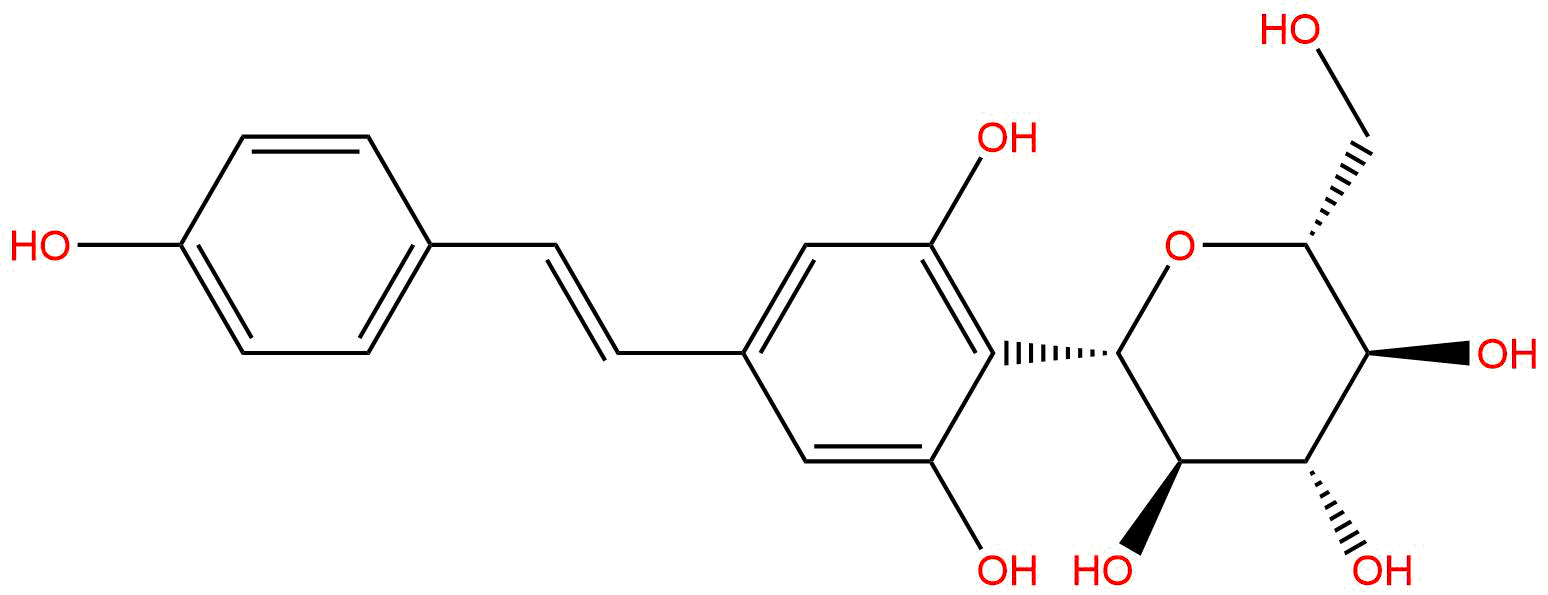


Product name: Resveratrol 12-C-β-glucopyranoside
Synonym name:
Catalogue No.: BP2319
Cas No.: 163527-00-2
Formula: C20H22O8
Mol Weight: 390.388
Botanical Source:
Type of Compound: Stibene glucosides
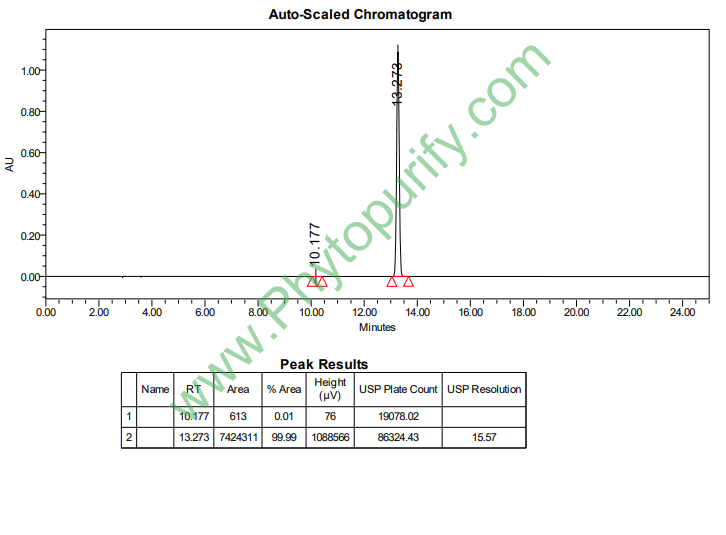
Purity: 95%~99%
Analysis Method: HPLC-DAD or/and HPLC-ELSD
Identification Method: Mass, NMR
Packing: Brown vial or HDPE plastic bottle
Storage: Store in a well closed container, protected from air and light. Put into refrigerate or freeze for long term storage.
Whenever possible, you should prepare and use solutions on the same day. However, if you need to make up stock solutions in advance, we recommend that you store the solution as aliquots in tightly sealed vials at -20℃. Generally, these will be useable for up to two weeks.
The product could be supplied from milligrams to grams
Inquire for bulk scale.
For Reference Standard and R&D, Not for Human Use Directly.
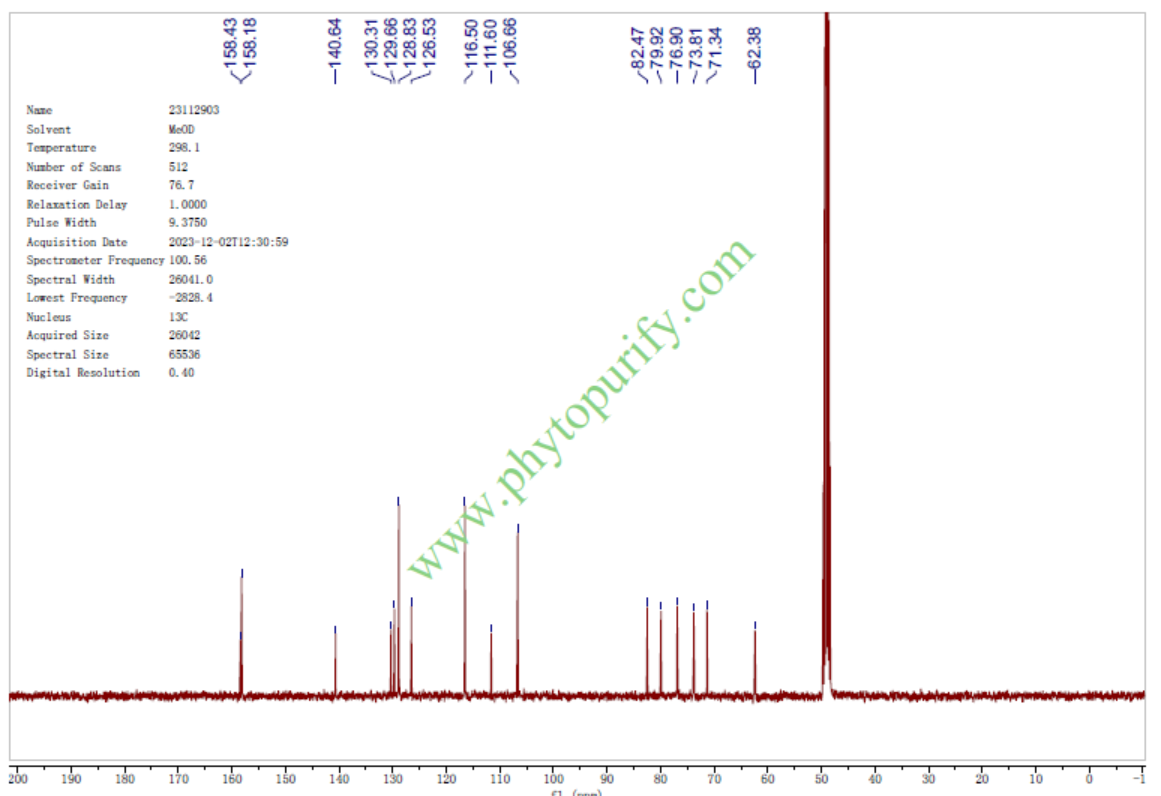
NMR of Resveratrol 12-C-β-glucopyranoside
HPLC of Resveratrol 12-C-β-glucopyranoside
Storage conditions:Short-term storage at 2~8℃, long-term storage at -20 ~ -80℃
150.8400
.5401
.5339
1.0615
.7224
.2725
Low
80.4680
3.8340
Yes
No
Yes
No
Yes
No
0.0
Yes
Yes
Yes
Yes
Aging is a complex biological process involving the gradual decline of multiple organ and system functions, with intricate molecular mechanisms including genomic instability, telomere depletion, epigenetic changes, protein homeostasis imbalance, mitochondrial dysfunction, cellular aging, stem cell exhaustion, and changes in intercellular communication. In the long process of evolution, the plant kingdom has evolved a wide variety of secondary metabolites, many of which have been proven to have the potential to delay aging and prevent age-related diseases. Resveratrol (3,5,4 '- trihydroxystilbene), as one of the most extensively studied polyphenolic natural products, has attracted much attention from the scientific community and the public due to its excellent antioxidant, anti-inflammatory, anti-tumor, and cardiovascular protective activities, especially its role as a SIRT1 activator to simulate calorie restriction and delay aging. However, resveratrol itself has defects such as poor water solubility, low bioavailability, and unstable metabolism, which seriously restrict its clinical translation.
To overcome these limitations, the natural world has produced glycoside derivatives of resveratrol through glycosylation modification. Among them, Resveratrol 12-C - β - glucoside (R12CG), as a unique C-glycoside compound, has gradually entered the research field in recent years. Unlike more common O-glycosides such as resveratrol 3-O - β - D-glucoside, also known as puerarin, the glucose group in R12CG is directly connected to the C-12 position of the resveratrol core (i.e. the 4 'position of the stilbene skeleton) through a stable carbon carbon bond (C-C bond). This fundamental structural difference endows R12CG with unique chemical stability, metabolic characteristics, and potential biological activity. Research has shown that R12CG not only retains various pharmacological activities of resveratrol mother nucleus, but also exhibits better in vivo stability and sustained action potential due to its C-glycosidic bond resistance to enzymatic hydrolysis. This article aims to systematically review the chemical structure, plant origin, pharmacological activity, mechanism of action, and pharmacological characteristics of R12CG, and explore its scientific value and development prospects as a novel anti-aging candidate molecule.
The chemical name of R12CG is resveratrol 12-C - β - glucopyranoside, and its core structure is composed of a stilbene glycoside and a β - D-glucopyranosyl group connected by a C-C bond. Specifically, the anomeric carbon (C1 ') of the glucose group is directly connected to the C-12 position (i.e., the 4' position) on the B ring of the resveratrol parent nucleus, forming a stable C - β - D-glucoside bond. This structural feature distinguishes it from the more common O-glycosides in nature, which connect sugar groups and aglycones through oxygen atoms. The C-glycosidic bond has high resistance to acid hydrolysis and glycosidases (such as β - glucosidase), which determines that R12CG may have higher chemical and enzymatic stability in the gastrointestinal tract and internal circulation.
From the perspective of physical and chemical properties, the molecular formula of R12CG is C ₂₀ H ₂₂ O ₈, with a molecular weight of 390.3880 Da. Its lipid water partition coefficient LogP is 0.5401, indicating that the compound has a certain hydrophilicity, but has not yet reached the level of extreme hydrophilicity or lipophilicity, which provides the possibility for its moderate penetration on biological membranes. The topological polar surface area (TPSA) is 150.8400 Å ², which is a relatively high value mainly attributed to the presence of multiple hydroxyl groups (phenolic hydroxyl and alcohol hydroxyl groups on sugar groups) in the molecule. Higher TPSA is usually associated with lower passive membrane permeability, but it may also promote polar interactions with target proteins. The water solubility data (1.0615 mg/mL) further confirms its good water solubility, which is superior to the resveratrol core (about 0.03 mg/mL), mainly due to the introduction of sugar groups that increase the ability of molecules to form hydrogen bonds with water molecules. It is worth noting that the predicted blood-brain barrier (BBB) penetration ability is "low", which is consistent with its high TPSA and polarity characteristics, suggesting that the application of R12CG in central nervous system diseases such as Alzheimer's disease and Parkinson's disease may require carrier transport or special delivery strategies. In addition, hERG inhibition was predicted as' no ', and the Ames test result was 0.0, preliminarily ruling out significant risks of cardiac toxicity and genetic toxicity, providing a positive signal for its safety. Overall, the physicochemical properties of R12CG exhibit a profile of "high water solubility, moderate lipid solubility, and low central penetration", laying the foundation for its application in peripheral targets such as anti-aging and metabolic diseases.
R12CG, as a relatively rare natural product, has limited reported plant sources. It is known that it mainly exists in certain specific medicinal plants, especially in Polygonaceae plants. For example, there is research on the tiger cane(Reynoutria japonica Houtt., Former name Polygonum cuspidatum)R12CG was isolated and identified. Tiger cane is a classic source of resveratrol and its glycosides (such as tiger cane glycosides), which also contain various C-glycoside compounds. In addition, in Vitaceae plants, such as certain specific varieties of grapes(Vitis vinifera)Trace amounts of R12CG may also exist in related tissues such as roots and stems. However, compared to the abundant content of resveratrol 3-O-glucoside, the abundance of R12CG in natural plants is usually lower, which poses a challenge for its large-scale acquisition.
The extraction and separation of R12CG usually follow the classic process of natural product chemistry and are optimized based on its C-glycosidic properties. The extraction method often uses solvent extraction, and commonly used solvents include methanol, ethanol, or their aqueous solutions. Due to the high polarity of R12CG, high concentration ethanol or methanol aqueous solutions (such as 70% -80% methanol) often achieve good extraction efficiency. To improve the dissolution of the target product, ultrasound assisted extraction or heating reflux extraction can be used. After vacuum concentration, the extract is subjected to preliminary liquid-liquid extraction (such as sequential extraction with petroleum ether, ethyl acetate, and n-butanol) to remove lipid soluble impurities and some moderately polar components. Due to the high polarity of R12CG, it is usually enriched in the n-butanol extraction layer or water layer.
Further separation and purification mainly rely on various chromatographic techniques. Macroporous adsorption resin (such as D101, AB-8 type) column chromatography is a commonly used preliminary separation method. By gradient elution with different concentrations of ethanol water system, R12CG can be separated from strongly polar impurities such as sugars and tannins. Then, it is necessary to combine normal phase silica gel column chromatography, reverse phase silica gel column chromatography (such as ODS-C18) and Sephadex LH-20 gel column chromatography for fine purification. Given the subtle differences in polarity between C-glycosides and O-glycosides, high-performance liquid chromatography (HPLC) or preparative HPLC is the key step in obtaining high-purity R12CG. The detection methods usually use ultraviolet detectors (with maximum absorption around 306 nm, derived from the π→π * transition of the styrene backbone) or mass spectrometry (LC-MS). In recent years, new separation technologies such as high-speed counter current chromatography (HSCCC) have also been attempted for the separation of such compounds, which have the advantages of high sample recovery and less irreversible adsorption. Overall, efficiently obtaining R12CG from natural plants remains a technical challenge, and chemical synthesis or biosynthetic pathways (such as in vitro enzymatic synthesis using glycosyltransferases) are potential directions to solve its source problem.
Although the research history of R12CG is relatively short, existing evidence has preliminarily revealed its multifaceted pharmacological activities, particularly demonstrating potential in anti-aging related fields.
antioxidant activity As a derivative of resveratrol, R12CG retains the phenolic hydroxyl groups on the styrene backbone and theoretically has the ability to scavenge free radicals. In vitro chemical experiments (such as DPPH and ABTS radical scavenging experiments) have confirmed that R12CG indeed exhibits significant antioxidant activity, with its ability comparable or slightly superior to resveratrol. More importantly, in cell models, R12CG can effectively reduce the levels of reactive oxygen species (ROS) induced by hydrogen peroxide (H ₂ O ₂) or tert butyl hydroperoxide (t-BHP), and inhibit the production of lipid peroxidation product malondialdehyde (MDA). This antioxidant effect may stem from its ability to directly scavenge free radicals, as well as its indirect effects through activating the endogenous antioxidant defense system of cells, such as the Nrf2 pathway.
anti-inflammatory activity Chronic low-grade inflammation is one of the important driving factors of aging. Research has shown that R12CG can significantly inhibit the release of pro-inflammatory factors such as tumor necrosis factor - α (TNF - α), interleukin-6 (IL-6), and interleukin-1 β (IL-1 β) in a macrophage model stimulated by lipopolysaccharide (LPS). The mechanism may be related to the inhibition of the activation of the nuclear factor kappa B (NF - κ B) signaling pathway. By blocking the phosphorylation and degradation of I κ B α, R12CG reduces the nuclear translocation of p65 subunit, thereby downregulating the transcription of inflammation related genes. This anti-inflammatory activity is of great significance in delaying tissue damage and functional decline related to aging.
Anti aging and prolonging lifespan This is the core activity of R12CG that has received the most attention. In model organisms such as Caenorhabditis elegans Caenorhabditis elegans)Treatment with R12CG can significantly prolong its average and maximum lifespan. This life extension effect is not simply a toxic stress response, but depends on specific signaling pathways. Research has found that nematodes treated with R12CG can maintain a high level of motor ability (such as body swing frequency) in old age, indicating that it delays age-related physiological decline. In mammalian cell models such as human fibroblasts, R12CG can delay replicative aging, reduce the activity of senescence associated β - galactosidase (SA - β - Gal), and inhibit the expression of senescence associated secretory phenotype (SASP) factors.
Other related activities Preliminary studies also suggest that R12CG may have other anti-aging related activities, such as:
- Protecting mitochondrial function In the cellular energy metabolism model, R12CG can improve the mitochondrial membrane potential decline and ATP production reduction induced by mitochondrial toxins, indicating its protective effect on mitochondrial homeostasis.
- Regulating energy metabolism: By activating AMPK signaling pathway, R12CG may promote glucose uptake and fatty acid oxidation, improve insulin sensitivity, which has potential value in preventing and treating aging related metabolic syndrome (such as type 2 diabetes, obesity).
- Neuroprotective effect Despite its low BBB penetration, R12CG still exhibits protective effects against oxidative stress and excitotoxic damage in some in vitro neuronal cell models, suggesting that it may affect the central nervous system through peripheral metabolites or indirect mechanisms.
The pharmacological activity of R12CG is rooted in its regulation of multiple key signaling pathways and molecular targets. According to existing research, its anti-aging mechanism can be summarized into the following core networks:
AMPK-SIRT1-PGC-1 α energy metabolism axis:
AMPK (AMP activated protein kinase) is a cellular energy receptor, while SIRT1 (deacetylase 1) is an NAD ⁺ - dependent histone deacetylase. Together, they form the core pathway for regulating energy metabolism and stress resistance. Research has shown that R12CG can activate AMPK, possibly by increasing the intracellular AMP/ATP ratio or directly acting on specific subunits of AMPK. Activated AMPK subsequently phosphorylates and activates SIRT1, or indirectly enhances SIRT1 activity by increasing intracellular NAD ⁺ levels. The activation of SIRT1 can deacetylate and activate its downstream targets, such as peroxisome proliferator activated receptor gamma coactivator 1 alpha (PGC-1 alpha), thereby promoting mitochondrial biosynthesis and oxidative metabolism, improving energy metabolism efficiency, and delaying cellular aging.
2. Nrf2 ARE antioxidant defense system:
NRF2 (nuclear factor E2 related factor 2) is a key transcription factor for cells to cope with oxidative stress. Under normal conditions, NRF2 binds to Keap1 and is anchored in the cytoplasm. R12CG may promote the dissociation and translocation of NRF2 from Keap1 into the nucleus by modifying key cysteine residues on Keap1 or activating upstream kinases such as PI3K and PKC. In the nucleus, NRF2 binds to antioxidant response elements (ARE) and initiates the transcription of a series of antioxidant enzyme and phase II detoxifying enzyme genes, including SOD1 (superoxide dismutase 1), CAT (catalase), HMOX1 (heme oxygenase 1), etc. These enzymes together form a powerful endogenous antioxidant network, effectively clearing ROS and maintaining cellular redox balance.
3. FOXO signaling pathway and cell cycle regulation:
FOXO1 (forkhead box protein O1) is an important transcription factor downstream of the insulin/IGF-1 signaling pathway, involved in regulating cell cycle, apoptosis, stress resistance, and metabolism. R12CG can regulate the transcriptional activity of FOXO1 by activating AMPK or SIRT1, promoting phosphorylation or deacetylation of FOXO1. Activated FOXO1 can upregulate its target genes, such as CDKN1A (p21) and SOD1. CDKN1A (p21) is a cyclin dependent kinase inhibitor, and its moderate upregulation can induce cell cycle arrest, buy time for DNA repair, and prevent the proliferation and accumulation of damaged cells, which is an important protective mechanism against cellular aging. Meanwhile, the upregulation of SOD1 by FOXO1 also enhances the antioxidant capacity of cells.
4. Telomeres and Telomerase Regulation:
Telomere depletion is one of the signs of cellular aging. TERT (Telomerase Reverse transcriptase) is the catalytic subunit of telomerase, and its activity is crucial for maintaining telomere length. Although there is insufficient evidence for the direct regulation of TERT by R12CG, it may indirectly affect the epigenetic status of telomere chromatin by activating SIRT1. SIRT1 can bind and deacetylate histones in the telomere region, maintaining the stability of telomere heterochromatin and thus delaying telomere shortening. In addition, TP53 (p53), as a genomic guardian, is activated during telomere dysfunction, leading to cellular aging or apoptosis. R12CG may prevent cells from entering an irreversible aging state prematurely under moderate stress by regulating the activity of p53 (such as reducing its phosphorylation level), while in severe injury, it may promote the clearance of damaged cells and maintain tissue homeostasis.
Overall, R12CG does not act on a single target, but synergistically exerts its anti-aging effect through a network regulation mode of multiple targets and pathways. Its core lies in activating energy receptors (AMPK) and longevity protein (SIRT1), while strengthening endogenous defense systems (Nrf2, FOXO), thereby improving metabolism, resisting oxidative stress, maintaining genomic stability, and ultimately delaying the aging process of cells and the body.
To push R12CG from laboratory research to clinical application, a systematic evaluation of its pharmacological properties is necessary. Based on existing data and computational predictions, its pharmacological characteristics are as follows:
Physical and chemical properties and drug like properties The molecular weight of R12CG (390.39 Da) conforms to Lipinski's Rule of Five, with a molecular weight<500. Its LogP (0.54) and the number of hydrogen bond donors/acceptors (phenolic hydroxyl+sugar hydroxyl) are also within an acceptable range. However, its TPSA (150.84 Å ²) is significantly higher than the recommended upper limit of 140 Å ² for oral medications, indicating that its oral absorption may face challenges and its permeability may be lower. Good water solubility (1.06 mg/mL), which is beneficial for formulation development. Overall, the physicochemical properties of R12CG are at the edge of the drug like space and need to be optimized for absorption through formulation methods such as nanomaterialization and prodrug design.
Pharmacokinetic (ADME) prediction:
- absorb Due to high polarity and high TPSA, passive transmembrane absorption of R12CG may be poor. But the stability of its C-glycosidic bond makes it difficult to be hydrolyzed by intestinal enzymes and acids, which provides the possibility for active absorption mediated by intestinal transporters such as SGLT1 and sodium glucose cotransporter 1. Many C-glycosides, such as certain flavonoid C-glycosides, are efficiently absorbed through SGLT1. Therefore, the oral bioavailability of R12CG may be superior to its O-glycosidic analogues, but experimental verification is still needed.
- distribution The plasma protein binding rate is not yet clear. Low BBB penetration indicates limited distribution in the central nervous system, mainly in peripheral tissues such as liver, kidney, muscle, and adipose tissue.
- Metabolism This is the key advantage that distinguishes R12CG from resveratrol. Due to the stability of C-glycosidic bonds, R12CG will not be rapidly hydrolyzed into aglycones by β - glucosidase in the intestine or liver like resveratrol 3-O-glucoside. Its main metabolic pathways may include: ① Phase II metabolism in the liver or intestine, such as glucuronidation, sulfation, or methylation, to modify its phenolic hydroxyl group; ② The gut microbiota may slowly cleave the C-glycosidic skeleton, but with much lower efficiency than O-glycosides. Therefore, R12CG may exist in the form of prototype or phase II metabolites in the body for a longer period of time, thereby maintaining more sustained pharmacological activity.
- excretion Metabolites and small amounts of prototype drugs may be excreted through bile and urine.
safety evaluation The preliminary toxicity prediction results are encouraging. HERG inhibition risk is' no ', reducing the risk of cardiac toxicity. The Ames test result is 0.0, indicating that it does not have significant mutagenicity. These data provide preliminary support for the safety of R12CG. However, systematic in vivo toxicology studies (including acute toxicity, subchronic toxicity, reproductive toxicity, etc.) are still necessary.
Based on the unique chemical stability, multi-target anti-aging activity, and preliminary safety characteristics of R12CG, it has shown broad clinical application prospects in the following fields:
1. Anti aging and healthy aging R12CG can be used as a dietary supplement or functional food ingredient to delay aging and improve age-related physiological decline (such as muscle loss and immune decline). It simulates the effect of heat restriction by activating the AMPK/SIRT1 pathway and may become one of the candidate molecules for the development of "longevity drugs".
2. Metabolic disorders In view of its potential to improve energy metabolism and enhance insulin sensitivity, R12CG can be used to prevent and treat type 2 diabetes, obesity, nonalcoholic fatty liver and other metabolic syndrome. Its good water solubility is also beneficial for the development of oral preparations.
3. Cardiovascular diseases: R12CG may have a protective effect on cardiovascular diseases such as atherosclerosis and hypertension through the mechanism of antioxidant, anti-inflammatory and improving vascular endothelial function.
4. Neurodegenerative diseases Although BBB penetration is low, R12CG may still have indirect neuroprotective effects on Alzheimer's disease, Parkinson's disease, etc. through peripheral metabolites or regulation of peripheral immune central communication. In addition, the development of intranasal drug delivery or nano targeted delivery systems is expected to overcome its BBB barrier.
Future research directions:
- Pharmacokinetic experimental validation It is urgent to conduct systematic pharmacokinetic studies in vivo to clarify the oral bioavailability, tissue distribution, metabolic pathways, and excretion characteristics of R12CG.
- Pharmacodynamic validation in vivo: In mammalian aging models (such as mice and rats), verify the effect of R12CG on prolonging life span and improving health span, and evaluate its therapeutic effect on a variety of aging related disease models (such as diabetes and atherosclerosis models).
- Study on Structure Activity Relationship Compare the activity differences between R12CG and its analogues such as resveratrol and puerarin, and elucidate the specific contribution of C-glycosidic bonds to its biological activity and metabolic stability.
- Target confirmation and mechanism deepening Using gene knockout/knock in models, chemical proteomics, and other techniques, accurately identify the direct target of R12CG and elucidate its molecular details in regulating pathways such as AMPK, SIRT1, and Nrf2.
- Formulation development To address the potential issue of poor oral absorption, new delivery systems such as liposomes, nanoemulsions, phospholipid complexes, and cyclodextrin inclusion complexes have been developed to improve their bioavailability.
- Long term safety assessment Conduct standardized preclinical toxicology studies to lay a safe foundation for subsequent clinical trials.
Resveratrol 12-C - β - glucoside, as a unique C-glycosidic stilbene compound, surpasses its parent resveratrol and common O-glycosidic analogues in terms of chemical stability and potential metabolic properties due to its stable carbon carbon glycosidic bond. Existing research has revealed that it exhibits multi-target and multi-level anti-aging pharmacological activity by regulating the AMPK/SIRT1 energy metabolism axis, Nrf2 antioxidant defense system, FOXO signaling pathway, and cell cycle regulatory network. Its good water solubility, preliminary safety prediction, and molecular characteristics consistent with drug properties make it a potential candidate for new anti-aging drugs. However, the field is still in the early stages of exploration, with many key questions yet to be answered, such as the exact pharmacokinetic behavior in vivo, anti-aging efficacy in mammalian models, and how to overcome oral absorption barriers. In the future, with breakthroughs in chemical synthesis technology, deepening pharmacological research, and innovation in formulation technology, R12CG is expected to move from a "potential molecule" in a laboratory to true clinical applications, providing new strategies and choices for humans to cope with aging and related diseases. The in-depth study of these rare but structurally unique natural products not only enriches our understanding of plant chemical diversity, but also provides new ideas and directions for finding anti-aging "elixirs" from nature.
