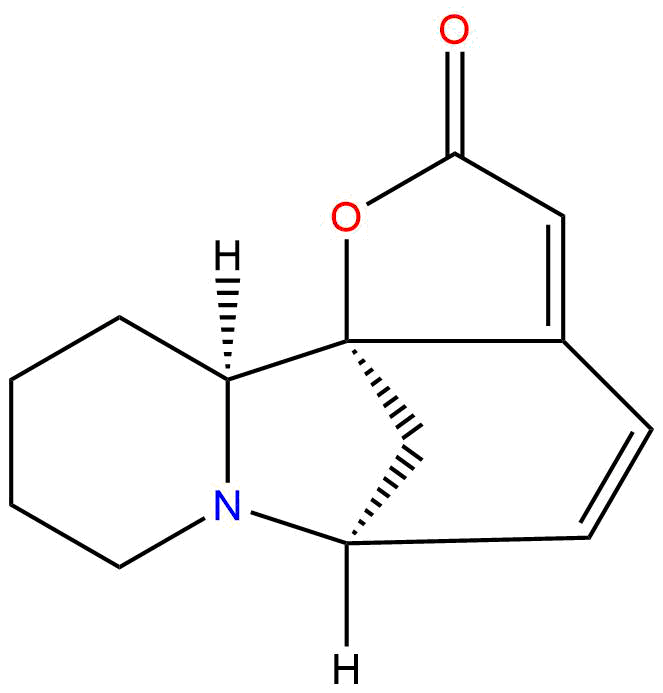


Product name: Allosecurinin
Synonym name: (-)-Allosecurinine; (-)-Phyllochrysine
Catalogue No.: BP4367
Cas No.: 884-68-4
Formula: C13H15NO2
Mol Weight: 217.268
Botanical Source:
Type of Compound:
Purity: 95%~99%
Analysis Method: HPLC-DAD or/and HPLC-ELSD
Identification Method: Mass, NMR
Packing: Brown vial or HDPE plastic bottle
Storage: Store in a well closed container, protected from air and light. Put into refrigerate or freeze for long term storage.
Whenever possible, you should prepare and use solutions on the same day. However, if you need to make up stock solutions in advance, we recommend that you store the solution as aliquots in tightly sealed vials at -20℃. Generally, these will be useable for up to two weeks.
The product could be supplied from milligrams to grams
Inquire for bulk scale.
For Reference Standard and R&D, Not for Human Use Directly.
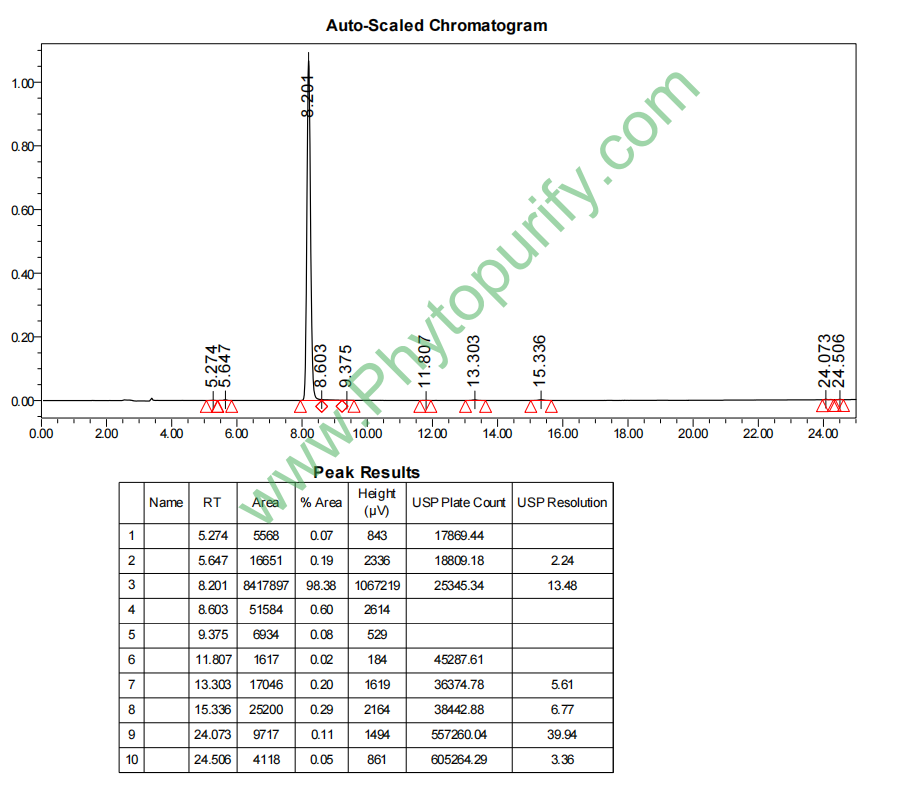
HPLC of Allosecurinin
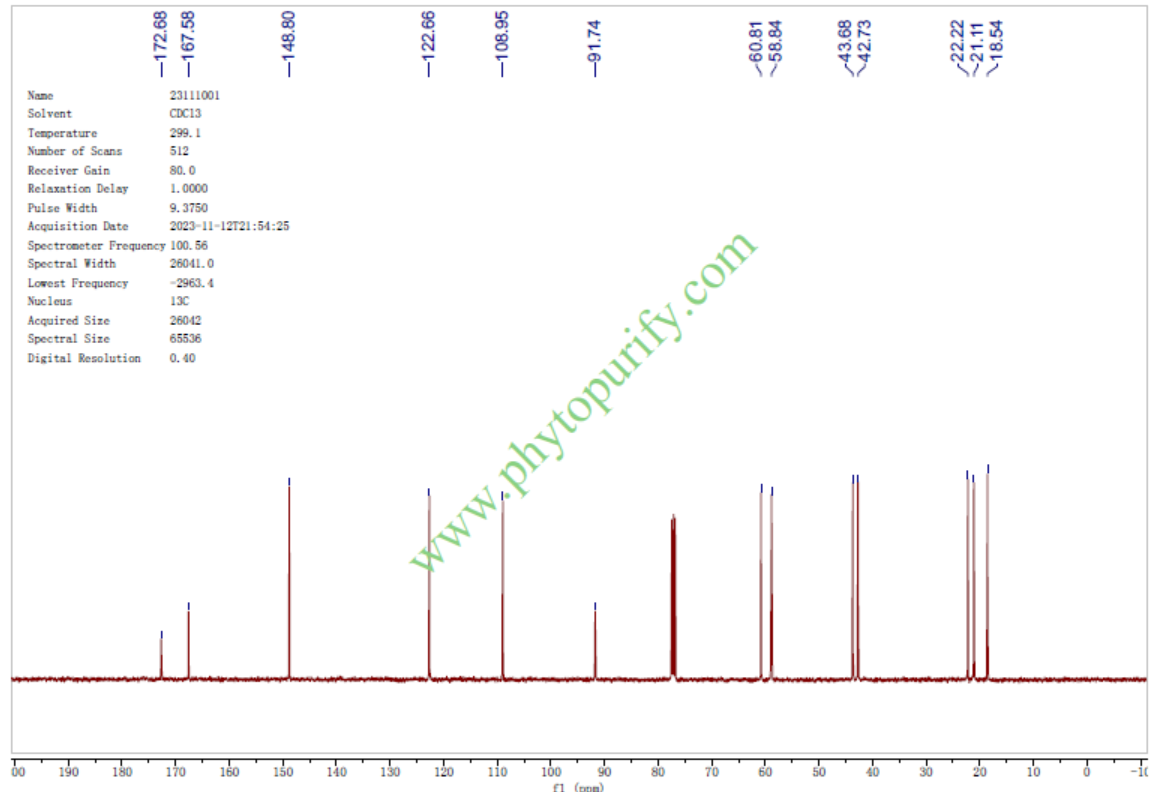
HNMR of Allosecurinin
Storage conditions:Short-term storage at 2~8℃, long-term storage at -20 ~ -80℃
29.5400
1.3135
1.1499
2.2257
4.8169
12.9628
High
39.5617
5.5598
No
Yes
Yes
No
Yes
No
0.6
Yes
Yes
Yes
Yes
Neurodegenerative diseases such as Alzheimer's disease (AD) and Parkinson's disease (PD) have become major global public health challenges. These diseases are characterized by progressive loss of neurons, and there is currently a lack of treatment methods that can reverse or effectively prevent the progression of the disease. Therefore, searching for lead compounds with neuroprotective activity from natural products is one of the important directions in current drug development. Indazine alkaloids, as a class of natural products with unique structures and diverse biological activities, have shown great potential in anti-tumor, anti-inflammatory, and neuropsychiatric activities. Allosecuritine, CAS number 884-68-4, is one of its members. Early research focused on its anti-tumor and immune regulatory effects, but recent studies have revealed that berberine exhibits significant neuroprotective activity in various neurodegenerative disease models. Its effects involve apoptosis regulation, oxidative stress, protein homeostasis, neuroinflammation, and other key pathological processes, targeting multiple key molecules such as BCL2, APP, BACE1, MAPT, SIRT1, MAPK1, ACHE, CASP3, SNCA, NRF2, etc. This article aims to provide a systematic review of the chemical properties, plant sources, pharmacological activities, mechanisms of action, and pharmacological properties of berberine, and to explore its potential as a lead compound for neuroprotective drugs.
Bieyi Hagian is a tetracyclic indole alkaloid with the molecular formula C13H15NO2 and a molecular weight of 217.2680. Its core structure is composed of a five membered lactone ring fused with an indazole (pyrrolo [1,2-a] nitrogen-containing) skeleton, with multiple chiral centers and complex stereochemistry, which is closely related to its specific biological activity. Its chemical structure determines its basic physicochemical properties. The calculated lipid water partition coefficient (LogP) is 1.3135, indicating that the compound has moderate lipophilicity, which is beneficial for its penetration into cell membranes. The topologically polar surface area (TPSA) is 29.5400 Å ², which is a relatively low value, further indicating its good membrane permeability. The predicted value of water solubility is 2.2257 mg/L, which belongs to the category of slight solubility and may need to be considered in the development of formulations. Of particular importance is the prediction based on its physicochemical properties that berberine has a high blood-brain barrier (BBB) permeability, which is a key advantage as a candidate drug for the treatment of central nervous system diseases. In addition, preliminary pharmacological risk assessment showed that its Ames test result was 0.6 (negative) and there was no significant hERG potassium channel inhibitory activity, indicating low genetic toxicity risk and low potential risk of cardiac toxicity, laying a preliminary safety foundation for its further development.
The main source of berberine is from plants in the Euphorbiaceae family, particularly from the Securinega genus(Securinega suffruticosa)The content is relatively high in the leaves, stems, and roots. This genus of plants is widely distributed in East Asia. In traditional Chinese medicine, Yiyeqie is used to treat neurological diseases such as facial nerve paralysis and sequelae of poliomyelitis, which suggests from the perspective of ethnic pharmacology that it contains neuroactive ingredients. Organic solvent extraction is commonly used to extract berberine from plant materials. The classic process includes: extracting or refluxing dried and crushed plant materials with alcohols (such as methanol, ethanol) or mixed solvents (such as chloroform methanol), combining the extracts and concentrating them under reduced pressure to obtain a crude extract. Subsequently, the alkaloids are dissolved from the crude extract using acidic water (such as dilute hydrochloric acid), alkalized (such as ammonia water), and then back extracted with organic solvents (such as chloroform, dichloromethane) to obtain the total alkaloid fraction. Further purification relies on column chromatography techniques, often using silica gel, alumina, or reverse phase silica gel (such as C18) as the stationary phase, and gradient elution with solvent systems of different polarities (such as petroleum ether ethyl acetate, chloroform methanol). By combining thin layer chromatography (TLC) or high performance liquid chromatography (HPLC) monitoring, high-purity monomers of berberine can ultimately be isolated. The application of modern technologies such as high-speed countercurrent chromatography (HSCCC) and preparative HPLC has further improved separation efficiency and purity.
The pharmacological activity research of berberine has expanded from early anti-tumor fields to the forefront direction of neuroprotection, and has been validated in various experimental models.
1. In vitro neuroprotective activity In cell models, berberine can significantly counteract neuronal damage induced by various neurotoxic stimuli. For example, in the PC12 cell or primary cortical neuron injury model induced by β - amyloid (A β), pretreatment with berberine can improve cell survival rate and reduce lactate dehydrogenase (LDH) leakage. It also exhibits similar protective effects in oxidative stress and excitotoxicity models induced by hydrogen peroxide (H ₂ O ₂) or glutamate. In addition, in Parkinson's disease cell models induced by rotenone or 6-hydroxydopamine (6-OHDA), berberine can protect dopaminergic neurons.
2. In vivo neuroprotective activity In animal models, the effect of berberine has been further confirmed. In the AD like mouse model induced by lateral ventricle injection of A β or D-galactose combined with sodium nitrite, intraperitoneal injection or gavage of berberine can improve the spatial learning and memory abilities of animals (such as Morris water maze test), and alleviate pathological damage to hippocampal neurons. In MPTP or 6-OHDA induced PD mouse or rat models, treatment with berberine can improve animal motor coordination and reduce the loss of dopaminergic neurons in the substantia nigra pars compacta. These in vivo studies provide strong in vivo evidence for its neuroprotective effects.
3. Other activities In addition to its core neuroprotective effects, research also suggests that berberine may have anti-inflammatory and antioxidant activities, which can inhibit the production of pro-inflammatory factors (such as TNF - α, IL-1 β) by overactivation of microglia and enhance the endogenous antioxidant defense system. These effects complement its neuroprotective effects.
The neuroprotective effect of berberine is the result of multi-target and multi pathway synergy, mainly involving the following key molecular targets and signaling pathways:
1. Inhibit cell apoptosis Bieyi Hagian can upregulate the expression of anti apoptotic protein BCL2, while downregulating pro apoptotic proteins such as BAX, and inhibiting the activation of apoptosis executor CASP3, thereby blocking the mitochondrial dependent apoptosis pathway. This is one of the core mechanisms by which it protects neurons from toxic damage.
2. Regulating the metabolism of Alzheimer's disease-related proteins Bieyi Hagian can downregulate the expression of amyloid precursor protein (APP) and inhibit the activity of β - secretase 1 (BACE1), thereby reducing the production of A β. Meanwhile, it can also reduce the excessive phosphorylation level of microtubule associated protein tau (MAPT) and decrease the formation of neurofibrillary tangles by affecting the kinase system.
3. Activate cellular defense and survival pathways Bieyi Hagian can activate SIRT1 (deacetylase 1), thereby regulating downstream transcription factors such as PGC-1 α and FOXO through deacetylation, promoting mitochondrial biosynthesis, reducing oxidative stress, and enhancing cellular autophagy. It can also activate the nuclear factor E2 related factor 2 (NRF2) signaling pathway, promote the expression of downstream antioxidant enzymes such as heme oxygenase-1 (HO-1) and quinone oxidoreductase 1 (NQO1), and enhance the antioxidant capacity of cells.
4. Regulating kinase signaling Bieyi Hagian has a regulatory effect on the mitogen activated protein kinase (MAPK) signaling pathway, especially the extracellular signal regulated kinase (MAPK1/ERK). Usually, it can promote the phosphorylation activation of ERK, and the ERK pathway is closely related to neuronal survival and synaptic plasticity.
5. Affects the cholinergic system and alpha synuclein The inhibitory activity of berberine on acetylcholinesterase (ACHE) may help improve cholinergic neurotransmission defects in AD. In addition, research suggests that it may reduce abnormal aggregation of alpha synuclein (SNCA) through unknown mechanisms, which has potential intervention value for the pathological process of PD.
Based on calculations and preliminary experimental data, Bieyi Hagian has shown certain potential for drug development, but its comprehensive pharmacokinetic (PK) characteristics still need to be further explored.
* Absorption and distribution Its moderate LogP and lower TPSA indicate good oral absorption potential and cell membrane permeability. The most crucial advantage is its predicted high blood-brain barrier permeability, which is crucial for central nervous system drugs. However, its actual oral bioavailability needs to be confirmed through in vivo PK studies.
* Metabolism and excretion As a nitrogen-containing heterocyclic alkaloid, berberine is likely to undergo metabolism in the liver, and the main metabolic enzymes may involve the cytochrome P450 (CYP) family. Its specific metabolites, main metabolic pathways, and whether it produces active or toxic metabolites are currently unclear. Its excretion pathway (renal excretion or bile excretion) also needs to be studied.
* Preliminary Safety Assessment The negative result of Ames test (0.6) indicates that it has no mutagenicity. The absence of hERG inhibitory activity reduces the risk of causing QT interval prolongation and apical torsion type ventricular tachycardia, which is an important early safety signal. However, comprehensive preclinical safety evaluations, including acute toxicity, chronic toxicity, reproductive toxicity, etc., have not yet been systematically carried out.
* Formulation Challenge Its lower water solubility may affect its dissolution rate and degree in gastrointestinal fluids, thereby limiting oral absorption. Future formulation development may need to consider the use of solubilization technologies, such as solid dispersions, cyclodextrin inclusion complexes, or nano formulations, to improve their solubility and bioavailability.
As a natural product with multi-target neuroprotective activity, berberine has shown unique application prospects in the treatment of neurodegenerative diseases, but its clinical application still faces many challenges and opportunities.
1. Prospects and advantages:
* Multi target synergistic effect For complex diseases such as AD and PD, multi-target intervention strategies may be more effective than single target drugs. Not only does it affect multiple key processes such as A β production, tau phosphorylation, oxidative stress, and cell apoptosis simultaneously, but it also has the potential to kill multiple birds with one stone.
* Good brain permeability Its high BBB permeability is a key characteristic that many candidate drugs do not possess.
* Natural product lead compounds Can serve as a starting point for structural optimization, improving its pharmacokinetic properties, enhancing activity, or reducing potential toxicity through chemical modification.
As a type of indazole alkaloid derived from traditional medicinal plants, berberine has emerged in the field of neuroprotection due to its unique chemical structure and multi-target mechanism of action. A large number of in vitro and in vivo studies have confirmed that it can effectively combat neurotoxicity, oxidative stress, and cell apoptosis by regulating multiple key targets such as BCL2, APP/ACE1, MAPT, SIRT1, NRF2, MAPK1, etc., thus playing a protective role in experimental models of neurodegenerative diseases such as Alzheimer's disease and Parkinson's disease. Its excellent blood-brain barrier permeability and preliminary favorable safety features have laid an important foundation for its further development. However, to push this promising natural lead compound into clinical applications, researchers still need to tirelessly explore the depth of its mechanism of action, pharmacokinetic properties, safety evaluation, and formulation development. In the future, through interdisciplinary collaboration, berberine and its optimized derivatives are expected to provide new candidate drugs for the treatment of neurodegenerative diseases, bringing new hope to the growing number of neurological disease patients worldwide.
