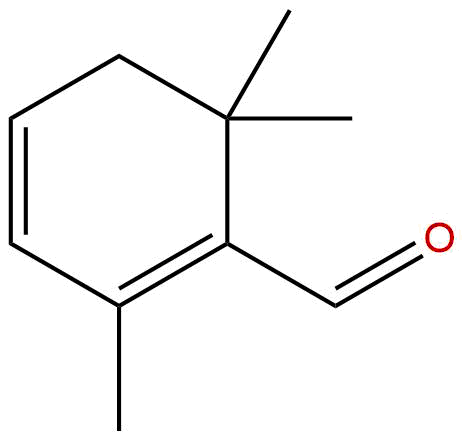
Product name: Safranal
Synonym name: 2,6,6-Trimethylcyclohexa-1,3-dienecarboxaldehyde
Catalogue No.: BP5464
Cas No.: 116-26-7
Formula: C10H14O
Mol Weight: 150.221
Botanical Source:
Type of Compound: Monoterpenoids
Purity: 95%~99%
Analysis Method: HPLC-DAD or/and HPLC-ELSD
Identification Method: Mass, NMR
Packing: Brown vial or HDPE plastic bottle
Storage: Store in a well closed container, protected from air and light. Put into refrigerate or freeze for long term storage.
Whenever possible, you should prepare and use solutions on the same day. However, if you need to make up stock solutions in advance, we recommend that you store the solution as aliquots in tightly sealed vials at -20℃. Generally, these will be useable for up to two weeks.
The product could be supplied from milligrams to grams
Inquire for bulk scale.
For Reference Standard and R&D, Not for Human Use Directly.
Storage conditions:Short-term storage at 2~8℃, long-term storage at -20 ~ -80℃
17.0700
2.1000
2.1000
High
Yes
Unknown
No
No
No
No
No
Natural products, as an important source of drug discovery, play an irreplaceable role in the long struggle between humans and diseases. Among numerous natural small molecules with biological activity, saffron aldehyde (Safranal) has attracted widespread attention in the fields of pharmacology and medicinal chemistry in recent years due to its unique chemical structure, significant pharmacological activity, and good safety. Saffron aldehyde is a plant in the Iridaceae family, saffron(Crocus sativus L. The main volatile components in the stigma are also the key substances that give this precious spice a unique aromatic aroma. Saffron, as a medicinal and edible plant with a long history, is used in traditional medical systems such as Persian medicine, Ayurvedic medicine, and traditional Chinese medicine to treat various diseases, including depression, premenstrual syndrome, asthma, cough, liver disease, and eye diseases. Modern scientific research has gradually revealed the pharmacological basis of saffron and its active ingredients, and saffron aldehyde, as an important lipid soluble monoterpene aldehyde compound, has increasingly highlighted its research value.
From a chemical structure perspective, saffron aldehyde belongs to the class of cyclic monoterpenes with a molecular weight of 150.22. It has moderate lipid solubility (LogP=2.1) and extremely low topological polar surface area (TPSA=17.07 Å ²). These physicochemical properties indicate that it has good membrane permeability and blood-brain barrier penetration ability, providing a structural basis for its application in the field of central nervous system diseases. In fact, a large number of preclinical studies have confirmed that saffron aldehyde has significant pharmacological activities such as neuroprotection, anti-inflammatory, antioxidant, antidepressant, anti anxiety, and anti-tumor effects. Especially its protective effect in neurodegenerative disease models such as Parkinson's disease and Alzheimer's disease makes it a potential candidate molecule for treating such complex diseases.
It is worth noting that the safety evaluation results of saffron aldehyde are encouraging. Its median lethal dose (LD50) is as high as 2000 mg/kg, and it has no hepatotoxicity, cardiotoxicity, or inhibition of hERG potassium channels. The Ames test result is negative, indicating a wide safety window and low genetic toxicity risk. Combined with its oral activity, saffron aldehyde exhibits good potential for medicinal properties. However, as an aldehyde compound, its chemical stability, metabolic pathways, and bioavailability still need to be further explored. This article will provide a systematic review of the research progress of saffron aldehyde from multiple dimensions, including chemical structure, plant origin, pharmacological activity, mechanism of action, pharmacological evaluation, and clinical application prospects, in order to provide scientific basis for the further development and utilization of this natural product.
The chemical name of saffron aldehyde is 2,6,6-trimethyl-1,3-cyclohexadiene-1-carbaldehyde, and its IUPAC name is 2,6,6-trimethyl-1,3-cyclohexanidine-1-carbaldehyde. Structurally, it belongs to cyclic monoterpenoid aldehydes, consisting of a hexagonal (1,3-cyclohexadiene) skeleton with three methyl substituents (located at positions C2, C6, and C6) and an aldehyde (- CHO) functional group attached to the ring. The molecular formula is C10H14O, with a molecular weight of 150.22 g/mol. The conjugated double bond system (C1-C2-C3-C4) in its structure forms π - π conjugation with the carbonyl group of the aldehyde group, endowing the molecule with specific UV absorption spectra and chemical reactivity.
In terms of physical form, saffron aldehyde is usually a light yellow to yellow oily liquid at room temperature, with a strong and characteristic saffron aroma. Its boiling point is about 70 ° C (at 1 mmHg), and its relative density is about 0.97 g/mL. Due to its small molecular weight and relatively compact structure, saffron aldehyde has a certain degree of volatility, which is also an important basis for its use as a flavoring ingredient.
In terms of solubility, saffron aldehyde exhibits typical lipophilic characteristics. Its oil-water partition coefficient (LogP) is 2.10, indicating that its solubility in lipid environment is significantly higher than that in aqueous phase. This characteristic makes it easy to penetrate biological membranes, including the blood-brain barrier. Its topological polar surface area (TPSA) is only 17.07 Å ², far below the upper limit of 140 Å ² commonly considered for oral drugs, which further supports its good intestinal absorption and central nervous system penetration ability. Saffron aldehyde is easily soluble in most organic solvents such as ethanol, ether, chloroform, and n-hexane, but its solubility in water is limited.
From the perspective of chemical stability, the aldehyde functional groups in saffron aldehyde molecules have high chemical reactivity. Aldehyde groups are easily oxidized to the corresponding carboxylic acid (i.e. crocetin) and can also undergo condensation reactions with amine compounds to form Schiff bases. In addition, its conjugated diene structure makes it sensitive to light, heat, and oxygen, which may lead to oxidative degradation or polymerization reactions. Therefore, during storage and experimentation, it is usually necessary to avoid light, store at low temperatures, seal, and often add antioxidants (such as vitamin E or BHT) to maintain its chemical integrity. Despite these unstable factors, its structural characteristics such as small molecular weight, good lipid solubility, and lack of chiral centers still provide significant operational space for drug chemical modification and formulation development.
The main natural source of saffron aldehyde is saffron, a plant of the saffron genus in the Iridaceae family(Crocus sativus L. The dry column head. Saffron is a perennial herbaceous plant native to the Mediterranean region and West Asia. Currently, it is mainly planted in Iran, India (Kashmir region), Greece, Spain, and China. Saffron, as a spice, has a very high cost of acquisition, requiring about 150000 to 200000 flowers to be harvested per kilogram of dried stigma, hence it is known as the "red gold". During the drying process of saffron stigma, the main bitter component, picrocrocin, undergoes enzymatic hydrolysis or pyrolysis, releasing saffron aldehyde and glucose. Therefore, saffron aldehyde is actually a secondary metabolite formed during the processing and storage of saffron, rather than the original component in fresh stigma. In dried saffron, the content of saffron aldehyde is usually between 0.1% and 0.6%, and the specific content is affected by factors such as origin, harvesting time, drying process, and storage conditions.
Besides saffron, saffron aldehyde or its structural analogues are also present in small quantities in other plants. For example, in gardenia(Gardenia jasminoides)Trace amounts of saffron aldehyde can also be produced in the fruit through enzymatic or acid hydrolysis of geniposide. In addition, saffron aldehyde has also been detected in the volatile components of certain citrus fruits, but the content is extremely low and does not have commercial extraction value.
The extraction methods for saffron aldehyde mainly include the following:
1. Steam distillation method: This is a traditional and classic extraction method. Dry saffron stigma is subjected to azeotropic distillation with water, and saffron aldehyde is distilled off with water vapor. After condensation, it is separated by organic solvent extraction or salt precipitation. This method is simple to operate and cost-effective, but the extraction temperature is relatively high (about 100 ° C), which may lead to the degradation of some thermosensitive components, and the extraction efficiency is relatively low.
2. Organic solvent extraction method: Using the lipophilicity of saffron aldehyde, organic solvents such as n-hexane, petroleum ether, ether, or ethanol are used for extraction or Soxhlet extraction. This method has a high extraction efficiency, but the issue of solvent residue needs attention. In recent years, the application of green solvents such as ethanol water mixed systems has gradually increased to balance extraction efficiency and safety.
3. Supercritical fluid extraction method: Supercritical carbon dioxide (SC-CO ₂) is used as the extraction solvent for extraction under high pressure (usually 150-300 bar) and appropriate temperature (40-60 ° C). This method has the advantages of low extraction temperature, no residual organic solvents, good selectivity, and high extraction efficiency, and is particularly suitable for extracting thermosensitive and easily oxidizable components. Research has shown that the yield of saffron aldehyde extracted by supercritical CO ₂ is usually higher than that of traditional steam distillation, and the resulting product quality is better.
4. Solid phase microextraction method: Mainly used for analysis and detection rather than large-scale preparation. The volatile components in saffron were directly adsorbed by headspace using fiber heads coated with adsorbents, and then analyzed by gas chromatography-mass spectrometry (GC-MS). This method has high sensitivity and requires a small amount of sample, making it suitable for quality evaluation and authenticity identification of saffron.
5. Chemical synthesis method: Given the high cost and limited yield of natural extraction, chemical synthesis has become an important pathway for obtaining saffron aldehyde. There are currently multiple synthetic routes reported, such as using β - cyclocitral or 2,6,6-trimethylcyclohexanone as starting materials, and synthesizing through oxidation, condensation, and other steps. The synthetic route usually involves multiple reactions, with a total yield ranging from 30% to 60%. Although synthetic products may not have the same optical purity as natural products (but saffron aldehyde has no chiral center, so there is no such problem), it can meet the needs of large-scale research and application.
During the extraction process, in order to obtain high-purity saffron aldehyde, further purification techniques such as column chromatography (silica gel or alumina), high performance liquid chromatography (HPLC), or molecular distillation are usually required. Purity identification mainly relies on analytical methods such as GC-MS, nuclear magnetic resonance spectroscopy (NMR), and infrared spectroscopy (IR).
The pharmacological activity research of saffron aldehyde has been one of the hotspots in the field of natural product pharmacology in recent years. A large number of in vitro and in vivo experiments have confirmed that this compound has various biological activities, especially outstanding in neuroprotection and anti-inflammatory effects.
The most notable pharmacological activity of saffron aldehyde is its neuroprotective effect. In Parkinson's disease models, saffron aldehyde can significantly alleviate dopaminergic neuron damage induced by 1-methyl-4-phenyl-1,2,3,6-tetrahydropyridine (MPTP) or 6-hydroxydopamine (6-OHDA). Experiments have shown that saffron aldehyde pretreatment can increase striatal dopamine levels, improve motor dysfunction, and inhibit apoptosis of substantia nigra pars compacta neurons. In the Alzheimer's disease model, saffron aldehyde can reduce the aggregation and deposition of β - amyloid protein (A β), decrease the excessive phosphorylation of tau protein, and improve cognitive function. In addition, saffron aldehyde also exhibits protective effects on acute neurological injury models such as cerebral ischemia-reperfusion injury, traumatic brain injury, and spinal cord injury, manifested by reducing infarct volume, alleviating brain edema, and improving neurological function scores.
Inflammatory response is a common pathological basis for various diseases, including neurodegenerative diseases, cardiovascular diseases, and cancer. Saffron aldehyde exhibits significant anti-inflammatory activity in various inflammatory models. Saffron aldehyde can significantly inhibit the production of pro-inflammatory cytokines such as tumor necrosis factor - α (TNF - α), interleukin-1 β (IL-1 β), and interleukin-6 (IL-6) in microglia or macrophages stimulated by lipopolysaccharide (LPS), while reducing the release of nitric oxide (NO) and prostaglandin E2 (PGE2). In animal models, saffron aldehyde can alleviate carrageenan induced toe swelling, acetate induced increased vascular permeability, and intestinal inflammation in colitis models. Its anti-inflammatory mechanism is closely related to the inhibition of nuclear factor kappa B (NF - κ B) and mitogen activated protein kinase (MAPK) signaling pathways.
Oxidative stress is an important cause of cellular damage. The conjugated diene aldehyde system in the molecular structure of saffron aldehyde gives it a certain free radical scavenging ability. In vitro experiments have shown that saffron aldehyde can scavenge 1,1-diphenyl-2-trinitrophenylhydrazine (DPPH) radicals, hydroxyl radicals, and superoxide anions. More importantly, in cell models, saffron aldehyde can upregulate the expression of nuclear factor E2 related factor 2 (Nrf2) and its downstream antioxidant enzymes such as heme oxygenase-1 (HO-1), quinone oxidoreductase 1 (NQO1), and glutathione S-transferase (GST), thereby enhancing the endogenous antioxidant defense ability of cells.
The effect of saffron aldehyde on the central nervous system is also reflected in emotional regulation. In various animal models of depression, such as forced swimming test, tail suspension test, and chronic unpredictable mild stress model, saffron aldehyde has shown significant antidepressant like effects, which are comparable or better than fluoxetine. At the same time, saffron aldehyde also showed anti anxiety activity in elevated cross maze and dark box experiments. Mechanism studies suggest that these effects may be related to regulating levels of monoamine neurotransmitters (serotonin, dopamine, and norepinephrine), upregulating brain-derived neurotrophic factor (BDNF) expression, and modulating hypothalamic pituitary adrenal (HPA) axis function.
In addition to the above main activities, crocin aldehyde has also been reported to have anti-tumor activity, which can inhibit the proliferation of a variety of cancer cells (such as breast cancer, lung cancer, colon cancer and leukemia cells) and induce apoptosis; Has anticonvulsant effects and can prolong the latency period of pentylenetetrazole induced epileptic seizures; Has a cardioprotective effect and can alleviate myocardial ischemia-reperfusion injury; And it has antibacterial and antiviral activity, with certain inhibitory effects on Staphylococcus aureus, Escherichia coli, influenza virus, etc.
The diverse pharmacological activities of saffron aldehyde stem from its ability to interact with multiple molecular targets and regulate multiple signaling pathways. A deep understanding of its mechanism of action is crucial for developing it into clinical drugs.
Nrf2 is the core transcription factor that cells use to respond to oxidative stress. Under normal physiological conditions, Nrf2 binds to Kelch like ECH related protein 1 (Keap1) and is degraded by ubiquitination. When cells are subjected to oxidative stimulation or electrophilic agents (such as the aldehyde group of saffron aldehyde), the conformation of Keap1 changes, leading to the release and translocation of Nrf2 into the nucleus, which binds to antioxidant response elements (ARE) and initiates the transcription of downstream antioxidant and detoxifying enzyme genes. Saffron aldehyde has been proven to be an effective activator of Nrf2. Research has shown that saffron aldehyde treatment can significantly increase the nuclear translocation of Nrf2 and upregulate the expression of target genes such as HO-1, NQO1, and glutamate cysteine ligase catalytic subunit (GCLC). This mechanism is an important basis for its neuroprotective and anti-inflammatory effects.
NF - κ B is the core regulatory factor of inflammatory response. In the resting state, NF - κ B binds to the inhibitory protein I κ B and remains in the cytoplasm. When stimulated by pro-inflammatory factors such as LPS and TNF - α, I κ B kinase (IKK) is activated, leading to phosphorylation and degradation of I κ B, and the released NF - κ B is translocated into the nucleus, initiating the transcription of pro-inflammatory genes. Saffron aldehyde can inhibit the activity of IKK, prevent the degradation of I κ B, and thus block the activation of NF - κ B. In addition, saffron aldehyde can inhibit the phosphorylation of MAPK family members such as p38, JNK, and ERK1/2, further weakening the transmission of inflammatory signals. By simultaneously acting on both NF - κ B and MAPK pathways, saffron aldehyde can effectively inhibit the expression of inflammatory mediators such as TNF - α, IL-1 β, IL-6, COX-2, and iNOS.
Apoptosis is the main cause of neuronal loss in neurodegenerative diseases. Saffron aldehyde exerts anti apoptotic effects by activating the survival signaling pathway. Research has shown that saffron aldehyde treatment can increase the phosphorylation levels of Akt and ERK1/2, leading to phosphorylation and inactivation of the pro apoptotic protein Bad, while upregulating the expression of the anti apoptotic protein Bcl-2 and inhibiting the release of mitochondrial cytochrome c and activation of caspase-3. In addition, saffron aldehyde can inhibit the endoplasmic reticulum stress-related apoptotic pathway and reduce the expression of CHOP and caspase-12.
The antidepressant and anti anxiety effects of saffron aldehyde are closely related to the monoamine neurotransmitter system. Research has found that saffron aldehyde can inhibit the activity of monoamine oxidase A (MAO-A), thereby reducing the degradation of monoamine neurotransmitters such as serotonin, dopamine, and norepinephrine, and increasing the concentration of these neurotransmitters in synaptic cleft. In addition, saffron aldehyde may regulate emotions and behavior by affecting serotonin receptors (especially 5-HT1A and 5-HT2A receptors) and dopamine receptors (D1 and D2 receptors).
In recent years, with the development of chemical biology and computational chemistry, the potential molecular targets of saffron aldehyde have been continuously revealed. For example, studies have found through molecular docking and surface plasmon resonance (SPR) techniques that saffron aldehyde can directly bind to and activate the transient receptor potential anchor protein 1 (TRPA1) channel, which may be a new mechanism for its anti-inflammatory and analgesic effects. In addition, saffron aldehyde has been reported to inhibit the activity of acetylcholinesterase (AChE) and butyrylcholinesterase (BuChE), which is related to its potential therapeutic effect in Alzheimer's disease. The regulatory effects of saffron aldehyde on gamma aminobutyric acid type A (GABAA) receptors and glutamate receptors are also being explored.
The evaluation of drug properties and pharmacokinetic characteristics are key thresholds that must be crossed in order to push natural products from laboratory research to clinical applications. Saffron aldehyde has both advantages and challenges in this regard.
According to Lipinski's "Five Rules", the molecular weight (150.22<500), LogP (2.10<5), number of hydrogen bond acceptors (1<10), and number of hydrogen bond donors (0<5) of saffron aldehyde fully meet the basic requirements for oral medication. Its TPSA is only 17.07 Å ², far below the threshold of 140 Å ², indicating good intestinal absorption and membrane permeability. The blood-brain barrier penetration ability is evaluated as' High ', which is highly consistent with the central nervous system activity observed in its experiments. These physicochemical parameters collectively indicate that saffron aldehyde has excellent drug like characteristics.
Safety is the primary prerequisite for drug development. The acute toxicity of saffron aldehyde is relatively low, with an oral LD50 of approximately 2000 mg/kg in mice and 1500-2000 mg/kg in rats, indicating a wide safety range. In subacute and chronic toxicity studies, no significant weight changes, organ coefficient abnormalities, or histopathological damage were observed within the therapeutic dose range (usually 10-100 mg/kg) after continuous administration for 28 or 90 days. Of particular note is that saffron aldehyde has no hepatotoxicity, no cardiotoxicity, no inhibition of hERG potassium channels (indicating a low risk of QT interval prolongation), and a negative Ames test result (no genetic toxicity). These safety data have laid a solid foundation for its further clinical development.
Although the physicochemical properties of saffron aldehyde indicate its good absorption properties, its pharmacokinetic studies are still relatively limited and there are some issues that need attention.
Absorption: Saffron aldehyde can be rapidly absorbed by the gastrointestinal tract after oral administration. Due to its small molecular weight and good lipid solubility, its absorption mechanism may be mainly passive diffusion. However, as an aldehyde compound, saffron aldehyde may partially react with food proteins or digestive enzymes in the gastrointestinal environment, affecting its bioavailability.
Distribution: Saffron aldehyde can be widely distributed in various tissues throughout the body, especially effectively penetrating the blood-brain barrier and entering the central nervous system. Its apparent distribution volume (Vd) is relatively large, indicating a high tissue binding rate. The plasma protein binding rate remains to be systematically studied.
Metabolism: Metabolism is a key link in the pharmacokinetics of saffron aldehyde. Aldehyde functional groups are the main metabolic sites. In the body, saffron aldehyde is mainly metabolized through two pathways: one is oxidized by aldehyde dehydrogenase (ALDH) to the corresponding carboxylic acid - safranic acid; The second is to undergo non enzymatic or enzymatic (glutathione S-transferase catalyzed) binding reactions with glutathione (GSH) to generate sulfide complexes. In addition, reducing metabolism (catalyzed by aldehyde reductase) to produce alcohol metabolites is also a possible pathway. These metabolic reactions mainly occur in the liver and intestinal mucosa. The first pass effect may be one of the reasons for its low oral bioavailability.
Excretion: Saffron aldehyde and its metabolites are mainly excreted through urine and feces. Due to the fact that metabolites are mostly polar complexes, renal excretion may dominate. Its half-life (t1/2) varies among different animal species, usually within the range of 1-4 hours, indicating faster clearance in the body.
The main challenges for the pharmacological development of saffron aldehyde are poor chemical stability (prone to oxidation and polymerization), significant first pass metabolism, potentially low oral bioavailability, and short half-life. Researchers are exploring various improvement strategies to address these issues:
Based on the rich pharmacological activity and good safety of saffron aldehyde, it has shown broad clinical application prospects in the treatment of various diseases.
Parkinson's disease is the second largest neurodegenerative disease after Alzheimer's disease, characterized by progressive loss of dopaminergic neurons in the substantia nigra of the midbrain. At present, the main clinical treatment is levodopa replacement therapy, but long-term use can lead to exercise complications and reduced efficacy. Saffron aldehyde protects dopaminergic neurons through multiple mechanisms such as antioxidant, anti-inflammatory, anti apoptotic, and neurotrophic effects, without any side effects related to levodopa. Preclinical studies have confirmed its effectiveness in MPTP and 6-OHDA models. In the future, conducting clinical trials of saffron aldehyde for the treatment of Parkinson's disease, especially as an adjuvant therapy drug, has important clinical value.
Alzheimer's disease is mainly characterized by progressive cognitive impairment, with pathological features including A β deposition, tau protein hyperphosphorylation, and neuroinflammation. Saffron aldehyde can inhibit A β aggregation, reduce tau phosphorylation, inhibit acetylcholinesterase activity, and alleviate neuroinflammation, demonstrating the potential of multi-target anti Alzheimer's disease. Preliminary clinical trials have suggested that saffron extract has the effect of improving cognitive function in patients with mild to moderate Alzheimer's disease, but clinical studies on saffron aldehyde as a single component are still blank.
Depression is one of the main sources of global disease burden. The existing antidepressant drugs have problems such as slow onset, multiple side effects, and limited efficacy. The antidepressant effect of saffron aldehyde has been validated in various animal models, and its fast onset and minimal side effects make it a candidate molecule for developing new antidepressant drugs. Clinical studies have reported that saffron extract is effective in patients with mild to moderate depression, but clinical research on saffron aldehyde is still needed.
In addition to the above-mentioned diseases, the application of saffron aldehyde in the following fields is also worth exploring:Ischemic stroke(neuroprotective effect);chronic pain(anti-inflammatory and analgesic effects);Metabolic diseases(such as diabetes and its complications, antioxidant and anti-inflammatory effects);Eye diseases(such as age-related macular degeneration and glaucoma, based on their antioxidant and anti apoptotic effects);tumor As an adjuvant therapy drug, it enhances chemotherapy sensitivity or reduces chemotherapy side effects.
Despite its broad prospects, the clinical translation of saffron aldehyde still faces many challenges, and future research should focus on the following directions:
Saffron aldehyde, a natural monoterpene aldehyde derived from the precious spice saffron, is gradually moving from the background of traditional medicine to the forefront of modern drug development due to its unique chemical structure and multifaceted biological activities. This article systematically reviews the research progress of saffron aldehyde in terms of chemical structure, plant origin, pharmacological activity, mechanism of action, drug evaluation, and clinical application prospects. Its significant neuroprotective, anti-inflammatory, antioxidant, and antidepressant effects, combined with good safety features and blood-brain barrier penetration ability, make it show great potential in the treatment of central nervous system diseases such as Parkinson's disease, Alzheimer's disease, and depression.
However, the road from natural products to clinical drugs is still long. The problems faced by saffron aldehyde, such as poor chemical stability, rapid metabolism, and unclear bioavailability, need to be addressed through strategies such as prodrug design, formulation optimization, and structural modification. Meanwhile, its complex multi-target mechanism of action is both an advantage and a challenge, requiring further research to elucidate its precise molecular pharmacology basis. With the development of modern analytical techniques, chemical biology, and drug delivery systems, we have reason to believe that saffron aldehyde and its derivatives have the potential to become novel drugs for treating neurodegenerative diseases and mood disorders in the future. The in-depth study of saffron aldehyde is not only a modern interpretation of traditional medical wisdom, but also contributes to the development of new treatment options for human health.
Batch can search by a CAS number,one per line