Introduction/Overview
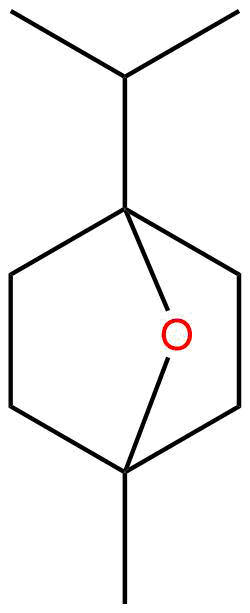
Natural products have long been an important source of drug discovery and development, among which terpenoids have attracted much attention due to their structural diversity and wide range of biological activities. 1,4-cineole (CAS number: 470-67-7), also known as 1,4-eucalyptol, is a monocyclic monoterpene oxide belonging to the family of oxadicaycloalkanes. Although its isomer 1,8-eucalyptol (widely present in eucalyptus oil) is more well-known in the pharmaceutical and fragrance industries, 1,4-eucalyptol, as a unique natural product, has gradually revealed its potential pharmacological value in recent years, especially in the field of respiratory diseases. Traditionally, plant extracts containing 1,4-eucalyptol have been used to alleviate respiratory symptoms such as cough and phlegm. Preliminary modern pharmacological studies have shown that 1,4-eucalyptol may exert multiple effects such as anti-inflammatory, bronchodilator, and mucus secretion regulation by modulating specific ion channels and receptors. This article aims to provide a systematic review of the chemical properties, plant sources, pharmacological activities, mechanisms of action, medicinal properties, and clinical application prospects of 1,4-eucalyptol, in order to provide comprehensive scientific references for the in-depth research and development of this compound.
Chemical structure and physicochemical properties
The chemical name of 1,4-eucalyptol is 1,3,3-trimethyl-2-oxabicyclo [2.2.2] octane, with a molecular formula of C10H18O and a molecular weight of 154.2530 g/mol. Its core structure is to form an epoxy bridge between the 1st and 4th positions of the menthone skeleton, thereby forming a rigid oxabicyclo [2.2.2] octane system. This unique bridge ring structure results in significant differences in spatial conformation and chemical reactivity compared to linear or monocyclic terpenoids.
In terms of physical and chemical properties, 1,4-eucalyptol is usually a colorless to pale yellow liquid with a unique camphor like cool odor. Its lipid water partition coefficient (LogP) is 3.73, indicating that the compound has high lipophilicity, which is consistent with its ability to penetrate cell membranes and the blood-brain barrier. The topologically polar surface area (TPSA) is only 9.23 Å ², further confirming its low molecular polarity. The water solubility is poor, about 0.2681 mg/mL, indicating that appropriate solubilization strategies may need to be considered in formulation development. The preliminary parameters of the key pharmacological properties show that 1,4-eucalyptus has high blood-brain barrier permeability, which is consistent with its reported central nervous system inhibitory activity. In addition, in the preliminary toxicity screening, it did not show significant hERG channel inhibitory activity (low risk of arrhythmia) and Ames test mutagenicity (result 0.0), providing early data support for its relatively good safety.
Plant sources and extraction methods
1,4-Eucalyptol is relatively widely distributed in nature, but its content is usually lower than its isomer 1,8-Eucalyptol. It is a secondary metabolite of various aromatic plants, mainly found in the essential oils of the following plants:
1. Eucalyptus plants Certain specific varieties of eucalyptus trees, such as Eucalyptus camaldulensis、Eucalyptus polybractea Wait, 1,4-eucalyptol can be detected in its essential oil, although 1,8-eucalyptol is still the main component.
2. sagebrush Like Central Asian Artemisia annua(Artemisia absinthium)Wait.
3. Other plants Including rosemary(Rosmarinus officinalis)Lavender(Lavandula spp.)、 And some camphor plants, etc. Its content is significantly affected by factors such as plant variety, origin, harvest season, and location.
The extraction of 1,4-eucalyptol from plant materials mainly uses traditional essential oil extraction techniques:
* steam distillation This is the most commonly used and economical method. Cut the plant materials into small pieces and introduce them into water vapor. The essential oil components are distilled out together with the water vapor, and after condensation and oil-water separation, crude essential oil is obtained. 1,4-Eucalyptol can be effectively extracted due to its volatility.
* Simultaneous distillation extraction method An improved method that combines distillation and solvent extraction can improve the extraction efficiency of certain components.
* Organic solvent extraction method Using solvents such as n-hexane and ethanol for reflux or extraction, suitable for small-scale laboratory preparation or extraction of thermally unstable components.
* Supercritical CO2 extraction method A modern green extraction technology that utilizes the high permeability and selectivity of supercritical CO2 fluid for extraction at low temperatures, which can better preserve the entire composition and thermosensitive components of essential oils. The resulting essential oils have high quality, but the equipment cost is relatively high.
The obtained essential oils are usually complex mixtures of dozens of terpenes and terpenoid oxides. To obtain high-purity 1,4-eucalyptol, further refining and separation are required. Common methods include fractional distillation, preparative gas chromatography, or column chromatography.
Pharmacological activity research
In recent years, a series of advances have been made in pharmacological research on 1,4-eucalyptol, especially its activity in the respiratory system.
1. Respiratory system related activities
* anti-inflammatory effect In the lipopolysaccharide induced macrophage inflammation model, 1,4-eucalyptol can significantly inhibit the excessive production of pro-inflammatory factors such as nitric oxide (NO), prostaglandin E2 (PGE2), tumor necrosis factor - α (TNF - α), interleukin-6 (IL-6), etc. Its anti-inflammatory effect is considered one of the core mechanisms for alleviating respiratory inflammatory diseases such as chronic obstructive pulmonary disease and asthma.
* Bronchodilator effect In vitro experiments have shown that 1,4-eucalyptol can relax smooth muscle in the trachea of guinea pigs or rats pre contracted by histamine or acetylcholine. This antispasmodic effect suggests that it may help alleviate bronchial spasms caused by asthma or bronchitis.
* Expectorant and mucus regulating effects Research has shown that 1,4-eucalyptol can affect airway mucus secreting cells. It can not only stimulate the secretion of mucus, dilute thick phlegm, and promote excretion (expectorant effect), but also inhibit excessive and abnormal mucus hypersecretion by downregulating the expression of key mucin genes such as mucin 5AC (MUC5AC), which is of great significance for the treatment of chronic bronchitis and asthma.
* Cough suppression Animal experiments have shown that 1,4-eucalyptol can prolong the latent period of cough induced by citric acid or capsaicin, reduce cough frequency, and exhibit central and/or peripheral antitussive effects.
2. Other biological activities
* Central nervous system inhibitory effect Early pharmacological observations and its high blood-brain barrier permeability suggest that 1,4-eucalyptol may have sedative and anti anxiety effects, but its specific mechanisms and targets still need to be further studied.
* Antibacterial and antifungal activity Like many plant essential oil components, 1,4-eucalyptol exhibits inhibitory activity against certain bacterial and fungal strains, which may help it play an auxiliary role in the treatment of respiratory infections.
* Fumigation insecticidal activity As a defensive substance of plants, 1,4-eucalyptol has a fumigant effect on some storage pests and agricultural pests, and is a potential candidate for plant-based pesticides.
Mechanism of action and molecular targets
The multiple pharmacological activities of 1,4-eucalyptol are closely related to its regulation of multiple molecular targets, especially in the field of respiratory diseases.
-
Regulation of Transient Receptor Potential Channels:
- TRPV1 (Vanillin Receptor 1)TRPV1 is an important nociceptive and cough receptor that can be activated by capsaicin, heat, and protons. Research has shown that 1,4-eucalyptol can Antagonistic TRPV1 channel Inhibit its mediated influx of calcium ions and release of neuropeptides. This is likely the key mechanism by which it exerts peripheral cough suppressing and anti-inflammatory effects (inhibiting neurogenic inflammation).
- TRPA1 (Transient Receptor Potential Anchoring Protein 1)TRPA1 is another ion channel associated with inflammation, pain, and cough, which can be activated by environmental stimuli such as mustard oil and cold air. 1,4-Eucalyptol has also been found to be Effective antagonists of TRPA1 By inhibiting TRPA1, it can alleviate airway inflammation and cough reflex, providing a targeted basis for the treatment of diseases such as cough hypersensitivity syndrome.
-
Antagonism of muscarinic acetylcholine receptor M3:
- CHRM3 (M3 receptor)M3 receptor mediates acetylcholine induced airway smooth muscle contraction and mucinous gland secretion. 1,4-Eucalyptol has been confirmed to have Anticholinergic activity Can antagonize M3 receptors. This directly explains the partial mechanism of its bronchodilator effect and inhibition of excessive mucus secretion, similar to the pathway of action of classical anticholinergic drugs such as ipratropium bromide.
-
Potential regulation of β 2-adrenergic receptors:
- ADRB2 (β 2 receptor)Activation of β 2 receptors is one of the main pathways of bronchial dilation. Some studies speculate that the bronchodilator effect of 1,4-eucalyptol may be partially derived from its action on β 2 receptors Positive allosteric regulation or indirect activation However, this mechanism still requires more direct molecular and functional evidence to confirm.
-
Regulation of mucin gene expression:
- MUC5AC Mucin 5AC is the main gel forming component of airway mucus, and its overexpression is the core of mucus hypersecretion in chronic airway diseases. 1,4-Eucalyptol can inhibit inflammatory signaling pathways such as nuclear factor kappa B (NF - κ B),Downregulation of transcription and expression of MUC5AC gene Thus reducing the production of pathological mucus from the root.
In summary, 1,4-Eucalyptol Multi target synergistic effect Antagonising TRPV1/TRPA1 to suppress inflammation and cough reflex, antagonizing CHRM3 to dilate bronchi and reduce secretion, and downregulating MUC5AC to regulate mucus quality, together constitute its comprehensive therapeutic potential for respiratory diseases.
Evaluation of drug properties and pharmacokinetics
Based on its physicochemical properties and preliminary biological data, 1,4-Eucalyptol has shown certain potential as a drug, but its complete pharmacokinetic characteristics still need to be systematically studied.
- Absorption and distribution A high LogP value and low TPSA value indicate good gastrointestinal absorption after oral administration and easy permeation through biofilms. Its high blood-brain barrier permeability has been confirmed in the prediction model, which is consistent with the reported central activity. Inhalation administration is the most direct route of treatment for respiratory diseases, which can quickly reach effective concentrations in lung tissue, with relatively low systemic exposure, helping to improve local efficacy and reduce systemic side effects.
- Metabolism and excretion As a monoterpene compound, 1,4-eucalyptol is mainly metabolized by the liver cytochrome P450 enzyme system (such as CYP2C9, CYP3A4) in the body, undergoing hydroxylation, oxidation and other reactions, and finally binding with glucuronic acid or sulfuric acid, and excreted through the kidneys or bile. The metabolic rate, main metabolites, and their activities need to be further studied.
- Preliminary evaluation of safety Existing data shows that it has no significant genetic toxicity (Ames test negative) and cardiac toxicity (hERG inhibition negative), which is a favorable factor for its use as a drug candidate. However, the potential skin and mucosal irritation of terpenoids, as well as the risk of neurotoxicity at high doses, require rigorous preclinical safety evaluations to confirm.
- Formulation Challenge Its low water solubility and high volatility are the main challenges in formulation development. Possible solutions include: making it into an inhalation solution or suspension (using propellants or nebulizers), preparing it into cyclodextrin inclusion complexes to improve solubility and stability, or developing it into sustained-release microspheres to achieve long-term retention in the lungs.
Clinical application prospects and prospects
1,4-Eucalyptol has clear and broad application prospects in the treatment of respiratory diseases.
Conclusion
1,4-Eucalyptol, as a structurally unique natural monoterpene oxide, is transitioning from a traditional plant component to a potential drug candidate molecule with clear molecular targets and multiple pharmacological activities. It demonstrates comprehensive therapeutic value for respiratory diseases by antagonizing multiple mechanisms such as TRPV1, TRPA1, CHRM3, and downregulating MUC5AC expression, in terms of anti-inflammatory, bronchodilator, cough suppressant, and mucus regulation. Although it has shown certain advantages in drug development, such as good membrane permeability and preliminary safety, it still faces challenges such as poor water solubility and lack of systematic pharmacokinetic data. Future research should focus on in-depth analysis of its in vivo action network, complete preclinical development evaluation of the system, and actively explore its optimal clinical application forms such as inhalation administration. With the continuous deepening of research, 1,4-eucalyptol is expected to provide a natural and novel therapeutic option for respiratory diseases, especially difficult to treat diseases with high mucus secretion and cough sensitivity.