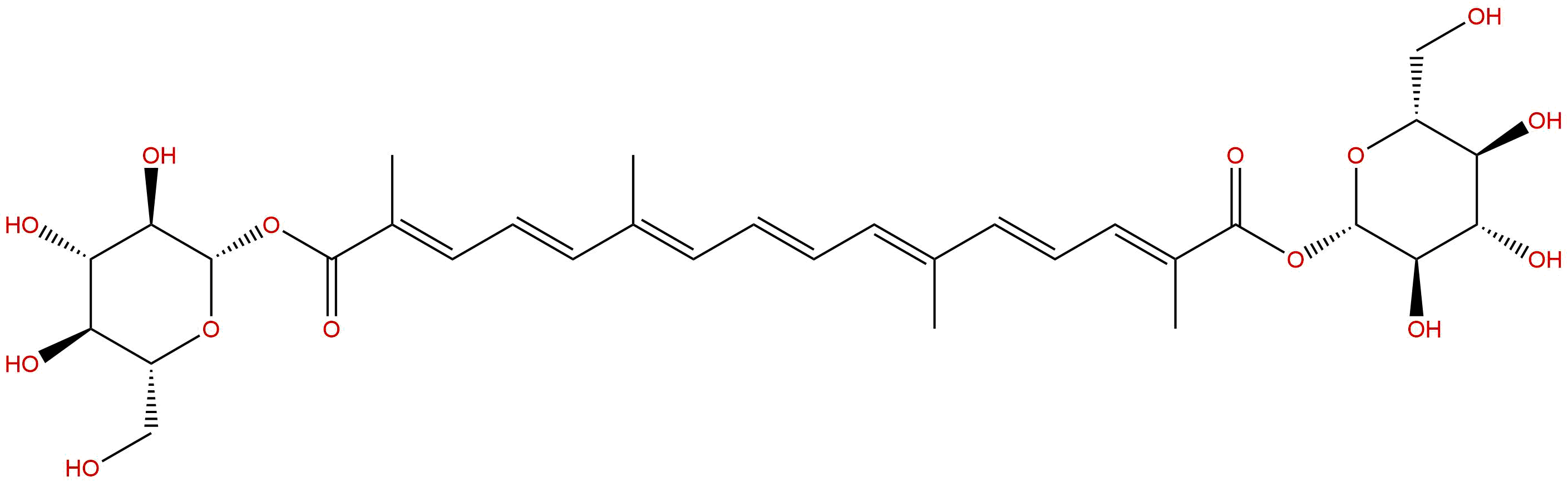


Product name: Crocin IV
Synonym name: Crocetin diglucosyl ester; Crocin 4
Catalogue No.: BP4121
Cas No.: 57710-64-2
Formula: C32H44O14
Mol Weight: 652.69
Botanical Source: Crocus sativus L.
Type of Compound: Diterpenoids
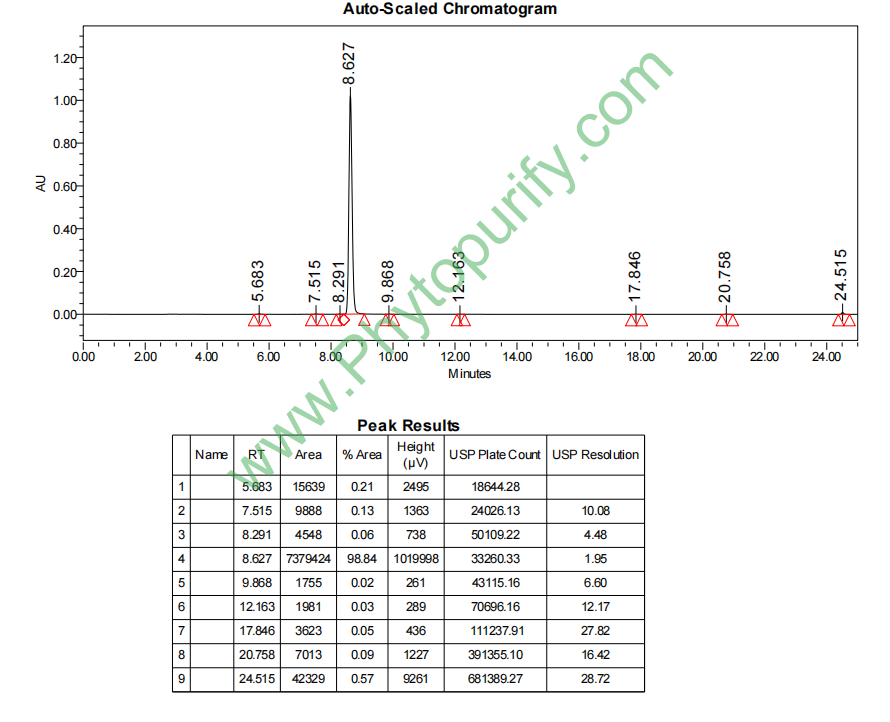
Purity: 95%~99%
Analysis Method: HPLC-DAD or/and HPLC-ELSD
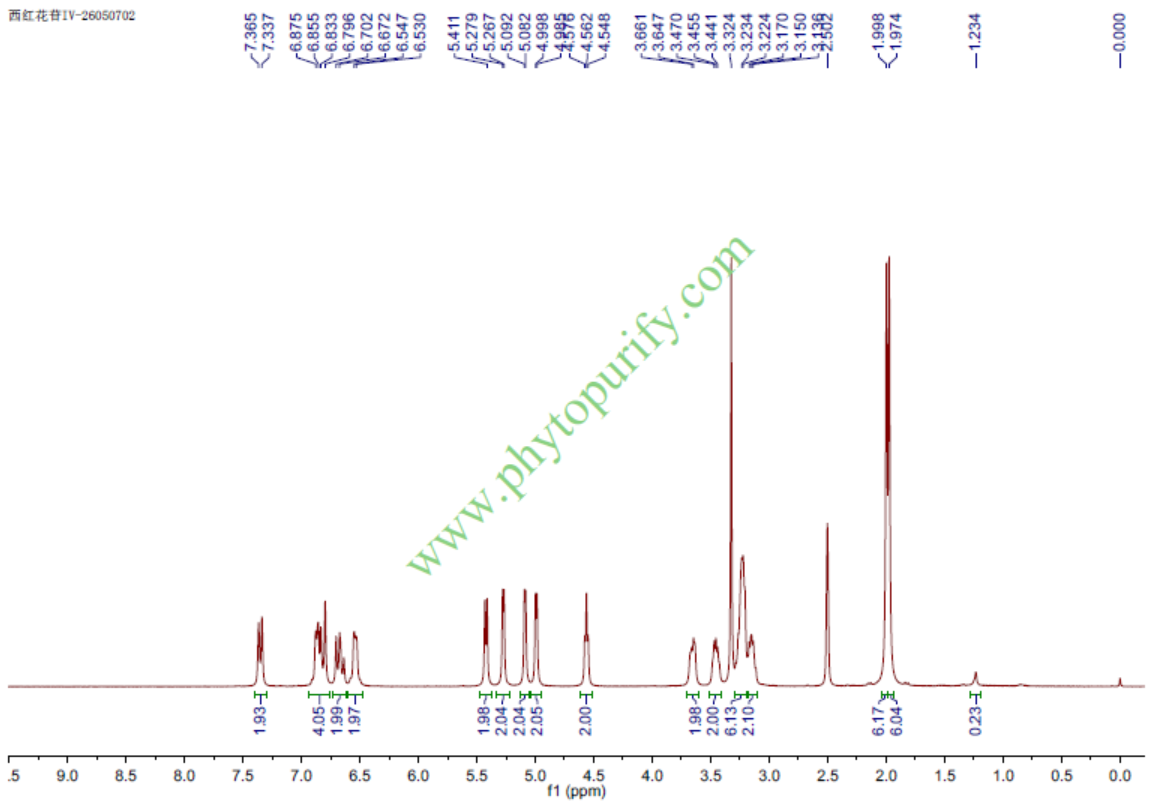
Identification Method: Mass, NMR
Packing: Brown vial or HDPE plastic bottle
Storage: Store in a well closed container, protected from air and light. Put into refrigerate or freeze for long term storage.
Whenever possible, you should prepare and use solutions on the same day. However, if you need to make up stock solutions in advance, we recommend that you store the solution as aliquots in tightly sealed vials at -20℃. Generally, these will be useable for up to two weeks.
The product could be supplied from milligrams to grams
Inquire for bulk scale.
Chengdu Biopurify Phytochemicals Ltd. is a leading company in the research, development, manufacture and marketing of High Quality Phytochemicals and Extracts(especially Active Ingredients from Traditional Chinese Medicine,TCM), Natural Active Pharmaceutical Ingredients worldwide.
The main services:
A. Supply active ingredients and reference standards of TCM, from mgs to kgs scale
B. Custom extraction and purification, target Herb Active Ingredients
C. Custom synthesis and semi-synthesis for Natural Active Ingredients
D. CR(contract research), CM(contract manufacture) and PD(process development) services from lab scale, pilot scale to commercial scale(GMP is also available)
E. TCM compounds library for drug screen,more than 3000 compounds available, many of them are rare and unique.
HPLC of Crocin IV
HNMR of Crocin IV
Storage conditions:Short-term storage at 2~8℃, long-term storage at -20 ~ -80℃
232.9000
.6911
.6911
7.5316
.4298
.4008
Low
64.4001
5.2650
Yes
Yes
No
No
No
No
0.3
Yes
Yes
Yes
Yes
Crocin IV, also known as bis (β - D-glucosyl) crocin, is one of the important carotenoid pigments in saffron (Crocus sativus L.) and belongs to the class of crocin glycosides. As a representative of various active ingredients in saffron, crocin IV has received widespread attention in the field of natural product pharmacology in recent years due to its unique chemical structure and significant biological activity. A large number of studies have shown that crocin IV has a strong antioxidant capacity and shows potential therapeutic effects in a variety of disease models, especially in the prevention and treatment of chronic diseases such as atherosclerosis, Alzheimer's disease, depression and diabetes retinopathy.
This article aims to systematically review the chemical structure and physicochemical properties, plant sources, and extraction methods of crocin IV, explore its pharmacological activity and mechanism of action, evaluate its pharmacological properties and pharmacokinetic characteristics, and prospect its clinical application potential, providing theoretical support and reference for research in related fields.
The chemical name of crocin IV is bis (β - D-glucosyl) crocetin, which is the diester form of crocetin. Its molecular formula is C26H-34O14 and its molecular weight is 652.6900. Structurally, crocin IV is composed of two carboxylic acid groups of safranic acid connected to two anomeric hydroxyl groups of β - D-glucopyranose through ester bonds, forming a diester glycoside. This structure endows it with strong water solubility (solubility of approximately 7.5316 mg/mL) and a LogP value of 0.6911, indicating a certain balance between hydrophilicity and lipophilicity.
Its topological polar surface area (TPSA) is as high as 232.9 Å ², indicating that the molecular surface has abundant polar groups, which are conducive to forming hydrogen bonds and polar interactions with biomolecules. The molecular structure of crocin IV contains multiple hydroxyl and carboxyl groups, providing it with a good antioxidant activity foundation. The low permeability of the blood-brain barrier suggests that its direct role in the central nervous system may be limited, but it indirectly exerts neuroprotective effects by regulating peripheral targets. The negative result of hERG inhibition experiment indicates a low risk of cardiac toxicity. The Ames test result is 0.3, indicating a low risk of genotoxicity and good safety.
Saffron IV is mainly present in the dried stigma of saffron (Crocus sativus L.) and is an important component of crocin pigments. Saffron, as a traditional Chinese medicine and natural dye, is widely cultivated and utilized due to its unique aroma and medicinal value. The content of crocin IV is greatly affected by variety, planting environment, harvesting time, and processing technology.
The extraction method usually uses water extraction or alcohol extraction combined with chromatographic separation technology. Traditional extraction techniques include:
In recent years, new green extraction technologies such as ultrasound assisted extraction and microwave-assisted extraction have been applied to the extraction of crocin IV, significantly improving extraction efficiency, shortening time, and reducing solvent usage, which is in line with the green and environmentally friendly trend of modern natural product extraction.
The pharmacological activity of crocin IV is mainly reflected in its strong antioxidant effect and regulatory ability on various chronic disease-related pathological processes. The following is a summary of its main pharmacological activities:
Saffron IV, as a carotenoid glycoside, has the ability to scavenge free radicals, inhibit lipid peroxidation, and protect cells from oxidative stress damage. In vitro studies have shown that it can activate the nuclear factor E2 related factor 2 (Nrf2) signaling pathway, upregulate the expression of antioxidant enzymes such as superoxide dismutase (SOD1, SOD2), catalase (CAT), glutathione peroxidase (GPX1), and heme oxygenase 1 (HMOX1), and enhance the cellular antioxidant defense system.
Crocin IV plays a protective role through multi target regulation of atherosclerosis related signaling pathways. Research has shown that it can downregulate the expression of oxidized low-density lipoprotein receptor LOX-1 (OLR1), inhibit monocyte adhesion and endothelial damage, activate the AMP activated protein kinase (AMPK) pathway, promote the expression of cholesterol efflux related protein ABCA1, and alleviate vascular wall lipid deposition and inflammatory response. In addition, crocin IV inhibits the regulation of apoptosis protein BCL2 family members (MCL1, BCL2) and DNA repair enzyme RECQ1, helping to maintain the survival and function of vascular cells.
In the Alzheimer's disease (AD) model, crocin IV exhibits significant neuroprotective effects. It activates the AMPK signaling pathway, regulates neuronal energy metabolism, reduces the expression of β - amyloid precursor protein (APP) and β - secretase 1 (BACE1), and decreases the generation and accumulation of harmful amyloid proteins. Meanwhile, crocin IV can regulate NOTCH1 signaling, improve neuronal differentiation and survival, and inhibit TLR4 mediated neuroinflammatory response. In addition, by regulating the retinoic acid receptor (RARA) and tryptophan metabolizing enzyme IDO1, crocin IV is expected to improve cognitive function and neuropsychiatric symptoms.
Saffron IV exhibits antidepressant activity in a depression model, which involves regulating neurotransmitter metabolism and anti-inflammatory and antioxidant pathways. It can inhibit the activity of indoleamine 2,3-dioxygenase (IDO1) and monoamine oxidase (MAOA, MAOB), increase serotonin (5-HT) and dopamine levels, and improve neurotransmitter imbalance. By activating the Nrf2 signaling pathway, reducing the expression of oxidative stress and inflammatory mediator TNF, and alleviating neuroinflammation. Saffron IV also affects neural regulatory targets such as TRPV1, CHRNA7, and MAPK1, promoting neural plasticity and emotional stability.
Crocin IV has protective effect on diabetes retinopathy (DR). It alleviates hyperglycemia induced retinal cell damage by regulating key targets such as tyrosinase (TYR), protein kinase C (PRKCA, PRKCB), and aldose reductase (AKR1B1). Activate the Nrf2 signaling pathway, enhance antioxidant enzyme expression, inhibit matrix metalloproteinase (MMP2) activity, and prevent degradation of the retinal basement membrane. By regulating the hypoxia inducible factor HIF1A and inflammatory factor TNF, crocin IV helps to inhibit angiogenesis and inflammatory response, delaying the progression of diabetic retinopathy.
The multi-target mechanism of action of crocin IV is the basis for its broad pharmacological activity. Its main targets and related signaling pathways include:
Saffron IV exerts its multidimensional pharmacological effects through the synergistic action of multiple targets and pathways, forming a complex signaling network. This multi-target mode of action provides a theoretical basis for its treatment in complex diseases.
The pharmacological parameters of crocin IV show that it has certain development potential, but there are also certain limitations:
At present, pharmacokinetic studies on crocin IV are relatively limited. Animal experiments have shown that it can be detected in plasma after oral administration, indicating a certain absorption capacity, but its bioavailability and metabolic pathways still need further research. Its high polarity and glycosidic structure may lead to intestinal enzymatic hydrolysis and first pass effects, affecting in vivo stability. In the future, it is necessary to combine novel drug delivery systems such as nanocarriers and liposomes to improve their pharmacokinetic properties.
Saffron IV, as an important active ingredient in saffron, has shown broad application prospects in the prevention and treatment of various chronic diseases due to its multi-target and multi mechanism pharmacological properties
In the future, combining modern drug development technology, in-depth preclinical safety evaluation, pharmacokinetics, and dosage form optimization research of crocin IV will lay the foundation for its clinical translation. Meanwhile, utilizing structural modification and drug carrier technology to enhance its bioavailability and targeting will greatly promote its clinical application.
Saffron IV, as an important carotenoid glycoside in saffron, exhibits strong antioxidant capacity and potential for multi-target regulation of disease-related signaling pathways due to its unique chemical structure and significant biological activity. Its pharmacological effects in atherosclerosis, Alzheimer's disease, depression, diabetes retinopathy and other chronic diseases highlight its value as a candidate molecule of natural drugs.
Although there are certain limitations in its pharmacological and pharmacokinetic characteristics at present, with the development of extraction and purification technologies, drug carrier systems, and structural optimization strategies, crocin IV is expected to overcome these obstacles and become an important component of the new generation of natural product drugs. In the future, we should strengthen its mechanism research, preclinical evaluation, and clinical trials, promote its transition from laboratory to clinical application, and benefit the vast number of patients.
In summary, crocin IV not only enriches the pharmacological connotation of saffron, but also provides new research directions and drug development opportunities for natural product pharmacology and chronic disease treatment.
