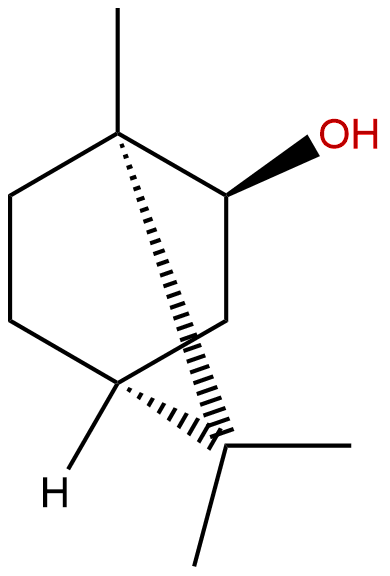


Product name: (+)-Borneol
Synonym name:
Catalogue No.: SBP03818
Cas No.: 464-43-7
Formula: C10H18O
Mol Weight: 154.253
Botanical Source:
Physical Description:
Type of Compound: Monoterpenoids
Purity: 95%~99%
Analysis Method: HPLC-DAD or/and HPLC-ELSD
Identification Method: Mass, NMR
Packing: Brown vial or HDPE plastic bottle
The product could be supplied from milligrams to grams. Inquire for bulk scale.
We provide solution to improve the water-solubility of compounds, thereby facilitating the variety of activity tests and clinic uses.
For Reference Standard and R&D, Not for Human Use Directly.
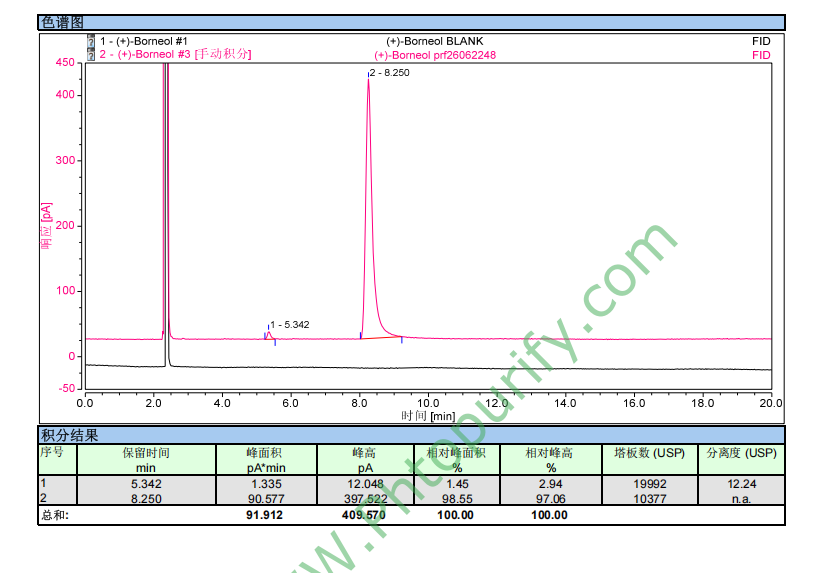
HPLC of (+)-Borneol
Storage conditions:Short-term storage at 2~8℃, long-term storage at -20 ~ -80℃
20.2300
2.8878
2.8878
1.1590
6.5934
9.9007
High
35.5897
4.2796
Yes
No
No
No
No
No
0.0
Yes
No
No
Yes
Natural borneol, also known as (+) - borneol, is a monoterpenoid compound with a long history of application, and its CAS number is 464-43-7. As one of the main active ingredients of traditional Chinese medicine "Borneol", (+) - Borneol is an enantiomer of (-) - Borneol (derived from Ainexia). The two have similar physical properties, but often exhibit stereoselective differences in biological activity. In the traditional medical system of China and other regions in Asia, borneol is often used as an essential medicine for "awakening the mind, clearing heat, and relieving pain". It is used to treat various diseases such as fever, dizziness, convulsions, stroke, sore throat, and blurred vision. It is often used as a "adjunctive medicine" to induce the upward movement of drugs and promote the absorption of other drugs.
Modern pharmacological research has gradually revealed the rich scientific connotations behind this ancient molecule. Natural (+) - Borneol not only has significant neuroprotective, anti-inflammatory, analgesic, antibacterial and other activities on its own, but also becomes a highly valuable "drug delivery enhancer" due to its unique physicochemical properties, especially its excellent ability to cross biological barriers (such as the blood-brain barrier). (+) - Borneol has shown great potential in innovative drug development, especially in the treatment strategies for central nervous system diseases. This article aims to systematically review the chemical properties, pharmacological activities, mechanisms of action, medicinal properties, and clinical application prospects of natural (+) - borneol, in order to provide comprehensive scientific references for the deep development and modern application of this natural product.
The chemical name of (+) - Borneol is (1S, 2S, 4S) -1,7,7-trimethylbicyclo [2.2.1] heptan-2-ol, with a molecular formula of C ₁₀ H ₁₈ O and a molecular weight of 154.2530. Its structure belongs to bicyclic monoterpene alcohols, with a ship shaped cyclohexane as the core, bridged by a methylene group, and connected to hydroxyl and two methyl groups on specific carbon atoms. Its absolute configuration is S-shaped at positions C1, C2, and C4, which forms a mirror relationship with the (-) - borneol (1R, 2R, 4R configuration) derived from Aina fragrance.
This difference in stereochemistry profoundly affects its physicochemical properties and biological activity. From the provided pharmacological parameters, the lipid water partition coefficient (LogP) of (+) - borneol is 2.8878, indicating its good lipophilicity, which is directly related to its ability to freely penetrate cell membranes and biological barriers. Its topological polar surface area (TPSA) is only 20.23 Å ², which is a very small value, further confirming its low molecular polarity and strong transmembrane transport ability. The water solubility parameter is 1.1590 mg/L, which belongs to compounds that are difficult to dissolve in water. In practical formulation applications, this often needs to be improved through methods such as cyclodextrin inclusion, microemulsion or nanoparticle preparation.
Of particular concern is its evaluation of "blood-brain barrier: high". This does not mean that it is easily blocked by the blood-brain barrier, on the contrary, it refers to its extremely high blood-brain barrier permeability. Numerous studies have confirmed that (+) - borneol can rapidly enter the central nervous system through passive diffusion, and can temporarily and reversibly alter the protein expression or membrane fluidity of the tight junctions between endothelial cells in the blood-brain barrier, promoting the entry of other co administered therapeutic molecules (such as chemotherapy drugs, neuroprotective agents, gene carriers, etc.) into the brain. This characteristic is one of its most important application values. In addition, the preliminary safety data of "hERG inhibition: no" and "Ames test: 0.0" suggest that its cardiac toxicity risk and genetic toxicity risk are low, providing a favorable basis for its drug development.
Natural (+) - Borneol mainly comes from the Lauraceae plant, Camphor camphora(Cinnamomum camphora (L.) Presl var. borneol)The crystalline compound obtained by steam distillation and recrystallization of branches and leaves. Longnao Camphor is a unique variety of camphor tree in China that is rich in right-handed Longnao (i.e. (+) - borneol). It is mainly distributed in Jiangxi, Hunan, Fujian and other places, and is currently the most important plant resource for obtaining high-quality natural (+) - borneol. In addition, the Asteraceae plant Artemisia annua(Blumea balsamifera The extracted (L.) DC. is mainly composed of (-) - borneol, and the two have different sources that need to be distinguished.
The traditional extraction method is mainly steam distillation. Chop the fresh branches and leaves of Longnao Camphor into small pieces, introduce water vapor, and allow the volatile components to be distilled out with the steam. After condensation, an oil-water mixture is obtained, and the crystalline component in it is crude borneol. The crude product can be purified through steps such as sublimation and recrystallization to obtain high-purity natural (+) - borneol crystals. This method has a mature process, but it consumes a lot of energy and the yield is greatly affected by the variety of raw materials, place of origin, and harvest season.
Modern extraction and separation techniques aim to improve efficiency and purity. including:
1. Supercritical CO ₂ extraction By utilizing the high permeability and selectivity of supercritical fluids, operating at lower temperatures can better preserve the natural configuration of ice flakes, avoid thermal sensitivity damage, and achieve higher extraction rates and purity than traditional methods.
2. molecular distillation Under high vacuum, the separation temperature is much lower than the boiling point of the material, making it particularly suitable for the separation and purification of high boiling, thermosensitive natural products such as ice flakes. It can effectively remove impurities and obtain products with extremely high optical purity.
3. Column chromatography and preparative chromatography Using fixed phases such as silica gel and alumina, combined with suitable eluents, it can be used for fine separation of ice flakes in complex mixtures in laboratory scale or industrial production.
Ensuring the optical purity of the product (i.e. (+) - enantiomer excess value) is key to quality control and is often analyzed through optical rotation determination, chiral gas chromatography, or chiral liquid chromatography.
Numerous in vitro and in vivo pharmacological studies have confirmed that natural (+) - borneol has multiple biological activities.
1. Neuroprotection and central nervous system function This is the core pharmacological activity of (+) - borneol. Research has shown that it exhibits clear protective effects in animal models such as cerebral ischemia/reperfusion injury, Alzheimer's disease, Parkinson's disease, etc. It can reduce neuronal apoptosis, inhibit oxidative stress, alleviate brain edema, and improve learning and memory impairment. The traditional efficacy of "awakening the mind" has been scientifically interpreted in modern times. In addition, (+) - Borneol itself has certain sedative and anticonvulsant effects, and dose dependently regulates neural excitability.
2. Anti inflammatory and immune regulation(+) - Borneol has inhibitory effects on both acute and chronic inflammation models. It can significantly inhibit the excessive production of nitric oxide (NO), prostaglandin E2 (PGE2), and pro-inflammatory cytokines (such as TNF - α, IL-1 β, IL-6) induced by lipopolysaccharides (LPS) and other factors in macrophages. Its anti-inflammatory mechanism involves the regulation of key inflammatory signaling pathways such as NF - κ B and MAPK.
3. Analgesic effect In various pain models such as hot plate method and acetic acid writhing method, (+- borneol) can increase pain threshold and reduce pain response. Its analgesic effect may be partially independent of its anti-inflammatory activity, involving modulation of central and peripheral pain signaling pathways.
4. Antibacterial and antiviral(+) - Borneol has inhibitory effects on various bacteria and fungi such as Staphylococcus aureus, Escherichia coli, and Candida albicans. It also showed a certain inhibitory activity on respiratory syncytial virus, influenza virus, etc., which is consistent with its traditional use in the treatment of infectious diseases such as laryngitis and oral ulcer.
5. Promoting penetration and enhancing drug delivery As mentioned earlier, this is the unique "adjunctive" function of (+) - Borneol. It can significantly improve the permeability and bioavailability of various co administered ingredients (whether they are small molecule chemical drugs, protein peptides, or nanomaterials) in the gastrointestinal tract, cornea, skin, and most importantly, the blood-brain barrier. The mechanism may include: interfering with the ordered arrangement of lipid bilayers on the cell membrane, increasing membrane fluidity; Downregulate the expression of tight junction proteins such as Occludin and ZO-1; Inhibiting the function of efflux transporters (such as P-gp).
As research deepens, the mechanism of action of (+- borneol) gradually extends from the macroscopic system level to the microscopic molecular target level. Its pleiotropic pharmacological effects stem from its regulation of multiple key signaling pathways and molecular targets.
1. Regulation of neuroinflammation and apoptosis pathways In brain injury models, (+- Borneol) reduces excessive activation of microglia and downstream inflammatory cytokine storms by inhibiting the TLR4/MyD88/NF - κ B signaling axis. At the same time, it can upregulate survival signaling pathways such as PI3K/Akt and Nrf2/HO-1, and inhibit mitochondrial dependent Caspase-3 apoptosis pathway, thereby synergistically exerting neuroprotective effects.
2. Regulation of blood-brain barrier function Its role in promoting BBB permeability is closely related to regulating the tight junctions of endothelial cells. Research has shown that (+) - borneol can dose - and time-dependent reduce the expression and phosphorylation levels of tight junction proteins such as Claudin-5 and Occludin in brain microvascular endothelial cells, temporarily and reversibly opening up cellular bypass pathways. In addition, it can inhibit the activity of ATP binding cassette transporters (such as P-glycoprotein) and reduce drug efflux.
3. Effects on the neurotransmitter system(+) - Borneol can affect the levels or receptor functions of neurotransmitters such as glutamate, gamma aminobutyric acid (GABA), and dopamine. For example, it may contribute to its sedative and anticonvulsant effects by regulating GABA_A receptors.
4. Potential role of ion channels As a small molecule terpenoid compound, borneol may directly or indirectly regulate the activity of certain ion channels (such as the TRP channel family), which is related to its sensory regulation effects (such as cooling sensation and pain relief).
5. Epigenetic regulation The latest research suggests that (+- borneol) may exert long-term regulatory effects by affecting histone modifications or the expression of non coding RNAs (such as miRNA), providing a new perspective for understanding its complex effects in central nervous system diseases.
Although multiple potential targets have been identified, the existence of one or more high affinity direct targets (such as specific receptors or enzymes) for (+) - borneol remains a frontier and challenge in current research. Its function is likely to be a network mode of "multi-target, micro regulation".
From the provided parameters and existing research, (+) - borneol exhibits unique medicinal properties.
Advantage:
1. Excellent barrier penetration capability Its most prominent advantages are high LogP, low TPSA, and "high" BBB penetration, making it a rare and efficient natural small molecule for brain penetration and an ideal enhancer.
2. Good security foundation Traditional applications have a long history and low toxicity. The preliminary negative results of hERG and Ames suggest a low risk of cardiovascular and genetic toxicity. The acute toxicity test showed that its LD ₅₀ value was relatively high.
3. Rapid internal processes As a small molecule volatile component, (+) - borneol is rapidly absorbed and distributed in the body. Oral or nasal administration can quickly enter the systemic circulation and distribute throughout the body, especially with high and rapid accumulation in brain tissue.
challenge:
1. Poor water solubility The extremely low water solubility limits its formulation development, often requiring complex formulation techniques (such as cyclodextrin inclusion complexes, liposomes, nanoemulsions, phospholipid complexes, etc.) to improve solubility and stability.
2. Volatile and unstable Ice flakes are prone to sublimation at room temperature and are sensitive to light and heat. Strict control of conditions is required during production and storage.
3. Rapid metabolism and short half-life It is mainly metabolized by the liver cytochrome P450 enzyme system (especially CYP2C9, CYP3A4) in the body, converted into hydroxylated or glucuronic acid bound products, and excreted by the kidneys. Its elimination half-life is relatively short, which may result in limited duration of efficacy and often requires the use of sustained-release formulations or multiple administrations to solve the problem.
Pharmacokinetic study Animal pharmacokinetics indicate that the oral bioavailability of (+) - borneol varies greatly depending on the formulation. After intravenous administration, it showed a two chamber model distribution with a large distribution volume, indicating a wide tissue distribution. Its pharmacokinetic behavior is stereoselective, and there may be differences in absorption, distribution, metabolism, and excretion between (+) - borneol and (-) - borneol. Generally, the distribution of (+) - isomer in the brain is more advantageous. When using it as a penetration enhancer, attention should be paid to its potential to alter the pharmacokinetic behavior of co administered drugs, and systematic interaction studies are necessary.
Based on its unique pharmacological activity and pharmacological characteristics, natural (+) - borneol has broad clinical application prospects and is expanding from traditional compatibility to modern innovative drugs.
1. Innovative drug development as a therapeutic ingredient:
* Central nervous system diseases Develop emergency or adjuvant therapy drugs for ischemic stroke, traumatic brain injury, and vascular dementia. Its neuroprotective and rapid brain entry properties are highly valuable.
* New type of analgesic and anti-inflammatory drugs Develop new formulations with dual central and peripheral effects for neuropathic pain, migraine, or arthritis.
* Inhalation Preparations Develop inhalation aerosols or tablets for respiratory infections (such as acute pharyngitis and bronchitis) by utilizing their antibacterial and antiviral activity and volatility.
2. As a key component of the "empowering" drug delivery system This is currently the hottest research and development direction.
* Brain targeted delivery system Combining (+) - borneol with chemotherapy drugs (such as doxorubicin, paclitaxel), nerve growth factors, gene drugs, or nanocarriers (such as liposomes, polymer nanoparticles) to construct an "intelligent" brain targeted delivery system for the treatment of gliomas, Alzheimer's disease, etc., breaking through the biggest bottleneck of the blood-brain barrier.
* Transdermal and mucosal enhancers Adding low concentration (+) - borneol to transdermal patches, ophthalmic preparations, and nasal delivery systems can safely and effectively enhance local or systemic absorption of the main drug.
3. Application of modern traditional Chinese medicine formulas and integrated traditional Chinese and Western medicine In depth explanation of the scientific connotation of (+) - Borneol in classic formulas (such as Angong Niuhuang Wan and Kuaishang Jiuxin Wan), including "promoting drug upward movement" and "coordinating with other agents", optimizing its dosage and compatibility in new formulas, and developing evidence-based modern Chinese medicine new drugs.
Future research prospects:
1. Exploration of Deep Mechanisms Using chemical biology methods such as affinity fishing, molecular docking, gene knockout/knock in, to search for its direct molecular targets and draw a multi-target action network map.
2. Stereopharmacology research Compare the differences in efficacy, pharmacokinetics, and toxicity between (+) - and (-) - borneol in the system, providing a basis for precision medication based on enantiomers.
3. High end formulation research and development Develop a novel drug delivery system based on (+) - borneol for long circulation, stimulus response, and brain targeting, achieving precise controlled release and enhanced efficacy and reduced toxicity.
4. Clinical translational research Conduct high-quality, multi center clinical trials to confirm its effectiveness and safety as a therapeutic drug or enhancer in specific diseases such as stroke and brain tumors, and promote its transition from laboratory to clinical use.
Natural (+) - Borneol, a crystallization of ancient Eastern medicine, is radiating new vitality under the light of modern science. It is no longer just a natural product with inherent pharmacological activity, but also a "chemical key" that can break through physiological barriers and empower drug delivery. Its outstanding ability to cross the blood-brain barrier provides a unique natural solution to the global challenge of drug delivery in the central nervous system. From the multi-target neuroprotective mechanism to the stereoselective pharmacokinetics, from the traditional compound's "Zuo Shi" intelligence to the core component of modern nano drug delivery systems, the study of (+) - borneol perfectly embodies the fusion of tradition and modernity. In the future, with a deeper understanding of its molecular mechanism of action and the continuous emergence of innovative formulations based on its characteristics, natural (+) - borneol will play an increasingly important role in the prevention and treatment of major diseases such as cardiovascular and cerebrovascular diseases, neurodegenerative diseases, tumors, as well as high-end drug delivery technology, becoming an important bridge connecting traditional natural medicine treasures with modern innovative drug research and development.
