


Product name: Crocin I
Synonym name: alpha-Crocin; Crocin; Gardenin
Catalogue No.: BP0406
Cas No.: 42553-65-1
Formula: C44H64O24
Mol Weight: 976.972
Botanical Source: Crocus sativus L.; Fructus Gardeniae
Physical Description:
Type of Compound: Diterpenoids
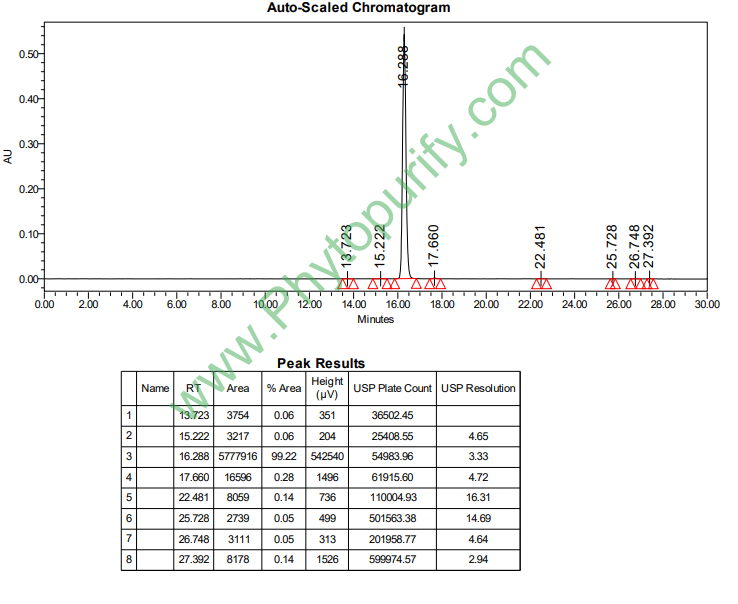
Purity: 95%~99%
Analysis Method: HPLC-DAD or/and HPLC-ELSD
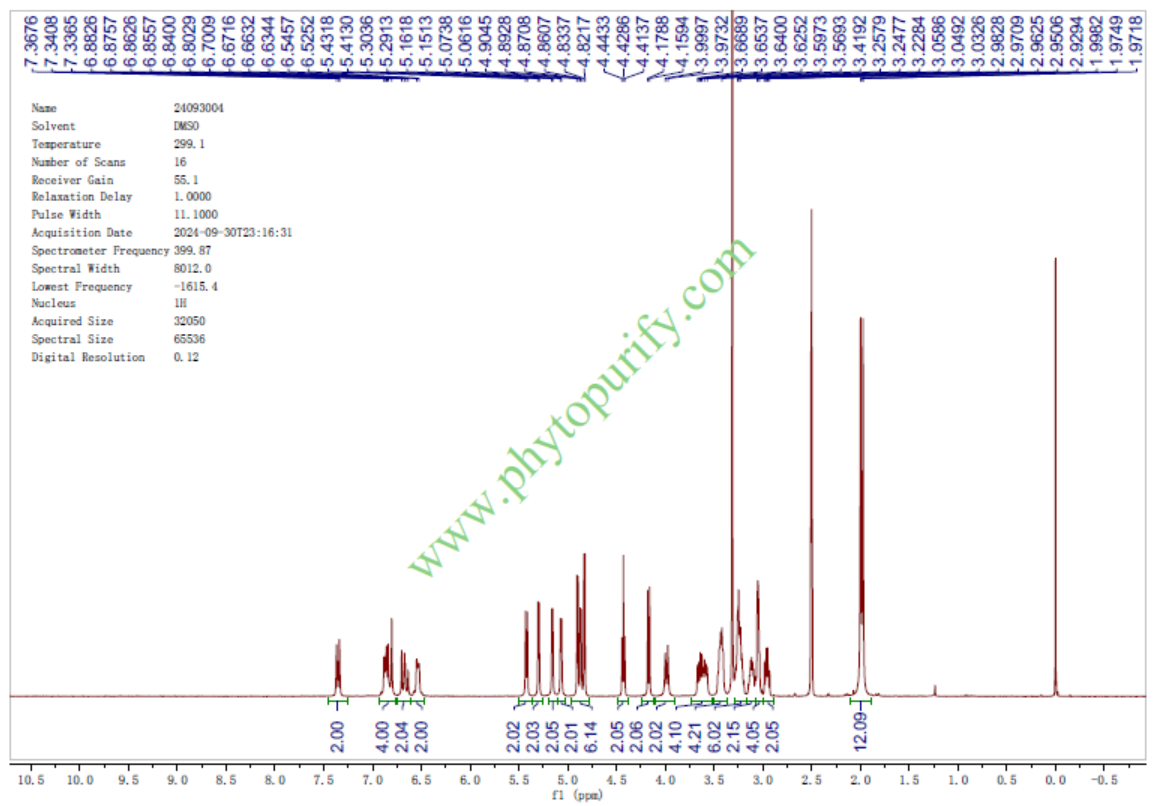
Identification Method: Mass, NMR
Packing: Brown vial or HDPE plastic bottle
Storage: Store in a well closed container, protected from air and light. Put into refrigerate or freeze for long term storage.
Whenever possible, you should prepare and use solutions on the same day. However, if you need to make up stock solutions in advance, we recommend that you store the solution as aliquots in tightly sealed vials at -20℃. Generally, these will be useable for up to two weeks.
The product could be supplied from milligrams to grams
Inquire for bulk scale.
Description:
Crocin is a water-soluble carotenoid pigment of saffron (Crocus sativus L.), it has been used as a spice for flavoring and coloring food preparations. Crocin has anti-inflammatory, anti-oxidative, anti-apoptotic, anti-asthma, anti-cancer, and hypolipidemic effects. Crocin improves toxic effects of diazinon via reducing lipid peroxidation and restoring altered contractile and relaxant responses in rat aorta; it also protects retinal photoreceptors against light-induced cell death. Crocin can also promote ovarian cancer HO-8910 cell apoptosis, most likely by increasing p53 and Fas/APO-1 expression, and then activating the apoptotic pathway regulated by Caspase-3.
References:
Nat Prod Commun. 2015 Feb;10(2):249-52.
Ovarian cancer HO-8910 cell apoptosis induced by crocin in vitro.
The effect and mechanism of ovarian cancer HO-8910 cell apoptosis induced by Crocin.
METHODS AND RESULTS:
MTT assay was performed to detect the inhibitory action of Crocin on the proliferation of HO-8910 cells. Flow cytometry was used to test the cell cycle distribution and apoptosis rate of ovarian cancer HO-8910 cells. Western blot analysis was utilized to measure the levels of apoptotic proteins such as p53, Fas/APO-1, and Caspase-3. MTT analysis revealed that Crocin significantly inhibited the growth of HO-8910 cells. Additionally, flow cytometry illustrated that Crocin raised the proportion of HO-8910 cells in the G0/G1 phase and increased their apoptosis rate. Furthermore, Western blot analysis revealed that Crocin up-regulated the expression of p53, Fas/APO-1, and Caspase-3.
CONCLUSIONS:
The results of this study showed that Crocin can significantly inhibit the growth of HO-8910 cells and arrest them in the G0/G1 phase. Crocin can also promote ovarian cancer HO-8910 cell apoptosis, most likely by increasing p53 and Fas/APO-1 expression, and then activating the apoptotic pathway regulated by Caspase-3.
Invest Ophthalmol Vis Sci. 2006 Jul;47(7):3156-63.
Protective effect of crocin against blue light- and white light-mediated photoreceptor cell death in bovine and primate retinal primary cell culture.
The present study was performed to investigate the effect of Crocin on blue light- and white light-induced rod and cone death in primary retinal cell cultures.
METHODS AND RESULTS:
Primary retinal cell cultures were prepared from primate and bovine retinas. Fifteen-day-old cultures were exposed to blue actinic light or to white fluorescent light for 24 hours. Cultures were treated by the addition of different concentrations of Crocin for 24 hours before light exposure or for 8 hours after light exposure. Cultures kept in the dark were used as controls. Green nucleic acid stain assay was used to evaluate cell death. Rods and cones were immunolabeled with specific antibodies and counted. TUNEL labeling was used to detect fragmented DNA in fixed cells after light exposure. Primary retinal cell cultures contained a mixture of retinal cells enriched in photoreceptors, bipolar cells, and Müller cells. Twenty-four-hour exposure to blue and white light induced death in 70% to 80% of the photoreceptors in bovine and primate retinal cell cultures. Crocin protected the photoreceptors against blue light- or white light-mediated damage in a concentration-dependent manner with an EC50 of approximately 30 microM. TUNEL assays confirmed that Crocin protected photoreceptors from light damage.
CONCLUSIONS:
These results show that blue and white light selectively induce rod and cone cell death in an in vitro model. Crocin protects retinal photoreceptors against light-induced cell death.
Immunopharmacol Immunotoxicol. 2015 Jun;37(3):236-43.
Anti-asthma potential of crocin and its effect on MAPK signaling pathway in a murine model of allergic airway disease.
Crocin, a diterpenoid glucoside, has multitudinous activities such as anti-inflammation, anti-allergy, anti-oxidation and relaxing smooth muscles. In this study, the potential of Crocin as an anti-asthma agent was investigated in a murine model.
METHODS AND RESULTS:
BALB/c mice were sensitized and challenged by ovalbumin (OVA) to induce allergic airway inflammation, with Crocin administered one hour before every OVA challenge. Airway hyper-reactivity was evaluated by lung function analysis systems. Leukocyte counts in bronchoalveolar lavage fluid (BALF) were measured by a hemocytometer and Diff-Quick-stained smears. Lung tissues were stained with hematoxylin-eosin, Congo red and methylene blue for histopathological inspection. Inflammatory mediators in serum, BALF and lung were measured by ELISA or RT-PCR. Effects of Crocin on MAPK signaling pathways were investigated by western blot analysis. Crocin significantly suppressed airway inflammation and hyper-reactivity, reduced levels of BALF interleukin (IL-4), IL-5, IL-13 and tryptase, lung eosinophil peroxidase and serum OVA-specific IgE, and inhibited the expression of lung eotaxin, p-ERK, p-JNK and p-p38 in the OVA-challenged mice.
CONCLUSIONS:
These results demonstrated that the suppression of Crocin on airway inflammation and hyper-reactivity in a murine model, thus Crocin might have a great potential to be a candidate for the treatment of asthma.
Drug Chem Toxicol. 2014 Oct;37(4):378-83.
Protective effect of crocin on diazinon induced vascular toxicity in subchronic exposure in rat aorta ex-vivo.
Diazinon (DZN) is a widely used organophosphate insecticide. Although mechanism of DZN cardiovascular toxicity is primarily mediated through inhibition of acetylcholinesterase, however, DZN causes remarkable atropine-insensitive hypotension in rats. It has been proved that oxidative stress is an important mechanism of DZN toxicity especially in chronic exposure. Crocin, an active ingredient of saffron, has been found to antagonize the hypotensive effects of DZN in rats, but do not reverse acetylcholinesterase inhibition. In this study the effects of DZN on contractile and relaxant responses in rat aorta as well as ex-vivo antioxidant actions of Crocin have been investigated.
METHODS AND RESULTS:
Rats were divided into 7 groups: corn oil (control), DZN (15 mg/kg/day, gavage), Crocin (12.5, 25 and 50 mg/kg/day, i.p.) plus DZN, vitamin E (200 IU/kg, i.p., three days a week) plus DZN and Crocin (50 mg/kg/day, i.p.) groups. Treatments were continued for 4 weeks. Contractile and relaxant responses were evaluated on the isolated aorta. Our results showed that DZN not only decreased the contractile responses to KCl and Phenylephrine (PE) (p < 0.001), but also attenuated the relaxant response to acetylcholine (ACh) (p < 0.01). Crocin and vitamin E attenuated lipid peroxidation, improved the reduction of contractile responses by KCl and PE and restored the decrease in ACh relaxation in rat aorta.
CONCLUSIONS:
DZN induced vascular toxicity which may be due to oxidative stress and not to a cholinergic mechanism. Crocin improved toxic effects of DZN via reducing lipid peroxidation and restoring altered contractile and relaxant responses in rat aorta.
HPLC of Crocin I
HNMR of Crocin I
Storage conditions:Short-term storage at 2~8℃, long-term storage at -20 ~ -80℃
391.2000
-.5043
-.5048
13.8265
.4185
.2651
Low
49.3584
6.1551
Yes
Yes
No
No
No
No
0.0
Yes
Yes
Yes
Yes
Natural products, as an important source of drug discovery, play an irreplaceable role in the history of human disease prevention and treatment. Among them, the active ingredients derived from the dried stigma of saffron (Crocus sativus L.) in the family Iridaceae, namely crocin compounds, have attracted much attention due to their bright color and extensive pharmacological activities. Crocin I (CAS number: 42553-65-1) is a core member of the crocin family and a water-soluble carotenoid glycoside. Modern pharmacological research has revealed that crocin I not only gives saffron a unique color, but also exhibits excellent multiple biological activities such as anti-inflammatory, antioxidant, and anti-tumor effects. It provides a new molecular perspective for the treatment of various diseases by intervening in key signaling pathways such as JAK/STAT, regulating cell proliferation and apoptosis. Especially in the field of oxidative stress-related diseases, crocin I exhibits strong cellular protective potential by activating the antioxidant defense system centered around NRF2. This article aims to systematically review the chemical properties, plant sources, pharmacological activities, molecular mechanisms of action, pharmacological evaluation, and clinical application prospects of crocin I, in order to provide comprehensive scientific references for the in-depth research and development of this natural product.
Saffron I is a rare and highly water-soluble carotenoid glycoside ester. Its chemical structure is based on crocetin, a conjugated polyene dicarboxylic acid skeleton composed of 8 isoprene units, forming a linear structure containing multiple conjugated double bonds, which is the basis for its color development and antioxidant activity. The specific structure of crocin I is formed by ester bonding between safranic acid and two molecules of gentiobiose (glucose - β (1 → 6) - glucose). The introduction of this disaccharide chain greatly alters the physicochemical properties of the parent compound chlorogenic acid.
Its molecular formula is C44H64O24 and its molecular weight is 976.9720. Due to the presence of multiple hydroxyl and sugar groups in the molecule, its lipid water partition coefficient (LogP) is negative (-0.5043), indicating its high hydrophilicity. The topologically polar surface area (TPSA) is as high as 391.2000 Å ², further confirming its strong polarity characteristics. These properties determine that crocin I has good solubility in water (calculated value of approximately 13.8265 mg/mL), but lower solubility in lipid environments. This hydrophilic characteristic directly affects its pharmacokinetic behavior in vivo, as its ability to cross the blood-brain barrier is predicted to be "low". In the preliminary safety evaluation, crocin I showed no significant risk of hERG potassium channel inhibition (possibly not inducing cardiac QT interval prolongation), and the Ames test result was negative (0.0), indicating that it has no direct genetic toxicity. Saffron I is sensitive to light, heat, and acid-base conditions, and is particularly prone to isomerization and degradation in solution. This is a key consideration in extraction, storage, and formulation research.
Saffron I is almost exclusively present in the dried stigma of saffron (Crocus sativus L.). Saffron is a precious perennial herbaceous plant, and its "three stigma" harvesting relies entirely on artificial labor, with extremely low yields, making it one of the most expensive spices in the world. Saffron I, together with other glycoside forms such as crocin II and III, constitute the main pigment and active ingredient group of saffron.
The extraction of crocin I from saffron stigma is mainly based on its water solubility and polarity. Traditional methods include water extraction or low concentration alcohol water (such as 20-50% ethanol) solution extraction. These methods are mild and can effectively extract water-soluble crocin while reducing the dissolution of fat soluble impurities. Modern extraction technology is dedicated to improving efficiency, protecting active ingredients, and achieving green extraction:
1. Ultrasound assisted extraction Using the cavitation effect of ultrasound to destroy plant cell walls, accelerate solvent penetration and component dissolution, can significantly shorten extraction time and improve yield.
2. Microwave assisted extraction Microwave heating rapidly vaporizes the internal water of plants, generating pressure to break through cells and release target components quickly, which has the advantages of high efficiency and energy saving.
3. Supercritical fluid extraction Supercritical CO ₂ is usually used. Due to the high polarity of crocin I, the extraction efficiency of pure supercritical CO ₂ is poor, and polar entrainers (such as ethanol and water) are often added. Although this method has a high cost, it has no solvent residue and is suitable for the preparation of high-purity products.
The crude extract after extraction usually needs further separation and purification, such as macroporous adsorption resin chromatography (using resin to adsorb glycosides and gradient elution of different concentrations of alcohol solutions), silica gel column chromatography, preparative high-performance liquid chromatography (HPLC), etc., to obtain high-purity crocin I monomer for in-depth pharmacological and pharmacokinetic studies.
Numerous in vitro and in vivo studies have confirmed that crocin I has broad and significant pharmacological activities.
1. Antioxidant activity This is one of the most fundamental and core activities of crocin I. The conjugated double bond system in its molecule enables it to effectively quench singlet oxygen and scavenge free radicals (such as DPPH free radicals, ABTS free radical cations, superoxide anions, etc.), exhibiting direct chemical antioxidant capacity. In cell and animal models, crocin I can significantly alleviate oxidative damage induced by oxidants such as hydrogen peroxide (H ₂ O ₂) and paraquat, improve cell survival, reduce levels of lipid peroxidation products (such as MDA), and protect biofilms, proteins, and DNA from oxidative attacks.
2. Anti inflammatory activity Saffron I has shown good inhibitory effects on both acute and chronic inflammation models. In a macrophage model stimulated by lipopolysaccharide (LPS), it can dose dependently inhibit the production of key pro-inflammatory factors (such as TNF - α, IL-1 β, IL-6) and the release of nitric oxide (NO). In animal models, crocin I can alleviate paw swelling induced by carrageenan or Freund's complete adjuvant, and its mechanism is closely related to the regulation of inflammatory signaling pathways such as NF - κ B and MAPK.
3. Antitumor activity Crocin I can inhibit the growth of many tumor cell lines (such as breast cancer, lung cancer, colon cancer, leukemia, etc.), and can induce apoptosis and cell cycle arrest. Its anti-tumor effect has multi-target characteristics, which are not limited to directly killing tumor cells, but can also exert effects through multiple pathways such as anti-inflammatory, antioxidant, and inhibition of angiogenesis. Importantly, some studies suggest that crocin I has relatively low toxicity to normal cells, demonstrating a certain degree of selectivity.
4. Neuroprotective activity Based on its strong antioxidant and anti-inflammatory abilities, crocetin I exhibits protective potential in various neurodegenerative diseases and brain injury models. Research has reported that it can improve learning and memory impairment, reduce neuronal loss, and alleviate behavioral deficits in Alzheimer's disease, Parkinson's disease, cerebral ischemia-reperfusion injury, and depression models.
5. Other activities In addition, the study also suggests that crocin I has potential application value in cardiovascular system protection (such as anti myocardial ischemia, anti atherosclerosis), liver protection (anti liver fibrosis, anti alcoholic liver injury), and improvement of metabolic syndrome (such as lowering blood sugar and regulating blood lipid).
The pharmacological effects of crocin I stem from its precise regulation of multiple signaling pathways within cells, and its molecular target network is becoming increasingly clear.
1. Core pathway for antioxidant damage: NRF2/ARE system
This is the most critical molecular mechanism of crocin I in combating oxidative stress. In the basal state, the transcription factor NRF2 (encoded by the NFE2L2 gene) binds to its inhibitory protein Keap1 in the cytoplasm and is degraded by ubiquitination. When crocin I intervenes, it may modify cysteine residues on Keap1 or affect related kinases, promoting the dissociation of NRF2 from Keap1 and subsequently translocating to the nucleus. In the nucleus, NRF2 binds to antioxidant response elements (ARE), initiating the transcriptional expression of a series of downstream phase II detoxifying enzymes and antioxidant proteins. This includes:
- Superoxide dismutase (SOD1, SOD2)Catalytic conversion of superoxide anions into hydrogen peroxide.
- Catalase (CAT)Decompose hydrogen peroxide into water and oxygen.
- Glutathione peroxidase 1 (GPX1)Reduce hydrogen peroxide and organic hydroperoxides using glutathione.
- Heme oxygenase-1 (HMOX1)Catalyze the degradation of heme, producing biliverdin, carbon monoxide, and iron ions with antioxidant and anti-inflammatory effects.
Through this systematic upregulation, crocin I significantly enhances the overall antioxidant defense ability of cells.
2. Anti inflammatory and anti-tumor related pathways
- JAK/STAT pathway As described, crocin I can inhibit the JAK pathway. The activation of JAK kinase phosphorylates STAT proteins, dimerizes them, and transfers them into the nucleus to regulate gene expression, participating in inflammation, proliferation, and apoptosis. Saffron I inhibits JAK phosphorylation, blocks abnormal activation of STAT (especially STAT3), thereby suppressing the expression of downstream genes related to cell proliferation and survival (such as Bcl-2, Cyclin D1), and promoting the expression of pro apoptotic factors. This is one of the important mechanisms by which it induces tumor cell apoptosis.
- NF - κ B pathway Saffron I can inhibit the activation of I κ B kinase (IKK), prevent the degradation of I κ B protein, and thus retain NF - κ B dimer in the cytoplasm, blocking its nuclear translocation and transcription of pro-inflammatory genes (TNF - α, IL-6, COX-2, etc.).
- MAPK pathway Saffron I can regulate the phosphorylation levels of proteins such as ERK, JNK, p38 MAPK, and affect cell proliferation, differentiation, and stress response.
- Mitochondrial apoptosis pathway Saffron I can regulate Bcl-2 family proteins (such as reducing the Bcl-2/Bax ratio), induce a decrease in mitochondrial membrane potential, release cytochrome C, and activate the caspase cascade reaction, leading to cell apoptosis.
These pathways do not exist in isolation, but interweave with each other to form a complex regulatory network. For example, oxidative stress can activate the NF - κ B and MAPK pathways, while activation of NRF2 can inhibit the activation of NF - κ B. The multi-target effect of crocin I is the basis for its multi effect pharmacological activity.
Although crocin I has significant pharmacological activity, its drug like and pharmacokinetic (PK) properties are the hurdles that must be overcome for its clinical application.
Analysis of drug properties parameters As mentioned earlier, crocin I has a high molecular weight (>500) and strong hydrophilicity (LogP<0, TPSA>140), which conforms to the characteristics of "lead like compounds" but does not comply with the traditional "five principles of drug like" (Lipinski rule). This suggests that its oral absorption may face challenges, such as poor transmembrane permeability and susceptibility to gastrointestinal enzyme hydrolysis. Its good water solubility is beneficial for making injections, but its low blood-brain barrier permeability may limit its efficacy in treating central nervous system diseases. The safety warning indicators (hERG inhibition negative, Ames test negative) provide positive signals for its early development.
Pharmacokinetic study Existing animal pharmacokinetic studies (mainly conducted in rodents) have revealed some PK characteristics of crocin I
- absorb After oral administration, crocin I is rapidly but incompletely absorbed in the gastrointestinal tract, with low bioavailability. This is related to its high polarity and difficulty in passive diffusion through intestinal mucosal epithelial cells. It may be partially absorbed through active transporters in intestinal epithelial cells, such as sodium dependent glucose transporter SGLT1, or hydrolyzed under the action of intestinal microbiota to produce less polar safranic acid, which is then absorbed.
- distribution After intravenous administration, crocin I showed rapid distribution and elimination characteristics. Its distribution volume is relatively small, mainly distributed in tissues with abundant blood and high membrane permeability, such as the liver and kidneys. Due to its low fat solubility and potential efflux pump effects (such as P-glycoprotein), its entry into the brain and adipose tissue is limited.
- Metabolism Saffron I mainly undergoes hydrolytic metabolism in the body. Its glycosidic bonds are hydrolyzed by esterases or glycosidases in the intestine, blood, and liver, gradually removing glycosides and generating intermediates such as crocin II and III, which are ultimately converted into aglycone safranic acid. Zanghua acid may be one of the main active forms for its systemic pharmacological effects. In addition, phase II metabolic reactions such as glucuronic acid binding may also occur.
- excretion Saffron I and its metabolites are mainly excreted through the kidneys and bile. The prototype drug and its glycoside metabolites are easily excreted from urine due to their high water solubility; Zanghua acid and other substances may enter the intestine more through bile and be excreted with feces.
In order to improve its drug efficacy, current research strategies include developing novel drug delivery systems (such as liposomes, nanoparticles, phospholipid complexes, self microemulsions, etc.) to enhance its oral bioavailability and targeting; Structural modification is carried out to improve lipid solubility and metabolic stability while retaining the active core; Explore its properties as a prodrug (hydrolyzed into gallic acid in the body) and utilize it.
The multi-target and multi pathway mechanism of action of crocin I has shown broad application prospects in the prevention and treatment of various diseases.
1. Potential therapeutic areas:
- Oxidative stress-related diseases As a powerful activator of NRF2, crocin I has great potential in the fields of complications of diabetes (nephropathy, retinopathy), neurodegenerative diseases (Alzheimer's disease, Parkinson's disease), cardiovascular diseases (atherosclerosis, ischemia reperfusion injury) and chemical liver injury.
- Inflammatory diseases Can be used as an adjuvant therapy for chronic inflammatory diseases such as rheumatoid arthritis, inflammatory bowel disease, asthma, etc.
- neoadjuvant therapy Its anti-tumor activity and sensitizing and detoxifying effects on radiotherapy and chemotherapy (protecting normal cells through antioxidant protection) make it a promising adjuvant drug for comprehensive cancer treatment.
- Emotional and cognitive disorders Based on its neuroprotective effects, it is also worth exploring in depression, anxiety disorders, and age-related cognitive decline.
2. Development Challenges and Prospects:
- Resources and Costs Saffron resources are scarce, expensive, and the chemical synthesis route is complex and costly. In the future, efficient biosynthetic technologies such as microbial cell factories and plant tissue culture need to be developed to achieve sustainable and large-scale production.
- Optimization of drug properties Continuous investment in formulation technology innovation and rational structural modification research is necessary to address bottlenecks such as poor oral absorption, rapid metabolism, and insufficient distribution of target tissues.
- Deep exploration of mechanisms It is necessary to use methods such as systems biology, network pharmacology, and chemical biology to more accurately elucidate the synergistic network and primary secondary relationships of its multi-target effects, and discover its most advantageous indications.
- clinical translation Currently, the vast majority of research is still in the preclinical stage. It is urgent to design rigorous clinical trials to verify its safety, effectiveness, and optimal medication regimen in the human body, and promote its transition from the laboratory to the hospital bed.
In the future, crocin I is not only expected to be developed as an innovative single ingredient drug, but also as a functional food additive, cosmetic active ingredient, or a core component of compound Chinese medicine, playing an important role in the "prevention and treatment of diseases" and the big health industry.
Saffron I, as a representative water-soluble active ingredient in saffron, has become a highlight in natural product pharmacology research due to its unique chemical structure and multiple pharmacological activities. From directly clearing free radicals to systematically activating the NRF2 antioxidant defense system, from inhibiting the JAK/STAT pathway to inducing tumor cell apoptosis to multi pathway synergistic anti-inflammatory effects, the mechanism of action research continues to deepen, revealing the therapeutic advantages of natural products with multi-target and holistic regulation. Although its strong polarity and complex pharmacokinetic properties pose challenges for new drug development, they also inspire researchers to innovate in formulation engineering, structural optimization, and drug delivery strategies. With the production revolution brought about by synthetic biology technology and the elucidation of mechanisms under the concept of precision medicine, crocin I is expected to bridge the gap from "active compounds" to "clinical drugs", providing a modern solution derived from ancient plants for humans to cope with major health problems such as oxidative stress, chronic inflammation, and tumors. Continuous and in-depth research on it will not only enrich the treasure trove of natural medicines, but also provide new scientific insights for understanding the regulation of complex life processes.
