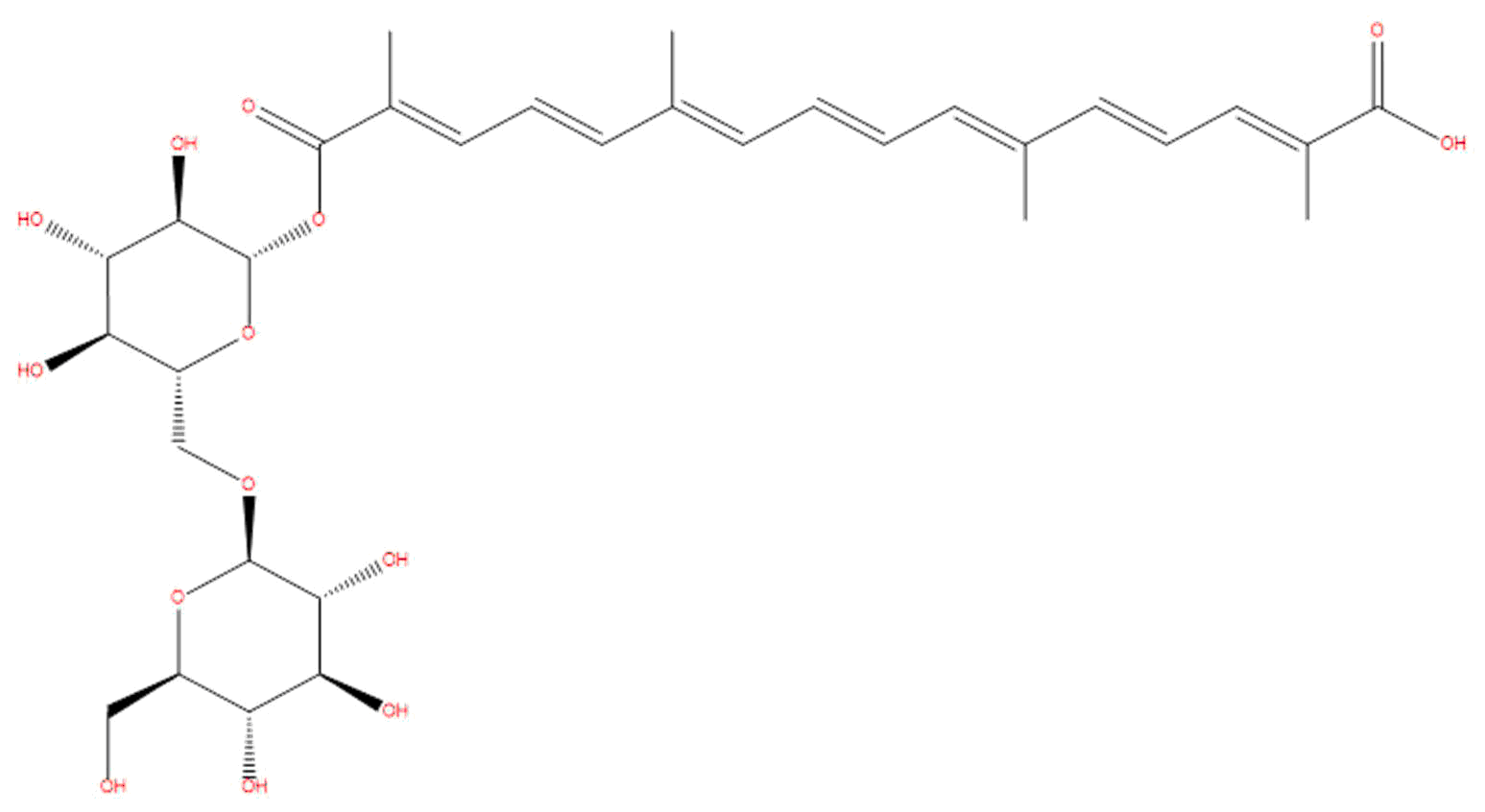


Product name: Crocin III
Synonym name: Crocin 3; Crocin C
Catalogue No.: BP4120
Cas No.: 55750-85-1
Formula: C32H44O14
Mol Weight: 652.69
Botanical Source: Crocus sativus L.
Type of Compound: Diterpenoids
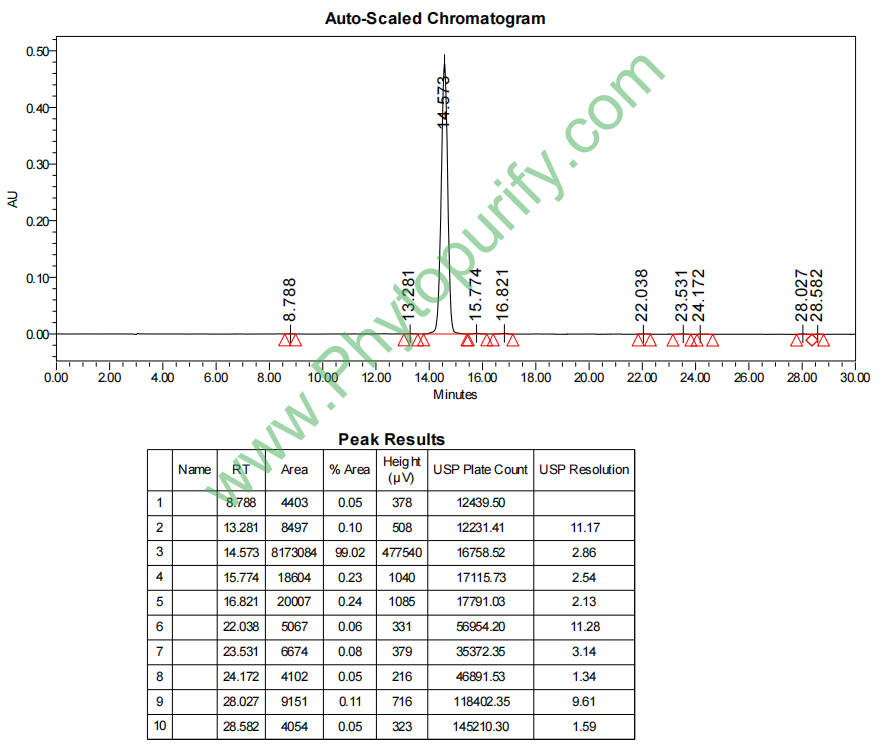
Purity: 95%~99%
Analysis Method: HPLC-DAD or/and HPLC-ELSD
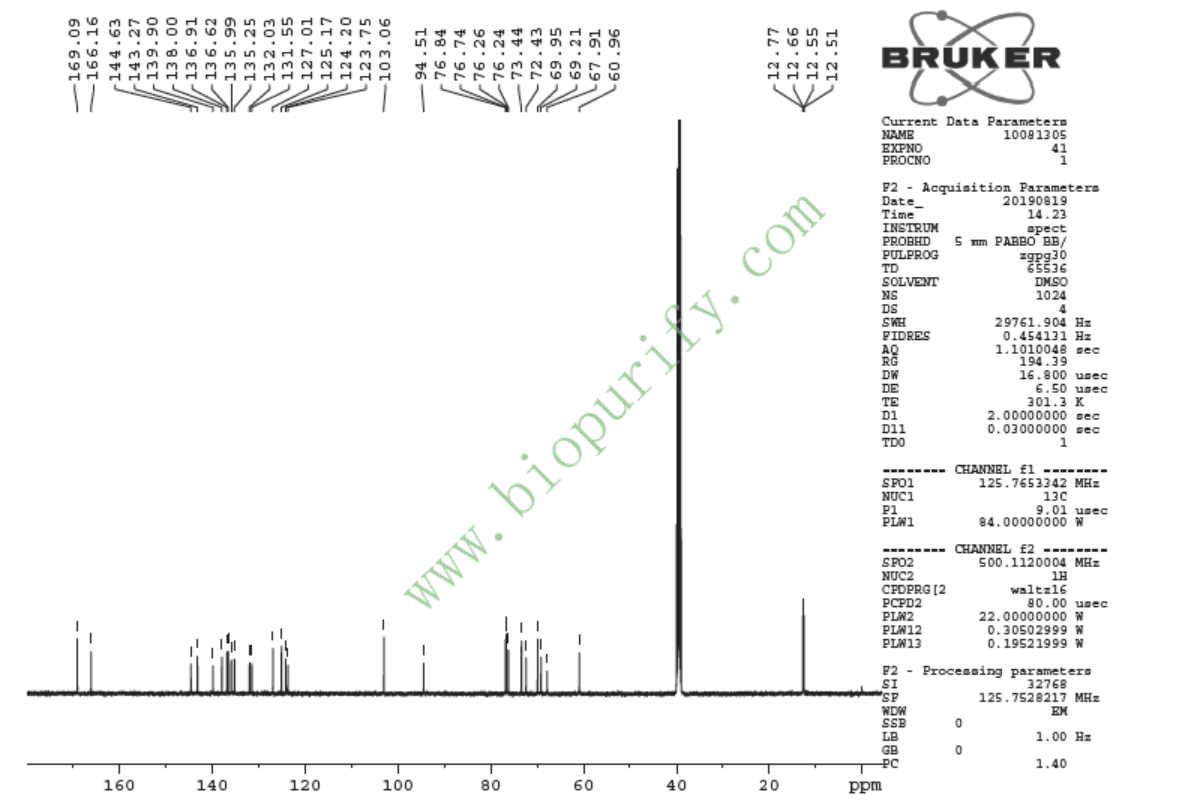
Identification Method: Mass, NMR
Packing: Brown vial or HDPE plastic bottle
Storage: Store in a well closed container, protected from air and light. Put into refrigerate or freeze for long term storage.
Whenever possible, you should prepare and use solutions on the same day. However, if you need to make up stock solutions in advance, we recommend that you store the solution as aliquots in tightly sealed vials at -20℃. Generally, these will be useable for up to two weeks.
The product could be supplied from milligrams to grams
Inquire for bulk scale.
Chengdu Biopurify Phytochemicals Ltd. is a leading company in the research, development, manufacture and marketing of High Quality Phytochemicals and Extracts(especially Active Ingredients from Traditional Chinese Medicine,TCM), Natural Active Pharmaceutical Ingredients worldwide.
The main services:
A. Supply active ingredients and reference standards of TCM, from mgs to kgs scale
B. Custom extraction and purification, target Herb Active Ingredients
C. Custom synthesis and semi-synthesis for Natural Active Ingredients
D. CR(contract research), CM(contract manufacture) and PD(process development) services from lab scale, pilot scale to commercial scale(GMP is also available)
E. TCM compounds library for drug screen,more than 3000 compounds available, many of them are rare and unique.
HPLC of Crocin III
NMR of Crocin III
Storage conditions:Short-term storage at 2~8℃, long-term storage at -20 ~ -80℃
232.9000
.7771
-1.7560
10.5550
.4459
.2459
Low
75.2731
5.3242
Yes
Yes
Yes
No
No
No
0.0
Yes
Yes
Yes
Yes
Crocin III as saffron(Crocus sativus L. One of the important active ingredients in, has received widespread attention in recent years due to its significant biological activity and potential medicinal value. Saffron, as a traditional Chinese medicine and spice, has a long history and is widely used in the fields of food, medicine, and cosmetics due to its unique color and aroma. Saffron III belongs to the crocin class of compounds and is a water-soluble monoglycosylated carotenoid derivative with excellent antioxidant, anti-inflammatory, and anti-tumor activities. With the development of modern pharmacology and molecular biology techniques, the pharmacological mechanism of crocin III has gradually been revealed, especially exhibiting unique advantages in antioxidant stress, cell protection, and tumor inhibition.
This article provides a systematic review of the chemical structure and physicochemical properties, plant sources and extraction methods, pharmacological activity research, mechanism of action and molecular targets, pharmacological evaluation and pharmacokinetic characteristics of crocin III, as well as its clinical application prospects and development trends. The aim is to provide comprehensive and in-depth reference materials for researchers in the field of natural product pharmacology.
Crocin III (CAS number: 55750-85-1) is a water-soluble carotenoid glycoside with the molecular formula C ₄₄ H ₆₄ O ₂₄ and a molecular weight of 652.69. Its structural characteristic is that crocetin is connected to three glucose residues through glycosidic bonds, presenting a polyhydroxy structure and endowing it with good water solubility. The LogP value of crocin III is 0.7771, indicating its low hydrophobicity and strong hydrophilicity, which is closely related to its polysaccharide groups. The total polar surface area (TPSA) is 232.9 Å ², indicating its high polarity, which is beneficial for dispersion and bioavailability in the aqueous phase.
In terms of physicochemical properties, crocin III exhibits high water solubility (10.5550 mg/mL), which gives it certain advantages in formulation development. Its molecular structure contains multiple hydroxyl and carboxyl groups, which can easily form hydrogen bonds with biomolecules, thereby affecting its pharmacological activity and targeted binding ability. It is worth noting that crocin III has a low blood-brain barrier penetration ability, suggesting that its direct effects in the central nervous system may be limited, but this also reduces the potential risk of central neurotoxicity. In addition, crocin III did not exhibit hERG channel inhibitory activity and the Ames mutagenicity test result was negative, indicating its high safety and good potential for drug development.
Saffron III is mainly derived from saffron(Crocus sativus L. The dried stigma of saffron is one of the main pigment components in saffron. Saffron is mainly distributed in Iran, Spain, India, and Xinjiang, China. Its quality and active ingredient content are greatly affected by growth environment, harvesting time, and processing technology.
Traditional extraction methods often use water extraction or alcohol extraction combined with liquid-liquid separation technology. In recent years, ultrasound assisted extraction, microwave-assisted extraction, and high-performance liquid chromatography (HPLC) technology have been widely used for the extraction and purification of crocin. The specific steps include:
These modern extraction techniques not only improve the extraction rate and purity of crocin III, but also ensure the stability of its biological activity, laying the foundation for subsequent pharmacological research and clinical applications.
The pharmacological activities of crocin III cover multiple aspects such as antioxidant, anti-inflammatory, anti-tumor, neuroprotective, and cardiovascular protection, reflecting its multi-target and multi mechanism pharmacological characteristics.
Saffron III significantly reduces oxidative stress damage by clearing free radicals, inhibiting lipid peroxidation, and regulating the intracellular antioxidant enzyme system. In vitro studies have shown that crocin III can enhance the activity of antioxidant enzymes such as superoxide dismutase (SOD1, SOD2), catalase (CAT), and glutathione peroxidase (GPX1), and improve the cell's ability to clear reactive oxygen species (ROS). In addition, it can induce the expression of heme oxygenase-1 (HMOX1) and exert a cell protective effect.
Saffron III reduces inflammatory response by inhibiting the release of inflammatory mediators and activation of inflammatory signaling pathways. Research has shown that crocin III can downregulate the expression of matrix metalloproteinases (MMP1, MMP3), inhibit the production of inflammation related cytokines, and alleviate tissue damage. In addition, it can also regulate the nuclear factor E2 related factor 2 (NFE2L2/NRF2) signaling pathway, exerting dual protective effects of antioxidant and anti-inflammatory.
Saffron III exhibits activity in inhibiting cell proliferation, inducing apoptosis, and blocking the cell cycle in various tumor cell lines. Its mechanism involves regulating multiple signaling pathways, including antioxidant stress, cell cycle regulation, and apoptosis related protein expression. Saffron III regulates the redox state, affects the survival environment of tumor cells, and inhibits their growth and invasion ability.
Although crocin III has a low blood-brain barrier penetration ability, its indirect regulation of peripheral antioxidant and anti-inflammatory states helps alleviate neurological damage. Related studies have shown that crocin III can alleviate neuroinflammation and oxidative stress, and has potential neuroprotective effects. In the cardiovascular system, crocin III exhibits cardiovascular protective potential by reducing myocardial cell damage and improving vascular function through antioxidant and anti-inflammatory effects.
The mechanism of action of crocin III mainly revolves around its antioxidant and anti-inflammatory activities, involving multiple key molecular targets and signaling pathways.
By regulating the above targets, crocin III achieves dual inhibition of oxidative stress and inflammatory response, building its broad biological basis of effects.
The pharmacological parameters of crocin III indicate its potential for development:
In terms of pharmacokinetics, crocin III is stable in the gastrointestinal tract after oral administration, but its absorption rate may be limited due to its large molecular weight and high polarity. The metabolism in the body is mainly released through the action of hydrolytic enzymes, which further metabolize and excrete crocin. The plasma protein binding rate and distribution volume still need further research. Overall, crocin III has good safety and biocompatibility, and is suitable for enhancing pharmacokinetic properties through structural optimization and formulation improvement.
Saffron III, with its multi-target and multi mechanism biological activity, has demonstrated extensive clinical application potential. Currently, it is mainly applied in the following directions:
Future research should focus on:
Saffron III, as an important active ingredient in saffron, has significant research value in the field of natural product pharmacology due to its unique chemical structure and diverse biological activities. Its significant antioxidant, anti-inflammatory, and anti-tumor effects, combined with good safety and pharmacological parameters, indicate its broad application prospects in disease prevention and health promotion. In the future, through interdisciplinary research and technological innovation, crocin III is expected to become an important candidate for new natural medicines, contributing new strength to the development of natural product pharmacology.
