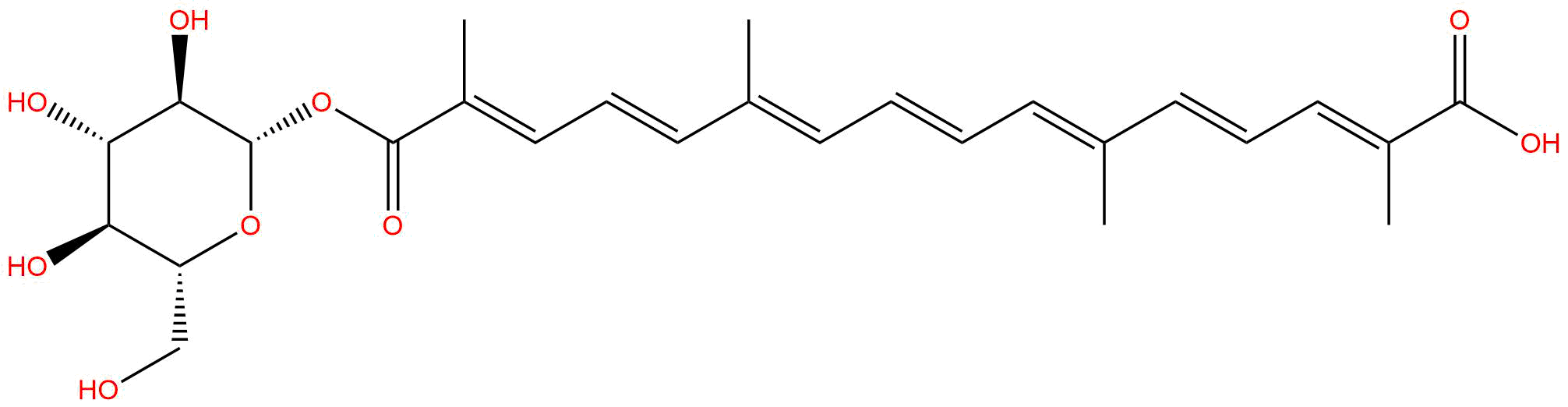


Product name: Crocin V
Synonym name: Crocin E; Crocetin β-D-glucosyl ester;Crocetin monoglucosyl ester
Catalogue No.: BP2174
Cas No.: 58050-17-2
Formula: C26H34O9
Mol Weight: 490.549
Botanical Source:
Type of Compound:
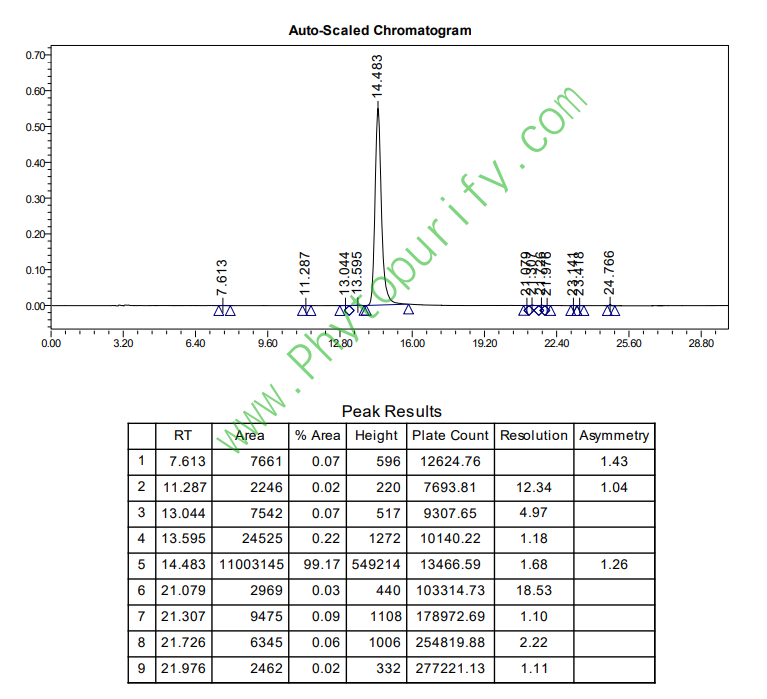
Purity: 95%~99%
Analysis Method: HPLC-DAD or/and HPLC-ELSD
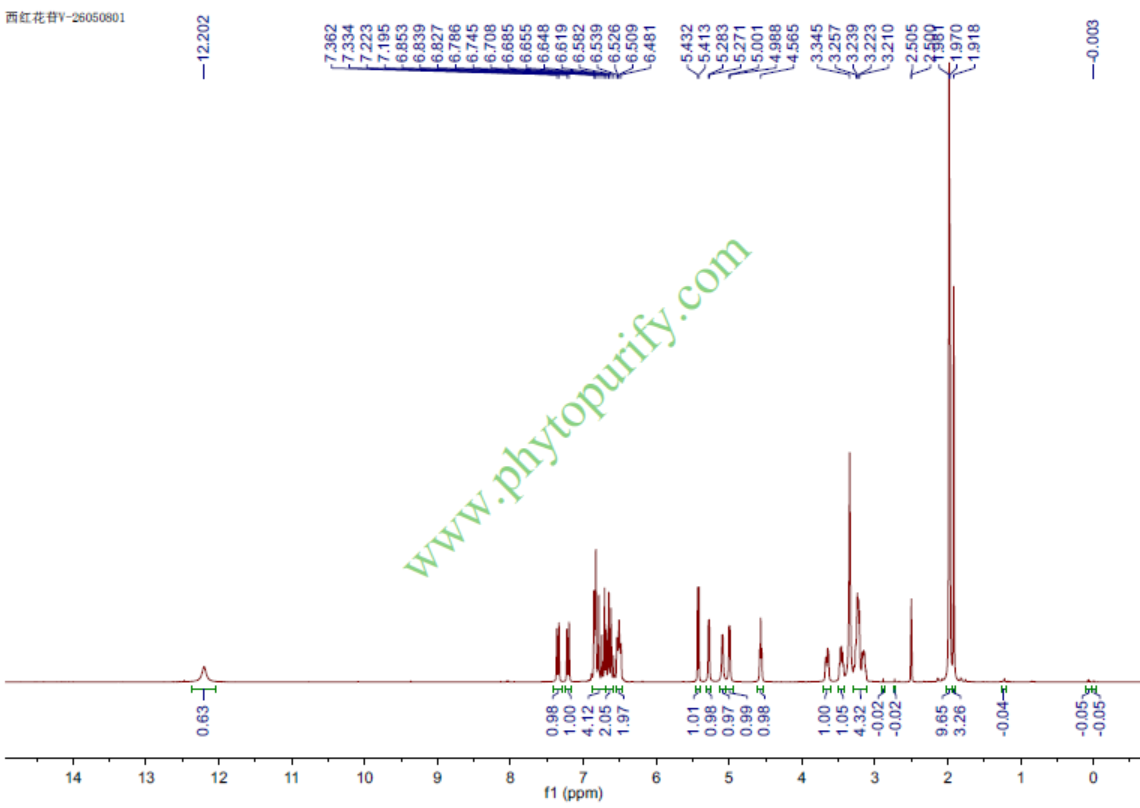
Identification Method: Mass, NMR
Packing: Brown vial or HDPE plastic bottle
Storage: Store in a well closed container, protected from air and light. Put into refrigerate or freeze for long term storage.
Whenever possible, you should prepare and use solutions on the same day. However, if you need to make up stock solutions in advance, we recommend that you store the solution as aliquots in tightly sealed vials at -20℃. Generally, these will be useable for up to two weeks.
The product could be supplied from milligrams to grams
Inquire for bulk scale.
For Reference Standard and R&D, Not for Human Use Directly.
HPLC of Crocin E
HNMR of Crocin E
Storage conditions:Short-term storage at 2~8℃, long-term storage at -20 ~ -80℃
153.7500
1.9252
-.7239
3.1448
.5041
.3827
Low
85.1531
4.6884
Yes
Yes
Yes
No
No
No
0.0
Yes
Yes
Yes
Yes
Crocus sativus L., also known as saffron, is a precious medicinal plant with a long history. Its dried stigma is widely used in traditional medicine to treat depression, anxiety, pain, and various inflammatory diseases. Modern pharmacological research has shown that the main bioactive component of saffron is a unique water-soluble carotenoid derivative - crocin. Crocin E (CAS number: 58050-17-2), as an important member of the crocin family, has attracted much attention in recent years due to its extensive and significant pharmacological activities. Research has confirmed that crocin E not only has strong antioxidant and anti-inflammatory properties, but also demonstrates enormous potential in fields such as anti-tumor and antidepressant effects. It inhibits tumor cell proliferation and induces apoptosis by regulating multiple key signaling pathways, including the JAK pathway. At the same time, it acts on the central nervous system through multiple targets, regulating neurotransmitter levels and neurotrophic factor expression, thereby exerting antidepressant effects. This article aims to systematically review the chemical structure, plant origin, pharmacological activity, molecular mechanism of action, pharmacological evaluation, and clinical application prospects of crocin E, in order to provide comprehensive scientific references for the in-depth research and development of this natural product.
Saffron E, chemically classified as a disaccharide esterified carotenoid glycoside. Its basic structure is composed of a lipophilic carotenoid core - croce tin - connected to two hydrophilic sugar groups (usually gentian disaccharides or glucose groups) through ester bonds. This unique structure endows crocin E with amphiphilic characteristics, which is the main determinant of its water solubility. Its molecular formula is C26H34O11The molecular weight is 490.5490 g/mol.
In terms of physicochemical properties, the calculated value of the lipid water partition coefficient (LogP) of crocin E is about 1.93, indicating that it has a certain lipophilicity, but overall it still tends to be water-soluble. Its topological polar surface area (TPSA) is as high as 153.75 Å ², which is mainly attributed to the multiple hydroxyl groups and oxygen atoms on the sugar ring in the molecule, further confirming its good water solubility characteristics. The theoretical water solubility value is about 3.14 mg/mL. These properties determine the distribution characteristics of crocin E in organisms, for example, its high polarity leads to a predicted "low" ability to penetrate the blood-brain barrier (BBB), which challenges its efficacy in the central nervous system, but also suggests that it may need to be mediated into the brain through peripheral indirect mechanisms or specific transporters. In addition, preliminary pharmacological risk assessment showed that crocin E had no significant inhibitory effect on hERG potassium channels (indicating a low potential risk of cardiac toxicity), and the Ames test result was negative (0.0), indicating that it was non mutagenic under the test conditions, providing preliminary favorable evidence for its safety.
Saffron E specifically originates from the dried stigma of Crocus sativus L., a plant in the family Iridaceae. Saffron is a triploid sterile plant that relies entirely on artificial division for reproduction. Each flower has only three stigma heads and requires manual harvesting, resulting in extremely low yields. Therefore, it is known as the "red gold". The components of crocin are mainly enriched in the top part of the stigma, and their content is significantly affected by factors such as climate, harvesting time, drying and storage conditions in the production area.
The extraction of crocin E from saffron stigma usually follows a process from crude to refined. The conventional extraction methods include:
1. Solvent extraction method The most commonly used method. Water, methanol, ethanol, or their aqueous solutions are commonly used as extraction solvents. Due to its good water solubility, simple water extraction method, low cost, and high safety, crocin E extract contains many impurities. The alcohol extraction method (such as 70% -80% ethanol) is more efficient and can simultaneously extract glycosides and some lipophilic components.
2. Ultrasonic assisted extraction/Microwave assisted extraction The use of ultrasound or microwave energy to destroy plant cell walls, accelerate solvent penetration and component dissolution, can significantly shorten extraction time and improve extraction efficiency, and is a commonly used reinforcement technique for modern natural product extraction.
3. Purification and Separation After filtration and concentration, the crude extract needs to be further purified to obtain high-purity crocin E. Macroporous adsorption resin chromatography is commonly used to effectively enrich crocin components by utilizing resin adsorption and gradient elution of different concentrations of ethanol solution. The final high-purity separation relies on preparative high-performance liquid chromatography (HPLC). By optimizing the mobile phase (usually acetonitrile water system) and chromatographic conditions, baseline separation of crocin E from other homologs (such as crocin I, II, etc.) can be achieved. In recent years, liquid-liquid distribution chromatography techniques such as high-speed countercurrent chromatography have also been applied to the separation and purification of crocin due to their advantages of irreversible adsorption and high recovery rate.
Numerous in vitro and in vivo pharmacological experiments have confirmed that crocin E has multiple biological activities.
Antitumor activity Saffron E exhibits growth inhibition and pro apoptotic effects on various tumor cell lines. Studies have shown that it can inhibit the proliferation of breast cancer, lung cancer, colon cancer and other cancer cells in a dose-dependent manner. Its anti-tumor effect is not limited to cytotoxicity, but also includes inducing cell cycle arrest (such as G2/M phase arrest), activating Caspase cascade reaction, regulating Bcl-2/Bax protein ratio, ultimately leading to programmed cell death of tumor cells.
Anti inflammatory and antioxidant activity Saffron E is a powerful antioxidant that can directly eliminate free radicals such as DPPH and ABTS, and enhance the intracellular antioxidant defense system, such as upregulating the activity of superoxide dismutase (SOD) and glutathione peroxidase (GSH Px). In the macrophage inflammation model induced by lipopolysaccharide (LPS), crocin E can significantly inhibit the production of nitric oxide (NO), prostaglandin E2 (PGE2), and pro-inflammatory cytokines (such as TNF - α, IL-1 β, IL-6), demonstrating excellent anti-inflammatory effects.
Antidepressant and neuroprotective activity This is one of the most distinctive pharmacological activities of crocin E. In classic depression animal models such as chronic unpredictable mild stress (CUMS) mouse model, forced swimming test (FST), and tail suspension test (TST), oral administration of crocetin E can effectively improve depression like behavior in animals, such as reducing immobility time and increasing sugar water preference. Its neuroprotective effects are reflected in combating oxidative stress-induced neuronal damage, inhibiting neuroinflammation, and promoting neurogenesis in the hippocampus.
Other activities Preliminary studies also suggest that crocin E may have potential benefits in improving learning and memory, anti anxiety, protecting the cardiovascular system (such as reducing myocardial ischemia-reperfusion injury), and protecting the liver.
The pharmacological effects of crocin E are achieved by regulating a complex cellular signaling network involving multiple key targets and pathways.
1. Mechanism of anti-tumor action:
* Inhibition of JAK/STAT pathway The JAK (Janus kinase)/STAT (signal transducer and activator of transcription) pathway is a core pathway for cell proliferation, survival, and immune regulation, and its abnormal activation is closely related to various tumors. Saffron E has been shown to inhibit the phosphorylation of JAK2 and STAT3, thereby downregulating the expression of downstream target genes related to proliferation (such as Cyclin D1) and survival (such as Bcl-2). This is one of its core mechanisms for inhibiting tumor growth and inducing apoptosis.
* Activation of apoptotic pathway By upregulating the pro apoptotic protein Bax and downregulating the anti apoptotic protein Bcl-2, it leads to a decrease in mitochondrial membrane potential, release of cytochrome C, and activation of Caspase-9 and Caspase-3, triggering endogenous apoptosis.
* Other pathways It may also involve regulation of pathways such as MAPK and PI3K/Akt.
2. Mechanism of antidepressant action (multi-target regulation):
The antidepressant effect of crocin E is not achieved through a single target, but presents a synergistic effect of multiple targets and systems:
* Monoamine neurotransmitter system Research has shown that it can regulate the activity of monoamine oxidase (MAOA/B) and reduce the degradation of monoamine neurotransmitters such as serotonin, norepinephrine, and dopamine. At the same time, it may affect the function of serotonin transporters (SLC6A4/SERT) and regulate the levels of serotonin in synaptic cleft. The regulation of 5-HT1A receptor (HTR1A) may also be involved in its anti anxiety and anti depression effects.
* Neuronutrition and plasticity pathway Saffron E can significantly upregulate the expression of brain-derived neurotrophic factor (BDNF) and activate its downstream CREB (cAMP response element binding protein) signaling pathway. The activation of the BDNF CREB pathway is crucial for the survival, differentiation, synaptic plasticity, and hippocampal neurogenesis of neurons, and is the structural basis for long-term antidepressant efficacy.
* Neuroendocrine and Inflammatory Systems May reduce elevated levels of corticosterone by regulating the hypothalamic pituitary adrenal (HPA) axis function. Its powerful anti-inflammatory and antioxidant effects help alleviate the neuroinflammation and oxidative stress damage associated with depression.
* Other neural targets The potential regulation of gamma aminobutyric acid type A receptor (GABRA1) may be related to its anti anxiety effect. The inhibition of glycogen synthase kinase-3 β (GSK3B) is linked to its antidepressant, neuroprotective, and potential anti Alzheimer's disease potential.
Despite the significant pharmacological activity of crocin E, its medicinal properties still face some challenges.
To improve its drug efficacy, formulation improvement is a key strategy, such as developing drug delivery systems such as liposomes, nanoparticles, self microemulsions, etc., to enhance its oral absorption, stability, and targeting.
The diverse pharmacological activities of crocin E provide broad prospects for its application in multiple therapeutic fields.
Future research priorities should include:① Thoroughly elucidate the specific mechanism of its crossing the blood-brain barrier and the contribution of its metabolites; ② Conduct standardized preclinical pharmacokinetic and toxicological studies to clarify their safety window; ③ Design and implement high-quality randomized controlled clinical trials to validate their effectiveness and safety in humans, especially in patients with depression; ④ Developing new delivery systems using modern pharmaceutical technology to overcome the bottleneck of low bioavailability; ⑤ Explore its potential and interactions in combination with other drugs.
Saffron E, as an important water-soluble carotenoid glycoside in saffron, has demonstrated remarkable pharmacological activities in anti-tumor, antidepressant, anti-inflammatory, and antioxidant fields due to its unique chemical structure and multi-target mechanism of action. It exerts anti-tumor effects by inhibiting the JAK/STAT pathway, and produces antidepressant effects by regulating multiple mechanisms such as the monoamine system, BDNF CREB pathway, and neuroinflammation. Despite facing challenges in oral bioavailability and blood-brain barrier penetration, its excellent safety and pleiotropy make it a highly valuable natural lead compound for development. With a deeper understanding of its pharmacokinetic properties, the application of novel drug delivery systems, and the advancement of rigorous clinical research, crocetin E is expected to transform from a traditional medicinal plant component into an innovative drug or key functional ingredient for treating major health problems such as tumors, emotional disorders, and neurodegenerative diseases, contributing its unique value to human health.
