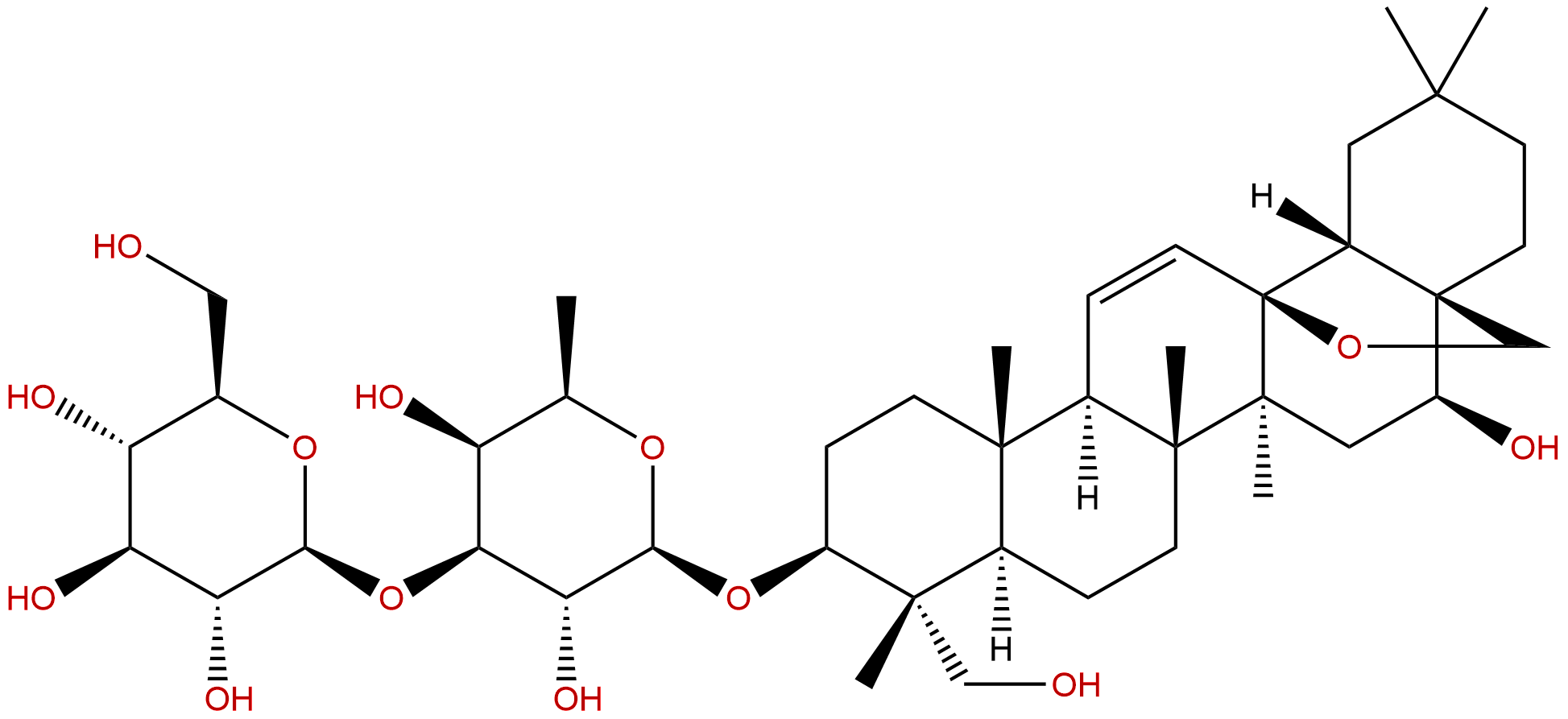


Product name: Saikosaponin A
Synonym name:
Catalogue No.: BP1238
Cas No.: 20736-09-8
Formula: C42H68O13
Mol Weight: 780.993
Botanical Source: Bupleurum falcatum, Bupleurum chinense and Bupleurum kunmingense
Physical Description: Powder
Type of Compound: Triterpenoids
Purity: 95%~99%
Analysis Method: HPLC-DAD or/and HPLC-ELSD
Identification Method: Mass, NMR
Packing: Brown vial or HDPE plastic bottle
Storage: Store in a well closed container, protected from air and light. Put into refrigerate or freeze for long term storage.
Whenever possible, you should prepare and use solutions on the same day. However, if you need to make up stock solutions in advance, we recommend that you store the solution as aliquots in tightly sealed vials at -20℃. Generally, these will be useable for up to two weeks.
The product could be supplied from milligrams to grams, up to kilograms
Inquire for bulk scale.
Descriptions:
Saikosaponin A (SSa), a main constituent of the Chinese herb Bupleurum chinense DC, has antiepileptic activity,could inhibit NMDA receptor current and persistent sodium current, and inhibit epileptiform discharges induced by 4AP in a dose-dependent manner.[1]
Saikosaponin A has anti-inflammatory activity,can decrease PMA plus A23187-induced cysteine-aspartic acid protease (caspase)-1 activity, and the number of nasal rubs and serum TNF-α level in the ovalbumin-sensitized allergic rhinitis mouse model, and inhibit the IL-1β production.[2]
Saikosaponin A extends to alcohol self-administration the capacity to suppress morphine and cocaine self-administration in rats ,the GABA B receptor system is likely part of the neural substrate underlying the reducing effect of SSA on alcohol self-administration. [3]
Saikosaponin A as antioxidants improve antioxidant status. Supplementation with curcumin and/or saikosaponin A suppress inflammation and fibrogenesis in rats with CCl(4)-induced liver injury. However, the combination has no additive effects on anti-inflammation and antifibrosis.[4]
References:
[1] Xie W, Yu Y H, Du Y P, et al. Evid-Based Compl Al, 2013, 2013(1):221-229.
[2] Han N R, Kim H M, Jeong H J.Biol Pharm Bull, 2011, 34(6):817-23.
[3] Maccioni P, Lorrai I, Carai M A M, et al. Neurosci Lett, 2016, 621:62-67.
[4] Shu-JuWu, Ka-WaiTam, Ya-HuiTsai, et al. Am J Chinese Med, 2012, 38(1):99-111.
[5] Tang Y H, Zhang Y Y, Zhu H Y, et al. Biomed Chromatogr, 2007, 21(5):458-62.
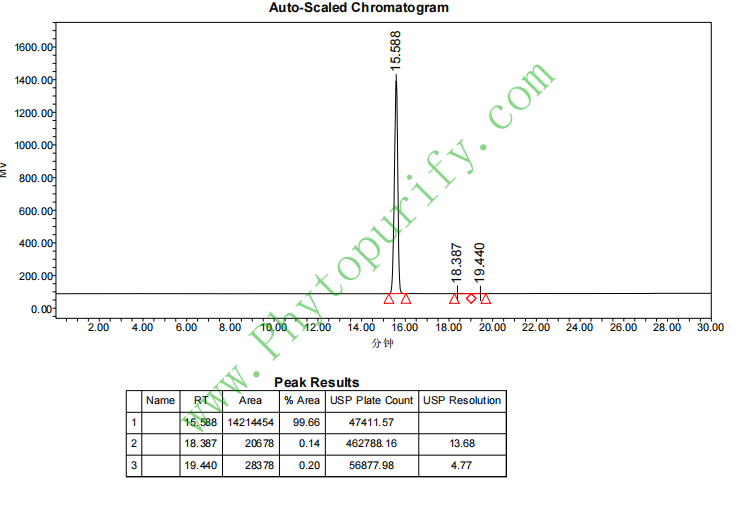
HPLC of Saikosaponin A
Storage conditions:Short-term storage at 2~8℃, long-term storage at -20 ~ -80℃
207.9900
2.9848
2.9846
.0239
.5906
1.4770
Low
75.2831
7.2591
No
No
No
No
No
No
0.0
Yes
No
Yes
Yes
Atherosclerosis and its related cardiovascular and cerebrovascular diseases are one of the main causes of death worldwide. Its early pathophysiological processes are closely related to lipid metabolism disorders, chronic inflammation and cholesterol reverse transport disorders. Hyperlipidemic pancreatitis, as another type of critical illness directly related to lipid metabolism abnormalities, also faces significant challenges in its prevention and treatment. Therefore, the search for drugs that can effectively regulate lipid metabolism, anti-inflammatory, and stabilize plaques is currently a hot research topic. In this context, natural active ingredients derived from traditional Chinese medicine have attracted much attention due to their multi-target and multi pathway effects. Chaihu saponin A, as the main active saponin component of the Umbelliferae plant Bupleurum chinense DC. or Bupleurum scorzonerifolium Willd., has been proven to have significant potential in regulating lipid metabolism, promoting cholesterol efflux, and anti-inflammatory effects in recent years. It may particularly play a core regulatory role by activating peroxisome proliferator activated receptor gamma (PPAR - γ). The purpose of this paper is to systematically review the chemical properties, pharmacological activities, molecular mechanism of action and pharmaceutical properties of saikosaponin A, so as to provide scientific basis for its drug development in atherosclerosis, hyperlipidemia, pancreatitis and other diseases.
The CAS number for Saikosaponin A (SSA) is 20736-09-8, with a molecular formula of C42H68O13 and a molecular weight of 780.9930. Its chemical structure belongs to the oleanane type pentacyclic triterpenoid saponin, which is a typical representative of saikosaponin compounds. Its basic skeleton consists of hydrophobic aglycones and hydrophilic sugar chains. The glycoside moiety is connected to sugar chains at positions C-3 and C-28, respectively. Typically, the C-3 position is linked to a molecule of glucose, while the C-28 position is linked to a disaccharide chain consisting of a molecule of glucose and a molecule of fucose. This unique structure is the material basis for its biological activity.
From the analysis of parameters related to drug properties, the lipid water partition coefficient (LogP) of saikosaponin A is 2.9848, indicating that it has a certain degree of lipophilicity, but not high lipid solubility. Its topological polar surface area (TPSA) is as high as 207.9900 Å ², which is mainly attributed to the multiple hydroxyl groups and oxygen atoms on the sugar ring in the molecule, resulting in its high polarity. The water-soluble data is 0.0239 mg/mL, which belongs to poorly soluble compounds, posing challenges for their oral absorption and formulation development. The prediction of blood-brain barrier permeability is "low", indicating that it is not easy to enter the central nervous system, which may reduce the risk of central side effects for drugs that mainly act on the peripheral system (such as cardiovascular and metabolic systems). In the early safety evaluation, the hERG inhibition test was negative, indicating a low risk of inducing QT interval prolongation in the heart; The Ames test result is 0.0, indicating that there is no significant genetic toxicity. These physicochemical and preliminary safety parameters lay the foundation for subsequent development, but also indicate that improving solubility and bioavailability are key issues that need to be addressed.
Chaihu saponin A mainly comes from the dried roots of traditional Chinese medicine Chaihu. There are many species of plants in the genus Bupleurum, among which Bupleurum chinense DC. and Bupleurum scorzonerifolium Willd. are authentic sources included in the Chinese Pharmacopoeia. There is a difference in the content of saikosaponin A between the two, with Bupleurum chinense DC. usually having a higher content in Bupleurum chinense.
The conventional method for extracting saikosaponin A includes solvent extraction. Ethanol or methanol aqueous solutions are often used for reflux extraction or ultrasonic extraction, utilizing the polarity characteristics of saponin components to extract them from plant tissues. After vacuum concentration, the crude extract needs to be further enriched and purified using macroporous adsorption resins (such as D101, AB-8). By utilizing the adsorption desorption characteristics of saponins and resins, gradient elution with water and different concentrations of ethanol can effectively remove impurities such as polysaccharides and proteins, and enrich the saponin sites. To further obtain high-purity monomers of saikosaponin A, modern chromatographic separation techniques such as silica gel column chromatography, reverse phase silica gel column chromatography (ODS), high performance liquid chromatography (HPLC), and preparative liquid chromatography need to be combined. At present, there have been reports on the rapid separation of saikosaponin A from total saponins of Bupleurum chinense using efficient separation techniques such as high-speed countercurrent chromatography (HSCCC). The optimization goal of extraction and separation processes is to improve the yield and purity of the target components while maintaining their biological activity.
Numerous in vitro and in vivo studies have confirmed that saikosaponin A has a wide range of pharmacological activities, centered around regulating lipid metabolism and anti-inflammatory effects.
1. Regulating lipid metabolism and anti atherosclerosis: This is one of the most highly regarded activities of saikosaponin A. In atherosclerosis animal models (such as ApoE -/- mice) and high-fat diet induced lipid metabolism disorder models, saikosaponin A can significantly reduce serum total cholesterol (TC), triglyceride (TG) and low-density lipoprotein cholesterol (LDL-C) levels, while increasing high-density lipoprotein cholesterol (HDL-C). More importantly, it can promote the outflow of cholesterol from macrophages and reduce the formation of foam cells, which is the core of early atherosclerosis. Research suggests that its function is closely related to upregulating the expression of ATP binding cassette transporters A1 (ABCA1) and G1 (ABCG1), which are downstream targets of PPAR - γ.
2. Anti inflammatory effect: Chaihu saponin A exhibits strong anti-inflammatory effects in various acute and chronic inflammation models. It can significantly inhibit the excessive production of inflammatory mediators (such as TNF - α, IL-6, IL-1 β) in macrophages induced by stimuli such as lipopolysaccharide (LPS). In animal models, it can alleviate swelling and pathological damage of inflammatory tissues. Its anti-inflammatory effect involves the regulation of classical inflammatory signaling pathways such as NF - κ B and JAK/STAT.
3. Protective effect on hyperlipidemic pancreatitis: Hyperlipidemia is an important cause of acute pancreatitis. Research has shown that saikosaponin A has a protective effect on acute pancreatitis models induced by hyperlipidemia through its dual effects of lipid-lowering and anti-inflammatory. It can alleviate pancreatic acinar cell necrosis, reduce inflammatory cell infiltration, and lower serum amylase and lipase levels. Its mechanism may be related to alleviating local pancreatic lipotoxicity and inhibiting NF - κ B pathway activation.
4. Other activities: In addition, the study also reported that saikosaponin A has hepatoprotective, antiviral, immunomodulatory, and certain antidepressant like effects, reflecting the multi efficacy of natural products.
The pharmacological effects of saikosaponin A stem from its precise regulation of multiple molecular targets and signaling pathways, and its core mechanism may revolve around PPAR - γ activation.
Core target: PPAR - γ
PPAR - γ is a member of the nuclear receptor superfamily and plays a central role in adipocyte differentiation, glucose and lipid metabolism, and inflammation regulation. Multiple studies have confirmed that saikosaponin A can significantly promote mRNA and protein expression of PPAR - γ, and may act as a ligand agonist to directly or indirectly activate PPAR - γ. Activated PPAR - γ forms a heterodimer with retinol X receptor (RXR) and binds to peroxisome proliferator response element (PPRE) in specific gene promoter regions, thereby regulating downstream gene transcription. In lipid metabolism, PPAR - γ activation can up regulate the expression of liver X receptor α (LXR α), ABCA1 and ABCG1, drive the reverse transport of cholesterol, and promote the outflow of cholesterol from peripheral cells (such as macrophage foam cells) to HDL, which is a key molecular event in its anti atherosclerosis.
Molecular network of anti-inflammatory effects
The anti-inflammatory effect of saikosaponin A involves inhibition of multiple key inflammatory targets and pathways:
* NF - κ B pathway: NF - κ B is the central regulator of inflammatory response. Chaihu saponin A can inhibit the activity of I κ B kinase (IKK, encoded by IKBKB), prevent the phosphorylation and degradation of I κ B α, thereby inhibiting the nuclear translocation and transcriptional activity of NF - κ B p65 subunit (encoded by RELA), and ultimately downregulating the expression of inflammatory factors such as TNF - α, IL-6, inducible nitric oxide synthase (iNOS, encoded by NOS2), and cyclooxygenase-2 (COX-2).
* JAK/STAT3 pathway: In the inflammatory response, cytokines (such as IL-6) activate JAK, which in turn phosphorylates and activates signal transduction and transcription activator 3 (STAT3). Chaihu saponin A can inhibit the phosphorylation of STAT3 and block the transcription of its downstream pro-inflammatory genes.
* NLRP3 inflammasome: The activation of this inflammasome leads to the activation of caspase-1 (encoded by CASP1), which then cleaves pro-IL-1 β and pro-IL-18 to produce mature forms. Research has shown that saikosaponin A can inhibit the assembly and activation of NLRP3 inflammasomes, and reduce the release of IL-1 β.
* Pain and neurogenic inflammation related targets: Chaihu saponin A may have a regulatory effect on transient receptor potential vanillic acid subtype 1 (TRPV1) and transient receptor potential anchor protein subtype 1 (TRPA1) channels, which may be related to its ability to alleviate "liver depression and rib pain" in traditional applications, but the specific mechanism needs further clarification.
* Classic inflammatory enzymes: The study also suggests that it has a certain impact on cyclooxygenase-1 (COX-1, encoded by PTGS1).
In summary, saikosaponin A activates the core node of PPAR - γ metabolism inflammation cross regulation, and synergistically inhibits multiple inflammatory signaling axes such as NF - κ B and STAT3, forming a multi-target and networked mechanism of action, jointly achieving its comprehensive effects of regulating lipid metabolism, anti-inflammatory, and protecting blood vessels/pancreas.
Although the pharmacological activity of saikosaponin A is clear, its pharmacological properties, especially pharmacokinetic properties, are the bottleneck for its clinical application.
Absorption, distribution, metabolism, and excretion (ADME):
* Absorption: The oral bioavailability of saikosaponin A is relatively low. Its large molecular weight, high polarity (high TPSA), and low water solubility severely limit its passive diffusion in the gastrointestinal tract. It may be a substrate for efflux transporters such as P-glycoprotein (P-gp), further affecting its absorption. Research has shown that it may be partially hydrolyzed by gut microbiota in the intestine, converted into deglycosylated aglycones, which have increased lipid solubility and may be absorbed and exert partial activity. However, this makes the pharmacokinetic behavior of the prototype drug more complex.
* Distribution: Animal pharmacokinetic studies have shown that after intravenous administration, saikosaponin A is distributed rapidly in the body, but its blood-brain barrier permeability is poor, mainly distributed in organs with abundant blood flow such as the liver, kidneys, and lungs, which is consistent with the pharmacological action site.
* Metabolism: The liver is its main metabolic site, which may undergo oxidative metabolism through cytochrome P450 enzyme systems (such as CYP3A4) and II binding reactions through glucuronosyltransferase (UGT). Its sugar moiety is also easily hydrolyzed.
* Excretion: Mainly excreted through bile and kidneys. The prototype drug and its metabolites can enter the intestine through bile, and some may undergo enterohepatic circulation.
Challenges and strategies for drug development:
1. Solubility and permeability: Low solubility and low permeability are the main obstacles to its oral absorption. The formulation strategy is the key to breaking through this bottleneck, including: preparing nanocrystals, solid dispersions, liposomes, micelles, or cyclodextrin inclusion complexes to improve their solubility and dissolution rate; Use absorption enhancers; Or develop new drug delivery systems (such as self microemulsions).
2. Stability Saponins may be unstable in acidic or enzymatic environments, and pH adjustment and enzyme inhibitors need to be considered in the formulation.
3. Structural modification: Another important research direction is to modify the glycosylation or aglycone of saikosaponin A through medicinal chemical methods, in order to improve its solubility, metabolic stability, and oral bioavailability while retaining its activity.
Saikosaponin A shows clear clinical application potential in the treatment of atherosclerotic cardiovascular disease (ASCVD) and hyperlipidemic pancreatitis.
1. Atherosclerosis and related metabolic diseases: As a potential PPAR - γ agonist, saikosaponin A has multiple effects such as lipid-lowering, anti-inflammatory, and improving insulin sensitivity. Compared with existing drugs such as statins and beta agonists, it may provide a new strategy for multi-target intervention. It is especially suitable for patients with early atherosclerosis, mixed hyperlipidemia or metabolic syndrome. In the future, its combination with statins can be explored to synergistically enhance efficacy, reduce statin dosage and side effects.
2. Hyperlipidemic acute pancreatitis (HLAP): For HLAP, there is currently a lack of specific therapeutic drugs, mainly relying on lipid-lowering and comprehensive supportive treatment. Chaihu saponin A has unique value in developing drugs for the treatment or prevention of HLAP by intervening in both etiology (lipid-lowering) and pathological process (anti pancreatitis).
3. Other inflammation related diseases: Its strong anti-inflammatory network regulation ability also makes it of exploratory value in chronic inflammatory diseases such as non-alcoholic fatty liver disease (NAFLD) and rheumatoid arthritis.
Future research directions and challenges:
* In depth mechanism research: It is necessary to clarify the direct binding site and mode between saikosaponin A and PPAR - γ, and to elucidate its exact evidence as an agonist. At the same time, it is necessary to systematically study the interaction relationships and contribution weights of each pathway in its multi-target network.
* Optimization of drug properties: As mentioned earlier, significantly improving its bioavailability through new formulation technologies or structural modifications is a prerequisite for transformation. Systematic formulation studies and preclinical pharmacokinetic/toxicological evaluations are required.
* Preclinical and clinical studies: It is necessary to validate its long-term efficacy and safety in animal models that are closer to human diseases, such as humanized models. Ultimately, design rigorous clinical trials to evaluate their effectiveness and safety in the target patient population.
* Quality Control: Ensure stable and controllable content of saikosaponin A from medicinal herbs to formulated products, and establish comprehensive quality standards.
Saikosaponin A, as the core active ingredient of Bupleurum chinense, shows a broad development prospect in the prevention and treatment of atherosclerosis, hyperlipidemia, pancreatitis and other major diseases by virtue of its excellent lipid metabolism regulation and anti-inflammatory effects through potential PPAR - γ activation, synergistic inhibition of NF - κ B/STAT3 and other pathways. It embodies the therapeutic concept of multi-component, multi-target, and multi pathway synergistic effects of natural products. However, its inherent pharmacological defects, especially low oral bioavailability, are the main challenges currently faced in transforming it from an active molecule into a clinical drug. Future research should focus on breaking through delivery bottlenecks through interdisciplinary approaches such as modern pharmacy, medicinal chemistry, and pharmacology, and conducting systematic preclinical and clinical translational studies to develop this ancient plant molecule into a new type of drug that benefits modern human health.
