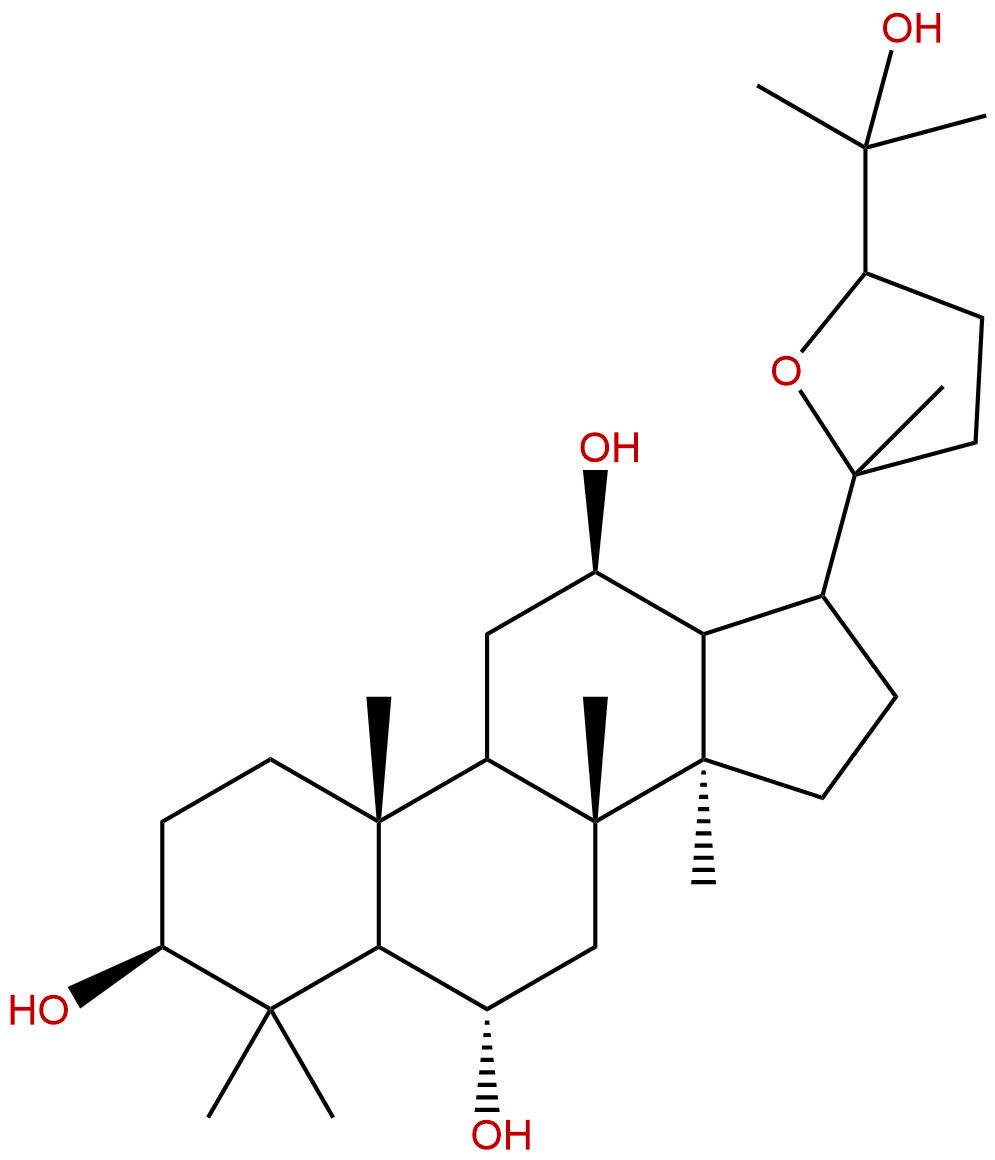


Product name: 20(S),24(R)-Ocotillol
Synonym name: 20(S)-protopanaxatriol oxide I
Catalogue No.: BP1783
Cas No.: 69926-31-4
Formula: C30H52O5
Mol Weight: 492.741
Botanical Source:
Physical Description:
Type of Compound: Triterpenoids
Purity: 95%~99%
Analysis Method: HPLC-DAD or/and HPLC-ELSD
Identification Method: Mass, NMR
Packing: Brown vial or HDPE plastic bottle
The product could be supplied from milligrams to grams. Inquire for bulk scale.
We provide solution to improve the water-solubility of compounds, thereby facilitating the variety of activity tests and clinic uses.
For Reference Standard and R&D, Not for Human Use Directly.
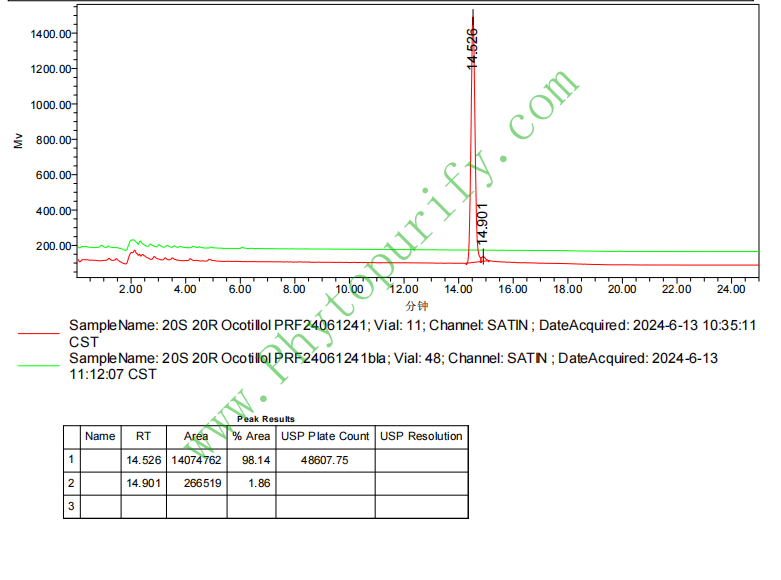
HPLC of 20(S),24(R)-Ocotillol
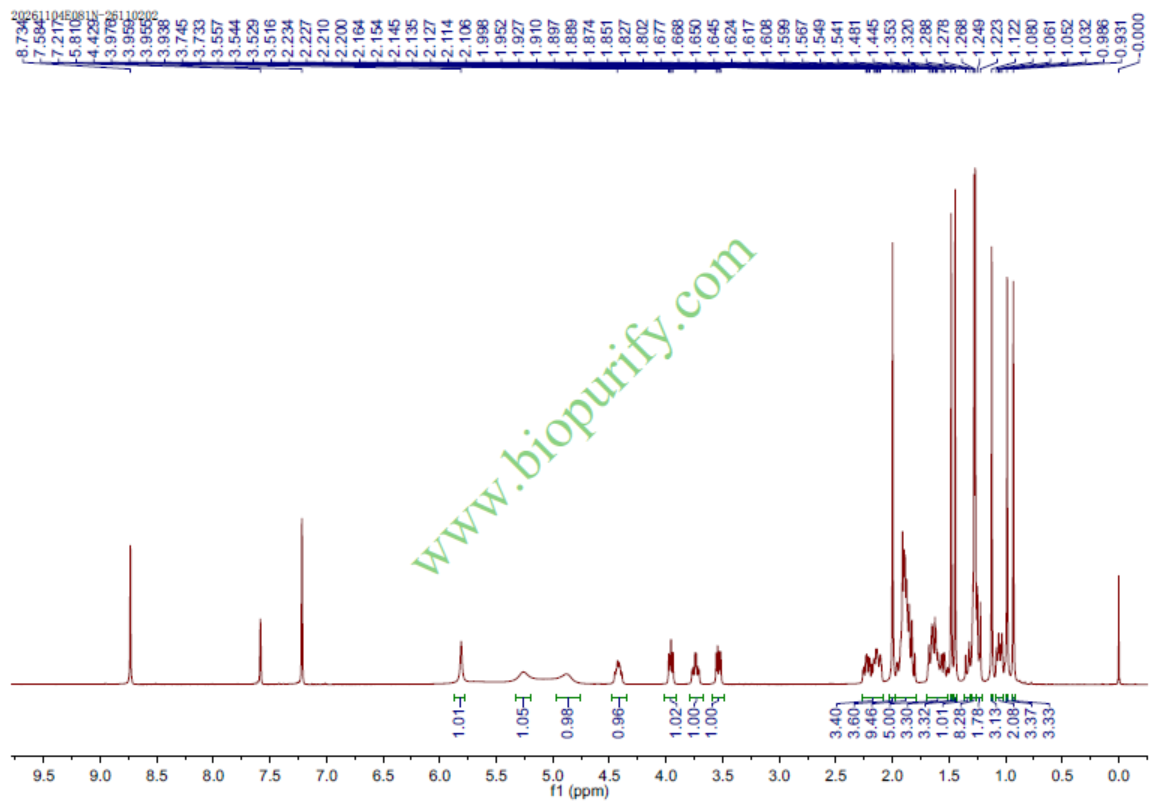
HNMR of 20(S),24(R)-Ocotillol
Storage conditions:Short-term storage at 2~8℃, long-term storage at -20 ~ -80℃
90.1500
4.4590
4.4590
.0026
4.0798
5.1186
Low
82.4473
5.1619
No
No
No
No
No
No
0.0
Yes
No
No
No
Atherosclerosis (AS) is the main pathological basis of cardiovascular and cerebrovascular diseases. Its occurrence and development involve many complex links, such as lipid metabolism disorder, endothelial dysfunction, chronic inflammatory reaction and imbalance of cell apoptosis. Although lipid-lowering therapies such as statins have achieved significant results, residual cardiovascular risks, drug side effects, and some patients' intolerance still exist. Therefore, exploring new anti AS active ingredients with multi-target and multi-channel intervention potential from natural products has always been an important direction for drug development. Anthropomorphic sapogenin (20 (S), 24 (R) - Ocotillol, hereinafter referred to as Ocotillol), as a natural triterpenoid sapogenin, has attracted much attention due to its unique chemical structure and wide range of biological activities. Early studies have revealed its potential in cardiovascular protection, anti-inflammatory, anti-tumor, and other areas. In recent years, with the deepening understanding of the molecular mechanism of AS, the pharmacological activity and action targets of Ocotilol in anti atherosclerosis have been gradually revealed, showing multi-dimensional intervention capabilities such as regulating lipid metabolism, inhibiting inflammation, protecting endothelium, and regulating apoptosis. This article aims to systematically review the chemical properties, plant sources, pharmacological activities of Ocotillol, especially its anti AS mechanism and molecular targets, and evaluate and prospect its pharmacological properties and clinical application prospects.
The chemical name of anthropomorphic sapogenin (20 (S), 24 (R) - Okotilol) is (20S, 24R) - epoxidamaran-3 β, 12 β, 25 triol, with a CAS number of 69926-31-4. Its molecular formula is C30H52O4 and its molecular weight is 492.7410. Structurally, Ocotillol belongs to the class of tetracyclic triterpenoid derivatives of the Damane type, with its core skeleton being a steroid like cyclopentane and a fully hydrogenated phenanthrene structure. Its structural features include an S configuration at position C-20 and an R configuration at position C-24, forming a unique tetrahydrofuran ring (connected by an oxygen bridge between C-20 and C-24), and containing three hydroxyl groups (located at positions C-3 β, C-12 β, and C-25) in the molecule. This unique epoxy structure is the key that distinguishes it from other ginsenosides such as protopanaxadiol and protopanaxatriol, and profoundly affects its physicochemical properties and biological activity.
In terms of physicochemical properties, the calculated lipid water partition coefficient (LogP) is 4.4590, indicating that the compound has high lipophilicity. The topological polar surface area (TPSA) is 90.1500 Å ², reflecting the size of the polar regions in its molecules. Its water solubility is extremely low, about 0.0026 mg/mL, which is consistent with its high LogP value, indicating that it may need to be improved in solubility and bioavailability through formulation methods (such as prodrugs, nano formulations, or cyclodextrin inclusion complexes) during the development process. Preliminary drug risk assessment shows that its ability to cross the blood-brain barrier is low, suggesting that the risk of central nervous system related side effects may be relatively low; No inhibitory activity on hERG potassium channels suggests a lower potential risk of arrhythmia; The Ames test result is negative (0.0), indicating preliminarily that it has no genetic toxicity. These basic physicochemical parameters and early safety data provide important references for the subsequent development of Ocotillol.
Ocotillol is not widely found in nature, and its main natural sources are concentrated in the roots and stems of the Araliaceae family, particularly in the Panax genus, especially in the Panax quinquefolius L. In addition, a small amount has also been found in medicinal plants such as Panax notoginseng. In plants, Ocotillol often exists in the form of saponins, where its hydroxyl group combines with sugar groups (such as glucose, xylose, etc.) to form pseudo ginsenosides (such as pseudo ginsenoside F11, etc.), which are its main storage and active forms in plants.
Obtaining Ocotillol from plant materials typically involves multiple steps of extraction, separation, and purification. Firstly, methanol, ethanol, or ethanol water mixed solvents are used for reflux extraction or ultrasound assisted extraction of dried American ginseng roots to obtain crude total saponins extract. Subsequently, preliminary enrichment and impurity removal were performed using macroporous adsorption resin (such as D101, AB-8) column chromatography, followed by gradient elution with water and different concentrations of ethanol to collect the target saponin rich fraction. Subsequently, further separation and purification were carried out using methods such as silica gel column chromatography, reverse phase silica gel column chromatography (such as ODS), high performance liquid chromatography (HPLC), or preparative thin layer chromatography (PTLC) to obtain a single anthropomorphic ginsenoside. Finally, in order to obtain the sapogenin Ocotillol, it is necessary to perform acid hydrolysis or enzymatic hydrolysis on the isolated anthropomorphic ginseng saponins to remove the glycosylation. Acid hydrolysis is commonly carried out using dilute solutions of hydrochloric acid or sulfuric acid under heating conditions, but the conditions must be strictly controlled to avoid side reactions such as dehydration or isomerization of the glycoside structure. Enzymatic hydrolysis conditions are relatively mild, but the cost is high and efficiency may be limited. After extraction, washing, and drying, the hydrolysis product can be purified by recrystallization or chromatography techniques to obtain high-purity Ocotillol monomer. Modern separation and analysis techniques, such as high-speed countercurrent chromatography (HSCCC) combined with mass spectrometry (MS) and nuclear magnetic resonance (NMR), greatly improve separation efficiency and accuracy in structural identification.
Ocotillol exhibits a wide range of pharmacological activities, and its research has expanded from early anti fatigue and immune enhancement to multiple fields such as cardiovascular and cerebrovascular protection, anti-inflammatory, anti-tumor, and neuroprotection.
Cardiovascular protection and anti atherosclerosis This is the core focus of Ocotillol's current research. In various AS animal models, such as ApoE -/- mouse high-fat diet model, Ocotillol intervention can significantly reduce aortic plaque area, improve lipid profile (such as reducing serum total cholesterol, low-density lipoprotein cholesterol, and triglyceride levels), and inhibit inflammatory cell infiltration in the vascular wall. Its cardiovascular protective effect is also reflected in anti myocardial ischemia/reperfusion injury, improving myocardial hypertrophy, and other aspects.
Anti inflammatory and immune regulatory effects Ocotillol exhibits inhibitory effects on both acute and chronic inflammation models. It can inhibit the excessive production of inflammatory mediators (such as TNF - α, IL-6, IL-1 β, nitric oxide) in macrophages induced by stimuli such as lipopolysaccharides (LPS). Its anti-inflammatory effect is closely related to the regulation of classic inflammatory signaling pathways such as NF - κ B and MAPK.
Antitumor activity: Studies have shown that Ocotillol can inhibit the proliferation and promote apoptosis of many tumor cell lines (such as lung cancer, liver cancer, breast cancer, colon cancer cells). Its mechanism involves inducing cell cycle arrest, activating apoptotic signaling pathways, and inhibiting tumor cell migration and invasion.
Neuroprotective effect Preliminary research suggests that Ocotillol may have protective potential against neurodegenerative diseases and injuries such as Alzheimer's disease and cerebral ischemia, possibly related to reducing oxidative stress, inhibiting neuroinflammation, and resisting apoptosis.
Other activities This also includes reports on antioxidant, antiviral (such as against influenza virus), and anti fibrotic effects.
The anti atherosclerosis mechanism of Ocotillol is complex, involving multi-target and multi-channel coordinated regulation, mainly focusing on the following aspects:
Regulating lipid metabolism and cholesterol reverse transport:
Inhibit endothelial cell damage and adhesion molecule expression:
Regulating energy metabolism and inflammatory signaling:
Affects epigenetic modifications:
Regulating the balance between cell apoptosis and survival:
To sum up, Ocotillol has formed a synergistic network from reducing lipid intake (inhibiting LOX-1), promoting lipid outflow (up regulating ABCA1), improving cell metabolism (activating AMPK), inhibiting inflammation (through AMPK, EHMT2, etc.), to protecting cells from apoptosis (up regulating Bcl-2/Mcl-1) by acting on LOX-1, AMPK, EHMT2, ABCA1 and other targets, to jointly fight against the occurrence and development of atherosclerosis.
Based on its physical and chemical properties, Ocotillol's pharmacological properties present both challenges and certain advantages.
Advantage aspects Moderate molecular weight (<500), in line with the basic rules of drug properties. No hERG inhibition and genotoxicity warning, with good early safety prospects. The low permeability of the blood-brain barrier may limit its central side effects, which may be an advantageous feature for drugs that primarily target the peripheral cardiovascular system.
Challenge aspect The most prominent issue is its extremely low water solubility, which inevitably leads to poor oral absorption and low bioavailability. A high LogP value also suggests that it may have characteristics such as large distribution volume and slow elimination, and attention should be paid to potential organizational accumulation risks.
At present, there is relatively limited publicly available systematic research on the pharmacokinetics (PK) of Ocotillol, which is related to its low content and difficulty in obtaining in plants. Limited animal experimental data (mainly in rat models) suggest that Ocotillol is slowly absorbed after oral administration, with a long peak time (Tmax) and possibly low absolute bioavailability. It may undergo extensive metabolism in the body, including phase I metabolism (such as hydroxylation, demethylation) and phase II binding reactions (such as glucuronidation, sulfation). The prototype drug and its metabolites may be mainly excreted through bile and feces, with a relatively small proportion excreted through the kidneys. Its unique epoxy structure may be one of the metabolic sites and also affects its interaction with target proteins.
In order to improve its pharmacological properties, future research strategies should include: 1)Formulation strategy Develop novel drug delivery systems such as nanocrystals, liposomes, solid dispersions, and self microemulsions to improve solubility and oral bioavailability. 2)Prodrug design By introducing hydrolyzable hydrophilic groups at hydroxyl and other sites, prodrugs are prepared to improve their water solubility and absorption properties, and release active parent drugs in vivo through enzymatic interpretation. 3)In depth PK/PD research The system conducts absorption, distribution, metabolism, and excretion (ADME) studies in different animal models, identifies the main metabolic enzymes and transporters, establishes a pharmacokinetic pharmacodynamic (PK-PD) correlation model, and provides a basis for clinical dosing regimen design.
As a natural compound with multi target anti atherosclerosis potential, Ocotillol has a promising clinical application prospect, but it has a long way to go.
Potential application directions:
1. Prevention and treatment of atherosclerotic cardiovascular disease (ASCVD)Can be used as a supplement or alternative therapy to statins, especially for patients with statin intolerance or residual risk. Its multi mechanism action characteristics may have unique value in stabilizing plaques and reducing cardiovascular events.
2. Anti inflammatory adjuvant therapy Based on its clear anti-inflammatory mechanism, it may be used to treat other chronic inflammation related diseases, such as rheumatoid arthritis, non-alcoholic fatty liver disease, etc.
3. combination therapy When used in combination with existing lipid-lowering drugs, antiplatelet drugs, etc., it may have a synergistic effect, reducing their respective dosages and side effects.
Challenges faced and future research directions:
1. Deep exploration of the mechanism of action The existing target research still needs to be deepened, especially the validation of relatively novel targets such as EHMT2 and RECQ1 and their exact position in the AS pathological network. Confirmation and expansion are required using techniques such as gene knockout/knockdown, chromatin immunoprecipitation (ChIP), proteomics, etc.
2. Optimization of drug properties in the system As mentioned earlier, addressing its water solubility and bioavailability issues is an urgent task in advancing preclinical research. Resources need to be invested in systematic formulation or prodrug research.
3. Comprehensive preclinical evaluation On the basis of optimizing the formulation, complete a standardized GLP toxicology evaluation (acute toxicity, long-term toxicity, reproductive toxicity, etc.) to clarify its safety window.
4. Clinical translational research Design a reasonable clinical trial plan and gradually explore its effectiveness and safety in ASCVD patients starting from phase I safety trials.
5. Structural modification and development of analogues Using it as the parent nucleus, reasonable structural modifications are carried out to enhance activity, improve pharmacokinetic properties, reduce potential toxicity, and develop derivatives with more clinical application value.
Anthropomorphic sapogenin (20 (S), 24 (R) - Ocotillol) is a naturally occurring tetracyclic triterpenoid with a unique structure and clear source. In recent years, its pharmacological activity in anti atherosclerosis has been significantly revealed, and its mechanism involves the multi-dimensional intervention in lipid metabolism, inflammatory reaction, endothelial protection and cell apoptosis through regulating LOX-1, AMPK, EHMT2, ABCA1, Bcl-2/Mgl-1 and other key targets, showing good development potential. Although it faces challenges such as poor water solubility and low bioavailability in terms of drug properties, these obstacles are expected to be overcome through the intervention of modern medicinal chemistry and formulation methods. In the future, through more in-depth mechanism research, systematic pharmacokinetic and toxicological evaluation and innovative preparation development, Ocotillol is expected to gradually move from a potential natural active molecule to clinical use, providing new candidate drugs or strategies for the prevention and treatment of atherosclerotic cardiovascular diseases, and also providing useful reference for the development of multi-target drugs based on natural products.
