| Catalog No | Package | Original Price | Price | Inventory | Quantity | Operating |
|---|---|---|---|---|---|---|
| BP5308-5mg | 5mg | $290.00 | Sign in |
|


Storage conditions:Short-term storage at 2~8℃, long-term storage at -20 ~ -80℃
93.0600
5.2230
5.0733
.0208
3.8987
11.6053
Low
89.8382
6.1081
No
No
Yes
No
Yes
No
0.0
Yes
No
Yes
Yes
Malaria, as a type of malaria caused by malaria parasites(Plasmodium Parasitic diseases caused by spp. and transmitted through female mosquitoes have long been a major challenge in the global public health field. Although artemisinin based combination therapies (ACTs) have achieved remarkable results in reducing the incidence rate and mortality of malaria, the emergence of drug-resistant strains of malaria parasites, especially falciparum resistant to artemisinin drugs(Plasmodium falciparum)The spread in Southeast Asia has made the development of antimalarial drugs with novel mechanisms of action an urgent global demand. In this context, searching for natural products with novel structures and unique activities from traditional medicinal plants has become an important strategy for the discovery of antimalarial drugs.
Tenghuang genus(Garcinia)Plants, belonging to the Clusiaceae family, are widely distributed in tropical and subtropical regions of Asia, Africa, and South America. This genus of plants is known for its abundant secondary metabolites, particularly polycyclic polyphenylated acylphenoglucinols (PPAPs) compounds. PPAPs are a class of natural products with complex structures, diverse skeletons, and a wide range of biological activities, including antidepressant, anti-tumor, antibacterial, and antiviral activities. Among them, Forbesione (CAS number: 180961-63-1), as a typical PPAPs compound, was first derived from Thai rattan(Garcinia forbesii)It has been isolated and identified from plants, and has attracted the attention of researchers due to its significant anti malaria activity.
The discovery and research of Forbesione not only enrich the chemical diversity of PPAPs compounds, but also provide potential lead compounds for addressing the increasingly severe problem of malaria drug resistance. Its unique chemical structure endows it with a mode of action different from traditional antimalarial drugs, and it is expected to overcome the resistance of existing drugs by acting on multiple targets or novel targets. This article aims to systematically review the chemical structure, physicochemical properties, plant origin, extraction methods, pharmacological activity, mechanism of action, pharmacological evaluation, and clinical application prospects of Forbesione, in order to provide comprehensive scientific basis for the in-depth development and utilization of this natural product.
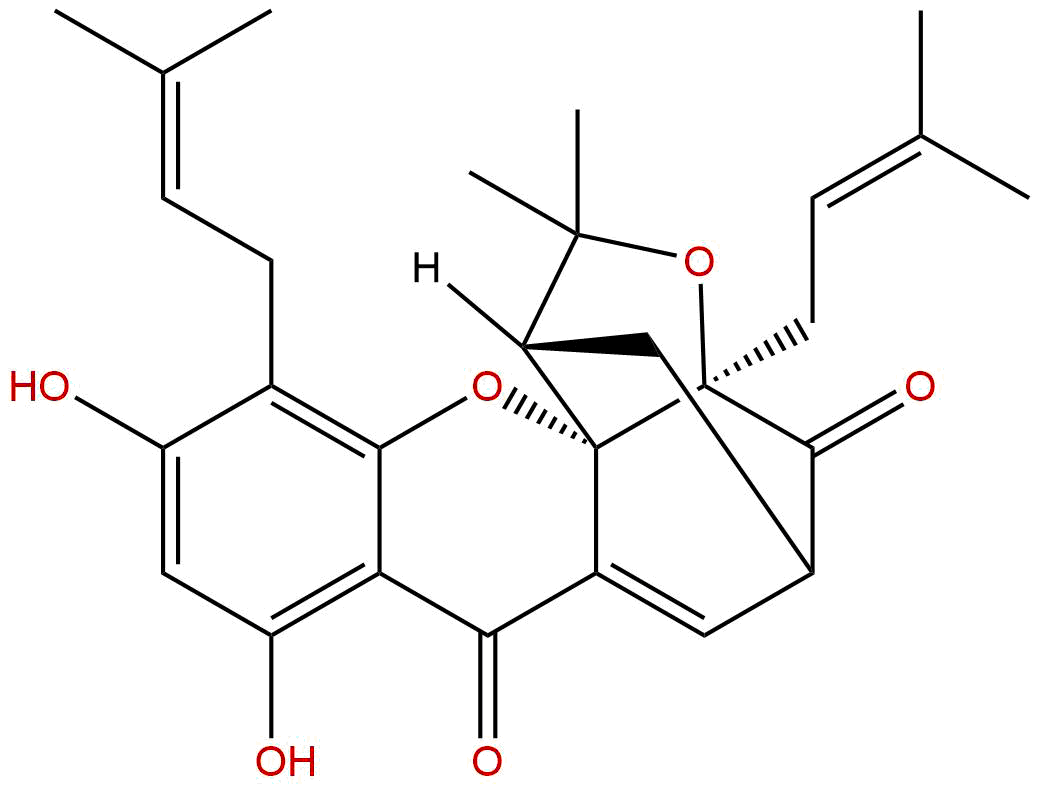
Forbesione belongs to the polycyclic polyisoprenyl triphenylphenols (PPAPs) family, and its core skeleton is a highly oxidized bicyclic [3.3.1] nonane-2,4,9-trione system, which is constructed by a complex cyclization reaction between a triphenylphenol core and one or more isopentenyl side chains. Specifically, the structural feature of Forbesione is the presence of multiple isoprene units such as isopentenyl or coumarin groups connected to its bridging ring system, as well as an acyl side chain. The types, positions, and stereoconfigurations of these substituents collectively determine Forbesione's unique molecular conformation and biological activity. Structurally, Forbesione shares a similar parent nucleus with other well-known PPAPs such as Garcinol and Guttiferone, but differs in the degree of side chain modification and oxidation, resulting in their diverse biological activities.
In terms of physical and chemical properties, Forbesione has a molecular formula of C ₂₉ H ∝₆ O ₅ and a molecular weight of 464.5580 g/mol. Its lipid water partition coefficient (LogP) is 5.2230, indicating that the compound has high lipid solubility, which is consistent with the structural characteristics of its polyisoprene side chain. High lipid solubility is beneficial for its penetration through biological membranes, but it may also lead to poor water solubility. The calculated topological polar surface area (TPSA) of Forbesione is 93.0600 Å ², which is at a moderate level and suggests that it may have some potential for oral absorption, but further in vivo experimental verification is needed. Its water solubility (LogS) is 0.0208, which is extremely low, indicating poor solubility of Forbesione in water. This will be one of the main challenges for its formulation development and in vivo delivery. In addition, Forbesione's blood-brain barrier (BBB) penetration ability is predicted to be "low", which means its potential in treating central nervous system diseases is limited, but this is not a disadvantageous factor for malaria parasites that mainly act on the blood and liver stages. Key toxicological predictions indicate that Forbesione does not possess hERG (human ether-a-go-go related gene) potassium channel inhibitory activity (predicted as' no '), and the Ames test result is 0.0, suggesting a low risk of cardiac and genetic toxicity, providing preliminary positive signals for its safety as a candidate drug.
Forbesione was originally derived from plants of the genus Tenghuang Thai rattan yellow(Garcinia forbesii Separated from the bark or fruit of King. This plant is mainly distributed in Southeast Asia, such as Thailand, Malaysia, and Indonesia, and is often used in traditional local medicine to treat infections, inflammation, and digestive system diseases. Except G. forbesii Furthermore, subsequent studies have also found the presence of Forbesione in other plants of the genus Tenghuang, such as Garcinia cowa、Garcinia xanthochymus and Garcinia mangostana Some parts of (mangosteen) indicate that Forbesione may be a widely distributed characteristic metabolite in this genus of plants. The content of Forbesione may vary significantly among different plant sources, different parts (such as bark, fruit, leaves), and different harvesting seasons. Therefore, selecting appropriate plant materials and parts is the key to efficiently obtaining this compound.
The extraction of Forbesione usually follows the classic process of natural product chemistry. Due to the moderate polarity of the compound, commonly used extraction solvents include methanol, ethanol, acetone, or their mixed solutions with water. The extraction methods often use cold soaking or percolation to avoid the degradation of thermosensitive components caused by high temperatures. In recent years, modern technologies such as ultrasound assisted extraction and microwave-assisted extraction have also been applied to the extraction of PPAPs compounds to improve extraction efficiency and shorten extraction time. After the extraction solution is concentrated under reduced pressure, crude extract is obtained. Subsequently, the crude extract was preliminarily separated using liquid-liquid extraction method (such as sequential extraction with different polar solvents such as petroleum ether, ethyl acetate, n-butanol, etc.), and the fraction rich in Forbesione is usually concentrated in the moderately polar ethyl acetate extraction layer.
Further purification mainly relies on various chromatographic techniques. Silica gel column chromatography is the most commonly used separation method, typically using gradient elution systems such as petroleum ether ethyl acetate or chloroform methanol. For PPAPs mixtures with more similar structures, high-performance liquid chromatography (HPLC) or preparative thin layer chromatography (PTLC) becomes a necessary refining tool. Reversed phase C18 column chromatography, combined with methanol water or acetonitrile water mobile phase systems, can effectively separate Forbesione and its analogues. Finally, the purified compound was structurally identified using spectroscopic techniques such as nuclear magnetic resonance spectroscopy (NMR) and high-resolution mass spectrometry (HR-MS), confirming its identity as Forbesione.
The most notable pharmacological activity of Forbesione is its significant anti malaria effect. Multiple in vitro studies have shown that Forbesione exhibits strong inhibitory activity against various strains of malaria parasites, including chloroquine sensitive strains (such as 3D7) and chloroquine resistant strains (such as Dd2, W2). Its half maximal inhibitory concentration (IC ₅₀) is typically in the nanomolar to low micromolar range, demonstrating potential superior to or equivalent to certain first-line antimalarial drugs. It is worth noting that Forbesione is also effective against artemisinin resistant strains (such as the artemisinin resistant clinical strain isolated from Cambodia), suggesting that its mechanism of action may be different from artemisinin based drugs, thereby avoiding or overcoming existing resistance mechanisms. The activity against multidrug-resistant malaria parasites is the core value of Forbesione as an anti malaria lead compound.
In addition to its antimalarial activity, researchers have also explored other pharmacological effects of Forbesione. The preliminary study found that Forbesione showed certain cytotoxicity to some cancer cell lines (such as breast cancer MCF-7, colon cancer HCT-116, etc.), but its selectivity index (IC ≮₀ ratio of normal cells to cancer cells) still needs further evaluation. In addition, based on the commonality of PPAPs family compounds, Forbesione may also have anti-inflammatory, antioxidant, and antibacterial activities, but research in these areas is not yet in-depth and needs to be systematically carried out. In terms of antimalarial activity, the stage of action of Forbesione is also worth paying attention to. Preliminary evidence suggests that it may primarily act during the blood phase (erythroid phase) of malaria parasites, particularly during the vegetative and schizoid stages, exerting insecticidal effects by interfering with their critical metabolic processes or disrupting their organelle structure.
Elucidating the anti malarial mechanism of Forbesione is the key to pushing it towards preclinical development. Based on its chemical structural characteristics and preliminary pharmacological studies, Forbesione may exert anti malarial effects through multi-target and multi pathway pathways, which is consistent with the "multi pharmacological" properties commonly found in PPAPs. The potential targets currently being studied include:
PfCRT (chloroquine resistant transporter protein of Plasmodium falciparum) and PfMDR1 (multidrug resistance protein 1 of Plasmodium falciparum)Forbesione is effective against chloroquine resistant strains, suggesting that it may not be a substrate for PfCRT or PfMDR1, or may be able to inhibit the function of these transporters, thereby reversing resistance. Forbesione may increase the effective concentration of drugs in malaria parasites by interfering with the efflux of drugs or metabolic waste by these transporters.
PfDHFR (Plasmodium falciparum dihydrofolate reductase)As a classic antimalarial target, PfDHFR is the target of action for drugs such as ethambutol. Although Forbesione's structure is far from folate analogs, molecular docking or enzyme activity inhibition experiments may reveal its inhibitory effect on the enzyme, which requires experimental verification.
PfK13 (Kelch13 protein of Plasmodium falciparum)PfK13 is a key molecular marker of artemisinin resistance. Forbesione is effective against artemisinin resistant strains, indicating that its target may not be dependent on PfK13 or may be able to act on downstream or parallel signaling pathways of PfK13. This makes it an ideal candidate compound for addressing artemisinin resistance.
PfATP6 (malignant malaria parasite sarcoplasmic reticulum/endoplasmic reticulum calcium ATPase)Artemisinin based drugs are believed to exert antimalarial effects by inhibiting PfATP6. There is controversy over whether Forbesione also acts on this target, but given its lack of cross resistance with artemisinin, its mechanism of action may be independent of PfATP6.
PfCYTb (malignant malaria parasite cytochrome b) and PfCYT (malignant malaria parasite cytochrome)These are components of mitochondrial electron transport chain complex III, which are targets of atorvastatin. Forbesione may inhibit the energy metabolism of malaria parasites by interfering with mitochondrial function.
PfATG8 (Autophagy related protein 8 of Plasmodium falciparum)Autophagy is an important survival mechanism for malaria parasites to cope with environmental stress. Forbesione may enhance its insecticidal effect by inhibiting the autophagy process mediated by PfATG8, blocking the self repair and nutrient recovery of malaria parasites under stress conditions.
In summary, Forbesione may be a "multi-target" antimalarial compound. It may act on multiple key targets simultaneously, such as inhibiting mitochondrial electron transfer (PfCYTb), interfering with drug efflux (PfCRT/PfMDR1), blocking autophagy (PfATG8), and affecting other metabolic pathways. This multi-target mode of action not only explains its high efficiency and low susceptibility to drug resistance, but also provides a new approach for developing a new generation of antimalarial drugs. However, the direct interaction between the aforementioned targets still needs to be confirmed through biochemical and molecular biology experiments, such as surface plasmon resonance, enzyme activity assays, gene knockout/knock in, etc.
The pharmacological evaluation of Forbesione is a comprehensive topic that involves multiple aspects such as absorption, distribution, metabolism, excretion (ADME), and toxicity. According to existing data, its pharmacological characteristics are as follows:
Advantage:
* High activity and low resistance tendency The nanomolar activity against multiple drug-resistant strains of malaria parasites is its greatest advantage.
* Low predictive toxicity The Ames test was negative and there was no risk of hERG inhibition, preliminarily ruling out the two common hazards of genetic toxicity and cardiac toxicity.
* Multi target mechanism Beneficial for reducing the probability of drug resistance.
Challenge:
* Extremely poor water solubility LogS is 0.0208, with extremely poor water solubility, which is the main obstacle to the development of oral and intravenous formulations. Solubilization techniques such as liposomes, nanoparticles, cyclodextrin inclusion complexes, or solid dispersions are required.
* High lipid solubility LogP is 5.2230, which is beneficial for membrane penetration but may also lead to drug accumulation in adipose tissue, prolong half-life, and increase the risk of toxic side effects. Meanwhile, high lipid solubility also increases the difficulty of metabolic clearance, which may lead to drug drug interactions.
* Unknown oral bioavailability Currently, there is a lack of pharmacokinetic data for Forbesione in animals. Its high LogP and low water solubility usually indicate lower oral bioavailability. Therefore, it may be necessary to develop non oral routes of administration (such as injection, transdermal delivery) or prodrug strategies.
* Metabolic stability PPAPs typically contain multiple isopentenyl and phenolic hydroxyl groups, which are potential sites of action for phase I and phase II metabolic enzymes such as CYP450 and UGT. The metabolic stability of Forbesione and the activity or toxicity of its metabolites need to be elucidated through in vitro liver microsomal experiments and in vivo metabolite identification.
* Plasma protein binding rate Highly lipophilic compounds typically have a high plasma protein binding rate (>99%), which may limit the concentration of free drugs, affect drug efficacy, and lead to drug interactions.
Pharmacokinetic prediction Based on its physicochemical properties, it can be inferred that the pharmacokinetic characteristics of Forbesione in vivo may manifest as poor oral absorption, large distribution volume, long half-life, and low clearance rate. Its ability to penetrate the blood-brain barrier is low, which is an advantage for treating malaria (mainly occurring in red blood cells and the liver) and can reduce central nervous system side effects. In the future, it is necessary to conduct systematic pharmacokinetic studies, including oral and intravenous administration experiments in rats or mice, to obtain key parameters (such as Cmax, Tmax, AUC, t1/2, F%, etc.), and establish PK/PD models to guide the design of dosing regimens.
Forbesione, as an anti malaria lead compound, has broad clinical application prospects, but also faces many challenges. Its core value lies in combating the increasingly severe malaria resistance, especially artemisinin resistance. If it can successfully overcome its drug resistance barriers, Forbesione is expected to become an important component of the new generation of antimalarial drug combinations.
Potential application directions:
1. Antimalarial combination therapy Given its multi-target mechanism, Forbesione is most likely to be developed as a component in combination therapy. For example, when combined with artemisinin derivatives such as artemether, it may synergistically kill malaria parasites through different mechanisms and delay the development of drug resistance. The combination with drugs such as atorvaquinone chloroguanidine or mefloquine is also worth exploring.
2. Treating severe malaria If a suitable injectable form is developed, Forbesione can be used to treat severe malaria, especially in cases where there is poor response to existing injectable drugs such as artemether.
3. Clearing gametophytes Some PPAPs compounds have been reported to have activity in killing the gametophytes of malaria parasites, thereby blocking the spread of malaria. Whether Forbesione has this activity is worthy of further investigation, which will endow it with a dual value of "treatment+prevention of transmission".
Future research directions:
1. Research on Structural Optimization and Structure Activity Relationship (SAR)To address the shortcomings of poor water solubility and metabolic instability of Forbesione, modifications were made to its side chains, acyl groups, or core skeleton through semi synthetic or total synthetic methods. For example, introducing hydrophilic groups such as amino, carboxyl, and sugar groups to improve water solubility; Replace easily metabolized isopentenyl groups with more stable functional groups; Or synthesize a series of similar compounds, systematically study the effects of different substituents on antimalarial activity and drug resistance, and search for derivatives with higher activity and better properties.
2. In depth elucidation of the mechanism of action Using multi omics techniques such as chemical proteomics (such as ABPP), CRISPR-Cas9 gene editing technology, transcriptomics, and metabolomics, comprehensively and systematically identify the direct targets and signaling pathways of Forbesione in malaria parasites. Clarifying its exact mechanism of action is the foundation for rational drug design and avoiding off target toxicity.
3. Formulation development Develop advanced drug delivery systems to address the issue of poor water solubility. For example, preparing Forbesione liposomes, nanoemulsions, polymer micelles, or phospholipid complexes to enhance their bioavailability and achieve targeted delivery (such as targeted infection of red blood cells).
4. Pharmacodynamic and toxicological evaluation in vivo In a malaria mouse model (such as Plasmodium berghei or P. chabaudi In the infection model, the in vivo antimalarial activity, pharmacokinetic characteristics, and acute/chronic toxicity of Forbesione and its derivatives were systematically evaluated. This is a crucial step in determining whether it can enter clinical trials.
5. Synthetic Biology and Biotechnology Exploring the use of genetic engineering techniques to efficiently express the biosynthetic gene cluster of Forbesione in heterologous hosts such as yeast or Escherichia coli, achieving sustainable and low-cost production and eliminating dependence on plant resources.
Forbesione, as a structurally unique natural product of PPAPs in the genus Tenghuang, has shown significant research value in the field of antimalarial drug discovery due to its potent inhibitory activity against multidrug-resistant malaria parasites, including artemisinin resistant strains. Its multi-target mode of action, especially its intervention on potential targets such as PfCRT, PfMDR1, PfCYTb, and PfATG8, provides a theoretical basis for overcoming existing drug resistance. However, Forbesione's poor water solubility, high lipid solubility, and unknown pharmacokinetic properties in vivo constitute the main bottlenecks in its drug development.
From phytochemistry to pharmacological activity, and then to preliminary exploration of the mechanism of action, Forbesione's research process reflects a typical paradigm of natural product drug discovery. In the future, through systematic structural optimization, in-depth mechanism research, innovative formulation development, and comprehensive in vivo evaluation, Forbesione, a natural product, is expected to be transformed into clinically available candidate antimalarial drugs. This will not only provide new "weapons" for the global fight against malaria, but also further demonstrate the enormous potential of nature as a treasure trove of drug lead compounds. In today's increasingly severe drug resistance crisis, exploring and developing "new" compounds such as Forbesione undoubtedly has important scientific significance and practical value.
Batch can search by a CAS number,one per line
