Introduction/Overview
Natural products have always been an important source of drug discovery and development, and their unique chemical structures and diverse biological activities provide valuable lead compounds for overcoming major human diseases. Among the numerous natural products with anti-tumor activity, those from the genus Epiphyllum(Garcinia)Polycyclic Polyphenylated Acylphoroglucinols (PPAPs) in plants have attracted much attention due to their complex skeletons and significant pharmacological activities. Gambogic acid (GA), as a representative member of this family, has been widely studied and demonstrated strong anti-tumor potential. However, its isomer, Isogambogic acid (IGA), although structurally very similar to ferulic acid, its unique biological properties and potential therapeutic value were often overlooked or confused in early research.
Isocinnamic acid (CAS number: 149655-52-7) is derived from plants of the Tenghuang genus, particularly from the Tenghuang tree(Garcinia hanburyi)The natural product isolated from the resin of the traditional Chinese medicine "Tenghuang". As a type of PPAPs, isoquercetin has a highly oxidized, bridged polycyclic skeleton and is connected to multiple isopentenyl units. This unique chemical structure endows it with diverse biological activities, especially its significant anti-tumor effects. Research has shown that isoflavones can effectively induce the death of Lewis lung cancer cells (LLC) and human lung cancer cells (SK-LU-1) in the range of micromolar concentrations, with half maximal inhibitory concentrations (IC50) of 2.26 μ M and 2.02 μ M, respectively, demonstrating potent anti-cancer potential.
Compared with ferulic acid, isoferulic acid may have differences in chemical stability, metabolic pathways, and selectivity towards certain molecular targets, making it an independent candidate molecule worthy of further investigation. In recent years, with the advancement of separation technology and the in-depth exploration of pharmacological mechanisms, research on the anti-tumor, anti-inflammatory, and antibacterial properties of isoquercetin has gradually increased. Its position as a lead compound for new natural anti-cancer drugs is becoming increasingly prominent. This article aims to systematically review the chemical structure, physicochemical properties, plant sources, extraction methods, pharmacological activity, mechanism of action, pharmacological evaluation, and clinical application prospects of isoquercetin, in order to provide comprehensive references for the subsequent research and development of this compound.
Chemical structure and physicochemical properties
chemical structure
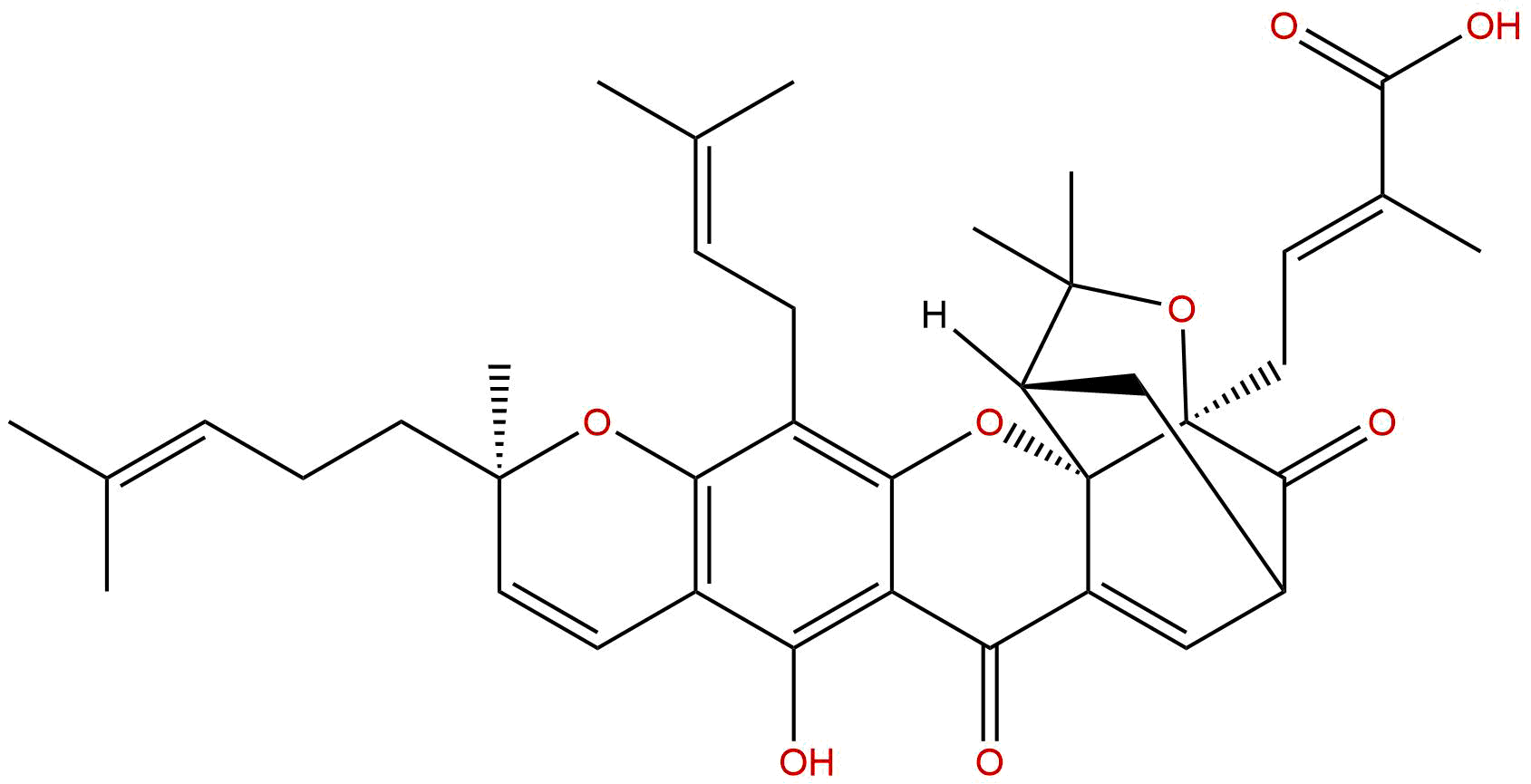
Isocinnamic acid belongs to the polycyclic polyisoprenyl triphenylene compounds, and its core skeleton is a highly modified bridged ring structure with a 4-oxatricyclic [4.3.1.0 ³, ⁷] dec-2-one system. The core skeleton is formed by complex biosynthetic steps such as cyclization and isopentenylation of triphenylphenol derivatives. Isocinnamic acid and cinnamic acid are a pair of isomers, both with the molecular formula C ∝₈ H ₄₄ O ₈. The main structural difference between the two lies in the configuration of a chiral center or the position of a double bond on the bridged ring system, which leads to differences in their physicochemical properties and biological activities. Specifically, the structure of isoquercetin contains a characteristic alpha, beta unsaturated ketone structural unit, as well as multiple free or ether forming hydroxyl groups, which are key pharmacophores for its biological activity. The multiple isopentenyl side chains in its structure not only increase the lipophilicity of the molecule, but may also affect its binding ability by interacting with the hydrophobic pocket of the target protein.
Physicochemical properties
The physicochemical properties of isoquercetin have a decisive impact on its medicinal properties and bioavailability.
- Molecular weight and formula The molecular weight is 628.7620, and the molecular formula is C ∝₈ H ₄₄ O ₈. The higher molecular weight exceeds the traditional Lipinski's Rule of Five limit of molecular weight less than 500, indicating that it may face challenges in oral absorption.
- Lipid water partition coefficient (LogP)The LogP value is 6.5244. This high value indicates that isoquercetin has extremely strong lipophilicity. High lipophilicity is beneficial for its penetration of cell membranes, but it may also lead to poor water solubility, thereby affecting its dissolution, leaching, and absorption in vivo.
- Topological Polarity Surface Area (TPSA)The TPSA is 119.3600 Å ². TPSA is an important parameter for predicting drug oral absorption and blood-brain barrier penetration ability. It is generally believed that molecules with TPSA greater than 140 Å ² have poor oral absorption, and molecules with TPSA greater than 90 Å ² are not easily able to penetrate the blood-brain barrier. The TPSA of isoquercetin is 119.36 Å ², which falls between the two, indicating that its oral absorption may be limited and difficult to enter the central nervous system.
- Water solubility The water solubility is only 0.0150 mg/mL, making it an extremely insoluble compound in water. This is one of the main obstacles faced during its development process. Extremely low water solubility can seriously affect its gastrointestinal absorption and feasibility for intravenous administration, and requires the use of formulation techniques such as liposomes, nanoparticles, cyclodextrin inclusion complexes, etc. to improve.
- Blood-brain barrier penetrability Evaluated as' low '. This is consistent with the higher TPSA and molecular weight, indicating that isoquercetin is not easily able to penetrate the blood-brain barrier, which to some extent limits its application in the treatment of brain tumors, but may also reduce its toxic side effects on the central nervous system.
- HERG inhibition The evaluation result is' no '. The inhibition of hERG (human Ether - à - go Related Gene) potassium ion channels is the main cause of drug induced cardiac toxicity (QT interval prolongation). Isoquercetin does not inhibit hERG channels, which is a positive pharmacological indicator indicating a low risk of cardiac toxicity.
- Ames test The result is 0.0, indicating that it does not have mutagenicity (negative in Ames test), which is an important basis for its safety as a candidate drug.
In summary, isoquercetin has strong anti-tumor activity, but its physicochemical properties exhibit typical characteristics of "high activity, low solubility". High lipophilicity and low water solubility are the main challenges facing its drug development, which require optimization through modern medicinal chemistry and pharmacology methods.
Plant sources and extraction methods
Plant-based
Isocinnamic acid mainly comes from the genus Garcinia(Garcinia)Plants, the main source of which is the vine yellow tree(Garcinia hanburyi Hook. f.)。 Tenghuang tree is a tropical tree native to Southeast Asia, such as Cambodia, Thailand, and Vietnam. When a tree trunk is injured, it secretes a yellow resin that gradually solidifies in the air, known as the traditional Chinese medicine "Gamboge". Tenghuang, as a traditional Chinese medicine, has the effects of breaking blood and dispersing knots, attacking toxins and killing insects. It is commonly used to treat diseases such as carbuncle, swelling, and injuries caused by falls and injuries. Modern pharmacological studies have shown that the main active ingredients of Tenghuang are PPAPs compounds such as Tenghuang acid and IsoTenghuang acid. In addition, other plants of the Tenghuang genus, such as Garcinia morella、Garcinia cowa Wait, it may also contain trace amounts of isoquercetin, but G. hanburyi Resin is currently recognized as the most important and economical source.
Extraction and Separation Methods
Due to their structural similarity and frequent coexistence in plant extracts, the extraction, separation, and purification of isoquercetin pose certain challenges. Traditional extraction methods mainly rely on organic solvent extraction, while modern separation techniques focus on efficient and highly selective chromatographic methods.
-
Extract:
- Raw material processing Dry rattan resin is usually used, crushed and set aside for later use.
- Solvent extraction Using the high lipophilicity of isoquercetin, organic solvents with lower polarity are often used for extraction, such as ethanol, methanol, ethyl acetate, chloroform, etc. Among them, ethanol or methanol reflux extraction is the most commonly used method, which can effectively extract PPAPs components from the resin. The extract is filtered and concentrated under reduced pressure to obtain the total extract.
-
Separation and Purification:
- Liquid-liquid extraction The total extract is suspended in water and extracted sequentially with solvents of different polarities such as petroleum ether, ethyl acetate, and n-butanol to achieve preliminary component separation. Isocinnamic acid and cinnamic acid are mainly enriched in the ethyl acetate or chloroform extraction layer.
- Column chromatography method This is the core step of separation and purification.
- Positive phase silica gel column chromatography Using silica gel as the stationary phase, gradient elution is carried out with mixed solvents such as petroleum ether ethyl acetate or chloroform methanol. Due to the similar polarity of isoferulic acid and ferulic acid, it is difficult to completely separate them on conventional silica gel columns and often requires repeated column chromatography.
- Reverse phase column chromatography Use a C18 reverse phase silica gel column and elute with methanol water or acetonitrile water system. Reverse phase chromatography is more effective in separating structurally similar compounds, often achieving baseline separation of isoquercetin and ferulic acid.
- Preparation type high-performance liquid chromatography (Pre HPLC)This is currently the most effective method for obtaining high-purity monomers of isoquercetin. By optimizing chromatographic conditions such as mobile phase ratio, flow rate, detection wavelength, etc., target compounds can be accurately separated from complex mixtures with a purity of over 98%.
- Crystallization method After preliminary purification, further purification can be achieved by utilizing the difference in solubility of isoquercetin in specific solvents (such as methanol, ethanol) and inducing its crystallization through slow evaporation or cooling.
Pharmacological activity research
Isocinnamic acid exhibits a wide range of pharmacological activities, with anti-tumor effects being the most prominent. In addition, it also involves anti-inflammatory and antibacterial effects.
Antitumor activity
Isocinnamic acid exhibits significant proliferation inhibition and cytotoxic activity against various types of tumor cell lines.
- Lung cancer As mentioned in the introduction, isoquercetin has a strong cytotoxic effect on Lewis lung cancer cells (LLC) in mice and SK-LU-1 lung cancer cells in humans, with an IC50 value of around 2 μ M. This suggests its potential value in the treatment of non-small cell lung cancer.
- breast cancer: Studies have shown that isoproterenoic acid can inhibit the proliferation of MCF-7, MDA-MB-231 and other breast cancer cells, and induce their apoptosis. Its mechanism of action may be related to the inhibition of estrogen receptor (ESR1) signal or aromatase (CYP19A1) activity, suggesting that it may be effective for hormone dependent and triple negative breast cancer.
- liver cancer Isocinnamic acid has cytotoxicity against liver cancer cell lines such as HepG2 and Huh7, and can inhibit liver cancer cell growth by inducing apoptosis and autophagy.
- leukemia Isocinnamic acid can induce differentiation and apoptosis of leukemia cells such as HL-60 and K562, demonstrating therapeutic potential for hematological tumors.
- Other tumors The study also found that isoflavones have inhibitory effects on various solid tumor cells such as gastric cancer, colon cancer, prostate cancer, and osteosarcoma.
anti-inflammatory activity
Inflammation is an important microenvironmental factor in the occurrence and development of tumors. Isocinnamic acid exhibits certain anti-inflammatory activity. It can reduce the expression of downstream inflammatory factors such as tumor necrosis factor alpha (TNF - α), interleukin-6 (IL-6), and cyclooxygenase-2 (COX-2) by inhibiting the activation of the nuclear factor kappa B (NF - κ B) signaling pathway. This anti-inflammatory effect may complement its anti-tumor activity.
Antibacterial activity
As one of the main components of rattan, isoquercetin also inherits the antibacterial properties of rattan. Early research reports on its effect on Staphylococcus aureus(Staphylococcus aureus)Gram positive bacteria have a certain inhibitory effect. However, its antibacterial activity is usually weaker than its anti-tumor activity, and its antibacterial spectrum is relatively narrow.
Mechanism of action and molecular targets
The anti-tumor mechanism of isoflavones is the result of the synergistic effect of multiple targets and pathways. According to existing research, its core mechanism can be summarized as follows:
Inducing cell apoptosis
This is the main way in which isoflavones have anti-tumor effects. It induces tumor cell apoptosis through two pathways: endogenous (mitochondria) and exogenous (death receptors).
- Regulating Bcl-2 family proteins Isoquercetin can downregulate the expression of anti apoptotic proteins MCL1 (myeloid leukemia factor 1) and BCL2 (B-cell lymphoma 2), while upregulating the expression of pro apoptotic protein BAX. This leads to a decrease in mitochondrial membrane potential, release of cytochrome c, and activation of Caspase-9 and Caspase-3, initiating the apoptotic cascade reaction. The clarification of the relevant targets MCL1 and BCL2 provides direct evidence for the mechanism of action of isoquercetin.
- Inhibition of STAT3 signaling pathway Signal transducer and activator of transcription factor 3 (STAT3) is continuously activated in various tumors, promoting cell proliferation, survival, and angiogenesis. Isoquercetin can effectively inhibit the phosphorylation of STAT3, block its nuclear translocation and transcriptional activity, thereby downregulating the expression of its target genes (such as Cyclin D1, Survivor, VEGF, etc.) and inducing tumor cell apoptosis. The inhibition of the related target STAT3 is one of the key steps in its anti-tumor activity.
Inhibit tumor cell invasion and metastasis
Tumor metastasis is the main cause of patient death. Isoquercetin exhibits the ability to inhibit tumor cell migration and invasion.
- Inhibition of matrix metalloproteinases (MMPs)Matrix metalloproteinases, especially MMP2 and MMP9, play a crucial role in degrading extracellular matrix and promoting tumor cell invasion and metastasis. Isoquercetin can downregulate the expression and activity of MMP2, thereby inhibiting the invasive ability of tumor cells. The inhibition of the related target MMP2 is an important molecular basis for its anti metastatic activity.
Inhibition of Topoisomerase Activity
Topoisomerase is a key enzyme in DNA replication and transcription processes, and is also a classic target for many anticancer drugs such as camptothecin and etoposide.
- Inhibition of Topoisomerase I and II Research has shown that isoquercetin can inhibit the activity of topoisomerase I (TOP1) and topoisomerase II alpha (TOP2A). By stabilizing enzyme DNA, the complex can be cleaved, leading to DNA damage and inducing tumor cell death. The mode of action of this' topoisomerase toxin 'is another important mechanism for its cytotoxicity. The clarification of the relevant targets TOP1 and TOP2A provides a basis for explaining their broad-spectrum anti-tumor activity.
Inhibition of angiogenesis and hypoxia signaling
The growth and metastasis of tumors depend on the generation of new blood vessels.
- Inhibition of HIF-1 α signaling Hypoxia inducible factor 1 alpha (HIF1A) is a core transcription factor for tumor cells to adapt to the hypoxic microenvironment. It can activate the expression of angiogenic genes such as vascular endothelial growth factor (VEGF). Isoquercetin can inhibit the protein accumulation and transcriptional activity of HIF-1 α, thereby reducing the secretion of VEGF and inhibiting tumor angiogenesis. The inhibition of the related target HIF1A is the key to its anti angiogenic activity.
Other mechanisms of action
- Inhibition of MAPK signaling pathway The mitogen activated protein kinase (MAPK) pathway (such as ERK, JNK, p38) plays an important role in regulating cell proliferation, differentiation, and apoptosis. The regulation of MAPK1 (ERK2) and other signaling molecules by isoquercetin may be involved in its induction of apoptosis and inhibition of proliferation.
- Regulating hormone signaling For breast cancer, it may inhibit the proliferation of hormone dependent breast cancer cells by downregulating the expression of estrogen receptor α (ESR1) or inhibiting the activity of aromatase (CYP19A1), blocking the growth promoting signal of estrogen.
In summary, isoflavones form a multi-level anti-tumor network by simultaneously acting on multiple key targets such as MCL1, BCL2, STAT3, MMP2, TOP1, HIF1A, TOP2A, MAPK1, ESR1, CYP19A1, etc. This multi-target mode of action makes it less likely to develop drug resistance, but also increases the complexity of studying its mechanism of action.
Evaluation of drug properties and pharmacokinetics
Drugability assessment
Based on the aforementioned physical and chemical properties, the pharmacological evaluation of isoquercetin presents a clear "double-edged sword" feature.
- Advantage:
- Strong activity At the micromolar level, it is effective and highly active against various tumor cells.
- Multi target mechanism Not easy to develop drug resistance.
- The initial safety evaluation is good There is no risk of hERG inhibition, and the Ames test is negative, indicating a low risk of cardiac toxicity and genetic toxicity.
- challenge:
- Extremely poor water solubility This is the biggest obstacle, severely limiting the development of oral bioavailability and injections.
- High lipophilicity Although it is beneficial for membrane penetration, it may also lead to accumulation in adipose tissue in the body, posing potential toxicity risks.
- Excessive molecular weight Not in compliance with the "Five Rules for Classified Drugs", with poor expected oral absorption.
- Metabolic stability The multiple isopentenyl groups and ester bonds contained in its structure may be rapidly metabolized by cytochrome P450 enzymes and esterases in the body, resulting in a short half-life.
pharmacokinetics
At present, there are relatively few systematic studies on the pharmacokinetics of isoquercetin in vivo. However, based on its physicochemical properties and related analogues (such as quercetin), it can be inferred that:
- absorb Oral absorption is extremely poor, and bioavailability may be very low. Intravenous injection is the preferred route of administration, but its poor water solubility needs to be addressed.
- distribution Due to its high lipophilicity, it may be widely distributed in tissues after intravenous administration, especially in the liver, lungs, and adipose tissue. The plasma protein binding rate is expected to be high.
- Metabolism The main metabolic site may be in the liver. The metabolic enzymes involved may include CYP450 enzyme systems such as CYP3A4, as well as esterases that hydrolyze ester bonds. Metabolites may lose their activity or their activity may decrease.
- excretion Metabolites may mainly enter the intestine through bile excretion and ultimately be excreted with feces. The renal excretion of the prototype drug may be minimal.
Clinical application prospects and prospects
Although isoflavones have shown excellent performance in preclinical studies, there is still a long way to go before their clinical application. Its future development direction mainly focuses on the following aspects:
-
Development of drug delivery system Solving the problems of poor water solubility and low oral bioavailability is the key to pushing it into clinical practice. The use of nanotechnology, such as preparing liposomes, polymer nanoparticles, albumin nanoparticles, micelles, or cyclodextrin inclusion complexes, is an effective strategy to improve their solubility and targeting. For example, encapsulating isoflavones in nanocarriers targeting tumors can achieve precise drug delivery, improve efficacy, and reduce systemic toxicity.
-
Structural modification and optimization The fundamental way to improve the pharmacological properties of isoquercetin is to modify its structure through medicinal chemical methods. For example, hydrophilic groups (such as phosphate groups, amino acids, sugar groups, etc.) can be introduced into their molecules to make prodrugs to improve water solubility; Alternatively, modifications can be made to easily metabolized sites to enhance metabolic stability. Synthesizing a series of structurally similar compounds and conducting structure-activity relationship studies is expected to discover derivatives with stronger activity, lower toxicity, and better pharmacokinetic properties.
-
Combination therapy strategy Given the multi-target nature of isoflavones, their combination with existing chemotherapy drugs (such as cisplatin, paclitaxel, doxorubicin) or targeted drugs (such as tyrosine kinase inhibitors) may produce synergistic effects and overcome or delay the development of drug resistance. For example, the inhibition of STAT3 and HIF-1 α by isoflavones may enhance the killing effect of certain chemotherapy drugs on drug-resistant tumor cells.
-
Expand indications In addition to anti-tumor effects, the anti-inflammatory activity of isoflavones is also worth further exploration. Chronic inflammation is the foundation of various diseases, such as autoimmune diseases and neurodegenerative diseases. Studying the role of isoquercetin in disease models such as rheumatoid arthritis and inflammatory bowel disease may open up new therapeutic areas for it.
-
In depth mechanism research Although multiple targets have been identified, the interaction network between these targets and the specific mode of binding of isoquercetin to them (such as covalent or non covalent binding) still need to be elucidated. Using chemical biology methods, such as activity-based proteomic analysis, to identify its direct target of action will help to gain a more precise understanding of its pharmacological mechanisms.
Conclusion
As a natural product derived from the traditional Chinese medicine Tenghuang, isoflavones have gained a place in the fields of natural medicinal chemistry and pharmacology due to their unique chemical structure and potent, multi-target anti-tumor activity. It effectively induces tumor cell apoptosis, inhibits invasion, metastasis, and angiogenesis by regulating multiple key signaling nodes such as MCL1, BCL2, STAT3, MMP2, TOP1, and HIF1A. However, the pharmacokinetic defects caused by its extremely poor water solubility and high lipophilicity are the main bottlenecks restricting its clinical translation.
Future research should focus on utilizing advanced drug delivery systems and novel drug chemistry strategies to overcome these obstacles. With the continuous development of nanotechnology and prodrug design concepts, the pharmacological properties of isoflavones are expected to be significantly improved. Meanwhile, in-depth analysis of its mechanism of action and exploration of combination therapy regimens will further tap into its clinical therapeutic potential. Despite the numerous challenges ahead, isoflavones are undoubtedly a highly valuable natural product lead compound, with the potential to provide new treatment options for cancer patients in the future.