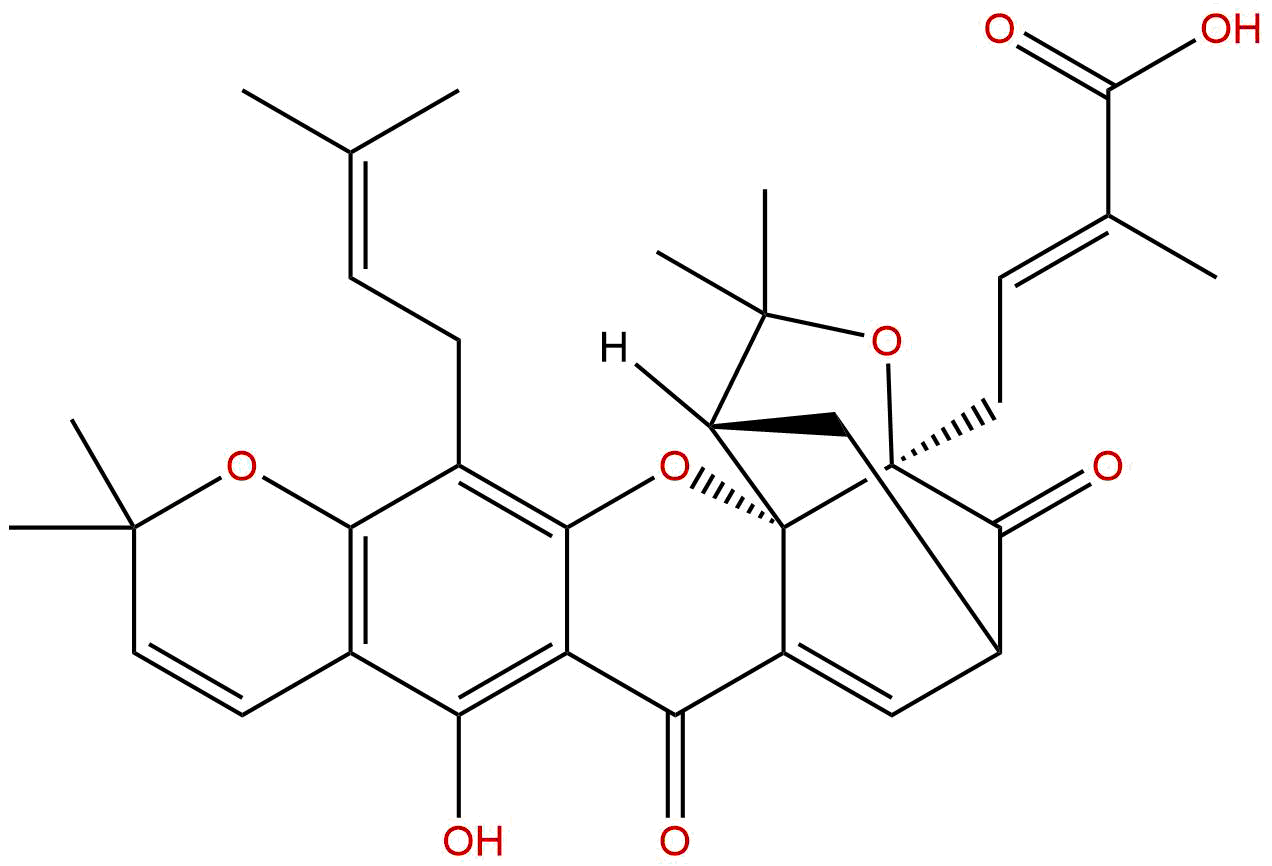
Isomorelic acid: research progress from natural mountain ketone to anti-tumor candidate molecule
Introduction/Overview
Natural products have always been an important source of drug discovery, especially in the field of anti-tumor. Active small molecules isolated from plants provide a rich library of lead compounds for cancer treatment. Tenghuang genus(Garcinia)Plants, belonging to the Clusiaceae family, have attracted much attention due to their abundance of structurally diverse and biologically active xanthones. Morellic acid and its isomer Isomorelic acid are representative cage like polyisoprenylated xanthones in this genus of plants. Their unique chemical skeleton and significant cytotoxicity make them a hot topic in natural product chemistry and pharmacology research.
Isogallic acid (CAS number: 5262-69-1) is a natural mountain ketone compound with cytotoxicity, mainly derived from plants of the Tenghuang genus such as Garcinia morella、Garcinia hanburyi Obtain by waiting for separation. As early as the mid-20th century, researchers discovered this type of compound from the resin (rattan gum) of plants in the genus Tenghuang and initially recognized its anti-tumor potential. With the advancement of separation technology and structural identification methods, the chemical structure of isoquercetin has been accurately resolved. As an isomer of quercetin, it has subtle but crucial differences in its parent nucleus structure, which directly affect its biological activity and target selectivity.
In recent years, research on the pharmacological activity of isoquercetin has been continuously deepened, revealing its broad-spectrum cytotoxicity in various tumor cell lines. It can exert multiple effects such as inducing apoptosis, inhibiting proliferation, anti angiogenesis, and reversing drug resistance by regulating multiple molecular targets closely related to tumor development, including MCL1, BCL2, STAT3, MMP2, TOP1, HIF1A, TOP2A, MAPK1, ESR1, CYP19A1, etc. However, its poor water solubility (0.0282 mg/mL) and high lipid solubility (LogP 5.1605) also pose challenges for its drug development. This article aims to systematically review the chemical structure, plant origin, pharmacological activity, mechanism of action, and pharmacological evaluation of isoquercetin, in order to provide reference for further research and development of this natural product.
Chemical structure and physicochemical properties
Isocinnamic acid belongs to cage like polyisoprenylated xanthones, with its core skeleton being xanthone, which is a dibenzo - γ - pyranone structure. Unlike ordinary anthraquinone, the molecule of isoquercetin contains a unique cage like structural unit - a bicyclic [3.3.1] nonane system formed by the cyclization of isopentenyl side chains with the mother nucleus. This cage like structure is considered a key pharmacophore for its cytotoxicity.
Structurally, isoferulic acid and ferulic acid are isomers of each other, and there are differences in the substituent positions or stereoconfigurations of the cage like ring system between the two. Specifically, the molecular formula of isomulberry vine yellow acid is C ③③ H ③₆ O ₈, with a molecular weight of 560.6430 Da. Its structure contains multiple phenolic hydroxyl groups, carboxyl groups, and isopentenyl side chains, which endow the molecule with abundant hydrogen bond donor/acceptor abilities and determine its physicochemical properties.
In terms of physical and chemical properties, isoquercetin exhibits typical lipophilic natural product characteristics. Its oil-water partition coefficient (LogP) is 5.1605, indicating that the compound has strong lipid solubility and is easy to penetrate biofilms, but it may also lead to limited solubility in aqueous environments. The measured water solubility is only 0.0282 mg/mL, which is a poorly soluble compound, which to some extent limits its in vivo bioavailability. The polar surface area (TPSA) is 119.36 Å ², which is at a moderate level, indicating that the molecule has a certain polar region and may interact with the target protein through hydrogen bonding. It is worth noting that the blood-brain barrier penetration ability of isoquercetin is relatively low, which may be a favorable factor for anti-tumor drugs that need to avoid central nervous system toxicity. In addition, the negative prediction result of hERG inhibition indicates a low risk of cardiac toxicity; The Ames test result was 0.0, indicating that the compound did not exhibit significant mutagenicity in the bacterial recovery mutation test, and the preliminary safety evaluation is relatively optimistic.
Plant sources and extraction methods
Isogallic acid mainly comes from the genus Garcinia(Garcinia)Plants, comprising over 400 species, are widely distributed in tropical and subtropical regions of Asia, Africa, and the Americas. among which,Garcinia morella(Indian rattan) and Garcinia hanburyi(Vine yellow tree) are the two most extensively studied species. The bark, fruit, and resin (such as rattan gum) of these plants are rich in various cage like anthraquinone compounds. Isogallic acid usually coexists with gallic acid, gambogic acid, and other compounds.
Traditional extraction methods often use organic solvent soaking or percolation methods. Due to its high lipid solubility, commonly used extraction solvents include methanol, ethanol, ethyl acetate, chloroform, etc. The specific process usually involves crushing dried plant materials (such as bark or resin), soaking them in 95% ethanol or methanol at room temperature, or heating and refluxing for extraction. The extract is then concentrated under reduced pressure to obtain a paste, which is then extracted using different polar solvents (such as petroleum ether, ethyl acetate, n-butanol) in a liquid-liquid manner to enrich the target compound in the ethyl acetate or chloroform layer.
Further separation and purification usually rely on modern chromatographic techniques. Silica gel column chromatography is the most commonly used preliminary separation method, which uses chloroform methanol or petroleum ether ethyl acetate gradient elution to preliminarily enrich the fraction containing isoquercetin. Due to the similar structure of these compounds, it is often difficult to obtain high-purity monomers by single silica gel column chromatography. It needs to be refined by combining reverse silica gel column chromatography (such as ODS), Sephadex LH-20 gel column chromatography and preparative high-performance liquid chromatography (prep HPLC). In HPLC separation, a C18 reverse phase column is commonly used, with acetonitrile water (containing 0.1% formic acid or trifluoroacetic acid) as the mobile phase for isocratic or gradient elution. The UV detection wavelength is usually set around 254 nm or 360 nm.
In recent years, with the promotion of green chemistry concepts, some new extraction techniques such as ultrasound assisted extraction, microwave-assisted extraction, and supercritical fluid extraction have also been attempted to be applied to the extraction of active ingredients from plants in the genus Platycodon. These methods have shown certain advantages in shortening extraction time and improving extraction efficiency, but have not yet been widely applied in the industrial production of isoquercetin. In addition, due to the low content of isoquercetin in plants (which varies depending on species, origin, and harvest season), and the difficulty in separating it from its homologs, achieving efficient, low-cost, and high-purity extraction and separation remains one of the technical bottlenecks in this field.
Pharmacological activity research
Antitumor activity
The most notable pharmacological activity of isoquercetin is its broad-spectrum cytotoxicity. A large number of in vitro studies have shown that this compound has a significant proliferation inhibitory effect on a variety of human tumor cell lines, including but not limited to liver cancer (HepG2, Huh7), lung cancer (A549, H1299), breast cancer (MCF-7, MDA-MB-231), prostate cancer (PC-3, DU145), colon cancer (HCT-116, SW480), gastric cancer (SGC-7901), melanoma, etc. Its half maximal inhibitory concentration (IC ₅₀) is usually in the sub micromolar to micromolar range (0.1-5 μ M), demonstrating strong anti-tumor potential.
It is worth noting that isoquercetin also exhibits cytotoxic activity against certain drug-resistant tumor cell lines. For example, in doxorubicin resistant breast cancer cells or cisplatin resistant lung cancer cells, isoproterenoic acid can still induce cell death, suggesting that it may have a different mechanism from traditional chemotherapy drugs and can circumvent or reverse some drug resistance pathways. This characteristic is of great significance for the development of new therapeutic drugs for drug-resistant tumors.
Inducing cell apoptosis
Apoptosis is the main cellular mechanism by which isoquercetin exerts anti-tumor effects. After treatment with isoquercetin, tumor cells exhibited typical apoptotic morphological features, such as cell shrinkage, chromatin condensation, nuclear fragmentation, and the formation of apoptotic bodies. Flow cytometry analysis showed that the compound can cause cell cycle arrest in G0/G1 or G2/M phases, accompanied by an increase in the population of sub diploid (Sub-G1) cells, indicating the occurrence of DNA fragmentation.
At the molecular level, isoquercetin can activate the endogenous (mitochondrial) apoptotic pathway. Specifically, it is manifested as a decrease in mitochondrial membrane potential (Δ PSI m), release of cytochrome c from mitochondria to cytoplasm, activation of Caspase-9 and Caspase-3, ultimately leading to cleavage of PARP protein. Meanwhile, the compound can upregulate the expression of pro apoptotic proteins Bax and Bak, and downregulate the expression of anti apoptotic proteins Bcl-2 and Mcl-1, thereby disrupting the balance of Bcl-2 family proteins and promoting mitochondrial outer membrane permeabilization (MOMP). In addition, some studies have found that isoquercetin can activate exogenous (death receptor) apoptosis pathways, upregulate the expression of Fas, FasL, and Caspase-8, indicating that it may synergistically induce tumor cell apoptosis through multiple pathways.
Anti angiogenic and anti metastatic activity
In addition to direct cytotoxicity, isoquercetin also exhibits potential for anti angiogenesis and anti metastasis. In an in vitro angiogenesis model, this compound can inhibit the proliferation, migration, and luminal formation of human umbilical vein endothelial cells (HUVEC). The mechanism may be related to downregulating the expression of vascular endothelial growth factor (VEGF) and its receptor (VEGFR2), as well as inhibiting the accumulation of HIF-1 α. HIF-1 α is a key adaptive regulatory factor for tumors in hypoxic microenvironment, and its downregulation can reduce the transcription of angiogenic factors such as VEGF, thereby inhibiting the formation of tumor neovascularization.
In terms of anti metastasis, isoquercetin can inhibit the migration and invasion ability of tumor cells. Matrix metalloproteinases (MMPs), especially MMP-2 and MMP-9, play a crucial role in tumor invasion and metastasis. Research has shown that isoquercetin can significantly reduce the activity and protein expression levels of MMP-2, while upregulating the expression of tissue inhibitors of metalloproteinases (TIMPs), thereby inhibiting the degradation of extracellular matrix and hindering the invasion and metastasis of tumor cells.
Mechanism of action and molecular targets
The anti-tumor effect of isoquercetin involves the regulation of multiple signaling pathways and molecular targets, exhibiting characteristics of multi-target and multi pathway action. The following will focus on its interaction with known targets.
Regulating apoptosis related proteins: MCL1 and BCL2
MCL1 (myeloid leukemia 1) and BCL2 (B-cell lymphoma 2) are two important anti apoptotic proteins in the Bcl-2 family, overexpressed in various tumors and closely related to tumor occurrence, development, and chemotherapy resistance. Isoquercetin can downregulate the expression of MCL1 and BCL2 at transcriptional and translational levels. On the one hand, the compound can inhibit the transcription of MCL1 mRNA and reduce protein synthesis; On the other hand, the degradation of MCL1 protein can be accelerated by activating the ubiquitin proteasome pathway. For BCL2, isoquercetin can inhibit its binding with pro apoptotic proteins BIM and BAD, release free pro apoptotic proteins, and promote the activation of the mitochondrial apoptotic pathway.
Inhibition of STAT3 signaling pathway
STAT3 (Signal Transduction and Transcription Activation Factor 3) is a key member of the JAK/STAT signaling pathway, which is continuously activated in various solid tumors and hematological malignancies, promoting tumor cell proliferation, survival, angiogenesis, and immune escape. Isoquercetin can inhibit the phosphorylation of STAT3 (Tyr705 site), block its dimerization and nuclear translocation, thereby inhibiting the transcription of downstream target genes such as Cyclin D1, Survivor, VEGF, Bcl xL, etc. In addition, the compound can indirectly inhibit the activation of STAT3 by upregulating the activity of protein tyrosine phosphatases such as SHP-1.
Inhibition of Topoisomerase Activity: TOP1 and TOP2A
Topoisomerases are essential enzymes in DNA replication and transcription processes, and are also classic targets for various clinical anti-tumor drugs such as camptothecin and anthracycline. Isoquercetin has been shown to inhibit the activity of topoisomerase I (TOP1) and topoisomerase II alpha (TOP2A). Similar to camptothecin, this compound may stabilize TOP1-DNA cleavable complexes, prevent DNA strand reconnection, lead to DNA damage accumulation, and ultimately trigger cell apoptosis. For TOP2A, isoquercetin may exert cytotoxicity by interfering with its catalytic cycle or inducing DNA double strand breaks. This dual topoisomerase inhibitory property endows isoquercetin with unique anti-tumor advantages.
Intervention in the hypoxic signaling pathway: HIF1A
Hypoxia inducible factor-1 alpha (HIF-1 alpha) is a core transcription factor for tumors to adapt to the hypoxic microenvironment, and its overexpression is closely related to the malignant progression, angiogenesis, and chemoradiotherapy resistance of tumors. Isoquercetin can reduce the level of HIF-1 α protein under both normoxic and hypoxic conditions, and its mechanism may involve inhibiting the PI3K/Akt/mTOR signaling pathway, thereby reducing the translation of HIF-1 α; Or by promoting the proline hydroxylase dependent degradation of HIF-1 α, accelerating its ubiquitination proteasomal degradation. The downregulation of HIF-1 α inhibits the expression of downstream target genes such as VEGF, GLUT1, CA9, and exerts anti angiogenic and anti metabolic reprogramming effects.
Regulating the MAPK signaling pathway
The MAPK (mitogen activated protein kinase) pathway includes three main branches: ERK, JNK, and p38, which play a crucial role in regulating cell proliferation, differentiation, survival, and apoptosis. The regulation of MAPK pathway by isoquercetin is cell type dependent. In most tumor cells, this compound can inhibit the phosphorylation of ERK1/2 (MAPK1) and block growth factor mediated proliferation signals; Simultaneously activate JNK and p38 to promote stress-induced apoptosis. This differential regulation of different branches of the MAPK pathway may be one of the important mechanisms for its selective killing of tumor cells.
Affects estrogen signaling pathway: ESR1 and CYP19A1
For hormone dependent breast cancer, estrogen receptor alpha (ESR1) and aromatase (CYP19A1) are important therapeutic targets. Research has shown that isoquercetin can downregulate the protein expression level of ESR1 and inhibit the binding of estrogen to receptors, thereby blocking estrogen mediated transcriptional activation. In addition, the compound can also inhibit the enzymatic activity of CYP19A1, reduce the conversion of androgens to estrogens, and lower estrogen levels in the tumor microenvironment. This dual mechanism of action suggests that isoflavone may have potential therapeutic value for ER positive breast cancer, and can be used as a supplement or substitute for aromatase inhibitors or selective estrogen receptor down-regulation (SERD).
Other potential targets
In addition to the clearly reported targets mentioned above, isoquercetin may also exert anti-tumor effects by regulating signaling pathways such as NF - κ B, Wnt/β - catenin, and p53. In addition, its cage like structure gives it the ability to covalently bind to multiple proteins, possibly through Michael addition reactions with cysteine residues of target proteins. This covalent binding mode may be the structural basis for its multi-target activity.
Evaluation of drug properties and pharmacokinetics
Analysis of drug properties parameters
From the perspective of medicinal chemistry, isoquercetin has some ideal medicinal properties, but also faces significant challenges. Its molecular weight (560.64 Da) exceeds the threshold of Lipinski's "Five Rules" for molecular weight less than 500, indicating the possibility of oral malabsorption. The LogP is 5.1605, which is higher than the ideal range (2-4), indicating that its lipid solubility is too strong, which may lead to poor water solubility, metabolic instability, and increased non-specific binding. The TPSA is 119.36 Å ², which meets the requirements for passive transport (<140 Å ²), but the higher TPSA also suggests that the molecule may become a substrate for efflux transporters such as P-glycoprotein (P-gp).
Water solubility is the main bottleneck in the development of medicinal properties of isoquercetin. The solubility of 0.0282 mg/mL is much lower than the usual requirement of 0.1 mg/mL for oral medications. This defect can be improved through formulation techniques such as liposomes, nanoparticles, cyclodextrin inclusion complexes, phospholipid complexes, etc. In addition, the carboxyl and phenolic hydroxyl groups present in its structure provide possibilities for salt formation or prodrug design, such as preparing sodium, potassium, or phosphate prodrugs, which are expected to improve water solubility.
Pharmacokinetic characteristics
At present, the systematic study on the pharmacokinetics of isoquercetin in vivo is not sufficient, but research based on its structural analogue gambogic acid can provide some reference. Vinegar acid exhibits a short half-life (t ₁/₂) and a large distribution volume (Vd) in animal experiments, indicating its widespread tissue distribution but rapid elimination. Isogallic acid may have similar pharmacokinetic characteristics.
In terms of absorption, the oral bioavailability of isoquercetin is expected to be low due to its high lipid solubility and low water solubility. Intravenous administration may be a more effective route of administration. In terms of distribution, its high lipid solubility makes it easy to bind with plasma proteins (especially albumin), with a binding rate that may exceed 99%. In terms of metabolism, the cage like structure of this type of compound may mainly undergo oxidative metabolism through the liver cytochrome P450 enzyme system (such as CYP3A4), while its phenolic hydroxyl and carboxyl groups may also undergo glucuronic acid or sulfuric acid binding reactions. In terms of excretion, bile excretion may be the main pathway, and some metabolites may be reabsorbed through the enterohepatic circulation.
It is worth noting that the blood-brain barrier penetration ability of isoquercetin is relatively low, which may be unfavorable for the treatment of brain tumors, but it is a safety advantage for the treatment of peripheral tumors that require avoidance of central nervous system toxicity. In addition, a negative hERG inhibition indicates a lower risk of cardiac toxicity, while a negative Ames test suggests a lower risk of genetic toxicity, providing a safety basis for subsequent development.
Clinical application prospects and prospects
Potential as a candidate anti-tumor drug
Based on the potent cytotoxicity and multi-target mechanism of action exhibited by isomulberry vine yellow acid in various tumor models, this compound has the potential to become a candidate anti-tumor drug. In particular, its ability to inhibit topoisomerases I and II, downregulate MCL1 and BCL2, block the STAT3 signaling pathway, and inhibit HIF-1 α gives it unique advantages in combating traditional chemotherapy resistance and targeted therapy resistance. In addition, its dual effect on ER positive breast cancer (inhibiting ESR1 and CYP19A1) suggests that it may become a potential therapeutic drug for hormone refractory breast cancer.
Combination therapy strategy
Given the multi-target nature of isoquercetin, combination therapy may be an effective strategy to improve efficacy and reduce toxicity. For example, when used in combination with conventional chemotherapy drugs such as paclitaxel, cisplatin, and doxorubicin, it can synergistically kill tumor cells through different mechanisms and may reverse drug resistance. Combined with immune checkpoint inhibitors such as PD-1/PD-L1 antibodies, isoquercetin can improve the tumor immune microenvironment and enhance anti-tumor immune response by inhibiting the STAT3 signaling pathway. In addition, when used in combination with anti angiogenic drugs such as bevacizumab, it can simultaneously act on tumor cells and tumor blood vessels, achieving a dual strike.
Structural modification and structure-activity relationship
Structural modification is an important research direction to overcome the drug defects of poor water solubility and low bioavailability of isomulberry vine yellow acid. Based on structure-activity relationship (SAR) research, the following sites can be modified: (1) esterification or salt formation of carboxyl groups to improve water solubility; (2) Alkylation or glycosylation of phenolic hydroxyl groups to regulate lipid solubility and metabolic stability; (3) Oxidation or cyclization of isopentenyl side chains to alter target selectivity; (4) Open loop or rearrangement of cage like structures to explore new active skeletons. Through structural optimization of the system, it is expected to obtain derivatives with higher activity, lower toxicity, and better pharmacokinetic properties.
Challenges and Solutions Faced
Despite its broad prospects, the clinical translation of isoquercetin still faces multiple challenges. Firstly, its natural sources are limited, and extracting and isolating it from plants is costly and inefficient, making it difficult to meet the demands of large-scale production. The solution strategies include: establishing plant cell culture or hairy root culture systems; Developing fully synthetic or semi synthetic routes; Utilizing biosynthetic techniques, such as heterologous expression of key enzyme genes, to achieve microbial synthesis of isoquercetin.
Secondly, its poor water solubility and pharmacokinetic properties need to be improved through advanced drug delivery systems. Nanotechnology (such as lipid nanoparticles, polymer micelles, mesoporous silica nanoparticles) and targeted delivery strategies (such as folate, RGD peptides, antibody modifications) can improve drug solubility, stability, and tumor targeting, while reducing systemic toxicity.
Finally, the multi-target properties of isoquercetin are both advantages and challenges. Multi targeted effects may lead to off target effects and unpredictable toxicity. Therefore, it is necessary to conduct systematic toxicology research to clarify its dose limiting toxicity (such as hepatotoxicity, nephrotoxicity, bone marrow suppression, etc.), and establish reliable biomarkers for efficacy monitoring and toxicity warning.
Conclusion
As a natural mountain ketone compound with a unique cage like structure in plants of the Tenghuang genus, isoquercetin plays an important role in the development of natural anti-tumor drugs due to its broad-spectrum anti-tumor activity, multi-target mechanism of action, and relatively good preliminary safety. From a chemical structure perspective, its cage like polyisoprenyl anthraquinone skeleton provides a novel lead compound template for medicinal chemists; From the perspective of pharmacological activity, its regulatory effects on multiple key tumor targets such as MCL1, BCL2, STAT3, TOP1, TOP2A, HIF1A, ESR1, CYP19A1, etc. reveal its enormous potential as a multi-target anti-tumor drug.
However, the road from laboratory discovery to clinical application is still long. The main bottlenecks currently faced include limited natural resources, poor water solubility, low bioavailability, and unclear pharmacokinetic behavior in vivo. Future research should focus on the following aspects: firstly, to deeply elucidate its structure-activity relationship and improve drug properties through structural modification and medicinal chemistry optimization; The second is to develop efficient and green extraction and synthesis methods to ensure the supply of compounds; The third is to use modern drug delivery systems to overcome their physical and chemical property defects; The fourth is to conduct systematic in vivo pharmacological, pharmacokinetic, and toxicological evaluations to lay the foundation for clinical trials.
Natural products are the treasure trove of drug discovery, and the story of isoquercetin once again proves the extraordinary ability of nature to create biologically active molecules with complex structures and unique activities. With the synergistic development of synthetic chemistry, pharmacology, pharmacy, and biotechnology, we have reason to believe that isoquercetin and its derivatives have the potential to become important members of the anti-tumor drug family in the future, bringing new therapeutic hope to cancer patients.