Introduction/Overview
Natural products, as an important source of drug discovery, play an irreplaceable role in the long history of human fight against diseases. Tenghuang(Garcinia hanburyi Hook. f.), As a traditional Chinese medicinal herb, its dried resin, Tenghuang, is widely used in folk medicine and has the effects of breaking blood and dispersing knots, attacking toxins and ulcers, stopping bleeding and killing insects. Modern pharmacological research has revealed that gamboge and its main active ingredient, gambogic acid (GA), have significant anti-tumor activity and have entered the clinical trial stage. However, the chemical composition of plants in the genus Tenghuang is complex. In addition to Tenghuang acid, they also contain various structurally similar polycyclic polyisoprenylated acylphenoglucinols (PPAPs) compounds. Isogambogenic acid (IGA) is one of the members that has attracted much attention.
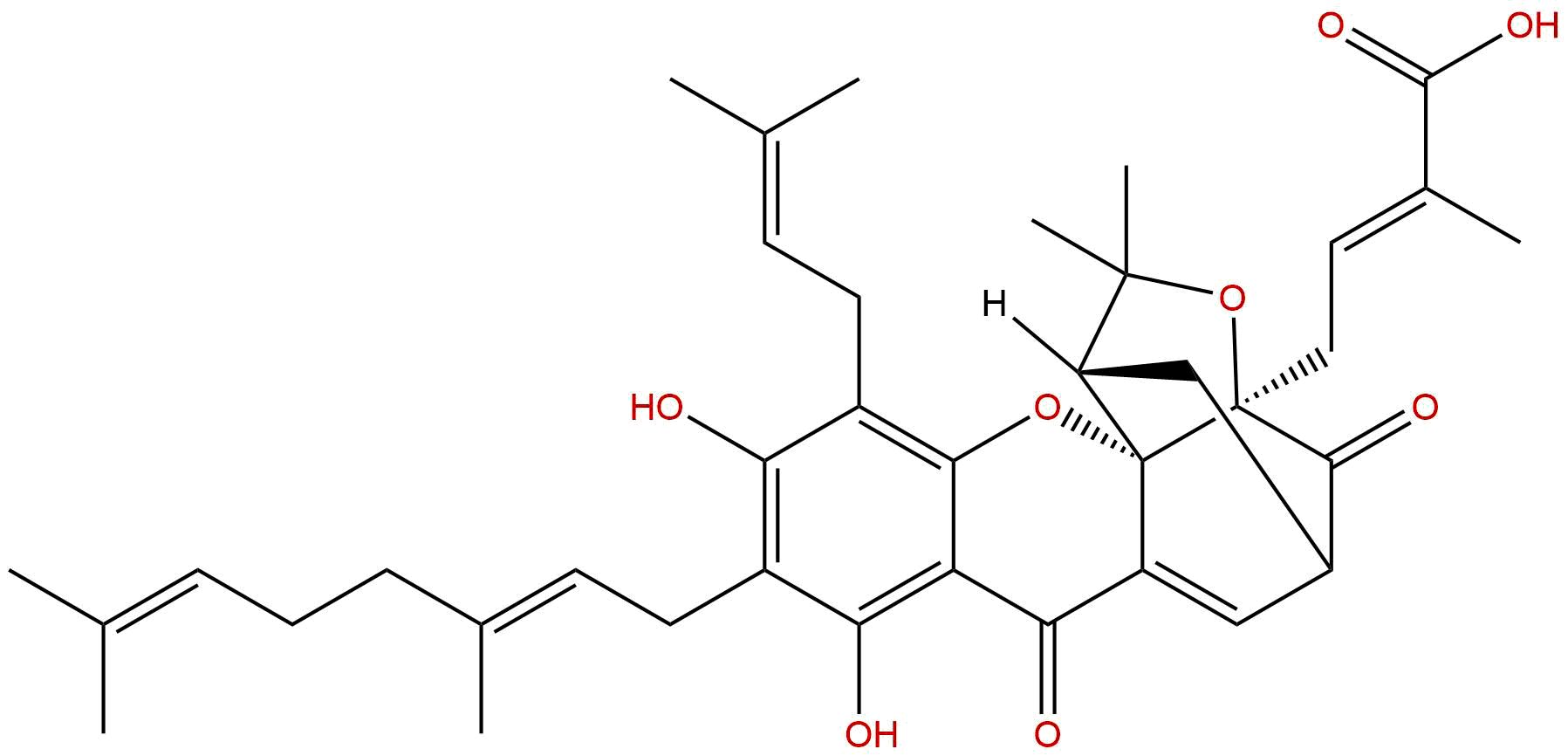
Isocinnamic acid, CAS number 887923-47-9, is a natural PPAPs compound isolated from rattan. Compared with ferulic acid, isoquercetin exhibits subtle but crucial structural differences, which endow it with a unique spectrum of biological activity. Existing studies have shown that isoquercetin exhibits strong cytotoxicity against various cancer cell lines, with half maximal inhibitory concentration (IC50) values ranging from 0.4327 to 5.942 μ mol/L, demonstrating broad-spectrum anti-tumor potential. More importantly, its mechanism of action and molecular target studies have revealed that isoquercetin may exert dual anti-inflammatory and anti-tumor effects by regulating inflammation related signaling pathways such as tumor necrosis factor (TNF), cyclooxygenase-2 (PTGS2/COX-2), nuclear factor kappa B (NFKB1), interleukin-6 (IL6), and interleukin-1 β (IL1B). This discovery elevates the study of isoquercetin from a simple cytotoxic compound to a potential lead compound with immunomodulatory functions.
Although isoquercetin exhibits exciting pharmacological activity, its pharmacological evaluation also reveals challenges. Its molecular weight is 630.7780, with high lipid solubility (LogP=6.7397) and extremely poor water solubility (0.0409 mg/mL). These physicochemical properties severely limit its bioavailability and in vivo delivery efficiency. In addition, although its low blood-brain barrier permeability (BBB=low) can to some extent avoid central nervous system toxicity, it also limits its application in brain diseases. Fortunately, the preliminary safety evaluation showed no hERG inhibitory activity (hERG inhibition=No) and the Ames test result was negative (0.0), indicating a low risk of cardiac and genetic toxicity.
This review aims to systematically review the research progress of isoquercetin, providing a comprehensive and in-depth analysis of its chemical structure, plant origin, pharmacological activity, mechanism of action, pharmacological evaluation, and clinical application prospects. Through the integration and critical analysis of existing literature, this article aims to reveal the potential and bottlenecks of isoquercetin as an anti-tumor and anti-inflammatory lead compound, and provide theoretical basis and strategic references for subsequent structural optimization, formulation development, and clinical translation.
Chemical structure and physicochemical properties
Isocinnamic acid belongs to the polycyclic poly isopentenyl acyl triphenylphenols (PPAPs) family, which is a highly complex and unique natural product. Its core skeleton is formed by cyclization reactions between acyl triphenylphenol units and multiple isopentenyl side chains. Isocinnamic acid and cinnamic acid are isomers of each other, and their structural differences are mainly reflected in the configuration of the bridging ring system or the position of substituents. Specifically, isoquercetin possesses a unique 4-oxatricyclic [4.3.1.0] dec-2-one core structure composed of a bridged cyclic lactone and a highly substituted cyclohexanone. Its molecular formula is C38H46O8 and its molecular weight is 630.7780 Da.
From the perspective of physical and chemical properties, isoquercetin exhibits typical lipid soluble natural product characteristics. Its oil-water partition coefficient (LogP) is as high as 6.7397, indicating strong lipophilicity and easy solubility in organic solvents such as dimethyl sulfoxide, ethanol, chloroform, etc. However, its solubility in water is extremely low, only 0.0409 mg/mL. This extremely poor water solubility is the primary challenge facing its drug development, directly leading to poor oral absorption, low bioavailability, and difficulties in injection administration. The topological polar surface area (TPSA) is 130.3600 Å ², which is relatively high and mainly due to multiple carbonyl and hydroxyl functional groups in the molecule. Higher TPSA is usually associated with poorer cell membrane permeability, but isoquercetin still exhibits significant cytotoxicity, suggesting that it may enter cells through passive diffusion or some active transport mechanism. Its low blood-brain barrier permeability (BBB=low) is consistent with higher TPSA and molecular weight, which to some extent reduces its potential toxicity risk to the central nervous system.
In terms of stability, isoquercetin, as a natural product containing multiple unsaturated double bonds and active functional groups, is sensitive to light, heat, and oxidation conditions. In a solution state, especially in alkaline or strongly acidic environments, its structure may undergo degradation or isomerization. Therefore, in the process of experimental research and formulation development, it is necessary to strictly control storage conditions (such as low temperature, light avoidance, inert gas protection) and pH environment. In addition, isoquercetin may undergo extensive metabolism in the body, including phase I metabolism (such as oxidation, reduction, hydrolysis) and phase II metabolism (such as glucuronidation, sulfation), which significantly alter its pharmacological activity and toxicity characteristics.
Plant sources and extraction methods
The main source of isoquercetin is from the Clusiaceae family, specifically the genus Clusiaceae(Garcinia)Plants, the main source of which is rattan(Garcinia hanburyi Hook. f.)。 The vine yellow tree is mainly distributed in Southeast Asia, such as Thailand, Cambodia, Vietnam, as well as Yunnan and Guangxi in China. After the trunk is cut, yellow resin will flow out, and after collection and drying, the traditional Chinese medicine "Tenghuang" can be obtained. Tenghuang resin is rich in various PPAPs compounds, among which Tenghuang acid has the highest content. As its isomer, isoquercetin has a relatively low content and usually requires fine separation and purification techniques to obtain.
Traditional extraction methods are mostly based on solvent extraction. Due to the high lipophilicity of isoquercetin, organic solvents such as methanol, ethanol, ethyl acetate, or chloroform are often used for cold soaking or hot reflux extraction of quercetin powder. The extract was concentrated under reduced pressure to obtain the total extract. Then, using classic chromatographic techniques such as silica gel column chromatography, ODS (octadecyl silane bonded silica gel) reverse phase column chromatography, Sephadex LH-20 gel column chromatography, gradient elution was carried out with solvent systems such as petroleum ether ethyl acetate, chloroform methanol or methanol water in different proportions to preliminarily separate the total extract. Due to the extremely similar structure between isoquercetin and ferulic acid, it is difficult to completely separate them by conventional column chromatography. Therefore, it is often necessary to combine preparative high performance liquid chromatography (HPLC) technology, using a C18 reverse phase chromatography column with acetonitrile water or methanol water (often with a small amount of formic acid or trifluoroacetic acid added as a modifier) as the mobile phase, and finally obtain high-purity isoquercetin monomers through isocratic or gradient elution.
In recent years, in order to improve extraction efficiency and purity, some modern extraction techniques have also been attempted to be applied to the extraction of active ingredients from Tenghuang. For example, ultrasound assisted extraction (UAE) and microwave-assisted extraction (MAE) can significantly shorten extraction time and improve the dissolution rate of target compounds. Supercritical fluid extraction (SFE), especially using carbon dioxide as an extractant, has shown great potential in extracting thermosensitive natural products due to its green, environmentally friendly, and highly selective advantages. However, due to the low content of isoquercetin in rattan and the difficulty in separating it from its analogues, laboratory research and small-scale preparation still mainly rely on the classic strategy of solvent extraction combined with multi-step chromatographic separation. In the future, developing efficient, low-cost, and scalable extraction and purification processes is the key to promoting in-depth research and potential applications of isoquercetin.
Pharmacological activity research
The pharmacological activity research of isoquercetin mainly focuses on its anti-tumor effect. At the same time, based on its molecular targets, its anti-inflammatory activity is gradually receiving attention.
1. Antitumor activity
Isocinnamic acid exhibits broad-spectrum and potent cytotoxicity against various human tumor cell lines. It has been reported in the existing literature that it has significant inhibitory effect on the proliferation of liver cancer cells (such as HepG2, Huh7), lung cancer cells (such as A549), breast cancer cells (such as MCF-7, MDA-MB-231), colon cancer cells (such as HCT-116), gastric cancer cells (such as SGC-7901), prostate cancer cells (such as PC-3), and leukemia cells (such as K562). Its IC50 value is usually in the range of sub micromolar to low micromolar (0.4327-5.942 μ mol/L), showing stronger in vitro activity than many traditional chemotherapy drugs.
It is worth noting that isoquercetin also exhibits cytotoxic activity against certain drug-resistant tumor cell lines. For example, in doxorubicin resistant liver cancer cells or paclitaxel resistant breast cancer cells, isoneogambogic acid can still effectively induce cell death, suggesting that it may have the potential to overcome multidrug resistance (MDR). This characteristic is of great significance for the development of drugs for the treatment of refractory and recurrent tumors. Its anti-tumor mechanism involves multiple levels, including inducing cell apoptosis, causing cell cycle arrest, inhibiting angiogenesis, inducing autophagic death, and regulating the tumor microenvironment.
2. Anti inflammatory activity
Inflammation is closely related to the occurrence and development of tumors. The potential of isoquercetin in anti-inflammatory effects stems from its molecular target analysis. Research has shown that isoquercetin can significantly inhibit the production of pro-inflammatory cytokines in macrophages (such as RAW264.7 cells) induced by lipopolysaccharide (LPS). Specifically, it can downregulate the mRNA and protein expression levels of key inflammatory factors such as TNF - α, IL-6, IL-1 β, etc. Meanwhile, it can also inhibit the expression of cyclooxygenase-2 (COX-2/PTGS2) and the synthesis of prostaglandin E2 (PGE2). The core of these effects lies in their regulation of the NF - κ B signaling pathway. NF - κ B is a central transcription factor in inflammatory response, and isoquercetin inhibits the phosphorylation and degradation of I κ B α, preventing the nuclear translocation of NF - κ B p65 subunit and thus blocking the transcription of a series of pro-inflammatory genes downstream of it. This anti-inflammatory activity not only helps to explain its anti-tumor effect (by inhibiting inflammation driven tumorigenesis), but also provides a theoretical basis for its application in the treatment of chronic inflammatory diseases such as rheumatoid arthritis and inflammatory bowel disease.
3. Other pharmacological activities
In addition to anti-tumor and anti-inflammatory effects, preliminary studies also suggest that isoquercetin may have other biological activities, such as antibacterial and antiviral effects. Given the widespread antibacterial activity of PPAPs family compounds, isoquercetin may have inhibitory effects on certain Gram positive bacteria, such as Staphylococcus aureus. In addition, studies have reported that ferulic acid has anti HIV activity, and the antiviral potential of isoneoferulic acid as a structural analogue is also worth exploring. However, research in these areas is not yet in-depth and requires further verification.
Mechanism of action and molecular targets
The pharmacological activity of isoquercetin is the result of its interaction with multiple molecular targets within cells. Its mechanism of action is complex, exhibiting characteristics of multi-target and multi pathway.
1. Inducing cell apoptosis
Inducing apoptosis is the core mechanism of the anti-tumor effect of isoquercetin. It is mainly achieved through the following two classic approaches:
- Endogenous apoptotic pathway (mitochondrial pathway)Isocinnamic acid can directly act on mitochondria, causing a decrease in mitochondrial membrane potential (Δ PSI m), opening of permeability transition pores (mPTP), and releasing pro apoptotic proteins such as cytochrome c and apoptosis inducing factor (AIF). Cytochrome c released into the cytoplasm binds with Apaf-1 and procaspase-9 to form apoptotic bodies, activating caspase-9 and subsequently activating downstream executing caspases (such as caspase-3/7), ultimately leading to cell apoptosis. During this process, isoquercetin can upregulate the expression of pro apoptotic proteins Bax and Bak, downregulate the expression of anti apoptotic proteins Bcl-2 and Bcl xL, disrupt the balance of Bcl-2 family proteins, and promote mitochondrial outer membrane permeabilization (MOMP).
- Exogenous apoptosis pathway (death receptor pathway)Isocinnamic acid can also upregulate the expression of cell surface death receptors (such as Fas/CD95, DR4/DR5) and activate caspase-8. Activated caspase-8 can directly cleave and activate caspase-3 on one hand, and cleave Bid protein to form tBid on the other hand. tBid is translocated to mitochondria, linking exogenous apoptotic signals with endogenous apoptotic pathways and amplifying apoptotic signals.
2. Cell cycle arrest
Isocinnamic acid can block tumor cells at specific cell cycle phases, thereby inhibiting their proliferation. Research has shown that the phase of blockade may vary in different cell lines. For example, in liver cancer cells, it may induce G0/G1 phase arrest; In some leukemia cells, it may cause G2/M phase arrest. This blocking effect is usually associated with changes in the expression of cyclins and cyclin dependent kinases (CDKs), such as downregulating Cyclin D1, CDK4, Cyclin B1, CDK1, and upregulating the expression of CDK inhibitors p21 and p27.
3. Inhibit the NF - κ B signaling pathway
As mentioned earlier, NF - κ B is a key hub connecting inflammation and tumors. Isocinnamic acid is a potent inhibitor of the NF - κ B signaling pathway. The mechanism is to inhibit the activity of I κ B kinase (IKK), prevent the phosphorylation and ubiquitination degradation of I κ B α, and lock NF - κ B dimers (mainly p50/p65) in the cytoplasm, preventing them from entering the nucleus to initiate transcription of target genes. These target genes include various pro-inflammatory factors (TNF - α, IL-6, IL-1 β), anti apoptotic proteins (Bcl xL, XIAP, c-FLIP), cell cycle regulatory protein (Cyclin D1), and angiogenic factor (VEGF). Therefore, inhibiting the NF - κ B pathway is one of the core molecular mechanisms by which isoquercetin exerts dual anti-inflammatory and anti-tumor effects.
4. Regulating other signaling pathways
In addition to NF - κ B, isoquercetin can also affect other important signaling pathways:
- MAPK pathway Isocinnamic acid can activate p38 MAPK and JNK, while inhibiting the phosphorylation of ERK1/2. The activation of p38 and JNK is usually associated with stress response and pro apoptotic signals, while the inhibition of ERK weakens pro proliferative signals.
- PI3K/Akt/mTOR pathway This pathway is a key regulator of cell survival and metabolism. It has been found that isoquercetin can inhibit the phosphorylation of Akt, thereby reducing its activity and inhibiting downstream mTOR signaling. This helps to alleviate the inhibition of autophagy and enhance apoptotic signaling.
- ROS generation Isocinnamic acid can induce a sharp increase in reactive oxygen species (ROS) levels within tumor cells. Excessive ROS can disrupt the intracellular redox balance, leading to oxidative stress, damage to DNA, proteins, and lipids, and act as a second messenger to activate the mitochondrial apoptosis pathway and MAPK pathway.
5. Summary of molecular targets
Based on existing research, the main molecular targets of isoquercetin can be summarized as follows:
- Direct target At present, there is no clear identification of a single high affinity binding protein for isoquercetin. Its function may be similar to that of "multi drug pharmacology" or "hybrid" compounds, exerting overall effects by interacting with multiple weak affinity targets. Some studies speculate that it may directly bind to certain proteins on the mitochondrial membrane (such as VDAC, ANT) or Bcl-2 family proteins.
- Indirect target Plays a role by regulating key nodes in the signal transduction network, including kinases such as IKK (NF - κ B pathway), Akt (PI3K/Akt pathway), MKK3/6 (p38 pathway), MKK4/7 (JNK pathway), etc.
- Downstream effect molecule Including: Bax, Bak, Bcl-2, Bcl-xL, Cytochrome c, caspases, Cyclin D1, CDKs, p21, p27, COX-2, TNF-α, IL-6, IL-1β, VEGF Wait.
Evaluation of drug properties and pharmacokinetics
Although isoquercetin has outstanding pharmacological activity, its drug like properties as a candidate drug have significant deficiencies, mainly concentrated in its extremely poor physicochemical properties and potential pharmacokinetic (PK) barriers.
1. Defects in physical and chemical properties
- Very poor water solubility The water solubility is only 0.0409 mg/mL, far below the requirements for drug formation (usually>0.1 mg/mL). This results in difficulty in dissolving in the gastrointestinal tract after oral administration, poor absorption, and almost zero bioavailability. Even with injection administration, a large amount of co solvents (such as polyoxyethylene castor oil, dimethyl sulfoxide, etc.) are required, which may themselves cause toxic side effects or allergic reactions.
- High lipid solubility The LogP is 6.7397, far exceeding the requirement of LogP<5 in the Lipinski Five Rules. Although high lipid solubility is beneficial for its penetration through cell membranes, it also leads to its easy uptake by adipose tissue in the body, large distribution volume, and easy metabolism and bile excretion in the liver. Its half-life is short, making it difficult to maintain effective blood drug concentrations.
- Metabolic instability Multiple double bonds and ester bonds in a molecule are potential metabolic sites. Under the action of liver microsomal enzymes, isoquercetin may undergo rapid phase I oxidative metabolism (such as epoxidation and hydroxylation) and phase II combined metabolism, leading to its rapid clearance.
2. Pharmacokinetic characteristics
At present, there are few systematic studies on the pharmacokinetics of isoquercetin in vivo. However, based on its physicochemical properties and related research on quercetin, it can be inferred that:
- absorb Poor oral absorption and extremely low bioavailability. Injection administration is the main route of administration.
- distribution Due to its high lipid solubility, it is widely distributed in the body, especially in tissues with rich blood flow and lipids such as the liver, spleen, and lungs, where its concentration is relatively high. The plasma protein binding rate may be high.
- Metabolism Mainly involved in liver metabolism, possibly involving the CYP450 enzyme system. Metabolites may lose their activity or their activity may decrease.
- excretion Mainly excreted through bile and feces, renal excretion may be minimal.
3. Safety evaluation
- cardiotoxicity The hERG inhibition test result is' no ', which is a positive signal indicating that isoquercetin has a lower risk of prolonging the QT interval and inducing apical torsion type ventricular tachycardia at therapeutic concentrations.
- Genotoxicity The Ames test result is 0.0, indicating that it does not have significant mutagenicity and has a low risk of genetic toxicity.
- Other toxicities Although the preliminary safety evaluation is good, as a potent cytotoxic compound, the systemic toxicity (such as hepatotoxicity, nephrotoxicity, bone marrow suppression, etc.) of isoquercetin in vivo still needs to be thoroughly evaluated through comprehensive animal toxicology experiments. At high doses, it may cause damage to normally proliferating tissues such as gastrointestinal mucosa and bone marrow.
4. Strategies for improving drug properties
Given the strong activity and poor medicinal properties of isoquercetin, future research must focus on how to overcome its PK deficiency. The main strategies include:
- Structural modification By means of medicinal chemistry, hydrophilic groups (such as phosphate groups, amino acids, sugar groups, polyethylene glycol chains, etc.) are introduced to synthesize prodrugs or analogues while retaining their key active groups (such as bridged cyclic lactones, carbonyl groups), in order to improve water solubility and regulate LogP and metabolic stability. For example, preparing its phosphate or succinate prodrug and releasing the original drug through enzymatic interpretation in vivo.
- New drug delivery system The use of nanotechnology is an effective way to solve the problem of difficult to dissolve drug delivery. For example, encapsulating isoquercetin in liposomes, polymer micelles, albumin nanoparticles, solid lipid nanoparticles, or mesoporous silica nanoparticles can significantly increase its apparent solubility, prolong in vivo circulation time, and achieve tumor targeted delivery through enhanced permeability and retention (EPR) effects, reducing systemic toxicity.
- combination therapy The combination of isoquercetin with other chemotherapy drugs or targeted drugs may achieve better therapeutic effects while reducing their respective doses through synergistic effects, thereby reducing toxicity.
Clinical application prospects and prospects
As a natural active molecule derived from traditional Chinese medicine, isoquercetin has broad clinical application prospects in the fields of anti-tumor and anti-inflammatory due to its unique chemical structure and multi-target pharmacological effects. However, it also faces significant transformation challenges.
1. Anti tumor therapy
The most direct clinical application prospect of isoquercetin lies in its anti-tumor properties. Its potent killing activity against various solid tumors and hematological tumors, especially against drug-resistant tumor cells, makes it an ideal lead compound for the development of new anti-tumor drugs. In the future, if the problem of drug formation can be successfully solved, isoquercetin or its derivatives are expected to be developed into:
- Anti tumor drugs for injection: It is used to treat high incidence malignant tumors such as liver cancer, lung cancer and breast cancer, especially as a second or third line treatment drug for patients who are resistant or intolerant to existing chemotherapy schemes.
- Local treatment formulations for tumors: Use its strong cytotoxicity to develop sustained-release preparations (such as gel and implant) for local injection of tumors for the treatment of surface or intracavitary tumors (such as interventional treatment of skin cancer and liver cancer).
- Sensitizer for combination chemotherapy Due to its ability to inhibit survival pathways such as NF - κ B and PI3K/Akt, when combined with conventional chemotherapy drugs such as cisplatin, paclitaxel, and doxorubicin, it may reverse drug resistance and enhance chemotherapy efficacy.
2. Anti inflammatory disease treatment
Based on its ability to inhibit the NF - κ B pathway and downregulate various pro-inflammatory factors, isoquercetin has also shown potential in the treatment of chronic inflammatory diseases. For example:
- Rheumatoid arthritis (RA)By inhibiting the proliferation of synovial fibroblasts and the secretion of inflammatory factors, joint inflammation and bone destruction can be alleviated.
- Inflammatory bowel disease (IBD)Relieve symptoms of ulcerative colitis and Crohn's disease by inhibiting the inflammatory response of the intestinal mucosa.
- Other inflammation related diseases: such as psoriasis, atherosclerosis, etc.
However, due to the strong cytotoxicity of isoquercetin itself, its safety risks (such as damage to normal cells) are much higher than its therapeutic benefits when directly used for non tumor chronic inflammatory diseases. Therefore, in the field of anti-inflammatory applications, it is more likely to rely on modifying its structure to develop derivatives with significantly reduced cytotoxicity but still retaining anti-inflammatory activity.
3. Future research directions
In order to promote the clinical translation of isoquercetin, future research should focus on the following aspects:
- In depth mechanism research Using chemical biology methods such as activity-based proteomic analysis and thermal stability migration experiments to identify the direct target proteins of isoquercetin in cells is the basis for understanding its pharmacological effects and designing more specific derivatives.
- Research on Structure Activity Relationship (SAR) of Systems Systematically synthesize a series of derivatives and analogues of isoquercetin, investigate the effects of different structural modifications (such as bridge ring configuration, isopentenyl side chain length and saturation, functional group changes) on activity, selectivity, and drug formation, and search for candidate molecules with higher activity, lower toxicity, and better PK properties.
- Development of an efficient drug delivery system Using nanotechnology as the core breakthrough point, develop safe, efficient, and targeted nano formulations of isoquercetin. For example, using nanoparticles modified with active targeting ligands (such as folate, RGD peptide, transferrin) to achieve precise delivery to tumor tissues.
- Comprehensive preclinical safety evaluation According to the regulatory requirements for new drug development, complete GLP toxicology studies on isoquercetin and its derivatives/formulations, including acute toxicity, long-term toxicity, reproductive toxicity, immunotoxicity, etc., and clarify their safety window.
- Explore new indications: In addition to tumor and inflammation, explore the potential application of isoneogambogic acid in the fields of antiviral, antibacterial, metabolic diseases (such as diabetes, obesity), etc.
Conclusion
Yixin Tenghuang Acid, a natural product discovered from the traditional Chinese medicine Tenghuang, showcases the exquisite molecular structure and powerful biological activity of nature through its unique PPAPs skeleton, broad-spectrum and potent anti-tumor activity, as well as its anti-inflammatory potential demonstrated by regulating key pathways such as NF - κ B. Its IC50 value is as low as sub micromolar, effective against drug-resistant cells, and the preliminary safety evaluation (no hERG inhibition, Ames negative) is encouraging. These advantages make it a highly valuable lead compound for development.
However, we must be aware that the path from "lead compounds" to "clinical drugs" is full of thorns. The extremely poor water solubility, high lipid solubility, and potential metabolic instability of isoquercetin constitute the "Achilles heel" of its medicinal properties. This is not only a dilemma faced by individuals of isoquercetin, but also a common bottleneck encountered by many fat soluble natural products in drug development.
Therefore, future research should not only focus on admiring its natural activity, but should also shift towards the "re creation" process centered on solving the problem of drug formation. Through the structural modification of medicinal chemistry, the construction of nano delivery systems in pharmacy, and the combination therapy strategy in pharmacology, interdisciplinary integration is necessary to truly unleash the potential of isoquercetin. We have reason to believe that with the continuous deepening of research, especially the precise grasp of structure-activity relationships and breakthroughs in delivery technologies, isoquercetin or its derivatives will eventually overcome obstacles and play their due value in the battle against cancer and inflammatory diseases in humans, continuing to write a new chapter in the modernization and transformation of traditional Chinese medicine.