


Product name: Gambogic acid
Synonym name: Guttic acid; Guttatic acid; β-Guttilactone; alpha-Gambogic acid; β-Guttiferin
Catalogue No.: BP0613
Cas No.: 2752-65-0
Formula: C38H44O8
Mol Weight: 628.762
Botanical Source: Garcinia hanburyi Hook.f.
Physical Description:
Type of Compound: Miscellaneous
Purity: 95%~99%
Analysis Method: HPLC-DAD or/and HPLC-ELSD
Identification Method: Mass, NMR
Packing: Brown vial or HDPE plastic bottle
Storage: Store in a well closed container, protected from air and light. Put into refrigerate or freeze for long term storage.
Whenever possible, you should prepare and use solutions on the same day. However, if you need to make up stock solutions in advance, we recommend that you store the solution as aliquots in tightly sealed vials at -20℃. Generally, these will be useable for up to two weeks.
The product could be supplied from milligrams to grams
Inquire for bulk scale.
Description:
Gambogic acid is a tissue-specific proteasome inhibitor, which has anticancer, anti-inflammatory, and anti-angiogenesis activities. Gambogic acid induces LRIG1 (leucine-rich repeat and Ig-like domain-containing-1) upregulation, which is responsible for EGFR (epidermal growth factor receptor) degradation and its downstream Akt/mTORC1 inhibition.
References:
Cell Biochem Biophys. 2013 Sep;67(1):199-206.
Gambogic acid sensitizes ovarian cancer cells to doxorubicin through ROS-mediated apoptosis.
Ovarian cancer is one human malignancy which has response portly to doxorubicin. The anti-cancer activity of Gambogic acid has been tested in in vitro and in vivo studies.
METHODS AND RESULTS:
In this study, we showed that Gambogic acid, a natural compound, could potentiate the anticancer activity of doxorubicin in ovarian cancer through ROS-mediated apoptosis. Platinum-resistant human ovarian cancer cell line (SKOV-3) was treated with Gambogic acid, doxorubicin, or the combination of both to investigate cell proliferation and apoptosis. We found that the combination of Gambogic acid and doxorubicin causes synergistic loss of cell viability in SKOV-3 cells and this synergistic effect correlated with increased cellular ROS accumulation. Moreover, in vivo results showed that Gambogic acid and doxorubicin combination resulted in a synergistic suppressing effect on tumor growth in ovarian cancer mice model.
CONCLUSIONS:
Taken together, the results suggested that doxorubicin in combination with Gambogic acid might provide a promising therapeutic strategy to enhance chemosensitivity of ovarian cancer to doxorubicin.
Cancer Res. 2008 Mar 15;68(6):1843-50.
Gambogic acid inhibits angiogenesis and prostate tumor growth by suppressing vascular endothelial growth factor receptor 2 signaling.
Gambogic acid (GA), the main active compound of Gamboge hanburyi, has been previously reported to activate apoptosis in many types of cancer cell lines by targeting transferrin receptor and modulating nuclear factor-kappaB signaling pathway. Whether GA inhibits angiogenesis, which is crucial for cancer and other human diseases, remains unknown.
METHODS AND RESULTS:
Here, we found that GA significantly inhibited human umbilical vascular endothelial cell (HUVEC) proliferation, migration, invasion, tube formation, and microvessel growth at nanomolar concentration. In a xenograft prostate tumor model, we found that GA effectively inhibited tumor angiogenesis and suppressed tumor growth with low side effects using metronomic chemotherapy with GA. GA was more effective in activating apoptosis and inhibiting proliferation and migration in HUVECs than in human prostate cancer cells (PC3), suggesting GA might be a potential drug candidate in cancer therapy through angioprevention with low chemotoxicity. Furthermore, we showed that GA inhibited the activations of vascular endothelial growth factor receptor 2 and its downstream protein kinases, such as c-Src, focal adhesion kinase, and AKT.
CONCLUSIONS:
Together, these data suggest that GA inhibits angiogenesis and may be a viable drug candidate in antiangiogenesis and anticancer therapies.
Mediators Inflamm. 2014;2014:195327.
Potent anti-inflammatory and antiproliferative effects of gambogic acid in a rat model of antigen-induced arthritis.
We have previously reported a continuous activation of caspase-1 and increased interleukin (IL)-1β levels in early rheumatoid arthritis (RA). These observations raised the hypothesis that drugs targeting the IL-1β pathway, in addition to tumour necrosis factor (TNF), may be particularly effective for early RA treatment. We have recently identified Gambogic acid as a promising therapeutic candidate to simultaneously block IL-1β and TNF secretion. Our main goal here was to investigate whether Gambogic acid administration was able to attenuate inflammation in antigen-induced arthritis (AIA) rats.
METHODS AND RESULTS:
Gambogic acid was administered to AIA rats in the early and late phases of arthritis. The inflammatory score, ankle perimeter, and body weight were evaluated during the period of treatment. Rats were sacrificed after 19 days of disease progression and paw samples were collected for histological and immunohistochemical evaluation. We found that inflammation in joints was significantly suppressed following Gambogic acid administration. Histological and immunohistochemical evaluation of treated rats revealed normal joint structures with complete abrogation of the inflammatory infiltrate and cellular proliferation.
CONCLUSIONS:
Our results suggest that Gambogic acid has significant anti-inflammatory properties and can possibly constitute a prototype anti-inflammatory drug with therapeutic efficacy in the treatment of inflammatory diseases such as RA.
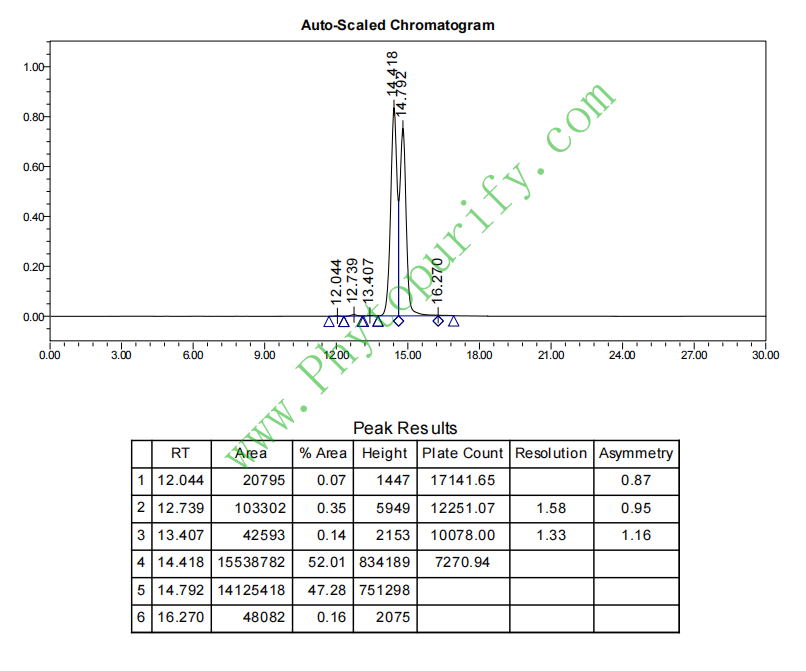
HPLC of Gambogic acid
Storage conditions:Short-term storage at 2~8℃, long-term storage at -20 ~ -80℃
119.3600
6.5490
3.4807
.0158
3.0970
3.9899
Low
91.4377
6.6595
No
Yes
Yes
No
No
Yes
0.0
Yes
Yes
Yes
Yes
Malignant tumors are a major disease that seriously threatens human health, and their occurrence and development involve a series of complex biological processes such as uncontrolled cell proliferation, apoptosis escape, invasion and metastasis. Traditional chemotherapy drugs often cause serious damage to normal tissues while killing tumor cells. Therefore, the development of highly efficient and low toxicity new anti-tumor drugs is an urgent need in current research. Natural products have always been an important source of innovative drug discovery due to their structural diversity and rich biological activity. Vinegar acid, a derivative of polyisopentenyl ketone isolated from traditional Chinese medicine Garcinia hanburyi resin, has attracted much attention due to its excellent anti-tumor activity. Since its structure was elucidated, a large number of studies have confirmed that ferulic acid has significant inhibitory and pro apoptotic effects on various malignant tumor cells, with a wide range of targets and complex mechanisms, demonstrating broad development prospects. This article aims to systematically review the chemical structure, plant origin, pharmacological activity, molecular mechanism, pharmacological evaluation, and clinical prospects of ferulic acid, in order to provide comprehensive references for the in-depth research and drug development of this natural product.
Gambogic acid (GA), chemical name Beta Guttiferin, CAS number 2752-65-0. Its molecular formula is C38H44O8 and its molecular weight is 628.7620. From a chemical structure perspective, ferulic acid belongs to polycyclic polyisoprenyl ketone compounds. Its core structure is a highly oxidized ketone skeleton, which is connected to a complex eight membered ring (cage like structure) through an isoprenyl side chain, forming a unique "cage like" molecular configuration. This rigid cage like structure is believed to be the key to its binding with hydrophobic pockets of various target proteins.
In terms of physicochemical properties, the lipid water partition coefficient (LogP) of ferulic acid is 6.5490, indicating its high lipophilicity. Its topological polar surface area (TPSA) is 119.3600 Å ². Its water solubility is extremely low, only 0.0158 mg/mL, which poses a huge challenge for its formulation development. According to the prediction of pharmacological parameters, the ability of quercetin to penetrate the blood-brain barrier is relatively low, which to some extent limits its direct effect on brain tumors, but may also reduce the risk of central neurotoxicity. In addition, preliminary in vitro safety evaluation showed no hERG potassium channel inhibitory activity at the tested concentration (indicating a low potential risk of cardiac toxicity), and the Ames test result was negative (0.0), indicating no direct genetic toxicity. These physicochemical and preliminary safety properties lay the foundation for its subsequent development, and also indicate the key issues that need to be overcome - solubility and delivery.
Tenghuang acid mainly comes from the dried resin of Garcinia hanburyi Hook. f., a plant in the Clusiaceae family, which is commonly known as the traditional Chinese medicine "Tenghuang". This plant is mainly distributed in Southeast Asia, such as Thailand, Cambodia, Vietnam, and other places. In traditional Chinese medicine, the external application of rattan resin has the effects of attacking toxins, corroding sores, breaking blood and dispersing nodules, and is used to treat carbuncles, sores, and stubborn ringworm. Modern research focuses on the abundant ketone components in its resin, among which ferulic acid is one of the main active ingredients.
The extraction and separation of ferulic acid usually use organic solvent extraction combined with various chromatographic techniques. The classic process is as follows: first, the dried rattan resin is crushed, and then subjected to hot reflux or ultrasound assisted extraction with organic solvents such as 95% ethanol or acetone. The extracted liquids are combined and concentrated under reduced pressure to obtain the paste. Subsequently, gradient extraction was performed using solvents such as petroleum ether and ethyl acetate, and oxalic acid was mainly enriched in the ethyl acetate fraction. Further purification is often carried out using silica gel column chromatography, with gradient elution using systems such as petroleum ether ethyl acetate or chloroform methanol. Collect the fraction containing oxalic acid by combining thin-layer chromatography (TLC) or high-performance liquid chromatography (HPLC) detection. To obtain high-purity monomers, it is often necessary to repeatedly perform column chromatography separation or use preparative high-performance liquid chromatography (pre HPLC) for final purification. In recent years, new separation technologies such as high-speed countercurrent chromatography (HSCCC) have also been applied to the efficient preparation of ferulic acid. The optimization of extraction process aims to improve yield, protect active structures, and reduce impurities.
Numerous in vitro and in vivo studies have confirmed that ferulic acid has broad-spectrum and potent anti-tumor activity, which is its core pharmacological action.
1. In vitro anti-tumor activity: Garcinic acid has significant growth inhibitory activity on a variety of human tumor cell lines, including lung cancer, liver cancer, gastric cancer, colorectal cancer, breast cancer, prostate cancer, leukemia, lymphoma, and so on. Its half inhibitory concentration (IC50) is mostly at the level of micromol or even nanomol. Its function is not limited to inhibiting proliferation, but more prominently manifested as inducing tumor cell apoptosis.
2. In vivo anti-tumor activity: In a variety of transplanted tumor models in mice (such as S180 sarcoma, H22 liver cancer, Lewis lung cancer, human breast cancer MCF-7 transplanted tumor, etc.), gambogic acid can significantly inhibit tumor growth by intraperitoneal injection or intravenous administration in a dose-dependent manner. Its anti-tumor effect is comparable to some commonly used chemotherapy drugs in clinical practice, but its toxic reactions such as weight loss are relatively mild, suggesting that its treatment window may be better.
3. Other pharmacological activities: In addition to its direct anti-tumor effect, studies have also found that quercetin has auxiliary anti-tumor activities such as anti-inflammatory, anti angiogenic, and reversal of multidrug resistance. For example, it can inhibit the release of inflammatory factors induced by lipopolysaccharide (LPS). More importantly, ferulic acid can enhance the sensitivity of drug-resistant tumor cells to chemotherapy drugs such as doxorubicin and paclitaxel by downregulating the expression or function of P-glycoprotein (P-gp).
The pleiotropy of the anti-tumor effect of ferulic acid stems from its interactions with multiple key targets within cells, and its mechanism network is complex and refined.
1. Inducing apoptosis - targeting the Bcl-2 protein family: This is the most classic mechanism of action of ferulic acid. As shown in the compound information, ferulic acid is a broad-spectrum inhibitor of various anti apoptotic Bcl-2 proteins (including Bcl-2, Bcl XL, Mcl-1, Bfl-1, etc.), with IC50 values ranging from 0.66 to 2.02 μ M. It directly binds to the hydrophobic grooves of these proteins, mimicking the function of BH3 only proteins, thereby relieving their inhibition of pro apoptotic proteins such as Bax and Bak, leading to increased mitochondrial outer membrane permeability, release of cytochrome C, and ultimately activating the caspase cascade reaction, triggering cell apoptosis. Among them, the strong inhibition of Mcl-1 and Bcl-2 is particularly crucial, as these two proteins are highly expressed in various tumors and associated with drug resistance.
2. Inhibition of survival signaling pathway:
* STAT3 signaling pathway: Tenghuang acid can inhibit tyrosine phosphorylation and nuclear translocation of STAT3, downregulate the expression of downstream target genes such as Cyclin D1, Bcl xL, and Survivors, thereby inhibiting cell proliferation and promoting apoptosis.
* MAPK/ERK signaling pathway: Tenghuang acid has an inhibitory effect on MAPK1 (ERK2) and interferes with the growth and survival signals of tumor cells.
* HIF-1 α pathway: Tenghuang acid can downregulate the protein level of hypoxia inducible factor HIF1A, inhibit tumor hypoxia adaptation and angiogenesis.
3. Inhibit invasion and metastasis: Vinegar can significantly downregulate the expression and activity of matrix metalloproteinases MMP2 and MMP9, thereby inhibiting the degradation and invasion ability of tumor cells to extracellular matrix.
4. Intervention in cell cycle and DNA metabolism: Research has shown that ferulic acid can affect the activity of topoisomerases (TOP1 and TOP2A), interfere with DNA replication and repair, cause DNA damage, and block cells in the G2/M phase.
5. Regulating hormone related targets: The regulation of gambogic acid on estrogen receptor (ESR1) and aromatase (CYP19A1) suggests that gambogic acid has potential value in the treatment of hormone dependent tumors (such as breast cancer).
In summary, ferulic acid forms a powerful anti-tumor effect network through multi-target and multi pathway synergistic effects.
Despite the significant activity of ferulic acid, its medicinal properties face challenges and its pharmacokinetic properties need to be optimized.
1. Pharmacokinetic characteristics: Animal studies have shown that after intravenous administration, ferulic acid is rapidly and widely distributed in the body, but it is also eliminated quickly and has a short plasma half-life. Its high LogP value leads to a large tissue distribution volume, especially in organs such as the liver, lungs, and spleen where the concentration is higher. Its main metabolic pathway may involve the CYP450 enzyme system in the liver, and metabolites are mostly excreted through bile and feces. The bioavailability of oral administration is extremely low, mainly due to its poor water solubility and possible first pass intestinal effects.
2. Challenges and strategies for drug development:
* Solubility and delivery: The extremely low water solubility is the biggest obstacle to its clinical translation. Currently, research is focused on novel delivery systems, including: ① nano-formulation Such as liposomes, polymer micelles, nanoparticles, albumin nanoparticles, etc. These systems can significantly increase the solubility of ferulic acid in aqueous phase, prolong blood circulation time, and target tumor tissue through enhanced permeability and retention (EPR) effect. ② Prodrug strategy Introducing hydrophilic groups through chemical modification to improve their solubility and release the original drug through enzymatic interpretation in vivo.
* Toxicity: Although preliminary studies have shown a low risk of cardiac toxicity (hERG) and genetic toxicity (Ames), adverse reactions such as liver toxicity can still be observed at high doses. Optimizing the dosing regimen and adopting targeted delivery systems are key to reducing systemic toxicity.
* Formulation stability: Vinegar has sensitivity to light and heat, and stability issues need to be considered in formulations.
As a highly promising natural anti-tumor candidate drug, the clinical application development of ferulic acid is advancing along two main lines.
1. Clinical research of new drugs: Based on its clear anti-tumor activity and unique mechanism of action, ferulic acid has entered the clinical trial stage in China. Early clinical trials mainly evaluated the safety, tolerability, and preliminary efficacy of its injectable formulations (such as oxalic acid injection) in the treatment of advanced malignant tumors. Despite facing challenges such as solubility and stability, these studies provide valuable data for subsequent formulation improvements.
2. Combination therapy strategy: Given the multi-target nature of ferulic acid, especially its potential to reverse drug resistance, combining it with existing standard chemotherapy drugs (such as platinum, paclitaxel, gemcitabine, etc.) or targeted drugs is a highly promising strategy. Combination therapy is expected to produce synergistic effects, reduce individual doses, minimize toxic side effects, and overcome or delay the development of drug resistance.
3. Future research directions and prospects:
* Advanced delivery system development: Continuing to optimize the nano targeted delivery system, such as developing stimulus responsive (pH, enzyme, reduction sensitive) nanocarriers, to achieve specific drug release at tumor sites, is the core direction for improving efficacy and reducing toxicity.
* Deep exploration of the mechanism of action: By utilizing chemical biology methods such as affinity fishing and proteomics, new targets and signaling pathways of its action are discovered, and its network of action is comprehensively elucidated.
* Structural modification and optimization: On the premise of retaining the core pharmacophore, structural modifications are carried out to improve water solubility, enhance targeting, reduce toxicity, and obtain derivatives or prodrugs with better properties.
* Expanding the exploration of indications: In addition to solid tumors, its application value in hematological malignancies (such as lymphoma, leukemia) and inflammation related diseases deserves further exploration.
As a natural product derived from traditional Chinese medicine, ferulic acid has become a star molecule in the field of anti-tumor drug development due to its unique cage like chemical structure and multi-target anti-tumor mechanism. It exhibits broad-spectrum and potent anti-tumor activity by directly inhibiting Bcl-2 family anti apoptotic proteins, interfering with multiple tumor cell survival signaling pathways, and inhibiting invasion and metastasis. Although its inherent physicochemical properties (such as low water solubility) and pharmacokinetic behavior pose serious challenges to pharmaceuticals, modern pharmaceutical technologies, especially the rapid development of nano targeted delivery systems, provide powerful tools to overcome these bottlenecks. At present, the clinical translation research of ferulic acid is in a critical period. Through innovative dosage forms, optimized combination therapy strategies, and continuous deepening of its mechanism of action, it is expected to transform it from an efficient "laboratory compound" into a "clinical new drug" that benefits a large number of cancer patients. The research process of ferulic acid is a vivid example of modern science and technology exploring the treasures of traditional medicine and promoting the development of innovative natural product drugs. Its future progress is worth looking forward to.
