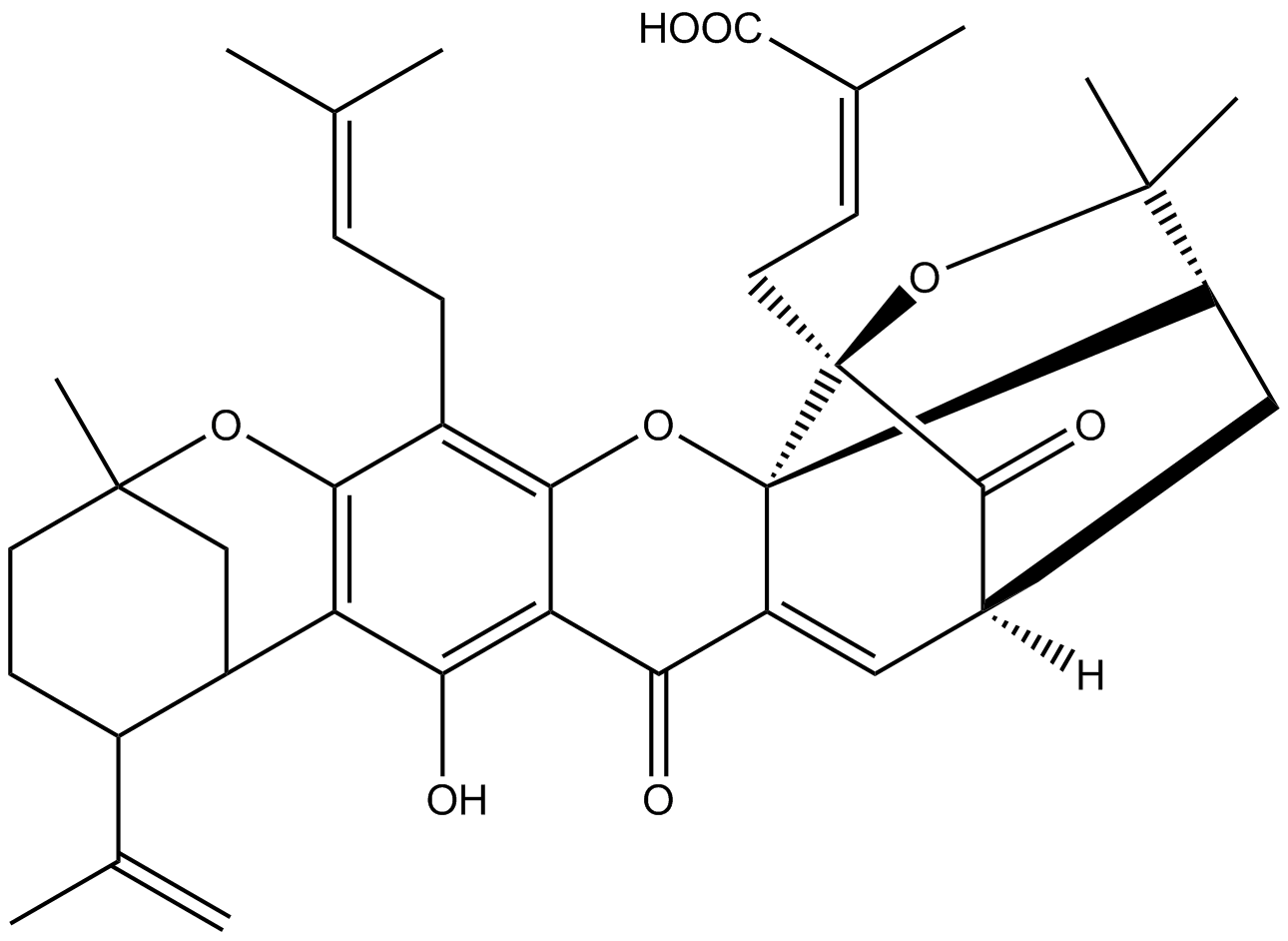


Product name: Gambogellic acid
Synonym name:
Catalogue No.: BP2015
Cas No.: 173867-04-4
Formula: C38H44O8
Mol Weight: 628.762
Botanical Source: Gamboge (Garcinia hanburyi)
Physical Description:
Type of Compound:
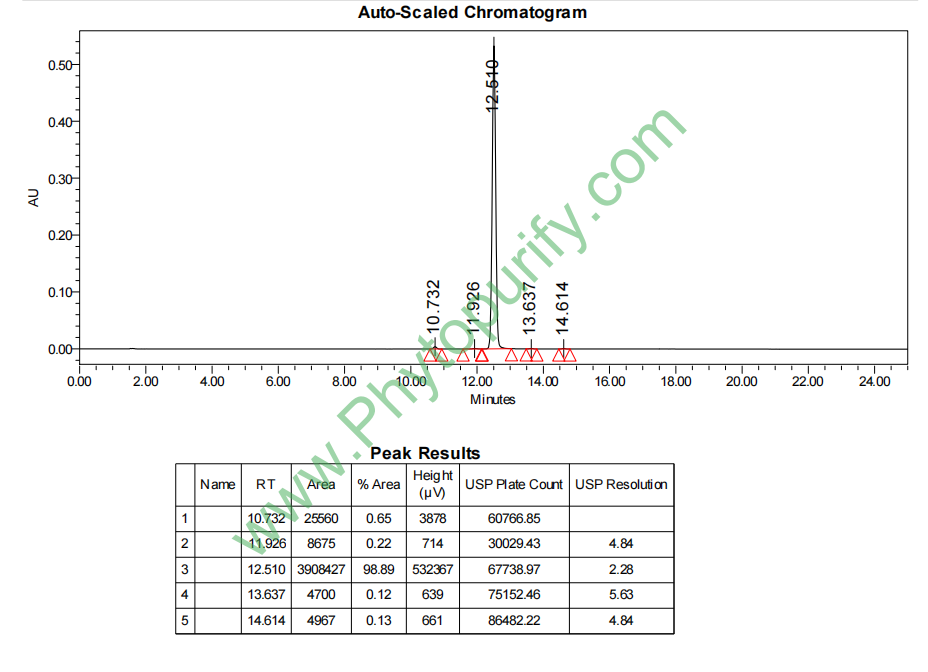
Purity: 95%~99%
Analysis Method: HPLC-DAD or/and HPLC-ELSD
Identification Method: Mass, NMR
Packing: Brown vial or HDPE plastic bottle
The product could be supplied from milligrams to grams. Inquire for bulk scale.
We provide solution to improve the water-solubility of compounds, thereby facilitating the variety of activity tests and clinic uses.
For Reference Standard and R&D, Not for Human Use Directly.
HPLC of Gambogellic acid
Storage conditions:Short-term storage at 2~8℃, long-term storage at -20 ~ -80℃
119.3600
6.1469
3.1898
.0120
3.5657
8.0067
Low
90.6912
7.1466
No
No
Yes
No
Yes
Yes
0.0
Yes
No
Yes
Yes
Natural products, as an important source of drug discovery, have played an indispensable role in the long history of human fight against diseases. Tenghuang(Garcinia hanburyi Hook. f., as a traditional Chinese medicinal herb, its dried resin is widely used in folk medicine in Southeast Asia and China, mainly for reducing swelling, detoxification, insecticidal and hemostatic purposes. Modern pharmacological research has revealed that gamboge and its main active ingredient, gambogic acid (GA), have significant anti-tumor activity, which has attracted widespread attention worldwide. However, in the process of exploring the chemical composition of rattan, scientists discovered and isolated a series of more complex and unique oxygen-containing anthraquinone compounds. Among them, Gambogellic acid (GBA), as a special isomer, has gradually become a new hotspot in natural product chemistry and pharmacology research due to its unique chemical structure and potential biological activity.
Transposition of cinnamic acid, CAS number 173867-04-4, is a polycyclic polyisoprenylated acylphenoglucinol (PPAP) compound isolated from processed cinnamic resin. Compared with the classical ferulic acid, translocated ferulic acid undergoes a crucial "transposition" rearrangement in its structure, where a certain isopentenyl unit in its core skeleton migrates to form a unique helical or bridged ring system. This subtle structural difference not only endows translocated ferulic acid with physicochemical properties different from those of ferulic acid, but also may determine its specificity in interacting with biological targets, thereby exhibiting a differentiated pharmacological activity spectrum.
In recent years, with the continuous deepening of understanding of tumor biology, especially the increasingly urgent demand for the treatment of refractory malignant tumors such as melanoma, the search for efficient and low toxicity new anti-tumor drugs has become an urgent task. Transposition of ferulic acid, with its clear anti melanoma activity and potential to act on multiple key signaling pathways and targets such as AMPK, BCL2, STAT3, MMP2, etc., has shown great value as a lead compound for further development. This article aims to systematically review the chemical structure, plant origin, pharmacological activity, mechanism of action, pharmacological characteristics, and clinical application prospects of translocated ferulic acid, in order to provide comprehensive scientific basis for the subsequent research and development of this natural product.
The chemical structure of translocated ferulic acid is the basis for all its biological functions. As a member of the PPAP family, its core skeleton consists of an oxanthone parent nucleus and multiple isopentenyl side chains. Compared with gambogelic acid (GA), the most significant structural feature of GBA is the "gambogelic rearrangement" of the isopentenyl group at the C-10 or C-12 position, resulting in a transition of its cyclic structure from the 4-oxatricyclic [4.3.1.0] dec-2-one system of GA to the more complex helical or bridged ring system unique to GBA. Specifically, the structure of GBA is often described as having an additional spirolactone or furan ring, which makes its molecular configuration more rigid and its three-dimensional spatial structure more unique. This structural rearrangement not only changes the overall shape of the molecule and the distribution of polar groups, but also significantly affects its binding mode with biomolecules such as proteins and DNA.
From the perspective of physical and chemical properties, translocated ferulic acid exhibits typical lipid soluble small molecule characteristics. Its molecular weight is 628.7620 Da, which is within the ideal range for small molecule drugs. Its lipophilic water partition coefficient (LogP) is as high as 6.1469, indicating that the compound has extremely strong lipophilicity, which is highly consistent with its hydrophobic structural characteristics of polyisoprene groups. A very high LogP value means that GBA has extremely low solubility in aqueous environments, with a water solubility of only 0.0120 mg/mL. This characteristic is one of the main challenges faced in the development of GBA drugs, as it directly affects the oral bioavailability of the drug and the development of intravenous formulations. The topological polar surface area (TPSA) is 119.3600 Å ², which is higher than the recommended upper limit of 140 Å ² for oral medications, indicating the possibility of membrane permeation barriers. However, considering its extremely high lipid solubility, the actual cell membrane penetration ability may be strong. It is worth noting that its blood-brain barrier (BBB) permeability has been evaluated as "low", which is a favorable feature for the development of non central nervous system targeted anti-tumor drugs and can effectively reduce central neurotoxicity. In addition, the hERG inhibition prediction was "no", and the Ames test result was 0.0, indicating that GBA has a low risk of cardiac toxicity and genetic toxicity, and has good safety potential.
Transposition of cinnamic acid is not the main component in cinnamic resin, but exists as a trace or minor component, with a much lower content than cinnamic acid. Its only plant source is the vine yellow plant of the genus Tenghuang(Garcinia hanburyi The dried resin of Hook. f., also known as the traditional Chinese medicine "Tenghuang". Tenghuang is mainly distributed in Southeast Asia, such as Cambodia, Thailand, Vietnam, as well as Yunnan, Hainan and other places in China. Traditionally, raw rattan is obtained by cutting the trunk of the rattan tree, collecting the yellow resin that flows out, and drying it. Raw Tenghuang is processed into medicine (such as tofu, lotus leaves, etc.), and translocated Tenghuang acid is isolated and identified from this processed Tenghuang.
Due to the extremely low content of GBA in Tenghuang (usually less than 0.1%), its extraction and purification are highly challenging tasks. The classic extraction process usually includes the following key steps:
The pharmacological activity research of translocated ferulic acid is still in its early stages, but existing evidence has clearly shown its significant anti-tumor activity, especially in the field of melanoma, demonstrating unique advantages.
Melanoma is a highly malignant skin cancer that is insensitive to conventional chemotherapy and radiation therapy. Research has shown that translocated ferulic acid exhibits strong proliferative inhibitory effects on various human melanoma cell lines, such as A375, SK-MEL-28, B16-F10, etc. Its half maximal inhibitory concentration (IC50) is typically in the sub micromolar to low micromolar range, comparable to or even stronger than the parent compound ferulic acid. More importantly, GBA has relatively low toxicity to normal melanocytes (such as HEMa LP), demonstrating a certain degree of selective cytotoxicity. The ability to selectively kill tumor cells is an important foundation for its development as an anti-tumor drug.
One of the core mechanisms of GBA anti-tumor activity is the induction of tumor cell apoptosis. Experimental results have shown that after GBA treatment of melanoma cells, typical morphological changes of apoptosis can be observed, such as cell shrinkage, chromatin condensation, and formation of apoptotic bodies. Flow cytometry analysis showed that GBA can increase the proportion of Annexin V positive cells in a dose-dependent and time-dependent manner. Further molecular mechanism studies have shown that GBA can:
- Downregulate anti apoptotic proteins Significantly reduce the expression level of BCL2 protein.
- Upregulation of pro apoptotic proteins Increase the expression of pro apoptotic proteins such as BAX and BIM.
- Activate Caspase cascade reaction Activate Caspase-9 and Caspase-3, cleave PARP protein, and ultimately execute the apoptotic program through the mitochondrial pathway (endogenous pathway).
Tumor metastasis is the main cause of death in melanoma patients. GBA also performs well in inhibiting melanoma cell migration and invasion. Both Transwell experiments and scratch experiments have confirmed that GBA can effectively inhibit the migration ability of A375 and B16-F10 cells. Its mechanism is closely related to the regulation of matrix metalloproteinases (MMPs). GBA can significantly inhibit the expression and activity of MMP2 and MMP9, thereby reducing the degradation of extracellular matrix and hindering the invasion and metastasis of tumor cells.
Immunosuppression in the tumor microenvironment is the key to tumor escape. Indoleamine 2,3-dioxygenase 1 (IDO1) is a key enzyme mediating immune suppression, highly expressed in melanoma, and inhibits T cell function by consuming tryptophan and producing canine urea. Preliminary research suggests that GBA may downregulate the expression of IDO1, reverse the immunosuppressive state in the tumor microenvironment, and enhance anti-tumor immune response by inhibiting the STAT3 signaling pathway. This discovery provides a theoretical basis for GBA combined immunotherapy.
In addition to its anti melanoma activity, transgamic gambogic acid also showed a certain inhibitory effect on proliferation of many other tumor cells (such as liver cancer, lung cancer, breast cancer, colon cancer, etc.), but its activity spectrum and selectivity still need to be systematically evaluated. In addition, sporadic reports suggest that GBA may have anti-inflammatory and antibacterial activities, but these effects still need further validation.
Transposition of ferulic acid exerts its anti-tumor effect through multiple targets and pathways, and its action network is complex and precise. Based on existing research, its core molecular mechanism can be summarized as follows:
AMP activated protein kinase (AMPK) is a key sensor for cellular energy metabolism and plays an important role in tumor metabolic reprogramming. GBA has been proven to be an effective AMPK activator. It promotes phosphorylation of the Thr172 site of the AMPK α subunit by increasing the intracellular AMP/ATP ratio or directly acting on the AMPK allosteric site. Activated AMPK subsequently phosphorylates downstream effector molecules such as acetyl CoA carboxylase (ACC) and mammalian target protein of rapamycin (mTOR), thereby inhibiting fatty acid synthesis and protein synthesis, and blocking tumor cell growth signals. The activation of AMPK is also associated with GBA induced cellular autophagy and apoptosis.
Signal transducer and activator of transcription factor 3 (STAT3) is continuously activated in various tumors, including melanoma, and is a core transcription factor driving tumor proliferation, survival, angiogenesis, and immune escape. GBA can effectively inhibit the phosphorylation of STAT3 (Tyr705 site), thereby preventing its dimerization, nuclear translocation, and binding to DNA. The inhibition of STAT3 activity leads to downregulation of downstream target genes such as BCL2, MYC, MMP2, VEGF, IDO1, thereby synergistically exerting pro apoptotic, anti invasive, and immune regulatory effects. GBA may inhibit STAT3 by directly binding to the SH2 domain of STAT3 or by activating negative regulatory factors such as SHP-1 and SOCS3.
BCL2 family proteins are the core regulators of mitochondrial apoptosis pathways. GBA disrupts the balance between BCL2/BAX by downregulating the anti apoptotic protein BCL2 and upregulating the pro apoptotic protein BAX, leading to increased mitochondrial outer membrane permeability (MOMP), release of pro apoptotic factors such as cytochrome c (Cyt c) and apoptosis inducing factor (AIF), and subsequently activate Caspase-9 and Caspase-3, initiating the apoptotic cascade reaction. In addition, GBA may directly act on mitochondria, inducing the production of reactive oxygen species (ROS), further exacerbating mitochondrial damage and cell death.
Nuclear factor E2 related factor 2 (NFE2L2, also known as NRF2) is a key transcription factor for cells to respond to oxidative stress. However, in some tumors, abnormal activation of NRF2 can actually promote tumor cell resistance to chemotherapy drugs. GBA has been found to inhibit the nuclear translocation of NRF2 and the expression of downstream antioxidant genes such as HO-1 and NQO1. By inhibiting the NRF2 pathway, GBA can weaken the antioxidant defense ability of melanoma cells, making them more sensitive to oxidative stress-induced cell death and overcoming some drug resistance.
In summary, translocated ferulic acid forms a synergistic anti-tumor network by simultaneously acting on multiple key nodes such as AMPK, STAT3, BCL2, NFE2L2, etc. It can directly kill tumor cells, inhibit their metastasis and drug resistance, and may regulate the immune microenvironment, demonstrating its unique advantages as a multi-target natural product.
A systematic evaluation of its pharmacological properties is necessary to promote the application of translocated ferulic acid from laboratory research to clinical practice. Although its pharmacological activity is encouraging, its physicochemical properties and pharmacokinetic characteristics constitute the main obstacles.
At present, there is extremely limited public data on the pharmacokinetics of GBA in vivo, but reasonable speculation can be made based on the study of its structural analogue, ferulic acid (GA). The oral bioavailability of GA is extremely low (usually<5%), and it is widely distributed after intravenous administration. However, its plasma half-life is short (about 1-2 hours), mainly through liver metabolism and bile excretion. GBA is likely to have similar pharmacokinetic characteristics:
- absorb Poor oral absorption and low absolute bioavailability.
- distribution Due to its high lipid solubility, GBA is widely distributed in the body, especially at higher concentrations in fat rich tissues and organs such as the liver, spleen, and lungs. Its binding rate with plasma proteins (especially albumin) is extremely high (>99%).
- Metabolism Mainly metabolized by the liver cytochrome P450 enzyme system (such as CYP3A4), it undergoes phase I reactions such as oxidation, reduction, hydrolysis, as well as phase II reactions such as glucuronic acid binding and sulfate binding. Its polyunsaturated side chain is the main metabolic site.
- excretion Metabolites mainly enter the intestine through bile and are excreted with feces, with only a small amount excreted from urine in their original form or metabolite form through the kidneys.
Given the pharmaceutical challenges of GBA, future research in medicinal chemistry and pharmacy should focus on the following strategies:
- Prodrug design Introducing hydrophilic groups (such as phosphate esters, amino acid esters, glycosides, etc.) onto the carboxyl or hydroxyl groups of GBA to prepare prodrugs for improved water solubility and oral absorption. In the body, prodrugs can be enzymatically hydrolyzed or hydrolyzed to release active active active ingredients.
- nano-formulation Using nano delivery systems such as liposomes, polymer micelles, albumin nanoparticles, and solid lipid nanoparticles to encapsulate GBA can significantly improve its water solubility, prolong in vivo circulation time, achieve tumor targeted delivery, and reduce systemic toxicity.
- Structural modification By semi synthesis or total synthesis, the skeleton of GBA can be modified, such as introducing polar groups (hydroxyl, amino, carboxylic acid, etc.) to reduce LogP, or simplifying the skeleton to reduce molecular weight while maintaining or enhancing its pharmacological activity. Search for a better "drug like" skeleton.
- combination therapy By utilizing the multi-target properties of GBA and combining it with chemotherapy drugs (such as dacarbazine and temozolomide), targeted drugs (such as BRAF inhibitors and MEK inhibitors), or immune checkpoint inhibitors (such as PD-1 antibodies), it is possible to overcome its pharmacokinetic deficiencies by synergistically increasing efficacy and reducing single drug doses.
Transposition of ferulic acid, as a natural product with novel structure and unique activity, has shown promising prospects in the field of anti-tumor drug development, especially in the treatment of melanoma.
Currently, the treatment of advanced melanoma mainly relies on targeted therapy (BRAF/MEK inhibitors) and immunotherapy (PD-1/CTLA-4 inhibitors). However, primary and acquired drug resistance pose significant challenges in clinical practice. Transposition of ferulic acid is expected to overcome or delay the development of drug resistance by simultaneously acting on multiple pathways related to drug resistance, such as AMPK, STAT3, BCL2, NFE2L2, etc. For example, the activation of STAT3 is one of the important mechanisms of BRAF inhibitor resistance, and the inhibitory effect of GBA on STAT3 makes it a potential candidate drug to overcome BRAF inhibitor resistance. In addition, the regulatory effect of GBA on IDO1 suggests that it may serve as a sensitizer for immunotherapy, when combined with PD-1 inhibitors to enhance anti-tumor immune response.
Although GBA itself has poor pharmacological properties, its unique "transposition" skeleton provides valuable structural templates for medicinal chemists. Through systematic structure-activity relationship (SAR) studies, it is possible to clarify which functional groups in GBA molecules are necessary "pharmacophores" for maintaining activity, and which functional groups are "toxic groups" that cause adverse physicochemical properties. On this basis, a series of GBA derivatives with simplified structure, improved water solubility, and enhanced metabolic stability can be designed and synthesized. For example, retaining the key spirocyclic lactone structure and isopentenyl side chains while introducing polar groups or replacing them with more stable bioelectronic excretors.
Given the multi-target nature of GBA, combination therapy is a shortcut for its clinical translation. Future research should focus on the following combinations:
- GBA+Targeted Therapy Used in combination with BRAF inhibitors (such as vefipronib) or MEK inhibitors (such as trametinib) to overcome drug resistance.
- GBA+Immunotherapy Combined with PD-1/PD-L1 inhibitors or CTLA-4 inhibitors, reverse the immunosuppressive microenvironment by inhibiting IDO1 and STAT3.
- GBA+chemotherapy Combined with dacarbazine or temozolomide, enhance chemotherapy sensitivity by inducing apoptosis and inhibiting NFE2L2.
Despite the bright prospects, the development of translocated ferulic acid still faces many challenges:
- Source issue The natural content is extremely low and difficult to obtain on a large scale. It is necessary to develop efficient chemical total synthesis or semi synthesis routes, or utilize biotechnology (such as genetic engineering, enzyme engineering) to achieve heterologous synthesis.
- Pharmacokinetic defects Poor water solubility and fast metabolism are the core challenges. A significant amount of effort is required for pharmaceutical and pharmaceutical chemistry research.
- Unclear toxicity spectrum Currently, there are only preliminary in vitro and computer predicted safety data available. Systematic preclinical safety evaluations are required for acute toxicity, chronic toxicity, reproductive toxicity, and immune toxicity in vivo.
- Insufficient depth of mechanism of action Although multiple targets are known, the direct molecular target of GBA (i.e. its' receptor ') has not been clearly identified. Identifying its direct binding protein is crucial for understanding its exact mechanism of action and guiding structural optimization.
Transposition of Tenghuang acid, a "new star" discovered from the ancient Chinese medicine Tenghuang, has opened up new directions for natural product drug research with its unique "transposition" chemical structure and multi-target anti-tumor activity, especially its significant effect on melanoma. It synergistically induces apoptosis, inhibits metastasis, regulates immunity, and overcomes drug resistance by regulating multiple key signaling pathways such as AMPK, STAT3, BCL2, and NFE2L2, demonstrating unique potential beyond its parent compound, ferulic acid.
However, the road from laboratory discovery to clinical application is still long and challenging. Its extremely low water solubility and potential pharmacokinetic defects are the Achilles heel that constrains its development. Future research must focus on overcoming these obstacles through advanced pharmaceutical chemistry techniques such as prodrug design and structural simplification, as well as modern pharmaceutical technologies such as nanodelivery systems; Accurately analyze its target and mechanism of action through systems biology and chemical biology methods; Maximizing its treatment window through a rational combination therapy strategy.
The story of the transformation of ferulic acid is far from over. It is not only another promising anti-tumor lead compound, but also a perfect combination of natural chemical diversity and biological activity. In depth research on it is not only expected to bring new treatment hope for patients with difficult to treat tumors such as melanoma, but also deepen our understanding of the interaction between natural products and complex disease networks, thereby promoting the development of modern drug discovery towards more efficient and precise directions.
