
| Catalog No | Package | Original Price | Price | Inventory | Quantity | Operating |
|---|---|---|---|---|---|---|
| BP0545-20mg | 20mg | $120.00 | Sign in |
|


Synonym name: Hexandraside F
Catalogue No.: BP0545
Cas No.: 140147-77-9
Formula: C39H50O20
Mol Weight: 838.809
Botanical Source: Vancouveria hexandra
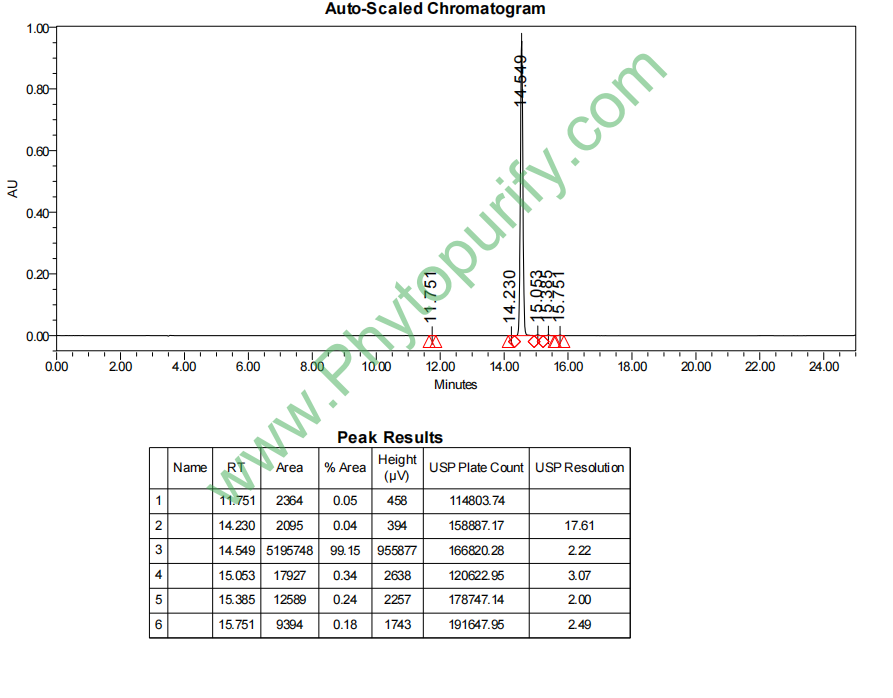
Purity: 95%~99%
Analysis Method: HPLC-DAD or/and HPLC-ELSD
Identification Method: Mass, NMR
Packing: Brown vial or HDPE plastic bottle
Can be supplied from milligrams to grams.
For Reference Standard and R&D, Not for Human Use Directly.
Inquire for bulk scale.
HPLC of Epimedin A1
Storage conditions:Short-term storage at 2~8℃, long-term storage at -20 ~ -80℃
317.3500
.4003
.3958
3.0811
.3991
.3594
Low
77.8755
5.5599
Yes
No
Yes
No
No
No
0.0
Yes
Yes
Yes
Yes
Osteoporosis is a systemic bone disease characterized by reduced bone mass, destruction of bone microstructure, and increased bone fragility. It has become a major public health challenge worldwide, especially in an aging society. At present, although first-line clinical drugs can effectively inhibit bone resorption or promote bone formation, long-term use often accompanies side effects such as mandibular necrosis, atypical femoral fractures, and cardiovascular risks. Therefore, the development of efficient and safe new anti osteoporosis drugs is an urgent need for current research. In this context, traditional Chinese medicine has become an important treasure trove for new drug development due to its advantages of multiple components, multiple targets, and overall regulation. Epimedium Folium, as a classic traditional Chinese medicine for tonifying the kidneys, strengthening yang, and strengthening tendons and bones, has been extensively validated for its anti osteoporosis activity by modern pharmacological studies. Epimidin A1 is a characteristic flavonoid compound isolated from Epimedium, and is one of the key active ingredients for the pharmacological effects of total flavonoids in Epimedium. In recent years, with the development of molecular biology and network pharmacology techniques, the multi-target mechanism of Chaohuoding A1 in bone metabolism regulation has gradually been revealed, showing broad development prospects. This article aims to systematically review the chemical properties, pharmacological activities, molecular mechanisms of action, and pharmacological properties of Chaohuoding A1, in order to provide comprehensive scientific references for the in-depth research and clinical application of this compound.
The chemical name of Chaohuoding A1 is 8-isoprenyl kaempferol-3-O - α - L-rhamnoside (1 → 2) - α - L-rhamnoside (1 → 6) - β - D-glucoside, and its CAS number is 140147-77-9. Structurally, Chaohuoding A1 belongs to the class of flavonol glycosides substituted with isopentenyl groups. Its parent nucleus is Kaempferol, which is connected to an isopentenyl group at position C-8. This is a characteristic structural feature of flavonoids in Epimedium plants and is believed to be closely related to its unique biological activity. The isopentenyl group enhances the lipophilicity of the molecule, which may affect its interaction with cell membranes and hydrophobic target proteins.
On the C-3 hydroxyl group, Chaohuoding A1 is connected to a complex triple sugar chain, consisting of β - D-glucosyl, α - L-rhamnose, and α - L-rhamnose in sequence. This highly glycosylated structure determines its key physicochemical properties. Its molecular weight is as high as 838.8090, and the total polar surface area (TPSA) is 317.35 Å ², indicating strong molecular polarity and high hydrophilicity. The calculated lipid water partition coefficient (LogP) is 0.4003, further confirming its amphiphilic but hydrophilic nature. Its water solubility value is 3.0811 (usually expressed in log mol/L or mg/mL, which needs to be interpreted in conjunction with specific units, but overall indicates that it has moderate to high water solubility). These physicochemical parameters collectively point to its poor membrane permeability, which explains the prediction results of its usually low oral bioavailability and is also a key issue that needs to be addressed in its drug development.
Chaohuoding A1 mainly comes from the dried leaves of various plants in the Epimedium L. genus of the Berberidaceae family, such as Epimedium koreanum Nakai, Epimedium sagittatum (Sieb. et Zucc.) Maxim., Epimedium pubescens Maxim., etc. The content of Asahuoding A1 varies among different varieties and regions of Epimedium, and it often constitutes the core component of total flavonoids in Epimedium together with Icarin, Asahuoding B, C, and other compounds.
Extracting Chaohuoding A1 from plant materials usually follows the general extraction strategy for flavonoids. Traditional methods include solvent extraction, which commonly uses 60% -70% ethanol or methanol for heating reflux or ultrasound assisted extraction. This method is easy to operate and has high extraction efficiency. To further enrich Chaohuoding A1, macroporous adsorption resins (such as AB-8 and D101) are often used for purification, and their adsorption differences with other polar components are utilized for separation. Modern separation techniques such as high-speed countercurrent chromatography (HSCCC) and preparative high-performance liquid chromatography (Prep HPLC) have become key technologies for obtaining high-purity Chaohuoding A1 monomers. HSCCC utilizes the liquid-liquid distribution principle and does not require a solid phase carrier, making it particularly suitable for separating such polar glycoside compounds. It can effectively separate Chaohuoding A1 and its structural analogues (such as Chaohuoding B and C). Finally, the structure was confirmed through techniques such as nuclear magnetic resonance (NMR) and mass spectrometry (MS).
The pharmacological activity research of Chaohuoding A1 mainly focuses on the skeletal system, and its anti osteoporosis effect has been widely supported by in vitro and in vivo experiments.
1. In vitro studies:
At the cellular level, Chaohuoding A1 exhibits bidirectional regulatory effects on osteoblasts and osteoclasts. Studies on osteoblast cell lines (such as MC3T3-E1, UMR-106) or primary bone marrow mesenchymal stem cells have shown that Chaohuoding A1 can significantly promote cell proliferation, differentiation, and mineralization. It can upregulate alkaline phosphatase (ALP) activity, increase bone nodule formation, and promote the expression of osteogenic related genes. On the other hand, in osteoclast differentiation models induced by receptor activator of nuclear factor kappa B ligand (RANKL), such as RAW264.7 cells or primary bone marrow macrophages, Chaohuoding A1 can effectively inhibit the fusion, differentiation, and bone resorption function of osteoclast precursor cells and reduce the formation of tartrate resistant phosphatase (TRAP) positive multinucleated cells.
2. In vivo studies:
Multiple animal models of osteoporosis have confirmed the bone protective effect of Chaohuoding A1. In a postmenopausal osteoporosis rat or mouse model induced by ovariectomy (OVX), oral administration of Chaohuoding A1 can significantly improve bone microstructural parameters, such as increasing bone density (BMD), increasing the number (Tb. N) and thickness (Tb. Th) of bone trabeculae, and reducing the degree of trabecular separation (Tb. Sp). Microscopic computed tomography (Micro CT) and bone tissue morphometric analysis visually demonstrated its reversal effect on bone loss. In addition, Chaohuoding A1 has shown good preventive and therapeutic effects in glucocorticoid (such as dexamethasone) - induced osteoporosis models and elderly osteoporosis models. Its strength of action is often comparable to or has unique advantages over positive drugs such as estrogen or bisphosphonates, and there have been no significant reports of liver and kidney toxicity, indicating its good safety.
3. Other potential activities:
In addition to its core anti osteoporosis activity, preliminary studies suggest that Chaohuoding A1 may also have potential anti-inflammatory, antioxidant, anti-tumor, and neuroprotective effects. These activities may be related to the antioxidant properties of its flavonoid mother nucleus and its regulation of multiple signaling pathways, but further systematic research is needed.
The anti osteoporosis effect of Chaohuoding A1 is not achieved through a single target, but through a complex multi-target network that synergistically regulates the balance between bone formation and bone resorption. The combination of network pharmacology prediction and experimental verification revealed its effects on the following key targets and pathways:
1. Promote bone formation (osteogenic differentiation):
* Regulation of core transcription factors: Chaohuoding A1 can be significantly upregulated RUNX2 and SP7(Osterix) The expression. RUNX2 is the main transcription factor controlling osteogenic differentiation, and SP7 is a downstream key factor of RUNX2. Together, they initiate and drive osteoblast specific genes (such as COL1A1、BGLAP(Osteocalcin))Transcription promotes collagen synthesis and bone matrix mineralization.
* Activation of classic signaling pathways: Research has shown that Chaohuoding A1 can activate the BMP/Smad and Wnt/β - catenin signaling pathways. By upregulating BMP-2 expression and promoting Smad1/5/8 phosphorylation, it synergistically interacts with RUNX2. Meanwhile, it may inhibit negative regulatory factors of bone formation SOST (sclerosing protein) The expression of β - catenin releases its inhibition of the Wnt pathway, allowing β - catenin to enter the nucleus and activate the osteogenic gene program.
* Nuclear receptor regulation: Chaohuoding A1 has similarities in structure with estrogen and can be used as a plant estrogen, similar to estrogen receptor alpha(ESR1)Combining and simulating the partial bone protective effect of estrogen. In addition, it can also activate vitamin D receptors(VDR)Synergistic promotion of bone calcium metabolism.
2. Inhibit bone resorption (osteoclast differentiation):
* Inhibition of key pathways for osteoclast differentiation: Chaohuoding A1 can interfere with RANKL/RANK/OPG systems. It can promote the secretion of osteoprotegerin by osteoblasts(TNFRSF11B/OPG)OPG acts as a "bait receptor" to competitively bind to RANKL, thereby blocking the binding of RANKL to RANK on osteoclast precursor cells, inhibiting the activation of NF - κ B and MAPK (such as JNK, p38) signaling pathways, which is the core initiating step of osteoclast differentiation.
* Inhibition of osteoclast functional enzymes: Chaohuoding A1 can downregulate tissue protease K(CTSK)Matrix metalloproteinase-9(MMP9)The expression. CTSK is a key enzyme involved in the degradation of bone organic matrix (mainly collagen) by osteoclasts, while MMP9 is involved in the initiation of osteoclast migration and bone matrix degradation. Inhibiting both can directly weaken the bone resorption function of osteoclasts.
* Oxidative stress and inflammation regulation: Its antioxidant activity helps to eliminate excess reactive oxygen species (ROS) produced during osteoclast differentiation, and ROS is an important signaling molecule for osteoclast activation. Meanwhile, by inhibiting the production of pro-inflammatory factors such as TNF - α, IL-1 β, IL-6, an unfavorable microenvironment for excessive bone resorption is indirectly created.
In summary, Chaohuoding A1 reconstructs bone homeostasis through a dual mechanism of "promoting formation and inhibiting absorption", with multiple targets and pathways, reflecting the therapeutic concept of multi-component, multi-target, and overall regulation of traditional Chinese medicine.
Based on its physical and chemical properties, the medicinal properties of Chaohuoding A1 exhibit obvious advantages and challenges.
Advantage:
* High security potential: Preliminary in vitro toxicity screening showed no inhibitory effect on hERG potassium channels (hERG inhibition: No), indicating a low risk of cardiac toxicity. The Ames test result is negative (0.0), indicating no mutagenicity in this testing system. These data provide early support for its security.
* Natural source, clear structure: As a natural product, its structure has undergone long-term evolutionary screening, and its biocompatibility may be good.
Challenge:
* Low oral bioavailability: This is the main bottleneck it faces. High polarity, high molecular weight (838.8), and complex sugar chain structure result in poor gastrointestinal absorption and low membrane permeability. It is predicted that its blood-brain barrier permeability is low, but this is not the main disadvantage for drugs that mainly act on the peripheral skeletal system. Low bioavailability means that higher doses are required to achieve effective blood drug concentrations, which may increase costs and unpredictable side effects.
* Metabolism and disposal: After oral administration, flavonoid glycosides often undergo hydrolysis (deglycosylation) by gut microbiota, producing glycosides (such as deglycosylated kaempferol derivatives) that are then absorbed. The activity, metabolism, and toxicity of aglycones may differ from the prototype drug, making the actual active substances and mechanisms in the body more complex. Further pharmacokinetic studies are needed to elucidate the metabolic pathways, major metabolites, tissue distribution, and excretion characteristics of Chaohuoding A1 in vivo.
Improvement strategy:
To enhance its medicinal properties, researchers are exploring various strategies: 1)Structural modification Chemical modification of sugar or isopentenyl groups to improve lipid solubility and stability while maintaining activity; 2)Formulation technology Using nano drug delivery systems such as nanocrystals, liposomes, polymer micelles, or self microemulsions, cyclodextrin inclusion complexes, etc., to improve their solubility, promote intestinal absorption, and target delivery; 3)Prodrug design Prepare it as a prodrug of the prototype drug that is enzymatically released in specific areas such as the intestine or bone tissue.
Chaohuoding A1, as one of the core active ingredients of Epimedium for anti osteoporosis, has broad clinical application prospects, but solid research is still needed for its transformation.
1. Drug development direction:
* Innovative monomers for traditional Chinese medicine/natural medicine: The development of Chaohuoding A1 monomeric drug is a direct pathway. It is necessary to complete preclinical pharmacological, pharmacokinetic, and toxicological studies of the system, clarify its therapeutic window, and use modern formulation technology to solve its bioavailability issues. It can be explored for the prevention and treatment of postmenopausal osteoporosis, senile osteoporosis, and glucocorticoid induced osteoporosis.
* Standardized components of traditional Chinese medicine compound: Mix Chaohuoding A1 with other active flavonoids in Epimedium (such as icariin and Chaohuoding B/C) in a specific ratio to form standardized extracts or components, as a treatment plan that is more in line with the holistic view of traditional Chinese medicine. This may be a faster way to achieve industrialization.
* Health food and functional food additives: Based on its natural source and good safety characteristics, it can be used as a health food ingredient related to bone health, for bone health and early prevention of osteoporosis in middle-aged and elderly populations.
2. Deepening the mechanism of action:
Future research needs to utilize cutting-edge technologies such as conditional gene knockout animals, single-cell sequencing, and proteomics to more accurately depict the communication network of Chaohuoding A1 between bone microenvironment cells (osteoblasts, osteoclasts, bone cells, immune cells) and reveal its new mechanism of regulating the bone immune microenvironment. Meanwhile, attention should be paid to its impact on bone homeostasis related processes such as bone fat metabolism and bone angiogenesis.
3. Exploration of combination therapy:
Exploring the combination therapy of Chaohuoding A1 with existing anti osteoporosis drugs (such as bisphosphonates, teriparatide, denosumab, etc.) may produce synergistic effects, reduce side effects, or overcome drug resistance, which has important clinical significance.
4. Expand indications:
Based on the pleiotropy of flavonoids, the potential application of Chaohuoding A1 in other bone related diseases such as osteoarthritis (protecting subchondral bone), fracture healing, periodontal bone defects, etc. can be studied.
Chaohuoding A1 is a flavonoid compound with clear anti osteoporosis activity discovered from the traditional Chinese medicine Epimedium. It works synergistically through multiple targets and pathways, bidirectionally regulating bone metabolism, promoting bone formation, and inhibiting bone resorption, demonstrating the advantages of systematic treatment with traditional Chinese medicine. Despite facing challenges in terms of oral bioavailability, its excellent in vitro safety and clear bone protective effects have laid a solid foundation for its subsequent development. With the deep involvement of modern pharmacology, medicinal chemistry, and molecular pharmacology, through structural optimization, development of novel delivery systems, and in-depth mechanism research, Chaohuoding A1 is expected to be successfully transformed from a potential natural active molecule into an innovative drug for the prevention and treatment of osteoporosis and other bone diseases, providing a new option for inheriting and promoting the valuable heritage of traditional Chinese medicine and meeting the unfinished clinical needs. Its research paradigm also provides useful reference for identifying key active ingredients from complex traditional Chinese medicine systems and achieving modernization and international development.
