Introduction/Overview
Natural products, as an important source of drug discovery and development, have played an irreplaceable role in the long history of human fight against diseases. Triterpenoids have always been a hot topic in natural medicinal chemistry and pharmacology research due to their structural diversity and wide range of biological activities. Picfeltarraenin IV (CAS number: 184288-35-5) is one of the eye-catching new stars. This compound is derived from the Scrophulariaceae plant Scrophulariaceae(Picriafel-terrae A triterpenoid saponin component isolated from Lour. Early studies have found that it has acetylcholinesterase inhibitory activity, suggesting its potential value in neurodegenerative diseases such as Alzheimer's disease. However, with the deepening of research, bitter ginseng glycoside IV has shown a broader pharmacological activity spectrum, especially in the fields of anti-inflammatory, anti-tumor, and anti infection, showing significant potential. Its mechanism of action involves the regulation of multiple key targets such as interleukin-6 (IL-6), signal transduction and transcription activator 3 (STAT3), nuclear factor kappa B (NF - κ B) key subunit RELA (p65), and transient receptor potential channel (TRPV1/TRPA1). The purpose of this article is to systematically review the chemical structure, plant origin, pharmacological activity, mechanism of action, and medicinal properties of bitter ginseng glycoside IV, and to prospect its clinical application prospects, in order to provide comprehensive scientific references for the in-depth research and development of this compound.
Chemical structure and physicochemical properties
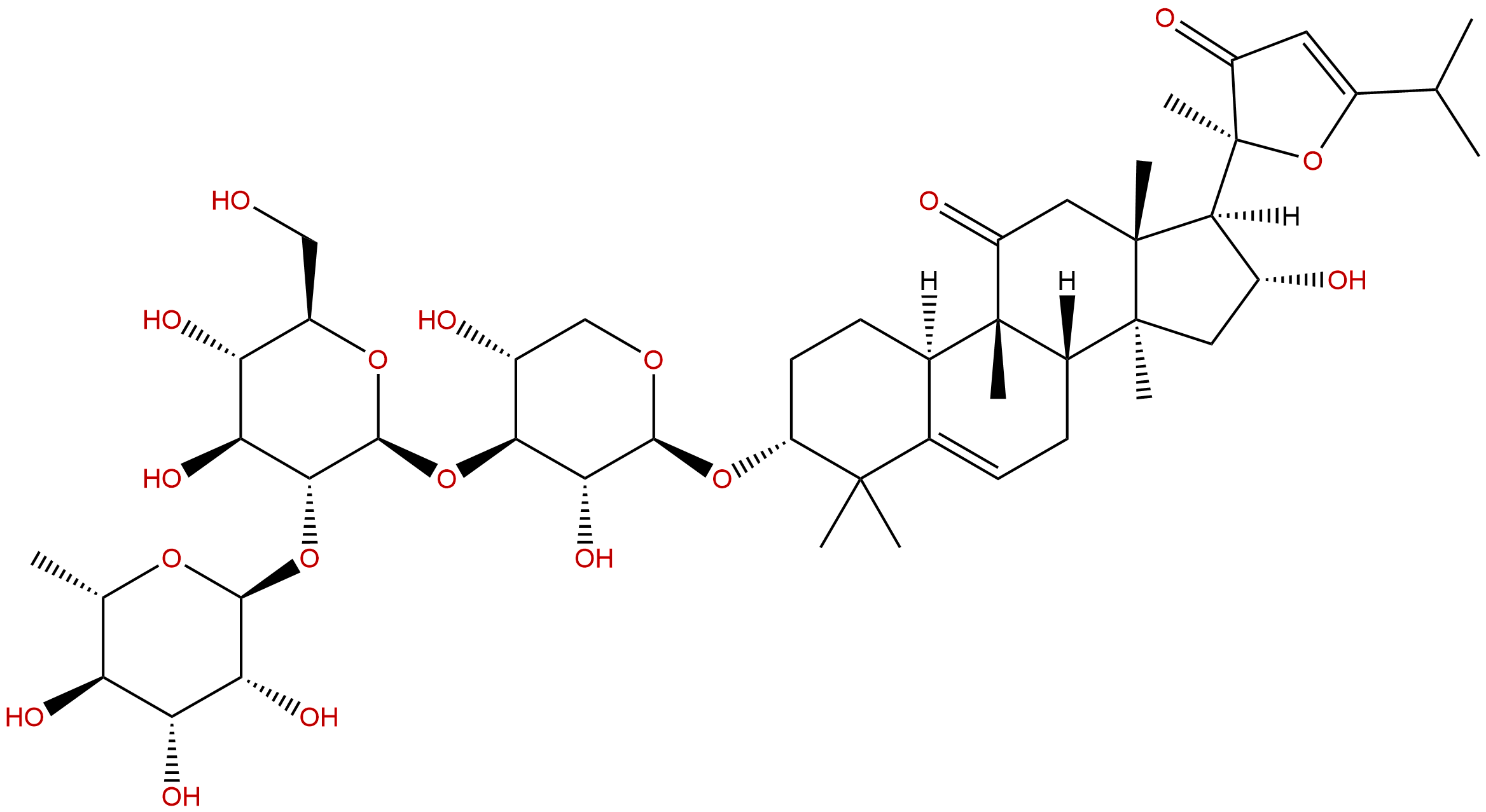
Ku Xuan Shen Glycoside IV is a structurally complex oleanane type pentacyclic triterpenoid saponin. Its molecular formula is C ₄₇ H ₇₄ O ₁₈, with a molecular weight of 925.0750 Da. Its basic skeleton is oleanolic acid, with sugar chains connected at C-3 and C-28 positions, forming a double sugar chain saponin structure. The sugar chain at C-3 position is usually composed of oligosaccharides such as glucose and xylose, while the sugar chain at C-28 position is often connected to glucose units, which is the material basis for its various biological activities.
From the analysis of parameters related to drug properties, the lipid water partition coefficient (LogP) of bitter ginseng glycoside IV is 2.0448, indicating that it has a certain degree of lipophilicity, but not high lipid solubility. Its topological polar surface area (TPSA) is as high as 280.8200 Å ², mainly due to the presence of multiple hydroxyl and sugar groups with a large number of oxygen atoms in the molecule, resulting in strong molecular polarity. This characteristic directly affects its solubility, with a calculated water solubility of 0.0991 mg/mL, belonging to the category of slightly soluble to poorly soluble, which poses a challenge for its formulation development. In terms of predicting absorption, distribution, metabolism, and excretion (ADME) properties, its larger molecular weight and higher TPSA result in a predicted "low" ability to cross the blood-brain barrier (BBB), which contradicts its potential application as a central acetylcholinesterase inhibitor and may require improvement through structural modifications or special delivery systems. Preliminary safety predictions indicate that it has no significant inhibitory risk on hERG potassium channels (hERG inhibition: No), and the Ames test predicted a value of 0.0, suggesting that it may not have direct genetic toxicity. This provides a favorable preliminary safety basis for its further development.
Plant sources and extraction methods
Ku Xuan Shen Glycoside IV is mainly derived from Ku Xuan Shen, a plant of the genus Ku Xuan Shen in the family Scrophulariaceae(Picriafel-terrae Lour., also known as Picria fel-terrae Lour.)。 Ku Xuan Shen is a traditional medicinal plant commonly used in Southeast Asia and some parts of China to treat fever, sore throat, dysentery, inflammation, and snake bites. Ku Xuan Shen glycoside IV is one of the characteristic active ingredients in Ku Xuan Shen, often coexisting with other triterpenoid saponins such as Ku Xuan Shen glycoside IA, IB, etc.
Its extraction and separation usually follow the conventional process of natural product chemistry. Firstly, the dried bitter ginseng whole plant is crushed and subjected to reflux extraction or ultrasound assisted extraction using polar solvents such as methanol, ethanol, or aqueous ethanol to obtain the total extract. Subsequently, preliminary enrichment was carried out using macroporous adsorption resin (such as D101, AB-8) column chromatography, with gradient elution using water and different concentrations of ethanol. Ku Xuan Shen glycoside IV is usually enriched in the elution sites of medium to high concentrations of ethanol (such as 50% -70% ethanol sites). Further purification depends on the combination of normal phase silica gel column chromatography, reverse phase silica gel column chromatography (such as ODS, C18), dextran gel column chromatography (such as Sephadex LH-20) and high performance liquid chromatography (HPLC). Modern separation techniques such as high-speed countercurrent chromatography (HSCCC) have been successfully applied to the efficient preparation and separation of bitter ginseng glycoside IV due to their advantages of not requiring solid carriers and high recovery rates. The optimization of extraction processes often focuses on factors such as solvent selection, solid-liquid ratio, extraction time, and temperature, aiming to improve the yield and purity of the target compound.
Pharmacological activity research
Numerous in vitro and in vivo pharmacological studies have shown that bitter ginseng glycoside IV has multiple biological activities, providing empirical evidence for its multi-target therapeutic potential.
1. Anti inflammatory activity: This is one of the most extensively studied activities of bitter ginseng glycoside IV. In various acute and chronic inflammation models, such as lipopolysaccharide (LPS) - induced macrophage (RAW264.7) inflammation model, carrageenan or Freund's complete adjuvant induced rat paw swelling model, xylene induced mouse ear swelling model, and dextran sulfate sodium (DSS) - induced mouse colitis model, bitter ginseng glycoside IV has shown significant anti-inflammatory effects. It can effectively inhibit the redness, swelling, and exudation of inflammatory sites, reduce the activity of myeloperoxidase (MPO) in inflammatory tissues, and significantly downregulate the production of various pro-inflammatory mediators.
2. Antitumor activity: Studies have shown that Scrophuloside IV can inhibit the growth and induce apoptosis of many human tumor cell lines, including liver cancer, breast cancer, colon cancer and lung cancer cells. Its anti-tumor mechanism is not limited to direct cytotoxic effects, but also involves inhibiting processes such as tumor cell migration, invasion, and angiogenesis. In animal transplant tumor models, bitter ginseng glycoside IV can also inhibit tumor growth and metastasis to a certain extent.
3. Neuroprotection and Acetylcholinesterase Inhibition Activity: As the first discovered activity, bitter ginseng glycoside IV has a clear inhibitory ability on acetylcholinesterase (AChE) in vitro, with IC50 values comparable to some known AChE inhibitors. This suggests that it may play a role in the treatment of Alzheimer's disease by increasing the level of acetylcholine in synaptic cleft and improving cholinergic neurotransmission. In addition, it has also shown protective effects in neural cell damage models related to oxidative stress and inflammation.
4. Anti infective activity: In addition to preliminary reports on its antibacterial and antifungal properties, recent research has focused more on its antiviral potential. Studies have shown that bitter ginseng glycoside IV has certain inhibitory activity against certain respiratory and intestinal viruses, and its mechanism may be related to interference with virus adsorption or replication, but the specific mechanism still needs to be further explored.
Mechanism of action and molecular targets
The multiple pharmacological activities of bitter ginseng glycoside IV stem from its cross regulation of multiple key signaling pathways within cells, and its target network is complex and precise.
1. Regulating the NF - κ B signaling pathway: NF - κ B is a core transcription factor in inflammation and tumorigenesis. Ku Xuan Shen glycoside IV can effectively inhibit NF - κ B activation induced by LPS and other stimuli. Its action includes: inhibiting the activity of IKB kinase complex (IKK, especially IKBKB subunit), preventing the phosphorylation and degradation of I κ B α; Furthermore, it inhibits the nuclear translocation of the key subunit RELA (p65) of NF - κ B and its binding ability to DNA. This directly leads to transcriptional downregulation of numerous downstream pro-inflammatory factors (such as TNF - α, IL-6) and enzymes (such as inducible nitric oxide synthase NOS2, cyclooxygenase-2 COX-2/PTGS2).
2. Intervention in JAK/STAT signaling pathway: Especially the STAT3 pathway is crucial in chronic inflammation and tumor immune escape. Ku Xuan Shen Glycoside IV can inhibit the tyrosine phosphorylation of STAT3 induced by cytokines such as IL-6, block its dimerization and nuclear translocation, thereby inhibiting the expression of STAT3 target genes (such as Bcl-2, Cyclin D1, VEGF). This may be an important mechanism for its induction of tumor cell apoptosis and inhibition of angiogenesis.
3. Regulating inflammasome activity: The activation of inflammasomes (such as NLRP3) is a key event in the inflammatory response. Research has shown that bitter ginseng glycoside IV can inhibit the assembly and activation of NLRP3 inflammasomes, specifically by reducing the activation level of CASP1 (cysteine protease-1) and decreasing the maturation and release of its downstream products IL-1 β and IL-18.
4. Affects pain perception related ion channels: Ku Xuan Shen glycoside IV has a regulatory effect on transient receptor potential vanillic acid subtype 1 (TRPV1) and transient receptor potential anchor protein subtype 1 (TRPA1) channels. These two channels are key sensors that mediate inflammatory pain and neuropathic pain. Ku Xuan Shen Glycoside IV may exert analgesic effects by directly or indirectly inhibiting the excessive activation of these channels, which complements its anti-inflammatory activity.
5. Inhibit prostaglandin synthesis: In addition to inhibiting inducible COX-2, bitter ginseng glycoside IV also has a certain inhibitory effect on constitutive cyclooxygenase-1 (PTGS1/COX-1), which may affect the production of prostaglandins such as thromboxane A2 and its extensive anti-inflammatory and antipyretic effects.
In summary, bitter ginseng glycoside IV forms a multidimensional and networked pharmacological mechanism by acting on multiple targets such as IL-6, STAT3, RELA, IKBKB, CASP1, TRPV1/TRPA1, PTGS1, TNF, NOS2, etc., collectively explaining its powerful anti-inflammatory, anti-tumor, and neuroprotective effects.
Evaluation of drug properties and pharmacokinetics
Although bitter ginseng glycoside IV has significant pharmacological activity, its conversion from lead compounds to drugs still faces challenges in terms of drug properties.
Absorption and bioavailability: As a saponin compound with high molecular weight and polarity (high TPSA), the oral absorption of bitter ginseng glycoside IV is expected to be poor. Saponins are easily hydrolyzed by acids or enzymes in the gastrointestinal tract, and their surface activity may cause irritation to the intestinal mucosa. Its membrane permeability is limited, and its absolute bioavailability may be low. At present, there is a lack of publicly available pharmacokinetic research data, and it is urgent to clarify key parameters such as drug time curves, peak time, peak concentration, half-life, and bioavailability after oral and intravenous administration through standardized animal experiments (rats, dogs, etc.).
Distribution: It is predicted that its blood-brain barrier permeability is low, which limits its direct therapeutic effect on central nervous system diseases. However, its distribution characteristics in inflammation and tumor tissues are worth paying attention to. Studying whether it has the potential for inflammation targeting or tumor targeting distribution is of great significance for developing it as an anti-inflammatory and anti-tumor drug.
Metabolism and excretion: The metabolism of triterpenoid saponins in the body is usually complex and may undergo reactions such as hydrolysis (deglycosylation), oxidation, and binding. The liver may be its main metabolic site, and the gut microbiota may also be involved in its metabolic transformation. It is necessary to systematically study its main metabolites, metabolic enzymes (such as CYP450 enzyme system), and excretion pathways (bile, urine).
Formulation strategy: The development of new drug delivery systems is a key direction to improve its drug properties. For example, preparing it into nanocrystals, liposomes, polymer micelles, or solid dispersions can improve its solubility and dissolution rate, enhancing oral absorption. Active targeting through surface modification (such as targeting inflammation or tumor sites), or modifying its sugar or carboxyl groups using prodrug strategies, may significantly improve its pharmacokinetic properties and therapeutic efficacy.
Clinical application prospects and prospects
The multi-target properties of bitter ginseng glycoside IV provide unique advantages for its application in the treatment of complex diseases, especially in the following fields with broad prospects:
1. Treatment of chronic inflammatory diseases: Such as rheumatoid arthritis, inflammatory bowel disease (ulcerative colitis, Crohn's disease), chronic obstructive pulmonary disease (COPD), and asthma. Its ability to simultaneously inhibit NF - κ B, STAT3, and inflammasomes may result in synergistic inhibition of the pathological core of such diseases, which is more effective than single target drugs and may reduce drug resistance.
2. Tumor adjuvant therapy and chemoprevention: Given that it inhibits tumor development and progression through non cytotoxic anti-inflammatory and immune regulatory mechanisms, bitter ginseng glycoside IV is expected to be developed as a tumor chemopreventive agent or combined with conventional chemotherapy, radiotherapy, and immunotherapy to enhance efficacy, reduce side effects, and reverse drug resistance. Tumor types with sustained activation of STAT3 may have specific therapeutic effects.
3. Neurodegenerative diseases and neuropathic pain: Although BBB permeability is a challenge, its dual effects of AChE inhibition and anti neuroinflammation provide new ideas for the treatment of diseases such as Alzheimer's disease and Parkinson's disease. Breaking through the BBB through nanotechnology or prodrug design, or focusing on treating peripheral neuropathic pain (by inhibiting TRPV1/TRPA1), are feasible development pathways.
4. Development of new analgesics and anti-inflammatory drugs: Its dual mechanism of action on the TRP channel and prostaglandin synthesis pathway suggests that it may become a novel analgesic different from nonsteroidal anti-inflammatory drugs and opioid drugs for the treatment of inflammatory pain and neuropathic pain.
Future research should focus on: ① conducting systematic preclinical pharmacological, pharmacokinetic, and toxicological evaluations to clarify their therapeutic window and safety; ② Using computer-aided drug design, structural biology, and synthetic biology methods to optimize its structure, while preserving its activity, improving its solubility, metabolic stability, and BBB permeability; ③ Deeply explore its immune regulatory function and its role in the tumor microenvironment; ④ Actively developing new drug delivery systems that are suitable for their physicochemical properties. Through interdisciplinary collaboration, bitter ginseng glycoside IV is expected to successfully transition from an excellent natural lead compound to clinical use, benefiting human health.
Conclusion
Ku Xuan Shen Glycoside IV, as a triterpenoid saponin derived from the traditional medicinal plant Ku Xuan Shen, has shown great potential for development in anti-inflammatory, anti-tumor, neuroprotective and other fields due to its unique chemical structure and multi-target mechanism of action. It is like a "multi key" that can simultaneously act on multiple disease-related key "locking cores" such as NF - κ B, STAT3, inflammasomes, TRP channels, etc., thereby producing synergistic therapeutic effects. Although it faces typical challenges in natural product drug formation in terms of oral absorption, metabolic stability, etc., the development of modern medicinal chemistry, pharmacy, and pharmacology technologies provides powerful tools to overcome these obstacles. The continuous in-depth research on bitter ginseng glycoside IV not only helps to reveal its deep-seated biological mysteries, but also provides important candidate molecules and scientific basis for the development of multi-target innovative drugs with independent intellectual property rights, fully reflecting the enormous charm and infinite possibilities of exploring the value of modern drugs from traditional medicinal plants.