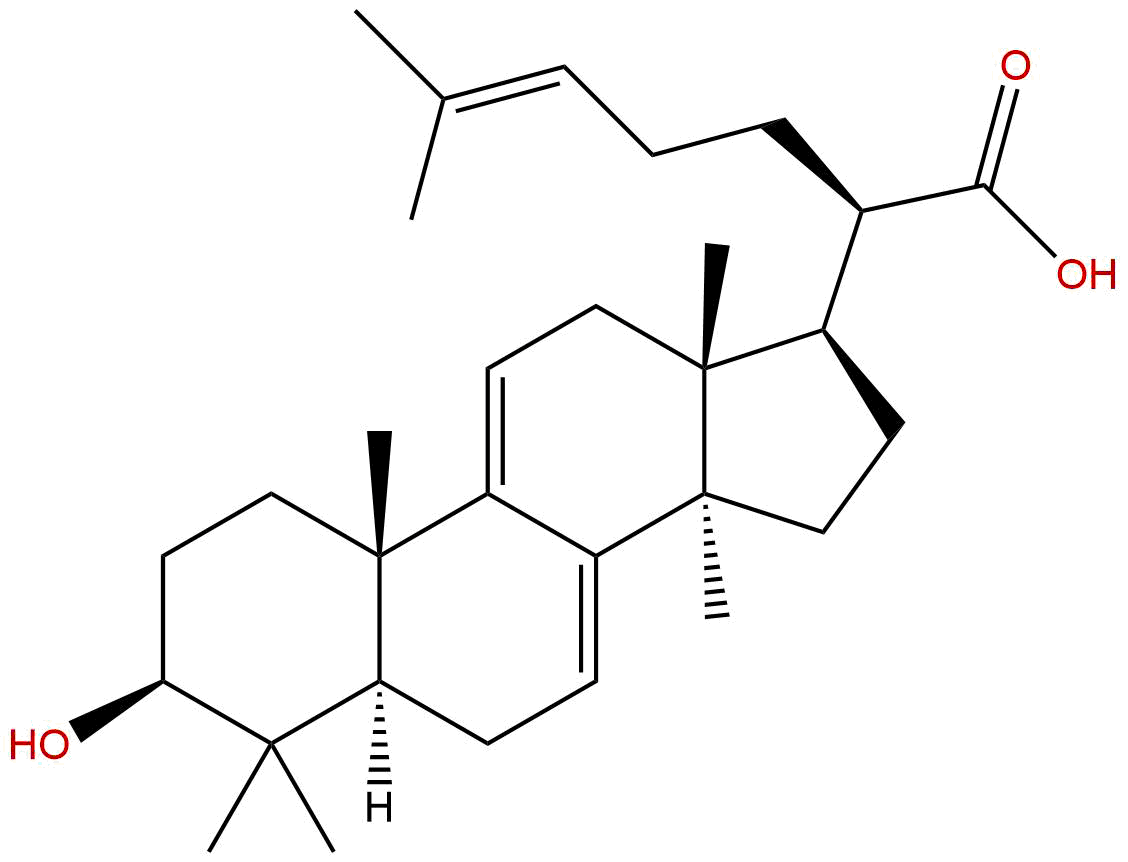


Product name: Dehydrotrametenolic acid
Synonym name: 3-epidehydrotrametenolic acid
Catalogue No.: BP1798
Cas No.: 29220-16-4
Formula: C30H46O3
Mol Weight: 454.695
Botanical Source:
Physical Description: Powder
Type of Compound: Triterpenoids
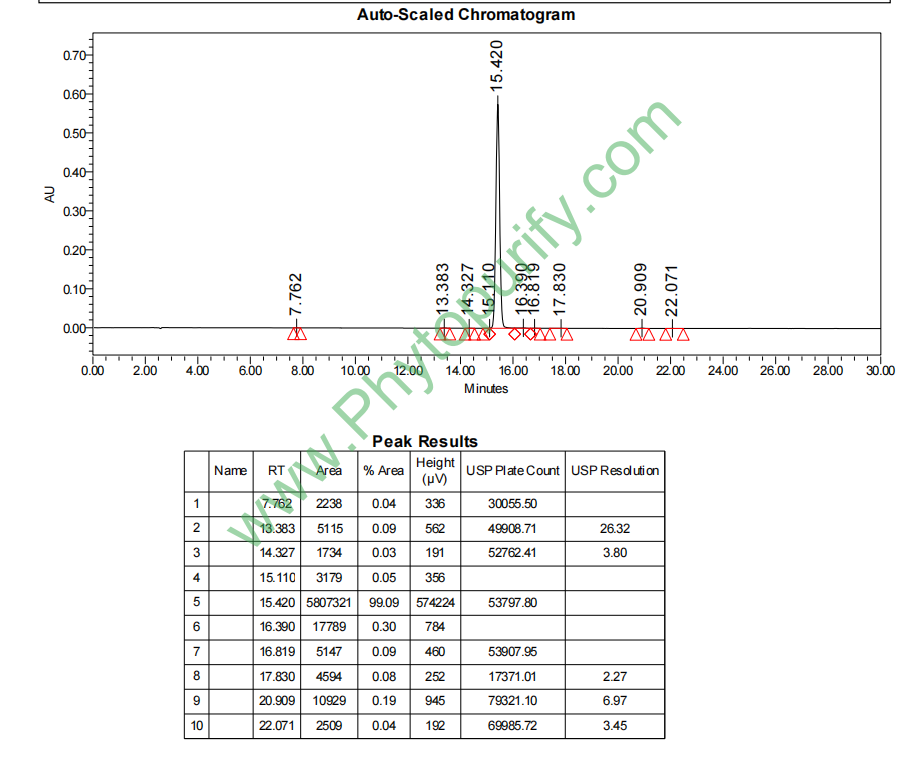
Purity: 95%~99%
Analysis Method: HPLC-DAD or/and HPLC-ELSD
Identification Method: Mass, NMR
Packing: Brown vial or HDPE plastic bottle
The product could be supplied from milligrams to grams. Inquire for bulk scale.
We provide solution to improve the water-solubility of compounds, thereby facilitating the variety of activity tests and clinic uses.
For Reference Standard and R&D, Not for Human Use Directly.
Description:
Dehydrotrametenolic acid is a promising candidate for a new type of insulin-sensitizing drug; it can be a potential anticancer agent against H-ras transformed tumor.
References:
Life Sci. 2006 Jan 2;78(6):607-13.
Dehydrotrametenolic acid selectively inhibits the growth of H-ras transformed rat2 cells and induces apoptosis through caspase-3 pathway.
The screening of natural products that preferentially inhibit growth of H-ras transformed rat2 cells vs. rat2 cells was performed to identify H-ras specific growth inhibitor.
METHODS AND RESULTS:
A lanostane-type triterpene acid, Dehydrotrametenolic acid (3beta-hydroxylanosta-7,9(11),24-trien-21-oic acid), was isolated from the sclerotium of Poria cocos (Polyporaceae). Dehydrotrametenolic acid selectively inhibited the growth of H-ras transformed cells with a GI(50) value of 40 microM. FACS analysis indicated that the compound exerted its anti-proliferation effects through cell cycle arrest at G2/M phase and accumulation of sub-G1 population. Dehydrotrametenolic acid-induced apoptosis was further confirmed with chromosomal DNA fragmentation, caspase-3 activation, and degradation of PARP and Lamin A/C degradation. The compound also regulated the expression of H-ras, Akt and Erk, which are the downstream proteins of H-ras signaling pathways.
CONCLUSIONS:
The results suggest that Dehydrotrametenolic acid can be a potential anticancer agent against H-ras transformed tumor.
Biol Pharm Bull. 2002 Jan;25(1):81-6.
Dehydrotrametenolic acid induces preadipocyte differentiation and sensitizes animal models of noninsulin-dependent diabetes mellitus to insulin.
We recently discovered that the triterpene acid compound Dehydrotrametenolic acid promotes adipocyte differentiation in vitro and acts as an insulin sensitizer in vivo. This natural product has been isolated from dried sclerotia of Poria cocos WOLF (Polyporaceae), a well-known traditional Chinese medicinal plant.
METHODS AND RESULTS:
We examined the effects of Dehydrotrametenolic acid on plasma glucose concentration in obese hyperglycemic db/db mice. Dehydrotrametenolic acid can reduce hyperglycemia in mouse models of noninsulin-dependent diabetes mellitus (NIDDM) and act as an insulin sensitizer as indicated by the results of the glucose tolerance test. These terpenoids and thiazolidine type of antidiabetic agents such as Ciglitazone, although structurally unrelated, share many biological activities: both induce adipose conversion, activate peroxisome proliferator-activated receptor gamma (PPAR gamma) in vitro, and reduce hyperglycemia in animal models of NIDDM. Dehydrotrametenolic acid is a promising candidate for a new type of insulin-sensitizing drug.
CONCLUSIONS:
This finding is very important for the development of insulin sensitizers that are not of the thiazolidine type.
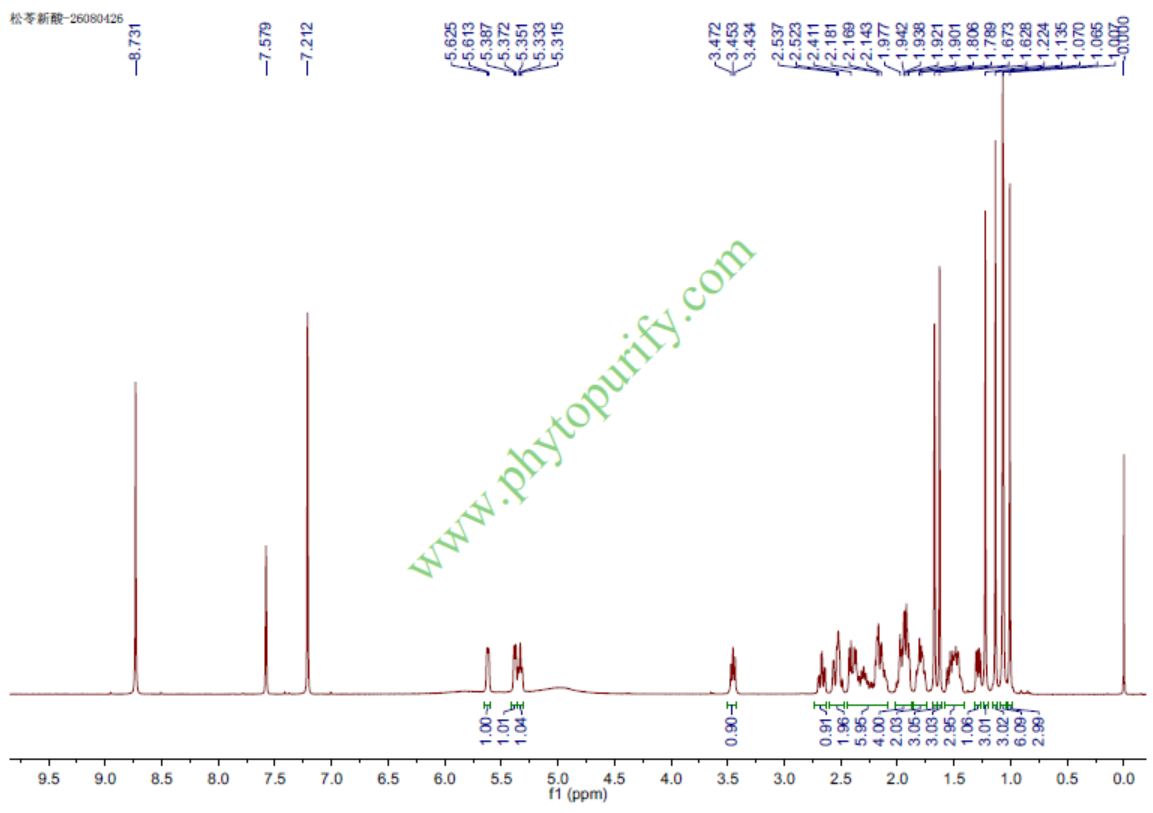
HNMR of Dehydrotrametenolic acid
HPLC of Dehydrotrametenolic acid
Storage conditions:Short-term storage at 2~8℃, long-term storage at -20 ~ -80℃
57.5300
6.9822
4.9967
.0035
4.5550
5.6252
Low
92.5040
4.8596
No
Yes
Yes
No
No
No
0.0
No
No
Yes
No
Natural products, as an important source of drug discovery, play an irreplaceable role in the history of human disease treatment. Among them, the medicinal fungus Poria cocos(Poria cocos)As a treasure of traditional Chinese medicine with a history of more than two thousand years of application, its fungus (Poria cocos) is known for its ability to promote water infiltration, invigorate the spleen and calm the heart. Modern pharmacological research reveals that the pharmacological substance basis of Poria cocos is mainly composed of its triterpenoids and polysaccharides. Among numerous triterpenoid compounds, dehydrotrametinoic acid (DTA), as a sterol triterpenoid acid with a unique structure, has attracted much attention in recent years due to its multiple biological activities. Songlingxin acid (CAS number: 29220-16-4) was initially isolated from the mycelium of Poria cocos, and its chemical structure belongs to the lanostane type triterpenoid. Early studies have shown that this compound can induce apoptosis in various tumor cells by activating the caspase-3 pathway, demonstrating potential anti-tumor activity. Subsequent studies further expanded its pharmacological spectrum, revealing its role in anti-inflammatory, anti diabetes and other fields. Of particular note is that recent research suggests that Songlingxin acid has regulatory potential for hyperuricemia and its related targets, opening up new directions for its application in the treatment of metabolic diseases. This article aims to systematically review the chemical structure, plant origin, pharmacological activity, mechanism of action, medicinal properties, and clinical application prospects of Songlingxin acid, in order to provide comprehensive scientific references for the in-depth research and development of this natural product.
Songlingxin acid is a tetracyclic triterpenoid acid, with the chemical name 3-oxolanostane-7,9 (11), 24-triene-21-acid. Its molecular formula is C30H46O3 and its molecular weight is 454.6950. Structurally, Songlingxin acid belongs to the lanostane type triterpenoid, with unsaturated double bonds in its core steroid skeleton at positions C-7, C-9 (11), and C-24, which is the origin of its "dehydro" name. The C-3 position is a carbonyl (ketone) group, while the C-21 position is connected to a carboxyl group, giving it an acidic characteristic. This unique conjugated olefin and carboxyl structure have a decisive impact on its biological activity and physicochemical properties.
In terms of physical and chemical properties, Songlingxin acid exhibits typical lipophilic characteristics. The calculated lipid water partition coefficient (LogP) is as high as 6.9822, indicating that the compound has strong hydrophobicity and tends to be distributed in the organic phase. Consistent with this, its water solubility is extremely low, only 0.0035 mg/mL, which poses a challenge for its formulation development. The topological polar surface area (TPSA) of the molecule is 57.53 Å ², which is relatively small, due to the fewer polar groups (mainly carboxyl and ketone groups) in its molecular structure. Preliminary pharmacological predictions indicate that the ability of Songlingxin acid to cross the blood-brain barrier is relatively low, suggesting that the risk of central nervous system related side effects may be relatively low. In the safety early warning indicators, the compound showed no significant inhibition of hERG potassium channels (predicted as' no '), indicating a low potential risk of arrhythmia. In addition, its Ames test predicted a value of 0.0, indicating no significant mutagenicity in the preliminary assessment. These physicochemical and preliminary safety property data provide a fundamental framework for subsequent pharmacological research and drug development.
Songlingxin acid mainly comes from the porous fungus Poria cocos in the family Polyporus(Poria cocos Dry sclerotia of (Schw.) Wolf. Poria cocos mainly parasitizes the roots of pine plants and is cultivated in Yunnan, Anhui, Hubei, Henan and other places in China. Among them, "Yunling" produced in Yunnan has the best quality. As an important member of the triterpenoid compounds in Poria cocos, Songlingxin acid usually coexists with other triterpenoid acids such as Poria cocos acid, Tumolic acid, dehydroTumolic acid, etc.
The extraction and separation of Poria cocos acid from Poria cocos sclerotia are usually carried out using organic solvent extraction combined with various chromatographic separation techniques. The conventional extraction process is as follows:
1. Preprocessing and Extraction Crush the dried Poria cocos sclerotia into coarse powder. Usually, high concentration ethanol (such as 95% ethanol) or methanol is used for reflux extraction or ultrasound assisted extraction to fully dissolve triterpenoid components, including Songlic acid. Sometimes, medium polarity solvents such as ethyl acetate are used for extraction to preliminarily enrich the target components.
2. Coarse separation The extract obtained by vacuum concentration of the extract is often subjected to gradient extraction using solvents such as petroleum ether, ethyl acetate, n-butanol, etc. Songlingxin acid is mainly enriched in the ethyl acetate extraction site due to its strong lipophilicity.
3. Fine separation and purification The ethyl acetate fraction was further separated by silica gel column chromatography using different ratios of petroleum ether ethyl acetate or chloroform methanol gradient elution. The fraction containing Songlingxin acid usually requires repeated purification by silica gel column chromatography, reverse phase silica gel column chromatography (such as ODS-C18), and high performance liquid chromatography (HPLC, often using C18 column with methanol water or acetonitrile water as mobile phase) to obtain high-purity monomer compounds.
4. appraisal The isolated monomer compounds were structurally identified using spectroscopic techniques such as nuclear magnetic resonance (NMR, including 1H-NMR, 13C-NMR, 2D-NMR), mass spectrometry (MS), and infrared spectroscopy (IR), and confirmed by comparing with literature data.
In recent years, some new extraction techniques such as supercritical CO2 extraction and microwave-assisted extraction have also been explored for the extraction of triterpenoids from Poria cocos, in order to improve the extraction efficiency and yield of target components.
Songlingxin acid exhibits a wide range of pharmacological activities, and its research has expanded from the initial anti-tumor field to anti-inflammatory, metabolic regulation, and other aspects.
Antitumor activity This is the earliest reported pharmacological effect of Songlingxin acid. Research shows that Songlingxin acid can effectively inhibit the proliferation of many human tumor cells, such as liver cancer cells (HepG2), breast cancer cells (MCF-7), lung cancer cells (A549), etc. Its function is not simply cytotoxicity, but rather through inducing apoptosis (programmed cell death). Experimental results have shown that tumor cells treated with Songlingxin acid exhibit typical apoptotic morphological features such as cell nucleus condensation and DNA fragmentation. Further mechanism research points to its activation of the mitochondrial apoptosis pathway.
anti-inflammatory activity Chronic inflammation is a common pathological basis for many diseases. Research has found that Songlingxin acid exhibits significant anti-inflammatory effects in an in vitro inflammatory model. For example, in the lipopolysaccharide (LPS) - induced macrophage (such as RAW264.7) inflammation model, Songlingxin acid can dose dependently inhibit the production of nitric oxide (NO), prostaglandin E2 (PGE2), and key inflammatory factors such as tumor necrosis factor - α (TNF - α) and interleukin-6 (IL-6). Its function is related to inhibiting the activation of classic inflammatory signaling pathways such as nuclear factor kappa B (NF - κ B) and mitogen activated protein kinase (MAPK).
Anti diabetes and metabolic regulation activity Songlingxin acid has shown potential in metabolic diseases. Research has reported that it has alpha glucosidase inhibitory activity, which can delay the digestion and absorption of carbohydrates, thereby helping to lower postprandial blood sugar. Furthermore, it is worth noting its regulatory effect on hyperuricemia. Hyperuricemia is an important risk factor for gout, metabolic syndrome, and chronic kidney disease. Preliminary in vitro and animal model studies suggest that Songlingxin acid may lower blood uric acid levels by affecting key targets involved in uric acid production and excretion.
Other activities There are also sporadic studies reporting that Songlingxin acid has certain antioxidant and hepatoprotective activities, but the relevant research is not yet systematic and needs further exploration.
The multiple pharmacological activities of Songlingxin acid stem from its regulation of multiple key signaling pathways and molecular targets within cells.
Mechanism of inducing cell apoptosis In terms of anti-tumor effects, the core mechanism of Songlingxin acid induced apoptosis is the activation of the caspase cascade reaction, especially downstream caspase-3 The upstream events usually involve activation of the mitochondrial pathway: treatment with Songlingxin acid can lead to a decrease in mitochondrial membrane potential, upregulation and/or translocation of pro apoptotic proteins (such as Bax) to mitochondria, downregulation of anti apoptotic proteins (such as Bcl-2) expression, resulting in the release of cytochrome c from mitochondria to cytoplasm. Cytochrome c forms apoptotic bodies with Apaf-1 and caspase-9 precursors, activating caspase-9 and subsequently cleaving and activating downstream effector caspase-3, ultimately leading to cell apoptosis. In addition, some studies suggest that it may be involved in the death receptor pathway or endoplasmic reticulum stress pathway.
Anti inflammatory mechanism The anti-inflammatory effect of Songlingxin acid is mainly achieved through its effects on NF-κB and MAPK To achieve inhibition of signaling pathways. Under LPS stimulation, Songlingxin acid can prevent the degradation of I κ B α, thereby inhibiting the nuclear translocation of NF - κ B p65 subunit and its binding activity with DNA, downregulating the gene transcription of inducible nitric oxide synthase (iNOS), cyclooxygenase-2 (COX-2), and various inflammatory cytokines. Meanwhile, it can also inhibit the phosphorylation activation of MAPKs such as p38, JNK, and ERK.
Potential target network for regulating hyperuricemia This is an emerging hot topic in the pharmacological mechanism research of Songlingxin acid. The steady state of uric acid depends on the balance of generation, reabsorption, and excretion. Songlingxin acid may intervene in this process through multi-target intervention:
Based on its physical and chemical properties and preliminary computer predictions, the pharmacological characteristics of Songlingxin acid are distinct, presenting both opportunities and challenges.
Pharmaceutical advantages:
Drug Challenge:
Prospects of Pharmacokinetic Research:
At present, there is a lack of reports on the pharmacokinetic studies of the Songlingxin acid system, which is a gap that must be filled in order to move towards drug development. Future research needs to focus on:
As a natural product lead compound with multiple targets and activities, Songlingxin acid has broad clinical application prospects, but solid research work is still needed to pave the way for its transformation.
Potential therapeutic areas:
Future research directions and challenges:
As a unique sterol triterpenoid acid in Poria cocos, Songlingxin acid has become a highlight molecule in natural product pharmacology research due to its multiple pharmacological activities such as inducing tumor cell apoptosis, inhibiting inflammatory response, and regulating uric acid metabolism. From the initial discovery of anti-tumor activity to its potential value in metabolic diseases, especially hyperuricemia, its research breadth and depth continue to expand. The mechanism of action study revealed the multifaceted characteristics of its action on multiple key targets such as caspase-3, NF - κ B, MAPK, and uric acid transporter network. However, its extremely poor water solubility and unclear systemic pharmacokinetic properties constitute the main bottleneck for its drug conversion. In the future, through in-depth target validation, systematic preclinical efficacy and safety evaluation, and advanced drug delivery technology for formulation innovation, Songlingxin acid is expected to gradually develop from a potential natural lead compound into a candidate drug for the treatment of hyperuricemia, gout, and related metabolic diseases, or provide an important structural template for the design of related innovative drugs. Continuous and in-depth research on it will not only help to explore the modern value of traditional Chinese medicine Poria cocos, but also provide useful references for innovative drug development of natural products.
