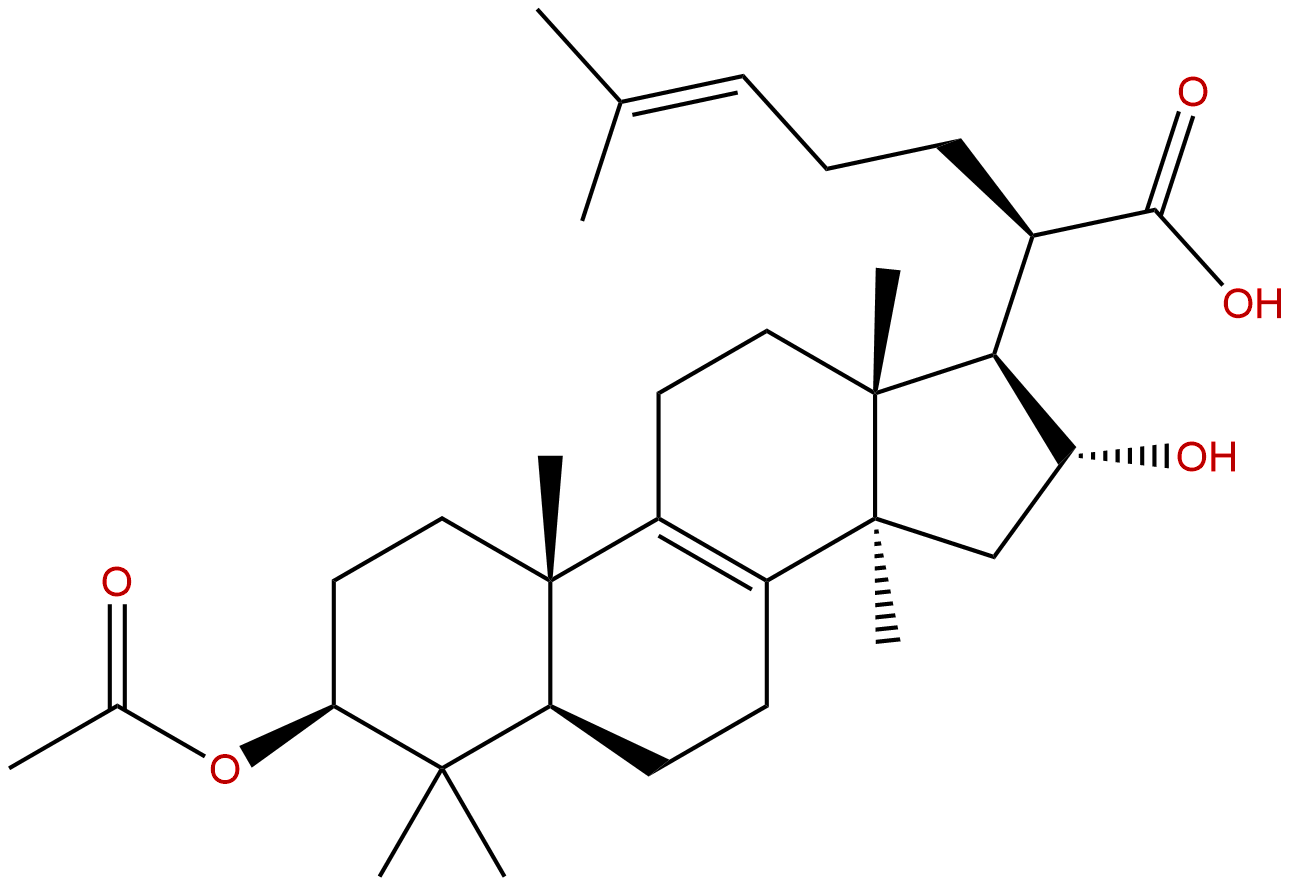
3-O-Acetyl-16 α - Hydroxy-3-Hydroxy-2-Hydroxy-2-Hydroxy-3-Hydroxy-3-Hydroxy-3-Hydroxy-3-Hydroxy-3-Hydroxy-3-Hydroxy-3-Hydroxy-3-Hydroxy-3-Hydroxy-3-Hydroxy-3-Hydroxy-3-Hydroxy-3-Hydroxy-3-Hydroxy-3-Hydroxy-3-Hydroxy-3-Hydroxy-3-Hydroxy-3-Hydroxy-3-Hydroxy-3-Hydroxy-3-Hydroxy-3-Hydroxy-3-Hydroxy-3-Hydroxy-3-Hydroxy-3-Hydroxy-3-Hydroxy-3-Hydroxy-3-Hydroxy-3-Hydroxy
1. Overview
3-O-Acetyl-16 α - Hydroxytrametinic acid (CAS number: 168293-13-8) is a natural tetracyclic triterpenoid isolated from the traditional medicinal fungus Wolfiporia extensa. As one of the important active ingredients in Poria cocos, this compound has attracted attention in the field of natural product pharmacy research in recent years due to its potential anti hyperuricemia activity. Hyperuricemia is a metabolic disorder caused by purine metabolism disorders leading to abnormally elevated blood uric acid levels. It is an important risk factor for gout, uric acid nephropathy, and cardiovascular disease. At present, commonly used clinical drugs such as allopurinol and febuxostat have certain side effects or contraindications. Therefore, searching for highly effective and low toxicity new uric acid lowering drugs from natural products has become a research hotspot. This compound exhibits the potential to regulate uric acid levels through multiple pathways by acting on multiple targets such as uric acid transporters and metabolic enzymes, providing a new candidate molecule for the treatment of hyperuricemia. This article will systematically elaborate on its chemical structure, plant origin, pharmacological activity, mechanism of action, and medicinal properties.
2. Chemical structure and physicochemical properties
The molecular formula of 3-O-acetyl-16 α - hydroxy-hydroabietic acid is C32H50O5, with a molecular weight of 514.7470 g/mol, and it belongs to the tetracyclic triterpenoid class. Its structural feature is the introduction of an acetoxy group (- OCOCH3) at the C-3 position of the hydrogenated ferulic acid skeleton, and the presence of an alpha configured hydroxyl group (- OH) at the C-16 position. This structural modification may affect its polarity, solubility, and interaction with target proteins. From SMILES string (CC (=O) O [C @ H] 1CC [C @] 2 (C) C3=C (CC [C @ H] 2C1 (C) C) [C @] 1 (C) C)C@@HC@H[C @ @] 1 (C) CC3) suggests that the molecule has multiple chiral centers and complex stereochemistry, which may have important implications for its biological activity and selectivity.
In terms of physicochemical properties, the calculated lipid water partition coefficient LogP is 6.0873 and LogD is 4.1671, indicating that the compound has high lipophilicity, which is consistent with its triterpenoid skeleton structure. Its topological polar surface area (TPSA) is 83.83 Å ², which is relatively moderate. The predicted value of water solubility is relatively low (about 0.0059 mg/mL), indicating poor solubility in water, which may pose challenges in formulation development. The predicted permeability of Caco-2 cells is 1.4662 (usually measured in x 10 ⁻⁶ cm/s), indicating moderate permeability. The blood-brain barrier (BBB) penetration prediction is "low", indicating that it is not easily able to enter the central nervous system, which may reduce the risk of central side effects for uric acid lowering drugs that mainly act on the peripheral system (such as the kidneys and liver). The predicted plasma protein binding rate (PPB) is as high as 90.57%, indicating that most drugs bind to proteins in the blood, which may affect their free concentration and pharmacokinetics.
3. Plant sources and traditional applications
This compound is mainly derived from the fungus Wolfiporia extensa (also known as Poria cocos) in the family Poriaceae. Poria cocos is a saprophytic fungus that grows at the roots of pine trees. Its dried mycelium is a famous traditional Chinese medicinal herb, with a medicinal history of over two thousand years in East Asian countries such as China, Japan, and South Korea. In traditional Chinese medicine theory, Poria cocos has a flat nature, a sweet and mild taste, and can regulate the meridians of the heart, lungs, spleen, and kidneys. It has the effects of promoting diuresis and dampness, strengthening the spleen and calming the heart. It is commonly used to treat conditions such as edema and oliguria, phlegm and dizziness, spleen deficiency and food deficiency, loose stools and diarrhea, restlessness, palpitations and insomnia. In the "Shennong Bencao Jing," it is classified as a top-grade herb, known for its ability to "regulate the qi flow in the chest and abdomen, cause worry, anger, shock, evil, fear, and palpitations, cause pain in the lower part of the heart, be filled with cold and heat, cough and reflux, dry mouth and tongue, and promote urination. Long term consumption can calm the soul and nourish the spirit, prevent hunger and prolong life
Modern pharmacological research has confirmed that Poria cocos contains various active ingredients, including polysaccharides, triterpenoids, sterols, etc. Among them, triterpenoids are considered as important material basis for their diuretic, anti-inflammatory, immune regulatory, anti-tumor and other activities. As a member of the triterpenoid family of Poria cocos, the isolation and structural identification of 3-O-acetyl-16 α - hydroxy-hydroabietic acid is the result of in-depth research in natural product chemistry. It links the efficacy of traditional Chinese medicine with modern molecular pharmacology, providing a chemical entity basis for explaining the scientific connotation of Poria cocos' "promoting water and dampness" (which may be related to promoting uric acid excretion).
4. Pharmacological activity and mechanism of action
Existing target prediction information suggests that 3-O-acetyl-16 α - hydroxy-hydroabietic acid may act on multiple protein targets related to uric acid metabolism and transport, including ABCG2, XDH, SLC22A12 (URAT1), and PDZK1. These targets are closely related to the pathophysiological process of hyperuricemia, suggesting that the compound may exert its uric acid lowering effect through multiple targets and pathways.
1. Effects on uric acid transporters:
- ABCG2 (breast cancer resistant protein): This is an important efflux transporter protein that is highly expressed in the intestine, kidneys, and liver. ABCG2 is responsible for secreting uric acid from the epithelial cells of the proximal tubules of the kidney into the urine. The loss or weakening of ABCG2 function is an important genetic factor leading to hyperuricemia and gout. If the compound can upregulate or enhance the transport function of ABCG2, it will promote the excretion of uric acid through the kidneys.
- URAT1 (uric acid transporter 1, encoded by SLC22A12 gene): The key uric acid reabsorption transporter located on the apical membrane of renal proximal tubular epithelial cells. It is responsible for reabsorbing approximately 90% of uric acid filtered into the original urine back into the bloodstream. The current clinical use of benzbromarone promotes uric acid excretion by inhibiting URAT1. If this compound is used as a URAT1 inhibitor, it will block the reabsorption of uric acid, thereby reducing blood uric acid levels.
- PDZK1: This is a scaffold protein that interacts with various transporters (including URAT1, ABCG2, etc.) in renal proximal tubular cells, regulating their localization, stability, and function on the cell membrane. Regulating PDZK1 may indirectly affect the activity of URAT1 and ABCG2, thereby regulating the net weight absorption or secretion of uric acid.
2. Effects on uricase:
- XDH (xanthine oxidoreductase): This is a key enzyme in the uric acid production pathway, which can convert hypoxanthine to xanthine and then xanthine to uric acid. The first-line clinical drug allopurinol and its active metabolites are inhibitors of XDH. If the compound can inhibit the activity of XDH, it will reduce the production of uric acid from the source.
Integrated analysis of mechanism of action:
Based on the above targets, 3-O-acetyl-16 α - hydroxy-hydroabietic acid may have the potential to have a "dual pronged" approach: on the one hand, it can reduce the endogenous synthesis of uric acid by inhibiting XDH; On the other hand, by inhibiting renal URAT1 (which may co regulate PDZK1), uric acid reabsorption can be reduced, while promoting ABCG2 mediated uric acid secretion, thereby significantly increasing renal net excretion of uric acid. This multi-target mode of action may have advantages over single mechanism drugs (such as only inhibiting generation or only promoting excretion), and is expected to be effective in a wider patient population, potentially reducing the decline in efficacy caused by compensatory mechanisms.
Association with hyperuricemia:
The core pathological process of hyperuricemia is excessive production and/or reduced excretion of uric acid. The predicted targets of this compound cover these two core links, so theoretically it has therapeutic potential for primary hyperuricemia. In addition, its source, Poria cocos, is traditionally used for "promoting water" and has similarities with the modern concept of "promoting uric acid excretion", reflecting the integration of traditional experience and modern science.
5. Evaluation of drug properties
Drug efficacy refers to the potential of a compound to develop into an oral medication. We evaluated the compound using Lipinski's Rule of Five (RO5) and other key parameters:
- Molecular weight (MW): 514.75 g/mol, Slightly higher than the recommended upper limit of 500 Da for RO5. This may be a slight negative factor for oral absorption, but many successful drugs (especially natural products and their derivatives) have a molecular weight exceeding 500, so it is not an absolute barrier.
- Lipid water partition coefficient (LogP): 6.09, significantly higher than the recommended upper limit of 5.0 for RO5. A high LogP value indicates that the compound has excessive lipid solubility, which may lead to poor water solubility (predicted water solubility is only 0.0059 mg/mL), low oral bioavailability, easy distribution and accumulation in adipose tissue in the body, and may increase metabolic burden. This is one of the main challenges facing the development of drug properties for this compound.
- Number of hydrogen bond donors (HBDs): From the structural formula, it can be inferred that the molecule contains carboxyl (- COOH) and hydroxyl (- OH) groups, and the number of HBDs may be 2 or 3, which meets the requirement of RO5 (≤ 5).
- Number of hydrogen bond acceptors (HBAs): The molecule contains multiple carbonyl and ether oxygen groups, and the number of HBA may be around 5, which meets the requirement of RO5 (≤ 10).
- Topological Polarity Surface Area (TPSA): 83.83 Å ², within an acceptable range (usually oral medication with a TPSA<140 Å ² is beneficial for absorption).
Other key parameter analysis:
- Permeability and absorption: The permeability of Caco-2 (1.4662) and the predicted effective permeability (Peff: 3.4655) indicate that it has moderate intestinal permeability potential, but its extremely high LogP and low water solubility may limit its dissolution and absorption in actual gastrointestinal environments.
- Distribution and Metabolism: A very high plasma protein binding rate (>90%) can affect its tissue distribution and free drug concentration. Low blood-brain barrier penetration is an advantage for its indications. The absence of hERG inhibition prediction reduces the risk of causing QT interval prolongation in the heart.
- Toxicity: Ames test predicted negative (0.0), indicating no mutagenicity. No chromosomal aberration and phototoxicity prediction. However, it is worth noting that there is a positive prediction of respiratory sensitization (Resp_Sens: Yes), which requires close attention in preclinical and clinical studies. There is no impact on the prediction of serum biomarkers (ALT, AST, GGT, ALK), indicating a low potential risk of liver toxicity.
Comprehensive Assessment:
This compound has great potential in the mechanism of target action, which is in line with the modern concept of multi-target therapy for complex metabolic diseases. However, there are obvious shortcomings in its medicinal properties, mainly Excessive lipophilicity (LogP>6) and extremely low water solubility This is likely to result in poor oral bioavailability. In addition, with a slightly higher molecular weight, there is a warning of respiratory sensitization. Therefore, using it as lead compound Optimizing the structure is a more feasible path. Optimization directions can include: reducing LogP and improving water solubility by introducing polar groups or making prodrugs (such as ester prodrugs); Conduct structure-activity relationship studies to simplify the structure and reduce molecular weight while maintaining the core pharmacophore (key functional groups that may bind to multiple targets).
6. Research Status and Application Prospects
At present, research on 3-O-acetyl-16 α - hydroxy-hydroabietic acid is still in its early stages. The existing information mainly focuses on the chemical isolation and identification of plant sources, as well as target analysis based on computational prediction. In depth analysis of the compound itself in vitro and in vivo Systematic data such as pharmacological validation, detailed structure-activity relationship studies, pharmacokinetic properties, and toxicological evaluations are still lacking.
Research Status:
1. Chemical research: The isolation, purification, and structural identification (including stereochemistry) of Poria cocos have been completed, providing a material basis for its subsequent research.
2. Bioinformatics prediction: The potential targets (ABCG2, XDH, URAT1, etc.) and related diseases (hyperuricemia) were predicted through computational models, providing direction for experimental research.
3. Preliminary evaluation of drug properties: As mentioned above, by calculating ADMET (absorption, distribution, metabolism, excretion, toxicity) parameters, we have gained a preliminary understanding of its advantages and disadvantages.
Future research directions and application prospects:
1. Experimental verification of pharmacological activity: The primary task is to conduct experimental research to confirm whether it has practical effects in inhibiting XDH, regulating URAT1/ABCG2 function, and reducing uric acid levels in cell models (such as cell lines overexpressing URAT1 or ABCG2) and animal models (such as potassium oxonate induced hyperuricemia mouse or rat models).
2. In depth mechanism research: Clarify its direct interaction mode with various target proteins (such as whether it is a competitive inhibitor, allosteric modulator, or expression modulator), and clarify the synergistic or primary secondary relationship between multiple targets.
3. Structural optimization and lead compound development: Systematic medicinal chemical modification is carried out to address its drug defects. For example, derivatization of the acetyl group at C-3 position, hydroxyl group at C-16 position, and carboxyl group at C-28 position is carried out to synthesize a series of analogues, evaluate their changes in activity, solubility, and permeability, and search for candidate molecules with better activity and drug properties.
4. Explore other potential activities: Based on the extensive traditional uses of Poria cocos and the diverse biological activities of its triterpenoid components, this compound may also have potential for anti-inflammatory, immune regulation, liver protection, or anti-tumor effects, and is worthy of further research.
5. Application of formulation technology: Even for the original compound, modern formulation techniques such as nanocrystals, solid dispersions, liposomes, cyclodextrin inclusion complexes, etc. can be explored to improve its extremely low water solubility and dissolution rate, thereby increasing its bioavailability.
Application prospects:
If subsequent experiments can confirm its strong multi-target anti hyperuricemia activity and overcome its physical and chemical property defects through structural optimization or formulation methods, 3-O-acetyl-16 α - hydroxy-hydroabietic acid is expected to develop into a new uric acid lowering drug derived from traditional Chinese medicine with a novel mechanism of action. It not only provides new treatment options for patients with hyperuricemia and gout, but also serves as a typical case of modernization of traditional Chinese medicine and the new drug development model of "originating from nature and surpassing nature". The research process will also deepen our understanding of the material basis of Poria cocos pharmacological effects and the scientific connotation of traditional efficacy.
Summary: 3-O-Acetyl-16 α - Hydroxy-3-Hydroxy-2-Hydroxy-2-Hydroxy-2-Hydroxy-3-Hydroxy-3-Hydroxy-3-Hydroxy-3-Hydroxy-3-Hydroxy-3-Hydroxy-3-Hydroxy-3-Hydroxy-3-Hydroxy-3-Hydroxy-3-Hydroxy-3-Hydroxy-3-Hydroxy-3-Hydroxy-3-Hydroxy-3-Hydroxy-3-Hydroxy-3-Hydroxy-3-Hydroxy-3-Hydroxy-3-Hydroxy-3-Hydroxy-3-Hydroxy-3-Hydroxy-3-Hydroxy-3-Hydroxy-3-Hydroxy-3-Hydroxy-3-Hydroxy-3-Hydroxy-3-Hydroxy-3-Hydroxy-3-Hydroxy-3-Hydroxy-3-Hydroxy-3-Hydroxy-3-Hydroxy-3-. Its unique chemical structure plays a crucial role in the production and excretion of uric acid, demonstrating promising mechanistic prospects. However, its inherent high lipophilicity and low water solubility are currently the main obstacles to drug development. Future research needs to focus on optimizing drug chemistry and pharmaceutical strategies based on experimental verification of its efficacy, in order to transform it from a potential natural product into a truly candidate drug for clinical treatment.