16 α - Hydroxy Songlic Acid: A Potential Natural Molecule for Anti Rheumatoid Arthritis in Poria cocos
1. Overview
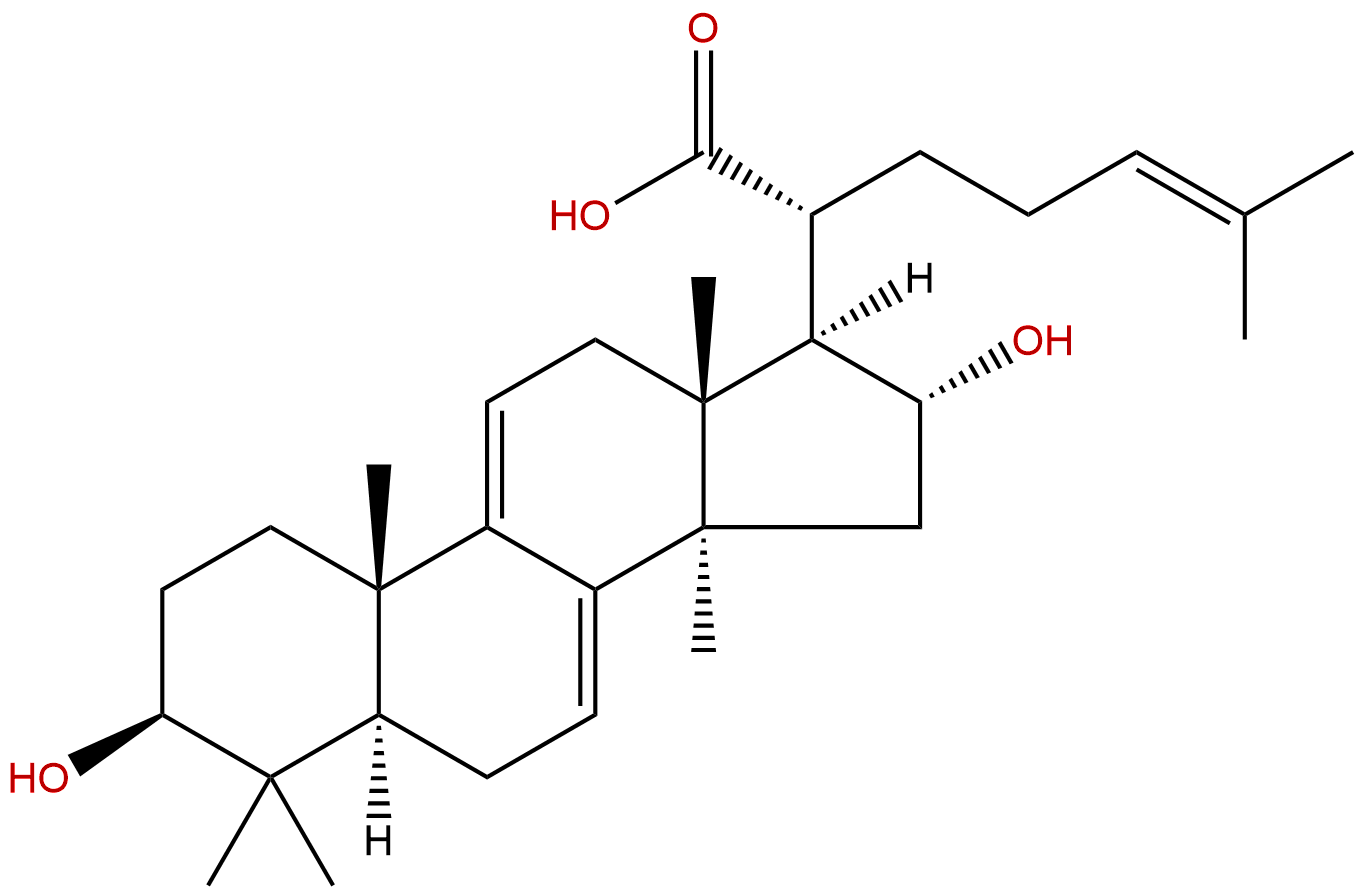
16 α - Hydroxydehydrotrametinoic acid (16 α - HDTA) is a traditional medicinal fungus derived from Poria cocos(Wolfiporia extensa)The lanostane type triterpenoids isolated from the middle. Its CAS number is 176390-66-2, molecular formula is C30H46O4, and molecular weight is 470.69 g/mol. As one of the important active secondary metabolites in Poria cocos, this compound has received widespread attention in the field of natural product pharmacy research in recent years due to its significant anti-inflammatory activity. Especially in the research on autoimmune inflammatory diseases such as rheumatoid arthritis, 16 α - hydroxypine acid has shown the potential to exert its effects by regulating key inflammatory factors such as TNF, IL-6, IL-1 β, and the NF - κ B signaling pathway, suggesting that it may become a source of novel anti-inflammatory drugs or precursor compounds. This article will provide a systematic professional popularization of this natural product from the aspects of its chemical structure, plant origin, pharmacological mechanism, medicinal evaluation, and research prospects.
2. Chemical structure and physicochemical properties
16 α - Hydroxypine acid belongs to the tetracyclic triterpenoid class, specifically the lanostane type triterpenoid. Its SMILES string (CC (C)=CCC)C@@H[C@H]1C@HC[C@@]2(C)C3=CC[C@H]4C(C)(C)C@@H CC [C @] 4 (C) C3=CC [C @] 12C accurately describes its stereochemical structure, indicating the presence of multiple chiral centers in the molecule, which are crucial for its biological activity. The carboxyl group (- COOH) and two hydroxyl groups (- OH) in the molecule are its main functional groups, determining its polarity and potential molecular interactions.
According to the provided pharmacological parameters, the logarithm of the lipid water partition coefficient (LogP) is 5.70 and the LogD is 3.81. The high LogP value indicates that the compound has significant lipophilicity, which is consistent with its triterpenoid skeleton structure. However, excessively high LogP (>5) may have adverse effects on water solubility. Its topological polar surface area (TPSA) is 77.76 Å ², reflecting the degree to which polar atoms (oxygen atoms) in the molecule are exposed to the solvent. The water solubility is 0.0133 mg/mL, which is a difficult to dissolve compound, posing a challenge for its formulation development.
The molecular weight (MW) is 470.69 g/mol, slightly higher than the ideal range for oral drugs (<500 g/mol). Overall, its physicochemical properties exhibit typical natural triterpenoid acid characteristics: medium to large molecular weight, strong lipophilicity, and low water solubility, which are key aspects that need to be focused on in subsequent pharmaceutical chemistry optimization.
3. Plant sources and traditional applications
The main source of 16 α - hydroxy Songlic acid is Poria cocos, a fungus in the family Poriaceae(Wolfiporia extensa, formerly known as Poria cocos). Poria cocos is a type of fungus that grows on the roots of pine trees. It has a long history of medicinal use in East Asian countries such as China, Japan, and South Korea, and is included in the Chinese Pharmacopoeia.
In traditional Chinese medicine theory, Poria cocos has a sweet, light, and flat nature, and can be found in the heart, lungs, spleen, and kidney meridians. It has the effects of promoting diuresis, moistening the spleen, and calming the heart. Commonly used to treat conditions such as edema, oliguria, phlegm retention and dizziness, spleen deficiency and low appetite, loose stools and diarrhea, restlessness, palpitations and insomnia. In classic prescriptions such as "Sijunzi Tang", "Wuling San", and "Linggui Zhugan Tang", Poria cocos is an indispensable royal medicine or imperial medicine. Modern pharmacological research has confirmed that the diuretic, immunomodulatory, anti-inflammatory, anti-tumor, sedative and other effects of Poria cocos are related to its various active ingredients, among which triterpenoids (such as Poria cocos acid, Poria cocos acid, dehydroPoria cocos acid and its derivatives) are considered one of its most important pharmacological substances. As a member of the triterpenoid family of Poria cocos, the discovery and activity research of 16 α - hydroxypine acid provide new molecular basis for explaining the modern scientific connotation of Poria cocos' "spleen strengthening and dampness removing" effects, especially its anti-inflammatory and immune regulatory effects.
4. Pharmacological activity and mechanism of action
The existing research data strongly suggests that the core pharmacological activity of 16 α - hydroxy Songlic acid lies in its Anti inflammatory and immune regulatory effects Its mechanism of action is closely related to regulating multiple key inflammation related targets. According to database information, the potential targets of this compound include TNF, PTGS2 (COX-2), NFKB1 (NF - κ B p50), IL6, and IL1B. These targets do not exist in isolation, but form a closely related inflammatory signaling network, especially in relation to Rheumatoid arthritis The pathological process is highly correlated.
(1) Analysis of core inflammatory targets
- TNF (tumor necrosis factor - α): is a core pro-inflammatory cytokine in the pathology of rheumatoid arthritis, produced by activated macrophages, T cells, and other cells. It can promote synovial cell proliferation, osteoclast activation, and induce the production of other inflammatory factors such as IL-6 and IL-1 β. Biological agents targeting TNF, such as Infliximab and Adalimumab, have become important drugs for treating rheumatoid arthritis. If 16 α - hydroxyproline can inhibit the production or signaling of TNF, it will directly intervene in the core link of the disease.
- IL-6 (interleukin-6)Another key pro-inflammatory factor involved in B cell activation, antibody production, acute phase protein synthesis, and osteoclast differentiation. Tozumab (IL-6 receptor antagonist) is an effective drug for treating rheumatoid arthritis.
- IL-1 β (interleukin-1 β)Mainly produced by activated macrophages, it is a strong pro-inflammatory factor that can induce prostaglandin synthesis, cartilage degradation, and bone erosion.
- PTGS2 (cyclooxygenase-2)Inducible cyclooxygenase, highly expressed at the site of inflammation, is responsible for catalyzing the production of inflammatory mediators such as prostaglandin E2 from arachidonic acid, causing pain, fever, and vasodilation. Non steroidal anti-inflammatory drugs (NSAIDs) mainly exert anti-inflammatory and analgesic effects by inhibiting COX-2.
- NF - κ B (nuclear factor kappa B)It is a key transcription factor that regulates the transcription of all inflammatory factors (TNF, IL-6, IL-1 β, COX-2) genes mentioned above. In the resting state, NF - κ B (usually composed of p50 and p65 subunits) binds to the inhibitory protein I κ B and exists in the cytoplasm. When cells are stimulated by TNF, IL-1, etc., I κ B is phosphorylated and degraded, NF - κ B enters the nucleus, and initiates the expression of a large number of inflammation related genes. Therefore, NF - κ B is the "master switch" in the inflammatory signaling pathway.
(2) Hypothesis of mechanism of action
Based on its target information, the possible mechanism of action of 16 α - hydroxysongling acid can be constructed as follows: this compound may inhibit the activity of I κ B kinase (IKK) or interfere with the nuclear translocation of NF - κ B directly or indirectly, thereby Inhibition of excessive activation of NF - κ B signaling pathway The downregulation of NF - κ B activity leads to a decrease in gene transcription of a series of downstream pro-inflammatory factors (TNF, IL-6, IL-1 β) and inflammatory mediator synthase (COX-2), ultimately exerting a synergistic anti-inflammatory effect at multiple levels:
-Reduce the release of pro-inflammatory cytokines and lower systemic and joint local inflammation levels.
-Inhibit COX-2, reduce the production of pain inducing prostaglandins, and alleviate pain.
-By inhibiting the production of osteoclast related factors, joint bone erosion may be slowed down.
This multi-target and networked characteristic of action is matched with the complex pathogenesis of rheumatoid arthritis (involving multiple links such as innate immunity, acquired immunity, synovial hyperplasia, bone destruction, etc.), and may have better comprehensive efficacy or lower resistance risk than single target drugs. Of course, further cell and animal experiments are needed to verify the above mechanism hypotheses, especially using techniques such as gene knockout, reporter genes, and protein interactions, to clarify their direct targets and precise signal perturbation nodes.
5. Evaluation of drug properties
Based on the provided pharmacological parameters and in combination with the classic "Rule of Five" (Ro5) and modern drug design concepts, we have conducted a preliminary evaluation of the potential of 16 α - hydroxypine acid as a drug:
(1) Lipinski's Five Rules Compliance Analysis:
- Molecular weight (MW):470.69 g/mol > 500, violate Rule 1 (MW<500).
- Lipid water partition coefficient (LogP):5.70 > 5, violate Rule 2 (LogP<5).
- Number of hydrogen bond donors (HBD)From the structural inference, carboxyl and two hydroxyl groups together provide approximately 3 HBDs, which conforms to rule three (HBD<5).
- Number of hydrogen bond acceptors (HBA)The molecular formula C30H46O4 contains 4 oxygen atoms and 4 HBAs, which comply with rule four (HBA<10).
- Number of rotatable keys The molecular structure has strong rigidity, and the number of rotatable bonds may be moderate.
Conclusion: This compound violates two of Lipinski's five rules (MW and LogP exceeding the standard). Ro5 is mainly used to predict the oral absorption potential of compounds, and two violations suggest its Oral bioavailability may be low This is consistent with the common characteristics of many natural triterpenoids.
(2) Interpretation of other key pharmacological parameters:
- Solubility and permeability The main drawback is its extremely low water solubility (0.0133 mg/mL), which severely limits its absorption. However, its Caco-2 cell permeability parameters (6.07) and effective permeability coefficient (Peff: 2.77) showed Higher intestinal permeability potential The characteristic of "low solubility high permeability" (BCS class II or IV) means that if its dissolution rate can be significantly improved through formulation techniques such as micronization, solid dispersion, liposomes, cyclodextrin inclusion, etc., it may be possible to improve its oral absorption.
- Distribution and Metabolism The plasma protein binding rate (PPB) is as high as 90.73%, indicating a low concentration of free drugs in the blood, which may affect the efficacy of the drug, but may also prolong the half-life. The blood-brain barrier (BBB) has low penetration, which is unfavorable for treating central nervous system diseases, but for rheumatoid arthritis, which mainly acts on peripheral joints, it may reduce central side effects, which is an advantageous characteristic.
- Preliminary safety warning The Ames test (0.0) and chromosome aberration test results were negative, indicating no mutagenicity. HERG inhibition is' no ', indicating a lower potential risk of arrhythmia. However, the respiratory sensitization (Resp_Sens) is "yes", and the potential liver toxicity risk indicated by elevated serum AST and ALT levels requires high vigilance Safety red light Strict respiratory toxicity and liver toxicity assessments must be conducted in subsequent development.
Comprehensive Assessment As a natural lead compound, 16 α - hydroxySonglingxin acid has a clear and highly disease related multi-target anti-inflammatory activity, which is its greatest advantage. But there are obvious shortcomings in its medicinal properties, mainly Poor solubility, poor oral absorption prediction, and potential safety risks It is not suitable for direct drug development, but Highly valuable as a lead compound Future directions for pharmaceutical chemistry optimization may include: introducing polar groups through structural modification to reduce LogP and improve solubility; Preparation of prodrug to improve absorption; Or retain its core pharmacophore, simplify the skeleton or synthesize similar compounds, and optimize drug properties while maintaining activity.
6. Research Status and Application Prospects
At present, there is relatively limited publicly available research literature on 16 α - hydroxy Songlic acid, and its activity data mostly comes from natural product screening databases and preliminary pharmacological research reports. This indicates that the compound is still in Early detection and validation stage Most studies focus on the characterization of its anti-inflammatory activity, while there are still many gaps that need to be filled in in-depth target validation, mechanism of action elucidation, structure-activity relationship research, and systematic preclinical pharmacodynamic and toxicological evaluation.
Future research directions may focus on the following areas:
1. Deep exploration of mechanisms Using techniques such as molecular docking, surface plasmon resonance (SPR), and cellular thermal shift analysis (CETSA), verify its direct interaction with key proteins in the NF - κ B pathway (such as IKK, p65, p50) or other targets. Systematically evaluate the pharmacological effects and their impact on the expression of target proteins/genes in animal models such as TNF/IL-1 β - induced cellular inflammation models (such as macrophages, synovial fibroblasts) and collagen induced arthritis (CIA).
2. Pharmaceutical Chemistry Optimization Using it as the parent nucleus, conduct systematic structural modification and structure-activity relationship research. For example, exploring carboxylation, hydroxylation or etherification, introducing amino or sulfonic acid groups, etc., aims to improve water solubility and pharmacokinetic properties, while monitoring changes in anti-inflammatory activity and searching for derivatives with better activity and drug properties.
3. Formulation technology research and development Develop a new drug delivery system based on its low solubility characteristics. Modern formulation technologies such as nanocrystals, self microemulsion delivery systems, and phospholipid complexes are expected to significantly improve their bioavailability, which is a key step in promoting their clinical application.
4. Security system evaluation Conduct specialized and in-depth preclinical safety pharmacological and toxicological studies on the respiratory sensitization and hepatotoxicity of preliminary warnings, clarify the toxic dose, mechanism, and reversibility, and provide a basis for subsequent development decisions.
Application Prospects If breakthroughs can be made in the above research, 16 α - hydroxysongling acid and its optimized derivatives are expected to be developed into new small molecule drugs for the treatment of other autoimmune inflammatory diseases such as rheumatoid arthritis and ankylosing spondylitis. Its multi-target mechanism of action may bring more comprehensive therapeutic effects and may be effective for patients who develop resistance to existing biologics or chemical drugs. In addition, it can also be used as a raw material for functional foods or health supplements to alleviate mild inflammation and regulate immunity. More importantly, as an active molecule discovered from the traditional Chinese medicine Poria cocos, it is a typical case of "modernization of traditional Chinese medicine" research, providing scientific clues and material basis for finding modern disease treatment plans from the treasure trove of traditional medicine.
In summary, 16 α - hydroxy Songlic acid is a bridging molecule that connects traditional medicinal wisdom with modern inflammatory disease treatment. Although the road ahead is full of challenges, its unique chemical structure and promising pharmacological activity continue to make it attractive in the field of natural product drug development, and it is worth more efforts from researchers to explore and develop.