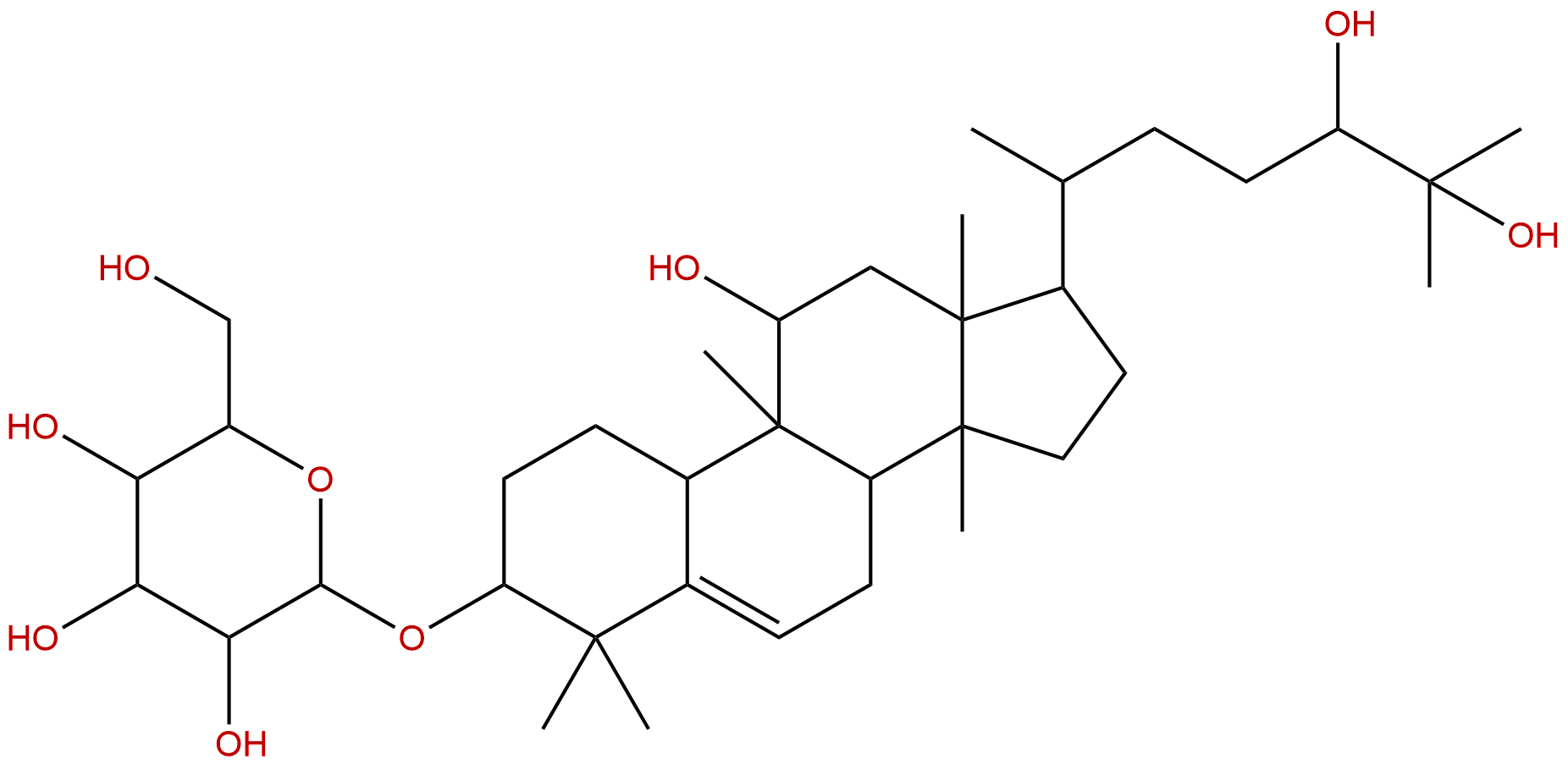


Product name: Mogroside Ie1
Synonym name: Mogroside IE1
Catalogue No.: BP3500
Cas No.: 88901-39-7
Formula: C36H62O9
Mol Weight: 638.883
Botanical Source: Momordica grosvenorii and Siraitia siamensis; Luohanguo
Physical Description:
Type of Compound: Triterpenoids
Purity: 95%~99%
Analysis Method: HPLC-DAD or/and HPLC-ELSD
Identification Method: Mass, NMR
Packing: Brown vial or HDPE plastic bottle
The product could be supplied from milligrams to grams. Inquire for bulk scale.
We provide solution to improve the water-solubility of compounds, thereby facilitating the variety of activity tests and clinic uses.
For Reference Standard and R&D, Not for Human Use Directly.
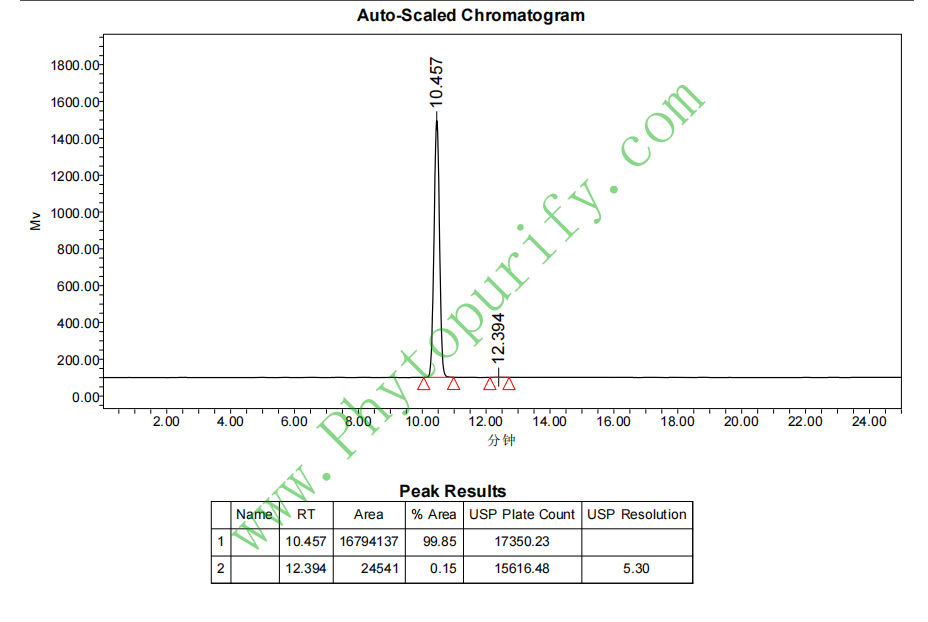
HPLC of Mogroside Ie1
Storage conditions:Short-term storage at 2~8℃, long-term storage at -20 ~ -80℃
160.0700
3.7255
3.7249
.0199
.6553
.9589
Low
78.1788
5.5780
No
No
No
No
No
No
0.0
Yes
No
No
No
Arhat Ie1 (Mogaside Ie1, CAS No. 88901-39-7) is a kind of fruit derived from the traditional medicinal plant Siraitia grosvenorii(Siraitia grosvenorii)Extract and isolate cucurbitane type triterpenoid saponins. As one of the important members of a series of Arhat grosvenorii glycosides, it is not only the core substance that endows Siraitia grosvenorii with high sweetness characteristics, but also the hot spot in the field of natural product pharmacy and functional food research due to its potential biological activity. Arhat derivatives, especially Siraitin V, have been widely used worldwide as a natural, zero calorie, high sweetness sweetener. However, as its structural analog, the unique chemical structure of Arhat fruit glycoside Ie1 endows it with biological activity that may surpass the simple sweet taste function, especially in the regulation of sugar metabolism and anti inflammation. The existing research has preliminarily revealed that Arhat fruit glycosides may play a beneficial role by activating AMPK pathway, regulating the expression of inflammatory factors and other mechanisms. This paper aims to systematically sort out the chemical characteristics, plant origin, pharmacological mechanism, pharmaceutical evaluation and research prospects of Arhat fruit glycoside Ie1 from the perspective of professional pharmacy, and provide a comprehensive popular science data based on existing data for researchers in related fields.
The molecular formula of Arhat Ie1 is C36H62O9, and the molecular weight is 638.8830 g/mol. Its structural parent nucleus is mogrol, which belongs to tetracyclic triterpenoids. Specifically, Arhat Ie1 is a monosaccharide derivative formed after the hydrogen on the 3-hydroxy of Siraitol is replaced by a β - D-glucosyl. Its SMILES string (CC (CCC (O) C (C) (C) O) C1CCC2 (C) C3CC=C4C (CCC (OC5OC (CO) C (O) C (O) C5O) C4 (C) C) C3 (C) C (O) CC12C) accurately describes its atomic connection order and stereochemistry.
From the analysis of its pharmacological parameters, its physicochemical properties show that its topological polar surface area (TPSA) is 160.070 Å ², which is relatively high and mainly attributed to the presence of multiple hydroxyl groups and oxygen atoms on the sugar ring in the molecule, indicating its strong hydrophilicity and ability to form hydrogen bonds. The calculated value of its lipid water partition coefficient (LogP) is 3.7255, indicating that the molecule as a whole exhibits moderate to high lipophilicity. By combining its TPSA and LogP values, it can be predicted that its distribution in organisms may have some tissue selectivity.
The water solubility parameter (water_solubility) is 0.0199 (the unit is usually mg/mL or mol/L, depending on the database definition), and the value is low, indicating that the solubility of Arhat fruit glycoside Ie1 in water is limited, which is consistent with its large molecular weight and partial lipophilic structure. The Caco-2 cell permeability (Caco2_permeability) value is 0.9589, which is generally considered to have moderate permeability if it is greater than 0.5, indicating that it may have some intestinal absorption potential. The effective permeability (Peff) is 0.6553 cm/s × 10 ⁻⁴, further supporting its possible absorption by the intestine through passive diffusion and other means. The plasma protein binding rate (PPB) is 78.18%, which is a moderately high level. This means that most of it binds to plasma proteins in the bloodstream, which may affect its free drug concentration and tissue distribution. The blood-brain barrier penetrability (BBB-permeability) is evaluated as "low", which is consistent with its larger molecular weight and higher TPSA, indicating that it is not easily able to enter the central nervous system. This may be an advantage for drugs aimed at peripheral targets and can reduce the risk of central side effects.
The only known natural source of Arhat Ie1 is Siraitia grosvenorii, a plant of Cucurbitaceae(Siraitia grosvenorii)Also known as "immortal fruit" or "longevity fruit". Siraitia grosvenorii is native to the mountainous areas of Guangxi, Guangdong, Hunan and other places in China, with a medicinal history of hundreds of years. In the traditional Chinese medicine theory, Momordica grosvenorii is cool in nature, sweet in taste, and belongs to the lung and large intestine meridians. It has the effects of clearing heat and moistening the lung, promoting pharynx and opening sound, and smoothing the intestines and catharsis. Commonly used for treating symptoms such as lung heat, dry cough, sore throat, and loss of voice, as well as intestinal dryness and constipation. Its dried fruit is often used for soaking in water for drinking or as a medicinal formula.
Modern analytical chemistry reveals that the sweetness and some pharmacological activities of momordica grosvenorii are mainly attributed to the rich Arhat fruit glycosides in its fruits, including Arhat fruit glycosides IIe, IIIe, IV, V and Ie1 described in this article. The sweetness of these ingredients can reach tens to hundreds of times that of sucrose, and they produce almost no heat and do not participate in human metabolism. Based on this characteristic, siraitia grosvenorii extract (mainly standardized as siraitin V) has been approved as a natural sweetener for food and beverage industry in China, Japan, the United States and other countries and regions since the 1990s, providing safe sugar alternatives for diabetes patients and weight control people. From the traditional cough relieving and lung moistening herbs to the star raw materials of modern natural sweeteners, the application value of Momordica grosvenorii has been expanded by leaps and bounds, and the in-depth research on its specific active ingredients, such as Arhat grosvenorii Ie1, is revealing more potential health benefits.
The database information shows that Arhat fruit glycoside Ie1 is associated with five key targets: GCK (glucokinase), PPARG (peroxisome proliferator activated receptor γ), IRS1 (insulin receptor substrate 1), SLC2A4 (glucose transporter 4, GLUT4) and INS (insulin). These targets are highly focused on insulin signaling pathway and glucose metabolism regulation network, which strongly point to the core pharmacological activity direction of "anti diabetes". Based on existing knowledge, explain the possible mechanisms of action as follows:
1. Improve insulin sensitivity and signal transduction:
* PPARG excitatory effect PPAR γ is a member of the nuclear receptor superfamily and plays a central role in adipocyte differentiation, lipid metabolism, and insulin sensitivity regulation. Thiazolidinediones (TZDs) anti diabetes drugs are PPAR γ agonists. Arhat fruit glycoside Ie1 may act as a potential PPAR γ ligand to activate this receptor, promote adipocyte differentiation, increase the uptake and utilization of glucose in adipose tissue, and improve systemic insulin sensitivity.
* IRS1 signal enhancement IRS1 is a key adaptor protein downstream of insulin receptors. After insulin binds to the receptor, the activated receptor tyrosine kinase phosphorylates IRS1, thereby initiating downstream signaling cascades such as PI3K/Akt. Lohanoside Ie1 may enhance the efficiency of insulin signal transduction by positively regulating the expression or phosphorylation of IRS 1.
2. Promote glucose uptake and utilization:
* Translocation and expression of SLC2A4 (GLUT4)GLUT4 is an insulin sensitive glucose transporter protein, mainly present in muscles and adipocytes. Insulin signaling promotes the translocation of GLUT4 from intracellular vesicles to the cell membrane through the Akt pathway, accelerating glucose uptake. Arhat Ie1 may promote the translocation and expression of GLUT4 by activating AMPK (as mentioned in the description) and/or enhancing insulin signal, thus directly increasing the uptake of glucose in peripheral tissues.
* GCK (glucokinase) activation GCK is a key enzyme in liver and pancreatic beta cells. As a glucose sensor, it catalyzes the phosphorylation of glucose to glucose-6-phosphate, which is the first step in glycolysis. GCK activity regulates insulin secretion in pancreatic beta cells; In the liver, it affects glycogen synthesis and gluconeogenesis. Lohanoside Ie1 may promote the utilization of glucose in the liver and improve the function of β cells by regulating GCK activity.
3. Potential pancreatic beta cell protection and insulin secretion regulation:
* INS (insulin) association The association with INS target suggests that Arhat fruit glycoside Ie1 may directly affect the synthesis, secretion or stability of insulin. Its anti-inflammatory activity (such as the anti-inflammatory potential mentioned in the description) may help to reduce the inflammatory stress (such as islet inflammation) faced by islet beta cells in the state of diabetes, thus playing a role in protecting the function of beta cells.
4. Anti inflammatory and AMPK activation:
*Although the data on AMPK activation and anti-inflammatory effects in the description come directly from momordicoside V, considering the structural similarity, Arhat Ie1 is likely to share these mechanisms. AMPK is an energy receptor in cells, and its activation can promote glucose uptake, fatty acid oxidation, and inhibit inflammatory responses. The anti-inflammatory effect in macrophage and ear edema models shows that Arhat fruit glycoside Ie1 may alleviate chronic low-grade inflammation by inhibiting inflammatory pathways such as NF - κ B, which is an important pathological basis for the occurrence and development of insulin resistance and type 2 diabetes. The mention of "protecting against LPS induced airway inflammation" in the description also suggests its broad potential for anti-inflammatory applications.
In summary Arhat fruit glycoside Ie1 may play an anti diabetes effect through multi target and multi way synergistic action from multiple levels such as enhancing insulin sensitivity, promoting glucose transport and utilization, protecting pancreatic islet function and anti inflammation. This "multi-target" characteristic is an advantage of many natural products, but it also poses challenges for fully elucidating their mechanisms of action.
Based on the provided pharmaceutical properties parameters and in combination with the classic "Lipinski Five, Ro5", the potential of Arhat fruit glycoside Ie1 as an oral drug lead compound was preliminarily evaluated:
Conclusion: Lohanoside Ie1 is likely to violate many of the five rules of Lipinski (molecular weight, number of hydrogen bond donors, number of rotatable bonds), which indicates that its development as a traditional small molecule oral drug may face Low oral bioavailability The challenge. Its high TPSA and moderate LogP also support this judgment. Other parameters show that its Ames test, chromosomal aberration, hERG inhibition, etc. are all negative/absent, indicating its Low risk of genetic toxicity and cardiac toxicity The high plasma protein binding rate and low blood-brain barrier penetration are characteristics that need to be comprehensively considered in drug design.
However, it should be pointed out that Ro5 is not an absolute standard, especially for natural products and their derivatives. Many marketed drugs (especially biologics and certain natural product derived drugs) also go beyond these ranges. For Arhat fruit glycoside Ie1:
* Advantage Preliminary safety data is good, with clear plant sources and long-term consumption history (as a sweetener ingredient), reducing early development risks.
* challenge Oral absorption and bioavailability may be the main bottlenecks in its commercialization. Its effect may depend more on its local effect in the intestine (such as regulating gut hormones, affecting gut microbiota) or acting as a prodrug/metabolite.
* Development Strategy Future research can focus on: ① improving its solubility and permeability through structural modifications (such as prodrug preparation and glycosylation modification); ② Explore its role as Functional food additives or health food ingredients The path, rather than strictly speaking drugs, may be a faster application direction; ③ Study its active metabolites and search for active units with smaller molecular weight and better drug properties.
At present, the special research on Arhat Ie1 is still relatively limited compared with its "star" counterpart, mogroside V. Most of the studies focused on the total extract of Arhat grosvenorii or momordicin V, which confirmed its role in sweetener, anti-inflammatory, antioxidant, cough and potential hypoglycemic effects. The research on Arhat fruit glycoside Ie1 is usually part of the analysis and identification of Arhat fruit glycoside mixture, or the preliminary activity screening in the cell model in vitro.
Research status:
1. Analysis and identification: Through HPLC, LC-MS and other technologies, Arhat Ie1 has been identified as one of the characteristic components in Siraitia grosvenorii, and its content and distribution have been characterized.
2. Active exploration Based on its association with diabetes related targets and the overall anti diabetes research background of Arhat fruit glycosides, it is speculated that Arhat fruit glycoside Ie1 has similar activity, but more independent in vivo and in vitro experimental data are needed to confirm its potency, specificity and specific action pathway.
3. mechanism research The mechanism of action is still in the stage of hypothesis and preliminary verification, especially the evidence of its direct interaction with targets such as PPARG and GCK needs to be confirmed through techniques such as molecular docking, surface plasmon resonance (SPR), and reporter gene experiments.
Application Prospects:
1. As a functional sweetener ingredient: Based on the application of existing natural sweeteners, further clarify the sweetness characteristics, stability and synergistic effects of different siraitin components (including Ie1), and develop more high-quality and function oriented sweetener products.
2. Develop health foods/dietary supplements for metabolic diseases In view of its good safety and the potential of multi target regulation of glucose metabolism, Arhat fruit glycoside Ie1 or its rich extract is expected to be developed as a health food to assist in the management of blood sugar and improve insulin resistance. Standardized clinical trials are needed to verify its human efficacy.
3. As a lead compound for drugs Despite facing challenges in drug development, its unique chemical structure and clear association with bioactive targets make it a promising candidate for further research Pharmaceutical Chemistry Optimization An excellent starting point. Through reasonable structural modification, derivatives with higher bioavailability and stronger activity may be obtained, which can be used to develop new anti diabetes or anti-inflammatory drugs.
4. Expand into new therapeutic fields Its anti-inflammatory activity suggests that it may have application value in inflammatory diseases such as colitis, dermatitis, and respiratory inflammation, and is worth exploring.
In a word, as a natural product found in traditional food and medicine homologous plants, Arhat fruit glycoside Ie1 integrates safety, sweetness and potential pharmacological activity. Future research needs to work together in three directions: deepening understanding of mechanisms, overcoming barriers to drug formation, and promoting clinical translation, in order to fully tap into the valuable value of this natural gift and provide new choices for human health, especially the prevention and treatment of metabolic diseases.
