


Product name: Mogroside III A1
Synonym name:
Catalogue No.: BP0951
Cas No.: 88901-42-2
Formula: C48H82O19
Mol Weight: 963.165
Botanical Source: Siraitiae fructus
Physical Description:
Type of Compound: Triterpenoids
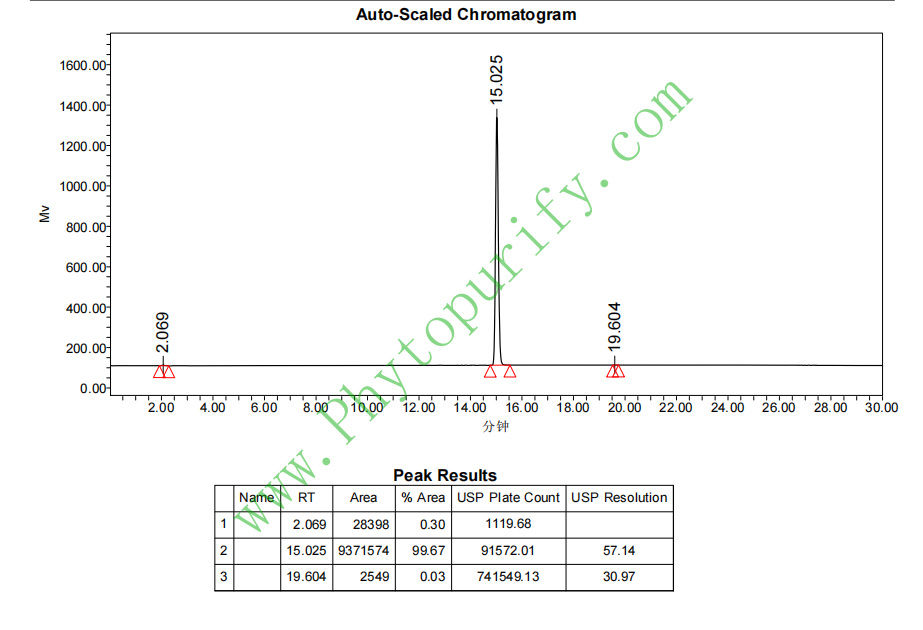
Purity: 95%~99%
Analysis Method: HPLC-DAD or/and HPLC-ELSD
Identification Method: Mass, NMR
Packing: Brown vial or HDPE plastic bottle
Storage: Store in a well closed container, protected from air and light. Put into refrigerate or freeze for long term storage.
Whenever possible, you should prepare and use solutions on the same day. However, if you need to make up stock solutions in advance, we recommend that you store the solution as aliquots in tightly sealed vials at -20℃. Generally, these will be useable for up to two weeks.
The product could be supplied from milligrams to grams
Inquire for bulk scale.
Chengdu Biopurify Phytochemicals Ltd. is a leading company in the research, development, manufacture and marketing of High Quality Phytochemicals and Extracts(especially Active Ingredients from Traditional Chinese Medicine,TCM), Natural Active Pharmaceutical Ingredients worldwide.
The main services:
A. Supply active ingredients and reference standards of TCM, from mgs to kgs scale
B. Custom extraction and purification, target Herb Active Ingredients
C. Custom synthesis and semi-synthesis for Natural Active Ingredients
D. CR(contract research), CM(contract manufacture) and PD(process development) services from lab scale, pilot scale to commercial scale(GMP is also available)
E. TCM compounds library for drug screen,more than 3000 compounds available, many of them are rare and unique.
HPLC of Mogroside III A1
Storage conditions:Short-term storage at 2~8℃, long-term storage at -20 ~ -80℃
Arhat grosvenorii III A1 (CAS No. 88901-42-2) is a kind of triterpene glycoside derived from Siraitia grosvenorii (commonly known as "bergamot"), which belongs to sweet triterpene natural product. As a non sugar sweetener, Arhat fructoside III A1 is much sweeter than sucrose, and has the characteristics of low calorie and low blood sugar load, so it has attracted much attention in the food industry and medicine field. In recent years, with the in-depth study of the pharmacological activities of natural products, Arhat fruit glycoside III A1 was found not only to have significant sweet properties, but also to show a variety of biological activities, including antioxidant, anti diabetes and anti-cancer effects, showing its potential application value in disease prevention and treatment.
Diabetes is a metabolic disease that seriously threatens human health worldwide. its pathogenesis is complex, involving multiple signaling pathways and multiple molecular targets. Arhat fruit glycoside III A1 has shown good pharmacological activity in regulating glucose metabolism, improving insulin sensitivity, anti inflammation and anti-oxidation, especially by regulating key targets such as AMPK, SGLT2, GCK, etc., showing the potential to treat diabetes. The purpose of this paper is to systematically review the chemical structure, plant origin, pharmacological activity and mechanism of action of Arhat fruit glycoside III A1, and to explore its clinical application prospects in combination with the drug evaluation and pharmacokinetic characteristics, so as to provide theoretical basis and reference for subsequent research and development.
Arhat fructoside III A1 is a triterpene glycoside, with the molecular formula of C_48H_78O_18 and molecular weight of 963.1650. Its structural core is a pentacyclic triterpene skeleton, which connects multiple glucose units through glycosidic bonds to form a highly polar glycosidic structure. The LogP value of this compound is 1.9125, indicating its moderate lipid solubility, which facilitates membrane penetration and bioavailability. The extremely high polar surface area (TPSA) is 318.3700 Å ², indicating that its molecular surface is rich in polar groups, especially hydroxyl and glycosidic bonds, which contribute to its water solubility. The water solubility value is 0.1505, suitable for dissolution in aqueous media.
From the perspective of pharmacokinetics, the blood brain barrier penetration ability of Arhat fruit glycoside III A1 is low, suggesting that its direct effect on the central nervous system is limited. The negative result of hERG channel inhibition experiment indicates a low risk of cardiac toxicity. The Ames mutagenicity test result is 0.0, indicating a low risk of genetic toxicity and meeting safety requirements.
Arhat grosvenoride III A1 is mainly found in the fruits of Momordica grosvenorii, a cucurbitaceae plant, which is native to Guangxi, Guangdong and other places in China. Momordica grosvenorii fruits contain rich sweet triterpene glycosides, mainly including momordica grosvenorii glycosides I, II, III and their derivatives. Arhat III A1 is one of the important sweet ingredients.
The extraction method usually adopts the water extraction and alcohol precipitation method. The specific steps include: drying and crushing the siraitia grosvenorii fruit, extracting it with hot water or 70% -80% ethanol, concentrating and filtering the extract solution, and enriching it with resin adsorption (such as D101 adsorption resin). Then, the high-purity Arhat fruit glycoside III A1 was obtained by silica gel column chromatography or high performance liquid chromatography (HPLC). In recent years, new technologies such as ultrasound assisted extraction and microwave-assisted extraction have also been applied to improve extraction efficiency and purity.
Arhat III A1 showed significant antioxidant capacity. In vitro experiments have shown that it can effectively scavenge free radicals such as DPPH, ABTS, etc., reducing oxidative stress damage to cells. Its antioxidant mechanism mainly relies on the abundant hydroxyl groups in the molecule, which neutralize free radicals through the action of electron donors, protecting cell membrane lipids and DNA from oxidative damage.
The pathogenesis of diabetes is complex, involving insulin insufficiency and insulin resistance. Arhat fruit glycoside III A1 regulates blood glucose metabolism through multiple targets, showing a good hypoglycemic effect. Animal model research shows that Arhat fruit glycoside III A1 can significantly reduce blood glucose levels, improve insulin sensitivity, and alleviate diabetes related tissue damage.
Its mechanism of action includes activating the AMPK signaling pathway, promoting glucose uptake and lipid metabolism; Inhibit SGLT2, reduce renal glucose reabsorption, and increase urinary glucose excretion; Regulate GCK (glucokinase) activity and promote liver glucose metabolism. In addition, Arhat fruit glycoside III A1 also enhances insulin signal transduction and reduces insulin resistance by inhibiting PTPN1 (protein tyrosine phosphatase 1B).
Arhat III A1 has the effect of inhibiting proliferation and inducing apoptosis in many tumor cell lines. Its anti-cancer mechanism involves regulating the cell cycle, activating apoptotic signaling pathways, and inhibiting the migration and invasion of tumor cells. Some studies indicate that Arhat fruit glycoside III A1 can regulate tumor related signal molecules, such as APP (amyloid precursor protein), MAOA (monoamine oxidase A) and ESR2 (estrogen receptor beta), and play an anti-tumor effect.
The multi target mechanism of Arhat III A1 is the basis of its diversified pharmacological activities. For diabetes, its main targets include:
AMPK(PRKAA1)As a key regulator of energy metabolism, AMPK activation promotes glucose uptake and fatty acid oxidation, improving metabolic disorders. Arhat III A1 plays a hypoglycemic role by activating AMPK and regulating downstream metabolic pathways.
SGLT2 Sodium glucose cotransporters in the proximal tubules of the kidney regulate glucose reabsorption. Arhat III A1 inhibits SGLT2 activity, promotes urine glucose excretion, and reduces blood sugar.
GCK (Glucokinase)Key enzymes in the liver and pancreas regulate glucose metabolism. Arhat III A1 promotes GCK activity and enhances glucose metabolism efficiency.
PTPN1 Protein tyrosine phosphatase, which negatively regulates the insulin signaling pathway, inhibits its activity and helps improve insulin sensitivity.
In addition, Arhat fruit glycoside III A1 regulates APP, MAOA, ESR2 and other targets, suggesting its potential role in the treatment of neurodegenerative diseases and tumors. Its multi-target properties make it a natural drug candidate molecule with broad therapeutic potential.
The pharmaceutical evaluation of Arhat III A1 shows that it has good safety and pharmacodynamic characteristics. The molecular weight is close to 1000, slightly higher than the ideal range of traditional small molecule drugs, but its moderate LogP value and good water solubility are beneficial for in vivo absorption and distribution. A higher TPSA value suggests stronger polarity, which may limit oral bioavailability, but can be improved through structural modification or formulation techniques.
In terms of toxicology, hERG channel inhibition was negative and Ames test showed no mutagenicity, indicating low risk of cardiotoxicity and genotoxicity. The low penetration ability of the blood-brain barrier reduces the possibility of central nervous system side effects.
Pharmacokinetic study showed that Arhat fructoside III A1 was absorbed slowly after oral administration, and was mainly hydrolyzed and metabolized in the intestinal tract, producing a variety of active metabolites. Its metabolic pathways mainly involve glucosidase hydrolysis and hepatic phase II metabolism. Moderate half-life in the body, suitable for daily administration. Further research on in vivo pharmacokinetics and toxicology systems is needed in the future to optimize dosage forms and administration regimens.
As a natural non sugar sweetener, Arhat fruit glycoside III A1 has been widely used in the food industry to replace traditional sucrose and meet the dietary needs of low calorie and low glucose load. Its multiple pharmacological activities make it have broad prospects in the adjuvant treatment of diabetes and related metabolic diseases. By regulating key targets such as AMPK and SGLT2, Arhat fruit glycoside III A1 can not only effectively reduce blood sugar, but also improve lipid metabolism and antioxidant status, and reduce the occurrence of diabetes complications.
In addition, the anticancer and anti-inflammatory activities of Arhat III A1 provide a possibility for its application in tumors and chronic inflammatory diseases. Combining its good safety and low toxicity, it can be developed into multi-target therapeutic drugs or functional health products in the future.
However, at present, the clinical research of Arhat fruit glycoside III A1 is still in its infancy, lacking systematic clinical trial data. Future research should focus on pharmacokinetic optimization, formulation development, clinical efficacy validation, and safety evaluation. At the same time, combining modern molecular biology and medicinal chemistry techniques, structural modification and derivative development are carried out to enhance their efficacy and drug properties.
As a natural triterpene glycoside derived from Arhat grosvenorii, Siraitin III A1 has high sweetness and multiple pharmacological activities, especially in the fields of anti diabetes, anti-oxidation and anti-cancer. Its multi-target mechanism of action and good safety have laid the foundation for it to become a candidate molecule for new natural medicines. In the future, with the continuous progress of extraction and purification technology and drug research and development means, Arhat fruit glycoside III A1 is expected to play an important role in the prevention and treatment of diabetes and related metabolic diseases, and promote the integrated development of natural product pharmacology and functional food. The clinical research and mechanism analysis of the system will further reveal its clinical application value and promote its clinical translation.
