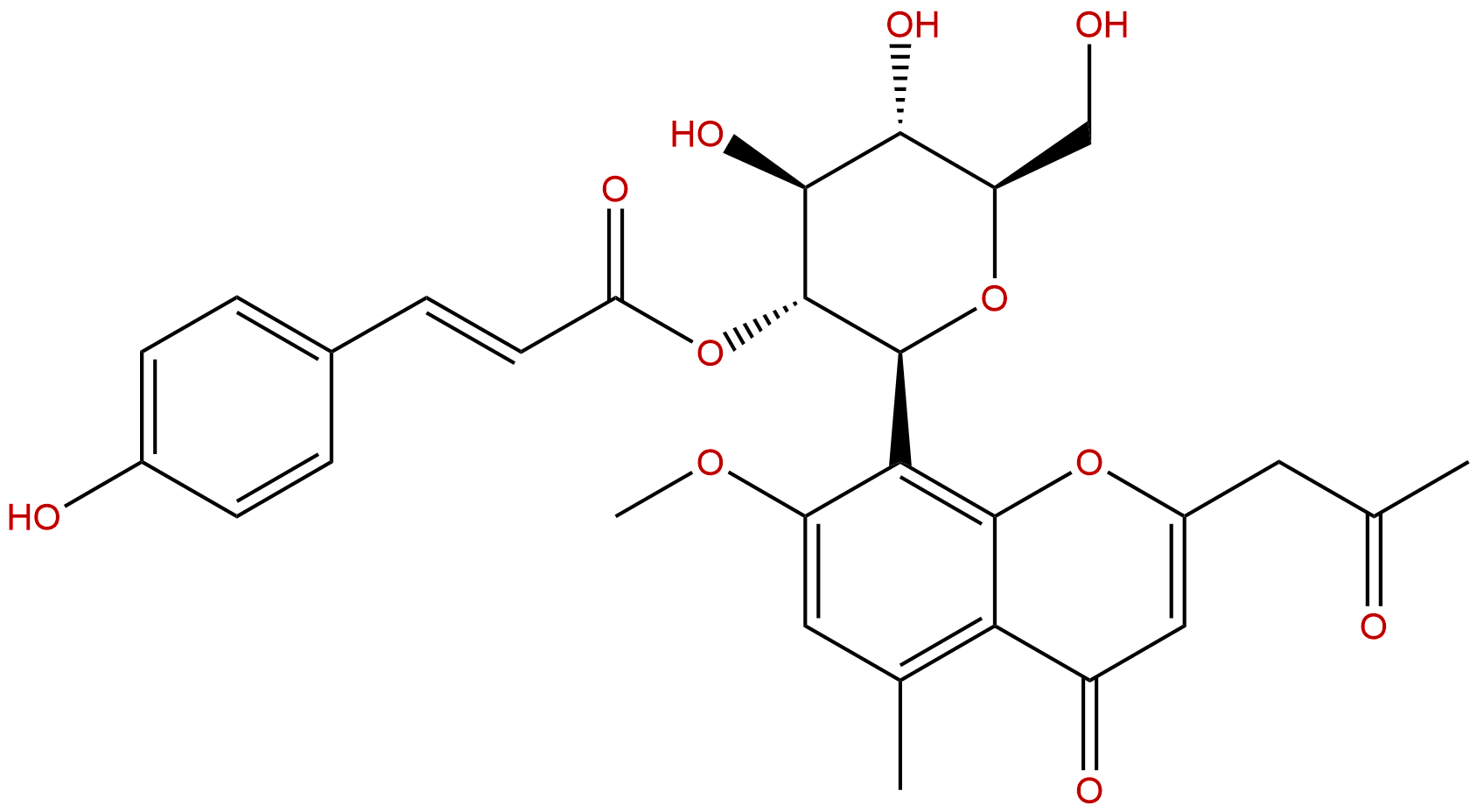
| Catalog No | Package | Original Price | Price | Inventory | Quantity | Operating |
|---|---|---|---|---|---|---|
| BP3287-5mg | 5mg | $245.00 | Sign in |
|


Product name: O-Methylaloeresin A, 7-
Synonym name:
Catalogue No.: BP3287
Cas No.: 329361-25-3
Formula: C29H30O11
Mol Weight: 554.548
Botanical Source:
Physical Description: Powder
Type of Compound: Flavonoids
Purity: 95%~99%
Analysis Method: HPLC-DAD or/and HPLC-ELSD
Identification Method: Mass, NMR
Packing: Brown vial or HDPE plastic bottle
The product could be supplied from milligrams to grams. Inquire for bulk scale.
We provide solution to improve the water-solubility of compounds, thereby facilitating the variety of activity tests and clinic uses.
For Reference Standard and R&D, Not for Human Use Directly.
Storage conditions:Short-term storage at 2~8℃, long-term storage at -20 ~ -80℃
172.9600
1.5505
1.5465
.3835
.5486
.9619
Low
82.4407
4.2846
No
No
No
No
No
Yes
0.0
Yes
Yes
Yes
Yes
Burns are a common traumatic disease worldwide, with a complex pathological process involving acute inflammatory response, tissue necrosis, secondary infection, and lengthy stages of wound repair and regeneration. After deep burns, excessive inflammatory response, abnormal expression of matrix metalloproteinases, and dysregulation of growth factor signaling networks often lead to scar hyperplasia, contraction, and functional impairment, causing heavy physical and mental burden to patients. Therefore, finding drugs that can regulate the healing process of burn wounds with multiple targets and multiple links, and effectively inhibit the formation of pathological scars, is an important research direction in the field of burn treatment. In recent years, natural products derived from medicinal plants have become valuable resources for the development of new wound repair drugs due to their structural diversity, multi-target action characteristics, and relatively low toxicity. Among them, aloe vera plants have a long history of being used in traditional medicine to treat burns, wounds, and skin inflammation, and their active ingredients have attracted much attention. 7-O-Methylaloeresin A (7-), as a chromogenic ketone carbon glycoside compound isolated from plants of the Aloe genus, is gradually showing potential as a candidate drug for burn treatment due to its unique chemical structure and preliminary revealed healing activity. This article aims to systematically review the chemical properties, plant sources, pharmacological activities, mechanisms of action, pharmacological properties, and application prospects of 7-O-methylaloin A in burn treatment, in order to provide comprehensive academic references for the in-depth research and development of this compound.
The chemical name system for 7-O-methyl aloe glycoside A is (2S) -5,8-dihydroxy-2- [(2R) -2-hydroxypropyl] -7-methoxy-2-methyl-2,3-dihydro-4H-1-benzopyran-4-one-8-C - β - D-glucopyranoside, with CAS registration number 329361-25-3. This compound belongs to chromogenic ketone derivatives, specifically chromogenic ketone carbon glycosides. The core of its molecular structure is a dihydrochromenone nucleus, which is directly connected to a β - D-glucosyl group through a C-C bond at the C-8 position, which is its characteristic as a carbon glycoside. In addition, the mother nucleus also contains multiple hydroxyl groups (C-5, C-8) and a key methoxy group (C-7), and this 7-O-methylation modification may significantly affect its biological activity and metabolic stability. The C-2 position is connected to a 2-hydroxypropyl side chain containing a chiral center.
Its molecular formula is C26H34O13, with a molecular weight of 554.5480 g/mol. The calculated lipid water partition coefficient (LogP) is 1.5505, indicating that the compound has moderate lipophilicity, which theoretically facilitates its penetration into cell membranes while retaining some water solubility. The topologically polar surface area (TPSA) is as high as 172.96 Å ², which is mainly attributed to the presence of multiple hydroxyl, methoxy, and oxygen atoms in sugar units in the molecule. These groups are potential hydrogen bond donors and acceptors, indicating that the molecule has strong polarity. The calculated water solubility value is about 0.3835 mg/mL, belonging to the category of slight solubility, which is consistent with its larger polarity and molecular weight. According to the comprehensive physical and chemical parameters, 7-O-methylaloin A belongs to the "Beyond Rule of 5" molecule. Its large molecular weight and TPSA may pose a challenge to its oral bioavailability, but as an active ingredient of topical preparations (such as gel and cream), these characteristics may be more appropriate. Preliminary drug risk assessment shows that its blood-brain barrier permeability is low, indicating that the risk of central nervous system related side effects is relatively low; Has no inhibitory activity on hERG potassium channels, reducing the potential risk of inducing QT interval prolongation in the heart; The Ames test result was negative (0.0), indicating no mutagenicity in this testing system, providing preliminary support for its safety.
7-O-Methylaloxin A is mainly isolated from plants of the Aloe genus in the Aloe family. Aloe plants, especially Aloe barbadensis Miller (also called Aloe vera) and Aloe ferox (Cape of Good Hope), are rich in anthraquinones, chromogenic ketones, polysaccharides and glycosides in their leaf skins and leaf gel. 7-O-Methylaloxin A belongs to one of the important chromogenic ketone carbon glycosides.
Its extraction and separation usually use organic solvent extraction combined with various chromatographic techniques. The classic process is as follows: first, dry aloe vera leaf skin or whole leaf powder is extracted or refluxed using methanol, ethanol, or methanol water mixed solvents, and concentrated to obtain the crude extract. The crude extract was then subjected to segmented extraction using solvents of different polarities, such as petroleum ether, ethyl acetate, n-butanol, etc. 7-O-Methyl Aloe Vera Glycoside A is often enriched in highly polar n-butanol extraction sites or water-soluble sites due to its polarity and glycosidic structure. Further purification depends on column chromatography technology, which often uses silica gel column chromatography, reverse phase silica gel (such as ODS) column chromatography, and dextran gel (such as Sephadex LH-20) column chromatography for repeated separation. High performance liquid chromatography (HPLC), especially preparative HPLC, is a crucial final step in obtaining high-purity monomers. C18 reverse phase chromatography columns are commonly used, with methanol water or acetonitrile water (usually containing a small amount of formic acid or acetic acid to adjust pH) as the mobile phase for gradient elution. The structural identification of compounds involves the comprehensive use of techniques such as ultraviolet spectroscopy (UV), infrared spectroscopy (IR), mass spectrometry (MS, especially high-resolution mass spectrometry HR-MS), and nuclear magnetic resonance spectroscopy (NMR, including 1H NMR, 13C NMR, 2D NMR such as HSQC, HMBC, etc.) to ultimately determine their planar and stereoisomeric configurations. Modern research also explores green technologies such as ultrasound assisted extraction and microwave-assisted extraction to improve extraction efficiency.
The pharmacological research on 7-O-methylaloin A is currently mainly focused on areas related to tissue repair and inflammation regulation, especially in the field of burn wound healing, showing multiple potential activities.
1. Anti inflammatory and antioxidant activity: One of the early characteristics of burns is explosive oxidative stress and strong inflammatory response. Research has shown that 7-O-methylaloin A may alleviate oxidative damage by scavenging free radicals such as DPPH and ABTS, and enhancing the activity of intracellular antioxidant enzymes such as superoxide dismutase (SOD) and glutathione peroxidase (GSH Px). In cell models such as LPS stimulated macrophages, it can significantly inhibit the overproduction of pro-inflammatory mediators such as nitric oxide (NO), prostaglandin E2 (PGE2), and key inflammatory cytokines such as tumor necrosis factor - α TNF - α, interleukin-6 IL-6, IL-1 β. This anti-inflammatory effect lays the foundation for controlling excessive inflammation and reducing secondary damage in the early stages of burns.
2. Promote wound healing and re epithelialization: In animal burn models, such as the rat deep second degree burn model, local application of formulations containing 7-O-methylaloxin A can significantly shorten the wound healing time. Organizational analysis shows that the compound can promote granulation tissue formation, increase the deposition and orderly arrangement of collagen fibers in wound tissue, and accelerate the migration and proliferation of epithelial cells, thereby promoting the process of re epithelialization. Its healing effect is comparable to or even better than positive control drugs such as sulfamethoxazole silver, and the scar appearance is smoother.
3. Regulating extracellular matrix metabolism: The formation of pathological scars is closely related to the imbalance of extracellular matrix (ECM), especially collagen synthesis and degradation. 7-O-Methylaloxin A has been shown to upregulate the synthesis of type I collagen (COL1A1), which is necessary for the recovery of wound tension strength. Moreover, more importantly, it can effectively inhibit the overexpression and activity of matrix metalloproteinase-9 (MMP-9). MMP-9 is abnormally elevated after burns, leading to excessive degradation of ECM and basement membrane components, hindering epithelialization, and participating in inflammation amplification. By inhibiting MMP-9, this compound helps maintain ECM metabolic balance and provides a stable scaffold for cell migration and tissue reconstruction.
4. Potential for promoting angiogenesis: The formation of new blood vessels (angiogenesis) is a crucial step in providing nutrition and oxygen to tissues during wound healing. Preliminary research suggests that 7-O-methylaloxin A may stimulate endothelial cell proliferation and tubular structure formation by affecting the expression or signaling pathways of vascular endothelial growth factor A (VEGFA) and basic fibroblast growth factor 2 (FGF2), thereby improving local blood supply to wounds and accelerating healing.
The promoting effect of 7-O-methylaloxin A on burn healing is not achieved through a single pathway, but acts on multiple interrelated molecular targets and signaling pathways, forming a networked regulatory system.
1. Core target: Matrix metalloproteinase-9 (MMP-9)
MMP-9 is one of its main targets of action. In burn wounds, inflammatory cells (such as neutrophils, macrophages) and keratinocytes secrete a large amount of MMP-9. 7-O-Methylaloxin A can inhibit the expression of MMP-9 at the transcriptional and/or translational levels. The mechanism may involve inhibiting the activation of transcription factors such as nuclear factor kappa B (NF - κ B) and activator protein-1 (AP-1), which are upstream key signaling nodes regulating MMP-9 gene expression. By inhibiting MMP-9, this compound protects the ECM structure, reduces the degradation of growth factors, and decreases the infiltration of inflammatory cells.
2. Growth Factor Network Regulation: FGF2, TGF - β 1, and VEGFA
The regulation of the growth factor network by this compound is the core of its promotion of tissue regeneration.
* Basic fibroblast growth factor 2 (FGF2): FGF2 is a powerful mitogen and angiogenic factor. 7-O-Methylaloxin A may promote the proliferation of fibroblasts, endothelial cells, and keratinocytes by stabilizing FGF2 or enhancing its receptor signaling, thereby accelerating granulation tissue formation and re epithelialization.
* Transforming Growth Factor - β 1 (TGFB1): TGF - β 1 plays a double-edged sword role in healing: it promotes inflammation and ECM synthesis in the early stages, while sustained high expression in the later stages can lead to fibrosis. Research has shown that 7-O-methylaloxin A may moderately regulate the TGF - β 1/Smad signaling pathway, ensuring its necessary reparative function in the early stages of healing, while inhibiting its excessive signaling in the later stages, potentially reducing scar overgrowth while promoting healing.
* Vascular endothelial growth factor A (VEGFA): This compound may increase the expression of VEGFA by upregulating hypoxia inducible factor-1 alpha (HIF-1 alpha) and other pathways, thereby stimulating endothelial cell proliferation, migration, and angiogenesis, and improving wound microcirculation.
3. Direct promotion of collagen synthesis: COL1A1
This compound can directly or indirectly (such as through the TGF - β 1 pathway) promote fibroblast synthesis of type I collagen (encoded by the COL1A1 gene), which is the main tension fiber in mature scars and is crucial for restoring wound mechanical strength.
4. Anti inflammatory signaling pathway
Its anti-inflammatory effect is closely related to the inhibition of the NF - κ B pathway. This compound may inhibit the activity of I κ B kinase (IKK), prevent the phosphorylation and degradation of I κ B protein, and retain NF - κ B dimers in the cytoplasm, preventing them from entering the nucleus and initiating the transcription of inflammation related genes such as TNF - α, IL-6, IL-1 β, and MMP-9.
In summary, 7-O-methylaloxin A synergistically inhibits MMP-9, regulates the FGF2/TGFB1/VEGFA growth factor axis, promotes COL1A1 expression, and inhibits NF - κ B-mediated inflammatory response. From multiple dimensions such as anti-inflammatory, antioxidant, pro angiogenesis, and regulation of ECM synthesis and degradation, it jointly promotes the development of burn wounds towards orderly and high-quality healing.
Although 7-O-methylaloxin A exhibits outstanding pharmacological activity, its successful conversion into a drug depends on systematic pharmacological evaluation and pharmacokinetic studies. At present, there is insufficient public data in this area, mainly based on its physical and chemical properties for calculation prediction and preliminary exploration.
1. Absorption, distribution, metabolism, and excretion (ADME) prediction:
* Absorption: A higher TPSA (>140 Å ²) and molecular weight (>500) suggest that its oral bioavailability may be low, and passive transmembrane absorption may be limited. As a topical preparation, its moderate LogP value (~1.55) may facilitate its penetration into the stratum corneum and dermis, allowing it to exert its effect locally on the wound. Developing transdermal absorption enhancers or nano drug delivery systems (such as liposomes, nanoemulsions) is a feasible strategy to improve their local bioavailability.
* Distribution: Predict low blood-brain barrier permeability, mainly distributed in peripheral tissues. If applied locally, the expected exposure of the system is low, which helps to reduce the risk of systemic side effects.
* Metabolism: As a glycoside compound, it may serve as a substrate for glycosidases in the intestine or liver, undergoing deglycosylation reactions to generate aglycones. The physicochemical properties and activities of aglycones may differ from those of the original glycosides, and further research is needed. The cytochrome P450 enzyme system may also be involved in its metabolism. Clarifying its main metabolites and metabolic pathways is crucial for safety evaluation.
* Excretion: It is speculated that its prototype or metabolites may be mainly excreted through the kidneys or bile.
2. Considerations for formulation development:
Given its limited water solubility, developing formulations suitable for local administration is the preferred direction. It can be made into hydrogel, cream, ointment or new dressing (such as drug carrying fiber membrane, hydrocolloid dressing). By utilizing techniques such as cyclodextrin inclusion, phospholipid complexes or nanocrystals, its solubility and skin permeability can be significantly improved.
3. Preliminary safety assessment:
The existing computational toxicology data (hERG negative, Ames negative) provide good preliminary safety signals. However, a complete preclinical safety evaluation is still required, including acute toxicity, long-term toxicity, skin irritation/allergy tests, reproductive toxicity, etc., to comprehensively assess its safety for use, especially on damaged skin.
4. Pharmacokinetic research gap:
There is currently a lack of reports on the systematic pharmacokinetic parameters (such as Cmax, Tmax, AUC, t1/2) of this compound in animals or humans. Establishing sensitive and accurate plasma and tissue concentration detection methods (such as LC-MS/MS) and conducting relevant in vivo kinetic studies are essential steps to advance their development process.
7-O-Methylaloxin A has shown unique application prospects in the field of burn treatment, but its transformation still faces challenges and opportunities.
1. Application prospects:
* As a core component of new healing promoting drugs: It can be developed into a single or compound burn ointment, gel, spray or new functional dressing for the treatment of second degree burns and donor skin wounds, aiming to achieve the comprehensive effects of anti-inflammatory, anti infection (may need to be combined with antibacterial ingredients), promoting granulation growth and epithelization.
* Part of the anti scar treatment strategy: Based on its inhibition of MMP-9 and potential regulatory effect on the TGF - β 1 pathway, this compound may be used in the late stage of healing to inhibit the formation of hypertrophic scars and keloids, as a supplement or alternative to traditional anti scar methods such as silicone preparations and pressure therapy.
* Expand to other difficult to heal wounds: Its mechanism of promoting angiogenesis and regulating ECM also has exploratory value in the treatment of diabetes foot ulcer, venous ulcer, radiation skin injury and other chronic and refractory wounds.
2. Challenges faced:
* Insufficient in-depth analysis of the mechanism of action: Existing research has mostly focused on describing phenomena and validating a few targets, with limited knowledge of their precise molecular mechanisms of action, signal pathway network interactions, and whether they act on upstream "master" targets such as certain key kinases or receptors.
* Pharmacokinetic and formulation research lags behind: As mentioned earlier, the ADME research of the system and the development of suitable clinical dosing regimens are currently the most urgent bottlenecks.
* Difficulties in raw material supply and synthesis: Extracting and isolating sufficient high-purity monomers from plants is costly and limited by plant resources. The routes of complete chemical synthesis or biosynthesis (such as microbial fermentation) are not yet mature, which hinders large-scale preclinical and clinical research.
* Clinical evidence gap: All activity data are sourced from preclinical studies, lacking efficacy and safety data from human clinical trials.
3. Future prospects:
* In depth mechanism research: By applying multiple omics technologies such as genomics, proteomics, and metabolomics, combined with molecular docking, surface plasmon resonance (SPR), and other techniques, a comprehensive network of target genes can be mapped. The necessity of using gene knockout/knockdown technology to validate key targets.
* Strengthening the optimization of drug properties: Conduct systematic pharmaceutical research and develop efficient, stable, and patient compliant local drug delivery systems. Simultaneously conduct standardized preclinical pharmacokinetic and safety evaluations.
* Exploring structural modifications: Using it as the parent nucleus, reasonable structural modifications (such as glycosylation modification, side chain modification) are carried out to improve its activity, stability, solubility or transdermal properties, and obtain derivatives with better drug properties.
* Promote clinical translation: After completing sufficient preclinical research, design and conduct standardized Phase I/II clinical trials to evaluate their safety, tolerability, and initial efficacy in burn patients, laying the foundation for their eventual market entry.
7-O-Methylaloxin A, as a natural chromogen ketone carbon glycoside derived from traditional medicinal aloe vera, has become a promising candidate molecule in the development of burn treatment drugs due to its unique pharmacological properties of multi-target and multi pathway regulation of burn wound healing process. It can not only effectively resist inflammation and oxidation, but also promote orderly granulation tissue formation, angiogenesis, and re epithelialization by precisely regulating key targets such as MMP-9, FGF2, TGFB1, VEGFA, and COL1A1, while potentially inhibiting pathological scar formation. Although some research progress has been made in its chemical structure, plant origin, and preliminary pharmacological activity, its in-depth molecular mechanism, systematic pharmacological evaluation, efficient formulation development, and crucial clinical validation are still key areas that need to be breakthrough in the future. With the continuous advancement of modern drug development technology, the continuous in-depth research on 7-O-methylaloin A is expected to transform it from a promising natural product into an innovative drug that can be used clinically to improve the prognosis of burn patients, and also provide new ideas and strategies for the treatment of other difficult to heal skin injuries.
Batch can search by a CAS number,one per line
