Introduction/Overview
Notoginsenoside M (NGM), also known as Panax notoginseng saponins, is a traditional and precious Chinese medicinal herb derived from Panax notoginseng(Panax notoginseng Damane type tetracyclic triterpenoid saponins isolated from Burk. F.H. Chen. Sanqi, as a representative medicine in traditional Chinese medicine that promotes blood circulation, removes blood stasis, reduces swelling, and relieves pain, has a long history of clinical application, especially in the prevention and treatment of cardiovascular and cerebrovascular diseases. Modern pharmacological research has confirmed that the main active ingredient of Panax notoginseng, Panax notoginseng saponins (PNS), has multiple pharmacological effects such as anti platelet aggregation, anti thrombosis, vasodilation, microcirculation improvement, anti-inflammatory and antioxidant effects.
Sanqi saponin M, as a trace saponin component with relatively low content but significant activity in Sanqi, has gradually attracted the attention of researchers in recent years. Its unique chemical structure endows it with pharmacological properties distinct from major saponins such as ginsenoside Rg1 and Rb1. In particular, existing studies have shown that Sanqi saponin M exhibits significant potential in anti thrombotic effects, with its mechanism of action involving multiple key targets in the coagulation cascade, including cyclooxygenase-1 (PTGS1/COX-1), thrombin (F2), coagulation factor VII (F7), IX (F9), X (F10), platelet membrane glycoprotein IIb/IIIa receptor (ITGA2B/ITGB3), platelet P2Y12 receptor (P2RY12), thromboxane A2 receptor (TBXA2R), and antithrombin III (SERPINC1). This multi-target and multi pathway regulatory mode may have the potential advantage of precise efficacy and relatively low side effects in antithrombotic therapy.
This article aims to provide a comprehensive and systematic review of the chemical structure, plant origin, extraction process, pharmacological activity, mechanism of action, medicinal properties, and clinical application prospects of Panax notoginseng saponins M, in order to provide scientific basis for the in-depth research and future development of this natural product.
Chemical structure and physicochemical properties
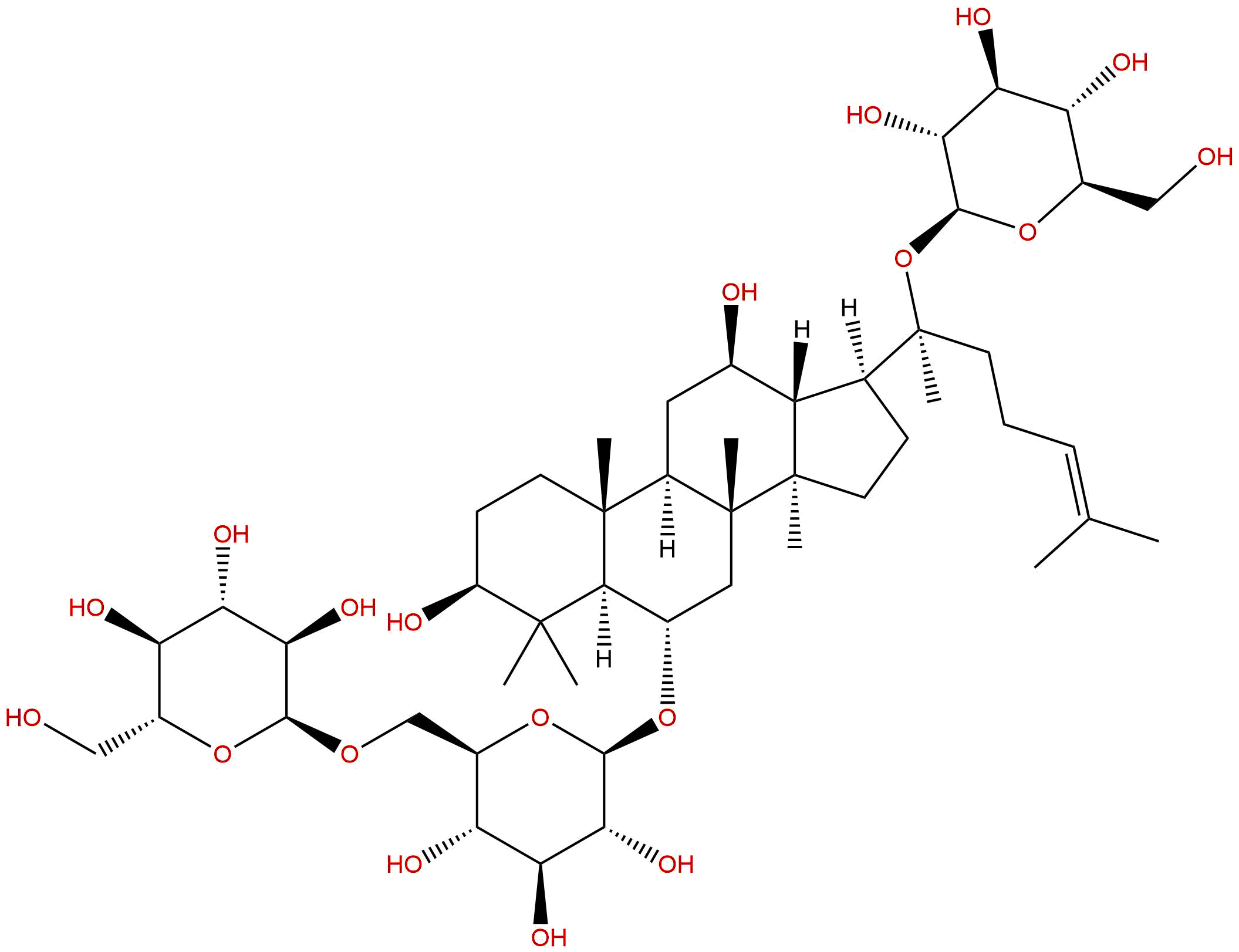
Sanqi saponin M belongs to the Damane type tetracyclic triterpenoid saponin, and its chemical structure has typical characteristics of this class of compounds. Its aglycone is Protopanaxadiol (PPD), which has hydroxyl substituents at positions C-3 and C-12 of the Damatane skeleton, and a (S) configuration at position C-20. Unlike common protopanaxadiol type saponins such as ginsenoside Rb1 and Rd, the sugar chain connection of Panax notoginseng saponins M has its unique characteristics. Specifically, the C-3 hydroxyl group is connected to a β - D-glucopyranose group (1 → 2) - β - D-glucopyranose group (i.e. sophorose group), while the C-20 hydroxyl group is connected to a β - D-xylopyranose group (1 → 6) - β - D-glucopyranose group. This specific sugar chain composition and connection sequence are key structural features that distinguish Panax notoginseng saponins M from other Panax notoginseng saponins (such as Panax notoginseng saponins R1, R2, Fa, etc.).
From the perspective of physical and chemical properties, the molecular formula of Panax notoginseng saponins M is C ₄₇ H ₈₀ O ₂₀, with a molecular weight of 963.1650 Da (exact mass). The LogP of its lipid water partition coefficient is 1.9859, indicating that the compound has a certain degree of lipophilicity, but overall it still belongs to a molecule with strong hydrophilicity. Its polar surface area (TPSA) is as high as 318.3700 Å ², mainly due to the presence of a large number of polar groups such as hydroxyl (- OH) and ether bonds (C-O-C) in its molecules. A high TPSA value usually indicates that the compound is difficult to passively diffuse through biological membranes, especially the blood-brain barrier (BBB). In fact, its blood-brain barrier permeability has been evaluated as' low ', suggesting that it may be limited in the treatment of central nervous system diseases, but at the same time, it may also reduce central related side effects. In terms of water solubility, its calculated water solubility value is 0.1528 mg/mL, belonging to the category of slight solubility, which is consistent with its larger molecular weight and more polar groups. However, compared with some insoluble natural products, its water solubility is still acceptable, providing a basis for its oral or injection administration. In addition, preliminary toxicity predictions indicate that the inhibitory risk of Panax notoginseng saponins M on hERG potassium channels is "no", with an Ames test result of 0.0, suggesting low risks of cardiac and genetic toxicity and good safety potential.
Plant sources and extraction methods
Sanqi saponin M is mainly derived from the Panax ginseng plant in the Araliaceae family(Panax notoginseng)Dry roots and rhizomes. Sanqi is mainly distributed in Wenshan, Yunnan and Baise, Guangxi in China, and is a typical representative of authentic medicinal herbs. In addition to the main root, saponins are also present in the reed head (cut), velvet root, whisker root, and stem and leaf of Panax notoginseng, but the content of Panax notoginseng saponin M varies significantly in different parts. Generally speaking, Panax notoginseng saponins M belong to the trace saponins in Panax notoginseng, and their content is much lower than that of the main components such as ginsenoside Rg1, Rb1, Re, Rd, and Panax notoginseng saponins R1. Therefore, its extraction and purification usually require targeted optimization of the process to improve yield and purity.
The traditional extraction method mainly adopts solvent extraction, such as using methanol, ethanol or water as solvents for heating reflux extraction or percolation extraction. Due to the good solubility of Panax notoginseng saponins M in ethanol water system, 70% -80% ethanol is usually used as the extraction solvent, and multiple extractions are carried out at 60-80 ℃ to obtain a high total saponin extraction rate. However, traditional methods have disadvantages such as high solvent consumption, long extraction time, and high impurities.
In order to improve extraction efficiency and purity, modern extraction techniques are widely used in the preparation of Panax notoginseng saponins M. For example, ultrasound assisted extraction (UAE) utilizes the cavitation effect and mechanical vibration of ultrasound to effectively destroy cell walls, accelerate solute release, significantly shorten extraction time, and improve yield. Microwave assisted extraction (MAE) utilizes the penetrability and selective heating of microwaves to rapidly dissolve polar substances within cells. In addition, enzyme assisted extraction (EAE) can effectively improve the extraction rate of saponins by hydrolyzing cell wall components with cellulases, pectinases, and other enzymes.
The crude extract after extraction contains a large amount of impurities such as sugars, proteins, pigments, etc., which need to be separated and purified. Macroporous adsorption resin column chromatography is the most commonly used method for separating and purifying total saponins from Panax notoginseng. By selecting resins of different polarities (such as D101, AB-8, etc.) and using gradient elution with ethanol water systems of different concentrations, saponin components can be enriched. For further purification of the trace component of Panax notoginseng saponins M, it is usually necessary to combine techniques such as normal phase silica gel column chromatography, reverse phase ODS column chromatography, high performance liquid chromatography (HPLC), or high-speed countercurrent chromatography (HSCCC). Through repeated column chromatography and preparative HPLC, high-purity monomers of Panax notoginseng saponins M can be obtained for subsequent pharmacological activity studies and structural identification.
Pharmacological activity research
The pharmacological activity research of Panax notoginseng saponins M is still in the exploratory stage, but there is evidence that it has potential effects in anti thrombotic, anti-inflammatory, anti-tumor, and cardiovascular protection, among which anti thrombotic activity is the most concerned research direction.
1. Antithrombotic effect
Thrombosis is the core pathological process of cardiovascular and cerebrovascular diseases (such as myocardial infarction and stroke), involving platelet activation, aggregation, and activation of coagulation cascade reactions. Sanqi saponin M exhibits multi link antithrombotic activity.
- Inhibit platelet aggregation Platelets play a central role in thrombus formation. Research has shown that Panax notoginseng saponins M can inhibit platelet aggregation induced by various inducers such as ADP, collagen, arachidonic acid AA, and thrombin. The mechanism may be related to inhibiting the mobilization of calcium ions in platelets, reducing the release of dense particles and alpha particles, and downregulating the expression of platelet surface activation markers such as P-selectin.
- Anticoagulant effect Sanqi saponin M can prolong prothrombin time (PT) and activated partial thromboplastin time (APTT), indicating its inhibitory effect on both endogenous and exogenous coagulation pathways. This effect may be related to its inhibition of the activity of coagulation factors F2 (thrombin), F7, F9, and F10. By inhibiting the activity or expression of these key coagulation factors, Panax notoginseng saponins M can effectively block the amplification of coagulation cascade reactions, thereby reducing the formation of fibrin clots.
- Promote fibrinolysis In addition to inhibiting coagulation and platelet function, Panax notoginseng saponins M may also exert antithrombotic effects by affecting the fibrinolytic system. There are studies suggesting that it may upregulate the activity or expression of tissue type plasminogen activator (t-PA), while downregulating the level of plasminogen activator inhibitor-1 (PAI-1), thereby promoting the dissolution of formed thrombi.
2. Anti inflammatory and antioxidant effects
Inflammation and oxidative stress are important triggers and accompanying events for thrombosis. Sanqi saponin M exhibits certain anti-inflammatory activity and can inhibit the expression of inflammatory mediators (such as TNF - α, IL-1 β, IL-6) and inflammatory enzymes (such as iNOS, COX-2) induced by lipopolysaccharides (LPS) or cytokines. Its antioxidant effect is reflected in its ability to clear free radicals (such as DPPH, ABTS+), increase the activity of intracellular antioxidant enzymes (such as SOD, GSH Px), and inhibit the production of lipid peroxidation products (such as MDA). These effects help protect endothelial cells from damage, maintain vascular homeostasis, and indirectly exert antithrombotic effects.
3. Cardiovascular protective effect
Preliminary cellular and animal experiments have shown that Panax notoginseng saponins M have a certain protective effect on myocardial ischemia-reperfusion injury. It can activate the PI3K/Akt signaling pathway, inhibit myocardial cell apoptosis, and reduce infarct size. In addition, it can also dilate blood vessels and improve microcirculation, which may be related to its regulation of endothelial cell nitric oxide (NO) production.
4. Antitumor activity
Partial studies have explored the anti-tumor potential of Panax notoginseng saponins M. In vitro experiments have found that it has inhibitory effects on the proliferation of certain tumor cell lines (such as liver cancer HepG2, lung cancer A549, etc.) and can induce cell apoptosis. The mechanism may be related to regulating the cell cycle, activating caspase family proteases, and affecting the MAPK signaling pathway. However, research in this area is not yet in-depth and requires more evidence to support it.
Mechanism of action and molecular targets
The pharmacological effects of Panax notoginseng saponins M, especially their antithrombotic activity, are based on the synergistic regulation of multiple molecular targets. According to existing research, its mechanism of action can be summarized as follows:
1. Regulation of coagulation cascade reaction
Sanqi saponin M achieves anticoagulant effects by acting on multiple key proenzymes and enzymes in the coagulation system. Its targets include:
- Coagulation factor F2 (thrombin)Thrombin is the core effector enzyme in the coagulation cascade, responsible for converting fibrinogen into fibrin and effectively activating platelets. Sanqi saponin M may directly or indirectly inhibit the activity of thrombin, thereby blocking the formation of fibrin clots.
- Coagulation factors F7, F9, F10 F7 is the initiating factor of the exogenous coagulation pathway, F9 is the key factor of the endogenous pathway, and F10 is the common pathway of the endogenous and exogenous pathways. Sanqi saponin M may block the transmission of coagulation signals upstream by inhibiting the activity or expression of these factors.
- Antithrombin III (SERPINC1)Antithrombin III is the most important natural anticoagulant protein in the body, which can inactivate thrombin and various coagulation factors. Sanqi saponin M may indirectly exert anticoagulant effects by upregulating the expression or enhancing the activity of SERPINC1.
2. Regulation of platelet function
Sanqi saponin M inhibits platelet activation, adhesion, and aggregation through various pathways.
- Inhibition of thromboxane A2 (TXA2) pathway TXA2 is a potent inducer of platelet aggregation and vasoconstrictor. Sanqi saponin M can inhibit the activity of cyclooxygenase-1 (PTGS1/COX-1), thereby reducing the conversion of arachidonic acid to TXA2, blocking the binding of TXA2 to its receptor (TBXA2R), and inhibiting platelet aggregation.
- Antagonistic P2Y12 receptor ADP is an important platelet aggregation agonist, mainly mediated by the P2Y12 receptor on the surface of platelets. Sanqi saponin M may act as an antagonist of P2Y12 receptor, blocking ADP induced signal transduction and inhibiting platelet aggregation.
- Blocking GPIIb/IIIa receptors Platelet membrane glycoprotein IIb/IIIa (integrin α IIb β 3, encoded by ITGA2B and ITGB3) is the ultimate common pathway for platelet aggregation. Fibrinogen bridges adjacent platelets by binding to activated GPIIb/IIIa receptors. Sanqi saponin M may inhibit platelet aggregation by inhibiting the activation of GPIIb/IIIa receptors or directly blocking their binding to fibrinogen.
3. Signal pathway regulation
The antithrombotic effect of Panax notoginseng saponins M also involves the regulation of intracellular signaling pathways. For example, it may reduce the release of calcium ions and granule secretion in platelets by inhibiting the phosphorylation of signaling pathways such as PI3K/Akt and MAPK (such as ERK and p38). At the same time, in terms of myocardial protection, it can activate the PI3K/Akt survival pathway and inhibit apoptotic signals.
In summary, Panax notoginseng saponins M form a "multi-target, multi pathway" network regulatory mode by acting on multiple targets such as PTGS1, F2, F7, F9, F10, ITGA2B, ITGB3, P2RY12, TBXA2R, SERPINC1, etc. This model may have the advantages of comprehensive efficacy, low resistance, and relatively low risk of bleeding in antithrombotic therapy, which is in stark contrast to single target drugs such as aspirin and clopidogrel.
Evaluation of drug properties and pharmacokinetics
Developing Sanqi Saponin M into a clinical drug requires a systematic evaluation of its pharmacological properties, including pharmacokinetic (ADME) characteristics and safety.
1. Pharmacokinetic characteristics
- absorb The molecular weight of Sanqi Saponin M is relatively large (963 Da), with a LogP of 1.99 and a TPSA of up to 318 Å ². These physicochemical properties determine that its oral bioavailability is usually low. After oral administration, most saponins are difficult to be directly absorbed in the gastrointestinal tract and need to be metabolized by gut microbiota (such as deglycosylation) before they can be converted into secondary glycosides or aglycones (such as protopanaxadiol) and absorbed into the bloodstream. Therefore, its oral absorption is slow and incomplete. Intravenous or intraperitoneal injection may be more effective routes of administration.
- distribution Due to its strong hydrophilicity, the plasma protein binding rate may be high, mainly distributed in blood and extracellular fluid. Its low BBB permeability indicates that it is difficult to enter the central nervous system, which is beneficial for reducing central side effects, but also limits its application in brain diseases.
- Metabolism Sanqi saponin M is mainly metabolized in the liver and intestines. The cytochrome P450 enzyme system in the liver may be involved in its oxidative metabolism, but the more important metabolic pathway is the gut microbiota mediated deglycosylation reaction, which gradually hydrolyzes the terminal glycans and generates active or inactive metabolites.
- excretion Saponins and their metabolites are mainly excreted into the intestine through bile and excreted with feces. A small portion may be excreted in urine in its original form or metabolite form through the kidneys.
2. Safety evaluation
- toxicity Preliminary toxicity predictions (such as negative Ames test) and some animal experiments indicate that the acute toxicity of Panax notoginseng saponins M is relatively low. Long term toxicity studies are not yet sufficient, but based on clinical experience with total saponins of Panax notoginseng, its safety is relatively good.
- cardiotoxicity The risk assessment of hERG inhibition is' no ', indicating a low risk of causing QT interval prolongation and apical torsion type ventricular tachycardia.
- Bleeding risk As an antithrombotic drug, bleeding is its most concerning side effect. Due to the multi-target inhibition of coagulation and platelet function by Sanqi Saponin M, its antithrombotic effect is strong, but theoretically it may also increase the risk of bleeding. However, compared to drugs such as aspirin or warfarin, its mechanism of action is milder and may have a certain degree of vascular protection, so its bleeding risk may be relatively controllable. This requires rigorous preclinical and clinical studies to verify.
3. Challenges in drug development and improvement strategies
The main pharmacological challenges faced by Sanqi Saponin M are Low oral bioavailability To solve this problem, the following strategies can be adopted:
- Structural modification Modification of the parent structure through chemical or biological methods, such as introducing specific functional groups to enhance lipid solubility or preparing prodrugs.
- New drug delivery system Using nanotechnology (such as liposomes, polymer nanoparticles, solid lipid nanoparticles), phospholipid complexes, cyclodextrin inclusion complexes, and other technologies to improve their solubility and permeability, and enhance oral absorption.
- Optimize the route of administration Develop injections (such as lipid microspheres, freeze-dried powder injections) or transdermal drug formulations that bypass the gastrointestinal absorption barrier.
Clinical application prospects and prospects
Based on the unique pharmacological activity and multi-target mechanism of action of Panax notoginseng saponins M, it has shown broad clinical application prospects in the following fields:
1. Prevention and treatment of cardiovascular and cerebrovascular diseases
This is the most promising application area of Panax notoginseng saponins M. Its antithrombotic, antiplatelet, anti-inflammatory, antioxidant and vascular protective effects are expected to develop into innovative drugs for the treatment or prevention of atherosclerosis, myocardial infarction, stroke, deep vein thrombosis and other thrombotic diseases. Especially for patients who require long-term antithrombotic therapy, Panax notoginseng saponins M may provide a new option with definite efficacy, relatively low risk of bleeding, and vascular protection. It may be used as a monotherapy or in combination with existing antiplatelet drugs such as aspirin and clopidogrel to achieve synergistic effects and reduce side effects.
2. Treatment of inflammation related diseases
Given its anti-inflammatory activity, Panax notoginseng saponins M may also be used to treat chronic inflammatory diseases such as rheumatoid arthritis and inflammatory bowel disease. By inhibiting the production of inflammatory mediators and signaling pathways, it may help alleviate inflammatory symptoms and delay disease progression.
3. Tumor adjuvant therapy
Although its anti-tumor activity is still in the early stages of research, its ability to induce tumor cell apoptosis and inhibit proliferation suggests that it may be used as an adjuvant drug for chemotherapy or radiotherapy to improve efficacy and reduce toxic side effects.
4. Future research directions
Despite its broad prospects, the research on Panax notoginseng saponins M still faces many challenges, and the following directions need to be focused on in the future:
- In depth mechanism research By utilizing systems pharmacology, network pharmacology, and molecular docking techniques, we aim to comprehensively reveal the interaction patterns with various targets, particularly PTGS1, P2RY12, ITGA2B/ITGB3, and elucidate the molecular basis of their multi-target synergistic effects.
- Pharmacokinetic optimization Systematically study its absorption, distribution, metabolism, and excretion processes in the body to identify its active metabolites. And focus on developing new formulations to improve their oral bioavailability.
- Preclinical safety evaluation of the system Conduct comprehensive toxicology studies on long-term toxicity, reproductive toxicity, immunotoxicity, etc., especially assessing their bleeding risk and determining safe dosage ranges.
- Clinical trial validation After completing sufficient preclinical research, standardized clinical trials should be conducted as soon as possible to verify its effectiveness, safety, and pharmacokinetic characteristics in humans, providing key evidence for its ultimate clinical application.
Conclusion
Sanqi saponin M, as an important trace active ingredient in Sanqi, has attracted widespread attention from researchers due to its unique chemical structure and multi-target pharmacological mechanism, especially its significant activity in anti thrombosis. It has shown great potential as a lead compound for novel antithrombotic drugs by regulating the coagulation cascade, inhibiting platelet function, anti-inflammatory and antioxidant pathways. Although there are challenges in terms of oral bioavailability, these issues are expected to be addressed through structural modifications and the development of novel drug delivery systems. In the future, with the in-depth analysis of its mechanism of action and the continuous advancement of pharmacological research, Panax notoginseng saponins M are expected to move from the laboratory to clinical practice, providing new, safer and more effective drug choices for the prevention and treatment of thrombotic diseases such as cardiovascular and cerebrovascular diseases, and further exploring and promoting the modern medicinal value of traditional Chinese medicine Panax notoginseng.