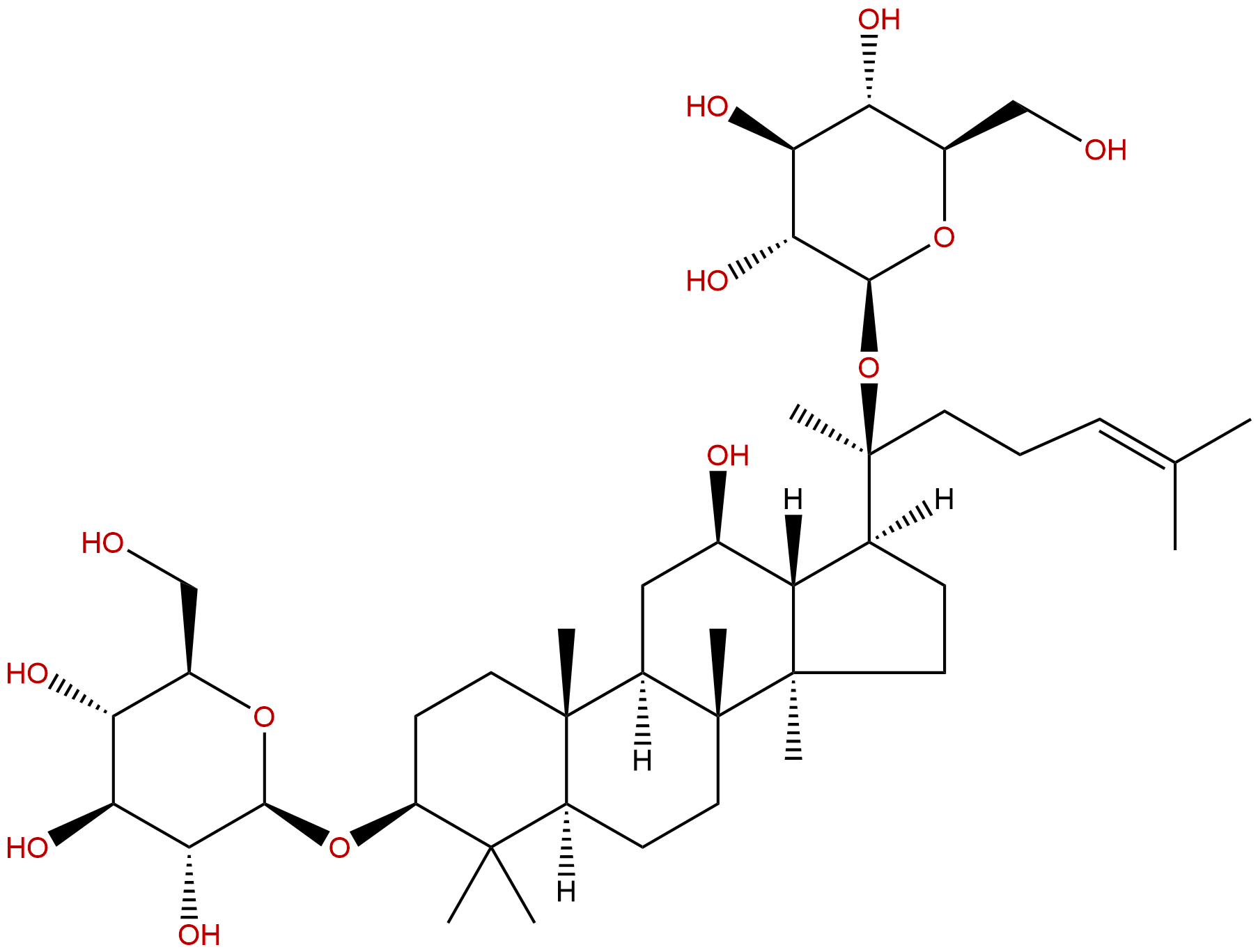


Product name: Ginsenoside F2
Synonym name:
Catalogue No.: BP0654
Cas No.: 62025-49-4
Formula: C42H72O13
Mol Weight: 785.025
Botanical Source: Panax spp.
Physical Description: White powder
Type of Compound: Triterpenoids
Purity: 95%~99%
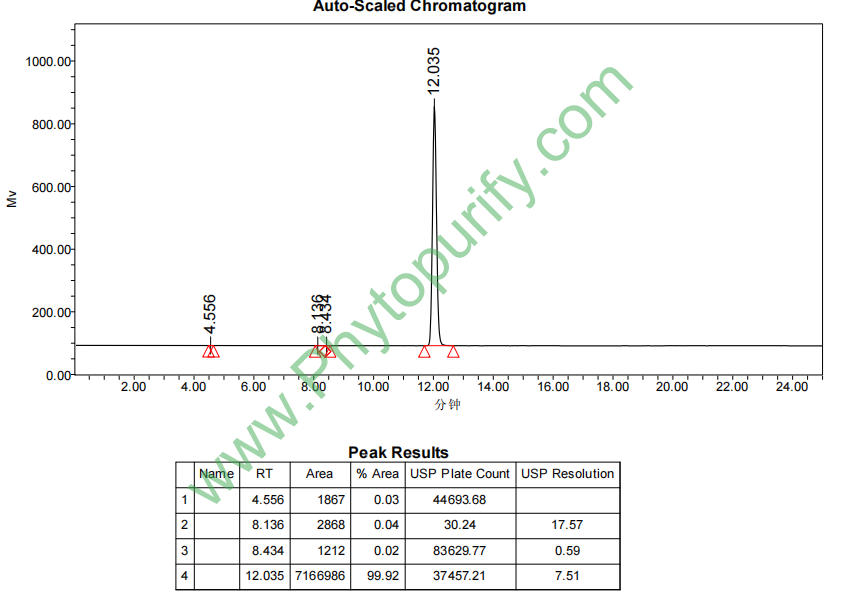
Analysis Method: HPLC-DAD or/and HPLC-ELSD
Identification Method: Mass, NMR
Packing: Brown vial or HDPE plastic bottle
Storage: Store in a well closed container, protected from air and light. Put into refrigerate or freeze for long term storage.
Whenever possible, you should prepare and use solutions on the same day. However, if you need to make up stock solutions in advance, we recommend that you store the solution as aliquots in tightly sealed vials at -20℃. Generally, these will be useable for up to two weeks.
The product could be supplied from milligrams to grams, up to kilograms
Inquire for bulk scale.
Descriptions:
Ginsenoside F2 has the anti-cancer activity, it induces apoptosis in breast cancer stem cells (CSCs) by activating the intrinsic apoptotic pathway and mitochondrial dysfunction, also induces the formation of acidic vesicular organelles, recruitment of GFP-LC3-II to autophagosomes, and elevation of Atg-7 levels, suggests that F2 initiates an autophagic progression in breast CSCs. [1]
Ginsenoside F2 suppresses hair cell apoptosis and premature entry to catagen more effectively than finasteride, it decreases the expression of TGF-β2 and SCAP proteins, this study provides evidence those factors in the SCAP pathway could be targets for hair loss prevention drugs.[2]
Ginsenoside F2 could be a new potential chemotherapeutic drug for glioblastoma multiforme (GBM) treatment by inhibiting the growth and invasion of cancer, the anticancer activity might be mediated through inhibition of proliferation judged by Ki67 and apoptosis induced by activation of caspase-3 and -8.[3]
Ginsenoside F2 may reduce obesity via the inhibition of adipogenesis in the 3T3-L1 cell line.[4]
References:
[1] Mai T T, Moon J Y, Song Y W, et al. Cancer Lett, 2012, 321(2):144–53.
[2] Shin H S, Park S Y, Hwang E S, et al. Biol Pharm Bull, 2014, 37(5):755-63.
[3] Shin J Y, Lee J M, Shin H S, et al. J Ginseng Res, 2012, 36(1):86-92.
[4] Siraj F M, Sathishkumar N, Kim Y J, et al. J Enzym Inhib Med Ch, 2014, 30(1):9-14.
[5] Zhou W, Li J, Li X, et al. J Sep Sci, 2008, 31(6-7):921-5.
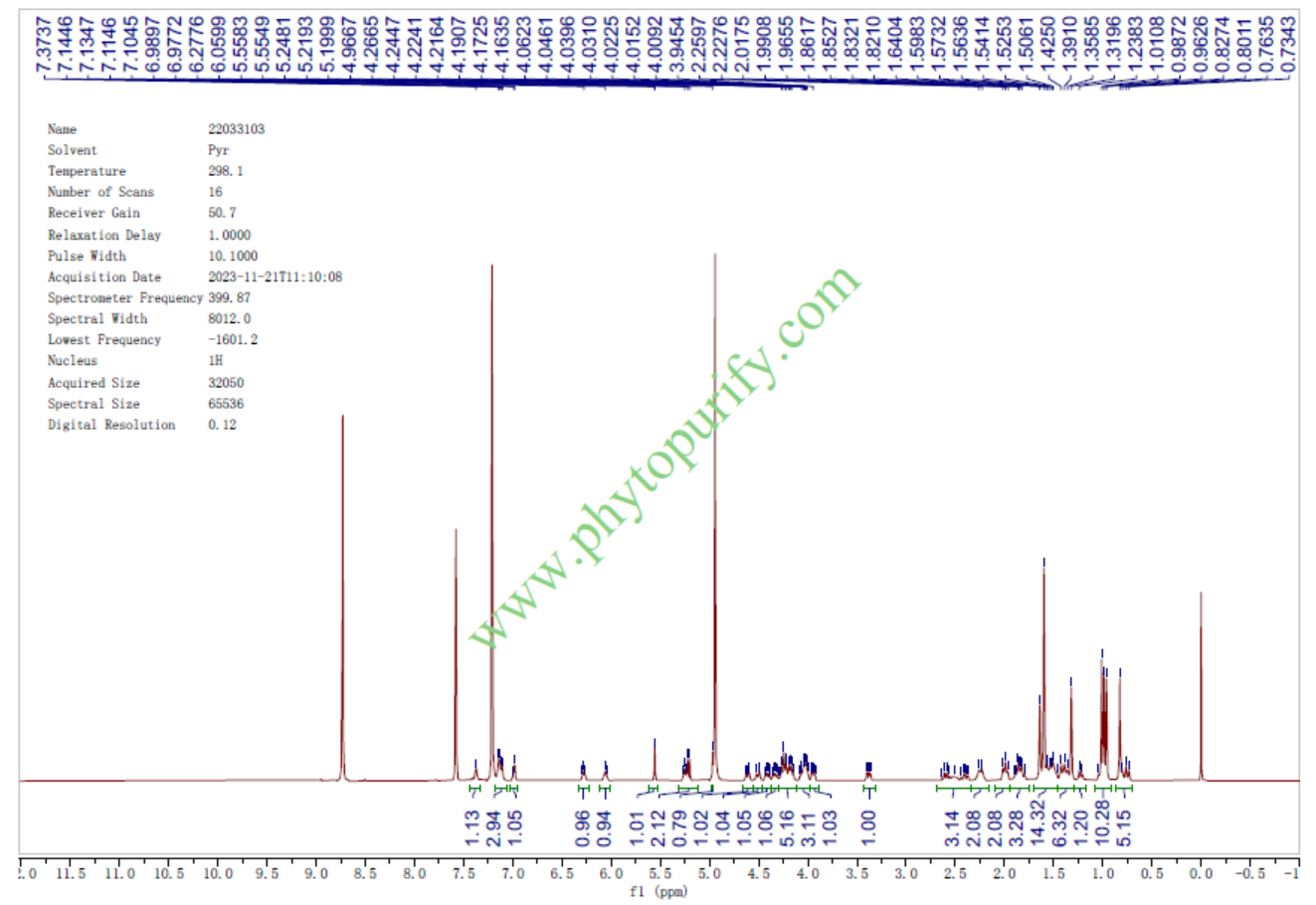
HNMR of Ginsenoside F2
HPLC of Ginsenoside F2
Storage conditions:Short-term storage at 2~8℃, long-term storage at -20 ~ -80℃
218.9900
3.2616
3.2613
.0317
.5922
.1896
Low
77.7256
5.8834
No
No
No
No
No
No
0.0
Yes
No
No
No
Ginseng, as a traditional precious Chinese medicinal herb, has been globally recognized for its pharmacological activity and application value. Ginsenosides are the main active ingredients of plants in the Panax genus, with diverse structures and a wide range of biological activities. Among numerous ginsenosides, protopanaxadiol type saponins have attracted much attention due to their significant metabolic regulation, anti-inflammatory, anti-tumor and other activities. Ginsenoside F2 (CAS number: 62025-49-4) is an important secondary metabolite of protopanaxadiol type saponins in the process of in vivo and in vitro metabolism and transformation. Its sugar composition is relatively simple and is generally considered as one of the active forms of high glycosylated saponins (such as Rb1, Rc, Rd) after being metabolized and deglycosylated by gut microbiota or liver. In recent years, with the deepening of research, ginsenoside F2 has been found to have oral activity and has shown multi-target and multi pathway regulatory effects in various pathological models such as metabolic diseases, inflammatory diseases, and tumors. Its core pharmacological effects involve activating the AMPK signaling pathway, regulating PPAR γ function, inhibiting the MAPK inflammatory pathway, activating the PI3K/AKT survival pathway, and regulating oxidative stress and cell apoptosis. This article aims to systematically review the chemical structure, sources, pharmacological activities, molecular mechanisms of action, pharmacological properties, and clinical application prospects of ginsenoside F2, in order to provide comprehensive scientific references for the in-depth research and development of this natural product.
Ginsenoside F2 belongs to the dammarane type tetracyclic triterpenoid saponin, specifically the protopanaxadiol (PPD) type saponin. Its molecular formula is C42H72O14 and its molecular weight is 785.0250. Its structural feature is the connection of sugar groups to the hydroxyl groups at positions C-3 and C-20 of the original panaxadiol. Specifically, connect one molecule of glucose at C-3 position and one molecule of glucose at C-20 position. Therefore, its sugar chain is 3-O - β - D-glucopyranosyl-20-O - β - D-glucopyranosyl-protopanaxadiol. Compared with ginsenoside Rb1 (tetrasaccharide) and others, its sugar number is reduced and its polarity is lowered.
Based on its chemical structure, ginsenoside F2 exhibits typical physicochemical properties of saponins. Its calculated lipid water partition coefficient (LogP) is 3.2616, indicating that it has a certain degree of lipophilicity, but not highly hydrophobic. Its topological polar surface area (TPSA) is as high as 218.99 Å ², which is mainly attributed to the multiple hydroxyl groups and oxygen atoms on the sugar ring in the molecule, indicating its strong ability as a hydrogen bond donor and acceptor. The water solubility parameters show that its solubility is relatively low (about 0.0317 mg/mL), which is consistent with the limited solubility of most saponins in water and may affect their formulation development. Preliminary pharmacological predictions indicate that its ability to cross the blood-brain barrier is relatively low, which is consistent with its larger molecular weight and higher TPSA. Importantly, the preliminary toxicity prediction showed no risk of hERG potassium channel inhibition (hERG inhibition: No), and the Ames test predicted a negative result (0.0), indicating a low potential genetic toxicity risk and providing preliminary positive signals for its safety evaluation.
Ginsenoside F2 mainly comes from plants of the Panax genus in the Araliaceae family, such as Panax ginseng C.A. Meyer, Panax quinquefolius L., and Panax notoginseng. In plants, the content of ginsenoside F2 is usually lower than its main precursor saponins (such as Rb1, Rc, Rd, etc.). It can be directly extracted and isolated from plants, or obtained as in vitro and in vivo metabolites of these major saponins.
1. Direct extraction and separation:
The direct extraction of ginsenoside F2 from plant raw materials is usually achieved through organic solvent extraction. The common process includes heating and refluxing the dried ginseng root powder with methanol, ethanol, or aqueous ethanol, or ultrasound assisted extraction. After vacuum concentration, the extract is enriched and purified using macroporous adsorption resins (such as D101, AB-8). Water soluble impurities are washed away with water first, and then gradient elution is performed with different concentrations of ethanol (such as 30% -80%) to collect the saponin rich fraction. Further refinement and separation are often carried out using techniques such as normal or reverse phase silica gel column chromatography and high-performance liquid chromatography (HPLC). Due to the low content of F2 in native plants, direct isolation and purification yield is limited and the cost is high.
2. Biotransformation and Enzymatic Hydrolysis Preparation:
Given that ginsenoside F2 is a metabolite of various protopanaxadiol type saponins, the preparation of F2 through biotransformation or enzymatic hydrolysis of its precursor saponins has become an efficient and sustainable strategy.
- Transformation of gut microbiota: Simulating the in vivo process, using human or animal gut microbiota to incubate ginsenosides Rb1, Rc, etc. under anaerobic conditions, they can gradually remove some sugar groups and ultimately generate secondary saponins including F2 (such as Compound K). This method has mild conditions, but the products are complex and difficult to separate.
- Enzymatic hydrolysis: Use specific glycosidases (such as β - glucosidase, cellulase, etc.) to selectively hydrolyze the sugar groups at specific positions of precursor saponins. For example, the use of specific sources of β - glucosidase can efficiently hydrolyze the glucose outside the C-3 position of ginsenoside Rd (glucose glucose at C-3 position, glucose at C-20 position), thereby specifically generating ginsenoside F2. Enzymatic hydrolysis has the advantages of mild reaction conditions, high selectivity, few by-products, and easy amplification, and is currently the preferred method for laboratory scale and potential industrial production of ginsenoside F2.
A large number of in vitro and in vivo studies have shown that ginsenoside F2 has a wide range of pharmacological activities, covering multiple fields such as metabolic regulation, anti-inflammatory, antioxidant, anti-tumor, and neuroprotection.
1. Metabolic regulation and anti obesity effects:
This is one of the most in-depth areas of research on ginsenoside F2. In a diet induced obese mouse model, oral administration of ginsenoside F2 significantly inhibits weight gain, reduces the weight of white adipose tissue (such as epididymal fat and retroperitoneal fat), and lowers serum levels of total cholesterol, triglycerides, and low-density lipoprotein cholesterol. Its function is closely related to the activation of the AMP activated protein kinase (AMPK) signaling pathway in the liver and adipose tissue. The activation of AMPK further phosphorylates and inhibits its downstream target acetyl CoA carboxylase (ACC), thereby promoting fatty acid oxidation and inhibiting fat synthesis. In addition, F2 can bind to and regulate the activity of peroxisome proliferator activated receptor gamma (PPAR gamma), which is a key transcription factor for adipocyte differentiation and lipid metabolism. These effects collectively promote a virtuous cycle of lipid metabolism, alleviate obesity and related metabolic disorders.
2. Anti inflammatory and immune regulatory effects:
Ginsenoside F2 has shown strong anti-inflammatory potential in various inflammatory models. In a mouse model of atopic dermatitis, F2 treatment can significantly alleviate skin inflammation, erythema, and edema, and reduce the levels of immunoglobulin E (IgE) and inflammatory cytokines (such as IL-4, IL-13, TNF - α) in the serum. The mechanism involves inhibiting the overactivation of mitogen activated protein kinases (MAPKs, such as p38, JNK, ERK) and nuclear factor kappa B (NF - κ B) signaling pathways. In addition, research suggests that F2 can reshape the structure of gut microbiota, increase the abundance of beneficial bacteria, reduce pathogenic bacteria, and indirectly alleviate skin inflammation through the "gut skin axis". In terms of immune regulation, F2 may regulate the balance of T lymphocyte subsets (such as Th1/Th2/Th17/Treg), promote the expression of anti-inflammatory factors (such as IL-10), and inhibit the excessive production of pro-inflammatory factors (such as IFN - γ, IL-2, TGF - β 1) by affecting TLR4/NF - κ B, JAK/STAT and other pathways, thereby exerting an immune homeostasis regulatory effect.
3. Antioxidant stress response:
Oxidative stress is a common pathological basis for various diseases. Ginsenoside F2 exhibits significant antioxidant capacity in both cellular and animal models. It can effectively reduce the generation of reactive oxygen species (ROS) in cells, decrease the content of malondialdehyde (MDA), a final product of lipid peroxidation, and restore or enhance the activity of endogenous antioxidant enzymes such as superoxide dismutase (SOD) and glutathione peroxidase (GSH Px). Its antioxidant effect is partially attributed to its ability to activate the Nrf2/ARE signaling pathway, which is a core regulator of the cellular antioxidant defense system. Meanwhile, F2 has been reported to reduce the expression of glutaredoxin (GLRX), which is associated with redox signaling regulation. These functions collectively protect cells from oxidative damage.
4. Antitumor effect:
Although there is relatively little research, preliminary evidence suggests that ginsenoside F2 has inhibitory activity against various tumor cells. In cell lines such as liver cancer, glioblastoma, and glioma, F2 can inhibit cell proliferation, migration, and invasion, and induce cell apoptosis. Its pro apoptotic effect is manifested by increasing the proportion of shear caspase-3 positive cells, disrupting mitochondrial membrane potential, and regulating the balance of Bcl-2/Bax protein expression. Meanwhile, F2 can also activate the PI3K/AKT/GSK-3 β signaling pathway, which plays a complex role in cell survival and death decisions. Its activation may promote apoptosis or inhibit proliferation in certain contexts. In addition, its anti-inflammatory and antioxidant properties also contribute to the inhibition of oncogenic factors in the tumor microenvironment.
5. Improve insulin resistance:
In the metabolic syndrome and type 2 diabetes related models, ginsenoside F2 shows the potential to improve insulin sensitivity. The mechanism may be related to the activation of the AMPK pathway mentioned above, which can promote glucose uptake and utilization in skeletal muscle and liver. Meanwhile, its anti-inflammatory effect helps alleviate chronic low-grade inflammation, which is a key driver of insulin resistance.
The pharmacological effects of ginsenoside F2 stem from its multidimensional regulation of multiple key signaling pathways and molecular targets, forming a complex network.
1. Core energy metabolism sensor: AMPK pathway
AMPK is a sensor of cellular energy status. F2 promotes the phosphorylation (activation) of AMPK at Thr172, thereby phosphorylating and inhibiting its downstream target ACC. Inhibiting ACC reduces the production of acetyl CoA, relieves the inhibition of carnitine palmitoyltransferase 1 (CPT1), and promotes the entry of fatty acids into mitochondria for β - oxidation. This is the core mechanism by which F2 regulates lipid metabolism and fights obesity.
2. The key transcription factor for lipid metabolism and adipocyte differentiation: PPAR γ
PPAR γ is the main regulator of adipogenesis and adipocyte differentiation. Research has shown that ginsenoside F2 can bind to PPAR γ and may act as its regulatory ligand, affecting its transcriptional activity. Moderate regulation of PPAR γ can help improve the function of adipose tissue, promote healthy lipid metabolism, and prevent excessive fat accumulation.
3. Inflammation and stress signaling pathways: MAPK and NF - κ B
F2 can inhibit the phosphorylation activation of MAPK family members (p38, JNK, ERK) induced by LPS or other stimuli. Meanwhile, it can also inhibit the degradation of I κ B α and the nuclear translocation of NF - κ B p65 subunit, thereby blocking the NF - κ B signaling pathway. The inhibition of these two pathways is the main molecular basis for F2 to exert strong anti-inflammatory effects, leading to a decrease in the expression of downstream pro-inflammatory factors such as TNF - α, IL-1 β, IL-6, etc.
4. Cell survival and apoptosis regulatory pathways: PI3K/AKT/GSK-3 β
F2 can activate the PI3K/AKT pathway, leading to AKT phosphorylation. Activated AKT subsequently phosphorylates and inhibits glycogen synthase kinase-3 β (GSK-3 β). In specific cellular contexts (such as certain tumor cells), inhibition of GSK-3 β may promote cell cycle arrest or apoptosis. Meanwhile, AKT can also affect the apoptosis process by phosphorylating apoptosis related proteins such as Bad and caspase-9. F2 tends to promote apoptosis in tumor cells by regulating this pathway, and may play a protective role in metabolic diseases.
5. Immune regulatory target network
Based on bioinformatics analysis and partial experimental verification, the immunomodulatory effect of ginsenoside F2 may involve a broad target network, including:
- Pattern recognition receptor: TLR4, As a key receptor that initiates the inflammatory response, its signal may be inhibited by F2.
- Transcription factors: STAT3、STAT4、NFKB1 (p50/p105), These are the core transcriptional regulators involved in the activation of various immune cells and the production of inflammatory factors.
- Cytokines and receptors: IL2, IL10, IFNG (IFN - γ), TGFB1 (TGF - β 1), and F2 affect the differentiation and function of Th1/Th2/Th17/Treg cells by regulating the balance of these key immune factors.
- Immune checkpoint: CTLA4 and F2 may indirectly affect their expression or function.
- Key transcription factors: FOXP3, a specific marker and functional controller of Treg cells, and F2 may enhance immune tolerance by promoting Treg function.
6. Regulation of redox balance: Nrf2 and GLRX
The antioxidant effect of F2 is partially achieved by activating the Nrf2 pathway, promoting the expression of phase II detoxifying enzymes and antioxidant proteins such as heme oxygenase-1 (HO-1) and quinone oxidoreductase 1 (NQO1). Meanwhile, F2 downregulates the expression of glutaredoxin (GLRX), which may affect the redox state of protein thiol/disulfide bonds and participate in more refined redox signal regulation.
Although ginsenoside F2 exhibits abundant biological activity, its pharmacological properties still require systematic evaluation.
1. Absorption, distribution, metabolism, and excretion (ADME):
- Absorption: As a saponin compound, the oral bioavailability of F2 may be limited by its lower water solubility and larger molecular weight. However, as a metabolite of high glycosylated saponins, it has a reduced sugar content and increased lipid solubility, making it theoretically more easily absorbed than its precursor (such as Rb1). It may undergo further transformation in the intestine.
- Distribution: Predict low blood-brain barrier permeability, mainly distributed in peripheral tissues. Its high TPSA and molecular weight limit its free diffusion, and its distribution volume may be limited.
- Metabolism: F2 itself is a metabolite, but it may still be further metabolized in the liver through Phase I (such as hydroxylation) and Phase II (such as glucuronidation, sulfation) reactions. The gut microbiota may also modify its structure.
- Excretion: The prototype drug and its metabolites may be mainly excreted through bile and kidneys.
At present, there are insufficient research reports on the pharmacokinetics of ginsenoside F2 system, and key parameters such as absolute bioavailability, half-life, and tissue distribution characteristics need to be further studied through standardized radioactive labeling or high-sensitivity mass spectrometry analysis methods.
2. Preliminary safety assessment:
Based on computational predictions, ginsenoside F2 has no risk of hERG channel inhibition, which reduces its potential risk of inducing QT interval prolongation and apical torsion type ventricular tachycardia. The Ames test predicts a negative result, indicating a low risk of mutagenicity. However, these are only computer predicted results and must be confirmed through standardized in vitro and in vivo toxicology experiments (such as acute toxicity, subchronic toxicity, reproductive toxicity, etc.). Saponin compounds generally have hemolytic potential and gastrointestinal irritation, which is also a concern for F2 in formulation development.
3. Challenges in Pharmaceutical Science:
Its low water solubility is the main obstacle to formulation development. It may be necessary to use solubilization techniques, such as making cyclodextrin inclusion complexes, phospholipid complexes, nanocrystals, liposomes, or self microemulsion delivery systems, to improve their solubility and oral absorption efficiency.
The multi-target and multi pathway properties of ginsenoside F2 provide broad application prospects for its prevention and treatment of various diseases, but it also faces many challenges.
1. Potential clinical application directions:
- Metabolic disorders: As an AMPK activator and PPAR γ modulator, F2 has great potential in the treatment of obesity, non-alcoholic fatty liver disease (NAFLD), type 2 diabetes and its complications (such as insulin resistance). Can be developed as a functional food or prescription drug to assist in lipid-lowering and weight control.
- Inflammatory and autoimmune diseases: Its strong anti-inflammatory and immune regulatory abilities make it valuable for application in diseases such as atopic dermatitis, psoriasis, arthritis, and inflammatory bowel disease. By adjusting the "gut skin axis" or "gut joint axis", new treatment strategies may be provided.
- Tumor adjuvant therapy: Although the direct anti-tumor efficacy needs to be strengthened, F2 can be used as an adjuvant therapy for comprehensive cancer treatment, especially for gliomas, liver cancer, etc., by inducing apoptosis, inhibiting metastasis, regulating the tumor microenvironment (anti-inflammatory, antioxidant), and possibly enhancing chemotherapy drug sensitivity.
- Neurodegenerative diseases: Its antioxidant and anti-inflammatory properties, as well as potential neuroprotective effects (through pathways such as PI3K/AKT), suggest that it may have research value in diseases such as Alzheimer's disease and Parkinson's disease, but its low blood-brain barrier permeability is the main limitation.
2. Future research prospects and challenges:
- In depth mechanism research: It is necessary to use techniques such as gene knockout/knockdown, reporter genes, chromatin immunoprecipitation (ChIP), and co crystallization to accurately elucidate the direct interaction mode and functional consequences between F2 and targets such as PPAR γ and TLR4.
- Systemic pharmacokinetics and toxicology: Complete preclinical ADME and GLP toxicology studies must be conducted to clarify their in vivo fate and safety boundaries.
- Structural optimization and derivative development: To address the issues of poor water solubility and potential poor bioavailability, derivatives with higher activity and better pharmacokinetic properties can be developed through chemical modifications (such as preparing prodrugs, modifying glycosides or aglycones).
- Research on Compound Preparations and Combination Medications: Exploring the synergistic effects of F2 with other natural products or Western medicines such as metformin and statins may reduce their respective doses, minimize side effects, and improve therapeutic efficacy.
- Clinical translational studies: Based on solid preclinical research, designing and advancing clinical trials for specific indications (such as mild to moderate obesity with dyslipidemia) is a crucial step in verifying their clinical value.
Ginsenoside F2, as an important link in the metabolic network of active ingredients in ginseng, has demonstrated remarkable biological activities in metabolic regulation, anti-inflammatory, antioxidant, and anti-tumor fields due to its unique chemical structure and multi-target pharmacological properties. Its mechanism of action revolves around AMPK, PPAR γ, MAPK, PI3K/AKT, and immune related signaling pathways, forming a synergistic regulatory network. Despite facing challenges such as water solubility, bioavailability, and lack of systematic pharmacokinetic data in drug development, these obstacles are expected to be overcome through the intervention of modern medicinal chemistry, pharmacology, and pharmacology methods. In the future, with more precise analysis of its molecular mechanism, clarification of pharmacokinetic characteristics, and innovation in formulation technology, ginsenoside F2 is expected to gradually develop from a potential natural product lead compound into a new drug or functional ingredient for the treatment of metabolic syndrome, chronic inflammation, and related diseases, contributing its unique value to human health.
