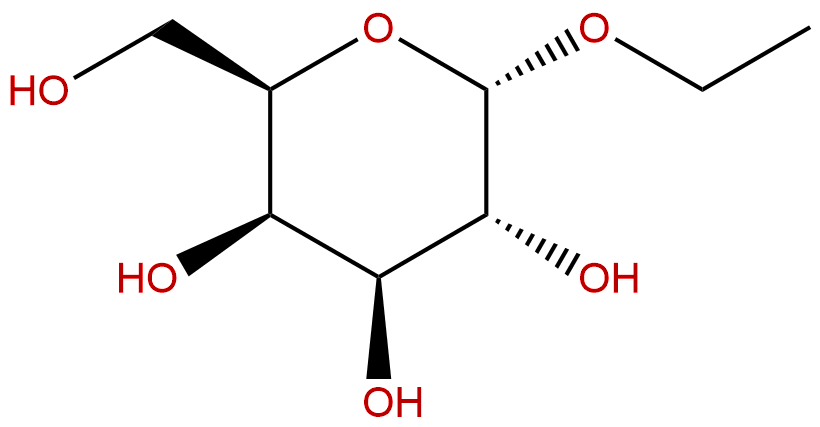


Product name: Eleutheroside C
Synonym name: Ethyl galactoside
Catalogue No.: SBP01675
Cas No.: 15486-24-5
Formula: C8H16O6
Mol Weight: 208.21
Botanical Source:
Physical Description:
Type of Compound: Saccharides
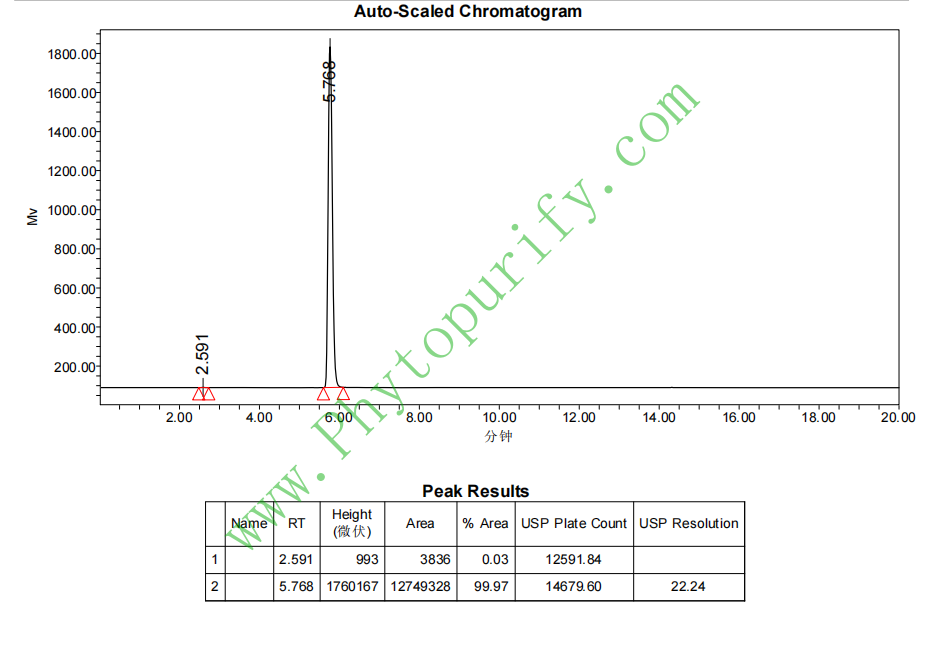
Purity: 95%~99%
Analysis Method: HPLC-DAD or/and HPLC-ELSD
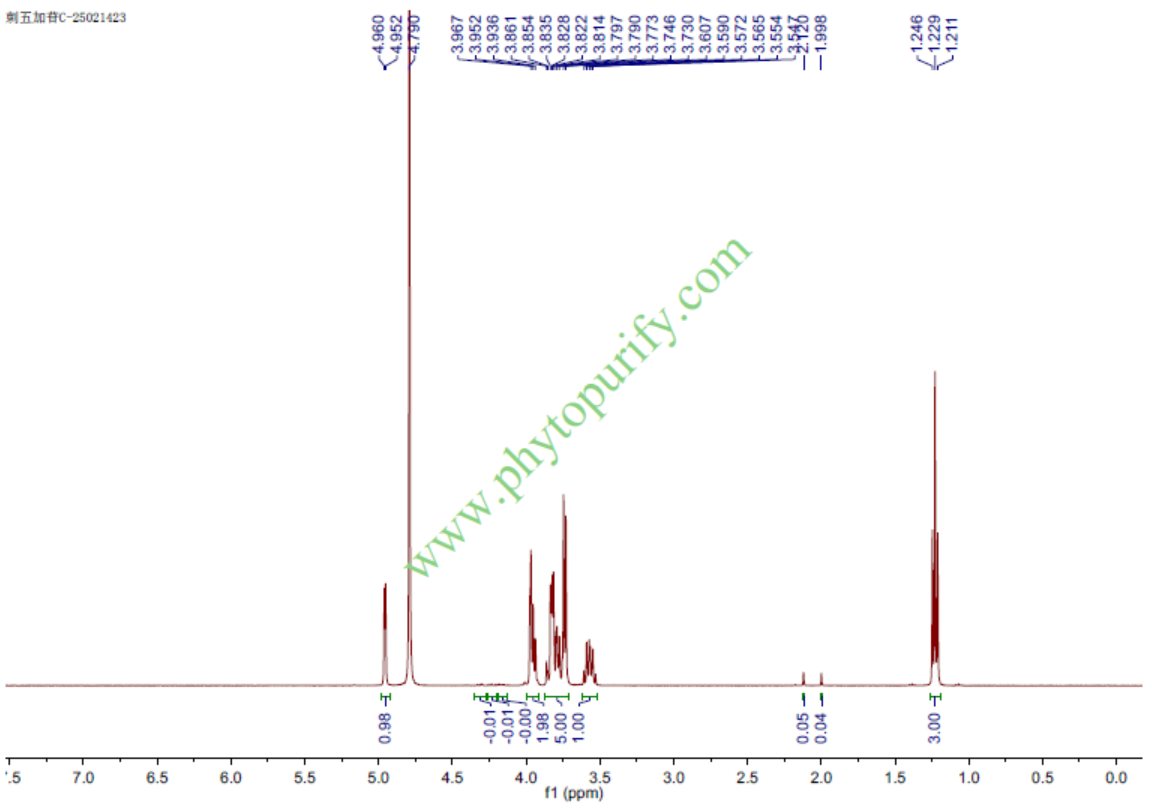
Identification Method: Mass, NMR
Packing: Brown vial or HDPE plastic bottle
Storage: Store in a well closed container, protected from air and light. Put into refrigerate or freeze for long term storage.
Whenever possible, you should prepare and use solutions on the same day. However, if you need to make up stock solutions in advance, we recommend that you store the solution as aliquots in tightly sealed vials at -20℃. Generally, these will be useable for up to two weeks.
The product could be supplied from milligrams to grams
Inquire for bulk scale.
For Reference Standard and R&D, Not for Human Use Directly.
HPLC of Eleutheroside C
HNMR of Eleutheroside C
Storage conditions:Short-term storage at 2~8℃, long-term storage at -20 ~ -80℃
99.3800
-1.4890
-1.4890
148.9051
.5591
.4223
Low
11.8377
3.5033
Yes
No
No
No
No
No
0.0
Yes
Yes
Yes
Yes
Eleutheroside C, also known as ethyl - α - D-galactoside, is a naturally occurring glycoside compound with a CAS number of 15486-24-5. This compound was originally isolated from the corm of Polianthes tuberosa, but its more famous source is the traditional medicinal plant Eleutherococcus senticosus, which has a long history of medicinal use in East Asia, especially in China, Russia, and Korea, and is known as the "Siberian ginseng". Ciwujia glycoside C is one of the important members of a series of bioactive glycoside compounds (collectively referred to as Ciwujia glycosides) in Ciwujia. These compounds are considered to be the key material basis for Ciwujia to exert its "adaptogen" effect, which enhances the body's non-specific resistance, anti fatigue, and regulates immune function.
In recent years, with the deepening development of natural product chemistry and immunopharmacology, Ciwujia glycoside C has attracted much attention due to its unique immunomodulatory activity. Modern pharmacological research has revealed that it can act on multiple key immune related targets, such as IL-2, FOXP3, IFN - γ, STAT1, and CD4, thus demonstrating potential value in maintaining immune homeostasis and intervening in immune related diseases. This article will provide a systematic professional popularization of this promising natural small molecule compound from its chemical structure, plant origin, pharmacological mechanism, drug evaluation, and research prospects.
The molecular formula of Ciwujia glycoside C is C8H16O6, with a molecular weight of 208.2100 g/mol. Its SMILES string (CCO [C @ H] 1O)C@HC@HC@H[C @ H] 1O) accurately describes its stereochemical structure. Structurally, it is a simple glycoside composed of an ethyl group (- C2H5) linked to a D-galactopyran ring via a glycosidic bond. The sugar ring contains multiple hydroxyl groups (- OH), which determine its basic physicochemical properties.
Based on the provided pharmacological parameters, we can quantitatively analyze its properties:
- Molecular weight (MW):208.21 Da, Far below the upper limit of 500 Da for conventional oral medications, it conforms to the basic characteristics of small molecule drugs.
- Topological Polarity Surface Area (TPSA)Up to 99.38 Å ². TPSA is an important parameter for measuring molecular polarity, especially the ability of hydrogen bond donors/acceptors. This value indicates that Ciwujia glycoside C has high hydrophilicity and the ability to form hydrogen bonds, mainly due to the multiple hydroxyl groups on its sugar ring.
- Lipid water partition coefficient (LogP/LogD)All are -1.489. LogP (octanol/water partition coefficient) is a key indicator for measuring the lipophilicity of compounds. Negative values indicate that the solubility of the compound in the aqueous phase is much higher than in the lipid phase, making it a typical hydrophilic molecule. This is completely consistent with its glycoside structure and high TPSA value.
- Water solubility The calculated value is 148.91 mg/mL, which confirms its excellent water solubility and facilitates its distribution in aqueous media such as body fluids.
- Permeability The permeability of Caco-2 cells is 0.4223, and the effective permeability (Peff) is 0.5591, which are relatively low values, indicating limited ability to cross the intestinal epithelial cell membrane through passive diffusion. This is consistent with its high hydrophilicity and low fat solubility characteristics. The blood-brain barrier (BBB) penetration is evaluated as' low ', meaning it is difficult for it to enter the central nervous system, which may actually reduce the potential risk of neurotoxicity for compounds that primarily act on the peripheral immune system.
- Plasma protein binding rate (PPB)Only 11.84%, indicating that it mainly exists in free form in the blood, which is conducive to rapid distribution to target tissues.
In summary, Ciwujia glycoside C is a typical small molecule, highly hydrophilic, and low fat soluble glycoside, and its physicochemical properties determine its good water solubility and poor membrane permeability.
The main natural source of Ciwujia glycoside C is Eleutherococcus senticosus (Rupr.&Maxim.) Maxim., which belongs to the Araliaceae family of plants. Ciwujia is mainly distributed in cold regions such as Northeast China, Far East Russia, Korean Peninsula, and northern Japan.
In the traditional medical system, especially in traditional Chinese medicine and Russian folk medicine, the roots and rhizomes of Acanthopanax senticosus are widely used. According to traditional Chinese medicine theory, Ciwujia has the effects of nourishing qi and spleen, tonifying kidney and calming the mind, promoting blood circulation and unblocking collaterals. It is commonly used to treat spleen kidney yang deficiency, physical weakness, loss of appetite, soreness and weakness of the waist and knees, insomnia and dreams. In Russia, it is classified as "Adaptogen", a concept proposed by Soviet scientists that refers to substances that can help the body resist various stressors such as physics, chemistry, and biology, and restore normal physiological functions. Ciwujia is used to enhance physical strength, eliminate fatigue, improve attention and work efficiency, and help athletes and special workers (such as astronauts and miners) cope with extreme environmental stress.
The traditional application of Ciwujia is often in the form of decoction, soaking in wine, or making into pills and powders. Modern plant chemistry research has isolated and identified various active ingredients from Acanthopanax senticosus, including Acanthopanax senticosus glycosides A, B, C, D, E, F, G, as well as polysaccharides, flavonoids, coumarins, etc. Among them, the glycosides of Acanthopanax senticosus are considered to be the core group of substances that exert their "adaptogen" and immune regulatory effects. As one of the members, although the content of Ciwujia glycoside C may not be as high as Ciwujia glycoside B and E, its unique chemical structure and clear immune targeting effect make it an important entry point for understanding the pharmacological mechanism of Ciwujia.
The core pharmacological activity of Ciwujia glycoside C is concentrated in immunomodulation field According to database information, its function involves five key targets: IL-2, FOXP3, IFN - γ, STAT1, and CD4. These targets do not exist in isolation, but form a complex immune regulatory network. Next, we will combine the functions of these targets to elucidate the possible mechanism of action of Ciwujia Glycoside C.
(1) Target network and immune homeostasis
- CD4 This is a characteristic marker on the surface of helper T cells (Th cells). CD4+T cells are the "commanders" of adaptive immune responses, and they can differentiate into different functional subgroups based on the cytokine environment, such as Th1, Th2, Th17, and regulatory T cells (Treg). Ciwujia glycoside C acts on CD4 targets, which may affect the activation, proliferation, or differentiation direction of CD4+T cells, which is the starting point of its immune regulatory effect.
- IL-2 (interleukin-2) and FOXP3 This is a crucial molecule involved in the development and function of regulatory T cells (Tregs). IL-2 is a key growth factor produced by activated T cells, and Treg cells have high expression of IL-2 receptors on their surface, which is highly dependent on IL-2. FOXP3 is the "master transcription factor" of Treg cells, and its expression is essential for Treg cell identity and inhibitory function. The IL-2 signaling pathway can induce and stabilize the expression of FOXP3. Research has shown that Ciwujia glycoside C may upregulate the expression of FOXP3 by promoting the production or signaling of IL-2, thereby promoting the generation of Treg cells or enhancing their inhibitory function. The main responsibility of Treg cells is to suppress excessive immune responses, maintain autoimmune tolerance, and prevent the immune system from attacking their own tissues (autoimmune diseases) or overreacting (such as allergies, inflammatory storms). Therefore, this pathway suggests that Ciwujia glycoside C may have Immunosuppression or enhanced immune tolerance Potential for the treatment of autoimmune diseases or excessive inflammation.
- IFN - γ and STAT1 This is a classic pro-inflammatory and cellular immune pathway. IFN - γ is mainly produced by Th1 cells and natural killer cells (NK cells), and is a core cytokine that drives cellular immune responses, such as combating intracellular pathogens and tumors. IFN - γ activates the downstream JAK-STAT signaling pathway by binding to its receptor, particularly leading to phosphorylation and nuclear translocation of transcription factor STAT1, thereby initiating the expression of a series of pro-inflammatory and immune activating genes. Ciwujia glycoside C acts on IFN - γ and STAT1 targets, which may indicate its ability to Regulating the intensity of Th1 type immune response If it inhibits this pathway, it may alleviate pathological damage in Th1 dominant autoimmune diseases such as multiple sclerosis and rheumatoid arthritis; If it moderately enhances this pathway, it may contribute to anti infection or anti-tumor immunity.
(2) Integration of mechanism of action and "adaptogen" characteristics
Ciwujia glycoside C simultaneously acts on the Treg pathway (IL-2/FOXP3) that promotes immune tolerance and the Th1 pathway (IFN - γ/STAT1) that drives immune attack, which may seem contradictory but actually reflects its "bidirectional regulation" or "immune homeostasis recovery" characteristics. This is the modern immunological interpretation of the concept of "adaptogen": it does not unilaterally enhance or inhibit immunity, but adjusts it towards a balance point based on the body's immune status.
-In immunocompromised or fatigued stress states, it may promote immune cell function and enhance the body's resistance by moderately enhancing signals such as IL-2.
-In autoimmune or excessive inflammatory states, it may suppress immune attacks and alleviate tissue damage by promoting Treg function (IL-2/FOXP3) and/or inhibiting overactive Th1 response (IFN - γ/STAT1).
The multi-target and bidirectional regulation characteristics of Ciwujia Glycoside C give it unique theoretical advantages in the treatment of complex immune imbalance related diseases, such as chronic fatigue syndrome, adjuvant therapy for autoimmune diseases, and immune reconstruction after radiotherapy and chemotherapy. Of course, its specific direction of action, dose-dependent relationship, and net effect in different disease models still require extensive preclinical and clinical research to clarify.
Based on the provided detailed pharmacological parameters, we can systematically evaluate the development prospects of Ciwujia glycoside C as a potential drug lead compound. The evaluation will be based on the well-known 'Rule of Five' (Ro5) and other key pharmacokinetic and safety indicators.
(1) Lipinski's Five Rules Compliance Analysis
The Lipinski rule is an empirical rule for evaluating the oral absorption potential of compounds, typically requiring: molecular weight<500, number of hydrogen bond donors (HBD)<5, number of hydrogen bond acceptors (HBA)<10, LogP<5.
- molecular weight 208.21 (compliant, far less than 500).
- LogP-1.489 (compliant, far less than 5).
- Hydrogen bond donor and acceptor From the structural formula, there are 4 hydroxyl groups on the sugar ring, and glycosidic oxygen may participate. The estimated number of hydrogen bond donors is ≥ 4; The number of hydrogen bond acceptors (oxygen atoms) is 6. Although HBD may approach or reach 4 and HBA is 6, they have not exceeded the limit of Ro5 (HBD<5, HBA<10).
Therefore, Ciwujia glycoside C Fully comply with Lipinski's five rules From the perspective of molecular size and polarity, it has a good foundation for becoming an oral medication.
(2) Absorption, distribution, metabolism, excretion (ADME) characteristics
- absorb As mentioned earlier, its high hydrophilicity (low LogP, high TPSA) and low Caco-2 permeability suggest that its intestinal absorption through passive diffusion may be poor. However, glycoside compounds may be actively absorbed through specific transporters on intestinal epithelial cells, such as glucose transporter SGLT1, which requires experimental verification. Its Peff value (0.5591) is in the moderate to low range, and the actual oral bioavailability needs to be determined by in vivo pharmacokinetic studies.
- distribution Low BBB penetration limits its central role, but favors peripheral immune targeting. A very low plasma protein binding rate (11.84%) means a high concentration of free drugs, which is beneficial for binding to the target.
- Metabolism and excretion As a glycoside, it may be hydrolyzed by gut microbiota or glycosidase in the body to produce galactose and ethanol, which can affect the blood concentration and half-life of its prototype drug. The relevant parameters (such as cytochrome P450 enzyme inhibition/induction) are not provided and further research is needed.
- Water solubility Excellent (148.9 mg/mL) is a major advantage in formulation development as it does not require complex structural modifications for solubilization.
(3) Preliminary Safety Assessment
- Genotoxicity The Ames test result is 0.0 (negative), and the chromosomal aberration test is "none", preliminarily ruling out its mutagenic risk.
- cardiotoxicity Inhibition of the hERG channel to 'no' reduces the potential risk of causing prolonged QT interval and apical torsion ventricular tachycardia in the heart.
- Other toxicities Skin sensitization (Skid_Sens), respiratory sensitization (Resp_Sens), and phototoxicity (Photo_tox) are all negative or "none", indicating good safety.
- Serum biochemical indicators The data shows that it has an effect on alkaline phosphatase (Ser_LK), gamma glutamyltransferase (Ser_GGT), aspartate aminotransferase (Ser_ST), and alanine aminotransferase (Ser_LT) (marked as "Yes"). This suggests that in animal or cell experiments, Ciwujia glycoside C may have an impact on liver function related indicators and should be highly valued. This may be its direct liver cell effect or an indirect response triggered by immune regulation. In subsequent development, it is necessary to conduct systematic acute and chronic toxicity experiments to thoroughly evaluate the safety of organs such as the liver and kidneys.
Comprehensive Assessment Ciwujia glycoside C conforms to the rules of oral medication in terms of molecular characteristics, and its safety screening is generally good. However, there are potential liver enzyme influence signals that need to be cautious. The main development challenge may lie in Oral bioavailability Due to its glycoside structure being easily hydrolyzed and poor membrane permeability, the exposure of its prototype drug in vivo may be limited. Future structural optimization may need to consider the preparation of prodrugs (such as esterification to improve lipid solubility), search for specific transporter mediated absorption pathways, or directly develop non oral administration formulations (such as injections, utilizing their good water solubility).
At present, research on Ciwujia glycoside C is still in progress Preclinical stage Mainly focused on in vitro cell experiments and a few animal model studies. Existing research has confirmed its activity in immune regulation, particularly its impact on T cell subpopulation differentiation and related cytokine networks, which is consistent with the aforementioned target analysis. However, most studies still observe Ciwujia glycoside C as a component of Ciwujia total extract or Ciwujia glycoside mixture, and there is still a relative lack of in-depth and systematic pharmacological, pharmacokinetic, and toxicological research on its monomeric compounds.
Future research focuses and directions include:
1. Deepening the mechanism of action By utilizing techniques such as gene knockout, RNA interference, and reporter genes, the direct effects on targets such as IL-2, FOXP3, IFN - γ, STAT1, and CD4 were accurately validated in cell and animal models, elucidating the upstream and downstream events of their signaling pathways.
2. Disease model validation Evaluate the therapeutic efficacy and dose-response relationship in clear autoimmune disease models (such as experimental autoimmune encephalomyelitis EAE, collagen induced arthritis CIA), immunosuppressive models, or chronic inflammation models, and clarify the specific conditions and boundaries of their "bidirectional regulation".
3. Pharmacokinetic study Conducting systematic animal in vivo ADME research to clarify its oral absorption, distribution, metabolism (especially the stability of glycosidic bonds), excretion pathways, and bioavailability is a crucial step in advancing it to clinical practice.
4. Structural optimization and formulation development To address the potential issue of low bioavailability, reasonable structural modifications (such as prodrug design) or the development of novel drug delivery systems (such as nanoparticles and liposomes) can be carried out to improve their stability and targeting.
5. Comprehensive evaluation of safety Under GLP regulations, complete preclinical safety evaluations of acute toxicity, chronic toxicity, reproductive toxicity, etc., with a focus on their impact on liver function.
Application Prospects If the above research achieves positive results, Ciwujia glycoside C is expected to be developed into a new type of compound Natural source immunomodulators Its applications may include:
- Autoimmune diseases As an adjuvant therapy drug, when used in combination with existing immunosuppressants, it may have a synergistic and detoxifying effect.
- Tumor immunotherapy adjuvant Used for immune reconstruction after radiotherapy and chemotherapy, or in combination with immune checkpoint inhibitors to regulate the tumor microenvironment.
- Chronic fatigue syndrome and stress-related immune dysregulation Utilize its "adaptogen" properties to help restore immune homeostasis.
- As a lead compound Its simple glycoside structure provides an optimized template for medicinal chemists, and through structural modification, it is possible to obtain derivatives with stronger activity and better pharmacokinetic properties.
In summary, as one of the effective ingredients of traditional herbal medicine Ciwujia, Ciwujia glycoside C is a typical representative of modern natural medicine research moving from "crude extract" to "clear monomer" and "precise target". It bridges the gap between traditional medical wisdom and modern immunology. Although there are still many scientific issues that need to be overcome in the future, its unique immune regulatory mechanism and good pharmacological basis have earned it a place in the field of immunotherapy drug research and development, which deserves continuous attention and in-depth exploration.
