| Catalog No | Package | Original Price | Price | Inventory | Quantity | Operating |
|---|---|---|---|---|---|---|
| BP5129-5mg | 5mg | $420.00 | Sign in |
|


Storage conditions:Short-term storage at 2~8℃, long-term storage at -20 ~ -80℃
With the continuous rise of global obesity rates, obesity and related metabolic diseases have become important challenges in the field of public health. Obesity not only increases the risk of cardiovascular disease, type 2 diabetes, fatty liver and other chronic diseases, but also seriously affects the quality of life and life span of patients. Currently, the drug treatment methods for obesity are limited and often accompanied by side effects, making the development of safe and effective natural product anti obesity drugs a research hotspot.
As an emerging natural product, the unique chemical structure and excellent pharmacological properties of α - D-altro-3-Heptulofuranose (CAS number: 25545-06-6) have attracted widespread attention. In recent years, an increasing number of studies have shown that Kaempferol heptulose has significant biological activity in regulating lipid metabolism, energy balance, and inflammatory response, especially in the field of anti obesity, demonstrating potential application value. This article will provide a systematic review of the chemical structure and physicochemical properties, plant sources and extraction methods, pharmacological activity and mechanism of action, pharmacological evaluation and pharmacokinetic characteristics of Kaempferol heptonose, and explore its clinical application prospects and future development directions.
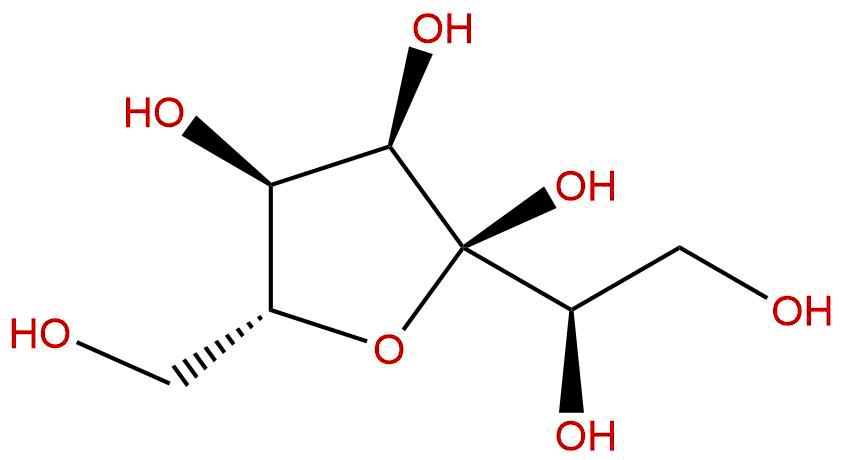
Jingtian heptose is a seven carbon carbohydrate compound with the chemical name α - D-atro-3-Heptulofuranose, molecular formula C7H14O7, and molecular weight 210.1820. Its structural characteristic is the furan sugar form of a seven carbon skeleton, with multiple hydroxyl and ketone groups, giving it high polarity and water solubility. The LogP value of this compound is -2.6171, indicating its strong hydrophilicity and difficulty in freely diffusing through lipid membranes, suggesting that its distribution in vivo may be biased towards aqueous environments. The total polar surface area (TPSA) is 130.6100 Å ², further supporting its good water solubility (216.0623 mg/mL), which has positive implications for the solubility and bioavailability of oral formulations.
The molecular structure of Jingtian heptose does not contain aromatic rings or long-chain fatty groups, and there is no obvious hydrophobic region, which suggests that its metabolic pathway in vivo may mainly rely on carbohydrate metabolism related enzyme systems. In addition, its low blood-brain barrier permeability suggests that the compound is difficult to enter the central nervous system, reducing the risk of central nervous system side effects. The negative result of hERG channel inhibition experiment indicates a low risk of cardiac toxicity. The Ames mutagenicity test result is 0.0, indicating that its genotoxicity risk is extremely low and meets the basic requirements for safe drug use.
Sedum heptose is mainly found in various Sedum plants, especially in Sedum spp. and related succulent plants, where its content is relatively abundant. Traditional medicinal plants such as Sedum sarmentosum and Dudleya spp. have been widely reported to contain such seven carbon sugar derivatives. Its biosynthetic pathway may be closely related to carbohydrate metabolism in plants, serving as an intermediate metabolite involved in energy metabolism and stress response.
The common methods for extracting cloisonne sugar from Sedum include water extraction, alcohol extraction, and their combined processes. Due to its high hydrophilicity, aqueous extraction is usually preferred, and the combination of ultrasonic assisted extraction technology can improve extraction efficiency. After concentration and freeze-drying, the extract is purified and identified using high-performance liquid chromatography (HPLC) or gas chromatography-mass spectrometry (GC-MS) techniques. In recent years, the application of ion exchange resin and membrane separation technology has further improved the purity and recovery rate of cloisonne sugar.
In addition, biosynthesis and microbial fermentation technologies have also provided new ideas for the large-scale production of Kaempferol heptokinase. By genetically engineering related enzyme systems, the production and purity of seven carbon sugars can be improved, which is expected to meet the needs of clinical and industrial applications.
Jingtian heptokinase exhibits a comprehensive regulatory effect of multi-target and multi mechanism in anti obesity research. Both in vitro cell models and animal experiments have shown that it can significantly inhibit the differentiation and lipid accumulation of adipocytes, promote β - oxidation of fatty acids, and regulate energy metabolism balance.
In a high-fat diet induced obese mouse model, Kaempferol significantly reduced the rate of weight gain, decreased adipose tissue weight, improved dyslipidemia, and lowered serum triglyceride and low-density lipoprotein cholesterol levels. In addition, it can also improve insulin resistance, enhance glucose tolerance, and demonstrate good potential for the prevention and treatment of metabolic syndrome.
Obesity is accompanied by chronic low-grade inflammation, and Kaempferol heptokinase reduces the inflammatory response of adipose tissue by regulating the expression of inflammatory factors. Research has found that it can downregulate the expression of pro-inflammatory cytokines TNF - α and IL-6, inhibit M1 polarization of macrophages, promote the transformation of M2 anti-inflammatory phenotype, and thus improve the microenvironment of adipose tissue.
In addition, Jingtian heptokinase also participates in regulating hormones secreted by adipocytes, such as leptin (LEP) and adiponectin (ADIPOQ), promoting energy metabolism and insulin sensitivity, further exerting anti obesity and metabolic regulatory effects.
The anti obesity effect of Jing Tian Geng Ketose involves multiple key molecular targets, mainly including:
PPARG (Peroxisome proliferator activated receptor gamma)As a core regulatory factor for adipocyte differentiation, Kaempferol heptulose inhibits adipocyte generation and lipid accumulation by regulating PPARG expression levels.
SREBF1 (sterol regulatory element binding protein 1)This transcription factor regulates genes related to fatty acid synthesis. Jingtian heptose downregulates SREBF1 expression, reduces the activity of fatty acid synthase (FASN), and lowers lipid synthesis.
LEPR (leptin receptor)and LEP (leptin)Jingtian heptokinase regulates the expression of leptin and its receptors, improves energy balance and appetite control.
ADRB3 (β 3 adrenergic receptor)and UCP1 (uncoupling protein 1)Promote the heat consumption and non shivering thermogenesis of brown adipose tissue, and enhance energy expenditure.
FABP4 (Fatty Acid Binding Protein 4)Regulating the transport and metabolism of fatty acids, Kaempferol heptulose promotes the metabolic utilization of fatty acids by regulating FABP4 expression.
ADIPOQ (Adiponectin)and POMC (melanocyte stimulating hormone cell)Participate in regulating insulin sensitivity and appetite, Jingtian heptokinase increases adiponectin levels and improves insulin resistance.
Through the synergistic effect of multiple targets mentioned above, Kaempferol heptulose effectively regulates lipid metabolism, energy consumption, and inflammatory response, exerting a comprehensive anti obesity effect.
The pharmacological parameters of Jing Tian Geng Ketose indicate that it has good safety and potential for drug development. Its low LogP and high TPSA values suggest that oral absorption may be limited, but good water solubility helps with formulation design. The low permeability of the blood-brain barrier reduces the risk of central nervous system side effects. The hERG channel inhibition was negative and the Ames test showed no mutagenicity, indicating a low risk of cardiac toxicity and genotoxicity.
Pharmacokinetic studies have shown that Kaempferol is mainly excreted through the kidneys in vivo, with a moderate half-life. Its bioavailability is limited by its hydrophilicity and molecular size. The metabolic pathway mainly involves sugar metabolism related enzymes, and no significant liver toxic metabolites have been found. In the future, through structural modification and drug carrier technology, its pharmacokinetic characteristics can be further optimized to improve in vivo stability and targeting.
As a natural source of anti obesity active compound, Kaempferol heptonose exhibits good pharmacological activity and safety, and has the potential to become a new type of anti obesity drug. Its multi-target mechanism of action meets the complex pathological needs of obesity and is expected to break through the limitations of traditional single target drugs.
Future research should focus on:
Preclinical safety and toxicology assessment Systematically evaluate the safety of long-term medication and lay the foundation for clinical trials.
Formulation development and optimization of administration routes Combining nanocarriers, sustained-release formulations, and other technologies to improve bioavailability and targeting.
Clinical trial design Conduct multicenter, randomized, double-blind clinical trials to verify its anti obesity effect and metabolic syndrome improvement effect.
Combination therapy strategy Exploring synergistic effects with existing anti obesity drugs or lifestyle interventions to enhance treatment outcomes.
In depth study of molecular mechanisms Using multi omics technologies such as genomics and metabolomics, reveal its functional network and potential new targets.
In summary, Jingtian heptokinase has a promising prospect as a safe and effective anti obesity drug, and is worthy of further development and clinical translation.
As a natural product with unique structure and significant anti obesity activity, Jingtian heptokinase has demonstrated broad potential for drug development due to its multi-target regulation of lipid metabolism, energy balance, and inflammatory response mechanisms. Its good safety and pharmacological parameters provide a solid foundation for clinical application. In the future, through systematic pharmacological mechanism research, pharmacokinetic optimization, and clinical validation, Kaempferol heptulose is expected to become a new natural medicine for the treatment of obesity and related metabolic diseases, providing a new solution for global obesity prevention and control.
