Introduction/Overview
Diabetes, as a global chronic metabolic disease, its incidence rate continues to rise and has become a major public health problem threatening human health. Although current first-line hypoglycemic drugs can effectively control blood sugar, long-term use often accompanies side effects such as hypoglycemia, weight gain, and cardiovascular risk, prompting researchers to continuously explore safer and more effective treatment strategies. In this context, natural products from traditional medicinal plants have become an important treasure house for the research and development of anti diabetes drugs due to their multi target, multi pathway characteristics and good safety. Ginseng(Panax ginseng C. A. Mey.), as the "king of all herbs", its core active ingredient - ginsenoside has been widely confirmed to have significant anti diabetes potential. Ginsenoside Rs2, as an important rare saponin component in ginseng, has attracted much attention in recent years due to its outstanding performance in improving insulin resistance and regulating glucose and lipid metabolism. The purpose of this paper is to systematically review the chemical characteristics, plant origin, anti diabetes pharmacological activity, molecular mechanism of action, pharmaceutical characteristics and clinical application prospects of ginsenoside Rs2, in order to provide a comprehensive scientific reference for the in-depth research and development of this compound.
Chemical structure and physicochemical properties
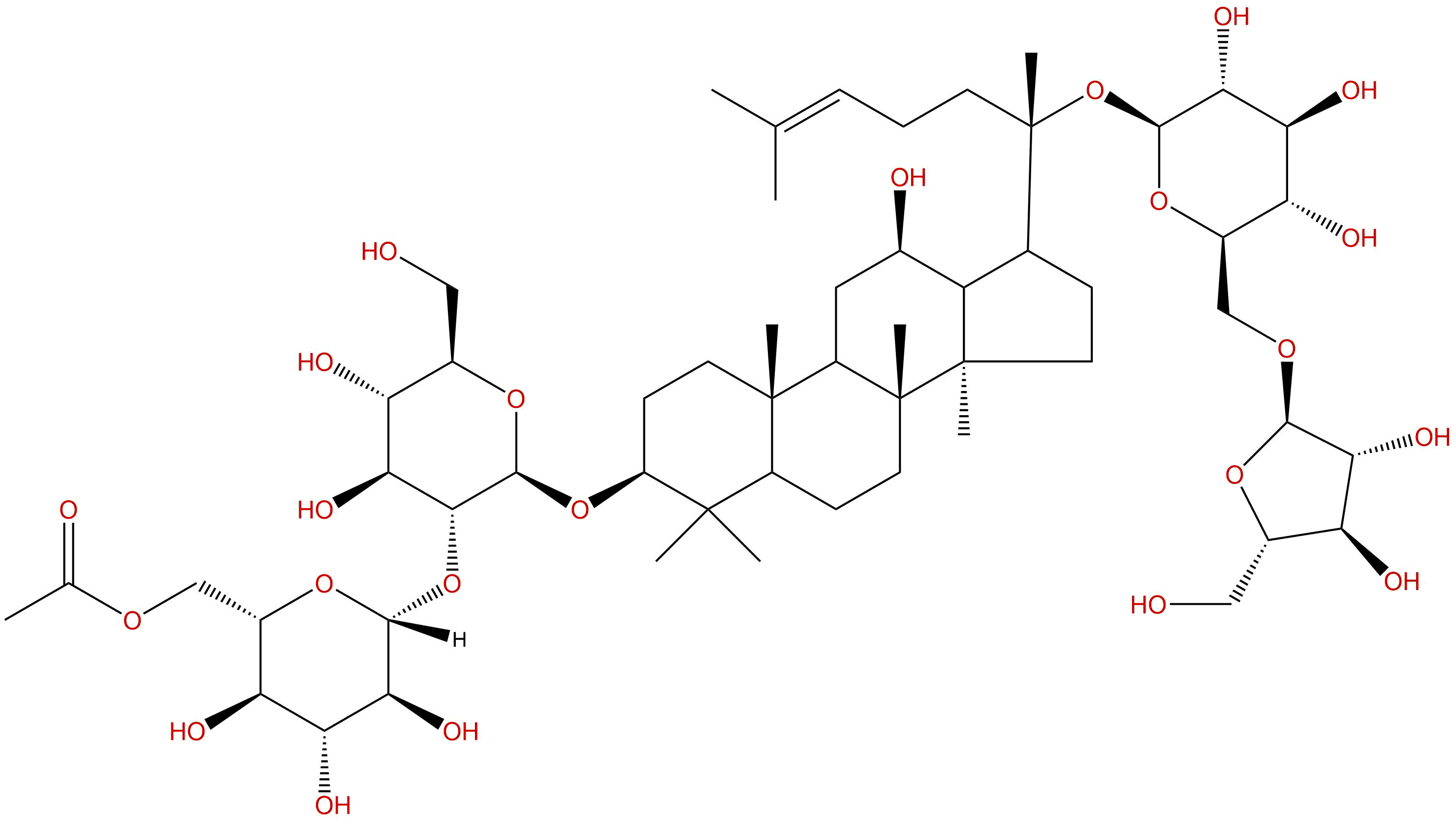
Ginsenoside Rs2, chemical name 3 β, 12 β, 20 (S) - trihydroxydamam-24-en-3-O - {β - D-glucopyranosyl - (1 → 2) - [β - D-glucopyranosyl - (1 → 6)] - β - D-glucopyranoside} -20-O - β - D-glucopyranosyl - (1 → 6) - β - D-glucopyranoside, CAS number 87733-66-2. Its molecular formula is C54H92O23, with a molecular weight of 1121.3180 g/mol.
Structurally, ginsenoside Rs2 belongs to the dammarane type tetracyclic triterpenoid saponin and is a derivative of the original panaxadiol type saponin. Its aglycone is 20 (S) - protopanaxadiol, with a complex oligosaccharide chain connected at positions C-3 and C-20. The sugar chain at position C-3 is a trisaccharide structure, consisting of one molecule of β - D-glucose connected to another molecule of β - D-glucose via a (1 → 2) bond, which in turn connects to a third molecule of β - D-glucose via a (1 → 6) bond; The sugar chain at position C-20 is a disaccharide structure, connected by two molecules of β - D-glucose via (1 → 6) bonds. This highly glycosylated structure endows it with unique physicochemical properties.
According to the provided pharmacological parameters, the lipid water partition coefficient (LogP) of ginsenoside Rs2 is 2.1975, indicating that it has a certain lipophilicity, but its large molecular weight and multi hydroxyl structure also retain some hydrophilic properties. Its topological polar surface area (TPSA) is as high as 363.1300 Å ², mainly attributed to the numerous hydroxyl groups and oxygen atoms on the sugar ring in the molecule, indicating strong molecular polarity that may affect transmembrane absorption. The water solubility value is 0.1793 (usually measured in mg/mL or log mol/L, which is not specified here but is relatively small), indicating limited solubility in water, which may be one of the main challenges facing its oral bioavailability. These physicochemical properties are the basis for determining its pharmacokinetic behavior.
Plant sources and extraction methods
Ginsenoside Rs2 mainly comes from ginseng, a plant of the Panax genus in the Araliaceae family(Panax ginseng)The roots and rhizomes. It is worth noting that in fresh or traditionally processed ginseng, the content of Rs2 is usually low and belongs to rare saponins. Its content often increases during the processing (such as steaming, heating) or storage of ginseng through conversion reactions such as deglycosylation and isomerization of other major saponins (such as Rb1, Rb2, Rc, Rd, etc.). For example, the content of rare saponins in red ginseng (steamed processed ginseng) is usually higher than that in sun dried ginseng.
The extraction of ginsenoside Rs2 usually follows the general process of natural product chemistry. Firstly, the dried ginseng root powder is subjected to reflux extraction or ultrasound assisted extraction using polar solvents such as methanol, ethanol, or water alcohol mixed solutions to fully extract the saponin components. Subsequently, crude extract was obtained by vacuum concentration. The crude extract needs to undergo a series of separation and purification steps to obtain high-purity Rs2. The commonly used techniques include:
1. Macroporous adsorption resin chromatography Using the adsorption characteristics of resins (such as D101, AB-8) for saponins, gradient elution is performed with water and different concentrations of ethanol to enrich the saponin sites.
2. Positive/reverse phase silica gel column chromatography This is a crucial step in further separation. Gradient elution is often performed using solvent systems such as chloroform methanol water or ethyl acetate methanol water.
3. High performance liquid chromatography Especially, preparative high-performance liquid chromatography (Prep HPLC) using a C18 reverse phase chromatography column with acetonitrile water or methanol water as the mobile phase is the ultimate and effective method for obtaining high-purity ginsenoside Rs2.
In addition, modern biotechnology such as enzyme conversion or microbial conversion, which uses abundant ginsenosides as precursors to selectively convert them into Rs2, has also become a research direction for improving yield and achieving large-scale preparation.
Pharmacological activity research
A large number of preclinical studies have confirmed that ginsenoside Rs2 has a wide range of pharmacological activities against diabetes and related metabolic disorders.
1. Hypoglycemic effect: In a variety of diabetes animal models (such as streptozotocin induced type 1 diabetes model, high-fat diet combined with low-dose streptozotocin induced type 2 diabetes model, db/db spontaneous diabetes mice), ginsenoside Rs2 intervention can significantly reduce fasting blood glucose, postprandial blood glucose and glycosylated hemoglobin levels, and improve abnormal glucose tolerance.
2. Improve insulin resistance Insulin resistance is the core pathological link of type 2 diabetes. Research has shown that Rs2 can significantly improve insulin sensitivity, manifested by promoting glucose clearance in insulin tolerance tests and reducing fasting insulin levels and insulin resistance index (such as HOMA-IR) in the serum of model animals.
3. Regulating lipid metabolism Diabetes is often accompanied by lipid metabolism disorder. Rs2 can effectively reduce the levels of total cholesterol, triglycerides and low-density lipoprotein cholesterol in the serum of diabetes animals, and at the same time increase the beneficial high-density lipoprotein cholesterol, reduce liver steatosis, showing a good role in regulating lipid.
4. Protect pancreatic beta cells Rs2 has a protective effect on pancreatic beta cell damage and apoptosis induced by chemical toxins or glucose and lipid toxicity, and helps maintain insulin secretion function.
5. Anti inflammatory and antioxidant properties Chronic low-grade inflammation and oxidative stress are important driving factors for the occurrence and development of diabetes and its complications. Rs2 can inhibit the expression of pro-inflammatory factors such as tumor necrosis factor - α and interleukin-6, while enhancing the activity of antioxidant enzymes such as superoxide dismutase and glutathione peroxidase, reducing the level of oxidative products such as malondialdehyde, and thus alleviating tissue damage.
Mechanism of action and molecular targets
The anti diabetes effect of ginsenoside Rs2 is not achieved through a single way, but through a complex multi target network. Its core mechanism involves multiple key links such as energy metabolism induction, insulin signaling pathway, glucose transport and utilization, and enteropancreatin system.
1. Activate the AMPK signaling pathway Adenosine activated protein kinase is a core regulator of cellular energy metabolism. Rs2 can directly or indirectly activate AMPK (encoded by subunits such as PRKAA1), phosphorylate and inhibit acetyl CoA carboxylase, and promote fatty acid oxidation; Simultaneously upregulating the membrane translocation of glucose transporter 4 increases the uptake of glucose by skeletal muscle and adipose tissue. The activation of AMPK can also inhibit the expression of key hepatic gluconeogenesis enzymes and reduce hepatic glucose output.
2. Enhance insulin signaling transduction Rs2 can promote tyrosine phosphorylation of insulin receptor substrate 1 and activate the phosphatidylinositol 3-kinase/protein kinase B signaling pathway. The activated PI3K/AKT1 pathway promotes the translocation of SLC2A4 (i.e. GLUT4) and accelerates glucose uptake; On the other hand, by regulating downstream targets such as glycogen synthase kinase-3, glycogen synthesis is promoted.
3. Regulating nuclear receptor PPAR γPeroxisome proliferator activated receptor gamma is a key transcription factor for adipocyte differentiation and insulin sensitization. Rs2 may act as a partial agonist or regulator of PPAR γ, promoting normal differentiation of adipocytes and increasing adiponectin secretion, thereby systematically improving insulin sensitivity.
4. Inhibit renal SGLT2 and upregulate liver GCK Rs2 may inhibit the activity of sodium glucose cotransporter 2 in the proximal tubules of the kidney, reduce the reabsorption of glucose in the original urine, and promote urinary glucose excretion, similar to the effect of SGLT2 inhibitors. Meanwhile, it may upregulate the expression or activity of hepatic glucokinase, promoting the liver's utilization of glucose.
5. Inhibit DPP-4 activity Dipeptidyl peptidase-4 is a key enzyme for degrading enteropancreatin (such as glucagon like peptide-1). Research has shown that Rs2 has DPP4 inhibitory activity, which can delay the degradation of GLP-1 and enhance its physiological effects of promoting insulin secretion and inhibiting glucagon release.
6. Improve mitochondrial function and autophagy Rs2 can also improve the mitochondrial function of pancreatic beta cells and insulin sensitive tissues (such as skeletal muscle and liver), maintain energy homeostasis, and clear damaged organelles by regulating autophagy flow, thereby reducing cellular stress.
Evaluation of drug properties and pharmacokinetics
Based on the provided parameters and existing research, a preliminary evaluation of the pharmacological properties of ginsenoside Rs2 is conducted
Pharmacokinetic characteristics As a large molecule, highly polar, and high TPSA saponin compound, the oral absorption of ginsenoside Rs2 often faces challenges. Its absorption may mainly occur in the intestine, but its bioavailability is expected to be low. After absorption, it may undergo extensive metabolism in the body, including gradual deglycosylation mediated by gut microbiota and liver enzymes, converting into aglycones or secondary saponins (such as Compound K), which may contribute to some pharmacological activity. Its high molecular weight and strong hydrophilicity result in its blood-brain barrier permeability low The risk of central nervous system related side effects is relatively low. The prototype drug and its metabolites may be mainly excreted through bile and kidneys.
Preliminary evaluation of safety The preliminary toxicological data provided is quite positive.HERG inhibition result No This suggests a low risk of potential cardiac toxicity (inducing long QT syndrome), which is an important drug safety indicator.Ames test result 0.0(usually referring to the absence of mutagenicity at the tested concentration), indicating that there is no significant genetic toxicity risk. However, comprehensive preclinical safety evaluation still requires systematic research on acute toxicity, long-term toxicity, reproductive toxicity, and other factors.
Challenges and optimization of drug development The main challenge lies in Low oral bioavailability Future research and development may require optimization through pharmaceutical strategies, such as: ①Formulation technology Develop new drug delivery systems such as nanocrystals, liposomes, micelles, and solid dispersions to improve their solubility and intestinal permeability; ②Structural modification Moderate chemical modification of glycosides or aglycones to improve their lipid solubility and metabolic stability while retaining the pharmacophore; ③Prodrug strategy Design precursor drugs that can be converted into Rs2 in vivo.
Clinical application prospects and prospects
Ginsenoside Rs2 shows great potential as a new type of anti diabetes natural medicine or functional food ingredient.
1. Direction of drug development:
* Single component drug As a new chemical entity, it develops prescription drugs for the treatment of type 2 diabetes and its complications. In view of its multi target action characteristics, it is especially suitable for diabetes patients with insulin resistance and lipid metabolism disorder.
* Combination medication components Combining with existing hypoglycemic drugs (such as metformin, SGLT2 inhibitors, DPP-4 inhibitors) may produce synergistic effects and reduce the dosage and side effects of a single drug.
* Core substances of traditional Chinese medicine compound: As the quality control index component and the material basis of efficacy of traditional anti diabetes traditional Chinese medicine prescriptions (such as those containing ginseng), it promotes the modernization and internationalization of compound preparations.
2. Functional foods and health products: Based on its natural source and good safety, it can be developed as a health care product for blood sugar management of pre diabetes population, auxiliary hypoglycemia of diabetes patients, and metabolic health maintenance of general population.
3. Future research focus:
* In depth mechanism exploration Using proteomics, metabolomics, network pharmacology and other technologies, systematically elucidate the precise network and upstream and downstream signaling pathways of its multi-target effects.
* Metabolism and PK/PD research Conduct systematic identification of metabolites in vitro and in vivo, pharmacokinetic pharmacodynamic correlation studies, and clarify their true active forms.
* Pharmaceutical research Focusing on tackling its delivery system and significantly improving its bioavailability is a key step towards its clinical translation.
* Preclinical and clinical research Complete standardized GLP toxicology evaluation and gradually promote human clinical trials to verify its safety and effectiveness.
* Expand indications Based on its anti-inflammatory, antioxidant, vascular protection and other effects, explore its application value in diabetes nephropathy, retinopathy, cardiovascular complications and other fields.
Conclusion
Ginsenoside Rs2, as a rare saponin with important biological activity in ginseng, shows significant effect in anti diabetes, improving insulin resistance and regulating lipid metabolism by activating AMPK, enhancing insulin signal, inhibiting DPP-4 and SGLT2 and other multi-target synergistic mechanisms. Although its large molecular weight and complex glycosyl structure pose a challenge to oral absorption, leading to the optimization of pharmaceutical properties, its clear multi-channel mechanism of action, good initial safety characteristics (no hERG inhibition, Ames negative) and profound traditional application background make it an attractive candidate molecule in the field of diabetes treatment. Future research should focus on using modern pharmaceutical technologies to overcome delivery bottlenecks and validate its efficacy and safety through systematic preclinical and clinical studies. With the deepening of research, ginsenoside Rs2 is expected to transform from an effective component of traditional herbal medicine into a modern new anti diabetes treatment option, bringing new hope to diabetes patients worldwide.