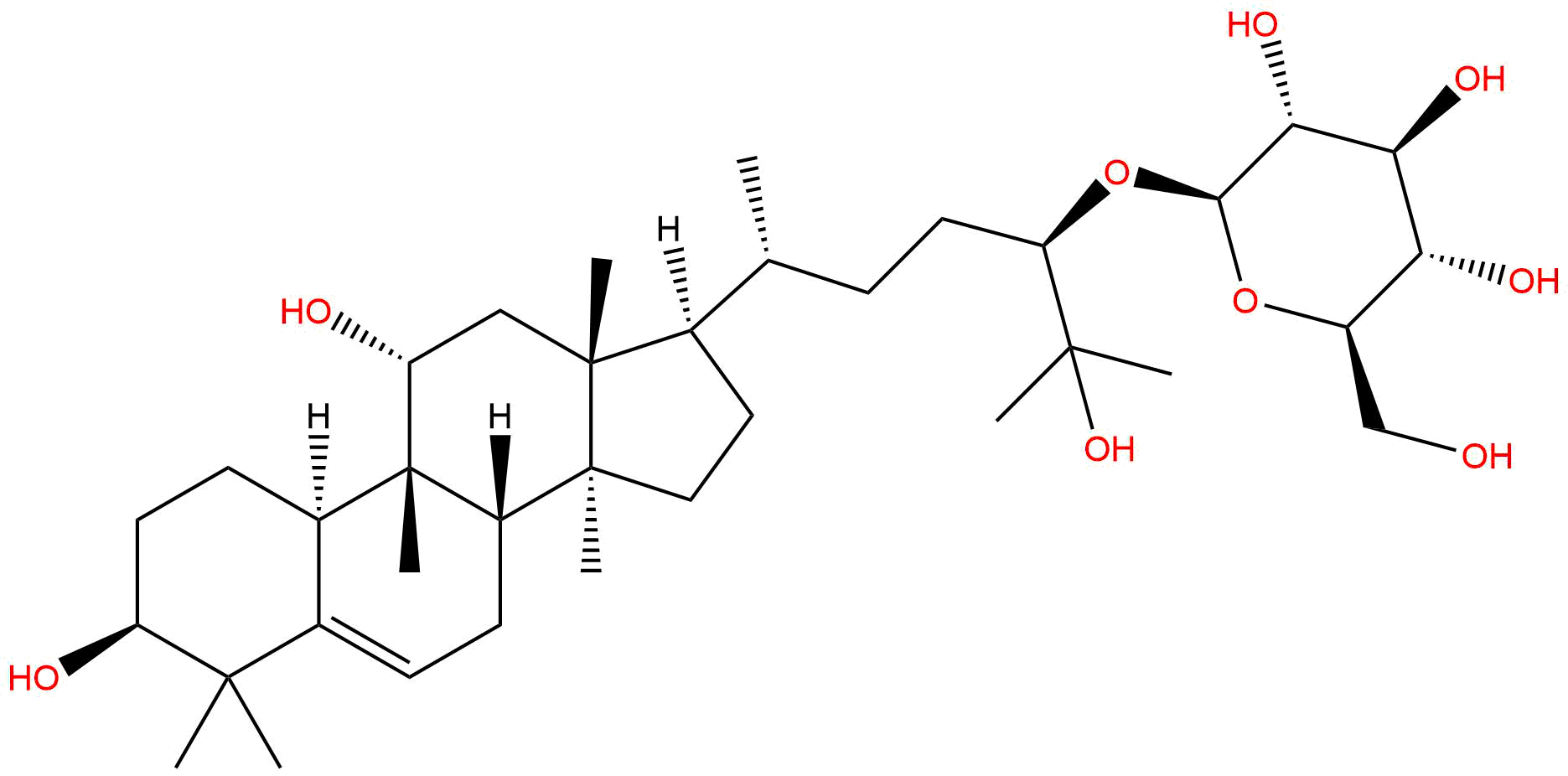


Product name: Mogroside Ia1
Synonym name:
Catalogue No.: BP3505
Cas No.: 88901-46-6
Formula: C36H62O9
Mol Weight: 638.883
Botanical Source: Momordica grosvenorii and Siraitia siamensis; Luohanguo
Physical Description:
Type of Compound: Triterpenoids
Purity: 95%~99%
Analysis Method: HPLC-DAD or/and HPLC-ELSD
Identification Method: Mass, NMR
Packing: Brown vial or HDPE plastic bottle
The product could be supplied from milligrams to grams. Inquire for bulk scale.
We provide solution to improve the water-solubility of compounds, thereby facilitating the variety of activity tests and clinic uses.
For Reference Standard and R&D, Not for Human Use Directly.
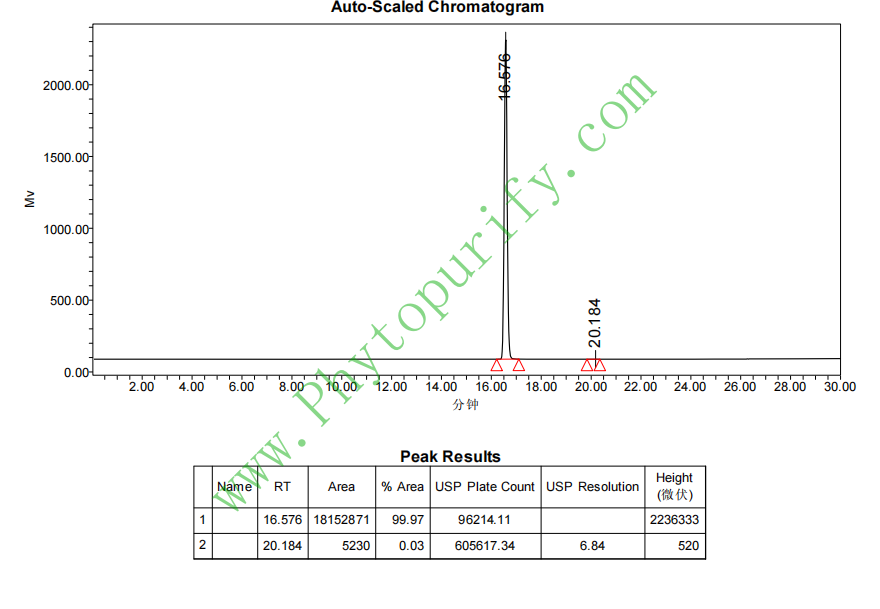
HPLC of Mogroside Ia1
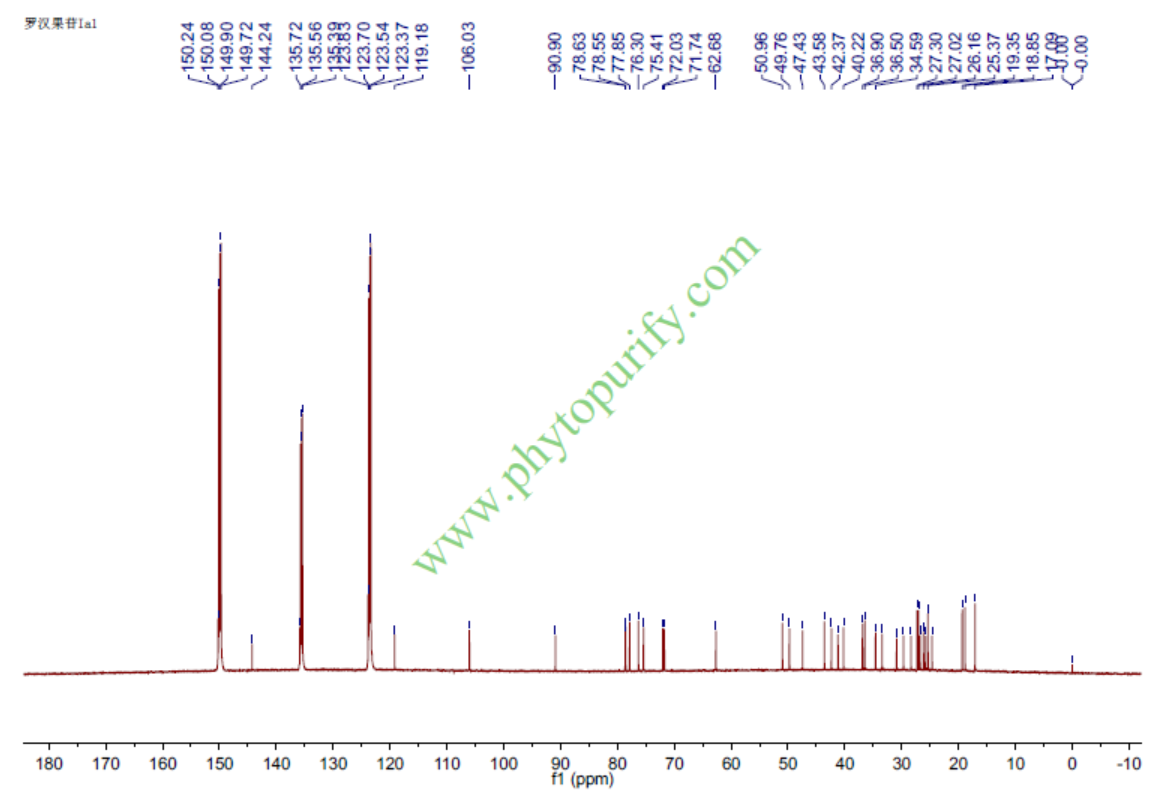
NMR of Mogroside Ia1
Storage conditions:Short-term storage at 2~8℃, long-term storage at -20 ~ -80℃
160.0700
3.7464
3.7467
.0118
.6027
.9947
Low
78.8885
5.6696
No
No
No
No
No
No
0.0
Yes
No
No
Yes
Momordide Ia1 (CAS: 88901-46-6) is a kind of traditional medicine plant from Momordica grosvenorii(Siraitia grosvenorii)Cucurbitane type triterpenoid saponins extracted through separation. As an important member of a series of sweet glycosides in Siraitia grosvenorii, it not only attracts much attention as a natural sweetener in the food industry due to its high sweetness and low calorie characteristics, but also becomes a hot molecule in the field of natural product drug research and development due to its various biological activities in pharmacological research, especially its potential anti diabetes role. From the perspective of chemical classification, mogroside Ia1 belongs to the glycosylated derivative of mogrol, specifically, a β - D-glucose group is attached to the 24 hydroxyl group of the mother nucleus of mogrol. This structural modification not only gives it a strong sweetness, but also profoundly affects its solubility, stability, and biological activity. In recent years, with the deepening of the understanding of the pathogenesis of metabolic diseases and the rise of the health concept of "returning to nature", the research on Arhat components, especially its core active monomer, such as mogroside Ia1, has expanded from the initial evaluation of sweet properties to the exploration of its deep pharmacological effects, such as anti-inflammatory, antioxidant, and regulation of glucose and lipid metabolism. This article will provide a systematic and professional interpretation of this natural compound from the aspects of its chemical nature, origin, pharmacological mechanism, potential for drug formation, and research prospects.
The molecular formula of siraitin Ia1 is C36H62O9, and the molecular weight is 638.8830 g/mol. The SMILES string accurately describes its stereochemical structure:C[C@H](CC[C@@H](O[C@@H]1O[C@H](CO)[C@@H](O)[C@H](O)[C@H]1O)C(C)(C)O)[C@H]1CC[C@@]2(C)[C@@H]3CC=C4[C@@H](CC[C@H](O)C4(C)C)[C@]3(C)[C@H](O)C[C@]12CThe structure shows that siraitin Ia1 is composed of a highly oxidized tetracyclic triterpene (cucurbitane type) mother nucleus (siraitol) and a β - D-glucopyranosyl unit connected by a glycosidic bond. This structure is the material basis for its biological activity.
From the analysis of medicinal parameters, its physicochemical properties exhibit typical polar natural product characteristics:
- Fat water partition coefficient The calculated LogP value is 3.7464, and the LogD value (at pH 7.4) is 3.7467, indicating that the molecule has moderate to high lipophilicity. This is beneficial for its penetration through the cell membrane, but it may also affect its solubility in water.
- solubility The predicted value of water solubility is relatively low (0.0118 mg/mL), which is related to the large molecular weight and the presence of multiple hydroxyl and sugar groups. In practical applications, it may be necessary to improve its solubility and bioavailability through formulation techniques such as salt formation, use of solubilizers or nano formulations.
- Polar Surface Area The topological polar surface area (TPSA) is 160.070 Å ², which is relatively high and mainly attributed to multiple hydroxyl groups in the molecule and oxygen atoms on the sugar ring. High TPSA is usually unfavorable for passive transmembrane diffusion, but may facilitate interactions with polar regions of target proteins.
- Permeability The permeability (Papp) predicted by the Caco-2 cell model is 0.9947 × 10 ⁻⁶ cm/s, with a Peff value of 0.6027, indicating moderate intestinal absorption potential. This is consistent with its application scenario as an oral sweetener/drug.
- Blood-brain barrier penetrability: It is predicted to be "low", indicating that it is not easy to enter the central nervous system, which may be an advantage for anti diabetes drugs that mainly act on peripheral metabolic organs (such as liver, muscle, fat), and can reduce the risk of central side effects.
- Plasma protein binding rate The predicted value (PPB) is 78.89%, which is moderately high, indicating that most of it binds to plasma proteins in the blood, which may affect its free drug concentration and pharmacokinetics.
The only natural source of siraitin Ia1 is Siraitia grosvenorii, a cucurbitaceae plant(Siraitia grosvenorii)Also known as' immortal fruit '. Siraitia grosvenorii is native to the mountainous areas of Guangxi, Guangdong, Hunan and other places in China, with a medicinal history of hundreds of years. In the traditional Chinese medicine theory, Momordica grosvenorii is cool in nature, sweet in taste, and belongs to the lung and large intestine meridians. It has the effects of clearing heat and moistening the lung, promoting pharynx and opening sound, and smoothing the intestines and catharsis. Commonly used for treating symptoms such as lung heat, dry cough, sore throat, and loss of voice, as well as intestinal dryness and constipation. Its usage is mostly through decoction or soaking in water as a substitute for tea drinks.
Modern phytochemical studies have revealed that the sweetness and pharmacological activity of Momordica grosvenorii are mainly attributed to its rich cucurbitane triterpene glycosides, namely Arhat. At present, a variety of Arhat fruit glycosides have been identified from momordica grosvenorii, including Arhat fruit glycosides II, III, IV, V and Ia1 described in this article. Among them, momordica fruit glycoside V has the highest sweetness, about 300 times of sucrose, and does not contain calories. As one of them, siraitin Ia1 may not be as sweet as siraitin V, but its unique chemical structure and biological activity make it have independent value in pharmacological research. The traditional understanding of the "lung moistening and cough relieving" effect of Momordica grosvenorii is consistent with the modern research that Arhat grosvenorii glycosides have anti-inflammatory and antioxidant effects and can alleviate respiratory inflammation. This reflects the bridging role between traditional experience and modern science.
The database information clearly linked siraitin Ia1 with "anti diabetes" disease, and pointed out five key targets: GCK (glucokinase), PPARG (peroxisome proliferator activated receptor γ), IRS1 (insulin receptor substrate 1), SLC2A4 (glucose transporter albumen 4, GLUT4) and INS (insulin). This outlines its potential multi target anti diabetes network.
Core mechanism analysis:
1. Improve insulin sensitivity and signal transduction:
- Targeted PPARG PPAR γ is a member of the nuclear receptor superfamily, mainly highly expressed in adipocytes, and is a classic target of insulin sensitizer thiazolidinedione drugs. Activation of PPAR γ can promote adipocyte differentiation, increase glucose uptake and utilization in adipose tissue, and improve systemic insulin sensitivity. Siraitin Ia1 may play a similar role as a regulator of PPAR γ.
- Acting on IRS1 IRS1 is a key signaling protein downstream of insulin receptors. After insulin binds to the receptor, the activated receptor tyrosine kinase phosphorylates IRS1, thereby initiating signaling pathways such as PI3K/Akt, ultimately promoting glucose uptake and glycogen synthesis. Siraitin Ia1 may enhance insulin signal transduction by enhancing tyrosine phosphorylation of IRS 1 or stabilizing its protein level.
Promote glucose uptake and metabolism:
Potential protective and regulatory effects:
Integration of mechanism of action To sum up, siraitin Ia1 may play a synergistic anti diabetes role through multiple targets and pathways: on the one hand, it can improve insulin sensitivity by activating PPAR γ and enhancing IRS 1/PI3K/Akt signal; On the other hand, directly promoting glucose uptake and disposal by upregulating GLUT4 and activating GCK; At the same time, its anti-inflammatory and antioxidant properties provide a protective environment for the metabolic regulation mentioned above, and may indirectly improve beta cell function. This multi target mode of action is consistent with the "multi-component multi target" characteristic of natural products, and may have comprehensive treatment advantages for diabetes, a complex metabolic disease.
Based on the provided pharmaceutical parameters and in combination with the classic "Lipinski Five Rules" and other standards, we can preliminarily assess the pharmaceutical potential of siraitin Ia1:
Lipinski Five Rule Compliance:
Analysis of other key parameters:
Comprehensive Assessment From the perspective of traditional small molecule drug development, siraitin Ia1 has high molecular weight, strong polarity, limited oral bioavailability, and potential hepatotoxic signals, which pose a challenge to its direct development into oral chemicals. However, as a natural product, its advantages lie in its extremely high safety history (long-term consumption of siraitia grosvenorii), clear multi target pharmacological effects and natural sweetener properties. Its development strategy may be more inclined towards:
At present, the special research on siraitin Ia1 is still less than that on its homologue siraitin V. Most pharmacological research focuses on the total extract of siraitin or Arhat V. However, based on its unique chemical structure and revealed target correlation, the research value of siraitin Ia1 is gradually being recognized.
Research status:
1. basic research: Existing studies mainly focus on the isolation and identification of this component from Momordica grosvenorii, and prediction of its potential targets and pathways (such as anti diabetes related targets described in this article) through network pharmacology, molecular docking and other computational means. These predictions provide direction for subsequent experimental verification.
2. Activity verification: The direct in vivo and in vitro experimental data on its anti diabetes activity need to be enriched. It is necessary to conduct experiments on cell models (such as insulin resistant liver cells, adipocytes, and myotubes) and animal models (such as db/db mice, high-fat diet induced obese mice) to systematically verify their effects on blood glucose, insulin sensitivity, inflammatory markers, and clarify their specific targets and signaling pathways.
3. comparative study: The comparative study of its activity with other Arhat grosvenorides such as momordicoside V will help to clarify the influence of different glycosylation modes and substitution positions on biological activity, and provide a basis for structural optimization.
Application Prospects:
1. New natural sweeteners and functional factors: In the context of "sugar reduction" becoming a global health trend, siraitin Ia1 can be used as a member of the siraitin family to develop more abundant and functional natural sugar substitute products. Its potential anti diabetes and anti-inflammatory properties make it an ideal candidate for "functional sweeteners".
2. Metabolic disease management adjuvant If its anti diabetes and metabolic improvement activities are fully confirmed, it can be developed as a health food or plant medicine to assist in the management of type 2 diabetes, obesity and related metabolic syndrome.
3. Lead compound development Despite facing challenges in developing its own medicinal properties, its novel cucurbitacin triterpenoid core structure and clear biological activity make it an excellent starting point for medicinal chemists to modify and optimize its structure. By simplifying sugar chains and introducing different substituents, it is expected to obtain derivatives with higher activity and better drug properties.
4. Multi component collaborative therapy Traditional Chinese Medicine emphasizes a holistic approach and compound medication. Siraitin Ia1 can be combined with other complementary natural active ingredients (such as flavonoids and alkaloids) to develop compound preparations based on multi target synergy for the prevention and treatment of complex chronic diseases.
Future research directions:
-Deepen the development mechanism of action Empirical research, particularly pharmacological and preliminary pharmacokinetic evaluations in animal models.
-System evaluation of it safety Especially conducting detailed research on the potential liver toxicity predicted.
-Explore advanced Formulation technology To improve its bioavailability and targeting.
-Using synthetic biological technology to realize the Green and efficient biosynthesis To solve the problem of limited plant extraction sources.
In a word, as a natural active ingredient derived from traditional dual-use plants, siraitin Ia1 combines sweet properties and potential pharmacological activities, and shows unique value in the health industry and drug research and development field. Although it falls short of meeting the standards of modern small molecule drugs, interdisciplinary research and technological innovation have the potential to transform it into a product with practical application value, providing a natural solution for human health, especially for the prevention and treatment of metabolic diseases.
