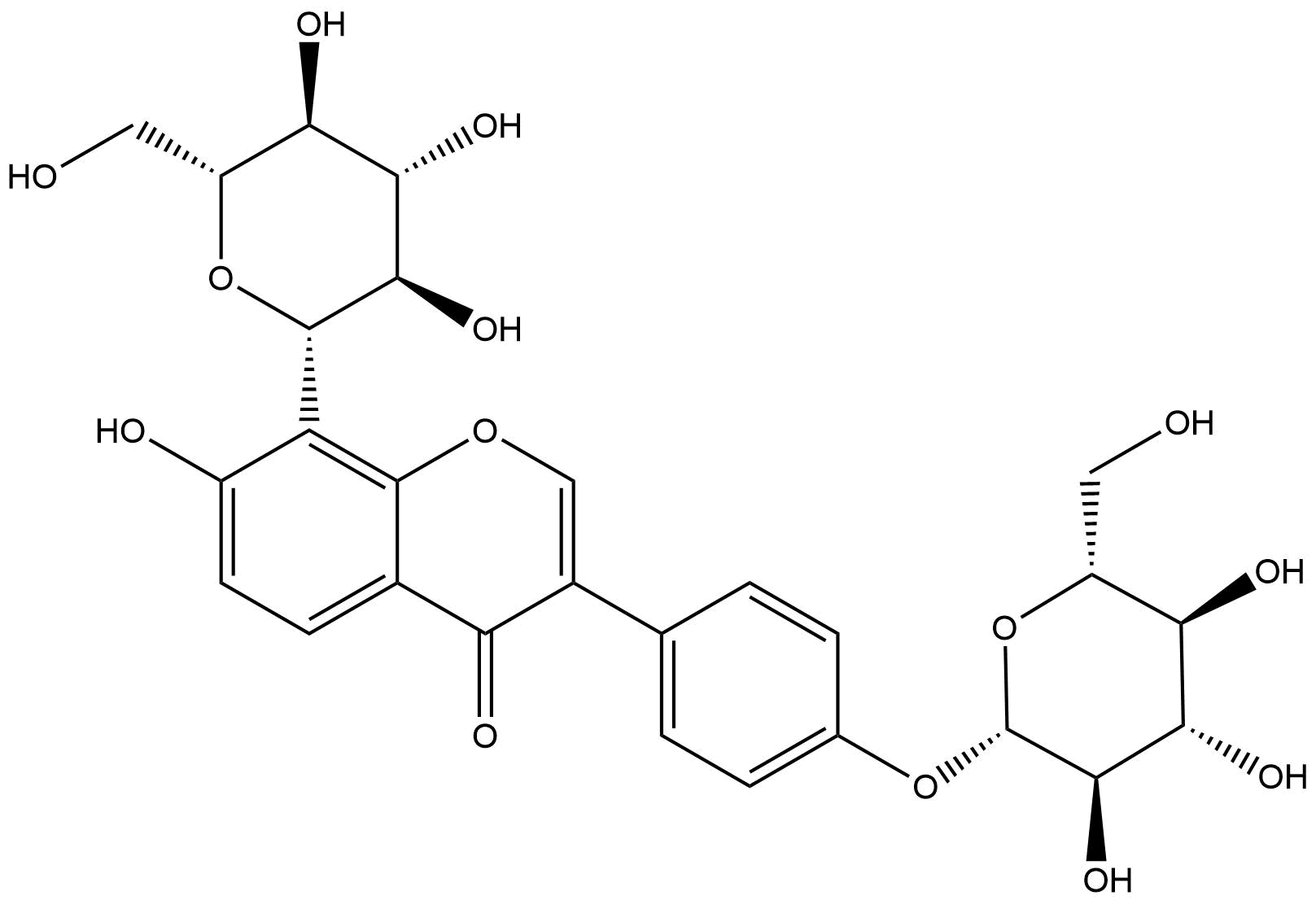


Product name: Puerarin-4'-O-β-D-glucopyranoside
Synonym name: Puerarin-4'-O-D-glycoside
Catalogue No.: BP2091
Cas No.: 117047-08-2
Formula: C27H30O14
Mol Weight: 578.523
Botanical Source: Puerariae lobatae radix
Type of Compound: Flavonoids
Purity: 95%~99%
Analysis Method: HPLC-DAD or/and HPLC-ELSD
Identification Method: Mass, NMR
Packing: Brown vial or HDPE plastic bottle
Storage: Store in a well closed container, protected from air and light. Put into refrigerate or freeze for long term storage.
Whenever possible, you should prepare and use solutions on the same day. However, if you need to make up stock solutions in advance, we recommend that you store the solution as aliquots in tightly sealed vials at -20℃. Generally, these will be useable for up to two weeks.
The product could be supplied from milligrams to grams
Inquire for bulk scale.
For Reference Standard and R&D, Not for Human Use Directly.
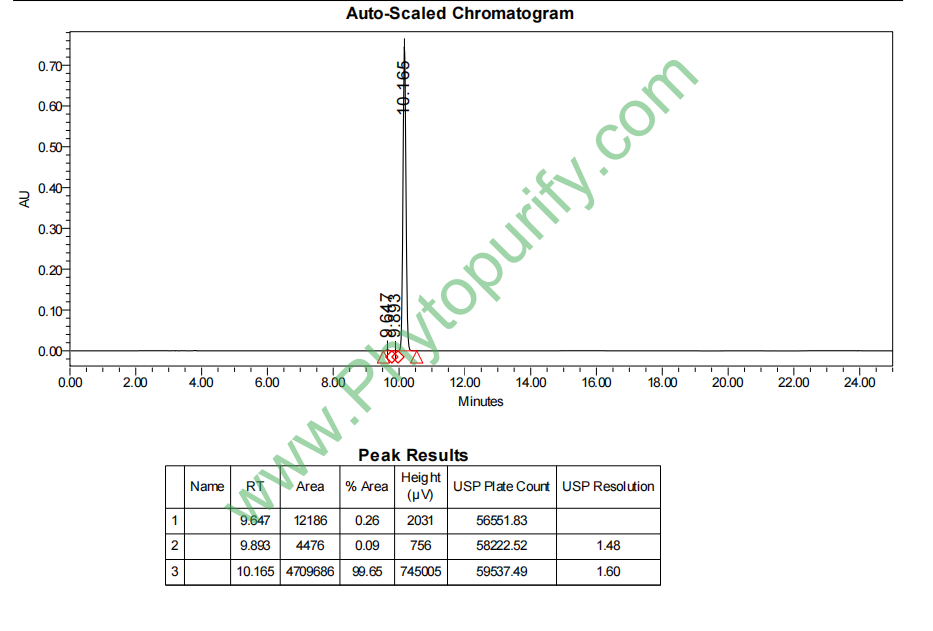
HPLC of Puerarin-4'-O-β-D-glucopyranoside
Storage conditions:Short-term storage at 2~8℃, long-term storage at -20 ~ -80℃
239.9700
-.6621
-.6720
3.8981
.6286
.2110
Low
76.0695
4.6086
Yes
No
No
No
Yes
No
0.0
Yes
Yes
Yes
No
Puerarin-4 '- β - D-glucoside (hereinafter referred to as "Puerarin-4' - O - β - D-glucoside") is an important natural flavonoid product, mainly found in the traditional Chinese medicine Pueraria lobata. As a glycoside derivative of puerarin, puerarin -4 '- glucoside has unique glycosylation modifications in its structure, endowing it with physicochemical properties and biological activity different from the parent compound. In recent years, with the development of natural product pharmacology and molecular biology techniques, the pharmacological effects and potential clinical application value of puerarin 4 '- glucoside have gradually attracted attention. This article aims to systematically review the chemical structure, plant origin, pharmacological activity, mechanism of action, pharmacological evaluation, and clinical application prospects of puerarin -4 '- glucoside, with the hope of providing theoretical basis and reference for related research.
The molecular formula of puerarin -4 '- glucoside is C27H30O14, with a molecular weight of 578.5230, belonging to the glycoside form of isoflavone compounds. Its structural feature is that the puerarin molecule is connected to a glucose residue through a β - D-glucoside bond on the 4 'hydroxyl group. The glycosylation modification significantly affects its water solubility and bioavailability.
In terms of physicochemical properties, the LogP value of puerarin -4 '- glucoside is -0.6621, indicating its strong hydrophilicity and reduced hydrophobicity compared to the puerarin core. Its topological polar surface area (TPSA) is as high as 239.9700, further confirming its high polarity, which may affect its cell membrane permeability. The water solubility index is 3.8981, indicating good water solubility, which is beneficial for dissolution and absorption after oral administration. The low permeability of the blood-brain barrier suggests that its role in the central nervous system may be limited. The negative result of hERG channel inhibition experiment indicates a low risk of cardiac toxicity. The Ames test result was 0.0, indicating no significant genotoxicity.
Overall, the physicochemical properties of puerarin -4 '- glucoside are suitable for water-soluble drug delivery systems and have good safety, laying the foundation for its drug development.
Puerarin -4 '- glucoside is mainly present in the leguminous plant Pueraria lobata, especially in the roots where it has a high content. As a traditional Chinese medicinal herb, kudzu root is widely used in the field of traditional Chinese medicine. Its active ingredients are mainly isoflavones, and puerarin and its glycosides are the main active ingredients.
The extraction method usually uses alcohol solvents (such as ethanol or methanol) to reflux extract dried kudzu root powder, and then separates and purifies it through liquid-liquid distribution, column chromatography and other techniques. High performance liquid chromatography (HPLC) and mass spectrometry (LC-MS) are widely used for qualitative and quantitative analysis of puerarin 4 '- glucoside. In recent years, green extraction techniques such as ultrasound assisted extraction and microwave-assisted extraction have gradually been applied to the preparation of puerarin 4 '- glucoside in order to improve extraction efficiency and purity.
In addition, the study of biosynthetic pathways also provides a theoretical basis for artificial biosynthesis and metabolic engineering modification, which is expected to achieve large-scale production of puerarin -4 '- glucoside.
Puerarin 4 '- glucoside exhibits significant pharmacological activity in various disease models, including cardiovascular disease, metabolic syndrome, inflammatory response, and neurodegenerative diseases.
Cardiovascular protective effect
Puerarin 4 '- glucoside can dilate blood vessels, lower blood pressure, and improve myocardial ischemia-reperfusion injury. Its mechanism of action involves antioxidant stress, inhibition of inflammatory cytokine release, and regulation of vascular endothelial function. Both in vitro and in vivo experiments showed that the compound could significantly reduce the proliferation of vascular smooth muscle cells and prevent atherosclerosis.
Anti inflammatory and immune regulation
This compound exerts anti-inflammatory effects by inhibiting the NF - κ B signaling pathway and reducing the expression of pro-inflammatory cytokines such as TNF - α and IL-6. In addition, puerarin -4 '- glucoside can regulate immune cell function and enhance the body's immune defense ability.
Antioxidant effect
Puerarin 4 '- glucoside has the ability to scavenge free radicals, reduce lipid peroxidation, and protect cells from oxidative damage. Its antioxidant activity helps to delay cellular aging and prevent oxidative stress-related diseases.
Neuroprotective effect
Although its blood-brain barrier permeability is low, in some neural cell models, puerarin -4 '- glucoside still shows potential for anti neuroinflammation and anti apoptosis, suggesting that it may exert neuroprotective effects through indirect mechanisms.
metabolic regulation
Puerarin-4 '- glucoside can improve insulin resistance, regulate blood sugar and lipid metabolism, showing potential anti diabetes and anti obesity effects.
The pharmacological effects of puerarin 4 '- glucoside involve multiple signaling pathways and molecular targets, mainly including:
In addition, puerarin -4 '- glucoside regulates cell cycle, apoptosis, and autophagy processes through interactions with various enzymes and receptors, exhibiting multi-target and multi mechanism pharmacological properties.
The pharmacological parameters of puerarin -4 '- glucoside show that it has good safety and suitable pharmacokinetic characteristics. Its LogP value and TPSA indicate good water solubility, but low cell membrane permeability, which may affect oral absorption efficiency. The low permeability of the blood-brain barrier limits the direct function of the central nervous system.
Pharmacokinetic studies have shown that puerarin -4 '- glucoside is stable in the gastrointestinal tract after oral administration, mainly absorbed through the small intestine, and subsequently metabolized in the liver. Its metabolites include deglycosylated puerarin, which has strong biological activity, suggesting that puerarin -4 '- glucoside may act as a prodrug. The half-life in the body is moderate, and the main excretion pathways are urine and bile.
In terms of safety, the hERG channel inhibition test was negative and the Ames test showed no mutagenicity, indicating a low risk of cardiac toxicity and genotoxicity, making it suitable for further clinical development.
Puerarin 4 '- glucoside, as a natural flavonoid glycoside, has shown broad application prospects in the fields of cardiovascular disease, metabolic syndrome, inflammatory diseases, and neuroprotection due to its multi-target and multi mechanism pharmacological effects.
Future clinical research should focus on:
In summary, puerarin -4 '- glucoside has great potential for drug development and is expected to become an important candidate molecule for natural product drug development in the future.
Puerarin 4 '- β - D-glucoside, as an important flavonoid glycoside in Pueraria lobata, has become a hot topic in natural product pharmacology research due to its unique chemical structure and diverse biological activities. Its good safety and multi-target pharmacological effects provide new ideas for the treatment of cardiovascular diseases, metabolic abnormalities, and inflammation related diseases. Although its blood-brain barrier permeability is currently limited, it is expected to expand its clinical indications through dosage form improvement and metabolic regulation. In the future, interdisciplinary research combining modern medicinal chemistry, molecular biology, and clinical pharmacology will promote the transition of puerarin 4 '- glucoside from the laboratory to clinical practice, benefiting a wide range of patients.
