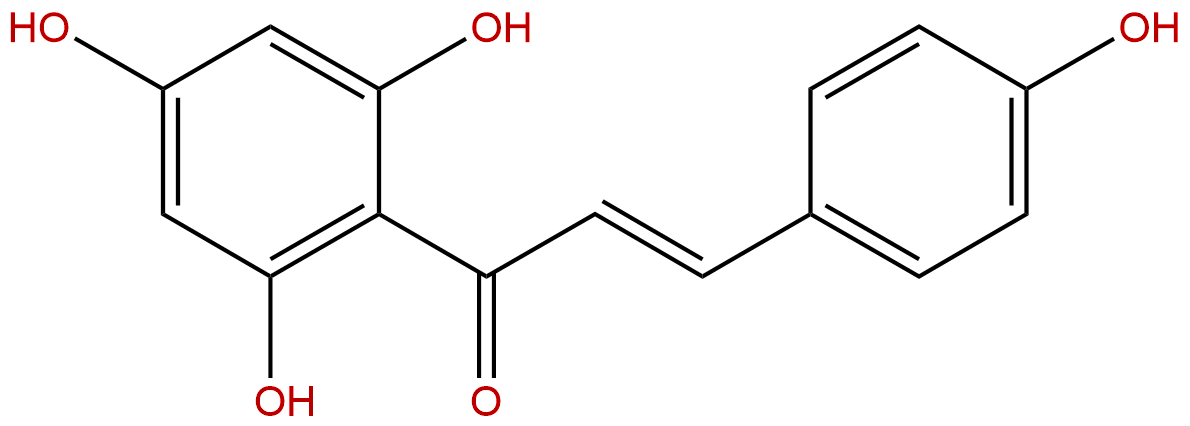


Product name: Naringenin chalcone
Synonym name: 25515-46-2; Chalconaringenin; Chalcononaringenin; Isosalipurpol; Naringenin chalcone; trans-2',4,4',6'- Tetrahydroxychalcone;2-Propen-1-one, 3-(4-hydroxyphenyl)-1-(2,4,6-trihydroxyphenyl)-, (2E)-
Catalogue No.: BP3262
Cas No.: 73692-50-9
Formula: C15H12O5
Mol Weight: 272.256
Botanical Source:
Physical Description: Powder
Type of Compound: Chalcones
Purity: 95%~99%
Analysis Method: HPLC-DAD or/and HPLC-ELSD
Identification Method: Mass, NMR
Packing: Brown vial or HDPE plastic bottle
The product could be supplied from milligrams to grams. Inquire for bulk scale.
We provide solution to improve the water-solubility of compounds, thereby facilitating the variety of activity tests and clinic uses.
For Reference Standard and R&D, Not for Human Use Directly.
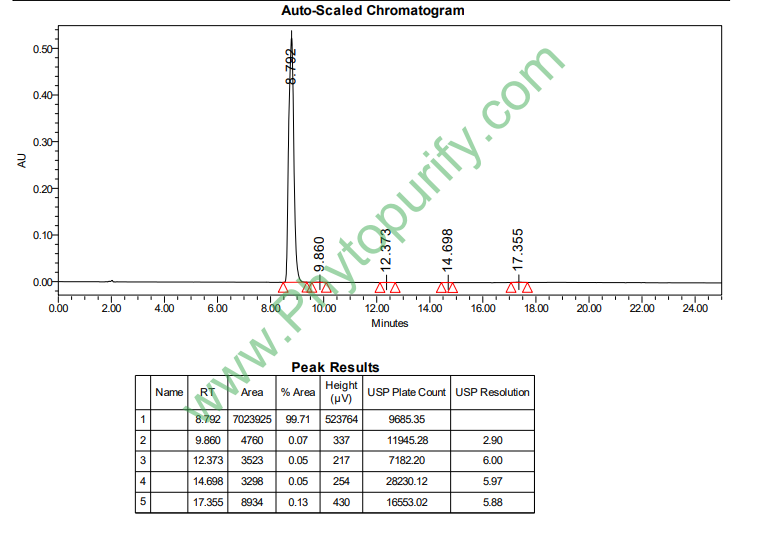
HPLC of Naringenin chalcone
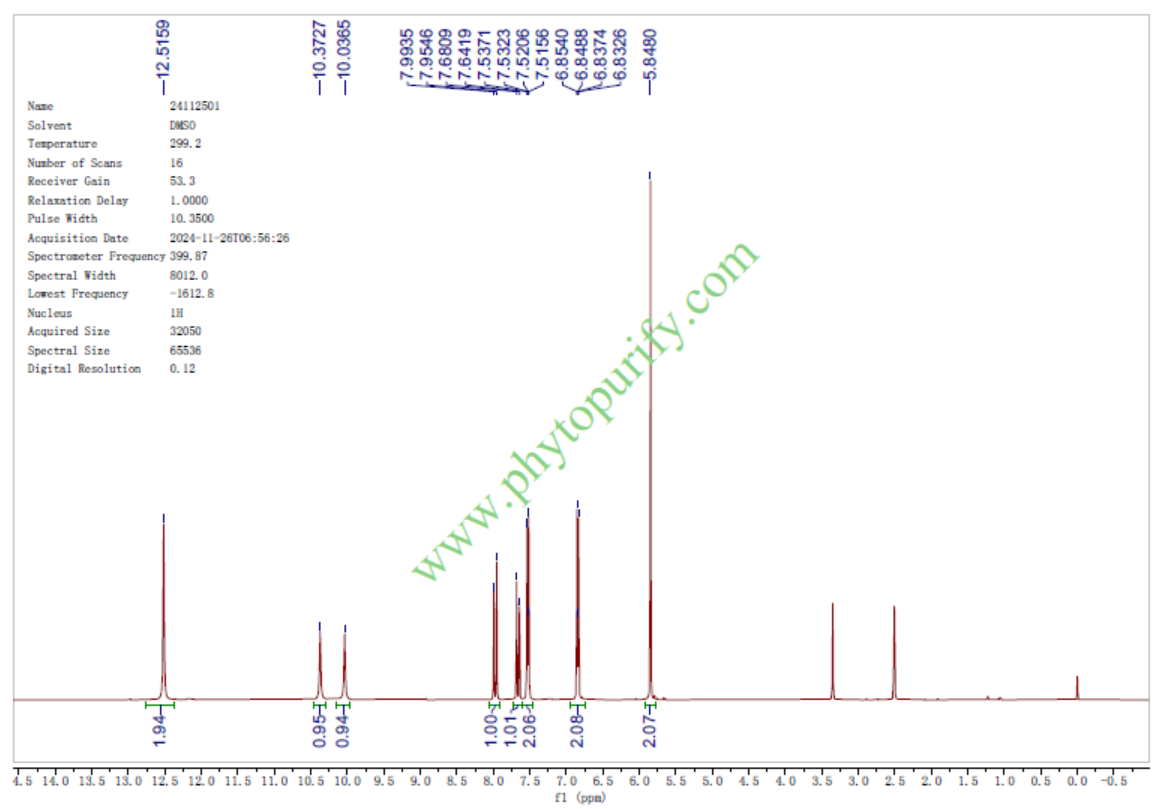
HNMR of Naringenin chalcone
Storage conditions:Short-term storage at 2~8℃, long-term storage at -20 ~ -80℃
97.9900
2.6188
2.2137
.1537
3.8486
9.4791
Low
90.7179
2.3298
Yes
No
Yes
No
Yes
Yes
0.6
Yes
Yes
Yes
Yes
Naringenin chalcone, also known as 2 ', 4,4', 6 '- tetrahydroxychalcone, is a naturally occurring chalcone compound with a CAS number of 73692-50-9. It is a key intermediate in the biosynthesis pathway of flavonoids, especially in citrus plants, where it is a precursor of flavonoids such as naringin. This compound has attracted widespread attention in the fields of natural product pharmacology and medicinal chemistry in recent years due to its unique chemical structure and extensive biological activity.
As one of the main active ingredients of Rutaceae plants such as Citrus aurantium, naringin chalcone has been proven to have oral activity and exhibits various pharmacological effects. Existing research has revealed that it not only has significant anti-inflammatory and anti allergic properties, but also exhibits anti-cancer activity by inducing cell apoptosis, inhibiting the production of monocyte chemoattractant protein-1 (MCP-1) and nitric oxide (NO), especially in the fight against glioblastoma. What is more striking is that it has a clear anti diabetic activity in the prevention and treatment of metabolic diseases, especially diabetes and its related complications, which is closely related to its regulation of multiple key targets.
This article will start from its chemical essence, deeply explore its plant origin, multi-target pharmacological mechanism, drug efficacy evaluation, and look forward to its future research and application prospects, aiming to provide a comprehensive and professional scientific reference for researchers and drug developers.
The molecular formula of naringin chalcone is C ₁₅ H ₁₂ O ₅, with a molecular weight of 272.2560 g/mol. Its SMILES structural formula is O=C (/C=C/c1ccc (O) cc1) c1c (O) cc (O) cc1O, which clearly depicts its core chalcone skeleton: an α, β - unsaturated ketone system connected by two aromatic rings (A ring and B ring). This compound is substituted with hydroxyl groups at positions 2 ', 4', 4 ', and 6', making it a typical tetrahydroxychalcone and also classified as a polyphenolic compound. The 2 '- hydroxychalcone structure of this (E) - configuration is an important basis for its biological activity.
From the analysis of drug forming parameters, its physicochemical properties exhibit certain "drug like" characteristics, but there are also challenges. Its molecular weight (MW) is 272.2560, far below the upper limit of 500 daltons in Lipinski's five rules, meeting the basic requirements of small molecule drugs. The calculated logarithm of the lipid water partition coefficient (LogP) is 2.6188, and the LogD (at pH 7.4) is 2.2137, indicating that the compound has moderate lipophilicity, which theoretically facilitates its penetration into cell membranes. However, excessive lipophilicity may also affect its water solubility. Its topological polar surface area (TPSA) is 97.99 Å ², which is relatively high, mainly due to the strong polarity brought by the five oxygen atoms (one carbonyl and four hydroxyl groups) in the molecule. High TPSA is usually not conducive to passive transmembrane diffusion.
The water solubility data (0.1537, usually in mg/mL or mol/L, depending on the specific database definition) suggests that its solubility in water is limited, which is a common feature of many polyphenolic compounds. Caco-2 cell permeability data (9.4791, typically on the order of × 10 ⁻⁶ cm/s) indicate moderate to good intestinal absorption potential. However, the blood-brain barrier (BBB) permeability is predicted to be "low", which is consistent with its higher TPSA and polarity, meaning it may not easily enter the central nervous system, which is a barrier to overcome for treating brain diseases such as glioblastoma, but may also reduce the risk of central side effects.
Naringin chalcone is mainly derived from plants in the Rutaceae family, with the most representative source being Immature Bitter Orange That is, immature lime (Citrus aurantium L.). Fructus Aurantii has a long history in traditional Chinese medicine theory and is included in the Chinese Pharmacopoeia. Its nature is bitter, pungent, sour, slightly cold, and belongs to the spleen and stomach meridians. Traditional Chinese medicine believes that Fructus Aurantii has the effects of breaking qi and eliminating accumulation, resolving phlegm and dispersing phlegm. It is commonly used to treat gastrointestinal stagnation, abdominal distension, severe diarrhea, constipation, and chest obstruction caused by phlegm stagnation and qi obstruction. Modern pharmacological research has gradually revealed that the benefits of Fructus Aurantii are closely related to the flavonoids it contains, including naringenin chalcone, hesperidin, neohesperidin, and others.
Citrus fruits such as grapefruit, orange, and lemon also contain naringenin chalcone and its derivatives in their skin and flesh. It is worth noting that in fresh citrus, naringin chalcone exists as a precursor of naringin, and its content may vary depending on the variety, maturity, and processing method. For example, during the processing and storage of citrus juice, naringin chalcone may undergo cyclization reactions to convert into naringin. This natural presence and transformability make dietary intake of citrus products a potential pathway for obtaining such active ingredients.
Although traditional applications do not directly target the single component of "naringenin chalcone", the widespread clinical use of Fructus Aurantii and its compounds (such as Fructus Aurantii and Dachengqi Decoction) provides valuable experience and clues for the modern pharmacological research of its main active ingredients. From "breaking qi and eliminating accumulation" to modern research on regulating gastrointestinal motility and improving metabolism, its connotation has been scientifically extended and confirmed.
Naringin chalcone has a wide range of pharmacological activities, and its core mechanism lies in its ability to regulate key signaling pathways within cells through multi-target targeting. The database information shows that its action targets mainly include GCK, PPARG, AKT1, SLC2A4 and INS. These targets are interrelated and together constitute its action network in anti inflammation, anti diabetes and anti-cancer.
4.1 Anti inflammatory and immune regulatory mechanisms
Naringin chalcone has been clearly labeled as having anti-inflammatory and anti allergic properties. Its mechanism involves inhibiting the production of pro-inflammatory cytokines and mediators. Research has shown that it can effectively inhibit the production of MCP-1 and NO. MCP-1 is a key chemokine that recruits monocytes/macrophages to the site of inflammation, while NO is an important inflammatory mediator, and excessive production can lead to tissue damage. By inhibiting these factors, naringin chalcone can alleviate inflammatory reactions. In particular, it can inhibit the production of proinflammatory cytokines in the model of adipocyte macrophage interaction, which is directly related to chronic low-grade inflammation - one of the core pathological characteristics of obesity, insulin resistance and type 2 diabetes.
4.2 Anti diabetes and metabolic regulation mechanism (core related diseases)
This is one of the most in-depth research fields of naringenin chalcone, which is directly related to its "anti diabetes" disease. Its mechanism of action is a multi-target synergistic process:
- PPARG (Peroxisome proliferator activated receptor gamma)This is the target of insulin sensitizer thiazolidinedione drugs (such as Rosiglitazone). Naringin chalcone may act as a regulator of PPARG, activating this receptor to promote adipocyte differentiation and increase the secretion of adiponectin. Adiponectin is a adipokine with insulin sensitizing, anti-inflammatory, and vascular protective functions. The mention of "activating the adiponectin related pathway to enhance insulin sensitivity" in the database description is derived from this.
- INS (insulin) and SLC2A4 (glucose transporter 4, GLUT4)The insulin signaling pathway is the core of maintaining blood glucose stability. Naringin chalcone may promote the translocation of SLC2A4 from intracellular vesicles to the cell membrane by enhancing insulin signaling or simulating its partial effects. SLC2A4 is the main transporter protein for glucose uptake by muscle and adipocytes, and its increased membrane translocation can significantly enhance the utilization of glucose by peripheral tissues and lower blood glucose levels.
- AKT1 (protein kinase B)AKT is a key downstream kinase in the insulin signaling pathway. Activated AKT can promote the translocation of SLC2A4 and regulate various metabolic processes such as glycogen synthesis and protein synthesis. Naringin chalcone may enhance insulin action by upregulating or activating AKT1.
- GCK (Glucokinase)Expressed in liver and pancreatic beta cells, it is the first rate limiting enzyme in glucose metabolism, sensing blood glucose levels and initiating glucose metabolism and insulin secretion. Regulating GCK activity helps improve glucose homeostasis.
By acting synergistically on the above targets, naringenin chalcone plays its role in anti diabetes and improving metabolic function from multiple aspects such as improving insulin sensitivity, promoting glucose uptake, and regulating fat factor secretion.
4.3 Anti cancer activity mechanism
The anticancer activity of naringenin chalcone against cancers such as glioblastoma is mainly related to inducing cell apoptosis. Apoptosis is programmed cell death and an important mechanism for the body to eliminate abnormal cells. This compound may activate the Caspase cascade through the mitochondrial pathway or death receptor pathway, leading to cancer cell apoptosis. Its inhibitory effects on MCP-1 and NO may also be involved in anti-cancer, as inflammation and immune suppression in the tumor microenvironment are beneficial for tumor growth and metastasis. In addition, the chalcone skeleton itself, due to its α, β - unsaturated ketone structure, can act as a Michael reaction receptor, binding to nucleophilic groups (such as thiol groups) inside cells, interfering with key protein functions of cancer cells, which is also one of its possible anti-cancer mechanisms.
Based on the provided pharmacological parameters, we can conduct a systematic evaluation of naringin chalcone as a potential drug lead compound, and refer to commonly used standards such as Lipinski's Rule of Five.
Lipinski's Five Rules Compliance Analysis:
1. Molecular weight (MW)272.2560<500, compliant.
2. Lipid water partition coefficient (LogP)2.6188<5, compliant.
3. Number of hydrogen bond donors (HBDs)There are 4 hydroxyl groups in the molecule, HBD = 4, Equal to the upper limit of 5, compliant.
4. Number of hydrogen bond acceptors (HBA)Carbonyl oxygen and 4 hydroxyl oxygen, HBA = 5, Equal to the upper limit of 10, compliant.
5. Number of rotatable keys(Based on structural estimation): The olefin and carbonyl parts connecting two aromatic rings have fewer rotatable bonds, usually conforming to (<10).
Therefore, naringin chalcone fully complies with Lipinski's five rules, indicating its good oral absorption potential.
In depth interpretation of other key parameters:
- Absorption and distribution The permeability data of Caco-2 (9.4791) supports its good intestinal absorption potential. However, a plasma protein binding rate (PPB) of up to 90.72% means that after entering the bloodstream, most drugs will bind to plasma proteins (mainly albumin), and only a small amount of free drugs can be distributed to tissues to exert their effects, which may require higher dosages to achieve effective blood drug concentrations. The extremely low BBB penetration limits its direct application in central nervous system diseases.
- Metabolism and toxicity This is the main challenge for its medicinal properties.
- Genetic toxicity warning The Ames test value is 0.6 (usually considered negative when<1.0, but caution should be exercised when approaching 1), and there is a clear indication of the risk of "chromosomal aberration". This suggests that naringin chalcone may have genetic toxicity, which is a "red line" issue that requires high vigilance and thorough evaluation in drug development.
- Phototoxicity The annotation "Photo_tox" indicates that the compound may cause skin toxicity under light exposure, which serves as a warning for the development of topical formulations or exposure to sunlight after patient medication.
- Respiratory sensitization Mark "Yes" (Resp_Sens) to indicate the risk of inducing respiratory allergic reactions.
- Serum enzyme indicators Labeling has an impact on serum alkaline phosphatase (ALK), gamma glutamyltransferase (GGT), aspartate aminotransferase (AST), and alanine aminotransferase (ALT) ("Yes"), which are usually sensitive indicators of liver cell damage or bile stasis, implying potential hepatotoxicity risks and requiring strict preclinical hepatotoxicity evaluation.
- Comprehensive score of drug properties The SyneAccess value is 2.3298 (usually the lower the value, the easier it is to synthesize), indicating moderate synthesis feasibility. MRTD is marked as' yes', which may indicate its potential for development.
Summary evaluation Naringin chalcone Good performance in terms of oral absorption and compliance with basic drug like rules Its multi target pharmacological activity is clear, especially its anti diabetes mechanism is clear. However, it Potential genetic toxicity, hepatotoxicity, phototoxicity, and respiratory sensitization pose significant obstacles to its drug conversion The high plasma protein binding rate and low BBB penetration are also limitations that need to be considered. Therefore, it is more likely to serve as an excellent lead compound Rather than candidate molecules for direct drug development. Future pharmaceutical chemistry optimization work should focus on: 1) reducing its toxicity, especially eliminating genetic toxicity risks, through structural modifications such as methylation of hydroxyl groups, glycosylation, or preparation of prodrugs; 2) Optimize its pharmacokinetic properties (such as reducing protein binding rate, regulating lipid solubility, etc.) while maintaining core pharmacological activity.
At present, research on naringin chalcone mainly focuses on the preclinical stage, including in vitro cell models and animal model experiments. These studies strongly confirmed its biological activities in anti-inflammatory, antioxidant, anti diabetes and anti-cancer. As a natural product, it has a wide range of sources and relatively higher safety than fully synthesized compounds, which lays a good foundation for its development.
However, as revealed by the drug efficacy assessment, its inherent toxicity risk is the biggest bottleneck towards clinical application. The current research hotspots and future directions may focus on the following aspects:
In summary, naringenin chalcone is a highly valuable natural active molecule for research. It is like a multi toothed key that can unlock multiple key targets for maintaining health. Although its direct path to becoming a drug is full of challenges, with the empowerment of modern medicinal chemistry and pharmaceutical technology, it is highly likely to derive a series of innovative drugs or health products with independent intellectual property rights and good market prospects, providing new choices for the prevention and treatment of metabolic diseases, inflammatory diseases, and even cancer. Continuous and in-depth research on it is an important bridge connecting traditional medicinal wisdom with modern precision medicine.
