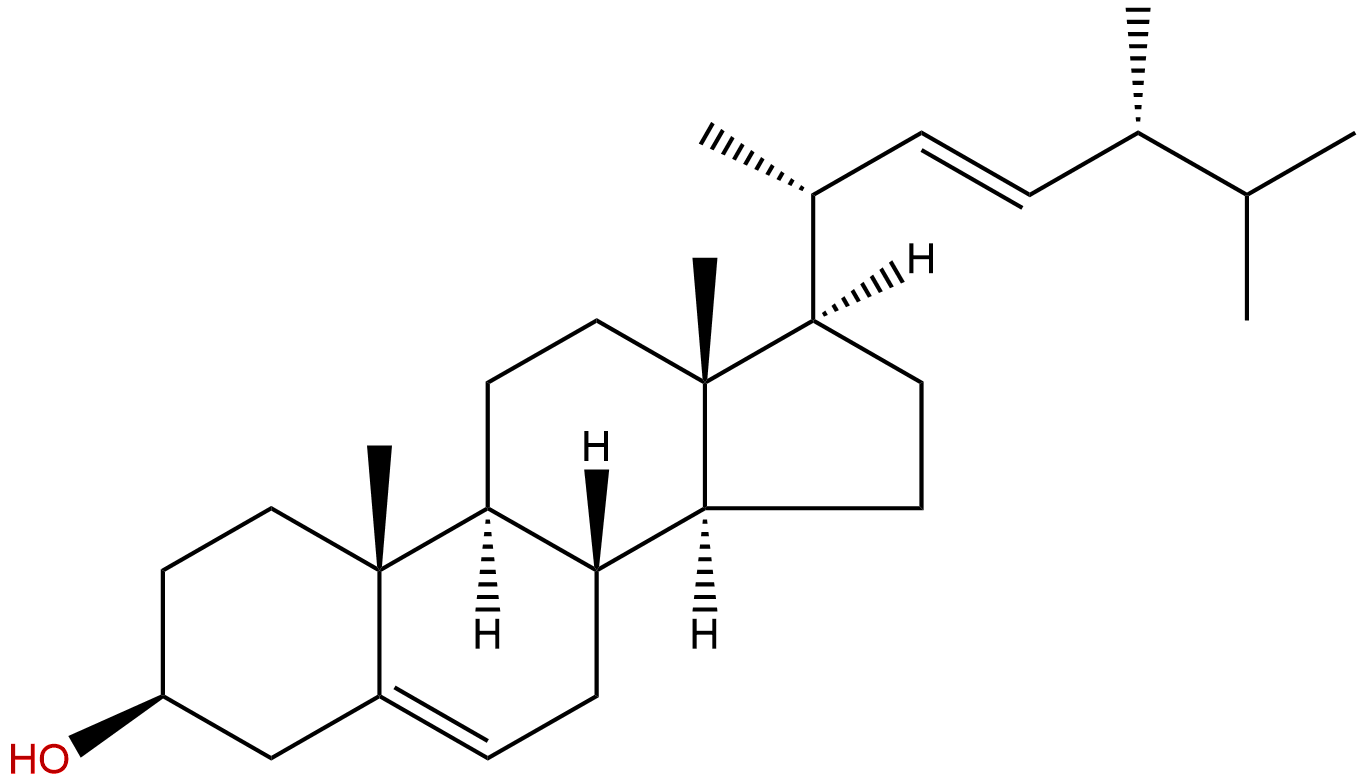


Product name: Brassicasterol
Synonym name: 24-Methylcholesta-5,22-dien-3-ol
Catalogue No.: BP1701
Cas No.: 474-67-9
Formula: C28H46O
Mol Weight: 398.675
Botanical Source: Brassica rapa oil and various marine organisms
Physical Description: Cryst.
Type of Compound: Steroids
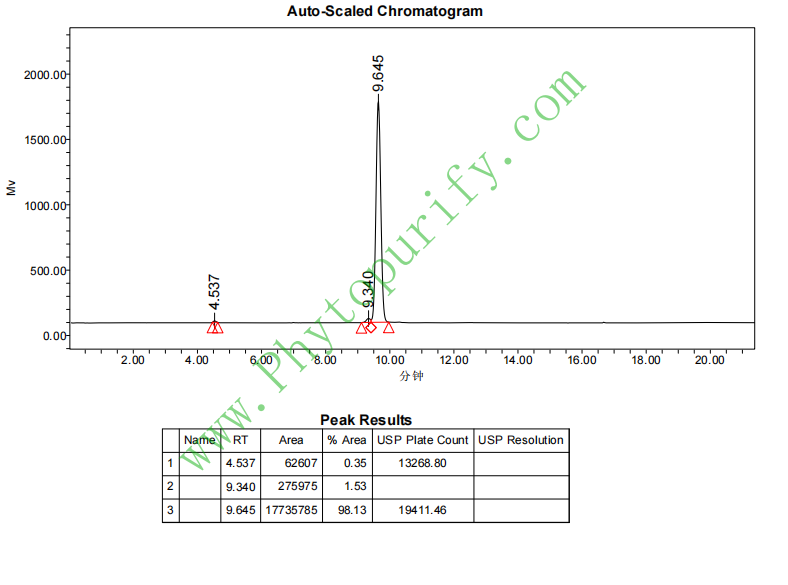
Purity: 95%~99%
Analysis Method: HPLC-DAD or/and HPLC-ELSD
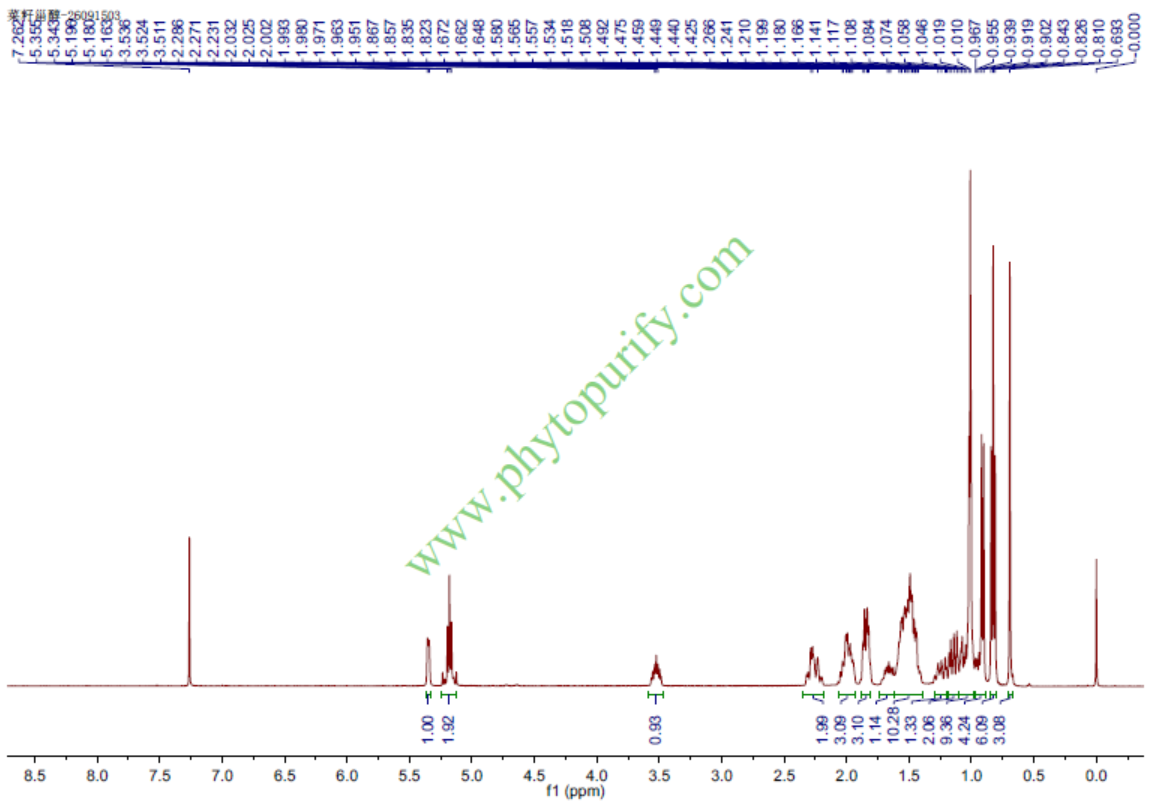
Identification Method: Mass, NMR
Packing: Brown vial or HDPE plastic bottle
The product could be supplied from milligrams to grams. Inquire for bulk scale.
We provide solution to improve the water-solubility of compounds, thereby facilitating the variety of activity tests and clinic uses.
For Reference Standard and R&D, Not for Human Use Directly.
HPLC of Brassicasterol
HNMR of Brassicasterol
Storage conditions:Short-term storage at 2~8℃, long-term storage at -20 ~ -80℃
20.2300
7.9006
7.8995
.0001
8.2164
5.0502
High
92.7172
4.4826
No
No
No
No
No
No
0.0
No
No
No
Yes
Phytosterols are a type of natural active ingredient widely present in the plant kingdom, with a structure similar to animal cholesterol. They play a key role in maintaining cell membrane function, regulating growth and development, and other aspects. Brassicasterol (CAS number: 474-67-9), as an important plant sterol, was originally named after its abundant content in cruciferous plants such as rapeseed. In recent years, with the deepening of pharmacological research on natural products, the biological functions of brassinosteroids have far exceeded their traditional understanding as plant components, exhibiting multidimensional and multi-target pharmacological activities. Research has shown that brassinosterol is not only a metabolite of ergosterol, but also has great potential in cardiovascular protection, anti-tumor, antiviral, antibacterial, and neurodegenerative diseases. It plays an anti-cancer role by regulating key signaling pathways such as AKT and androgen receptor, has significant inhibitory activity against herpes simplex virus type 1 (HSV-1) and mycobacterium tuberculosis, and can interfere with sterol metabolic enzymes to delay the process of atherosclerosis. Of particular note is that brassinosteroids have been identified as a potential cerebrospinal fluid biomarker for Alzheimer's disease, opening a new window for their application in the field of neuroscience. This article aims to systematically review the chemical properties, plant sources, pharmacological activities, molecular mechanisms of action, and medicinal properties of brassinosteroids, and to explore their clinical application prospects, in order to provide comprehensive scientific references for the deep development and transformation research of this natural product.
The chemical name of brassinosteroid is (22E) - ergosterol-5,22-dien-3 β - ol, with a molecular formula of C28H46O and a molecular weight of 398.6750. Its core structure is the cyclopentane dihydrophenanthrene steroid nucleus, belonging to the Δ 5-sterol class. Compared with cholesterol, brassinosteroids have a double bond (Δ 5) at the C-5 position of the steroid nucleus, a trans double bond (Δ 22, E configuration) between the C-22 and C-23 positions of the side chain, and a methyl group at the C-24 position. These structural features determine its unique physicochemical properties and biological activity.
In terms of physical and chemical properties, rapeseed sterols appear as white crystals or powders, with extremely strong lipid solubility. Its calculated lipid water partition coefficient (LogP) is as high as 7.9006, indicating its high lipophilicity and hydrophobicity. The theoretical polar surface area (TPSA) is only 20.23 Å ², further confirming its non-polar characteristics. Its water solubility is extremely low, about 0.0001 mg/mL, which limits its direct application in aqueous media. However, its high lipid solubility and small polar surface area also indicate good membrane permeability. Pharmacokinetic predictions indicate that brassinosteroids have a high blood-brain barrier permeability, which is consistent with their potential role as a central nervous system biomarker and in Alzheimer's disease. Preliminary safety predictions indicate that it has no inhibitory activity on hERG potassium channels (hERG inhibition: No), and the Ames test result is 0.0, suggesting that it may not have mutagenicity and potential cardiac toxicity risks, providing preliminary positive signals for its safety evaluation.
Rapeseed sterols are widely distributed in nature, especially in cruciferous plants with high content, such as rapeseed (Brassica napus), mustard (Brassica juncea), cabbage, etc. The name "rapeseed sterols" comes from this. In addition, it also exists in certain algae (such as diatoms), marine invertebrates, and some fungi. As a metabolite of ergosterol, it is also produced in the sterol metabolism pathways of fungi and certain microorganisms.
The extraction of rapeseed sterols from plant materials usually follows the general extraction and separation process of plant sterols. The main steps include:
1. Raw material pretreatment and degreasing Grind dry plant seeds (such as rapeseed), first use non-polar solvents such as petroleum ether and n-hexane for Soxhlet extraction or cold soaking, remove a large amount of oil and triglycerides, and obtain crude lipids.
2. Release and Extraction of Sterols Sterols in crude lipids often exist in esterified form. Saponification reaction is required, which involves heating and refluxing in an alkaline alcohol solution (such as KOH/ethanol) to hydrolyze sterol esters into free sterols. After saponification, extract free sterols with organic solvents such as ether and n-hexane.
3. Separation and Purification The extracted components are complex and require further purification. Common methods include:
* Crystallization method Recrystallize using the difference in solubility of brassinosteroids in different solvents such as methanol and acetone.
* Chromatography Column chromatography (such as silica gel column, alumina column) is an effective separation method, often using different ratios of petroleum ether ethyl acetate or n-hexane isopropanol gradient elution. High performance liquid chromatography (HPLC), especially reverse phase HPLC, is a key technology for obtaining high-purity brassinosteroids.
* Derivative combined with gas chromatography (GC)Converting sterols into trimethylsilyl ether derivatives for GC analysis is a commonly used method for qualitative and quantitative detection, but it is less commonly used for large-scale preparation.
4. appraisal The purified compound needs to be structurally confirmed by nuclear magnetic resonance (NMR, including 1H NMR and 13C NMR), mass spectrometry (MS), infrared spectroscopy (IR), and comparison with standard samples.
In recent years, supercritical CO2 extraction technology has shown potential in the extraction of plant sterols due to its green, efficient, and low-temperature operation advantages, and is expected to be used for large-scale extraction of rapeseed sterols.
Numerous in vitro and in vivo studies have revealed the extensive and diverse pharmacological activities of brassinosteroids.
Cardiovascular protective effect Rapeseed sterols are important members of the plant sterol family that reduce cholesterol activity. Its structure is similar to cholesterol. It can competitively inhibit the absorption of cholesterol in the intestine, promote its excretion from the feces, thus reducing the level of serum total cholesterol and low-density lipoprotein cholesterol, and has a basic role in preventing and treating hypercholesterolemia and atherosclerosis. In addition, research indicates that it can inhibit sterol Δ 24 reductase, which is involved in cholesterol synthesis and metabolism, and its inhibition can further regulate the intracellular sterol balance and slow down the formation and development of atherosclerotic plaque.
Antitumor activity Rapeseed sterols have shown significant anti-cancer potential in prostate cancer research. Its function is not through a single pathway, but through a "dual targeting" strategy: on the one hand, it can inhibit the PI3K/AKT signaling pathway, which is a key regulator of cell survival, proliferation, and metabolism, and its overactivation is associated with various cancers; On the other hand, it can antagonize the androgen receptor signaling pathway, which is the core driving factor for the occurrence and development of prostate cancer. This dual inhibitory effect synergistically inhibits the proliferation of prostate cancer cells, induces their apoptosis, and may suppress their invasive and metastatic abilities.
Antiviral and antibacterial activity:
Neuroprotection and biomarker effects In the field of neuroscience, brassinosteroids have been found to exhibit specific changes in levels in the cerebrospinal fluid of Alzheimer's disease patients and are considered a potential disease biomarker. This suggests that brassinosteroids may be involved in steroid metabolism or inflammatory response processes in the central nervous system. Although its specific neuroprotective mechanism remains to be elucidated, its high blood-brain barrier permeability provides the possibility for it to directly act on the central nervous system.
The multiple pharmacological activities of brassinosteroids stem from their precise regulation of multiple molecular targets and signaling pathways.
Regulating lipid metabolism and related targets: In the prevention and treatment of hypercholesterolemia and atherosclerosis, the role of rapeseed sterol involves multiple targets:
Mechanism of anti-tumor action:
Antimicrobial mechanism The inhibition of HSV-1 may be related to its hydrophobic structure inserting into the viral envelope or host cell membrane, disrupting membrane stability. The effect on Mycobacterium tuberculosis may be similar to other sterols, interfering with the biosynthesis of mycolic acid in its cell wall or membrane function.
Potential association with topoisomerases The given target list includes topoisomerase I (TOP1), although the specific mechanism is unclear, some steroid compounds have been reported to affect topoisomerase activity. Whether brassinosteroids affect DNA replication and repair by interfering with TOP1 function, and thus play a role in anti-cancer or antibacterial activities, is a direction worth exploring.
Based on its physicochemical properties and preliminary prediction data, a preliminary evaluation of the medicinal properties of rapeseed sterols is conducted
Advantage:
challenge:
Formulation strategy To improve its bioavailability, advanced drug delivery technologies such as:
Systematic pharmacokinetic studies (including absorption, distribution, metabolism, and excretion) and targeted formulation development are key steps in promoting the clinical application of brassinosteroids.
The diverse biological activities of brassinosteroids have brought broad application prospects in multiple therapeutic fields.
Cardiovascular disease prevention and adjuvant therapy: As a natural cholesterol reducing ingredient, it can be developed as a functional food additive or dietary supplement for daily management of hypercholesterolemic population and to help prevent atherosclerotic cardiovascular disease. Its mechanism of inhibiting Δ 24 reductase provides a new idea for developing new anti atherosclerosis drugs.
Tumor treatment, especially prostate cancer Its dual targeting of AKT and androgen receptor pathways makes it a potential candidate drug or adjuvant therapy for the treatment of castration resistant prostate cancer. It is possible to explore its combination application with existing endocrine therapy drugs or chemotherapy drugs to enhance efficacy and overcome drug resistance.
Anti-infection therapy: In view of the strong activity of HSV-1, its topical preparations (such as cream and gel) can be studied for the treatment of herpes simplex virus infection (such as herpes labialis). Its inhibitory effect on Mycobacterium tuberculosis, although possibly weak, provides clues for the search for new anti tuberculosis adjunctive drugs or membrane acting agents.
The field of neurodegenerative diseases:
Other potential areas Its anti-inflammatory and antioxidant properties (through targets such as Nrf2) may also play a role in chronic inflammation related diseases such as metabolic syndrome and non-alcoholic fatty liver disease.
Future research directions and challenges:
* In depth mechanism research The multi-target effect needs to be validated in more cell and animal models, and the cross dialogue between each target needs to be elucidated.
* Systematic pharmacodynamic and toxicological evaluation Conduct standardized preclinical pharmacological studies and comprehensive acute and chronic toxicity assessments.
* Pharmacokinetic and Formulation Research and Development It is necessary to address its water solubility and bioavailability issues and obtain reliable in vivo kinetic parameters.
* Clinical translational research From dietary supplementation to drug development, rigorous clinical trials need to be designed to validate their safety and efficacy in different indications.
Rapeseed sterols, a natural sterol derived from plants, have evolved from simple plant components into a star molecule with multiple pharmacological activities and complex mechanisms of action. Its outstanding performance in cardiovascular protection, anti prostate cancer, antiviral, and as a biomarker for neurological diseases highlights the immortal value of natural products in drug discovery. Its unique dual targeted anti-cancer mechanism and excellent blood-brain barrier permeability are particularly remarkable. Despite facing challenges such as poor water solubility and lack of systematic pharmacokinetic data, these obstacles are expected to be overcome through collaborative innovation in modern medicinal chemistry, pharmacy, and pharmacology. In the future, with deeper analysis of its molecular mechanism, breakthroughs in formulation technology, and advances in clinical research, brassinosteroids are expected to move from the laboratory to clinical practice, providing new natural source strategies or drug lead compounds for the prevention and treatment of various human diseases, and shining new vitality in the era of precision medicine and integrated medicine.
