| Catalog No | Package | Original Price | Price | Inventory | Quantity | Operating |
|---|---|---|---|---|---|---|
| BP1778-20mg | 20mg | $36.00 | Sign in |
|


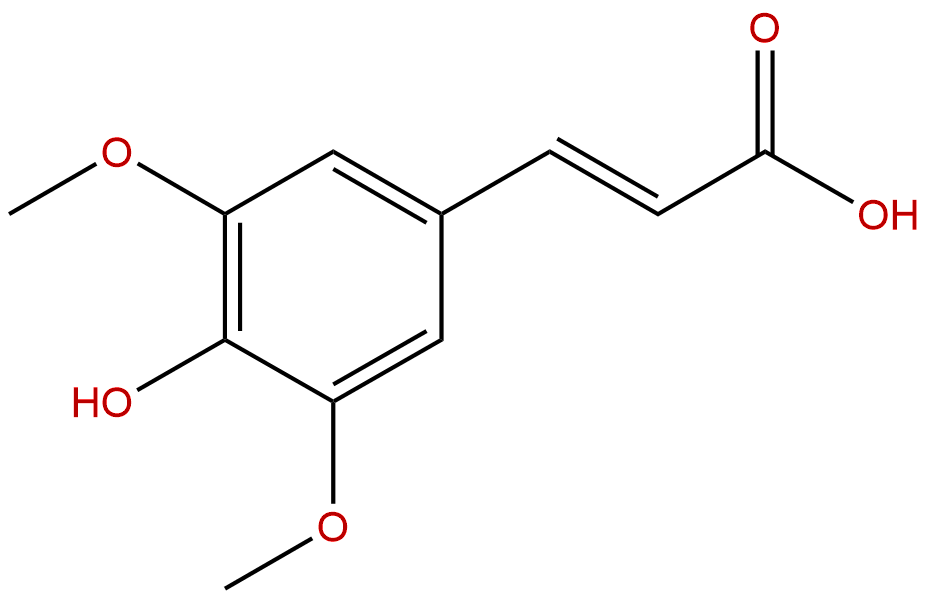
Product name: Sinapic acid
Synonym name: 3,5-Dimethoxy-4-hydroxycinnamic Acid
Catalogue No.: BP1778
Cas No.: 530-59-6
Formula: C11H12O5
Mol Weight: 224.212
Botanical Source:
Physical Description: Cryst.
Type of Compound: Phenylpropanoids
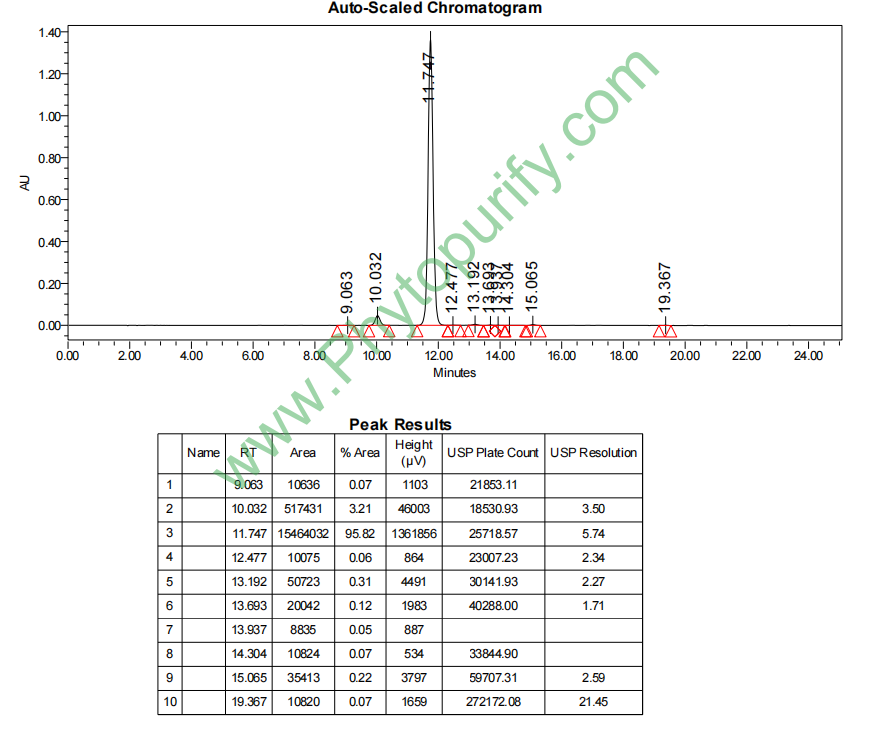
Purity: 95%~99%
Analysis Method: HPLC-DAD or/and HPLC-ELSD
Identification Method: Mass, NMR
Packing: Brown vial or HDPE plastic bottle
The product could be supplied from milligrams to grams. Inquire for bulk scale.
We provide solution to improve the water-solubility of compounds, thereby facilitating the variety of activity tests and clinic uses.
For Reference Standard and R&D, Not for Human Use Directly.
HPLC of Sinapic acid
Storage conditions:Short-term storage at 2~8℃, long-term storage at -20 ~ -80℃
75.9900
1.8373
-.8344
1.8326
4.8702
8.2021
Low
86.5193
1.9772
Yes
No
No
No
Yes
No
0.0
Yes
Yes
Yes
Yes
In the field of natural product chemistry and pharmacology research, hydroxycinnamic acid compounds have attracted much attention due to their extensive biological activities. Sinapic acid (SA), also known as 3,5-dimethoxy-4-hydroxycinnamic acid, is an important representative molecule. It is widely present in various plant-based foods, such as cruciferous vegetables (broccoli, mustard), grains (rye, wheat), as well as various spices and medicinal plants. It is an important derivative of the secondary metabolite ferulic acid in plants. For a long time, plant extracts rich in mustard acid have been used in traditional medicine for anti-inflammatory and antioxidant purposes. Modern pharmacological research has gradually revealed that sinapine is not only a key component of plant defense systems, but also a lead compound with multi-target and multi pathway regulatory potential.
In recent years, with the deepening understanding of the pathogenesis of chronic inflammatory diseases, especially inflammatory bowel diseases (such as colitis), the search for efficient and low toxicity new treatment strategies has become a research hotspot. Mustard acid exhibits significant protective effects in intestinal inflammation models such as colitis due to its excellent antioxidant and anti-inflammatory properties. Its mechanism of action involves the regulation of multiple key signaling pathways, including nuclear factor kappa B (NF - κ B), nuclear factor E2 related factor 2 (Nrf2), and Toll like receptor 4 (TLR4). This article aims to systematically review the chemical characteristics, plant sources, pharmacological activities of sinapine, and focus on its mechanism of action and molecular targets in the prevention and treatment of colitis. At the same time, it looks forward to its pharmacological properties and clinical application prospects, in order to provide scientific reference for the deep development and transformation of this natural product.
Mustard acid (CAS number: 530-59-6) is an organic acid belonging to the hydroxycinnamic acid derivative. Its molecular formula is C11H12O5 and its molecular weight is 224.2120 g/mol. From a chemical structure perspective, the basic skeleton of sinapine is cinnamic acid (cinnamic acid), with two methoxy groups (- OCH3) at positions 3 and 5 of the benzene ring, one hydroxyl group (- OH) at position 4, and a carboxyl group (- COOH) at position 3 of the acrylic side chain. This unique 3,5-dimethoxy-4-hydroxy substitution mode is the key that distinguishes it from other cinnamic acid compounds such as caffeic acid and ferulic acid, and profoundly affects its physicochemical properties and biological activity.
In terms of physical and chemical properties, sinapine usually appears as light yellow crystals or powder. Its calculated lipid water partition coefficient (LogP) is about 1.84, indicating that it has a certain degree of lipophilicity, but not high lipid solubility. The topological polar surface area (TPSA) is 75.99 Å ², reflecting the proportion of polar groups (hydroxyl, carboxyl, methoxy) in the molecule, indicating its ability to form hydrogen bonds. These parameters collectively determine that its water solubility is relatively limited (about 1.83 mg/mL), belonging to the category of slightly soluble to poorly soluble. In living organisms, this property affects their absorption and distribution. Preliminary pharmacokinetic predictions indicate that sinapine has a lower ability to penetrate the blood-brain barrier, mainly due to the presence of polar functional groups and a certain molecular weight in its molecule. In the early screening of safety, sinapine did not show significant hERG potassium channel inhibitory activity (low risk of QT interval prolongation), and the Ames test result was negative (0.0), indicating that it has no direct genotoxic mutagenesis risk, laying a good safety foundation for its further development.
Mustard acid is widely distributed in the plant kingdom, mainly in the form of free acid, esterified forms (such as sinapine and sinapyrylcholine), or in the form of bound polysaccharides and lignin. Its rich sources include:
1. Brassicaceae plants: Such as mustard seeds, broccoli, cabbage, rapeseed, etc., which are the most classic sources of erucic acid and its esters.
2. Cereal grains Rye, wheat, and oat bran contain high levels of sinapine.
3. Fruits and Vegetables Citrus fruits, pineapples, tomatoes, carrots, etc.
4. Medicinal plants and spices Such as basil, thyme, schisandra, etc.
5. Oil crops Rapeseed oil and mustard oil can also produce or contain mustard acid derivatives during processing.
Solvent extraction is commonly used to extract sinapine from plant materials. The process varies depending on the different forms of raw materials and mustard acid. For free mustard acid, methanol, ethanol, acetone, or their aqueous solutions are commonly used for extraction or ultrasound assisted extraction. Due to the fact that mustard acid often exists in the form of sinapine, alkaline hydrolysis or enzymatic hydrolysis (such as using esterases) is often required during or after extraction to break the ester bond and release free mustard acid. Subsequently, separation and purification were carried out using techniques such as macroporous adsorption resin chromatography, silica gel column chromatography, and preparative high-performance liquid chromatography (HPLC). In recent years, green extraction techniques such as supercritical CO2 extraction, microwave-assisted extraction, and high-voltage pulsed electric field extraction have also been explored to improve the extraction efficiency and purity of sinapine. The optimization of extraction process aims to balance extraction rate, cost, environmental friendliness, and maintain the biological activity of compounds.
A large number of in vitro and in vivo studies have shown that sinapine has diverse pharmacological activities, with its core centered around antioxidant and anti-inflammatory effects, and extending to multiple fields such as neuroprotection, metabolic regulation, and anti-tumor effects.
antioxidant activity Mustard acid is a potent natural antioxidant. The phenolic hydroxyl group on its benzene ring can effectively scavenge free radicals (such as DPPH, ABTS ⁺ free radicals), inhibit lipid peroxidation, and has the ability to chelate metal ions. Its antioxidant capacity is superior to common ferulic acid and p-coumaric acid, which is attributed to the synergistic effect of electron donating methoxy groups on its benzene ring, enhancing the dissociation ability of phenolic hydroxyl hydrogen atoms, thereby improving the efficiency of free radical scavenging.
anti-inflammatory activity This is one of the most highly regarded activities of sinapine. Mustard acid has shown significant inhibitory effects in various acute and chronic inflammation models. For example, in the rat paw edema model induced by carrageenan and the mouse peritoneal capillary permeability increase model induced by acetic acid, sinapine can dose dependently reduce swelling and exudation. Its anti-inflammatory effect has been extensively studied in intestinal inflammation.
Protective effect on colitis In experimental colitis mouse/rat models induced by dextran sulfate sodium (DSS) or trinitrobenzenesulfonic acid (TNBS), administration of sinapine can significantly improve disease activity index (weight loss, diarrhea, rectal bleeding), reduce colonic tissue myeloperoxidase (MPO) activity (neutrophil infiltration marker), alleviate colonic shortening and mucosal damage (ulcers, edema, inflammatory cell infiltration). Histopathological examination showed that sinapine treatment can effectively protect the integrity of colon mucosal structure.
Neuroprotective activity Mustard acid can penetrate the blood-brain barrier (although with low efficiency) and has shown protective effects in animal models such as Alzheimer's disease, Parkinson's disease, and cerebral ischemia-reperfusion injury. The mechanism may be related to clearing reactive oxygen species in neuroinflammation, inhibiting excessive activation of microglia, reducing beta amyloid toxicity, and regulating neurotransmitters.
Other activities The research also shows that erucic acid has the potential of anti diabetes (improving insulin resistance, protecting pancreatic islet β cells), anti-tumor activity (inducing apoptosis of cancer cells, inhibiting proliferation and metastasis), antibacterial and antiviral activities, and cardiovascular protection (anti atherosclerosis, lowering blood lipids).
The protective effect of sinapine on colitis is not achieved through a single target, but through a complex multi-target network that regulates inflammation, oxidative stress, cell apoptosis, and intestinal barrier function. Based on the provided target information, explain its core mechanism of action:
Inhibition of TLR4/NF - κ B inflammatory core pathway This is the key mechanism of the anti-inflammatory effect of sinapine. Pathogen related molecular patterns such as lipopolysaccharides (LPS) are activated through activation Toll like receptor 4 (TLR4)Triggering downstream myeloid differentiation factor 88 (MyD88) dependent pathway, ultimately activating transcription factors Nuclear factor kappa B (NF - κ B)Especially its subunits RELA(p65)Activated NF - κ B enters the nucleus, initiating gene transcription of a large number of pro-inflammatory cytokines such as tumor necrosis factor - α (TNF - α), interleukin-1 β (IL-1 β), IL-6, etc. Mustard acid can effectively inhibit the expression and activation of TLR4, block the degradation of I κ B α and nuclear translocation of NF - κ B p65, thereby suppressing inflammatory storms from the source.
Activate Nrf2/ARE antioxidant defense pathway Oxidative stress is an important driving force behind the occurrence and development of colitis. Mustard acid is Nuclear factor E2 related factor 2 (NFE2L2/Nrf2) An effective activator. It may modify the cysteine residues of Keap1 protein to dissociate and translocate Nrf2 to the nucleus, bind to antioxidant response elements (ARE), upregulate the expression of a series of phase II detoxifying enzymes and antioxidant enzymes such as heme oxygenase-1 (HO-1), NAD (P) H quinone oxidoreductase 1 (NQO1), superoxide dismutase (SOD), glutathione peroxidase (GPx), etc., and enhance the cell's resistance to oxidative damage.
Regulating cell apoptosis and pyroptosis Excessive apoptosis and pyroptosis of intestinal epithelial cells can disrupt the barrier.Cystatine-1 (CASP1) It is a key executor of pyroptosis, whose activation leads to GSDMD protein cleavage and mature release of pro-inflammatory cytokines IL-1 β and IL-18. Mustard acid can inhibit the activation of CASP1 and reduce cell pyroptosis. At the same time, it may also affect Protein kinase C alpha (PRKCA) Waiting for signaling molecules to regulate the mitochondrial apoptosis pathway and protect epithelial cells.
Affects lipid metabolism and signaling Mustard acid also has a regulatory effect on lipid metabolism related targets.Farnesyl ester X receptor (NR1H4/FXR) It is a key regulatory factor for bile acid homeostasis and intestinal inflammation. Activating FXR has anti-inflammatory and barrier protective effects. Mustard acid may act as a regulator of FXR. In addition, it can also inhibit Sphingosine kinase 1 (SPHK1) The activity reduces the production of pro-inflammatory lipid mediator sphingosine-1-phosphate (S1P). Correct Lysophosphatidic acid receptor 2 (LPAR2) and Fatty acid amide hydrolase (FAAH) The potential regulation may also affect lipid signaling networks associated with inflammation and pain.
Other targets:Carboxyesterase 1 (CES1) It is an enzyme involved in the metabolism of ester drugs and prodrugs. Mustard acid, as a substrate or regulator, may affect its own or other drug metabolism processes, but its specific role in colitis remains to be elucidated.
In summary, sinapine forms a "dual engine" driving mechanism for its anti colitis effect by simultaneously inhibiting the TLR4/NF - κ B pro-inflammatory axis and activating the Nrf2/ARE antioxidant axis. Meanwhile, by regulating targets such as CASP1 and SPHK1, multidimensional protection is provided at the level of cell death and lipid inflammation signaling.
Although mustard acid has shown great potential in preclinical studies, its medicinal properties still face some challenges, which is a common issue among natural products.
Pharmacokinetic properties Existing studies have shown that after oral administration of free sinapine, its absorption in the gastrointestinal tract is rapid but incomplete, and its absolute bioavailability is relatively low. This is mainly related to the pH dependent solubility caused by its carboxyl group and its possible metabolism by the gut microbiota. After absorption, sinapine undergoes extensive II binding metabolism in the body, mainly binding with glucuronic acid or sulfuric acid to form corresponding ester or ether complexes, which are its main forms of existence in plasma and urine. Methylation, demethylation, and other phase I metabolism also occur. Mustard acid and its metabolites are mainly excreted through the kidneys. Its plasma half-life is relatively short, indicating that frequent administration or dosage form modification may be necessary to maintain effective blood drug concentration.
Challenges and optimization strategies for drug development:
1. Solubility and permeability Moderate LogP and limited water solubility limit its biofilm permeability and absorption. The strategy includes: preparing its salt form (such as sodium salt) to enhance solubility; Develop phospholipid complexes, cyclodextrin inclusion complexes, and nano formulations (nanocrystals, liposomes, polymer nanoparticles) to improve solubility and intestinal lymphatic absorption, and enhance bioavailability.
2. Metabolic stability Widespread II binding metabolism leads to low exposure of the prototype drug. The prodrug strategy is one direction, such as esterifying carboxyl groups to produce prodrugs that slowly hydrolyze and release sinapine in vivo, which may improve their pharmacokinetic characteristics.
3. Targeted delivery It is crucial to develop colon targeted delivery systems (such as pH dependent, time-dependent, or enzyme triggered colon drug release capsules, nanoparticles) for colitis. This ensures that the drug is released at a high concentration locally in the colon, enhancing efficacy while reducing systemic exposure and potential side effects.
4. Structural modification The main task of medicinal chemists is to optimize the structure of the parent nucleus based on sinapine, synthesize a series of derivatives, and screen candidate molecules with stronger activity, more stable metabolism, and higher oral bioavailability.
Mustard acid has evolved from a dietary component to a potential therapeutic drug, with broad clinical application prospects, but the path still needs to be explored solidly.
Potential application directions:
1. Adjuvant treatment and prevention of inflammatory bowel disease (IBD)As a dietary supplement or functional food ingredient, it is used to alleviate symptoms of mild to moderate ulcerative colitis, or in combination with existing drugs (such as 5-aminosalicylic acid, glucocorticoids) to enhance efficacy, reduce the dosage and side effects of the latter. Its multi-target properties of antioxidant and anti-inflammatory are particularly suitable for complex diseases such as IBD.
2. Chemical preventive agent Long term intake of foods or supplements rich in mustard acid may reduce the risk of chronic inflammation related cancers such as colorectal cancer through their antioxidant and anti-inflammatory effects.
3. Other inflammation related diseases It also has potential application value in fields such as neurodegenerative diseases, metabolic syndrome, and skin inflammation.
Future research focus:
1. In depth mechanism research Using gene knockout/knock in animal, organoid and other models, accurately verify the direct interaction between sinapine and the aforementioned targets (such as FXR, LPAR2) and their functional importance under pathological conditions.
2. Advanced formulation development Accelerate the preclinical and clinical research of colon targeted delivery systems based on nanotechnology, and solve the core bottleneck of drug development.
3. Clinical translational research Conduct rigorously designed human clinical trials to evaluate the safety, tolerability, pharmacokinetics, and preliminary efficacy of sinapine or its optimized formulations in IBD patients, and obtain key human data.
4. Collaborative effect research Explore the synergistic effects of mustard acid in combination with other natural products or existing drugs, and develop multi-component, multi-target integrated treatment plans.
Mustard acid, as a natural phenolic acid with abundant sources and good safety, has excellent multi-target anti-inflammatory and antioxidant activities, especially demonstrated clear protective effects in experimental colitis models, making it an attractive leading compound for the development of new intestinal anti-inflammatory drugs. Its mechanism of action involves precise regulation of multiple key inflammatory and oxidative stress nodes such as TLR4/NF - κ B, Nrf2, CASP1, etc., reflecting the advantages of natural product multi pathway synergy. Despite facing challenges in terms of oral bioavailability and metabolic stability, these obstacles are expected to be overcome through modern pharmaceutical and medicinal chemistry methods such as nano delivery, prodrug design, and structural modification. In the future, with the continuous deepening of basic research and the continuous promotion of translational medicine, sinapine and its derivatives are expected to move from the laboratory to clinical practice, providing a new and natural treatment option for patients with chronic inflammatory diseases such as inflammatory bowel disease, achieving a leap from "eating on the plate" to "treasure in medicine".
