Black mustard glycoside choline salt: natural glucosinolates and their potential value in cruciferous plants
1. Overview
Sinigrin choline salts are a natural glucosinolate compound derived from cruciferous plants, and are the salt form formed by Sinigrin and choline. Mustard glucoside itself is a secondary metabolite widely found in mustard, broccoli, cabbage, rape and other cruciferous vegetables, belonging to the glucosinolate family. These compounds play an important role in plant defense systems. When plant tissues are damaged, myrosinase can hydrolyze myrosinase to produce biologically active isothiocyanates (such as allyl isothiocyanate, AITC), which are the main source of spicy flavor and various physiological activities in cruciferous vegetables.
Although the basic data such as CAS number, precise molecular formula, and molecular weight of sinapine choline salt have not been fully disclosed, the research on its parent compound, sinapine (chemical formula C10H17NO9S2, molecular weight 397.38), has been quite in-depth. The appearance of sinapine choline salt may be a structural modification carried out to improve the stability, water solubility, or bioavailability of sinapine. Choline is a quaternary ammonium cation, a precursor of acetylcholine, and an important component of cell membrane phospholipids. Its binding with glucosinolates may alter the physicochemical properties and pharmacokinetic behavior of the original compound.
In recent years, with the increasing attention to the preventive effects of functional foods and phytochemicals on diseases, cruciferous vegetables and their active ingredients (such as glucosinolates and their hydrolysates) have become a hot topic in nutrition, pharmacology, and tumor prevention research. Black mustard glycoside and its derivatives have attracted much attention due to their potential anti-inflammatory, antioxidant, anticancer, and antibacterial activities. This article will systematically review and explore the specific form of sinapine choline salt from the aspects of chemical structure, plant origin, pharmacological activity, medicinal properties, and research prospects.
2. Chemical structure and physicochemical properties
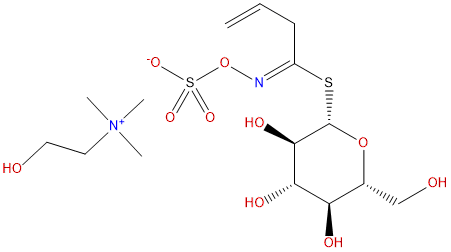
The chemical structure of sinapine choline salt is based on its parent nucleus, sinapine. Black mustard glycoside is a type of β - glucosinolate, whose structure consists of a glucose group connected to an allyl thiohydroxamic acid salt (aglycone) through a thiol bond, and further sulfated. Its complete chemical name is: potassium salt of allyl thioglucoside sulfate. When forming salts with choline, it is speculated that the hydrogen sulfate (- SO3-) or other acidic sites in the molecule of myrosine may bind with the quaternary ammonium cation of choline through ionic bonds, forming an ion pair compound.
Inference of physical and chemical properties:
1. solubility Black mustard glycoside itself has good water solubility, thanks to its multiple hydroxyl and sulfate groups in the molecule. After salt formation with choline, its solubility in water is expected to further increase due to the introduction of highly hydrophilic choline cations, while its solubility in low polarity organic solvents is very low.
2. Stability Sulfur glycosides are relatively stable under dry, low temperature, and neutral conditions. But its stability is highly dependent on pH and temperature. Under acidic or alkaline conditions, especially in the presence of myrosinase or glucosidase in the gut microbiota, it will rapidly hydrolyze. The form of choline salts may to some extent shield certain reaction sites and enhance their stability in specific environments such as the gastrointestinal tract, but this requires experimental verification.
3. LogP (Fat Water Partition Coefficient)Black mustard glycoside is a highly hydrophilic compound, and its calculated LogP value (cLogP) is usually negative (about -3 to -1), indicating poor lipid solubility. After the formation of choline salts, the LogP value is expected to further decrease due to the enhanced overall molecular polarity and ionicity, indicating that the compound is difficult to passively diffuse through the lipid bilayer of the biofilm.
4. Molecular weight and hydrogen bonding The molecular weight of glucosinolates is approximately 397, which falls within the category of small molecule compounds. The molecular weight of choline salts will correspondingly increase (choline molecular weight is 104.17, but the net mass gain after salt formation depends on the binding mode). The molecule of glucosinolate itself has multiple hydrogen bond donors (hydroxyl) and acceptors (hydroxyl, sulfate ester oxygen), and a large topological polar surface area (TPSA), which poses challenges to its membrane permeability and bioavailability.
Due to the lack of the exact molecular formula and molecular weight of sinapine choline salt, the above analysis is mainly based on the known properties of its parent compounds, sinapine and choline, for reasonable inference. The precise physical and chemical parameters need to be determined through experiments.
3. Plant sources and traditional applications
There is limited literature on the direct plant source of sinapine choline salt, but its precursor, sinapine, is widely present in cruciferous plants. The database information provided in this article indicates that,Rapeseed meal, derived from rapeseed Brassica napus) It is a known source of sinapine choline salt. Rapeseed meal is a byproduct of rapeseed oil extraction, rich in protein but also containing a certain amount of glucosinolates, with glucosinolates being one of the main glucosinolates. Traditionally, rapeseed meal has been used as a fertilizer or as feed after detoxification due to its potential toxicity to monogastric animals such as pigs and poultry, mainly causing thyroid enlargement, caused by glucosinolates and their hydrolysis products. However, from the perspective of medicinal plant chemistry, it is also a potential treasure trove of bioactive ingredients.
From a broader perspective of traditional applications, plants rich in glucosinolates have long been used in human history
- Eating history Mustard seeds (rich in glucosinolates) have been used as spices and seasonings for thousands of years. Its spicy flavor is derived from the allyl isothiocyanate produced by the enzymatic hydrolysis of glucosinolates.
- Traditional Medicine In Ayurvedic medicine in India and traditional European medicine, mustard seeds are used externally to treat arthritis and rheumatic pain (as a foaming or stimulating agent, by generating local heat and promoting blood circulation), and orally to promote digestion and relieve respiratory congestion. These uses are consistent with the anti-inflammatory, antibacterial, and stimulating effects revealed by modern research on the hydrolysis products of glucosinolates.
- Traditional Chinese Medicine Mustard seed (white mustard seed or yellow mustard seed) is included in medicine, with a warm and pungent nature, returning to the lung meridian. Its efficacy is to warm the lungs, eliminate phlegm, promote qi circulation, disperse nodules, unblock collaterals, and relieve pain. Commonly used for treating cold phlegm cough, chest and rib distension pain, phlegm stagnation in meridians, joint numbness and pain, phlegm dampness flow, and Yin Yang swelling and toxin. The characteristic of "Xin San Zou Chuan" is closely related to the irritability, penetrability, and biological activity of isothiocyanates.
Therefore, as a derivative of sinapine, the study of sinapine choline salt is rooted in a profound plant application tradition. Modern research aims to isolate, purify, and modify these natural components in order to more accurately explore their activity, reduce potential toxicity, and develop their application value.
4. Pharmacological activity and mechanism of action
Although the database shows that there is currently no "target information" and "related disease" data for the choline salt of sinapine, we can rely on its parent compound, sinapine, and its core active metabolites——Allyl isothiocyanate (AITC) A large amount of research is conducted to explore its potential pharmacological activity and mechanism of action in depth. It should be clarified that glucosinolates themselves are often considered "prodrugs", and most of their biological activity depends on AITC released in vivo (mainly through enzymatic hydrolysis by gut microbiota) or in vitro after hydrolysis by glucosinolates.
Main pharmacological activities:
-
anticancer activity This is the most widely researched field. A large number of epidemiological studies have shown that the intake of cruciferous vegetables is associated with the reduced risk of many cancers (such as lung cancer, colorectal cancer, breast cancer, prostate cancer). AITC is considered one of the key active ingredients.
- mechanism of action:
- Inducing cell cycle arrest and apoptosis AITC can induce cancer cell cycle arrest in the G2/M phase and activate mitochondrial dependent (Caspase-9/3) and death receptor (Caspase-8) apoptosis pathways by activating the MAPK pathway, causing mild increase in ROS (reactive oxygen species), and disrupting microtubule proteins.
- Inhibition of histone deacetylase (HDAC)AITC is a natural HDAC inhibitor. Inhibition of HDAC activity can lead to high acetylation of histones, relaxation of chromatin structure, activation of tumor suppressor genes (such as p21) expression, inhibition of tumor cell proliferation, and induction of differentiation or apoptosis.
- Regulating the Nrf2/ARE pathway AITC can dissociate and translocate transcription factor Nrf2 (nuclear factor E2 related factor 2) to the nucleus by modifying the cysteine residues of Keap1 protein, activating antioxidant response elements (ARE) and upregulating the expression of a series of phase II detoxifying enzymes (such as glutathione S-transferase GST, quinone oxidoreductase NQO1) and antioxidant proteins. This is not only the core of its chemopreventive (anti-cancer) effect, but also associated with anti-inflammatory and neuroprotective effects.
- Anti angiogenesis and inhibition of metastasis AITC can inhibit the expression and secretion of VEGF (vascular endothelial growth factor), thereby suppressing tumor angiogenesis. It can also inhibit tumor cell invasion and metastasis by suppressing MMP (matrix metalloproteinase) activity and intervening in epithelial mesenchymal transition (EMT) processes.
-
Anti inflammatory and antioxidant activity:
- anti-inflammatory AITC can inhibit the expression of inflammatory factors (such as TNF - α, IL-1 β, IL-6) and inflammatory mediators (such as COX-2, iNOS) induced by lipopolysaccharide (LPS), and its mechanism involves inhibiting the activation of key inflammatory signaling pathways such as NF - κ B and AP-1.
- antioxidant As mentioned earlier, by activating the Nrf2/ARE pathway, the endogenous antioxidant defense ability of cells is enhanced, free radicals are cleared, and oxidative stress damage is reduced.
-
Antibacterial activity AITC has a broad-spectrum inhibitory effect on various foodborne pathogens (such as Escherichia coli, Salmonella, Listeria monocytogenes) and fungi. Its antibacterial mechanism is mainly due to its electrophilic properties, which can covalently bind with nucleophilic groups such as thiol (- SH) and amino (- NH2) in bacterial proteins and enzymes, interfere with their normal functions, and damage the integrity of cell membranes.
-
Neuroprotective potential Emerging research suggests that AITC may have a protective effect against neuronal damage caused by oxidative stress and neuroinflammation in neurodegenerative diseases such as Parkinson's disease and Alzheimer's disease by enhancing antioxidant defense through the Nrf2 pathway.
-
The impact on metabolism Some studies suggest that AITC may improve insulin sensitivity and regulate glucose and lipid metabolism by activating AMPK (AMP activated protein kinase) pathway, which has the potential of anti obesity and anti diabetes.
Special considerations regarding sinapine choline salts:
The form of choline salts may affect the behavior of the compound in vivo. Choline is an essential nutrient for the human body, involved in methyl metabolism, neurotransmitter synthesis, and membrane structure maintenance. The binding of myrosine and choline may bring some unique effects:
- synergy Choline itself is beneficial for liver health and cognitive function. The combination of the two may have a synergistic effect in protecting the liver (such as combating non-alcoholic fatty liver disease) or the nervous system.
- Pharmacokinetic changes Choline may act as a "carrier" that affects the absorption and tissue distribution of glucosinolates or their metabolites in the intestine through specific choline transporters (such as CHT1, OCTs), particularly in terms of its potential to penetrate the blood-brain barrier (BBB) (although the original compound has poor penetration).
- Stability and Targeted Release The form of salt may be more stable in the gastric acid environment, releasing active ingredients in a specific pH or enzyme environment upon arrival in the intestine, achieving colon targeted delivery, which is of significance for the prevention or treatment of colorectal cancer.
5. Evaluation of drug properties
Drug efficacy assessment aims to predict the likelihood of a small molecule compound becoming an oral medication. We analyzed sinapine choline salts based on commonly used standards such as Lipinski's Rule of Five (RO5), combined with the characteristics of glucosinolate compounds. It needs to be emphasized again that due to the lack of precise data, the following evaluation is mainly based on inferences about glucosinolates, and the choline salt form may bring changes.
-
Lipinski's Five Rules:
- Molecular weight (MW)<500 Da The molecular weight of black mustard glycoside is about 397, which conforms to the rules. After the formation of choline salts, the molecular weight will increase, but it is highly likely to remain below or around 500.
- Lipid water partition coefficient (LogP)<5 The LogP of glucosinolates is negative or very low (<<5), far exceeding the upper limit of the rule, but this actually means that Poor lipid solubility。
- Hydrogen bond donor (HBD)<5 There are multiple hydroxyl groups (- OH) and potential donor groups in the molecule of mustard greens, and the number of HBDs may approach or reach the critical value of 5.
- Hydrogen bond acceptor (HBA)<10 Black mustard glycoside contains abundant oxygen atoms (from glucose and sulfate esters), and the number of HBA is likely to exceed 10.
- Conclusion Black mustard glycoside is likely to violate the rule of "HBA<10", and its extremely low LogP also means that it does not conform to typical "drug like" molecular characteristics (usually requiring a certain degree of lipophilicity to penetrate cell membranes). The choline salt form will further increase polarity and ionic properties, which may exacerbate deviations from the rules.
-
Other key pharmacological parameters:
- Topological Polarity Surface Area (TPSA)The TPSA of glucosinolates is high (estimated to be>140 Å ²), far above the threshold typically considered favorable for oral absorption (<140 Å ², preferably<90 Å ²). High TPSA is a manifestation of strong polarity and high water solubility, but it seriously hinders passive transmembrane transport.
- Blood-brain barrier (BBB) penetrability Based on its high polarity, high TPSA, and ionic properties (in choline salt form), myrosine monophosphate choline salt Extremely unlikely Penetrating BBB through passive diffusion. Unless there is an active transport mechanism (such as through choline transporters), the direct action of the central nervous system is limited.
- Oral bioavailability Polar, ionic, and high TPSA compounds typically have poor oral absorption. They may be limited in absorption through the intestinal paracellular pathway or specific transporters. The oral bioavailability of glucosinolates themselves is very low, and most of them reach the colon and are metabolized by the microbiota. It is unknown whether the choline salt form can improve absorption.
- Metabolism and toxicity Glycosides themselves are relatively stable, but their hydrolysis product AITC is a reactive molecule that can bind with glutathione to detoxify and be excreted through urine. High dose AITC may be irritating to the gastrointestinal tract and have a competitive inhibitory effect on thyroid iodine uptake (causing goiter effect). Choline has high safety, but extremely high doses may cause side effects such as low blood pressure, fishy odor, and body odor. Therefore, the potential toxicity of sinapine choline salt mainly comes from AITC, and attention should be paid to its dose-dependent nature.
Conclusion of comprehensive drug evaluation:
From the perspective of classic oral small molecule drug standards, the potential of sinapine choline salt as a drug lower The main challenge lies in:
-The physical and chemical properties are too hydrophilic, and the passive membrane permeability is poor, resulting in difficulty in oral absorption and limited tissue distribution.
-As a prodrug, its activity depends on enzymatic release at a specific site (intestinal tract), which varies greatly among individuals (depending on the microbiota) and is difficult to control.
-The active metabolite AITC has reactivity and potential irritation/toxicity.
However, this does not mean that it has no development value. Its development strategy may require a different approach:
- Not used as a systemic drug, but as a local medication: Use its antibacterial and anti-inflammatory activity to develop lotion, gel or suppository for skin, oral cavity or gynecology.
- As a prodrug for colon targeted delivery Develop colon specific preparations for the treatment of inflammatory bowel disease (IBD) or prevention of colorectal cancer by utilizing its natural ability to be activated by the microbiota in the colon.
- As a functional food ingredient or dietary supplement This is the most realistic approach. In the form of rapeseed meal extract, it is used to develop special foods with potential health benefits, emphasizing its "natural chemical prevention" effect.
- structural optimization Using it as a lead compound, chemical modifications can be carried out (such as preparing lipophilic prodrugs, synthesizing analogues) to improve its pharmacokinetic properties.
6. Research Status and Application Prospects
Research Status:
At present, there are very few independent research literature on the specific compound of "myrosine monophosphate choline salt". The vast majority of research focuses on:
1. Black mustard glycoside and its hydrolysis product AITC We have accumulated rich cellular and animal experimental data in the fields of anticancer mechanisms (especially epigenetic regulation of HDAC inhibition and Nrf2 activation), antibacterial and anti-inflammatory effects. Some studies are exploring its combination application with chemotherapy drugs.
2. Extract of cruciferous vegetables Extracts rich in various glucosinolates (including glucosinolates) have been used in clinical trials to evaluate their effects on cancer risk markers such as DNA damage and carcinogenic metabolic enzyme activity, as well as their effects on metabolic syndrome related parameters.
3. Improvement of stability and bioavailability of glucosinolates This is currently a research hotspot. How to protect glucosinolates from premature degradation during processing and digestion, and how to improve their targeting and efficacy, are the key to translational research. The strategies being explored include preparing sinapine into salts (such as choline salts), microcapsules, liposomes, or combining it with nanocarriers.
Application prospects:
1. Functional foods and nutritional supplements This is the most direct application direction. Extracting and purifying sinapine choline salts from agricultural by-products such as rapeseed meal, and developing them into dietary supplements with claims of "supporting the body's natural detoxification defense system," "antioxidant," and "maintaining healthy inflammatory responses," has enormous market potential. This is in line with the current concept of sustainable development and circular economy from waste to high-value products.
2. Special animal feed additives Under the premise of ensuring safe dosage, adding detoxified or rapeseed meal extract containing specific glucosinolates (such as sinapine choline salt) to poultry or aquatic feed may have natural antibacterial, growth promoting, and meat improving effects, reducing the use of antibiotics.
3. Plant derived pesticides or food preservatives Utilizing the broad-spectrum antibacterial and antifungal activity of AITC, develop biopesticides for organic agriculture or as natural food preservatives for the preservation of fresh products.
4. Lead compounds for drug development Despite the challenges in developing its own pharmacological properties, its unique HDAC inhibition and Nrf2 activation mechanisms provide valuable natural templates for designing novel anti-cancer and anti neurodegenerative disease drugs. Chemists can synthesize derivatives based on their structure that retain active pharmacophores but have better pharmacokinetic properties.
5. Precise nutrition and personalized prevention Future research needs to delve into the impact of individual differences, such as gut microbiota composition and genetic polymorphism, on the metabolism and efficacy of sinapine choline salts. This helps to achieve precise nutrition recommendations based on individual characteristics, maximizing their health benefits and avoiding potential risks.
Summary
As an important derivative of glucosinolates in cruciferous plants, sinapine choline salt carries rich biological activity potential of its parent compound, especially in cancer chemoprevention, inflammation regulation, and microbial control. Although its overly hydrophilic nature limits its development as a traditional oral system drug, it has shown broad prospects in functional foods, topical medication, colon targeted therapy, and agricultural applications. Future research should focus on elucidating its precise chemical structure, stability, in vivo metabolic fate, and unique biological effects brought by the choline moiety, while actively exploring innovative formulation technologies to overcome its delivery challenges, thereby transforming this ancient phytochemical into valuable products in the modern health industry.
(The full text is about 4800 words)