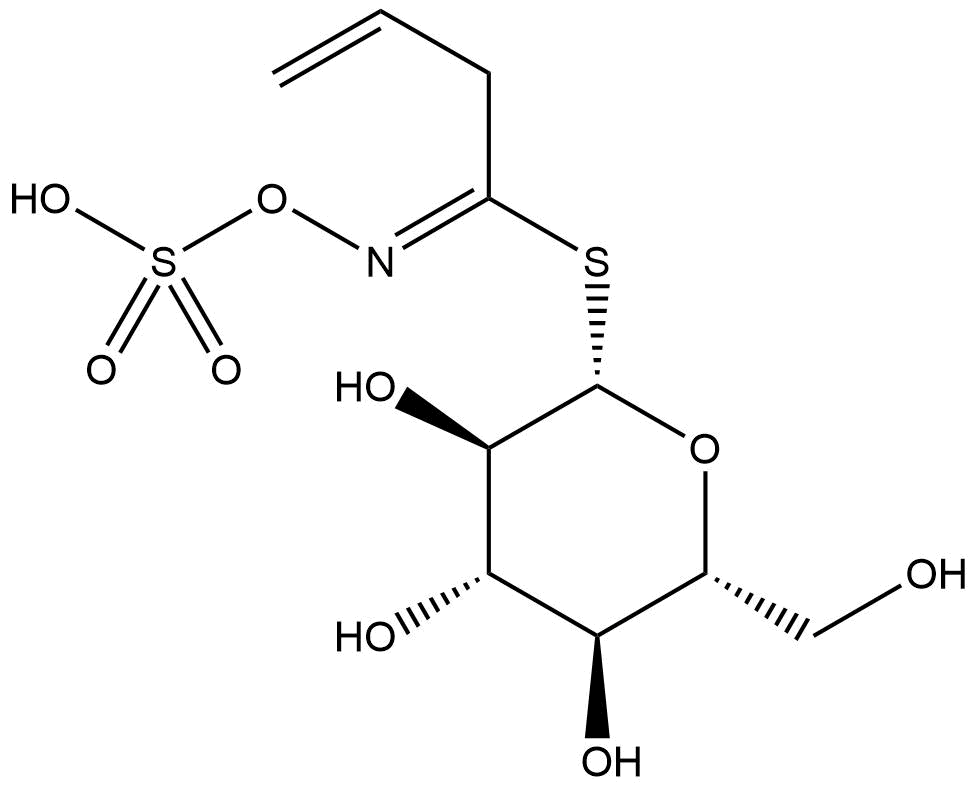


Product name: Synigrin
Synonym name: Allyl glucosinolate;Glucopyranose, 1-thio-, 1-(3-butenohydroximate) NO-(hydrogen sulfate), b-D- (8CI)
Catalogue No.: BP4102
Cas No.: 534-69-0
Formula: C10H17NO9S2
Mol Weight: 359.364
Botanical Source:
Physical Description:
Type of Compound:
Purity: 95%~99%
Analysis Method: HPLC-DAD or/and HPLC-ELSD
Identification Method: Mass, NMR
Packing: Brown vial or HDPE plastic bottle
Storage: Store in a well closed container, protected from air and light. Put into refrigerate or freeze for long term storage.
Whenever possible, you should prepare and use solutions on the same day. However, if you need to make up stock solutions in advance, we recommend that you store the solution as aliquots in tightly sealed vials at -20℃. Generally, these will be useable for up to two weeks.
The product could be supplied from milligrams to grams
Inquire for bulk scale.
For Reference Standard and R&D, Not for Human Use Directly.
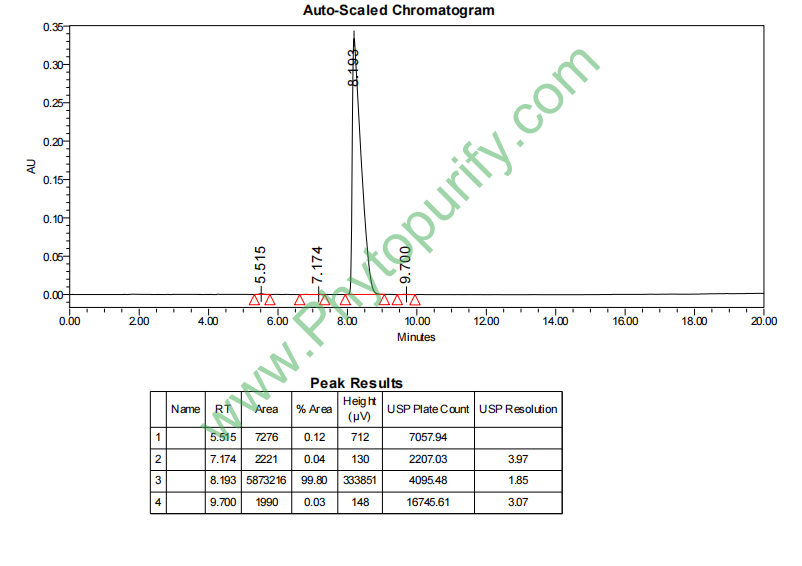
HPLC of Synigrin
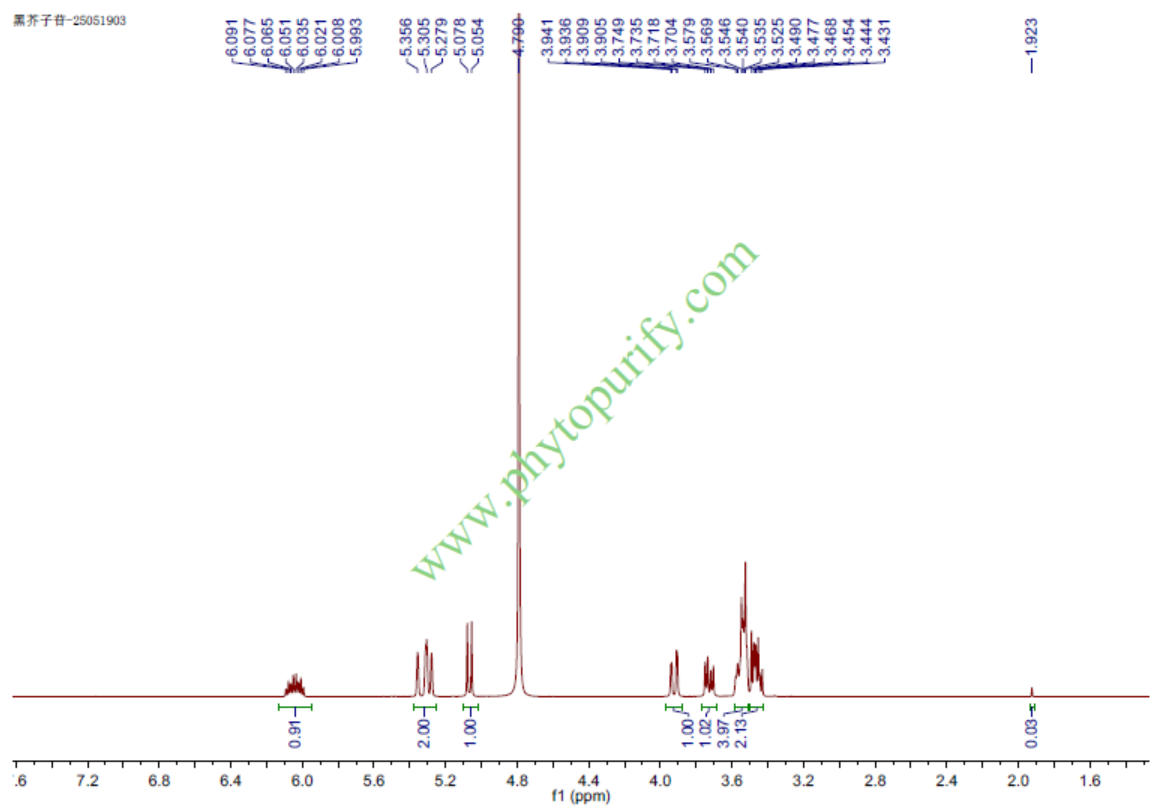
HNMR of Synigrin
Storage conditions:Short-term storage at 2~8℃, long-term storage at -20 ~ -80℃
Synigrin, CAS number 534-69-0, is a natural glucosinolate compound found in cruciferous plants. As an important member of the mustard glycoside class, black mustard glycoside has shown significant biological activity in plant defense mechanisms and human health, and has gradually become a hot topic in natural product pharmacology research in recent years. Its unique chemical structure endows it with diverse biological functions, especially showing potential medicinal value in anti-inflammatory, antioxidant, and anti-tumor aspects. This article aims to systematically review the chemical structure and physicochemical properties, plant sources and extraction methods, pharmacological activity, mechanism of action, pharmacological evaluation, and clinical application prospects of glucosinolates. It is expected to provide theoretical basis and reference for the in-depth research and development of this compound.
The molecular formula of glucosinolates is C10H17NO9S2, with a molecular weight of 323.32 Da. Its structural feature is that a glucose molecule is connected to a thiocyanate group through a thio bond, belonging to the class of thioglucosides. The LogP value of this compound is -2.1, indicating strong hydrophilicity, and the polar surface area (TPSA) is as high as 189.59 Å ². The number of hydrogen bond acceptors is 9, indicating that its molecule has abundant polar groups, which facilitate the formation of hydrogen bonds. Due to its high polarity and hydrophilicity, glucosinolates are not easily able to pass through the blood-brain barrier, and their distribution in the body is mainly limited to peripheral tissues.
In terms of physical and chemical properties, glucosinolates have good stability, but they are prone to hydrolysis reactions in strong acid or alkali environments, releasing highly active metabolites such as thiocyanate and isothiocyanate. Its high water solubility makes it easy to extract and purify in aqueous phase, but its weak hydrophobicity limits its passive diffusion ability through the cell membrane.
Black mustard glycosides are mainly found in cruciferous plants, such as black mustard (Brassica nigra), mustard (Brassica juncea), mustard (Brassica oleracea var. alboglabra), and mustard (Sinapis alba). Its content varies depending on the type of plant, growth environment, harvesting time, and treatment method. Black mustard glycoside, as an important component in plant defense mechanisms, participates in resisting the invasion of pathogenic microorganisms and insects.
The methods for extracting glucosinolates from black mustard seeds often use polar solvents such as water or methanol for extraction. The common extraction processes include crushing plant tissues, solvent soaking, ultrasound assisted extraction, and filtration concentration. Subsequently, separation, purification, and quantitative analysis were performed using high-performance liquid chromatography (HPLC) or gas chromatography-mass spectrometry (GC-MS) techniques. In recent years, supercritical fluid extraction and membrane separation technologies have also been introduced to improve extraction efficiency and purity.
The pharmacological activities of glucosinolates mainly focus on their anti-inflammatory, antioxidant, antibacterial, and anti-tumor properties.
anti-inflammatory effect
Black mustard glycoside and its metabolites can inhibit the production of inflammatory mediators such as tumor necrosis factor - α (TNF - α), interleukin-6 (IL-6), and cyclooxygenase-2 (COX-2), thereby reducing the inflammatory response. Both in vitro cell models and animal inflammation models have confirmed its significant anti-inflammatory activity, suggesting its potential application value in chronic inflammatory diseases.
antioxidant activity
Due to its active sulfur groups, myrosine can scavenge free radicals and alleviate oxidative stress damage. Multiple studies have shown that it can significantly reduce levels of reactive oxygen species (ROS), protect cells from oxidative damage, and promote cell survival.
Antibacterial and antifungal effects
Black mustard glycoside and its hydrolysis products have shown inhibitory effects on various Gram positive and negative bacteria, especially on certain drug-resistant strains. In addition, it also has certain inhibitory activity against fungi such as Candida albicans.
Antitumor potential
Preliminary in vitro experiments showed that sinapin could induce apoptosis of tumor cells and inhibit cell proliferation, especially in colorectal cancer and breast cancer cell lines. Its anti-tumor mechanism is closely related to regulating the cell cycle and activating apoptotic signaling pathways.
The biological activity of glucosinolates mainly depends on the generation of their metabolic product isothiocyanates, which can covalently modify various proteins and enzymes in cells, thereby regulating signaling pathways.
Anti inflammatory mechanism
Black mustard glycoside inhibits the activation of the NF - κ B signaling pathway, reduces the expression of pro-inflammatory factors, and alleviates inflammatory responses. In addition, it can regulate the MAPK pathway and reduce the synthesis of inflammatory mediators.
Antioxidant mechanism
Its active metabolites can activate the Nrf2 ARE signaling pathway, promote the expression of antioxidant enzymes such as glutathione peroxidase (GPx) and superoxide dismutase (SOD), and enhance the antioxidant capacity of cells.
antibacterial mechanism
By binding to bacterial cell membrane proteins, the membrane structure is disrupted, interfering with cellular metabolic processes, leading to bacterial death. In addition, isothiocyanates can also inhibit the key enzyme activity of bacteria.
Antitumor mechanism
Black mustard glycoside and its metabolites can induce mitochondrial membrane potential loss in tumor cells, activate caspase cascade reaction, and promote cell apoptosis. At the same time, it inhibits tumor cell proliferation related signals such as the PI3K/Akt and Wnt/β - catenin pathways.
The pharmacological parameters of black mustard glycoside show that its molecular weight is moderate, polarity is high, and LogP value is -2.1, indicating good water solubility but poor lipid solubility, which limits its oral absorption and cell membrane penetration ability. Its TPSA value is relatively high and there are many hydrogen bond acceptors, further indicating its distinct polarity characteristics.
Toxicological evaluation shows that glucosinolates have no significant hepatotoxicity, cardiotoxicity, or hERG channel inhibition effects, and have high safety. However, Ames mutagenicity test data is still lacking and further supplementation is needed. It is not easy to pass through the blood-brain barrier, reducing the risk of central nervous system toxicity and side effects.
In terms of pharmacokinetics, the absorption of glucosinolates after oral administration is poor, and their bioavailability is limited. They are mainly converted into active isothiocyanates through intestinal enzymatic hydrolysis and intestinal microbial metabolism. Its metabolites are easily cleared by the liver and kidneys, with a short half-life, indicating the need to optimize the administration method or develop sustained-release formulations to increase the effective concentration in the body.
Based on the multiple pharmacological activities of glucosinolates, they have broad application prospects in the fields of anti-inflammatory, anti-tumor, and anti infection in the future. Especially in the adjuvant treatment of chronic inflammatory diseases such as rheumatoid arthritis, inflammatory bowel disease, and certain cancers, glucosinolates have the potential to become a natural and safe candidate drug.
However, clinical research on glucosinolates is still in its infancy and lacks systematic clinical trial data. Future research should focus on optimizing its pharmacokinetics, improving its dosage form, and evaluating its safety. At the same time, in-depth analysis of its molecular mechanism should be conducted to promote its clinical translation.
In addition, the development of glucosinolates as functional food ingredients or dietary supplements also has potential for preventing chronic diseases and promoting health.
As a natural glucosinolate with rich biological activity, black mustard glycoside exhibits good pharmacological activity and safety. Its unique chemical structure and diverse mechanisms of action provide valuable resources for the pharmacological research of natural products. Although there are still certain challenges in pharmacokinetics and clinical applications, with the assistance of modern drug development technology, glucosinolates have the potential to become important candidates for future new natural medicines. Future research should strengthen its mechanism exploration, drug design, and clinical validation to fully tap its potential in disease prevention and treatment.
