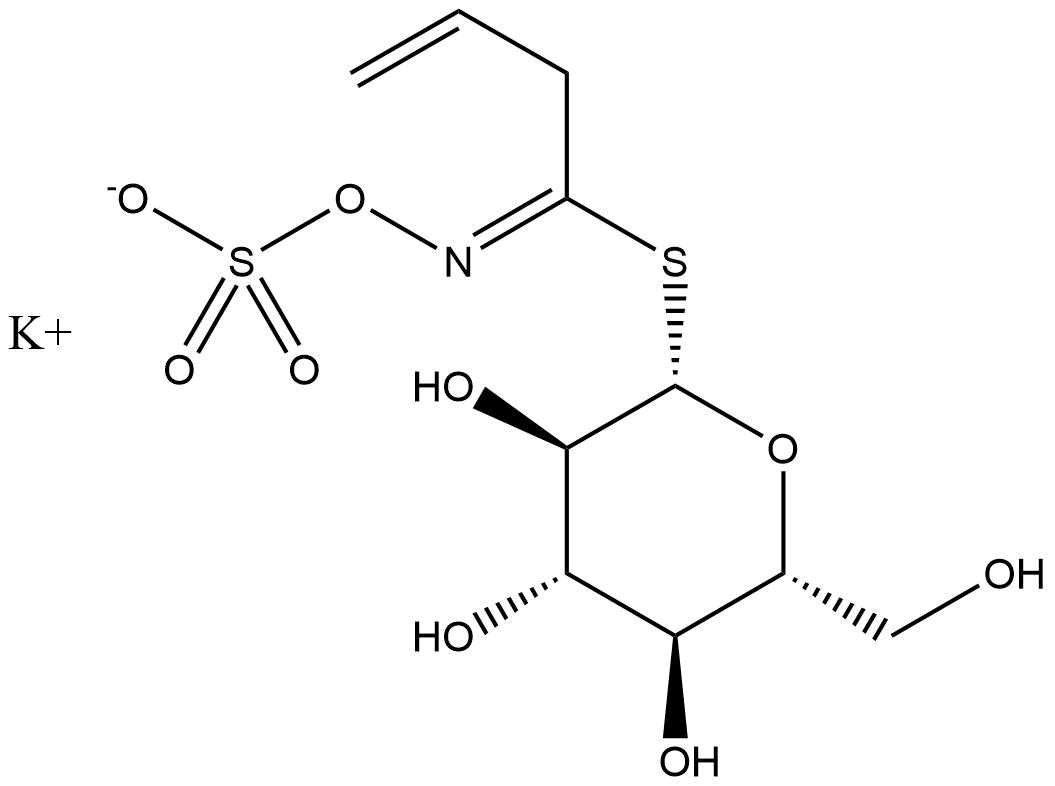


Name: Sinigrin
Synonym name: 2-Propenyl glucosinolate; Allyl glucosinolate potassium; Sinigrine
Catalogue No.: BP1311
Cas No.: 3952-98-5
Formula: C10H17NO9S2
Mol Weight: 397.4
Botanical Source:
Purity: 30%, 50%, 90%, 95%, 99%
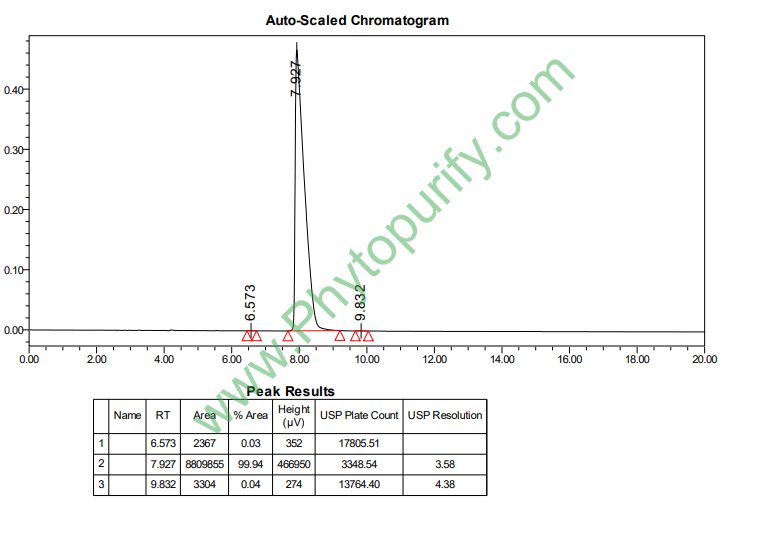
Analysis Method: HPLC-DAD
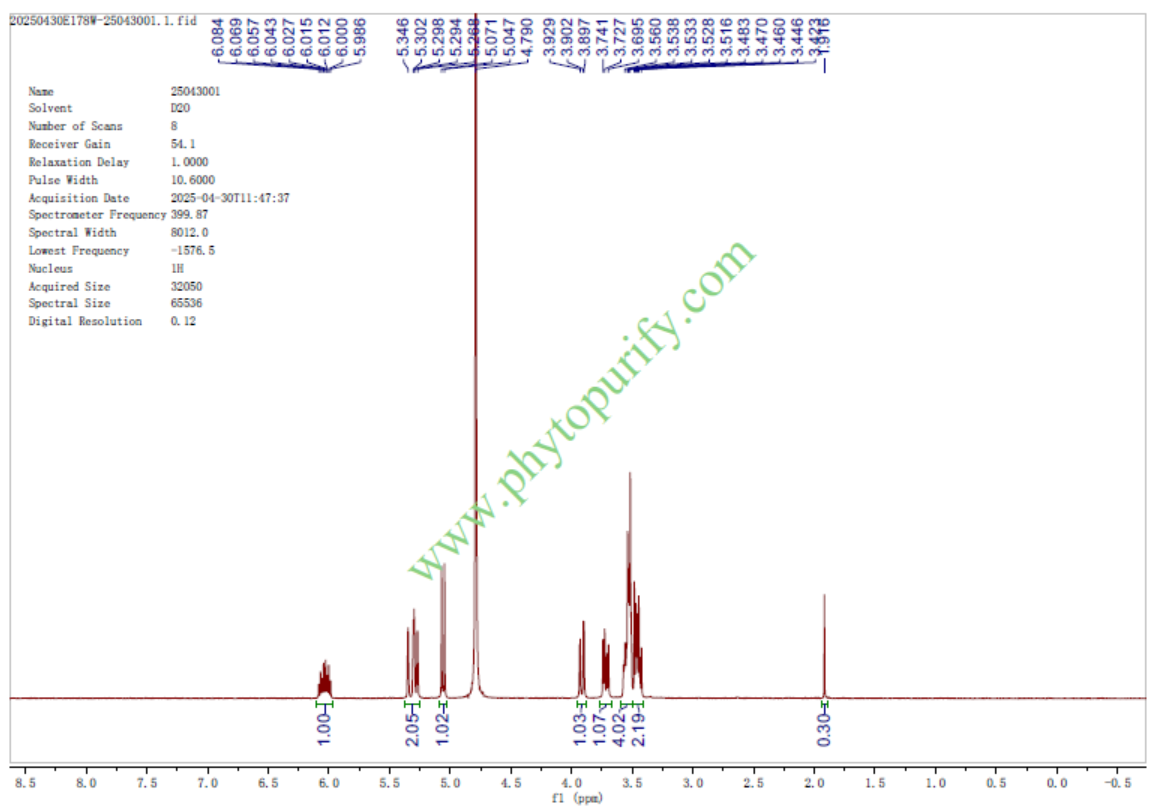
Identification Method: Mass, NMR
Packing: Brown vial or HDPE plastic bottle
Can be supplied from milligrams to grams, up to kilograms.
Inquire for bulk scale.
The purity(assay) of 30%, 50%, 90%, 95% and 98% is available for food, nutrition and cosmetics request, except for R&D and reference standard.
References:
1, Sinigrin, a major glucosinolate from cruciferous vegetables restrains non-enzymatic glycation of albumin.
Int J Biol Macromol. 2016 Feb;83:410-5.
Abstract:
Sinigrin is a major component of cruciferous vegetables such as cabbage, Brussels sprout, mustard greens and broccoli. The present study demonstrates the protective effects of sinigrin against the non-enzymatic glycation of albumin and lens crystallin based on fluorescence spectroscopy, circular dichroism and molecular interaction studies. Sinigrin was found to be a potent inhibitor for both the early (Amadori product) and advanced glycation end products (AGEs). In addition, the in vitro glycation studies of lens crystallin demonstrated the strong antiglycation activity of sinigrin. Computational studies using molecular docking approach revealed the interaction pattern of sinigrin with BSA and the binding affinity of sinigrin was found to be greater than the other potent natural inhibitors of glycation such as quercetin, apigenin, and curcumin.
KEYWORDS:
Advanced glycation end products; Albumin; Sinigrin
2, Sinigrin and Its Therapeutic Benefits
Molecules. 2016 Mar 29;21(4):416.
Abstract:
Sinigrin (allyl-glucosinolate or 2-propenyl-glucosinolate) is a natural aliphatic glucosinolate present in plants of the Brassicaceae family, such as broccoli and brussels sprouts, and the seeds of Brassica nigra (mustard seeds) which contain high amounts of sinigrin. Since ancient times, mustard has been used by mankind for its culinary, as well as medicinal, properties. It has been systematically described and evaluated in the classical Ayurvedic texts. Studies conducted on the pharmacological activities of sinigrin have revealed anti-cancer, antibacterial, antifungal, antioxidant, anti-inflammatory, wound healing properties and biofumigation. This current review will bring concise information about the known therapeutic activities of sinigrin. However, the information on known biological activities is very limited and, hence, further studies still need to be conducted and its molecular mechanisms also need to be explored. This review on the therapeutic benefits of sinigrin can summarize current knowledge about this unique phytocompounds.
KEYWORDS:
Brassicaceae family; anticancer; glucosinolates; mustard; myrosinase; sinigrin
HPLC of Sinigrin
NMR of Sinigrin
Storage conditions:Short-term storage at 2~8℃, long-term storage at -20 ~ -80℃
166.1100
-1.1901
-1.5651
34.8515
.4298
.1468
Low
37.6690
4.9862
Yes
No
No
No
No
No
0.9
Yes
Yes
Yes
No
Natural products, as an important treasure trove for drug discovery, play an irreplaceable role in the history of human disease prevention and treatment. Among them, glucosinolates, as a characteristic secondary metabolite widely present in cruciferous plants, have attracted much attention due to their unique chemical structure and diverse biological activities. Potassium glucosinolate, also known as allyl glucosinolate potassium salt, is one of the most extensively studied members of the glucosinolate family. Its CAS number is 3952-98-5, and its molecular formula is C ₁₀ H ₁₆ KNO ₉ S ₂. Mustard glucoside itself is a part of the plant defense system. When plant tissues are damaged, it can be hydrolyzed to produce pungent isothiocyanates (such as allyl isothiocyanates, i.e. mustard oil) under the action of myrosinase, which is an important chemical basis for the flavor and health care efficacy of cruciferous vegetables (such as mustard, broccoli, cabbage).
In recent years, a large number of epidemiological and preclinical studies have shown that the intake of vegetables rich in glucosinolates is significantly associated with a reduced risk of various chronic diseases, especially cancer. Black mustard glycoside and its hydrolysis products have been proven to have a wide range of pharmacological activities, including but not limited to anti-cancer, antibacterial, antifungal, anti-inflammatory, antioxidant, and lipid metabolism regulating effects. These activities demonstrate enormous potential in research fields such as tumors, inflammatory diseases (such as colitis and arthritis), and metabolic syndrome (such as obesity and non-alcoholic fatty liver disease). This article aims to systematically review the chemical properties, plant sources, pharmacological activities, molecular mechanisms of action, pharmacological evaluation, and clinical application prospects of potassium glucosinolate, in order to provide comprehensive scientific references for the in-depth research and development of this natural product.
Potassium glucosinolate is an anionic compound composed of β - D-thioglucosyl, sulfonated oxime, and allyl side chains. Its potassium form enhances water solubility and stability. Its molecular weight is 359.3780 g/mol. Structurally, its core is a skeleton consisting of a glucose group and a sulfonated oxime group connected by sulfur atoms (- S-C (=NOSO ∝⁻) -), with an allyl side chain (- CH ₂ - CH=CH ₂). This unique structure is the foundation of its biological activity, especially the key to releasing active molecules after enzymatic hydrolysis.
In terms of physical and chemical properties, potassium glucosinolate exhibits typical hydrophilic characteristics. The calculated lipid water partition coefficient (LogP) is -1.1901, indicating that it has extremely strong hydrophilicity and is not easily soluble in lipid media. The topologically polar surface area (TPSA) is as high as 166.110 Å ², which is closely related to the presence of multiple polar groups (such as sulfonic acid groups and hydroxyl groups) in its molecule. The high TPSA value further confirms its strong hydrophilic properties. Its water solubility is excellent, with a calculated value of approximately 34.8515 mg/mL, which is beneficial for its dissolution and distribution in living organisms. However, this strong hydrophilicity also limits its transmembrane transport ability, especially predicting a "low" penetration through the blood-brain barrier, suggesting a low possibility of its direct role in the central nervous system. In the preliminary safety evaluation, the data showed no inhibitory activity on hERG potassium channels (hERG inhibition: No), indicating a low potential risk of cardiac toxicity. The Ames test result is 0.9, indicating no significant mutagenicity under standard testing conditions, providing preliminary support for its safety.
Potassium glucosinolate is mainly enriched in cruciferous plants and is a characteristic component of these plants. Its content varies depending on plant species, parts, growth stages, and environmental conditions. Common plants rich in black mustard include: black mustard, mustard, horseradish, broccoli, cabbage, kale, Brussels sprouts, etc. Among them, black mustard seeds and horseradish roots are particularly abundant in content.
Extracting potassium glucosinolate from plant materials requires consideration of its water solubility and sensitivity to heat and pH. The traditional extraction method is mainly based on solvent extraction:
1. Hot water/boiling water extraction Utilizing its high water solubility, hot water extraction is employed. This method is simple, but it may cause hydrolysis of glycosidic bonds due to high temperature activation of endogenous myrosinase, which needs to be prevented by pre enzyme inactivation (such as boiling methanol treatment).
2. Organic solvent water mixed extraction Commonly used methanol water or ethanol water systems. Methanol water (such as 70%) has high extraction efficiency, can effectively inhibit enzyme activity, and extract various polar components. The ethanol water system is more in line with the concept of green extraction.
3. Ultrasonic assisted extraction or microwave-assisted extraction These modern technologies can significantly shorten extraction time, improve extraction efficiency, disrupt cell walls through physical effects, and promote the dissolution of target components.
The crude extract after extraction usually needs further purification to obtain high-purity potassium salt of glucosinolate. Purification techniques include:
- Column chromatography The use of ion exchange resins (such as DEAE Sephadex A-25) is a classic and effective method that utilizes the anionic properties of glucosinolates for specific adsorption and elution. Reverse phase C18 silica gel column can also be used for separation.
- Preparation type high-performance liquid chromatography method For obtaining high-purity standards, preparative HPLC is the most accurate method, usually using a reverse phase column with water methanol or water acetonitrile (containing a small amount of buffer salt) as the mobile phase.
The key to the extraction and purification process lies in controlling the pH (neutral to weakly alkaline) and temperature (low temperature) throughout the process, and effectively inhibiting myrosinase activity to avoid degradation of the target substance.
Numerous in vitro and in vivo studies have confirmed that potassium glucosinolate and its enzymatic hydrolysis products have a wide range of pharmacological activities.
anticancer activity This is its most highly regarded activity. Studies have shown that sinapin and its hydrolysates can inhibit the proliferation of a variety of cancer cells, including colon cancer, breast cancer, prostate cancer, lung cancer, bladder cancer, etc. Its functions include inducing cell cycle arrest (such as G2/M phase), triggering mitochondrial pathway induced apoptosis, activating autophagy, and inhibiting cancer cell migration and invasion. In the chemoprevention model, it can promote the detoxification and elimination of carcinogens by inducing phase II detoxifying enzymes such as glutathione S-transferase and quinone oxidoreductase.
anti-inflammatory activity Black mustard glycoside has shown significant anti-inflammatory effects in various acute and chronic inflammation models. For example, in a mouse colitis model induced by sodium dextran sulfate, glucosinolates can alleviate colon tissue damage, reduce disease activity index, and inhibit excessive production of pro-inflammatory cytokines. In the rat paw edema model induced by carrageenan, it also showed anti edema effects.
Antibacterial and antifungal activity Black mustard glycoside itself has weak antibacterial activity, but its enzymatic hydrolysis product - isothiocyanate (especially allyl isothiocyanate) has broad-spectrum and strong antibacterial and antifungal activity. It can disrupt the integrity of microbial cell membranes, interfere with their energy metabolism, and have inhibitory effects on various fungi including Escherichia coli, Staphylococcus aureus, Listeria monocytogenes, and Candida albicans.
antioxidant activity Black mustard glycoside and its metabolites can directly scavenge free radicals (such as DPPH free radicals, ABTS ⁺ free radicals) and enhance the body's antioxidant defense system, such as upregulating the activity of superoxide dismutase, catalase, and glutathione peroxidase, and reducing the production of lipid peroxidation product malondialdehyde.
Regulating lipid metabolism and anti obesity activity Recent studies have found that glucosinolates can inhibit the differentiation of preadipocytes and reduce the expression of adipogenic transcription factors such as PPAR γ and C/EBP α. In a diet induced obesity animal model, supplementation with glucosinolates can reduce weight gain, improve fatty liver, lower serum triglyceride and cholesterol levels, and its mechanism is related to activating the AMPK signaling pathway and promoting fatty acid oxidation.
Other activities It has also been reported that it has neuroprotective, anti diabetes, anti platelet aggregation and other potential activities.
The biological activity of potassium glucosinolate, especially its core anti-inflammatory and anticancer effects, involves a complex molecular network and multiple key targets. Its mechanism of action can be divided into direct and indirect effects: indirect effects mainly rely on the active molecules (such as isothiocyanates) generated by the hydrolysis of mustard enzymes in gut microbiota or plants; And glucosinolates themselves may also directly regulate certain signaling pathways.
In anti-inflammatory effect In terms of mechanism, its core lies in regulating key inflammatory signaling pathways such as nuclear factor kappa B (NF - κ B) and signal transduction and transcriptional activation factor 3 (STAT3). Specifically involving the following targets:
- NFKB1 (NF-κB p50)Black mustard glycoside and its metabolites can inhibit the degradation of I κ B α, prevent the translocation of NF - κ B p50/p65 dimer into the nucleus, and thereby downregulate the expression of a series of pro-inflammatory genes.
- TNF (tumor necrosis factor - α) and IL-6 (interleukin-6)It can significantly inhibit the production of TNF - α and IL-6 by macrophages stimulated by lipopolysaccharides and other factors.
- PTGS2 (COX-2) and NOS2 (iNOS)By inhibiting pathways such as NF - κ B, downregulating the expression of inducible cyclooxygenase (COX-2) and inducible nitric oxide synthase (iNOS), and reducing the excessive production of inflammatory mediators such as prostaglandin E2 and nitric oxide.
- STAT3 Inhibit the phosphorylation activation of STAT3 and block the transcription of downstream pro-inflammatory and pro survival genes.
- CASP1 (Caspase-1)By affecting the activity of NLRP3 inflammasome and inhibiting the activation of Caspase-1, the maturation and release of interleukin-1 β and IL-18 are reduced.
- TRPV1 and TRPA1 As a regulator of transient receptor potential channels, its hydrolysis products can activate or desensitize these nociceptive channels, participating in the regulation of neurogenic inflammation and pain perception.
In Anti-cancer effect In addition to the inhibition of the anti-inflammatory related NF - κ B and STAT3 pathways (both of which play important roles in the tumor microenvironment and cancer cell survival) mentioned above, it also involves:
- Apoptosis pathway Upregulation of pro apoptotic proteins (such as Bax, Bak), downregulation of anti apoptotic proteins (such as Bcl-2, Bcl xL), activation of Caspase-3, -8, -9 cascade reaction.
- cell cycle regulation Inducing cell cycle arrest by regulating the expression of proteins such as Cyclin B1, CDK1, p21, etc.
- Keap1-Nrf2-ARE pathway Its hydrolysis product is a classic Nrf2 activator that can modify the cysteine residues of Keap1 protein, causing Nrf2 to dissociate and merge into the nucleus, initiating the expression of phase II detoxifying enzymes and antioxidant enzyme genes driven by antioxidant response elements (ARE), which is the core mechanism of its chemopreventive effect.
- Histone deacetylase inhibition Studies have shown that its metabolites can inhibit HDAC activity, leading to high acetylation of histones and activating the expression of specific tumor suppressor genes.
Based on its physical and chemical properties, the medicinal properties of potassium glucosinolate exhibit distinct characteristics and challenges.
Advantage:
- Good security foundation Naturally present in daily diet, long-term consumption history indicates its high safety. Preclinical data shows that it has low acute toxicity, no hERG inhibition, and no risk of mutagenicity (Ames negative).
- Excellent water solubility Beneficial for producing various dosage forms such as oral and injection solutions, with minimal obstacles in the dissolution process of bioavailability.
- Clear activity and multi-target effects It has potential therapeutic effects on various chronic diseases, and multi-target characteristics may bring synergistic therapeutic advantages.
challenge:
- Oral bioavailability may be low Strong hydrophilicity (high TPSA, low LogP) leads to poor passive transmembrane absorption. It may be partially absorbed mainly through active transporters in the intestine, such as glucose transporters. Most oral doses of glucosinolates may reach the colon and be enzymatically hydrolyzed by gut microbiota.
- Metabolism and transformation are complex After oral administration, its fate is highly dependent on the intestinal environment. In the stomach and small intestine, if taken together with food containing myrosinase or through the action of intestinal bacterial enzymes, it will rapidly hydrolyze into isothiocyanates. Isothiocyanates are rapidly absorbed and metabolized by glutathione binding in the body (via the sinapine pathway), ultimately excreted from urine in the form of N-acetylcysteine conjugates (such as allyl mercapturic acid). If glucosinolates are absorbed in their complete form, there will be limited pharmacokinetic studies and their expected distribution volume will be small. They will mainly be distributed in the blood and extracellular fluid, making it difficult to penetrate the blood-brain barrier.
- chemical stability Unstable in acidic environments or in the presence of myrosinase, which poses requirements for formulation processes (such as enteric coating) and storage conditions.
- Dose-response relationship As a dietary ingredient, its pharmacological dosage is much higher than the daily dietary intake, and the long-term safety at high doses needs to be systematically evaluated.
At present, there is very limited systematic pharmacokinetic research on pure potassium glucosinolate in the human body, and its ADME (absorption, distribution, metabolism, excretion) characteristics still need to be elucidated through standardized preclinical and clinical studies.
The clinical application development of potassium glucosinolate is currently in the research stage of transitioning from dietary supplements to potential therapeutic drugs.
Current applications and research directions:
1. Cancer chemoprevention and adjuvant therapy As a functional food ingredient or dietary supplement, used for cancer prevention in high-risk populations. The potential of combining it with conventional chemotherapy/radiotherapy to enhance efficacy and reduce side effects is being explored.
2. Inflammatory bowel disease Due to its ability to target delivery to the colon after oral administration and be locally hydrolyzed by bacterial enzymes into anti-inflammatory active substances in the intestine, it has unique local therapeutic advantages for ulcerative colitis, Crohn's disease, and other conditions. The development of colon targeted delivery systems, such as pH dependent or enzyme triggered microspheres and nanoparticles, is a hot topic in improving their therapeutic efficacy.
3. Metabolic diseases: It has shown the potential to regulate glucose and lipid metabolism in intervention studies of metabolic diseases such as obesity, non-alcoholic fatty liver disease, type 2 diabetes, and may become a new type of natural metabolic regulator.
4. Topical preparations for local use: Use the antibacterial and anti-inflammatory properties of its hydrolysates to develop topical gel, creams or patches for skin infections, acne or inflammation of muscles and joints.
Future prospects and challenges:
- Structural modification and derivative development To address its strong hydrophilicity and poor stability, chemical synthesis of its prodrug or stable derivative is used to improve its pharmacokinetic properties, enhance bioavailability and targeting.
- Innovation in delivery system Using nanotechnology (such as liposomes, polymer nanoparticles), microencapsulation technology, or bio coupling technology to achieve protective encapsulation, controlled release, and targeted delivery of glucosinolates, especially targeting tumors or specific inflammatory sites.
- Deep analysis of the mechanism of action Using systems biology, multi omics techniques, and chemical proteomics, comprehensively map its functional network, discover new molecular targets and biomarkers, and lay the foundation for precise applications.
- Clinical translational research Promote well-designed and appropriately scaled clinical trials to evaluate their effectiveness and safety in specific diseases such as colitis and metabolic syndrome related diseases, and obtain key human data.
- Collaborative effect research Explore the combination application of glucosinolates with other natural products or existing drugs to achieve synergistic therapeutic effects through multiple pathways.
Potassium glucosinolate, as a natural active molecule gifted by cruciferous plants, has become a star compound in natural product pharmacology research due to its wide pharmacological activity, multi-target mechanism of action, and good safety foundation. From anti-cancer and anti-inflammatory to regulating metabolism, its therapeutic potential is remarkable. However, the pharmacokinetic limitations and chemical instability caused by its strong hydrophilicity are key scientific challenges that must be overcome to successfully transform it from a dietary component into a therapeutic drug. In the future, through interdisciplinary collaboration, combined with modern research methods in medicinal chemistry, pharmacy, systems biology, and clinical medicine, we will deeply analyze its complex network of action and innovate drug delivery strategies. This is expected to fully unleash the clinical application value of potassium glucosinolate and provide new natural drug choices or dietary intervention strategies for the prevention and treatment of major chronic diseases such as tumors, inflammation, and metabolism.
