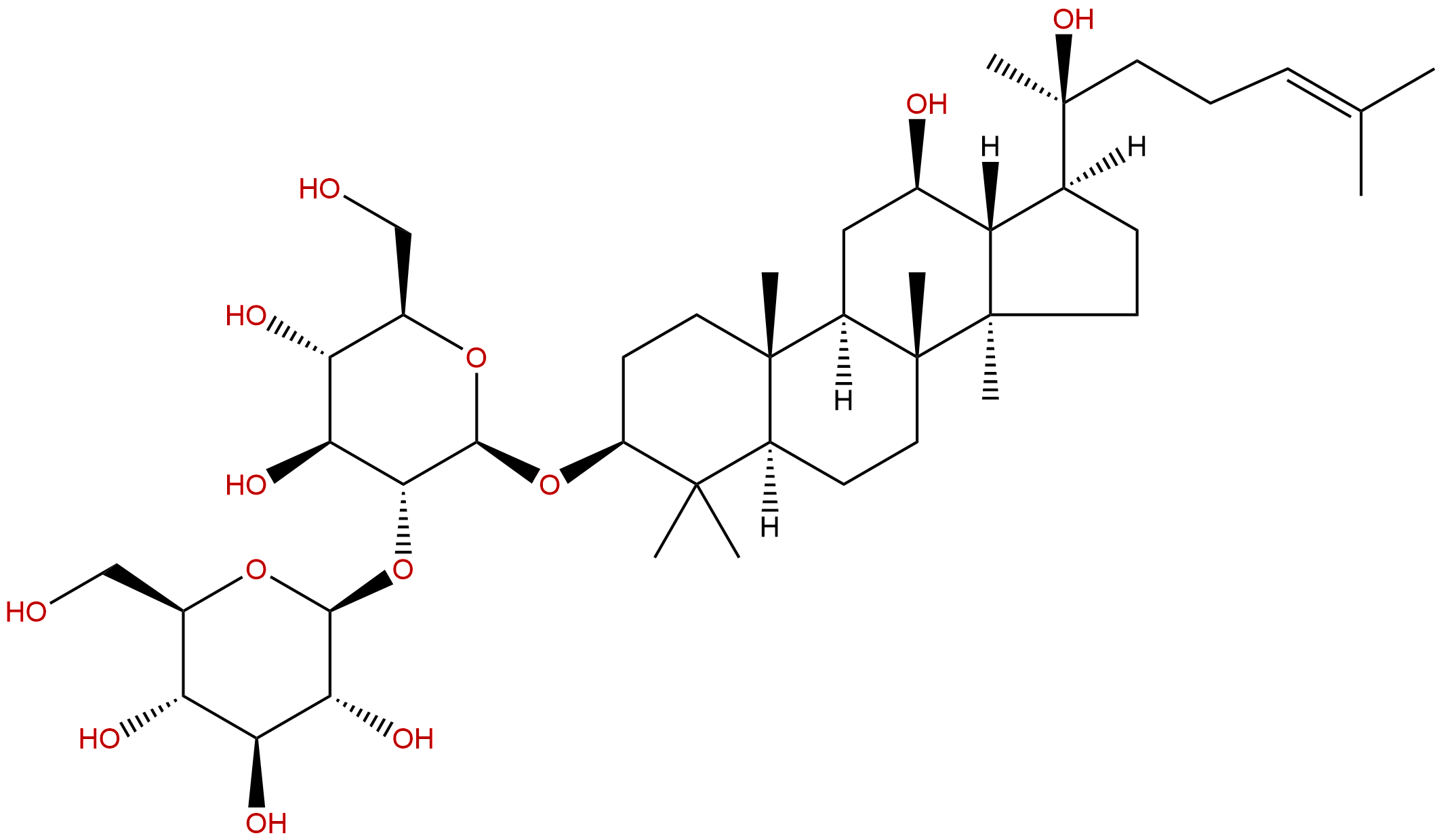


Product name: Ginsenoside Rg3
Synonym name:
Catalogue No.: BP0666
Cas No.: 14197-60-5
Formula: C42H72O13
Mol Weight: 785.025
Botanical Source: Panax spp.
Physical Description: White powder
Type of Compound: Triterpenoids
Purity: 95%~99%
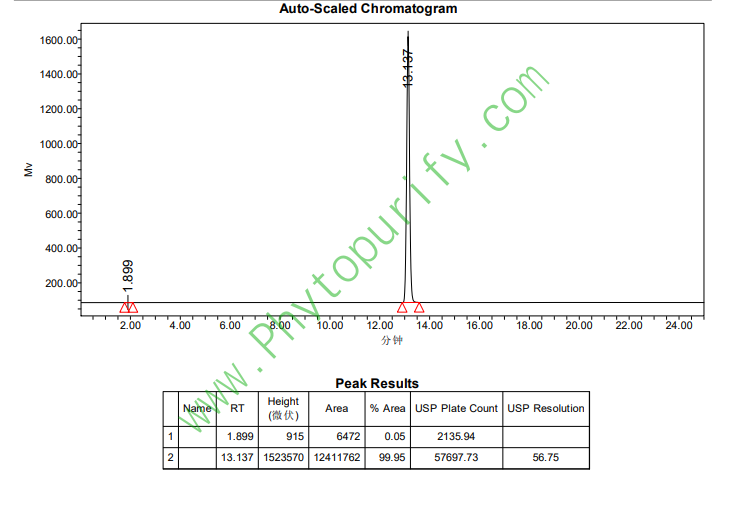
Analysis Method: HPLC-DAD or/and HPLC-ELSD
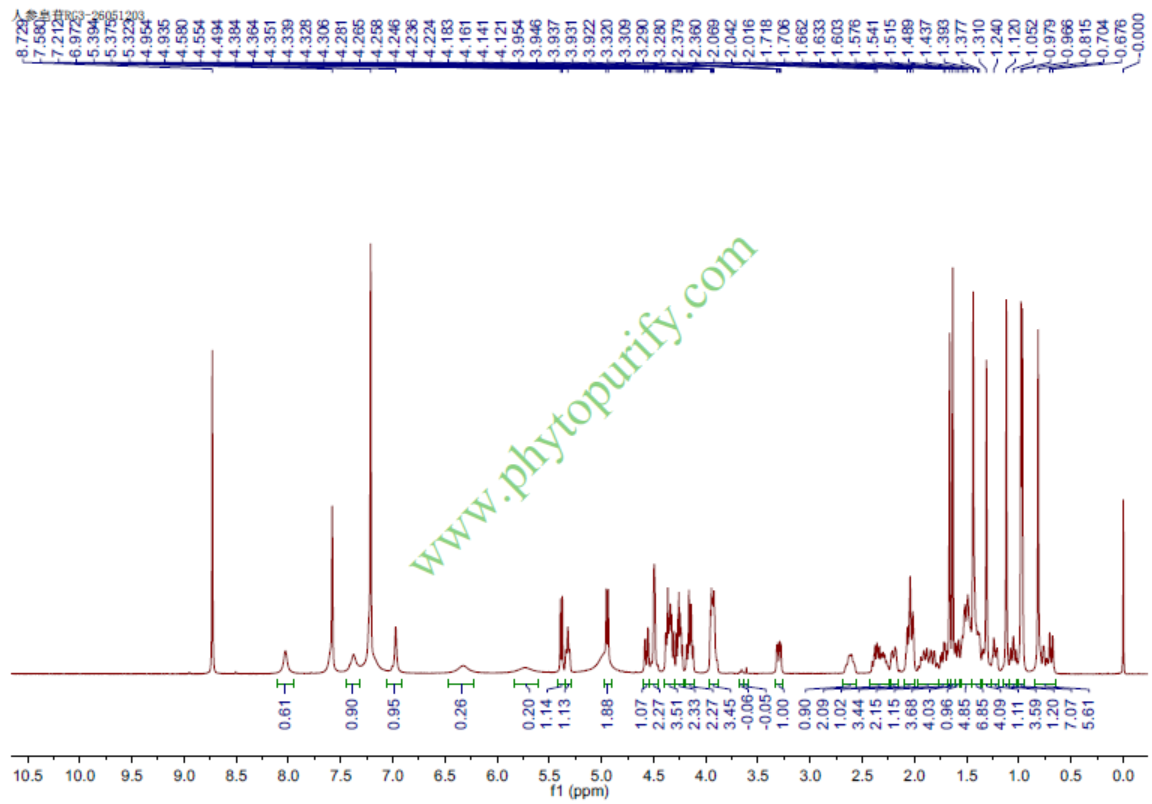
Identification Method: Mass, NMR
Packing: Brown vial or HDPE plastic bottle
Storage: Store in a well closed container, protected from air and light. Put into refrigerate or freeze for long term storage.
Whenever possible, you should prepare and use solutions on the same day. However, if you need to make up stock solutions in advance, we recommend that you store the solution as aliquots in tightly sealed vials at -20℃. Generally, these will be useable for up to two weeks.
The product could be supplied from milligrams to grams, up to kilograms
Inquire for bulk scale.
Descriptions:
Ginsenoside-Rg3, possess an ability to inhibit the lung metastasis of tumor cells, and the mechanism of their antimetastatic effect is related to inhibition of the adhesion and invasion of tumor cells, and also to anti-angiogenesis activity.[1]
Ginsenoside-Rg3 (2.5 or 5.0 mg/kg body weight,s.c. injections) inhibits cancer metastasis through activities that do not affect the growth or vascularity of intestinal cancers.[2]
Ginsenoside Rg3 has anti-tumor property through its angiosuppressive activity, is a ginsenoside monomer with high anti-cancer activity.[3,4]
Ginsenoside-Rg3 has new pharmacological activity against testosterone-induced prostate overgrowth,downregulates AR by facilitating the degradation of AR protein, could be potential therapeutic regimens for treating BPH.[5]
Ginsenoside-Rg3 is a novel drug, capable of inhibiting the early of scarring (HS) and later HS. GS-Rg3/electrospun is a very promising new treatment for early and long-term treatment of HS.[6]
References:
[1] Mochizuki M, Yoo Y C, Matsuzawa K, et al. Biol Pharm Bull, 1995, 18(9):1197-202.
[2] Iishi H, Tatsuta M, Baba M, et al. Clin Exp Metastas , 1997, 15(6):603-11.
[3] Yue P Y K, Wong D Y L, Wu P K, et al. Biochem Pharmcol, 2006, 72(4):437-45.
[4] Xue-Long L I, Yao-Yao F U, Sun S Y, et al. Journal of Dalian Polytechnic University, 2010,29(6):396-8.
[5] Bae J S, Park H S, Park J W, et al. J Nat Med, 2012, 66(3):476-85.
[6] Cheng L, Sun X, Hu C, et al. Acta Biomater, 2013, 9(12):9461-73.
[7] Zhao Q, Zheng X, Jiang J, et al. J Chromatogr B , 2010, 878(24): 2266-73.
HPLC of Ginsenoside Rg3
HNMR of Ginsenoside Rg3
Storage conditions:Short-term storage at 2~8℃, long-term storage at -20 ~ -80℃
218.9900
3.1474
3.1474
.0328
.5971
.1908
Low
73.6503
5.8482
No
No
No
No
No
No
0.0
Yes
No
No
No
Ginseng (Panax ginseng C.A. Mey.), as a treasure of traditional medicine, has been recognized and applied for thousands of years in East Asia for its pharmacological activity and health benefits. Modern pharmacological research has revealed that many of the benefits of ginseng are mainly attributed to its rich class of characteristic active ingredients - ginsenosides. Ginsenoside Rg3, as one of the representative compounds of protopanaxadiol saponins, has become a hot topic in natural product pharmacology research due to its extensive and significant biological activity since its isolation and identification. Its CAS number is 14197-60-5, with a unique chemical structure. It is one of the key molecules exploring the scientific bridge between the traditional efficacy of ginseng in "tonifying qi, solidifying qi, promoting intelligence and calming the mind" and modern disease treatment.
Early studies have confirmed that 20 (S) - ginsenoside Rg3 has inhibitory effects on ion channels such as Na+channels and hKv1.4 potassium channels, suggesting that it may affect neural excitability and cardiac electrophysiology. More importantly, its potential in neurodegenerative diseases and inflammation related pathology is gradually emerging, such as inhibiting the production of β - amyloid protein (A β), nuclear factor kappa B (NF - κ B) activity, and cyclooxygenase-2 (COX-2) expression. In recent years, with the global prevalence of metabolic diseases, especially diabetes and its complications, the role of Rg3 in regulating blood glucose homeostasis has attracted widespread attention. Its potential targets involve multiple key signaling molecules and pathways such as EHMT2, AMPK, SGLT2, etc. This article aims to systematically review the chemical properties, pharmacological activities, mechanisms of action, and medicinal properties of ginsenoside Rg3, and to explore its clinical application prospects, in order to provide comprehensive academic references for the deep development and transformation research of this natural product.
The molecular formula of ginsenoside Rg3 is C42H72O13, with a molecular weight of 785.0250. Its basic skeleton is a tetracyclic triterpenoid dammarane type, belonging to the protopanaxadiol type saponin. The core characteristic of chemical structure lies in its chiral center at C-20 position, with two types of diastereomers, S and R, among which the biological activity of the 20 (S) - configuration is usually more significant. The sugar moiety is connected to the hydroxyl groups at positions C-3 and C-20, specifically connecting two molecules of glucose at position C-3 (forming 3-O - β - D-glucosyl - (1 → 2) - β - D-glucose) and one molecule of glucose at position C-20 (20-O - β - D-glucose). This specific glycosylation pattern is crucial for its water solubility and biological activity.
From the analysis of physical and chemical properties, the lipid water partition coefficient (LogP) of ginsenoside Rg3 is 3.1474, indicating that it has a certain lipophilicity, but not highly hydrophobic. Its topological polar surface area (TPSA) is as high as 218.99 Å ², mainly attributed to the abundant hydroxyl groups and oxygen atoms on the sugar ring in the molecule, which also enable the formation of intramolecular and intermolecular hydrogen bonds. The water solubility data is 0.0328 mg/mL, which belongs to the category of slightly soluble to poorly soluble, which to some extent limits its bioavailability. These physical and chemical parameters collectively determine the absorption, distribution, metabolism, and excretion characteristics of Rg3 in the body, which are the basis for its pharmacological evaluation.
Ginsenoside Rg3 is mainly derived from plants of the Panax genus in the Araliaceae family, including Panax ginseng, Panax quinquefolius, and Panax notoginseng. In fresh ginseng roots, the content of Rg3 is usually low, and it exists more as a transformation product of other ginsenosides (such as Rb1, Rb2, Rc, etc.) during processing, storage, or in vivo metabolism. For example, in the preparation process of red ginseng, after steaming and drying, some of the original ginsenosides undergo deglycosylation reactions, resulting in a significant increase in the content of Rg3, which is also one of the material bases for the unique pharmacological activity of red ginseng.
Extracting and enriching ginsenoside Rg3 from plant materials is a multi-step process. The traditional method mainly uses solvent extraction, and commonly used solvents include methanol, ethanol, or ethanol water systems with different ratios. After vacuum concentration of the extract, it is preliminarily enriched and purified using macroporous adsorption resins (such as D101, AB-8). Different concentrations of ethanol aqueous solutions are used for gradient elution, and Rg3 is usually obtained in the medium to high concentration ethanol elution fraction. To further obtain high-purity Rg3 monomer, modern chromatographic separation techniques such as silica gel column chromatography, reverse phase preparative high-performance liquid chromatography (RP-HPLC), or high-speed countercurrent chromatography (HSCCC) are often required. In recent years, biotransformation has attracted much attention, which utilizes specific microorganisms or enzymes (such as β - glucosidase) to selectively hydrolyze Rb1, Rc, and other high content ginsenosides in ginseng, and directionally convert them into Rg3. This method has the advantages of high efficiency, good selectivity, and environmental friendliness, and is an important strategy for improving the yield of Rg3.
A large number of in vitro and in vivo studies have confirmed that ginsenoside Rg3 has multi-target and multi pathway pharmacological activities, covering multiple fields such as anti-tumor, neuroprotective, cardiovascular protection, anti-inflammatory, immune regulation, and metabolic regulation.
Antitumor activity Rg3 is one of the most extensively studied anti-tumor ginsenosides. It can inhibit the proliferation of various tumor cells (such as lung cancer, liver cancer, colon cancer, breast cancer), induce cell cycle arrest (such as G1 phase) and apoptosis. Its anti-tumor mechanism is complex, involving inhibiting tumor cell invasion and metastasis (by downregulating MMP-9, VEGF, etc.), inhibiting tumor angiogenesis, reversing tumor multidrug resistance, and regulating the tumor microenvironment.
Neuroprotection and anti Alzheimer's disease activity Rg3 can penetrate the blood-brain barrier (although with lower efficiency) and exert a protective effect on the central nervous system. Research has shown that Rg3 can reduce the production of β - amyloid protein (A β), which is related to its inhibition of abnormal processing of β - secretase 1 (BACE1) and amyloid precursor protein (APP). At the same time, it can alleviate A β - induced neuronal toxicity, oxidative stress, and inflammatory response, and improve cognitive dysfunction in Alzheimer's disease model animals.
Cardiovascular protective activity Rg3 has a protective effect on the heart and vascular system. It inhibits the activity of Na+channels and Kv1.4 potassium channels in cardiomyocytes, suggesting potential antiarrhythmic potential. In addition, it can dilate blood vessels, lower blood pressure, inhibit myocardial hypertrophy and fibrosis, and alleviate myocardial ischemia/reperfusion injury through antioxidant and anti-inflammatory effects.
Anti inflammatory and immune regulatory activity Rg3 can significantly inhibit the inflammatory response induced by stimuli such as lipopolysaccharide (LPS). One of its key mechanisms is to inhibit the activation of the NF - κ B signaling pathway, thereby downregulating the expression of COX-2, inducible nitric oxide synthase (iNOS), and various pro-inflammatory cytokines (such as TNF - α, IL-1 β, IL-6). In terms of immune regulation, Rg3 exhibits a bidirectional regulatory effect, which can enhance macrophage phagocytic function and NK cell activity, as well as inhibit excessive immune responses.
Regulating blood sugar and improving insulin resistance Regarding hyperglycemia, Rg3 has shown clear potential to improve glucose metabolism. In the animal model of diabetes, Rg3 can reduce fasting blood glucose, improve glucose tolerance and increase insulin sensitivity. Its function is closely related to activating the AMP activated protein kinase (AMPK) signaling pathway, promoting glucose uptake and utilization in skeletal muscle and liver, inhibiting hepatic gluconeogenesis, protecting pancreatic beta cell function, and regulating fat metabolism. The suggested targets also include inhibiting SGLT2 (sodium glucose cotransporter 2) to reduce renal reabsorption of glucose, as well as regulating the activity of key sugar metabolism enzymes such as GCK (glucokinase) and PTPN1 (protein tyrosine phosphatase 1B).
The multiple pharmacological effects of ginsenoside Rg3 stem from its interactions with various cellular signaling molecules and pathways. Its mechanism of action is complex and interconnected.
Signal pathway regulation:
Key molecular targets:
Although ginsenoside Rg3 has a wide range of pharmacological activities, its pharmacological development still faces challenges, mainly due to its poor pharmacokinetic properties.
absorb Rg3 has low oral bioavailability. Its larger molecular weight, higher TPSA, and slightly soluble properties result in poor solubility and permeability in the gastrointestinal tract. In addition, it is also a substrate for the intestinal efflux protein P-glycoprotein (P-gp), which may be actively pumped into the ileal lumen, further limiting absorption.
distribution Rg3 is widely distributed in the body, but its ability to enter the central nervous system is limited (low blood-brain barrier permeability), which to some extent affects its efficacy in treating central nervous system diseases. Its LogP value indicates that it has a certain tissue affinity and can be distributed to organs such as the liver, kidneys, and lungs.
Metabolism Rg3 undergoes extensive metabolic transformation in the body, especially in the gut microbiota and liver metabolism. Glycosidases in the gut microbiota can hydrolyze their glycosides to generate secondary glycosides (such as ginsenoside Rh2 and protopanaxadiol PPD), which may have different or stronger activity than the original drug. Liver metabolism involves both phase I (such as CYP450 enzyme system) and phase II binding reactions.
excretion Rg3 and its metabolites are mainly excreted through bile and urine.
Preliminary evaluation of safety According to the provided pharmacological parameters, Rg3 does not significantly inhibit hERG potassium channels (hERG inhibition: No), indicating a low potential cardiac toxicity (risk of QT interval prolongation). The Ames test result is 0.0, indicating that no mutagenicity was observed under the conditions of this experiment, and the risk of genetic toxicity is low. These are its safety advantages as a drug development.
To enhance its pharmacological properties, current research strategies include: ① structural modification: preparing prodrugs or derivatives to improve solubility and stability; ② New drug delivery systems: Developing nanoparticles, liposomes, microemulsions, solid dispersions, etc. to improve solubility, promote absorption, avoid first pass effects, and achieve targeted delivery; ③ Combination therapy: Used in combination with other drugs to reduce individual doses through synergistic effects, or in combination with P-gp inhibitors to increase bioavailability.
Ginsenoside Rg3 has been approved in China as an adjuvant drug for cancer treatment (such as Shenyi capsules). Clinical studies have shown that its combination with chemotherapy can improve efficacy, reduce toxic side effects, and improve patients' quality of life. This has laid a solid clinical foundation for its further development.
Looking ahead, the clinical application potential of Rg3 is expected to achieve breakthroughs in the following directions:
1. Metabolic diseases In view of its regulatory effect on multiple targets such as AMPK, SGLT2, PTP1B, Rg3 has broad prospects in the treatment of metabolic diseases such as type 2 diabetes and non-alcoholic fatty liver disease (NAFLD). Developing new formulations or combination drugs targeting these indications is an important direction.
2. Neurodegenerative diseases Its clear anti A β, anti-inflammatory, and neuroprotective effects make it a candidate natural molecule for the prevention and treatment of diseases such as Alzheimer's disease and Parkinson's disease. The key is to develop a delivery system that can efficiently cross the blood-brain barrier.
3. cardiovascular disease Based on its role in ion channel, vascular function and myocardial protection, its application in arrhythmia, heart failure, atherosclerosis and other fields is worth further exploration.
4. Chronic inflammatory diseases Its strong anti NF - κ B activity may make it suitable for adjuvant therapy of chronic inflammatory diseases such as rheumatoid arthritis and inflammatory bowel disease.
The future research focus should include: ① utilizing systems pharmacology, network pharmacology, and chemical biology techniques to comprehensively elucidate its multi-target action network; ② Carry out high-quality, large sample randomized controlled clinical trials to confirm its efficacy and safety in new indications such as diabetes and neurodegenerative diseases; ③ Accelerate the research on the transformation of new drug delivery systems and solve the bottleneck problem of low bioavailability; ④ Pay attention to the activity and function of its metabolites, and comprehensively evaluate its in vivo pharmacological substance basis.
Ginsenoside Rg3, as an important active ingredient in ginseng, exhibits multidimensional pharmacological activities such as anti-tumor, neuroprotective, cardiovascular protection, anti-inflammatory, and regulation of glucose metabolism due to its unique tetracyclic triterpenoid Damatane structure. Its mechanism of action involves the regulation of key signaling pathways such as AMPK and NF - κ B, as well as direct or indirect effects on multiple molecular targets such as BACE1, ion channels, EHMT2, SGLT2, forming a complex multi-target network. Although its poor solubility and oral bioavailability pose challenges to drug development, this bottleneck is expected to be overcome through structural optimization and the development of novel drug delivery systems. With the deepening of modern pharmacology, pharmaceutics and clinical research, ginsenoside Rg3 is expected to transform from traditional tonic ingredients to modern drugs for the treatment of modern major chronic diseases (such as diabetes, Alzheimer's disease, cancer, etc.), fully reflecting the continuous value and great potential of natural products in the research and development of innovative drugs. The research process also provides highly inspiring examples for us to use modern technology to deeply explore and enhance the value of active ingredients in traditional Chinese medicine.
