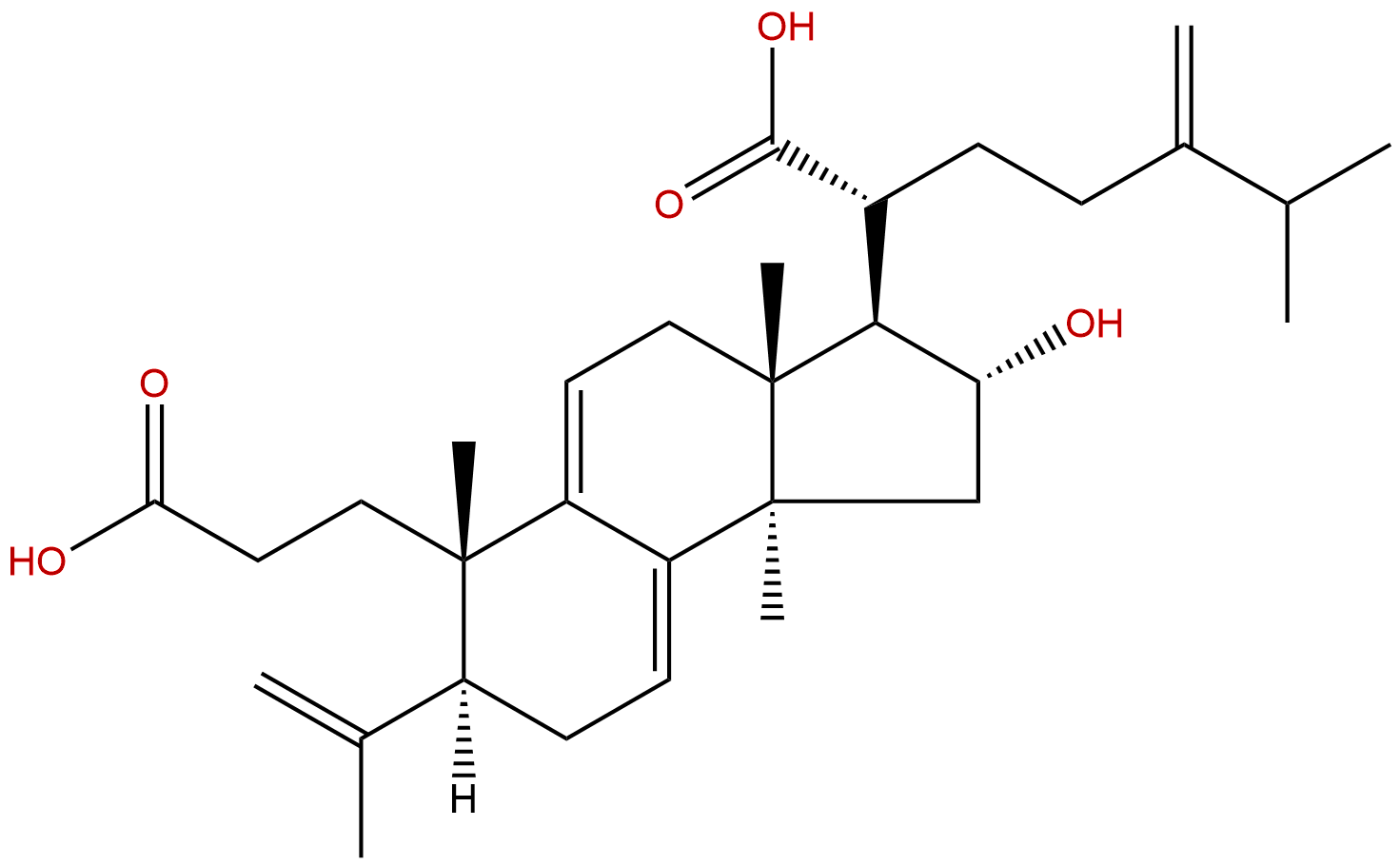


Product name: Poricoic acid A
Synonym name: Poricoic acid F
Catalogue No.: BP1838
Cas No.: 137551-38-3
Formula: C31H46O5
Mol Weight: 498.704
Botanical Source:
Physical Description: Powder
Type of Compound: Triterpenoids
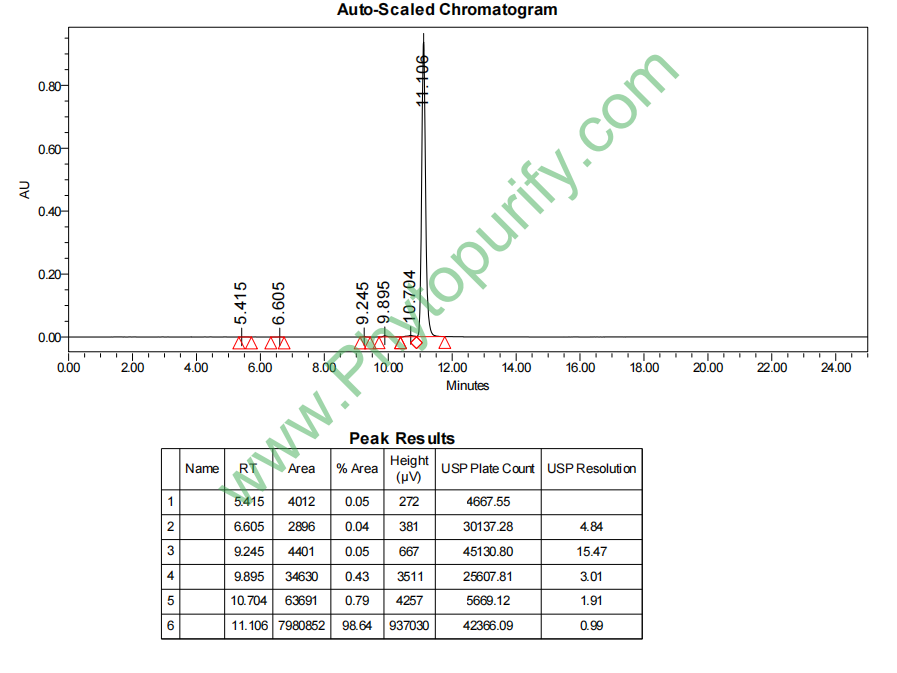
Purity: 95%~99%
Analysis Method: HPLC-DAD or/and HPLC-ELSD
Identification Method: Mass, NMR
Packing: Brown vial or HDPE plastic bottle
The product could be supplied from milligrams to grams. Inquire for bulk scale.
We provide solution to improve the water-solubility of compounds, thereby facilitating the variety of activity tests and clinic uses.
For Reference Standard and R&D, Not for Human Use Directly.
Description:
Poricoic acid A(F) shows anti-inflammatory activity. It is a potential whitening active ingredient, it exhibits good inhibitory effects on the activities of monophenolase and diphenolase in mushroom tyrosinase, as well as a certain inhibitory effect on tyrosinase in B16 cells.
References:
Zhongcaoyao, 2017(9):328.
Tyrosinase Inhibitory Activity of Total Triterpenes and Poricoic Acid A Isolated from Poria cocos.
With the improvement of people's living standards, people's requests for beauty are increasing. Skin whitening and lightening have become the pursuit of many women, and whitening and removing freckles have become the focus of scientific research. At present, widely used whitening agents, such as kojic acid, vitamin C, and its derivatives, have shortcomings such as poor stability and retarded effect. Therefore, safer and more effective whitening products from herbs are urgently needed. To explore the possibility of triterpenes as whitening active substance, the effects of total triterpenes of Poria (TTP) and Poricoic acid A(F) (PAA) on mushroom tyrosinase activities and B16 cells were investigated, and their mechanisms on mushroom tyrosinase were also studied.
METHODS AND RESULTS:
Using arbutin and nicotinamide as reference substances, we determinated the inhibitory effects of TTP and PAA on mushroom tyrosinase and tyrosinase in B16 cells and then studied the inhibitory mechanism on mushroom tyrosinase. TTP and PAA exhibited good inhibitory effects on the activities of monophenolase and diphenolase in mushroom tyrosinase, as well as a certain inhibitory effect on tyrosinase in B16 cells.
CONCLUSIONS:
TTP and PAA are potential whitening active ingredients.
Journal of Natural Products, 2011, 74(2):137-144.
Cytotoxic and Apoptosis-Inducing Activities of Triterpene Acids from Poria cocos.
METHODS AND RESULTS:
Six lanostane-type triterpene acids (1a-6a), isolated from Poria cocos , and their methyl ester (1b-6b) and hydroxy derivatives (1c-6c) were prepared. Upon evaluation of the cytotoxic activity of these compounds against leukemia (HL60), lung (A549), melanoma (CRL1579), ovary (NIH:OVCAR-3), breast (SK-BR-3), prostate (DU145), stomach (AZ521), and pancreas (PANC-1) cancer cell lines, 11 compounds (5a, 6a, 2b-5b, 1c, and 3c-6c) exhibited activity with single-digit micromolar IC(50) values against one or more cell lines. Poricotriol A (1c), a hydroxy derivative of Poricoic acid A(F) (1a), exhibited potent cytotoxicities against six cell lines with IC(50) values of 1.2-5.5 μM. poricotriol Ainduced typical apoptotic cell death in HL60 and A549 cells on evaluation of the apoptosis-inducing activity by flow cytometric analysis. Western blot analysis in HL60 cells showed that poricotriol A activated caspases-3, -8, and -9, while increasing the ratio of Bax/Bcl-2.
CONCLUSIONS:
This suggested that poricotriol A induced apoptosis via both mitochondrial and death receptor pathways in HL60. On the other hand, poricotriol A did not activate caspases-3, -8, and -9, but induced translocation of apoptosis-inducing factor (AIF) from mitochondria and increased the ratio of Bax/Bcl-2 in A549. This suggested that poricotriol A induced apoptosis via the mitochondrial pathway mostly by translocation of AIF, independent from the caspase pathway in A549. Furthermore, poricotriol A was shown to possess high selective toxicity in lung cancer cells since it exhibited only weak cytotoxicity against a normal lung cell line (WI-38).
HPLC of Poricoic acid A
Storage conditions:Short-term storage at 2~8℃, long-term storage at -20 ~ -80℃
94.8300
5.4259
2.0126
.0158
3.3346
6.7576
Low
91.6243
5.2197
No
Yes
No
No
No
No
0.0
No
No
Yes
No
Poricoic acid A is a traditional medicinal fungus derived from Poria cocos(Wolfiporia extensa)Natural triterpenoid compounds isolated from the middle. Its CAS number is 137551-38-3, molecular formula is C31H46O5, and molecular weight is approximately 498.70 g/mol. As a secondary metabolite, Poria cocos acid A is classified as a tricyclic triterpenoid compound in terms of chemical structure, and has structural characteristics of both secondary alcohols and dicarboxylic acids. In recent years, with the deepening of research on the pharmacological activity of natural products, Poria cocos acid A has attracted much attention due to its significant anti fibrotic activity, especially in the field of kidney disease where breakthrough progress has been made. Existing research suggests that it is not only a potential oral anti-tumor drug, but more importantly, it plays a key protective role in the transition from acute kidney injury to chronic kidney disease by regulating the Gas6/Axl NF κ B/Nrf2 signaling axis, activating AMPK, inhibiting Smad3, and other multiple mechanisms, and can effectively alleviate renal fibrosis. This transforms it from a traditional fungal metabolite into a modern drug lead compound with clear molecular targets and mechanisms of action, providing new ideas and candidate molecules for the treatment of fibrosis related diseases.
The molecular structure of Poria cocos acid A is complex, and its SMILES string (C=C (CC))C@@H[C@H]1C@HC[C@@]2(C)C3=CCC@@HC@(CCC (=O) O) C3=CC [C @] 12C) C (C) C) reveals its core tricyclic triterpenoid skeleton, as well as key functional groups such as carboxyl, hydroxyl, and vinyl bonds connected to it. These functional groups are not only the basis of their biological activity, but also profoundly affect their physicochemical properties.
From the analysis of the provided pharmacological parameters:
- Molecular weight (MW):498.70 g/mol, Slightly higher than the recommended upper limit of 500 Da in Lipinski's Five Rules, but as a natural product, this deviation is within an acceptable range and usually does not pose an absolute barrier to oral absorption.
- Lipid water partition coefficient (LogP)The calculated value is 5.43, indicating that the compound has high lipophilicity. However, it LogD (apparent partition coefficient at pH 7.4)It is 2.01, significantly lower than LogP. This difference is mainly attributed to the possible dissociation of two carboxylic acid groups in the molecule at physiological pH, forming charged species that greatly increase the hydrophilicity of the molecule. This explains the huge gap between its LogP and LogD.
- Topological Polarity Surface Area (TPSA): 94.83 Å ², which reflects the total surface area of polar atoms (oxygen atoms) in the molecule. Generally, TPSA<140 Å ² is beneficial for the cell membrane permeation and oral absorption of compounds. The TPSA value of Poria cocos acid A is within a favorable range.
- Water solubility The predicted value is 0.0158 mg/mL, which belongs to slight solubility. This is consistent with its larger molecular weight and partially lipophilic structure, but the dissociative carboxyl group provides a certain water-soluble basis for it, which may be beneficial for formulation development.
- Permeability The predicted permeability value (Peff) of Caco-2 cells is 3.33 cm/s × 10 ⁻⁴, indicating moderate permeability. The permeability value of Caco-2 is 6.76, indicating its good intestinal absorption potential. However, it Blood-brain barrier (BBB) penetrability The prediction is' low ', which is mainly related to its higher polar surface area and molecular weight, meaning that it may not easily enter the central nervous system. This may actually reduce the risk of central side effects for treating fibrotic diseases in peripheral organs such as the kidneys and liver.
- Plasma protein binding rate (PPB)As high as 91.62%, it indicates that the vast majority of it binds to plasma proteins (mainly albumin) after entering the bloodstream. High protein binding rate can affect the free concentration, distribution volume, and clearance rate of drugs, which need to be carefully considered in drug efficacy and pharmacokinetic design.
In summary, Poria cocos acid A is a medium-sized molecule with amphiphilicity (both lipophilic skeleton and hydrophilic carboxyl group). Its physical and chemical properties generally meet most of the requirements for oral drugs, but high protein binding rate and moderate to low water solubility may be areas that need to be optimized in its subsequent development.
Fuling New Acid A is derived from the traditional Chinese medicine Fuling. Poria cocos is a fungus in the family Poriferae(Wolfiporia extensa)Dry sclerotia. This fungus usually parasitizes the roots of pine trees, and its sclerotia are spherical, elliptical, or irregularly shaped. The outer skin is light brown to black brown, and the interior is white or light red. Fuling has a medicinal history of more than two thousand years in China. It was first recorded in the "Shennong Bencao Jing" and is classified as a top-grade herb. It is said to "have the ability to suppress qi in the chest and abdomen, cause worry, shock, evil fear, and palpitations, cause pain in the heart and lower abdomen, be full of cold and heat, cough and reflux, dry mouth and tongue, and promote urination. Long term consumption can calm the soul and nourish the spirit, prevent hunger and prolong life
In traditional Chinese medicine theory, Poria cocos has a sweet, mild, and flat nature, and belongs to the heart, lungs, spleen, and kidney meridians. It has Promote diuresis and dampness, strengthen the spleen and calm the heart The efficacy. Widely used in clinical practice to treat conditions such as edema, oliguria, phlegm retention and dizziness, spleen deficiency and food deficiency, loose stools and diarrhea, restlessness, palpitations and insomnia. Famous traditional Chinese medicine formulas such as Sijunzi Tang (Jianpi), Wuling San (Lishui), Guipi Tang (Anshen), etc. are mainly composed of Poria cocos.
The modern chemical composition research of Poria cocos shows that its main active ingredients include polysaccharides (such as Poria cocos polysaccharides), triterpenoids (such as Poria cocos acid, Turmeric acid, dehydroTurmeric acid, and Poria cocos neoacid A in this article), and sterols. Among them, triterpenoids are considered as important material basis for the pharmacological effects of Poria cocos, such as diuresis, anti-inflammatory, and anti-tumor. The discovery of Poria cocos acid A is the result of using modern separation and identification techniques to deeply explore Poria cocos, a treasure of "medicinal and edible origin". It combines the traditional efficacy of Poria cocos in "promoting water and dampness" (especially in treating edema) at the molecular level with Anti renal fibrosis and protection of renal function The modern pharmacological effects are linked together, providing a model for the modernization and scientific interpretation of traditional Chinese medicine.
The pharmacological research focus of Poria cocos acid A is currently highly concentrated on Anti organ fibrosis Especially in the field of renal fibrosis. Fibrosis is a common pathological endpoint of various chronic diseases, such as chronic kidney disease, cirrhosis, and pulmonary fibrosis. It is characterized by excessive activation and proliferation of fibroblasts, as well as the secretion of a large amount of extracellular matrix (ECM), leading to the replacement of normal tissues by scar tissue and the loss of organ function. Fuling Xin Acid A exhibits multi-target and multi pathway effects by intervening in multiple key stages of fibrosis process.
Analysis of the core mechanism of action:
Regulating the Gas6/Axl NF κ B/Nrf2 axis to inhibit inflammation and oxidative stress:
Continuous inflammation and oxidative stress are key driving factors in the transition from acute kidney injury (AKI) to chronic kidney disease (CKD). Research has shown that Poria cocos acid A can enhance the inhibitory effect of melatonin on AKI-CKD transformation. The mechanism involves regulating the Gas6/Axl signal axis. Gas6 is a vitamin K-dependent protein that, when bound to its receptor Axl, can activate the downstream NF - κ B pathway and promote the expression of inflammatory factors. Meanwhile, oxidative stress can disrupt the redox balance within cells. Fuling Xinsuan A, in conjunction with melatonin, can inhibit the activation of NF - κ B, thereby reducing inflammatory reactions; On the other hand, it can also activate the Nrf2 (nuclear factor E2 related factor 2) pathway. Nrf2 is the main regulator of cellular antioxidant response, which can upregulate the gene expression of various antioxidant enzymes and phase II detoxifying enzymes. By using a dual approach of "anti-inflammatory (NF - κ B)" and "antioxidant (Nrf2)", Poria cocos acid A effectively blocks the vicious cycle of inflammation oxidative stress after AKI, protects renal tubular epithelial cells, and delays fibrosis initiation.
Activation of AMPK, inhibition of TGF - β 1/Smad3 pathway, anti fibrotic core mechanism:
This is the most direct and core mechanism of Poria cocos acid A in anti fibrosis. Transforming growth factor - β 1 (TGF - β 1) is widely recognized as the strongest pro fibrotic factor, and its downstream is mainly transmitted through the Smad2/3 signaling pathway.
Association with related diseases:
- kidney disease The above mechanism has been validated in animal models such as renal ischemia-reperfusion injury (IRI) and unilateral ureteral obstruction (UUO). The combination of Poria cocos acid A and melatonin can significantly reduce serum creatinine and urea nitrogen levels in model rats, alleviate glomerular podocyte damage, and improve tubulointerstitial fibrosis.
- Liver cirrhosis The database suggests that Poria cocos acid A is associated with liver cirrhosis. The core pathological mechanisms of liver fibrosis/cirrhosis are also hepatic stellate cell activation, excessive activation of TGF - β 1/Smad signaling pathway, and ECM metabolic imbalance. Although there are relatively few direct research reports on the anti fibrotic effects of Poria cocos acid A, its clear anti fibrotic targets (TGFB1, ACTA2, COL1A1, TIMP1, MMP2) highly overlap with the occurrence and development of liver fibrosis. Therefore, it has great potential to be developed for the treatment of liver fibrosis and cirrhosis, which may be one of its important research directions in the future.
Based on the provided pharmacological parameters and classic rules of medicinal chemistry, we evaluate the potential of Poria cocos acid A as an oral medication:
Lipinski's Rule of Five This is an empirical rule for evaluating the oral absorption potential of compounds.
Penetration and absorption:
Distribution and Metabolism:
Preliminary Safety Assessment:
Summary Poria cocos acid A has a good chemical basis to become an oral anti fibrotic drug. Its main advantages lie in clear pharmacological targets, multi-channel mechanisms of action, good permeability, and preliminary genetic and cardiac safety. The development difficulty lies in Improve water solubility, manage the impact of high protein binding rates, and confirm risks such as liver toxicity through more comprehensive preclinical toxicology studies。
Research status:
At present, research on Poria cocos acid A is still mainly in progress Preclinical stage Focus on in-depth exploration of the mechanism of action and validation of drug efficacy in animal models. The existing research has clearly depicted the molecular blueprint of its protective effect in renal fibrosis models through core pathways such as AMPK/TGF - β 1/Smad3 and NF - κ B/Nrf2. The study of its synergistic effect with melatonin provides ideas for the development of compound preparations. However, its independent pharmacokinetic characteristics (absorption, distribution, metabolism, excretion), long-term toxicity, and efficacy in fibrosis models of other organs (such as liver and lung) still require systematic research to fill the gap.
Application Prospects:
1. As an innovative lead compound for the treatment of chronic kidney disease (CKD)In response to the current lack of drugs that can effectively reverse fibrosis in CKD, the multi-target anti fibrotic mechanism of Poria cocos acid A has shown unique advantages. In the future, structural optimization can be carried out around it to improve its solubility and pharmacokinetic properties, and develop it into a new type of anti renal fibrosis drug.
2. Expand to other fibrotic diseases Given the universality of its target, its potential applications in fields such as liver fibrosis/cirrhosis, pulmonary fibrosis, and myocardial fibrosis are enormous and worth exploring as a new direction.
3. Examples of Modernization and Precision Treatment of Traditional Chinese Medicine The research on Poria cocos acid A successfully connects the traditional efficacy of Poria cocos in "promoting diuresis" with the scientific connotation of "anti renal fibrosis" in modern medicine. It inspires us to systematically isolate and identify active ingredients from traditional Chinese medicine, and elucidate their modern pharmacological mechanisms, which is an effective path for discovering new drugs and achieving precise treatment with traditional Chinese medicine.
4. Developing drug combination strategies Current research suggests that its combination with melatonin has a synergistic effect. In the future, it is possible to explore its combination therapy with other anti-inflammatory, antioxidant, or anti fibrotic drugs in order to achieve better therapeutic effects and reduce their respective doses and side effects.
In short, Poria cocos acid A is a pearl discovered from the treasure trove of traditional Chinese medicine. Its unique chemical structure and multi-target anti fibrotic mechanism bring new hope for the treatment of chronic fibrotic diseases that plague the world. Although clinical application still faces a series of pharmaceutical and toxicological challenges, its enormous potential undoubtedly makes it a highly valuable candidate molecule in the field of natural product drug development, and future research results are highly anticipated.
