

Synonym name:
Catalogue No.: BP0952
Cas No.: 88901-41-1
Formula: C54H92O24
Mol Weight: 1125.31
Botanical Source: Momordica grosvenorii
Purity: 95%~99%
Analysis Method: HPLC-DAD or/and HPLC-ELSD
Identification Method: Mass, NMR
Packing: Brown vial or HDPE plastic bottle
Can be supplied from milligrams to grams.
For Reference Standard and R&D, Not for Human Use Directly.
Inquire for bulk scale.
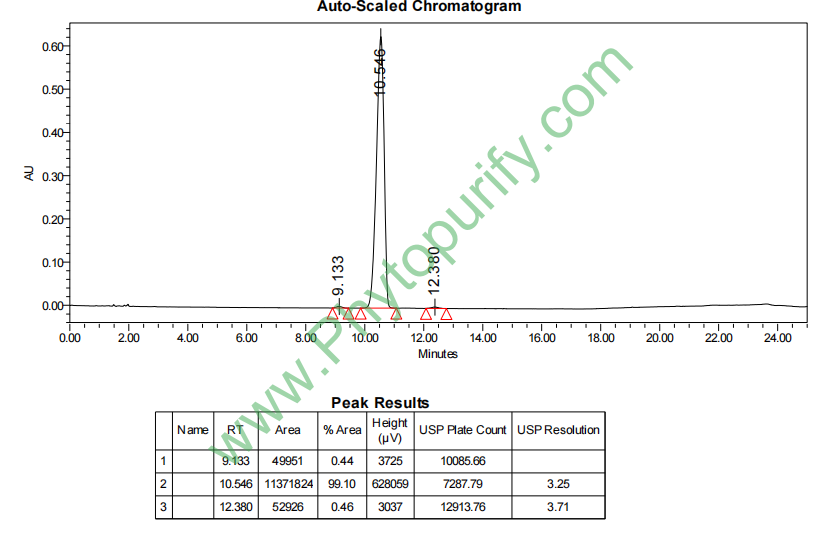
HPLC of Mogroside IVa
Storage conditions:Short-term storage at 2~8℃, long-term storage at -20 ~ -80℃
397.5200
1.4704
1.4702
.3267
.4346
.5582
Low
67.1125
7.0540
No
No
No
No
No
No
0.0
Yes
No
No
Yes
Diabetes is a global chronic metabolic disease, its incidence rate continues to rise, has become a serious public health challenge. Long term hyperglycemia can lead to various complications such as cardiovascular disease, kidney disease, neuropathy, and retinopathy, imposing a heavy burden on patients and society. The current first-line hypoglycemic drugs in clinical practice, such as metformin, sulfonylureas, SGLT2 inhibitors, etc., although effective, still have problems such as gastrointestinal reactions, risk of hypoglycemia, weight gain, or specific organ side effects. Therefore, exploring efficient and low toxicity new hypoglycemic lead compounds or functional food ingredients from natural products has always been an important direction for drug development.
Siraitia grosvenorii(Siraitia grosvenorii)The perennial vine plant of the Cucurbitaceae family is a unique medicinal and edible resource in China, traditionally used to moisten the lungs, relieve cough, produce fluids, and quench thirst. Its sweetness mainly comes from a class of triterpene saponins called mogrosides. Among them, Arhat IVa (CAS: 88901-41-1), as one of the main active ingredients in mogroside extract, has attracted much attention in recent years due to its multi target and multi-channel pharmacological activities in the regulation of glucose and lipid metabolism. Compared with mogroside V with higher sweetness, Arhat IVa has a unique position in content and biological activity. The purpose of this paper is to systematically review the chemical properties, pharmacological activities, mechanism of action and drug yield of Arhat fruit glycoside IVa, and provide scientific basis for its in-depth research and development in the field of prevention and treatment of diabetes and its complications.
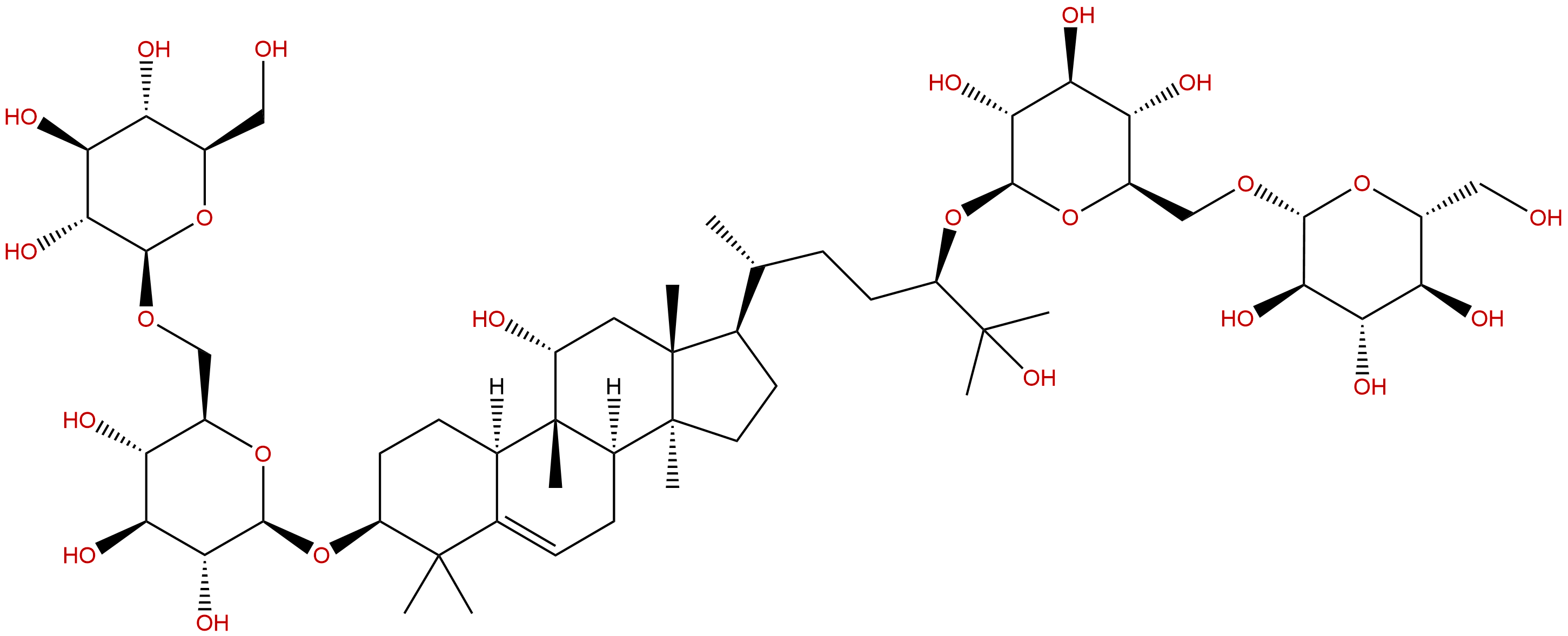
Arhat fruit glycoside IVa belongs to cucurbitane type tetracyclic triterpene saponin, and its parent nucleus is cucurbitane-5-en-3 β, 24R diol. Its chemical structural feature is that both the C-3 and C-24 positions of the mother nucleus are connected by glycosidic bonds to the sugar chain.
Specifically, its molecular formula is C54H92O24 and its molecular weight is 1125.3060. A disaccharide chain consisting of two molecules of glucose (β - D-glucosyl - (1 → 2) - β - D-glucosyl) is connected at position C-3, while a disaccharide chain consisting of one molecule of glucose and one molecule of rhamnose (β - D-glucosyl - (1 → 6) - α - L-rhamnose) is connected at position C-24. The structure of this polyhydroxy and polysaccharide group determines its unique physicochemical properties.
The calculated lipid water partition coefficient (LogP) is 1.4704, indicating that the molecule has a certain degree of lipophilicity, but due to the presence of a large number of hydrophilic hydroxyl groups in its sugar moiety, it still exhibits hydrophilicity as a whole. Its topological polar surface area (TPSA) is as high as 397.5200 Å ², mainly attributed to the numerous oxygen atoms and hydrogen bonding sites in the molecule, indicating its strong polarity. The water solubility value is 0.3267, indicating that it belongs to the category of slightly soluble to soluble in water, which lays the foundation for its dissolution and absorption in organisms. To sum up, Arhat fruit glycoside IVa is a high polar, multi hydroxyl macromolecular triterpene saponin, and its physical and chemical properties directly affect its extraction, purification, absorption and distribution in vivo.
Arhat IVa mainly comes from the cucurbitaceae plant Siraitia grosvenorii(Siraitia grosvenorii The dried fruit of Swingle. The content of Arhat fruit glycoside is rich in fruits, and its composition and proportion vary with fruit maturity, variety and origin. Arhat fruit glycoside IVa often coexists with Arhat fruit glycoside III, IV, V, etc., and is an important component of total glycosides.
Its extraction and separation usually follow the following process:
1. Preprocessing and Extraction: After the dried Siraitia grosvenorii fruit is crushed, it is often extracted with water, alcohol water (such as ethanol, methanol) or hot water. Modern technologies such as ultrasound assisted extraction, microwave-assisted extraction, and pressurized solvent extraction can significantly improve extraction efficiency and shorten time.
2. Preliminary purification After concentration, the extract is enriched and preliminarily separated using macroporous adsorption resins (such as AB-8, D101, HPD series). Utilizing the adsorption characteristics of resin on saponins, water soluble impurities such as polysaccharide and protein were removed by water elution, and then eluted with ethanol solution of different concentrations to collect the fraction rich in mogrosin.
3. Fine separation: The components rich in mogroside were further separated and purified by silica gel column chromatography, reverse phase silica gel column chromatography (such as ODS), preparative high performance liquid chromatography (HPLC) and other methods to obtain high-purity Arhat IVa. High speed counter current chromatography technology is also commonly used for the separation of such polar saponins due to its advantage of irreversible adsorption.
4. Identification and Quality Control The purified compounds can be structurally confirmed by techniques such as nuclear magnetic resonance (NMR, including 1H-NMR, 13C-NMR, 2D-NMR) and mass spectrometry (MS). High performance liquid chromatography evaporative light scattering detector or liquid chromatography-mass spectrometry is a key method for quantitative analysis of Arhat fruit glycoside IVa content and control of raw materials and product quality.
A large number of in vivo and in vitro studies have shown that Arhat fruit glycoside IVa has a wide range of pharmacological activities in diabetes and related metabolic disorders.
Hypoglycemic activity: In a variety of diabetes animal models (such as streptozotocin induced diabetes rats, high-fat diet combined with low-dose streptozotocin induced type 2 diabetes rats, db/db spontaneous diabetes mice), intragastric administration of Arhat fruit glycoside IVa can significantly reduce fasting blood glucose, postprandial blood glucose and glycosylated hemoglobin levels, and improve impaired glucose tolerance. Its hypoglycemic effect is mild and long-lasting, and no serious hypoglycemic events have been reported in the study.
Improving insulin resistance: Arhat fruit glycoside IVa can enhance the sensitivity of peripheral tissues (such as skeletal muscle, adipose tissue, liver) to insulin. In insulin resistance cell and animal models, it can promote glucose uptake and utilization, reduce serum insulin levels, and improve insulin resistance index.
Regulating lipid metabolism: The compound can improve the lipid metabolism disorder often associated with diabetes. Research shows that it can reduce the levels of total cholesterol, triglyceride and low-density lipoprotein cholesterol in the serum of diabetes model animals, and increase the level of high-density lipoprotein cholesterol at the same time to reduce liver steatosis.
Antioxidant and anti-inflammatory effects Chronic hyperglycemia leading to oxidative stress and chronic low-grade inflammation is the core link of the occurrence and development of complications of diabetes. Arhat IVa can enhance the activity of antioxidant enzymes such as superoxide dismutase and glutathione peroxidase, and reduce the level of lipid peroxidation products such as malondialdehyde. At the same time, it can inhibit inflammatory signaling pathways such as nuclear factor kappa B, reduce the expression of pro-inflammatory cytokines such as tumor necrosis factor alpha and interleukin-6, thereby alleviating pancreatic beta cell damage and inflammation of insulin target organs.
Potential benefits for complications of diabetes: Preliminary studies suggest that Arhat fruit glycoside IVa may have protective effects on diabetes nephropathy (reducing urinary protein, reducing glomerulosclerosis) and diabetes liver injury (improving liver function, reducing liver fibrosis), which is closely related to the comprehensive effects of hypoglycemic, lipid regulating, antioxidant and anti-inflammatory.
The hypoglycemic and metabolic regulation of Arhat fruit glycoside IVa is not through a single target, but involves a complex multi target network, which is consistent with the characteristics of its natural products. According to existing research, its mechanism of action mainly revolves around the following key targets and pathways:
Activate AMPK signaling pathway Adenosine activated protein kinase is a core regulator of cellular energy metabolism. Arhat fruit glycoside IVa has been proved to activate AMPK (target: PRKAA1/AMPK). The activation of AMPK can produce a series of beneficial effects:a) In the liver, inhibiting the expression of key enzymes involved in gluconeogenesis, such as phosphoenolpyruvate carboxykinase and glucose-6-phosphatase, reduces hepatic glucose output;b) Promote the translocation of glucose transporter 4 to the cell membrane and increase glucose uptake in skeletal muscle and adipose tissue;c) Promote fatty acid oxidation, inhibit fat synthesis, and thus improve lipid metabolism.
Regulating insulin related signaling pathways: Arhat fruit glycoside IVa can enhance the tyrosine phosphorylation of insulin receptor substrate and activate the phosphatidylinositol 3 kinase/protein kinase B signal pathway, which is the core pathway for insulin to promote glucose uptake and anabolism. Meanwhile, it has been reported to inhibit the activity of protein tyrosine phosphatase 1B. PTP1B is a key negative regulator of the insulin signaling pathway and leptin signaling pathway, and its inhibition can enhance the sensitivity of insulin and leptin.
Affects intestinal glucose absorption and hepatic glucose metabolism: Studies have shown that Arhat fruit glycoside IVa may have a certain inhibitory effect on sodium glucose cotransporter 2, thereby reducing the renal reabsorption of glucose and increasing urinary glucose excretion. This mechanism is similar to that of clinical SGLT2 inhibitors. In addition, it may affect the liver's perception and utilization of glucose by regulating the activity or expression of glucokinase.
Other potential targets: The study also suggests that the effect of Arhat fruit glycoside IVa may involve other targets, such as:a) Monoamine oxidase A MAOA is associated with oxidative stress and insulin resistance, and its inhibition may contribute to antioxidant effects.b) Estrogen receptor beta ESR2 is involved in the regulation of energy metabolism and insulin sensitivity, and may mediate some of its metabolic benefits.c) Amyloid precursor protein The abnormal metabolism of APP is related to insulin signal interference and neuronal damage, which may play a role in diabetes encephalopathy, but the specific relationship between Arhat fruit glycoside IVa and this target needs further study.
To sum up, Arhat fruit glycoside IVa plays an anti diabetes role in many aspects, such as increasing glucose disposal, inhibiting gluconeogenesis, reducing sugar absorption, improving insulin sensitivity, regulating lipid metabolism and reducing oxidative inflammatory stress, through synergistic action on multiple targets such as AMPK, insulin signaling, PTP1B, SGLT2, etc.
Based on the provided pharmaceutical properties parameters and existing research, the preliminary evaluation of the pharmaceutical properties of Arhat IVa is as follows:
At present, the research reports on the pharmacokinetics of Arhat fruit glycoside IVa system are insufficient, and the key parameters such as its absolute bioavailability, main metabolites, and half-life in vivo need to be further clarified.
Arhat fruit glycoside IVa shows a wide range of potential applications in the prevention and treatment of diabetes:
However, its clinical application still faces challenges:① The low oral bioavailability is the main bottleneck restricting its development, which requires innovative formulation technology to overcome.② Systematic and standardized preclinical pharmacological, pharmacokinetic, and toxicological research data still need to be supplemented and improved, especially for long-term toxicity, reproductive toxicity, etc.③ It is urgent to conduct rigorously designed clinical trials to confirm its effectiveness, safety, and optimal dosage in humans.④ The specific weights of its multi-target effects, the interaction relationships between each target, and whether there are unknown off target effects require further molecular and systems biology research to clarify.
As an active triterpene saponin derived from the traditional edible and medicinal plant Arhat grosvenorii, IVa shows significant comprehensive pharmacological activity in regulating glucose and lipid metabolism, improving insulin resistance, reducing oxidative stress and inflammation by activating AMPK, enhancing insulin signal, inhibiting PTP1B and SGLT2 and other multi-target synergistic effects. The background of its natural origin and preliminary good safety (no hERG inhibition, Ames negative) provide a favorable basis for its development. Although there are challenges in oral absorption and systematic clinical evidence, with the progress of preparation technology and the deepening of basic research, Arhat fruit glycoside IVa is expected to play an important role in the prevention and treatment of diabetes and its complications as a functional food raw material, health food or new drug precursor compound. Future research should focus on optimizing its in vivo processes, precise analysis of its action network, and clinical translational validation, in order to fully explore the application value of this natural product and provide new options for the prevention and treatment of metabolic diseases.
