


Product name: Imperatorin
Synonym name: Marmelide; Ammidin; Marmelosin
Catalogue No.: BP0761
Cas No.: 482-44-0
Formula: C16H14O4
Mol Weight: 270.284
Botanical Source: Present in roots of Imperatoria ostruthium and Clausena dentata. Also in Aegle marmelos, Angelica dahurica, Glehnia littoralis infected with Pseudomonas cichorii, Ammi majus, Pastinaca spp., Seseli campestre, Urena lobata and others
Physical Description: Cryst.
Type of Compound: Coumarins
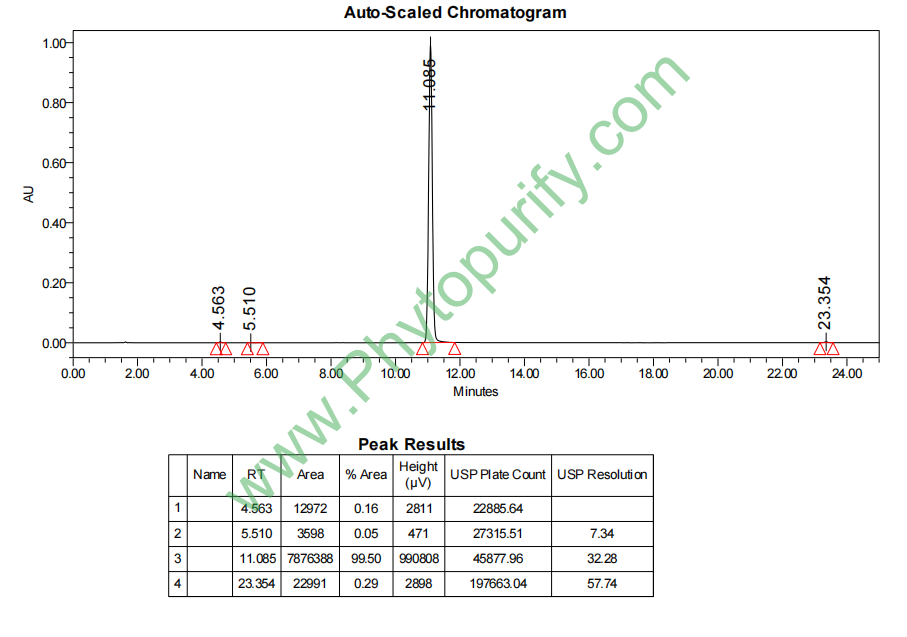
Purity: 95%~99%
Analysis Method: HPLC-DAD or/and HPLC-ELSD
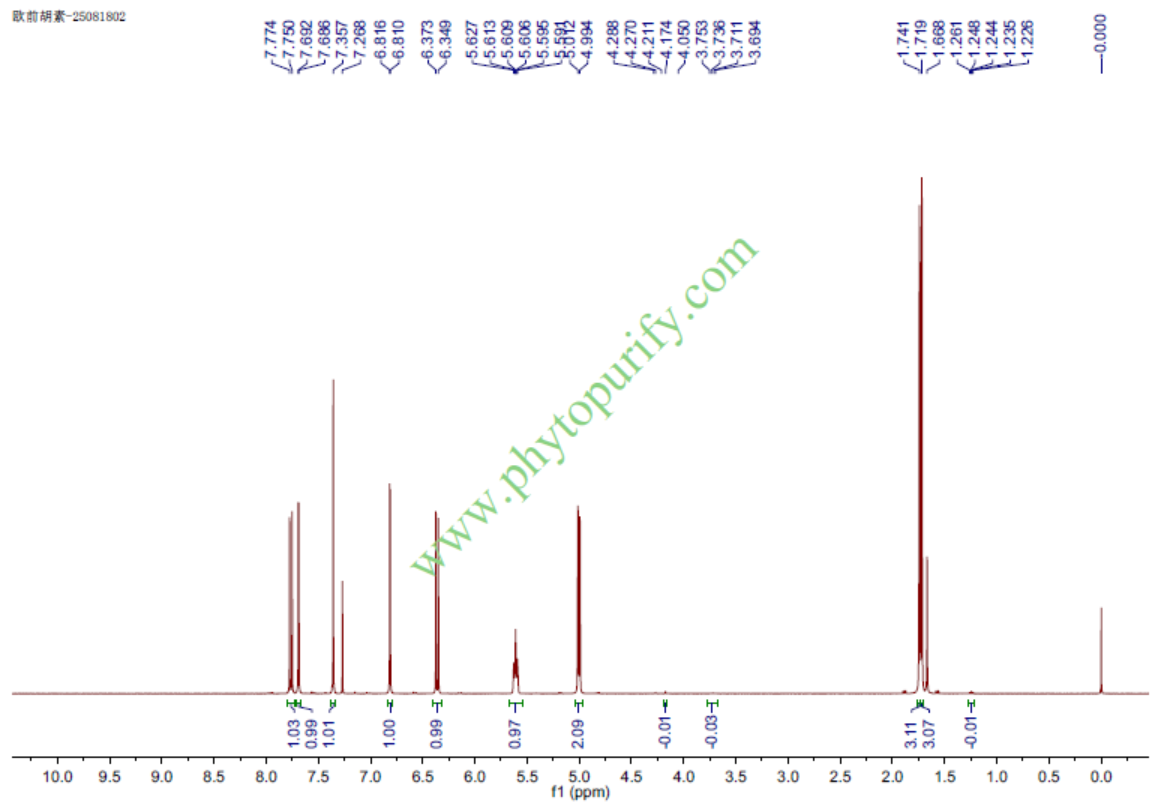
Identification Method: Mass, NMR
Packing: Brown vial or HDPE plastic bottle
Storage: Store in a well closed container, protected from air and light. Put into refrigerate or freeze for long term storage.
Whenever possible, you should prepare and use solutions on the same day. However, if you need to make up stock solutions in advance, we recommend that you store the solution as aliquots in tightly sealed vials at -20℃. Generally, these will be useable for up to two weeks.
The product could be supplied from milligrams to grams, up to kilograms
Inquire for bulk scale.
Descriptions:
Imperatorin, a biologically active furanocoumarin from the roots of Angelica dahurica (Umbelliferae), can induce apoptosis in human promyelocytic leukaemia, HL-60 cells,
and induces apoptosis was significantly blocked by Z-VAD-FMK (a broad spectrum caspase inhibitor), Z-LEHD-FMK (a caspase-9 inhibitor) and Ac-DMQD-CHO (a caspase-3 inhibitor), but not by Z-IEDT-FMK (a caspase-8 inhibitor).[1]
Imperatorin and quercetin are potent apoptosis inducers, especially when they act synergistically, which may be a promising combination useful in glioma therapy, it also blocks the HSP27 and HSP72 gene expression might serve as a therapeutic target for the human brain cancer.[2]
Imperatorin has been used in herbal formulations for the treatment of hypertension and cardiovascular diseases, it exerts considerable anti?proliferative activities in HT?29 colon cancer cells and highlight the potential of imperatorin as an anticancer agent for colon cancer.[3]
Imperatorin exerts anti-inflammatory activity, also has effects on inhibition of degranulation and eicosanoid generation through the suppression of multiple steps of IgE/Ag-mediated signaling pathways would be beneficial for the prevention of allergic inflammation.[4]
Imperatorin has anticonvulsant effects, dampens neuronal excitability by inhibiting voltage-gated Na + channels (VGSC).[5]
References:
[1] Pae H O, Oh H, Yun Y G, et al. Pharm Toxicol, 2002, 91(1):40–48.
[2] Wu K C, Chen Y H, Cheng K S, et al. Eur J Pharmacol, 2013, 721(1–3):49-55.
[3] Zheng Y M, Lu A X, Shen J Z, et al. Oncol Rep, 2016.
[4] D B?dziul, Jakubowicz-Gil J, Langner E, et al. Pharmacol Rep , 2014, 66(2):292-300.
[5] Jeong K T, Lee E, Park N Y, et al. Biomol Ther, 2015, 23(5):421-7.
[6] Xue J, Ping W, Yang W, et al. Chemistry & Industry of Forest Products, 2008, 28(3):101-3.
HPLC of Imperatorin
HNMR of Imperatorin
Storage conditions:Short-term storage at 2~8℃, long-term storage at -20 ~ -80℃
52.5800
3.6120
3.6123
.0050
4.1315
33.1506
High
87.2791
2.7819
Yes
Yes
No
No
Yes
Yes
1.5
Yes
No
Yes
Yes
Natural products, as an important source of drug discovery, play an irreplaceable role in human health maintenance and disease treatment. Among numerous natural compounds with biological activity, furan coumarin compounds have attracted much attention due to their unique chemical structure and extensive pharmacological activities. Imperatorin, as a typical linear furan coumarin, was first isolated and identified from plants in the Umbelliferae family, and has long been used in traditional medical systems to treat various diseases. Modern pharmacological research has revealed that resveratrol has multiple biological activities such as anti-inflammatory, antioxidant, anti-tumor, neuroprotective, and cardiovascular protection. Its mechanism of action involves multiple signaling pathways and molecular targets.
The chemical name of Euphorax is 9- (3-methyl-2-butenoxy) -7H-furano [3,2-g] benzopyran-7-one, with a molecular formula of C ₁₆ H ₁₄ O ₄ and a molecular weight of 270.28. This compound is widely present in various medicinal plants such as Bai Zhi, Du Huo, and Snake Bed Zi in nature, and is one of the important active ingredients in these traditional Chinese medicines. In recent years, with the deepening of the research on imperatorin, its potential in the treatment of breast cancer, neurodegenerative disease intervention and inflammation related diseases has been gradually revealed, making it a research hotspot in the field of natural product pharmacology.
This article will provide a systematic review of the research progress of Eupatorium palmatum from the aspects of chemical structure and physicochemical properties, plant sources and extraction methods, pharmacological activity research, mechanism of action and molecular targets, pharmacological evaluation and pharmacokinetics, clinical application prospects and prospects, in order to provide reference for the further development and utilization of this compound.
Euphorax belongs to the linear furan coumarin class of compounds, and its core structure is composed of a coumarin parent nucleus (benzo α - pyranone) linearly fused with a furan ring. Specifically, its structural feature is that an oxygen atom is connected to the 7th position of the coumarin parent nucleus, which is further linked to a 3-methyl-2-butenyloxy (isopentenyl) side chain. This unique structure endows resveratrol with specific physicochemical properties and biological activity.
From a molecular structure perspective, there are multiple key pharmacophores present in the molecule of Euphorbia: the coumarin lactone ring (α, β - unsaturated lactone structure) is the basis for various biological activities, the furan ring provides a planar structure for interacting with biomolecules, and the isopentenyl side chain increases the lipid solubility and membrane permeability of the molecule. These structural features collectively determine that resveratrol can interact with various enzymes, receptors, and ion channels.
In terms of physical and chemical properties, resveratrol is a white or pale yellow crystalline powder with a melting point of 102-104 ° C. Its molecular weight is 270.2840, and its lipid water partition coefficient (LogP) is 3.6120, indicating that the compound has moderate lipid solubility and is beneficial for penetrating biofilms. The topological polar surface area (TPSA) is 52.58 Å ², which is within the acceptable range for oral medication (usually<140 Å ²), indicating its good oral absorption potential. However, the water solubility of resveratrol is poor, only 0.005 mg/mL, which to some extent limits its bioavailability. It is worth noting that resveratrol has a high blood-brain barrier penetration ability, which makes it potentially valuable for the treatment of central nervous system diseases.
From a medicinal chemistry perspective, the structure of Euphorax contains multiple modifiable sites, including different carbon positions on the coumarin nucleus, furan rings, and isopentenyl side chains. Through structural modification, its water solubility can be improved, targeting can be enhanced, toxicity can be reduced, or specific pharmacological activity can be enhanced. For example, introducing polar groups into the isopentenyl side chain can improve water solubility, while replacing the coumarin core can regulate its binding affinity with the target protein.
Euphorbia is widely distributed in nature, mainly found in plants of the Apiaceae and Rutaceae families. Among them, medicinal plants with abundant content include Angelica dahurica, Angelica pubescens, Cnidium monnieri, Saposhnikovia divaricata, Notopterygium incisum, and various plants of the Angelica genus. In addition, trace amounts of resveratrol have also been detected in the peel of citrus fruits.
There are significant differences in the content of resveratrol among different plant sources, and it is influenced by multiple factors. Taking Bai Zhi as an example, the content of paeoniflorin in its rhizome is usually between 0.1% and 0.5%, but it may fluctuate due to factors such as origin, harvest season, and processing method. Research has shown that the content of resveratrol in the roots of Bai Zhi harvested in autumn is relatively high, and the drying method (such as shade drying, sun drying, and oven drying) also significantly affects its retention rate. In addition, ecological factors such as light, temperature, and soil conditions in the plant growth environment also have important impacts on the biosynthesis and accumulation of resveratrol.
In terms of extraction methods, traditional solvent extraction is still the most commonly used approach. Due to its moderate lipid solubility, organic solvents such as ethanol, methanol, or ethyl acetate are often used for extraction of resveratrol. Among them, ethanol is widely used in industrial production due to its high safety and strong edibility. The typical extraction process is as follows: after crushing the dried plant material, reflux extraction is carried out 2-3 times with 70% -95% ethanol at 60-80 ° C for 1-2 hours each time. The extracted liquids are combined and concentrated under reduced pressure to obtain the crude extract.
In order to improve extraction efficiency and selectivity, various modern extraction techniques have been applied in the separation and purification of resveratrol in recent years. Ultrasonic assisted extraction utilizes cavitation effect to destroy plant cell walls, which can significantly shorten extraction time and improve yield; Microwave assisted extraction achieves efficient mass transfer through the rapid vibration of polar molecules in a microwave field; Supercritical fluid extraction (especially supercritical CO ₂ extraction) has attracted attention due to its advantages of green environmental protection, good selectivity, and high product purity. Research has shown that using supercritical CO ₂ extraction technology, under the conditions of pressure of 25-30 MPa, temperature of 40-50 ° C, and adding an appropriate amount of ethanol as an entrainer, it is possible to efficiently extract quercetin from Angelica dahurica, with an extraction rate increased by more than 30% compared to traditional methods.
The crude extract after extraction needs to be further purified to obtain high-purity resveratrol. Common purification methods include silica gel column chromatography, preparative high-performance liquid chromatography, high-speed countercurrent chromatography, etc. Among them, silica gel column chromatography is the most commonly used due to its simple operation and low cost, usually using petroleum ether ethyl acetate or n-hexane acetone as elution systems. In recent years, molecular imprinting technology and macroporous adsorption resin have also been applied to the selective separation of resveratrol, showing promising application prospects.
The anti-tumor activity of resveratrol is one of its most highly regarded pharmacological effects. A large number of studies have shown that imperatorin can inhibit the proliferation and induce apoptosis of many tumor cell lines, especially in the treatment of breast cancer. In vitro experiments showed that imperatorin could inhibit the proliferation of breast cancer cell lines such as MCF-7, MDA-MB-231 in a dose-dependent and time-dependent manner, and its IC ≮₀ value was within the range of 10-50 μ M. Further studies have found that imperatorin can play an anti breast cancer role by regulating AMPK signaling pathway, inhibiting STAT3 phosphorylation, down regulating BCL2 expression, and activating NOTCH1 signal.
In addition to breast cancer, imperatorin also showed inhibitory activity against many malignant tumors, such as liver cancer, lung cancer, colon cancer, stomach cancer, melanoma, etc. It is worth noting that resveratrol has relatively low toxicity to normal cells and exhibits certain selective cytotoxicity, providing a safety basis for its use as an anti-tumor candidate drug.
Eupatorin is an effective inhibitor of nitric oxide (NO) synthesis, with an inhibitory effect on inducible nitric oxide synthase (iNOS) at an IC50 of 9.2 μ M. In a macrophage model stimulated by lipopolysaccharide (LPS), resveratrol can significantly inhibit the production of NO and reduce the release of pro-inflammatory factors such as prostaglandin E ₂ (PGE ₂), tumor necrosis factor - α (TNF - α), and interleukin-6 (IL-6). In addition, resveratrol can regulate the expression of inflammation related genes at the transcriptional level by inhibiting the activation of nuclear factor kappa B (NF - κ B) and mitogen activated protein kinase (MAPK) signaling pathways.
In the in vivo inflammation model, Eupatorium praeruptorum showed significant anti-inflammatory effects on acute and chronic inflammation models such as carrageenan induced foot swelling, acetic acid induced increased vascular permeability, and cotton ball granuloma, with a strength equivalent to that of the positive control drug.
Euphorax has high blood-brain barrier penetration ability, which lays the foundation for its application in central nervous system diseases. Research has shown that resveratrol has a protective effect against neurotoxicity induced by β - amyloid protein (A β), reducing A β aggregation, lowering oxidative stress levels, and inhibiting neuronal apoptosis. In Alzheimer's disease models, resveratrol can improve cognitive function and reduce neuronal loss in the hippocampus.
In addition, resveratrol has an inhibitory effect on butyrylcholinesterase (BChE) with an IC ₅₀ of 31.4 μ M. BChE is one of the important targets for the treatment of Alzheimer's disease. Inhibiting BChE activity can increase acetylcholine levels in the brain and improve cholinergic neurotransmission. It is worth noting that the inhibitory effect of resveratrol on acetylcholinesterase (AChE) is weak, and this selective BChE inhibitory property may reduce peripheral cholinergic side effects.
Euphorax has multiple protective effects on the cardiovascular system. Experiments have shown that resveratrol can dilate blood vessels and lower blood pressure, and its mechanism may be related to activating the nitric oxide cyclic guanosine monophosphate (NO cGMP) pathway and inhibiting voltage dependent calcium channels. In the myocardial ischemia-reperfusion injury model, pretreatment with resveratrol can reduce myocardial infarction area, decrease lactate dehydrogenase release, inhibit myocardial cell apoptosis, and exert myocardial protective effects.
In addition, imperatorin also has anti platelet aggregation, anti atherosclerosis and other activities. These effects collectively form the pharmacological basis for its cardiovascular protective effects.
In addition to the main activities mentioned above, resveratrol also exhibits various biological activities such as antioxidant, antiviral, antifungal, and photosensitizing. As a type of furan coumarin compound, Eupatorin has photosensitivity and can produce phototoxic reactions under long wave ultraviolet (UVA) irradiation, which has potential application value in phototherapy. In addition, resveratrol also exhibits certain inhibitory effects on various viruses (such as influenza virus, herpes simplex virus) and fungi (such as Candida albicans).
The pharmacological activity of resveratrol involves multiple molecular targets and signaling pathways, and its mechanism of action exhibits the characteristics of multi-target and multi pathway.
In the treatment of breast cancer, imperatorin plays an anti-tumor role by regulating multiple key targets. AMPK (PRKAA1) is a key regulatory factor in cellular energy metabolism, and resveratrol can activate the AMPK signaling pathway, thereby inhibiting downstream mTOR signaling, reducing protein synthesis, and cell proliferation. Meanwhile, resveratrol can downregulate the expression of anti apoptotic protein BCL2, upregulate the expression of pro apoptotic protein BAX, and activate the mitochondrial apoptosis pathway. In addition, resveratrol can also inhibit the phosphorylation and nuclear translocation of STAT3, blocking STAT3 mediated pro proliferative and anti apoptotic signaling.
It is worth noting that resveratrol has a regulatory effect on the NOTCH1 signaling pathway. NOTCH1 plays an important role in the maintenance and self-renewal of breast cancer stem cells. Imperatorin can inhibit the characteristics of breast cancer stem cells by regulating NOTCH1 signal, and reduce the risk of tumor recurrence and metastasis. In addition, imperatorin also has some effects on the activity of estrogen receptor beta (ESR2) and tyrosinase (TYR), which may be involved in regulating the progression of hormone sensitive breast cancer.
Imperatorin can regulate ABC transporter family members ABCB1 (P-glycoprotein) and ABCG2 (breast cancer resistant protein). Research has shown that resveratrol can inhibit the transport function of ABCB1 and ABCG2, increasing the sensitivity of drug-resistant tumor cells to chemotherapy drugs. This discovery suggests that resveratrol may serve as a chemotherapy sensitizer to overcome tumor multidrug resistance.
Eupatorin is a weak agonist of transient receptor potential vanillic acid subtype 1 (TRPV1), with an EC ₅₀ of 12.6 ± 3.2 μ M. TRPV1 is a non selective cation channel that plays an important role in pain perception, inflammatory response, and thermoregulation. The weak excitatory effect of resveratrol on TRPV1 may be related to its anti-inflammatory and analgesic activities, but the specific mechanism still needs further research.
In addition, resveratrol also has certain effects on protein kinase C alpha (PRKCA) and microtubule associated protein Tau (MAPT). PRKCA is involved in various cellular signal transduction processes, while abnormal phosphorylation of MAPT is closely related to Alzheimer's disease. The regulatory effect of resveratrol on these two targets may be related to its neuroprotective activity.
Overall, resveratrol regulates multiple signaling pathways such as AMPK/mTOR, STAT3, NF - κ B, MAPK, NOTCH1, etc. by acting on multiple molecular targets, forming a complex signaling network. This multi-target mode of action enables it to simultaneously intervene in multiple stages of tumor development, including cell proliferation, apoptosis, inflammation, angiogenesis, and metastasis, demonstrating comprehensive therapeutic potential.
Based on the principles of medicinal chemistry and drug design, a systematic evaluation of the pharmacological properties of Eupatorium palmatum was conducted. According to the Lipinski Rule of Five, the molecular weight (270.28) of Euphorbia is less than 500, LogP (3.61) is less than 5, the number of hydrogen bond donors (0) is less than 5, and the number of hydrogen bond acceptors (4) is less than 10, fully meeting the basic requirements for oral medication. Its TPSA is 52.58 Å ², indicating good intestinal absorption potential.
However, the extremely poor water solubility (0.005 mg/mL) of resveratrol is the main limiting factor for its medicinal properties. Low water solubility may lead to issues such as low oral bioavailability and unstable in vivo absorption. In addition, the Ames test result is 1.5, indicating that the compound may have potential genetic toxicity risks and needs to be given special attention in subsequent development.
The hERG inhibition test result was negative, indicating a low risk of QT interval prolongation caused by resveratrol, which provides favorable evidence for its cardiovascular safety. High blood-brain barrier penetration ability is both an advantage (beneficial for the treatment of central nervous system diseases) and a challenge (may increase the risk of central nervous system side effects).
There has been a certain accumulation of pharmacokinetic studies on Eupatorium palmatum. After oral administration, resveratrol is absorbed rapidly in the gastrointestinal tract, but its absolute bioavailability is relatively low (about 10% -20%) due to first pass metabolic effects. In the body, resveratrol is mainly metabolized by the liver, involving oxidation reactions catalyzed by the cytochrome P450 enzyme system (especially CYP3A4 and CYP2C9). The main metabolites include hydroxylation products and epoxidation products.
The plasma protein binding rate of resveratrol is high (>90%) and its distribution volume is large, indicating its widespread distribution in tissues. The elimination half-life is about 2-4 hours, mainly excreted through bile and feces, with a small amount excreted through urine. It is worth noting that resveratrol has a certain inhibitory effect on the CYP450 enzyme system and may undergo metabolic interactions with other drugs. Caution should be exercised when using combination therapy.
To overcome the problems of poor water solubility and low bioavailability of resveratrol, various formulation technologies have been explored. New drug delivery systems such as liposomes, nanoparticles, solid dispersions, and cyclodextrin inclusion complexes can significantly improve the solubility and oral bioavailability of resveratrol. For example, the oral bioavailability of the Eupatorin Phospholipid Complex prepared using phospholipid complex technology is 3-5 times higher than that of the raw material. In addition, transdermal drug delivery systems utilize the lipid solubility and small molecular weight characteristics of resveratrol to achieve local or systemic administration, avoiding first pass metabolism.
Based on the multi-target inhibitory effect of imperatorin on breast cancer cells and its regulatory activity on drug resistant proteins, the compound has broad application prospects in the treatment of breast cancer. Especially for triple negative breast cancer (lack of ER, PR and HER2 expression) and drug-resistant breast cancer, imperatorin may provide new treatment options. Future research should focus on: ① determining the best administration scheme of imperatorin in the treatment of breast cancer; ② Explore its combined application strategies with chemotherapy drugs, targeted drugs, or immune checkpoint inhibitors; ③ Develop a specific targeted delivery system for breast cancer to increase the drug concentration at the tumor site.
The high blood-brain barrier penetration ability, BChE inhibitory activity, and neuroprotective effects of resveratrol make it a potential therapeutic drug for neurodegenerative diseases such as Alzheimer's disease. Compared with current clinical AChE inhibitors such as donepezil, the selective BChE inhibitory properties of propranolol may reduce peripheral cholinergic side effects. In addition, its antioxidant and anti-inflammatory activities also contribute to delaying the progression of neurodegenerative diseases. However, more preclinical studies and clinical trials are needed to validate its effectiveness and safety.
As a NO synthesis inhibitor and anti-inflammatory active compound, Euphorax has potential application value in inflammation related diseases such as arthritis, inflammatory bowel disease, dermatitis, etc. Its multi-target anti-inflammatory mechanism may provide better therapeutic effects than traditional nonsteroidal anti-inflammatory drugs, while reducing gastrointestinal side effects. In addition, the weak excitatory effect of resveratrol on TRPV1 may enable it to play a role in pain treatment.
As a furanocoumarin compound, the photosensitivity of resveratrol has potential applications in phototherapy. Compared with classical psoralen, resveratrol may have different phototoxicity and mutagenicity characteristics, and its safety and efficacy in phototherapy need to be systematically evaluated.
Despite the various pharmacological activities and good pharmacological basis demonstrated by Euphorbia, its clinical translation still faces many challenges. Firstly, the issues of poor water solubility and low bioavailability need to be addressed through formulation techniques or structural modifications. Secondly, the genetic toxicity risk indicated by positive Ames test results needs to be further evaluated, including in vivo genetic toxicity testing and long-term toxicity studies. In addition, although the multi-target mode of action of resveratrol is beneficial for comprehensive treatment, it also increases the complexity of mechanism of action research and the potential risk of off target effects.
Future research directions should include: ① studying the structure-activity relationship to design and synthesize derivatives of resveratrol with higher activity, better selectivity, and lower toxicity; ② Using systems pharmacology and network pharmacology methods, comprehensively analyze the molecular mechanism of action of resveratrol; ③ Develop new drug delivery systems to improve their bioavailability and targeting; ④ Conduct preclinical safety evaluations and clinical trials of the system to promote its clinical translation.
As a typical natural furan coumarin compound, Euphorax has attracted widespread attention for its unique chemical structure and diverse pharmacological activities. From anti-tumor, anti-inflammatory, neuroprotective to cardiovascular protection, Euphorax has demonstrated multifaceted therapeutic potential, and its mechanism of action involves multiple molecular targets and signaling pathways such as AMPK, STAT3, BCL2, NOTCH1, TRPV1, etc. The evaluation of its pharmacological properties shows that Eupatorium palmatum meets the physical and chemical requirements of oral drugs, but its poor water solubility and potential genetic toxicity are the main obstacles to its clinical translation.
With the development of modern pharmaceutical chemistry, pharmacology and pharmaceutical technology, imperatorin and its derivatives are expected to become candidate drugs for the treatment of breast cancer, Alzheimer's disease, inflammation related diseases and other diseases. Future research needs to clarify its mechanism of action in depth, overcome its drug defects through structural optimization and formulation innovation, and ultimately achieve the transformation from natural products to clinical drugs. The research on resveratrol not only provides a model for the development of natural product drugs, but also contributes new possibilities to human health.
