


Synonym name:
Catalogue No.: BP0298
Cas No.: 482-25-7
Formula: C17H18O7
Mol Weight: 334.324
Botanical Source: Japanese drug byakusi obt. from Angelica spp. Also from lemon oil and other Citrus spp. and from Heracleum nepalense
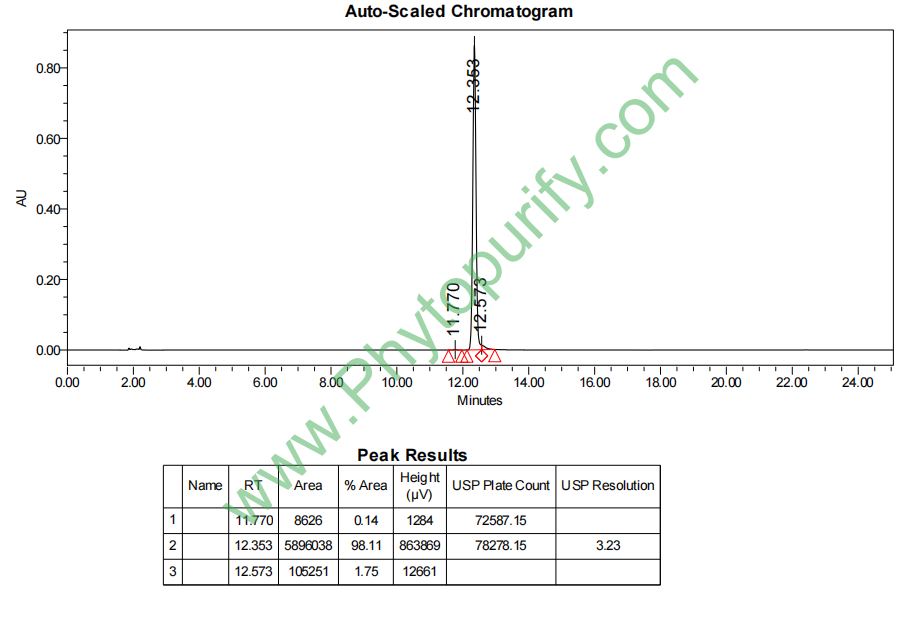
Purity: 95%~99%
Analysis Method: HPLC-DAD or/and HPLC-ELSD
Identification Method: Mass, NMR
Packing: Brown vial or HDPE plastic bottle
Can be supplied from milligrams to grams.
For Reference Standard and R&D, Not for Human Use Directly.
Inquire for bulk scale.
HPLC of Byakangelicin
Storage conditions:Short-term storage at 2~8℃, long-term storage at -20 ~ -80℃
102.2700
1.5483
1.5482
.1823
1.2348
8.9268
High
73.2129
3.3646
Yes
No
No
No
Yes
Yes
0.9
Yes
No
Yes
Yes
As an important treasure trove for drug discovery and development, natural products continue to provide modern medicine with lead compounds with novel structures and diverse activities. Among them, coumarin compounds have attracted much attention due to their wide range of biological activities. Byakangelicin, also known as 9-hydroxy-4-methoxy-7H-furano [3,2-g] [1] benzopyran-7-one, is a typical linear furan coumarin with a CAS number of 482-25-7. It mainly comes from plants belonging to the Umbelliferae family, such as Angelica sinensis(Angelica sinensis)Korean Angelica sinensis(Angelica gigas)The roots of these plants are often used in traditional medicine for nourishing blood, promoting blood circulation, regulating menstruation, and relieving pain.
In recent years, Bai Danggui Su has become a hot topic in natural product pharmacology research due to its unique and diverse pharmacological activities. Early research focused on its photosensitive properties, but as research deepened, its activities in anti-inflammatory, neuroprotective, regulating drug metabolizing enzymes and transporters gradually became revealed. Of particular note is that Angelica sinensis extract has been found to act as a regulator of the Pregnane X receptor (PXR), affecting the expression of various drug metabolizing enzymes and transporters, including multidrug resistance protein 1 (MDR1/ABCB1), thereby significantly altering the pharmacokinetic behavior of other active compounds (such as psoralen, curcumin, doxorubicin, etc.) in vivo, particularly in brain tissue accumulation. This provides a new approach for overcoming the therapeutic barrier of central nervous system diseases. In addition, its potential in anti-inflammatory and inhibitory hormone related pathways also indicates its application prospects in the treatment of inflammatory diseases and hormone dependent tumors.
This article aims to systematically review the chemical structure, plant origin, pharmacological activity, molecular mechanism of action, pharmacological characteristics, and clinical application potential of Angelica sinensis extract, in order to provide comprehensive academic references for the in-depth research and development of this compound.
Bai Danggui Su is a linear derivative of furan coumarin, whose parent nucleus structure is composed of a benzene ring (A ring) and an α - pyranone ring (C ring), and a furan ring (D ring) is added to the 6th (coumarin numbering system) or 7th (IUPAC naming system) position of the C ring, forming the basic skeleton of 7H-furano [3,2-g] [1] benzopyran-7-one. Its specific structural features are: there is a hydroxyl group (- OH) at position 5 (or 9) of the parent nucleus, and a methoxy group (- OCH3) at position 8 (or 4 '). This specific substitution pattern has a decisive impact on its physicochemical properties and biological activity.
From the perspective of medicinal properties, the molecular weight of Bai Danggui Su is 334.32 g/mol, which meets the basic requirements of the Rule of Five for oral drug molecular weight. The calculated lipid water partition coefficient (LogP) is about 1.55, indicating that the compound has moderate lipophilicity, which is beneficial for penetrating cell membranes and avoiding the problems of rapid metabolism or narrow distribution caused by high lipid solubility. The topological polar surface area (TPSA) is 102.27 Å ², indicating that its molecules have moderate polarity, which may affect its membrane permeability and oral bioavailability. Experimental data shows that its water solubility is low, about 0.1823 mg/mL, which is related to its coumarin core and aromatic ring structure, and is one of the key factors restricting its formulation development. It usually needs to be improved through techniques such as salt formation, inclusion complex formation, or nano formulation.
In terms of key pharmaceutical safety parameters, Bai Danggui Su has shown good potential. Its blood-brain barrier (BBB) permeability is predicted to be "high", which is consistent with the phenomenon observed in experimental studies that it can regulate the accumulation of other drugs in the brain, suggesting that it may have a certain central nervous system permeability or can exert its effect by regulating the function of efflux transporters (such as P-gp) on the blood-brain barrier. In terms of cardiac toxicity, it has no significant inhibitory effect on the potassium channel of the human ether - à - go go related gene (hERG), reducing the risk of cardiac toxicity induced by acquired long QT syndrome and apical torsion ventricular tachycardia. In addition, the actual Ames test result is 0.9 (usually considered negative if the number of revertant mutant colonies is less than twice that of the control group), which preliminarily indicates that the compound has no significant mutagenicity in vitro, providing important safety basis for its further development.
Bai Danggui Su mainly exists in the Apiaceae family and belongs to(Angelica)And the genus of Qianhu(Peucedanum)Among various plants. Among them, the source with high medicinal value and the most extensive research is Angelica sinensis(Angelica sinensis Oliv. Diels and Korean Angelica sinensis(Angelica gigas Nakai)。 The roots of these two plants are important medicinal herbs in traditional East Asian medicine, and Angelica sinensis extract is one of the active ingredients that exert pharmacological effects. In addition, in Europe, the traditional medicinal plant, the coastal pre Hu, is used(Peucedanum japonicum)It has also been detected in plants.
Extracting Angelica sinensis extract from plant materials usually follows the conventional process of natural product chemistry. Firstly, it is necessary to dry and crush the plant roots to increase the surface area in contact with the extraction solvent. Common extraction methods include:
1. Solvent extraction method The most classic method. Polar organic solvents such as methanol, ethanol, and acetone are often used for reflux extraction or cold soaking extraction. Ethanol is a commonly used solvent in laboratory and industrial preparation due to its low toxicity, high extraction efficiency, and environmental friendliness. By adjusting the ethanol concentration (such as 70% -95%), it is possible to extract the target coumarin components while reducing the dissolution of large polar impurities such as polysaccharides and proteins.
2. Ultrasonic assisted extraction method Utilizing the cavitation effect, mechanical vibration, and thermal effect generated by ultrasound to accelerate the fragmentation of plant cell walls and the dissolution of components. This method has the advantages of short extraction time, high efficiency, low solvent dosage, and relatively low operating temperature (which is conducive to the preservation of thermally unstable components), and is widely used in the field of natural product extraction.
3. Supercritical fluid extraction method Especially supercritical CO ₂ extraction. This method utilizes supercritical CO ₂ (with liquid like solubility and gas diffusion) as the extraction medium, and selectively extracts the target component by adjusting pressure and temperature. Its advantages are no residual organic solvents, low operating temperature, simple post-treatment, and the ability to improve the extraction rate of polar components such as Angelica sinensis by adding entrainers (such as a small amount of ethanol). The disadvantage is that the equipment investment and maintenance costs are relatively high.
After obtaining the crude extract, it needs to undergo systematic separation and purification to obtain high-purity Angelica sinensis extract. The conventional purification strategy involves the combination of multiple chromatographic techniques:
- Preliminary enrichment Macroporous adsorption resins (such as D101 and AB-8) are commonly used for column chromatography, utilizing their adsorption properties and molecular sieve action to remove most sugars, pigments, and inorganic salts, and enrich coumarin components.
- Fine separation: Silica gel column chromatography, reverse phase silica gel column chromatography (such as ODS-C18), dextran gel column chromatography (such as Sephadex LH-20), etc. are often used. Silica gel column chromatography is based on the principle of adsorption and is commonly separated using gradient elution systems such as chloroform methanol and petroleum ether ethyl acetate. Reverse phase chromatography and gel chromatography are based on the principles of partition and molecular size exclusion, and have good separation effects on coumarin homologues with similar structures.
- Final purification and identification High performance liquid chromatography (HPLC) and preparative high-performance liquid chromatography (pre HPLC) are key methods for obtaining chromatographically pure monomers. By comparing the retention time and UV spectra of known standard samples, and combining spectroscopic techniques such as mass spectrometry (MS) and nuclear magnetic resonance (NMR, including ¹ H-NMR and ¹ ³ C-NMR), it can be finally determined that the isolated compound is Angelica sinensis extract and its structure can be confirmed.
A large number of in vitro and in vivo pharmacological studies have revealed the extensive biological activities of Angelica sinensis extract, with its core areas of action focused on anti-inflammatory, neuroprotective/regulatory, and hormone regulation.
1. Anti inflammatory activity
Anti inflammation is one of the most significant and extensively studied pharmacological activities of Angelica sinensis extract. In various inflammatory cell models (such as lipopolysaccharide (LPS) - stimulated macrophage RAW264.7, microglial BV2) and animal models (such as carrageenan induced paw swelling in rats and xylene induced ear swelling in mice), baicalein has shown strong anti-inflammatory effects. Its function is reflected in:
- Inhibit the production of pro-inflammatory mediators Can dose dependently inhibit the excessive production of nitric oxide (NO) and prostaglandin E2 (PGE2) induced by LPS.
- Downregulate the expression of pro-inflammatory cytokines Significantly reduce the gene and protein expression levels of key pro-inflammatory factors such as tumor necrosis factor - α (TNF - α), interleukin-6 (IL-6), and interleukin-1 β (IL-1 β).
- Relieve tissue pathological damage In animal models, it can effectively reduce redness, exudation, and histopathological changes in inflamed areas.
2. Effects on the central nervous system and neuroprotective effects
The effect of Bai Danggui Su on the central nervous system is dual, mainly manifested in regulating the blood-brain barrier function and potential neuroprotective effects.
- Regulating blood-brain barrier function This is a highly distinctive pharmacological activity of Bai Danggui Su. Research has shown that Angelica sinensis extract itself is not a potent P-gp substrate, but it is an effective regulator of the nuclear receptor PXR. By activating PXR, it can upregulate the expression of various efflux transporters such as P-gp (encoded by MDR1 gene) on brain capillary endothelial cells. It is interesting that in some cases, this upregulation not only does not hinder, but also "accompanies" an increase in the concentration of certain drugs (such as psoralen, curcumin, doxorubicin) that are used in combination with it in the brain. The mechanism may involve complex transporter network regulation, altering the distribution dynamics of drugs in the brain, or inhibiting other metabolic pathways. This feature provides a new strategy for designing combination therapy regimens to enhance targeted delivery of neuroactive drugs or chemotherapy drugs to brain lesions.
- Neuroprotective potential Based on its anti-inflammatory activity, Bai Danggui Su has shown protective effects in neuroinflammation related disease models. For example, in the LPS induced activation model of microglia, it can inhibit neuroinflammatory responses, and excessive activation of microglia is a key pathological link in neurodegenerative diseases such as Alzheimer's disease and Parkinson's disease. Therefore, Bai Danggui Su may indirectly exert neuroprotective effects by inhibiting neuroinflammation.
3. Effects on hormone metabolism
Research suggests that Angelica sinensis extract may have a regulatory effect on sex hormone metabolism. Some literature suggests that it may accelerate the clearance of endogenous sex hormones by inducing enzyme systems (such as cytochrome P450 enzyme CYP3A4) related to the breakdown metabolism of sex hormones (such as estrogen and androgen) in the liver, thereby producing a "resistance hormone" like effect. This activity suggests that it has potential application value in the treatment of hormone dependent diseases, such as certain types of breast cancer, prostate cancer, or gynecological diseases related to hormone imbalance, but the specific mechanism and effect still need more in-depth research.
4. Other activities
In addition, studies have reported that Angelica sinensis extract has antioxidant, anti allergic, and antispasmodic effects. The structure of its furan coumarin allows it to produce a photosensitive reaction under ultraviolet light irradiation, which has also been used in phototherapy research for dermatological diseases such as vitiligo and psoriasis.
The multiple pharmacological activities of Bai Danggui Su stem from its interactions with multiple key signaling pathways and molecular targets. The current research reveals that the mechanism of action network mainly revolves around two core areas: anti-inflammatory and drug metabolism regulation.
1. Core signaling pathways and targets of anti-inflammatory effects
The anti-inflammatory effect of Angelica sinensis extract is mainly achieved by inhibiting classic inflammatory signaling pathways such as nuclear factor kappa B (NF - κ B) and mitogen activated protein kinases (MAPKs).
- NF - κ B signaling pathway NF - κ B is a core transcription factor that regulates inflammatory responses. In the resting state, NF - κ B (usually p65/p50 dimer) binds to the inhibitory protein I κ B and is retained in the cytoplasm. When stimulated by LPS and other stimuli, the I κ B kinase (IKK) complex is activated, phosphorylating I κ B, leading to its ubiquitination and degradation, thereby releasing NF - κ B. NF - κ B immediately enters the nucleus and initiates transcription of pro-inflammatory genes such as TNF, IL6, and IL1B. Research has shown that Angelica sinensis extract can inhibit the activity of IKK, prevent the phosphorylation and degradation of I κ B, thereby blocking the nuclear translocation of NF - κ B and the transcriptional activation of downstream genes. This is the main molecular basis for its downregulation of cytokines such as TNF - α, IL-6, IL-1 β, etc.
- MAPKs signaling pathway The MAPKs family (including p38, JNK, ERK) plays a crucial role in the transmission and amplification of inflammatory signals. Bai Danggui Su has been shown to inhibit LPS induced phosphorylation activation of p38 MAPK and JNK, thereby reducing the activity of transcription factors such as AP-1 and synergistically inhibiting the production of pro-inflammatory mediators.
- Cyclooxygenase-2 (PTGS2/COX-2)COX-2 is the rate limiting enzyme that catalyzes the production of prostaglandins (such as PGE2) from arachidonic acid and is a key mediator of inflammation. Bai Danggui Su can significantly inhibit the gene expression and enzyme activity of COX-2, which is directly related to its ability to reduce PGE2 production.
2. Core target for regulating drug metabolism and transport: Pregnane X receptor (PXR)
PXR is a ligand activated nuclear receptor, mainly highly expressed in the liver and intestine, and serves as the "master switch" for the metabolism and clearance of exogenous substances (including drugs). Bai Danggui Su is an effective agonist of PXR.
- Activate PXR Bai Danggui Su binds to the PXR ligand binding domain, resulting in the formation of heterodimers between PXR and retinoic acid X receptor (RXR). The dimer transfers to the nucleus and recognizes and binds to specific DNA sequences (such as ER6 response elements) in the promoter region of the target gene.
- Regulating downstream gene networks Activated PXR can widely upregulate the expression of a series of drug metabolizing enzymes (such as CYP3A4, CYP2B6) and drug transporters (such as MDR1/P-gp, MRPs). Among them, the upregulation of MDR1 gene (encoding P-gp protein) is a key mechanism that affects the pharmacokinetic behavior of other drugs in the brain. P-gp is one of the most important efflux pumps on the blood-brain barrier, which can pump many drugs back into the bloodstream and restrict their entry into the brain. Bai Danggui Su upregulates P-gp expression through PXR, theoretically reducing drug entry into the brain. However, the observed "sensitization" phenomenon in practical research suggests the existence of more complex mechanisms, which may involve the regulation of P-gp functional status, changes in other co transporters, or dominant inhibition of drug metabolic pathways. This is still a frontier and controversial point in this field of research.
3. Impact mechanism on sex hormone metabolism
The possible mechanism of its resistance hormone action is closely related to PXR activation. After PXR activation, it strongly induces the expression of CYP3A4, which is a key enzyme involved in the hydroxylation metabolism of sex hormones such as testosterone and estradiol. Therefore, Bai Danggui Su may accelerate the breakdown metabolism of endogenous sex hormones through the PXR-CYP3A4 axis, reduce their bioavailability, and thus produce regulatory effects.
Although Bai Danggui Su exhibits rich pharmacological activity, its successful development as a drug largely depends on its pharmacological characteristics, including absorption, distribution, metabolism, and excretion (ADME) properties.
1. Absorption and oral bioavailability
The moderate LogP value and low TPSA of Bai Danggui Su suggest that it has certain membrane permeability and can theoretically be absorbed by the intestine through passive diffusion. However, its low water solubility (0.1823 mg/mL) is the primary bottleneck limiting its oral absorption rate and degree. In gastrointestinal fluids, low solubility may result in slow dissolution rate and inability to achieve effective absorption concentration. In addition, as an agonist of PXR, it may induce first pass metabolic enzymes (such as CYP3A4) and efflux transporters (such as P-gp) in intestinal epithelial cells, which may accelerate its own metabolism and efflux, further reducing its oral bioavailability. The actual oral bioavailability data is relatively lacking in public literature, and further pharmacokinetic studies are needed to clarify it.
2. Distribution
Bai Danggui Su is predicted to have high blood-brain barrier permeability, which is consistent with its ability to affect the distribution of drugs in the brain in experimental studies. It may enter the central nervous system through passive diffusion or mediated by certain transporters. Its moderate lipophilicity is beneficial for its distribution in various tissues. The binding rate with plasma proteins is a key parameter affecting their distribution volume and free drug concentration, and detailed data is currently lacking.
3. Metabolism and excretion
As a ligand for coumarin compounds and PXR, the metabolism of baicalein is expected to be complex and possibly self inducible.
- Metabolism The liver is its main metabolic organ. It is likely to undergo phase I metabolic reactions such as oxidation and demethylation through the cytochrome P450 enzyme system (especially its self induced CYP3A4), generating hydroxylation or demethylation products. Subsequently, these metabolites may bind with glucuronic acid, sulfuric acid, etc. to form II phase complexes. Its furan ring structure may result in unique metabolism and even the formation of reactive metabolic intermediates, which requires systematic metabolite identification and safety assessment.
- excretion Metabolites are mainly excreted from the body through the kidneys (urine) and/or bile (feces). The proportion of prototype drugs excreted through the kidneys may be low.
4. Pharmacokinetic interaction potential
This is a crucial and distinctive part of the evaluation of the medicinal properties of Angelica sinensis extract. Due to its strong PXR agonist activity, it is highly likely to act as a "pharmacokinetic enhancer" or "interferent" and interact with numerous combination drugs.
- As an enhancer When used in combination with certain drugs that are primarily metabolized by CYP3A4 or are substrates of P-gp for treating brain diseases, baicalein may unexpectedly alter the tissue distribution of these drugs (such as increasing brain concentration) by inducing metabolic enzymes and transporters, thereby enhancing efficacy or toxicity. This requires extremely careful evaluation and design.
- As an interference agent More commonly, Bai Danggui Su accelerates the metabolism and clearance of other drugs eliminated through the CYP3A4/P-gp pathway, leading to a decrease in their blood drug concentration and efficacy. For example, when used in combination with certain chemotherapy drugs, immunosuppressants, anticoagulants, etc., there are potential clinical risks.
Therefore, conducting comprehensive preclinical pharmacokinetic studies on Bai Danggui Su, clarifying its ADME characteristics, absolute bioavailability, major metabolic pathways, enzyme induction/inhibition potential, and interactions with standard drugs, is an indispensable step in promoting its clinical application.
Based on its unique pharmacological activity and mechanism of action, Bai Danggui Su has shown attractive application prospects in multiple therapeutic fields, but also faces many challenges.
1. Potential clinical application directions
- As an anti-inflammatory adjuvant therapy drug For chronic inflammatory diseases such as rheumatoid arthritis, inflammatory bowel disease, and neuroinflammatory diseases (such as Alzheimer's disease and multiple sclerosis), Bai Danggui Su can be developed as an anti-inflammatory agent for oral or local administration. Its multi-target inhibition of inflammatory pathways may have more advantages than single target drugs. Combining with existing nonsteroidal anti-inflammatory drugs (NSAIDs) may reduce their dosage and gastrointestinal side effects.
- As a central nervous system drug delivery enhancer This is the most innovative direction. By utilizing its ability to regulate drug transport across the blood-brain barrier, Bai Danggui Su or its structurally optimized derivatives can be combined with difficult to enter neuropharmaceuticals such as anticancer drugs, neuroprotective agents, and antidepressants to form compound formulations or co loaded nanosystems. The aim is to increase the concentration of the main drug at the site of brain lesions, thereby enhancing the therapeutic effect on brain tumors, central nervous system infections, and neurodegenerative diseases. This requires precise dosage and timing control studies to avoid excessive induction of P-gp and its potential obstructive effects.
- Treatment of hormone related diseases In the adjuvant treatment of hormone dependent breast cancer or prostate cancer, white angelica may play a certain role in inhibiting tumor growth by accelerating the metabolism of endogenous cancer promoting hormone. It can also be studied for the treatment of certain gynecological diseases associated with high estrogen levels, such as uterine fibroids and endometriosis.
- Dermatology applications Its photosensitivity can be used for the improvement of PUVA (psoralen+UVA) phototherapy for skin diseases such as psoriasis and vitiligo, or for the development of new photodynamic therapy drugs.
2. Challenges faced and future research directions
- Water solubility and bioavailability Low water solubility is the primary obstacle to the development and clinical efficacy of its formulations. Future research needs to focus on exploring advanced drug delivery technologies, such as nanocrystals, liposomes, polymer micelles, cyclodextrin inclusion complexes, etc., to improve their solubility and oral bioavailability.
- The double-edged sword effect of the mechanism of action The widespread drug drug interaction (DDI) risk caused by its PXR activation activity is one of the biggest challenges in clinical development. Systematic and rigorous preclinical and clinical DDI studies must be conducted to clarify their safe range of use. Meanwhile, structural modification research can be conducted to obtain novel derivatives that retain anti-inflammatory and other therapeutic activities but weaken or eliminate PXR agonist activity, in order to reduce the risk of DDI.
- In depth study on the mechanism of action In particular, the exact mechanism by which other drugs enter the brain for "sensitization" has not been fully elucidated. It is necessary to use technologies such as genetically modified animals, specific inhibitors, and in vivo imaging to analyze the complex impact network of PXR activation on blood-brain barrier function and brain drug distribution dynamics in a complete biological system.
- Security evaluation of the system The current safety data (such as hERG, Ames) is relatively preliminary. A comprehensive preclinical toxicology study is required, including long-term toxicity, reproductive toxicity, carcinogenicity testing, etc., to evaluate the safety of its long-term use. Attention should also be paid to the safety of its metabolites.
- Clinical translational research On the basis of completing sufficient preclinical research, design a reasonable clinical trial plan, first conduct Phase I clinical trials in healthy volunteers to evaluate their safety, tolerability, and pharmacokinetic characteristics, and then gradually advance to the validation of therapeutic efficacy for specific patient populations.
As a natural furan coumarin compound discovered from traditional medicinal plants, Bai Danggui Su has become a remarkable research object in the field of natural product pharmacology due to its significant anti-inflammatory activity, unique ability to regulate blood-brain barrier function and drug metabolism. It exerts anti-inflammatory effects by inhibiting pathways such as NF - κ B and MAPKs, and extensively affects drug disposal processes by stimulating PXR nuclear receptors, forming the molecular basis of its pleiotropic pharmacological effects.
Despite facing challenges such as poor water solubility and potential drug interaction risks in drug development, these challenges also point to future research directions: optimizing structures through modern medicinal chemistry methods, improving their physicochemical properties through innovative drug delivery systems, and clarifying the essence of their complex mechanisms of action through in-depth basic research. With the continuous deepening of research, Bai Danggui Su is expected to not only serve as a potential direct therapeutic drug, but also as a valuable tool molecule and drug enhancer, providing new strategies and solutions for the treatment of inflammatory diseases, central nervous system diseases, and hormone related diseases. Its research and development process fully reflects the enormous potential of exploring the value of modern drugs from traditional medical wisdom, and also demonstrates the importance of interdisciplinary collaboration in the development of innovative natural product drugs.
