Introduction/Overview
Migraine is a common chronic neurovascular disease characterized by recurrent moderate to severe pulsatile headaches, often accompanied by symptoms such as nausea, vomiting, photophobia, and fear of sound, which seriously affect the quality of life and social function of patients. Its pathological and physiological mechanisms are complex, involving activation of the trigeminal vascular system, cortical diffusive inhibition, release of neuropeptides (such as calcitonin gene-related peptide), and dysfunction of multiple ion channels and receptors. Although drugs such as triptans and CGRP receptor antagonists have been applied in clinical practice, some patients have poor efficacy or contraindications. Therefore, exploring lead compounds with novel structures, diverse mechanisms of action, and good safety from natural products has always been an important direction in drug development.
Coumarin compounds are a class of benzo [a] - pyranone derivatives widely found in plants such as the Umbelliferae and Rutaceae families, with various biological activities including anti-inflammatory, antioxidant, antibacterial, anti-tumor, and neuroprotective effects. Heraclenol, a derivative of furan coumarin, was originally derived from the traditional Chinese medicine Angelica sinensis(Angelica sinensis)It is isolated from the fruit and has attracted attention for its potential antibacterial activity. In recent years, with the development of technologies such as network pharmacology, molecular docking, and in vitro activity screening, studies have found significant interactions between Heracylenol and multiple key targets related to migraine treatment, suggesting that it may intervene in the complex pathological network of migraine through multi-target synergistic effects. This article aims to systematically review the chemical properties, plant sources, pharmacological activities of Heracylenol, especially its mechanism of action, pharmacological evaluation, and clinical translation potential for migraine related targets, in order to provide scientific basis for new migraine treatment strategies based on natural products.
Chemical structure and physicochemical properties
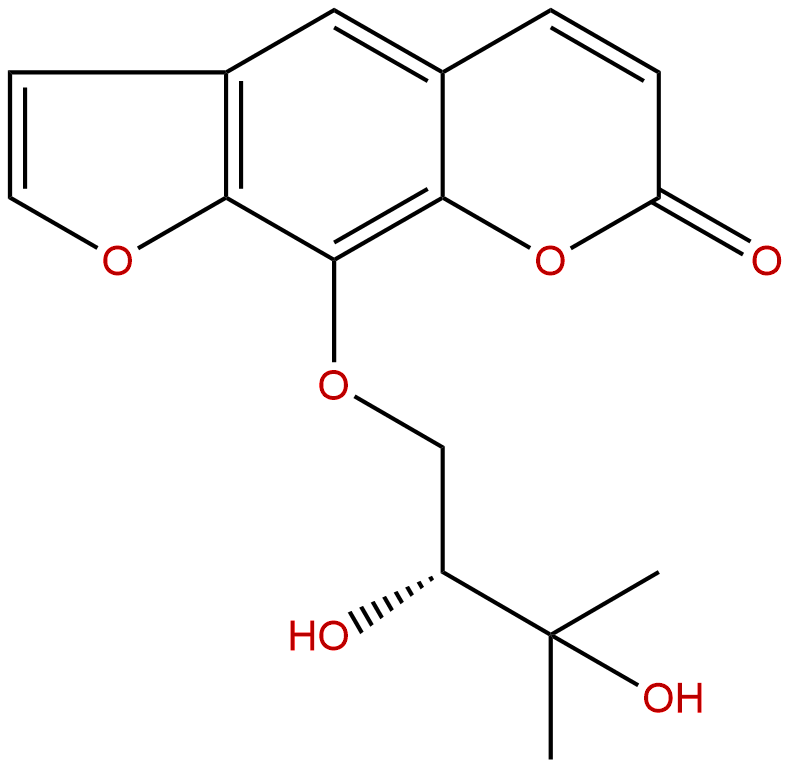
Bai Zhi belongs to the Heraclenol genus, with a chemical name of 9-hydroxy-4-methoxy-7H-furano [3,2-g] chromen-7-one and a CAS number of 31575-93-6. Its molecular formula is C15H12O6 and its molecular weight is 304.2980 g/mol.
From a chemical structure perspective, Heracylenol belongs to the linear Furocoumarin family, whose basic skeleton consists of a coumarin nucleus (coupled with a benzene ring and an α - pyranone ring) and a furan ring at positions 6 and 7. Compared with simple coumarins, its structural features include: 1) a hydroxyl group (- OH) attached to the 9th position of the mother nucleus (equivalent to the 8th position of the coumarin benzene ring), which enhances the hydrophilicity and hydrogen bonding ability of the molecule; 2) There is a methoxy group (- OCH3) connected at position 4, which has a significant impact on the lipophilicity and spatial orientation of the molecule. This substitution mode of hydroxyl and methoxy groups gives it a certain degree of polarity and lipophilicity, which is the structural basis for its interaction with various biological targets.
The theoretical physicochemical parameters calculated based on its structure show that its lipid water partition coefficient (LogP) is 1.6294, indicating that the compound has moderate lipophilicity, which is conducive to transmembrane transport and absorption. The theoretical polar surface area (TPSA) is 93.0400 Å ², reflecting the sum of hydrogen bond acceptors and donors (hydroxyl, carbonyl, ether bonds) in the molecule. The value is moderate, indicating that it may have good membrane permeability. The predicted value of water solubility is 0.0993 mg/mL, which belongs to the category of slight solubility. This may limit its oral bioavailability to some extent, but it can be improved through formulation methods such as making solid dispersions, cyclodextrin inclusion complexes, or nano formulations. Taking into account its moderate molecular weight (<500), ideal LogP value (between 1-3), and TPSA not exceeding 140 Å ², Heracylenol basically meets the preliminary requirements of Lipinski's "Five Rules" for drug like molecules and has the structural potential to become an oral candidate drug.
Plant sources and extraction methods
Heracylenol mainly comes from the Umbelliferae family and belongs to it(Angelica)And the genus of Qianhu(Peucedanum)Waiting for various plants. The initial reported source of separation was the traditional Chinese medicine Angelica sinensis(Angelica sinensis Dried and ripe fruit of Oliv. Diels. In addition, in plants of the same family such as Xing'an Bai Zhi(Angelica dahurica)Binhai Qianhu(Peucedanum japonicum)And the presence of this ingredient has also been detected in some Rutaceae plants. These plants are often used in traditional Asian medicine to treat diseases such as headaches, rheumatism, and infections, and the material basis of their efficacy may be partially attributed to the coumarin components they contain.
Extracting and isolating Heracylenol from plant materials usually follows the conventional process of natural product chemistry. Firstly, organic solvents are used to extract dried and crushed plant parts (such as seeds and roots). Common extraction solvents include methanol, ethanol, ethyl acetate, etc. Among them, alcohol solvents are the most widely used due to their high extraction efficiency for coumarin components with a wide range of polarities. The extraction method can choose cold soaking, hot reflux, or ultrasound assisted extraction to shorten the extraction time and improve the yield.
After obtaining the crude extract, it needs to undergo systematic separation and purification to obtain high-purity Heracylenol monomer. The classic separation strategy relies on the combined application of multiple chromatographic techniques: 1)column chromatography Silica gel column chromatography is commonly used for preliminary separation, using gradient elution systems such as petroleum ether ethyl acetate or chloroform methanol to separate the crude extract into several fractions. 2)Thin layer chromatography (TLC)Used for rapid monitoring of separation processes and preliminary identification of target components through characteristic fluorescence (coumarin usually shows blue or blue-green fluorescence under UV light) or color reagents. 3)High performance liquid chromatography (HPLC)The key step in obtaining high-purity monomers, especially in preparative HPLC, is to use a reverse phase C18 chromatographic column with methanol water or acetonitrile water as the mobile phase for fine separation. Modern separation techniques such as high-speed countercurrent chromatography (HSCCC) are increasingly being used for the preparation of coumarin compounds due to their advantages of irreversible adsorption and high recovery rates.
During the extraction and separation process, attention should be paid to the photostability of furan coumarin compounds, and the operation should be carried out under light avoidance or weak light conditions. The final Heracylenol monomer needs to be structurally confirmed by nuclear magnetic resonance (NMR, including 1H-NMR and 13C-NMR), mass spectrometry (MS), ultraviolet spectroscopy (UV), and comparison with literature data or reference standards.
Pharmacological activity research
Early research confirmed that Heracylenol has Antibacterial activity It exhibits inhibitory effects on certain Gram positive and Gram negative bacteria, which may be related to its ability to interfere with microbial cell membrane function or metabolic enzymes. However, what is more remarkable is its multiple pharmacological potential demonstrated in the fields of nervous system and cardiovascular and cerebrovascular diseases in recent years, especially highly correlated with the pathological process of migraine.
-
Neuroprotection and anti-inflammatory activity Neurogenic inflammation is the core link in the activation of the trigeminal neurovascular system leading to migraine attacks. Research has shown that Heracylenol can significantly inhibit the excessive activation of microglia (innate immune cells of the central nervous system) induced by lipopolysaccharide (LPS) or other stimulants, reduce the release of pro-inflammatory factors such as tumor necrosis factor - α (TNF - α), interleukin-1 β (IL-1 β), and nitric oxide (NO). The mechanism may be related to the inhibition of nuclear factor kappa B (NF - κ B) and mitogen activated protein kinases (MAPKs) signaling pathways. In addition, it also exhibits antioxidant activity in oxidative stress models, which can clear free radicals and alleviate neuronal damage.
-
Vascular regulation and anti nociceptive activity Migraine is accompanied by abnormal dilation and contraction of cerebral blood vessels. Heracylenol has been reported to have a certain regulatory effect on vascular smooth muscle. More importantly, coumarin compounds with similar structures have been proven to have calcium channel blocking and potassium channel activating effects. Preliminary molecular docking and in vitro electrophysiological studies suggest that Heracylenol may intervene in the initiation and spread of migraine by modulating voltage-gated calcium channels (such as Cav2.1 channel encoded by CACNA1A) and potassium channels (such as Kv1.1 channel encoded by KCNA1) to affect neuronal excitability and vascular tone.
-
Potential impact on neurotransmitter system The disorder of the 5-hydroxytryptamine (5-HT) system is an important mechanism of migraine. The potential interactions between Heracylenol and 5-HT1B/1D receptors (targets of triptans), as well as 5-HT1A receptors and 5-hydroxytryptamine transporters (SLC6A4), suggest that it may regulate 5-HTergic neurotransmission, exert brain vasoconstriction and inhibit neuropeptide release similar to triptans, but may have different receptor subtype selectivity spectra.
-
Other related activities The potential inhibitory effect of Heracylenol on cyclooxygenase-2 (PTGS2/COX-2) suggests that it may alleviate pain through anti-inflammatory pathways. Its interaction with angiotensin-converting enzyme (ACE) suggests that it may affect the renin-angiotensin system, indirectly regulating cerebrovascular function. It is worth noting that its association with transient receptor potential vanillic acid subtype 1 (TRPV1) deserves further investigation, as TRPV1 is an important pain receptor and potential therapeutic target for migraine.
Mechanism of action and molecular targets
Based on the provided target information, Heracylenol may exert anti migraine effects through a multi-target network synergy, and its core mechanism can be summarized as follows:
-
Inhibition of Trigeminal Neurovascular System Activation and Neurogenic Inflammation This is the core pathway for its intervention in migraine.
- Regulating the CGRP pathway Calcitonin gene-related peptide (CGRP) is a key pathogenic neuropeptide in migraine. Heracylenol may affect the CGRP pathway through the following ways: ① Directly or indirectly acting as CGRP receptor Antagonists/modulators; ② Inhibit its genes(CALCA)Expression; ③ By antagonizing TRPV1 Channel (TRPV1 activation can promote CGRP release) reduces the release of CGRP.
- Inhibit inflammatory mediators By inhibiting PTGS2(COX-2)Reduce the synthesis of inflammatory mediators such as prostaglandins and alleviate perivascular inflammation.
- Regulating the 5-HT system Excited 5-HT1B receptor (HTR1B) Can cause cerebral vasoconstriction and inhibit CGRP release; excited 5-HT1A receptor (HTR1A) May produce analgesic and anti anxiety effects in the central nervous system. At the same time, adjust 5-hydroxytryptamine transporter (SLC6A4) Can affect the level of 5-HT in synaptic cleft and stabilize 5-HT neurotransmission.
-
Regulating ion channels to stabilize neuronal excitability Overexcitation of neurons is the basis of migraine, especially migraine with aura.
- Calcium channel regulation:CACNA1A The functional gain mutation of P/Q-type voltage-gated calcium channels (Cav2.1) encoded by genes is the cause of familial hemiplegic migraine. Heracylenol may reduce neuronal excitability and neurotransmitter release by regulating the function of this channel, inhibiting calcium ion influx.
- Potassium channel activation:KCNA1 The encoded voltage-gated potassium channel Kv1.1 is crucial for maintaining neuronal resting potential and action potential repolarization. Enhancing the function of Kv1.1 channel can stabilize membrane potential and inhibit neuronal excessive discharge. Heracylenol may act as a regulator of Kv1.1 channels, exerting a stabilizing effect.
-
Affects the renin-angiotensin system (RAS)The RAS in the brain is involved in blood pressure regulation, inflammation, and pain regulation. Heracylenol and Angiotensin converting enzyme (ACE) The interaction between them may provide another auxiliary pathway for migraine treatment by inhibiting the production of angiotensin II, leading to vasodilation, anti-inflammatory, and possible analgesic effects.
In summary, Heracylenol does not act on a single target like classical drugs, but may simultaneously act on multiple key nodes such as TRPV1, CGRP pathway, 5-HT receptor, ion channel (Cav2.1, Kv1.1), and COX-2, forming a synergistic network of "multiple targets, multiple pathways". This is expected to comprehensively curb the complex pathophysiological cascade of migraine and produce therapeutic effects on patients with refractory migraine or multiple symptoms.
Evaluation of drug properties and pharmacokinetics
Based on the provided pharmacological parameters and known properties of coumarin compounds, a preliminary evaluation of the pharmacological properties of Heracylenol is conducted
-
Basic physicochemical and absorption, distribution, metabolism, excretion (ADME) properties:
- absorb Moderate LogP values (1.63) and TPSA values (93 Å ²) indicate that it may have good intestinal permeability and potential for oral absorption. However, the slightly soluble water solubility (0.0993 mg/mL) may be the main factor limiting its oral bioavailability, which needs to be addressed during the formulation stage.
- distribution: Predict it The blood-brain barrier (BBB) penetration is "high"This is one of its candidate drugs for the treatment of central nervous system diseases such as migraine Key Advantages It can effectively enter brain tissue and act on central targets such as 5-HT1A receptors, ion channels, CGRP central receptors, etc.
- Metabolism Coumarin compounds are mainly metabolized in the liver through the cytochrome P450 enzyme system (especially CYP2A6, CYP1A2) for hydroxylation, dealkylation, and other phase I metabolism, and combine with glucuronic acid or sulfuric acid to form phase II complexes for excretion. The methoxy and hydroxyl groups in the Heracylenol structure are common metabolic sites, and their specific metabolic enzyme profiles and potential drug drug interactions need to be studied in the later stage.
- excretion Metabolites are mainly excreted through the kidneys and urine.
-
Preliminary Safety Assessment:
- cardiotoxicity:HERG inhibitory prediction is' no 'This is a very positive signal, indicating that it may not inhibit the rapid delayed rectifier potassium current (IKr) of the heart at therapeutic concentrations, thereby reducing the risk of cardiac toxicity causing acquired long QT syndrome and apical torsion ventricular tachycardia.
- Genotoxicity:The predicted value of Ames test is 0.9(Usually, a value<1.0 is considered a negative tendency, and>1.5 is considered a positive tendency). The value is close to 1, indicating a low risk of mutagenicity, but it still needs to be validated through standard in vitro chromosomal aberration tests and in vivo micronucleus tests.
- Phototoxicity As a furan coumarin, whether it has phototoxicity is a safety indicator that needs to be carefully examined. Compared with strong light toxic furanocoumarins such as psoralen, the specific substitution mode of Heracylenol may weaken its photo crosslinking ability with DNA, but this must be clarified through in vitro 3T3 neutral red uptake phototoxicity tests.
-
Gap in pharmacokinetic research At present, there is a lack of systematic pharmacokinetic studies on Heracylenol, such as absolute bioavailability, half-life, tissue distribution, plasma protein binding rate, etc. in animals such as rats and dogs. These data are essential for advancing its preclinical development.
Clinical application prospects and prospects
Heracylenol, as a natural coumarin with multi-target anti migraine potential, has broad clinical application prospects, but also faces a series of challenges.
Potential advantages and prospects:
1. Multi target collaborative therapy Regarding the complex network of migraine, multi-target drugs may be more effective than single target drugs, especially for patients who are unresponsive to existing therapies. The multi-target nature of Heracylenol may lead to more comprehensive symptom control.
2. Good central permeability The high BBB penetration allows it to directly act on central targets, which is an advantage that many peripheral administered large molecule CGRP antibodies do not possess.
3. Preliminary safety is good No hERG inhibition warning, Ames test predicted negative, laying the foundation for its safety.
4. Originating from traditional Chinese medicine The plant derived Angelica sinensis has a long history of medicinal use, which provides certain traditional experience support and safety clues for its development.
Challenges faced and future research directions:
1. Confirmation of mechanism of action The current target prediction is mainly based on computational models and analog inference. Urgent need to carry out systematic development In vitro binding experiments, cell function experiments, and ex vivo tissue experiments Confirm its direct efficacy, selectivity, and functional effects on TRPV1, CGRP receptors, 5-HT receptors, ion channels, etc.
2. Pharmacodynamic validation in vivo: Need to mature Migraine animal model Evaluate the effects of Heracylenol on headache related behaviors, neuropeptide release, meningeal blood flow, and inflammatory markers in models such as nitroglycerin induction, cortical diffusion inhibition, and trigeminal ganglion stimulation, and clarify its overall efficacy.
3. Comprehensive optimization of drug properties To address the issue of poor water solubility, it is necessary to develop suitable solutions Drug delivery system(such as nanocrystals, phospholipid complexes, cyclodextrin inclusion complexes). At the same time, a systematic preclinical pharmacokinetic and safety evaluation (including acute toxicity, long-term toxicity, reproductive toxicity, and formal phototoxicity assessment) needs to be completed.
4. Research on structural modification and analogues Using it as the mother nucleus, proceed structural optimization Aiming to enhance activity, improve pharmacokinetic properties (such as prolonging half-life), and reduce potential toxicity (such as eliminating phototoxicity), is an effective strategy for obtaining better candidate drugs.
5. Explore other indications Based on its anti-inflammatory, antioxidant, neuroprotective and possible antibacterial activities, Heraclenol or its derivatives may also have application value in neurodegenerative diseases (such as Alzheimer's disease), cerebral ischemia, chronic pain and even some infectious diseases, which is worth expanding research.
Conclusion
As a type of furanocoumarin discovered from traditional medicinal plants, the research on Heraclenol has expanded from its early antibacterial activity to the treatment of neurological diseases, especially migraines. Computational prediction and preliminary research reveal that it may exert unique advantages of multi pathway synergistic intervention by simultaneously acting on multiple targets closely related to migraine pathology, such as TRPV1, CGRP pathway, 5-HT receptor, voltage-gated ion channel, and COX-2. Its excellent drug like parameters, high blood-brain barrier penetration, and preliminarily predicted low cardiac toxicity and genetic toxicity have laid a positive foundation for its further development.
However, there is still a lot of scientific work to be done from potential compounds to candidate drugs. Future research needs to focus on experimental confirmation of its multi-target mechanism of action, in vivo efficacy evaluation in relevant animal models, and optimization of its pharmacological properties targeting its physicochemical shortcomings (such as water solubility). Conducting in-depth pharmacokinetic, toxicological, and structural modification studies on Heracylenol will help to comprehensively evaluate its clinical translational value. In summary, Heracylenol represents an important direction for exploring multi-target neurological drugs from natural products, and its subsequent research is expected to not only bring new treatment options for migraine patients, but also provide a new scientific perspective for elucidating the pharmacological effects of coumarin compounds.