Introduction/Overview
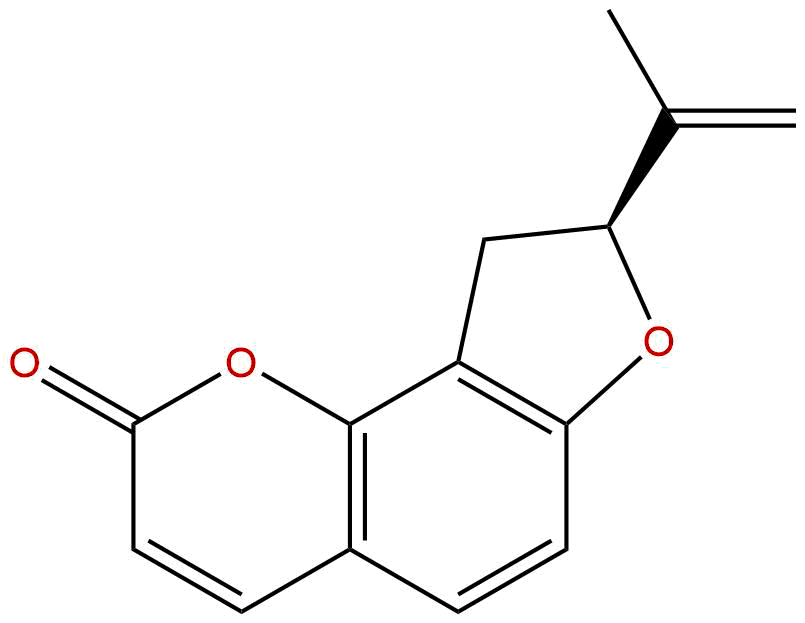
Natural products have always been an important source of innovative drug discovery, among which coumarin compounds have attracted much attention due to their extensive and significant biological activities. As an important branch of the coumarin family, furanocoumarin has shown great potential in anti-inflammatory, anti-tumor, photosensitive, and neuroprotective effects. Angenomalin, a plant from the Umbelliferae family Angelica anomala The furan coumarin monomer compounds isolated from Angelica sinensis have become a hot topic in pharmacological research in recent years due to their excellent anti-inflammatory activity. Its CAS number is 18199-64-9 and its molecular formula is C14H12O3. Modern pharmacological studies have shown that Chuanbaizhisu can regulate complex inflammatory signaling networks by acting on multiple key targets such as interleukin-6 (IL-6), signal transduction and transcription activator 3 (STAT3), caspase-1 (CASP1), transient receptor potential vanillic acid subtype 1 (TRPV1), and tumor necrosis factor (TNF), thereby exerting therapeutic effects in various inflammatory disease models. This article aims to systematically review the chemical properties, plant sources, pharmacological activities, molecular mechanisms of action, pharmacological evaluation, and clinical application prospects of Chuanbaizhisu, in order to provide comprehensive scientific references for the in-depth research and development of this compound.
Chemical structure and physicochemical properties
Chuanbaizhisu is a typical linear furan coumarin. Its basic parent nucleus is benzo [2,3-h] coumarin, which is fused to a furan ring at the 6th or 7th position (usually the 7th position) of its benzene ring to form the structure of furano [2,3-h] coumarin. Its molecular weight is 228.2470 g/mol, which is a moderate molecular weight that conforms to the basic characteristics of drug like compounds.
In terms of physicochemical properties, the calculated value of the lipid water partition coefficient (LogP) of Chuanbaizhisu is about 2.65, indicating that the compound has moderate lipophilicity, which is conducive to its penetration of cell membranes and binding to targets. Its topological polar surface area (TPSA) is 39.44 Å ², which is a relatively low value, further confirming its good membrane permeation potential. However, its water solubility is poor, about 0.0153 mg/mL, which may be a limiting factor for its oral bioavailability. In the development of formulations, it needs to be improved through techniques such as salt formation, solid dispersion, or nanomaterialization. Based on its molecular weight, LogP, and TPSA, Chuanbaizhisu basically conforms to Lipinski's "Five Rules", indicating that it has good oral absorption potential.
From the perspective of structure activity relationship, the introduction of furan ring enhances the planarity and rigidity of the molecule, which may facilitate its embedding into the hydrophobic pockets of certain enzymes or receptors. The oxygen atoms on the coumarin lactone ring and furan ring can act as hydrogen bond acceptors, participating in key interactions with target proteins. These structural features are the material basis for the various biological activities of Chuanbaizhisu.
Plant sources and extraction methods
Chuanbaizhisu mainly comes from plants belonging to the Umbelliferae family Angelica anomala Ave-Lall., In Chinese, it is often referred to as "Alien Angelica sinensis" or "Kuye Angelica sinensis", and is also used for medicinal purposes in some regions. This plant is mainly distributed in East Asia, including Northeast China, Far East Russia, and Japan. Traditionally, its roots and stems are commonly used for dispelling wind, dampness, dispelling cold, and relieving pain.
The extraction and separation of Angelica dahurica from plant materials usually follow the conventional process of natural product chemistry. Firstly, dry it Angelica anomala Crush the roots and extract them using organic solvents. Common extraction methods include:
1. Solvent extraction method Using polar solvents such as methanol, ethanol, or acetone for cold soaking or hot reflux extraction is a simple and commonly used method for initial enrichment of coumarin components.
2. Ultrasonic assisted extraction method Utilizing the cavitation effect of ultrasound to accelerate solvent penetration and component dissolution can improve extraction efficiency, shorten time, and reduce solvent consumption.
3. Supercritical fluid extraction method Using supercritical CO ₂ as the extractant, this method has mild conditions, good selectivity, and no solvent residue, making it particularly suitable for the extraction of thermosensitive and lipophilic components. It has potential advantages for compounds with moderate polarity such as Chuanbaisu.
After obtaining the crude extract, it needs to undergo systematic separation and purification to obtain high-purity Chuanbaisu monomer. Silica gel column chromatography, gel column chromatography (such as Sephadex LH-20) and reverse phase preparative high performance liquid chromatography (RP-HPLC) are often used for stepwise separation. Thin layer chromatography (TLC) and high-performance liquid chromatography (HPLC) combined with standard reference are key methods for identification and purity analysis. In recent years, liquid-liquid distribution chromatography techniques such as high-speed countercurrent chromatography (HSCCC) have been successfully applied in the preparation of furan coumarin monomers due to their high recovery rate and avoidance of irreversible adsorption.
Pharmacological activity research
Numerous preclinical studies have confirmed that the core pharmacological activity of Chuanbaizhisu lies in its extensive and powerful anti-inflammatory effects, and has demonstrated therapeutic potential in related disease models.
1. Anti inflammatory activity
The anti-inflammatory effect of Chuanbaizhisu is its most prominent biological activity. In various animal models of acute and chronic inflammation, such as carrageenan or acetic acid-induced paw swelling in mice, xylene induced ear swelling in mice, and cotton ball induced granuloma model in rats, Chuanbaizhisu can significantly inhibit the degree of swelling and inflammatory exudation in a dose-dependent manner. At the cellular level, it can effectively inhibit the excessive production of nitric oxide (NO) and prostaglandin E2 (PGE2) in macrophages (such as RAW264.7 cells) stimulated by lipopolysaccharide (LPS) or TNF - α, which are two key mediators of inflammatory response.
2. Analgesic activity
Inflammation is closely related to pain. Research has shown that Chuanbaizhisu exhibits significant analgesic effects in the second phase (inflammatory pain phase) of acetic acid-induced twisting and formalin experiments in mice, which may be related to its inhibition of peripheral inflammatory mediators and regulation of central pain sensitization.
3. Protective effect on specific disease models
Based on its anti-inflammatory mechanism, Chuanbaizhisu has shown promising applications in more complex disease models:
- Neuroinflammatory related diseases In cell models of Alzheimer's or Parkinson's disease, Chuan Bai Zhi Su can reduce neuronal damage by inhibiting neuroinflammation mediated by excessive activation of microglia.
- arthritis In the collagen induced arthritis (CIA) rat model, it can alleviate joint synovitis and cartilage damage.
- pulmonary inflammation In the LPS induced acute lung injury mouse model, it can alleviate alveolar inflammatory cell infiltration and pulmonary edema.
- Skin inflammation In animal models of atopic dermatitis or psoriasis, local or systemic administration can improve pathological symptoms such as skin erythema and thickening.
Mechanism of action and molecular targets
The anti-inflammatory effect of Chuanbaizhisu is not achieved through a single pathway, but rather through the synergistic regulation of multiple targets and pathways. Existing research reveals that its functional network involves the following key targets and signaling pathways:
1. Inhibit the pro-inflammatory cytokine signaling pathway
- IL-6/STAT3 pathway IL-6 is a key pro-inflammatory cytokine. Chuanbaizhisu can significantly inhibit the gene expression and protein secretion of IL-6 in macrophages induced by LPS. Meanwhile, it can also inhibit the phosphorylation activation of STAT3, thereby blocking downstream inflammatory gene transcription mediated by IL-6, which is one of the core mechanisms of its anti-inflammatory effect.
- TNF - α/NF - κ B pathway TNF - α is another core pro-inflammatory factor. Chuanbaizhisu can inhibit the production of TNF - α. More importantly, it can inhibit the activity of I κ B kinase (IKK, encoded by IKBKB), prevent the degradation of I κ B α, and thus inhibit the nuclear translocation of nuclear factor kappa B (NF - κ B, RELA/p65 subunit), ultimately downregulating the expression of various inflammatory mediators such as iNOS, COX-2, IL-1 β.
2. Regulating inflammasome activity
The activation of inflammasomes (such as NLRP3 inflammasome) leads to the cleavage and activation of CASP1, which in turn promotes the maturation and release of IL-1 β and IL-18. Research shows that Chuanbaizhisu can inhibit the assembly and activation of NLRP3 inflammasome, reduce the activity of CASP1, and thus reduce the secretion of mature IL-1 β, which is of great significance in the treatment of gout, type 2 diabetes and other diseases closely related to inflammasome.
3. Adjust ion channels and pain perception
- TRPV1 channel TRPV1 is a key receptor involved in the transmission of thermal pain and inflammatory pain sensation. Chuanbaizhisu has been found to be an antagonist of TRPV1 channel, which can inhibit capsaicin or proton activated TRPV1 current, directly contributing to its peripheral analgesic effect.
- TRPA1 channel TRPA1 is also involved in inflammatory and neuropathic pain. Preliminary evidence suggests that Chuanbaizhisu may have a regulatory effect on it, but the specific mechanism remains to be elucidated.
4. Affects the arachidonic acid metabolism pathway
Arachidonic acid metabolism is an important pathway for the production of inflammatory mediators. Chuanbaizhisu can inhibit the activity of cyclooxygenase-1 (COX-1, encoded by PTGS1) and reduce the production of prostaglandin inflammatory mediators. Meanwhile, it can also downregulate the expression of inducible nitric oxide synthase (iNOS, encoded by NOS2) and reduce excessive NO production.
In summary, Chuanbaizhisu has the potential to treat complex inflammatory diseases by simultaneously acting on multiple targets such as IL-6, STAT3, TNF, RELA (NF - κ B), IKBKB, CASP1, TRPV1, PTGS1, and NOS2, forming a three-dimensional anti-inflammatory network from cytokine signaling, transcriptional regulation, to mediator synthesis and pain perception.
Evaluation of drug properties and pharmacokinetics
Preliminary pharmacological evaluation of Chuanbaizhisu can help determine its feasibility for development as a drug.
1. Preliminary characteristics of pharmacokinetics
Although the pharmacokinetic studies of the system are not yet sufficient, predictions can be made based on its physicochemical properties and related analogues. Its moderate LogP value and low TPSA suggest that it may have good intestinal absorption after oral administration. Its high blood-brain barrier permeability prediction is consistent with reports of its ability to act on central nervous system inflammation, providing advantages for the treatment of central nervous system diseases. However, poor solubility may limit its absorption rate and degree. Coumarin compounds usually undergo extensive metabolism in the body, such as hydroxylation, dealkylation, and glucuronidation, and the liver may be their main metabolic site. The specific parameters of its metabolites, bioavailability, half-life, etc. need to be clarified through in vivo pharmacokinetic experiments.
2. Preliminary evaluation of safety
- HERG inhibitory activity Preliminary data shows that Chuanbaizhisu does not significantly inhibit hERG potassium channels ("no"), which reduces its potential risk of inducing QT interval prolongation and apical torsion type ventricular tachycardia, and is a favorable safety feature.
- Genotoxicity Ames test is a standard method for evaluating the mutagenicity of compounds. The value "1.5" in the report usually refers to the ratio of the number of revertant colonies of the tested strain to the negative control (mutagenicity index). According to OECD guidelines, a mutagenicity index less than 2 is usually considered negative. Therefore, this result preliminarily suggests that Chuanbaizhisu does not exhibit significant mutagenicity under the test conditions used, but further confirmation is needed in conjunction with mammalian cell gene mutation assays.
- Other toxicities Furancoumarin compounds usually have phototoxicity, which is a safety indicator that needs to be closely monitored when applied topically. The phototoxic potential of Chuanbaizhisu needs to be specifically evaluated. In addition, its acute toxicity, long-term toxicity, and organ specific toxicity still need to be determined through standardized preclinical safety assessment studies.
Clinical application prospects and prospects
Chuanbaizhisu, as a multi-target anti-inflammatory natural small molecule, has broad clinical application prospects but also faces challenges.
1. Potential therapeutic areas
- Chronic inflammatory diseases For diseases such as rheumatoid arthritis, osteoarthritis, inflammatory bowel disease (Crohn's disease, ulcerative colitis), etc., their multi-target characteristics may have more comprehensive regulatory advantages than single target drugs.
- Neurodegenerative diseases Based on its excellent BBB permeability and anti neuroinflammatory activity, it is expected to develop adjuvant or therapeutic drugs for Alzheimer's disease, Parkinson's disease, multiple sclerosis, and other diseases.
- pain management Especially for inflammatory pain and neuropathic pain, the TRPV1 antagonistic effect provides a new analgesic mechanism.
- skin disease For psoriasis and atopic dermatitis, topical preparations can be developed, but their photosensitivity risk must be strictly evaluated.
2. Challenges faced and future research directions
- Optimization of solubility and bioavailability This is the primary pharmaceutical challenge for advancing its research and development. New drug delivery systems such as nanocrystals, liposomes, cyclodextrin inclusion complexes, etc. need to be studied to improve their solubility and oral absorption.
- Systematic and in-depth pharmacokinetic research Clarify its ADME (absorption, distribution, metabolism, excretion) process, absolute bioavailability, tissue distribution characteristics, and main metabolites in the body.
- Comprehensive preclinical safety evaluation Complete GLP toxicology studies that meet drug registration requirements, particularly in assessing phototoxicity, hepatotoxicity, and long-term toxicity.
- Deep exploration of the mechanism of action Using chemical biology methods (such as affinity fishing proteomics) to discover new direct targets; Using gene edited animal models to validate its key pathways of action in complex diseases.
- Structural modification and development of analogues Using it as the parent nucleus for structural optimization, the aim is to enhance activity, reduce toxicity, improve pharmacokinetic properties, and obtain candidate compounds with greater development value.
- Exploring the potential of combination therapy Consider combining it with existing anti-inflammatory drugs in order to reduce their respective doses, minimize side effects, and enhance efficacy.
Conclusion
Chuanbaizhisu is derived from traditional medicinal plants Angelica anomala A furan coumarin compound with significant multi-target anti-inflammatory activity was discovered. It constructs a powerful anti-inflammatory network by synergistically inhibiting IL-6/STAT3, TNF - α/NF - κ B signaling pathways, regulating inflammasome activity, antagonizing TRPV1 channels, and affecting arachidonic acid metabolism. The preliminary pharmacological parameters show that it has good drug like properties and potential central action advantages, and there is no obvious risk of hERG inhibition or mutagenicity. Although a lot of work is still needed in terms of solubility, systemic pharmacokinetics, and comprehensive toxicological evaluation, its unique molecular mechanism of action and extensive pharmacological activity make it show great potential for development in the treatment of chronic inflammation, neurodegenerative diseases, and pain. In the future, through interdisciplinary research strategies combined with modern medicinal chemistry, pharmacy, and systems pharmacology methods, it is expected to push Chuanbaizhisu or its optimized derivatives into clinical practice, providing new candidate drugs to meet unmet clinical needs.