


Product name: Isoimperatorin
Synonym name: 4-Prenyloxypsoralen; Auraptin; Cnidin
Catalogue No.: BP0785
Cas No.: 482-45-1
Formula: C16H14O4
Mol Weight: 270.284
Botanical Source: Imperatoria ostruthium and Angelica spp. Also from Cnidium dubium. Also in Peucedanum, Prangos, Ruta, Cachrys and Hippomarathrum spp.
Physical Description: Powder
Type of Compound: Coumarins
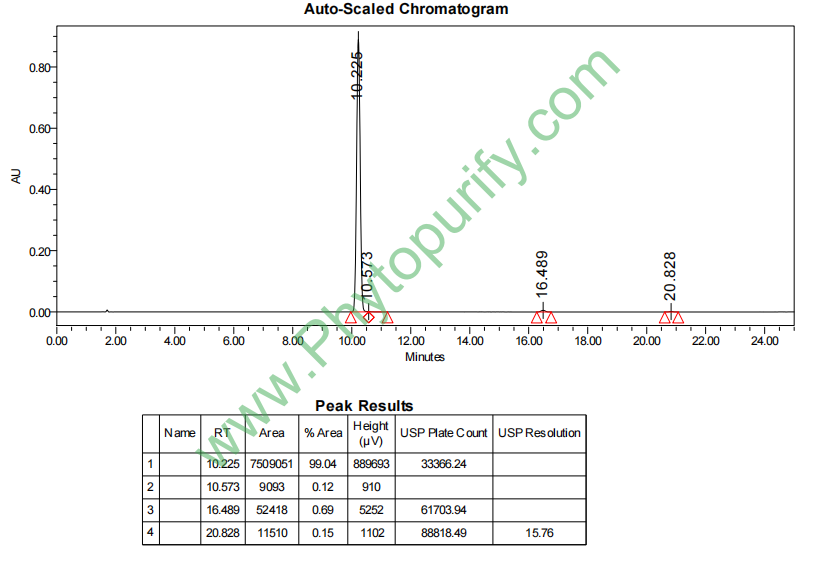
Purity: 95%~99%
Analysis Method: HPLC-DAD or/and HPLC-ELSD
Identification Method: Mass, NMR
Packing: Brown vial or HDPE plastic bottle
Storage: Store in a well closed container, protected from air and light. Put into refrigerate or freeze for long term storage.
Whenever possible, you should prepare and use solutions on the same day. However, if you need to make up stock solutions in advance, we recommend that you store the solution as aliquots in tightly sealed vials at -20℃. Generally, these will be useable for up to two weeks.
The product could be supplied from milligrams to grams, up to kilograms
Inquire for bulk scale.
Descriptions:
Isoimperatorin is a medicinal herbal product that is isolated from the dried roots of Angelicae dahuricae ,can inhibit the cyclooxygenase-2 (COX-2) and COX-1-dependent phases of prostaglandin D 2 (PGD 2 ) generation in bone marrow-derived mast cells (BMMC) in a concentration-dependent manner, with IC 50 values of 10.7 μM and 24 μM, respectively; it may provide the basis for novel anti-inflammatory drugs.[1]
Isoimperatorin possesses a potent hepatoprotective effect against AFB1, presumably through the induction of GSTalpha and the direct inhibition of CYP1A at 2 microM concentration , and suggests that it should be considered a potential chemopreventive.[2]
Isoimperatorin isolated from Cimicifugae Rhizome selectively inhibits TNF-α-induced expression of VCAM-1 at least by upregulation of PPAR-γ, and signals for ERK1/2, PI3K, and PKC are involved in this effect.[3]
Isoimperatorin (IO) has antimycobacterial activity against Mycobacterium tuberculosis strain H37Rv (ATCC 27294), IO has antimycobacterial activity against 2 drug-sensitive and 6 drug-resistant isolates, with minimum inhibitory concentrations (MICs) of 50-100 ug ml(-1) and 100-200 ug ml(-1), respectively; and IO exhibits synergistic antimycobacterial effects with rifampin (RMP), isoniazid (INH) and ethambutol (EMB) against 6 drug-resistant strains, with fractional inhibitory concentration index (FICI) values of 0.133–0.472, 0.123–0.475 and 0.124–0.25, respectively.[4]
References:
[1] Moon T, Jin M, Son J, et al. Arch Pharml Res, 2008, 31(2):210-5.
[2] Pokharel Y R, Han E H, Kim J Y, et al. Carcinogenesis, 2006, 27(12):2483-90.
[3] Lidiya Moon, Yu Mi Ha, Hwa Jin Jang,et al. J Ethnopharmacol, 2011, 133(2):336-44.
[4] N. Guo ?, J. Wu ?, Fan J, et al. Lett Appl Microbiol, 2014, 58(4):344–9.
[5]Yong Chen, Yinchi Jin, Yifen Chen, et al. J Liq Chromatogr R T, 2009, 32(16):2384-95.
HPLC of Isoimperatorin
Storage conditions:Short-term storage at 2~8℃, long-term storage at -20 ~ -80℃
52.5800
3.4548
3.4548
.0032
2.6100
20.7244
High
89.9715
2.6740
Yes
Yes
Yes
No
Yes
Yes
0.9
Yes
No
Yes
Yes
Natural products, as an important source of drug discovery, play an irreplaceable role in the long-term struggle between humans and diseases. From ancient times to the present, plant derived active ingredients have not only directly formed the therapeutic basis of traditional medicine, but also provided rich chemical frameworks and lead compounds for the development of modern innovative drugs. Among the numerous biologically active natural product families, furan coumarin compounds have attracted much attention due to their unique chemical structures and extensive pharmacological activities. Isoipratronin, as a typical representative of linear furanocoumarin, has shown remarkable research value in the field of natural product pharmacology in recent years.
Isoquercetin, also known as 5- [(3-methyl-2-butenyl) oxy] -7H-furano [3,2-g] benzopyran-7-one, is a naturally occurring oxygen substituted furan coumarin. This compound was originally derived from the plant Bai Zhi in the Umbelliferae family(Angelica dahurica)The root was isolated and subsequently discovered in various medicinal plants. As a traditional Chinese medicine, Bai Zhi has the effects of dispelling wind, dispelling cold, relieving pain, reducing swelling and pus, and has a long history of clinical application. Modern pharmacological research has revealed that isoquercetin is not only an important material basis for the pharmacological effects of Angelica dahurica, but also exhibits various biological activities, especially in the fields of anti-tumor and neuroprotection, with significant potential.
It is worth noting that research has found that isoquercetin can effectively inhibit acetylcholinesterase (AChE) activity, with a half maximal inhibitory concentration (IC ₅₀) of 74.6 μ M. This discovery not only provides new candidate molecules for the treatment of neurodegenerative diseases such as Alzheimer's disease, but also suggests that the compound may have a more complex pharmacological action network. At the same time, isoquercetin has shown particularly outstanding performance in anti-tumor research, exhibiting the ability to inhibit proliferation, induce apoptosis, and suppress metastasis in various tumor cell lines, involving multiple key signaling pathways and molecular targets.
This article will systematically review the research progress of isoquercetin from multiple dimensions, including chemical structure and physicochemical properties, plant sources and extraction methods, pharmacological activity research, mechanism of action and molecular targets, pharmacological evaluation and pharmacokinetics, and clinical application prospects. The aim is to provide comprehensive scientific basis for the in-depth development and transformation of this natural product.
Isocoumarin belongs to the linear furanocoumarin family, and its core skeleton is composed of a coumarin nucleus (benzo α - pyranone) linearly fused with a furan ring. Specifically, its structural feature is that a 3-methyl-2-butenyloxy (isopentenyl oxy) side chain is attached to the 5th carbon of the coumarin parent nucleus, while the furan ring is fused to the 6th and 7th positions of coumarin. This structure endows isoquercetin with unique planarity and hydrophobicity.
From the perspective of molecular topology analysis, the furan ring and coumarin ring of isoquercetin are coplanar, forming a large π - conjugated system. This not only affects its UV absorption spectrum characteristics, but also provides a structural basis for its interaction with biomolecules such as DNA and proteins. The presence of isopentenyl side chains increases the flexibility and lipophilicity of the molecule, which may affect its membrane permeability and binding mode with target proteins.
The molecular formula of isoquercetin is C ₁₆ H ₁₄ O ₄, with a molecular weight of 270.2840 g/mol. Its oil-water partition coefficient (LogP) is 3.4548, indicating that the compound has moderate to high lipid solubility, which is consistent with its structural characteristics of containing isopentenyl hydrophobic side chains. A higher LogP value indicates that isoquercetin is easily able to penetrate biofilms, but may also lead to poor water solubility.
The topological polar surface area (TPSA) is 52.5800 Å ², which is within the acceptable range for oral medication (usually TPSA<140 Å ²), indicating its good oral absorption potential. It is worth noting that the water solubility of isoquercetin is extremely low, only 0.0032 mg/mL, which may become a key factor limiting its bioavailability in practical applications.
In terms of medicinal chemical evaluation, the blood-brain barrier (BBB) penetration ability of isoquercetin is predicted to be "high", which is closely related to its high lipid solubility and moderate molecular weight. Good BBB penetration is a prerequisite for the efficacy of drugs in the treatment of central nervous system diseases. In addition, the hERG inhibition risk assessment showed a negative result, indicating a low potential risk of the compound causing cardiac QT interval prolongation. The Ames test result is 0.9, indicating that it may have a slight genetic toxicity risk, and this finding needs to be given special attention in future development.
Isoquercetin is mainly distributed in Apiaceae plants in nature, among which Angelica dahurica(Angelica dahurica)It is the most classic source. The root of Bai Zhi, as a traditional Chinese medicinal herb, has a long history of medicinal use in East Asian countries such as China, Japan, and South Korea. In addition to Bai Zhi, isoquercetin is also present in the following plants:
In addition, isoquercetin has also been detected in Rutaceae plants such as certain citrus species, but the content is usually low. The content of isoquercetin varies significantly among different plant sources, with relatively high content in the roots of Angelica dahurica, reaching 0.1% -0.5% (dry weight), which is the main raw material for industrial extraction.
Traditional extraction of isoquercetin often uses organic solvent extraction method. Due to its lipophilic characteristics, commonly used extraction solvents include methanol, ethanol, ethyl acetate, etc. Research has shown that using 95% ethanol reflux extraction to extract Bai Zhi root powder has a higher extraction efficiency and relatively fewer impurities. The specific operations usually include: drying and crushing of raw materials, solvent soaking or reflux extraction, filtration, and vacuum concentration to obtain the extract.
With the promotion of green chemistry concept and the development of extraction technology, some new extraction methods have been applied to the preparation of isoquercetin:
Ultrasound assisted extraction (UAE)Using the cavitation effect of ultrasound to destroy plant cell walls, accelerate solvent penetration and effective ingredient dissolution. Compared with traditional reflux extraction, ultrasound assisted extraction can significantly shorten the extraction time (usually 30-60 minutes), improve the extraction rate, and operate at a lower temperature, which is beneficial for protecting thermosensitive components.
Microwave assisted extraction (MAE)By utilizing the penetrating and selective heating properties of microwaves, the internal temperature of plant cells rapidly increases, cell walls rupture, and target components are rapidly released. This method has the advantages of short extraction time, low solvent dosage, and high extraction rate.
Supercritical fluid extraction (SFE)Using CO ₂ as the extraction medium, the solubility can be changed by adjusting the pressure and temperature. Supercritical CO ₂ extraction has advantages such as no solvent residue, good selectivity, and environmental friendliness, making it particularly suitable for the extraction of fat soluble natural products. Research has shown that under the conditions of a pressure of 30 MPa, a temperature of 50 ℃, and the addition of an appropriate amount of ethanol as an entrainer, the extraction rate of isoquercetin can reach 1.5-2 times that of traditional methods.
The crude extract obtained from extraction usually requires further separation and purification to obtain high-purity isoeugenol. Common separation methods include:
One of the most notable pharmacological activities of isoquercetin is its inhibitory effect on acetylcholinesterase (AChE). AChE is a key enzyme that degrades the neurotransmitter acetylcholine. In the brains of Alzheimer's disease (AD) patients, the degeneration of cholinergic neurons leads to a decrease in acetylcholine levels. Inhibiting AChE activity can effectively increase synaptic acetylcholine concentration and improve cognitive function. Research has found that the inhibitory activity of isoquercetin on AChE is 74.6 μ M. Although its inhibitory activity is weaker than that of tacrine or donepezil used clinically, as a natural product backbone, it has the potential for further structural optimization.
In addition, isoquercetin also exhibits antioxidant stress and neuroinflammatory activity. In the model of neuronal injury induced by β - amyloid protein (A β), isoquercetin can reduce intracellular reactive oxygen species (ROS) levels, inhibit the activation of nuclear factor kappa B (NF - κ B), and reduce the release of pro-inflammatory cytokines such as TNF - α and IL-1 β. These multi-target neuroprotective effects make them potentially applicable in the comprehensive treatment of AD.
The anti-tumor activity of isoquercetin is currently a hot research topic. In vitro experiments showed that the compound had the effects of inhibiting proliferation and inducing apoptosis on a variety of tumor cell lines, including breast cancer (MCF-7, MDA MB-231), lung cancer (A549, H1299), liver cancer (HepG2), colorectal cancer (HCT-116, HT-29), gastric cancer (SGC-7901) and melanoma (B16-F10).
In the study of breast cancer, isoimperatorin activates the mitochondrial apoptosis pathway by down regulating the expression of anti apoptotic proteins MCL1 and BCL2, and up regulating the level of pro apoptotic protein BAX. In addition, it can also inhibit the phosphorylation of signal transducer and activator of transcription 3 (STAT3), block the nuclear translocation of STAT3 and the transcription of its downstream target genes, thereby inhibiting the proliferation and migration of breast cancer cells.
For lung cancer cells, isoquercetin can inhibit the expression and activity of matrix metalloproteinase 2 (MMP2), reducing the invasion and migration ability of cells. At the same time, it can also weaken the adaptive survival ability of tumor cells in hypoxic environments and enhance sensitivity to chemotherapy drugs by inhibiting the accumulation of hypoxia inducible factor 1 alpha (HIF1A).
In colorectal cancer research, isoquercetin has been confirmed as an inhibitor of topoisomerase I (TOP1) and topoisomerase II alpha (TOP2A). By stabilizing the TOP1-DNA cleavable complex, DNA damage is induced, ultimately leading to cell cycle arrest and apoptosis. This mechanism is similar to commonly used camptothecin based anti-tumor drugs in clinical practice, but isoquercetin has a different chemical skeleton, which may overcome some resistance issues.
Eosinomenin exhibits anti-inflammatory activity in various inflammatory models. In a macrophage model stimulated by lipopolysaccharide (LPS), this compound can inhibit the expression of inducible nitric oxide synthase (iNOS) and cyclooxygenase-2 (COX-2), reduce the production of nitric oxide (NO) and prostaglandin E ₂ (PGE ₂). Its anti-inflammatory mechanism involves the regulation of the mitogen activated protein kinase (MAPK) signaling pathway, particularly the inhibition of p38 MAPK and extracellular signal regulated kinase (ERK) phosphorylation.
In terms of antioxidant properties, isoquercetin can directly scavenge various free radicals, including DPPH free radicals, ABTS cationic free radicals, and superoxide anion free radicals. Its antioxidant activity may be related to the presence of phenolic hydroxyl groups in the molecule. Although isoquercetin itself does not contain free phenolic hydroxyl groups, its furan coumarin skeleton may produce phenolic metabolites during metabolism, thereby exerting indirect antioxidant effects.
In addition to the main activities mentioned above, isoquercetin also exhibits other noteworthy pharmacological effects:
The anti-tumor effect of isoquercetin involves multiple signaling pathways and molecular targets, exhibiting a multi-target and multi pathway characteristic of action.
Eosinomenin induces tumor cell apoptosis by regulating the expression balance of BCL2 family proteins. Specifically, it can downregulate the expression of anti apoptotic proteins MCL1 and BCL2, while upregulating the levels of pro apoptotic proteins BAX and BAK, leading to increased mitochondrial outer membrane permeability, release of cytochrome c, and activation of caspase-9 and caspase-3, initiating endogenous apoptosis programs. In addition, isoquercetin can also act through the death receptor pathway (exogenous apoptosis pathway), upregulate the expression of Fas and FasL, and activate caspase-8.
STAT3 is a key transcription factor that is continuously activated in various tumors, promoting cell proliferation, survival, and angiogenesis. Isoquercetin can inhibit the tyrosine phosphorylation of STAT3 (Tyr705 site), block its binding ability to DNA, and downregulate the expression of STAT3 target genes, including Cyclin D1, Survivin, VEGF, and MMP2. This mechanism has been verified in breast cancer, lung cancer and liver cancer cells.
As a dual inhibitor of TOP1 and TOP2A, isoquercetin has a mechanism of action similar to that of camptothecin compounds. It can stabilize TOP1-DNA cleavable complexes, prevent DNA strand reconnection, lead to DNA damage accumulation, and ultimately trigger cell cycle checkpoint activation and apoptosis. Compared with single topoisomerase inhibitors, dual inhibition may have stronger anti-tumor activity and lower incidence of drug resistance.
Under hypoxic conditions, HIF1A is stably expressed and transcribed to activate a series of genes adapted to hypoxia, including angiogenic factors, glycolytic enzymes, and drug efflux transporters. Eosinomenin can promote the ubiquitination degradation of HIF1A, reduce its protein level, thereby inhibiting tumor angiogenesis and reprogramming of glycolytic metabolism. This effect may enhance the sensitivity of tumor cells to chemotherapy and radiotherapy.
For estrogen receptor α (ESR1) positive breast cancer cells, isoimperatorin showed anti estrogen like effects. It can competitively bind to ESR1, inhibit estrogen induced receptor dimerization and transcriptional activation, thereby suppressing cell proliferation. In addition, isoimperatorin can also inhibit the activity of aromatase (CYP19A1), reduce the synthesis of estrogen in vivo, and provide a new strategy for the treatment of hormone dependent breast cancer.
The neuroprotective effects of isoquercetin mainly involve the following aspects:
Based on existing research, the molecular targets of isoquercetin can be classified into the following categories:
The multi-target action characteristics of isoquercetin give it unique advantages in the treatment of complex diseases such as cancer and neurodegenerative diseases, but also increase the difficulty of fully understanding its mechanism of action.
Based on Lipinski's "Rule of Five", the molecular weight of isoeugenol (270.28 Da) is less than 500, the LogP (3.45) is less than 5, the number of hydrogen bond donors (0) is less than 5, and the number of hydrogen bond acceptors (4) is less than 10, fully meeting the basic requirements for oral medication. In addition, its TPSA (52.58 Å ²) and number of rotatable bonds (3) are also within the ideal range, indicating that the compound has good oral bioavailability potential.
However, the extremely low water solubility (0.0032 mg/mL) of isoquercetin is the main bottleneck for its medicinal properties. Low water solubility not only affects oral absorption, but may also lead to significant fluctuations in drug concentration and individual differences in the body. Therefore, in drug development, formulation techniques such as solid dispersions, liposomes, nanocrystals, etc. are needed to improve their solubility and dissolution rate.
At present, there is relatively limited systematic research on the pharmacokinetics of isoquercetin, but some preliminary findings have been made:
Preliminary safety evaluation shows that isoquercetin has low toxicity and high selectivity index (SI) to normal cells (such as human liver cell L02 and human umbilical vein endothelial cell HUVEC) in vitro. The acute toxicity test on mice showed that the median lethal dose (LD ₅₀) is about 500-1000 mg/kg (oral), with a wide safety window.
However, the Ames test result was 0.9, indicating that the compound may have a slight genetic toxicity risk. This result may be related to the photosensitivity and DNA binding ability of furan coumarin compounds. In the subsequent development, more comprehensive genetic toxicity evaluation (including in vivo micronucleus test, chromosome aberration test, etc.) and long-term toxicity research are needed.
In addition, isoeugenol, as a furan coumarin compound, has phototoxic potential. Under UVA irradiation, it can form adducts with DNA, leading to skin photosensitivity. Therefore, in clinical applications, attention should be paid to avoiding light or developing non phototoxic derivatives.
Based on the multi-target anti-tumor activity of isoquercetin, it has the following potential application directions in tumor therapy:
The AChE inhibitory activity and neuroprotective effect of isoquercetin make it promising for the treatment of Alzheimer's disease. Compared with existing AChE inhibitors such as donepezil and Kabardine, isoepirubicin has the following advantages:
However, its relatively weak AChE inhibitory activity (IC ₅₀=74.6 μ M) needs to be improved through structural optimization. Reasonable structural modification based on isoquercetin skeleton is expected to obtain AChE inhibitors with stronger activity and higher selectivity.
Future structural optimization strategies may include:
To overcome the problems of poor water solubility and low bioavailability of isoquercetin, the following new formulations can be developed:
As a typical representative of natural furan coumarin compounds, isoquercetin has attracted widespread research interest due to its unique chemical structure and multifaceted pharmacological activities. From acetylcholinesterase inhibition to multi-target anti-tumor effects, from neuroprotection to anti-inflammatory and antioxidant effects, this compound exhibits rich biological functions. Its mechanism of action involves multiple aspects such as apoptosis regulation, signal transduction, and DNA topoisomerase inhibition, reflecting the multi-target and multi pathway characteristics of natural products.
In terms of drug properties, isoquercetin has good drug similarity and safety, but low water solubility and potential phototoxicity are the main challenges facing its clinical translation. Future research should focus on the following aspects: in-depth elucidation of the molecular mechanisms of its anti-tumor and neuroprotective effects, especially the confirmation of key targets and analysis of signal networks; By studying the structure activity relationship of the system, develop derivatives with stronger activity, higher selectivity, and better drug properties; Using advanced formulation technology to solve the problems of poor water solubility and low bioavailability; Conduct comprehensive pharmacokinetic and toxicological evaluations to lay the foundation for clinical research.
With the cross fusion of natural product chemistry, pharmacology, and medicinal chemistry, as well as the application of new technologies and methods, isoquercetin and its derivatives are expected to play an important role in the treatment of tumors and neurodegenerative diseases. The active ingredient discovered in traditional Chinese medicine Bai Zhi is showing new vitality on the stage of modern drug development, and its transformation from a natural product to an innovative drug is worth looking forward to.
